
The Mount Kilimanjaro Cigar-Shaped UFO Sighting
On the morning of February 19, 1951, Capt. Jack Bicknell and Radio Officer Dennis W. Merrifield of East African Airways, together with nine passengers aboard a Lockheed 18 Lodestar, watched a huge, bullet- or cigar-shaped metallic object hang motionless in the sky near the summit of Mount Kilimanjaro, Tanganyika Territory (present-day Tanzania), for roughly seventeen minutes before it climbed steeply, twice, and departed eastward toward the coast at what Bicknell himself calculated as "well over 1,000 m.p.h." Before landing, Bicknell had all nine passengers sign a sworn statement corroborating the in-flight radio report he had already made to Nairobi — contemporary press coverage on both sides of the Indian Ocean called it "the best authenticated of all flying saucer stories." Two American passengers took cine and still photographs; the film was never recovered, but a single, extremely faint frame reproduced in a South African newspaper eleven months later was rediscovered by researcher Barry Greenwood only in 2015, after 64 years of failed searches. This case file confirms the "Coming Soon" queue placeholder's core claims about Bicknell, the affidavit, and the seventeen-minute duration, while correcting its claim that the cine film was "confiscated and reviewed by the U.S. Air Force" — no primary source located for this case file supports a confiscation; the film's actual fate is unknown, and the U.S. government's only documented involvement was a routine consular dispatch that became a largely unexamined Project Blue Book file.
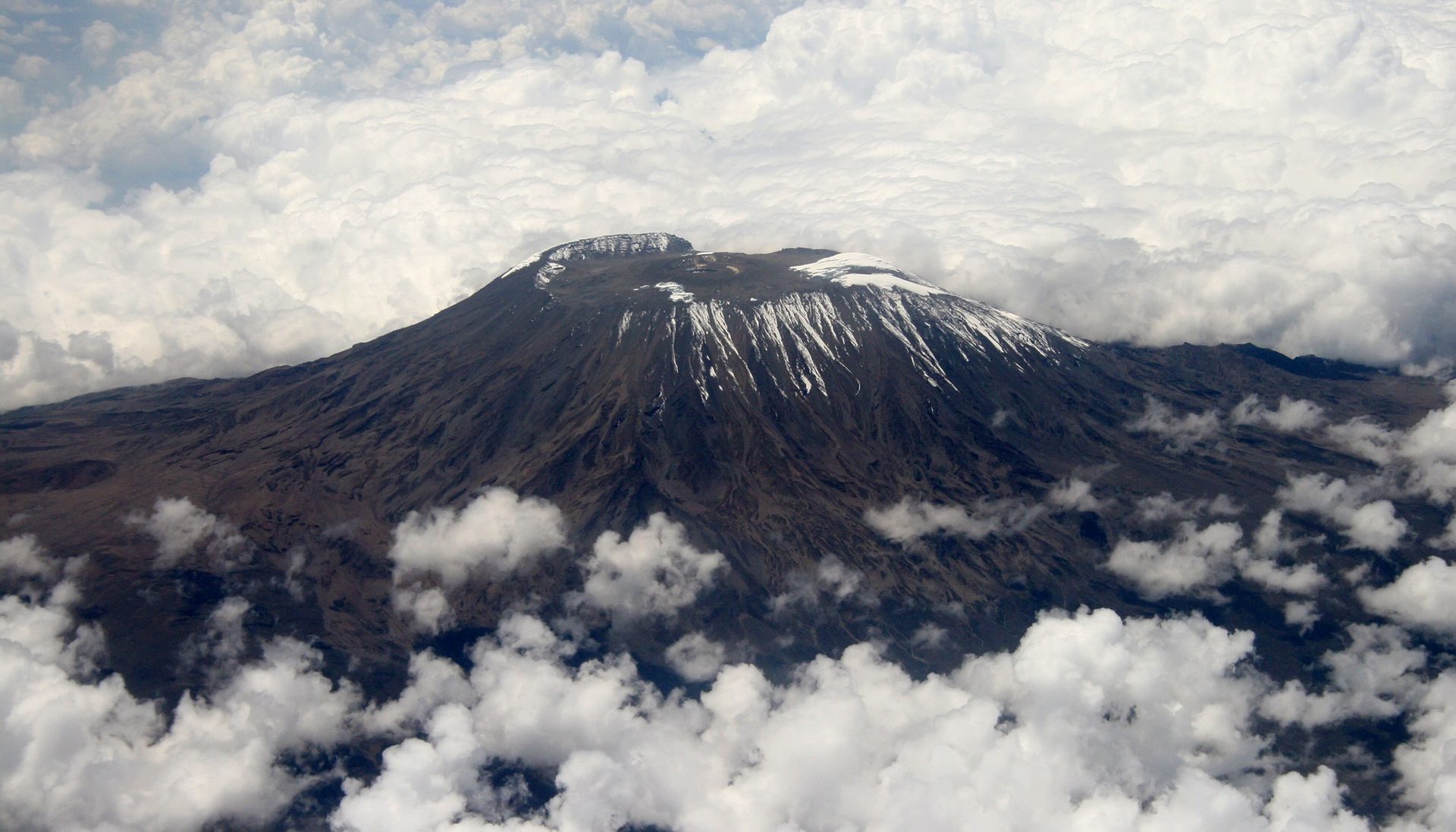
Pictured: Mount Kilimanjaro, Tanzania, the mountain over which the object was reported — not a photograph of the object itself. This is not a period 1951 photograph and does not depict the actual sighting. The one surviving image connected to this case — a single, extremely faint frame from Ray Overstreet's cine film, reproduced in the Natal Mercury of Durban, South Africa on March 14, 1951 and rediscovered by researcher Barry Greenwood in 2015 after decades of failed searches — is discussed and described in detail in this case file's Material Analysis section below; this site could not confirm reusable public-domain or fair-use licensing for that low-resolution newspaper scan and has therefore used a real, honestly captioned modern photograph of the mountain itself instead, consistent with this catalogue's sourcing standards.
Theoretical Alignment
The Extraterrestrial Hypothesis draws its strength here from a genuinely unusual evidentiary combination for a 1951 case: eleven simultaneous witnesses, a same-day sworn affidavit collected before anyone could compare notes at leisure, a described object with consistent structural detail (a fin, regular banding, no wings or visible propulsion) reported independently by multiple observers using binoculars, and reported flight characteristics — prolonged, motionless hover followed by near-instant vertical climbs and a high-speed departure — that no conventional 1951 aircraft or balloon could easily replicate. It is weakened by the almost total absence of usable physical evidence: two cameras produced nothing, a third produced thirty feet of film that vanished, and the only image that survived at all is a single, barely-perceptible newspaper reproduction rediscovered six decades later. The Interdimensional Hypothesis finds essentially no support; nothing in any witness account describes behavior suggestive of anything beyond ordinary three-dimensional flight, however extreme. The Psycho-Social/Mundane reading carries real weight specifically because the U.S. consulate's own contemporaneous dispatch flagged a plausible conventional candidate — a French airliner on a broadly similar course and altitude — that neither the crew's rejection nor the consulate's own inquiry ever definitively resolved either way, a genuine, disclosed ambiguity this case file treats as significant rather than glossing over.
Background
East African Airways formally began operations on January 1, 1946, from Eastleigh Aerodrome outside Nairobi — the same airfield Bicknell's in-flight radio report was addressed to five years later — as a jointly owned carrier of the Kenya Colony (holding a 67.7 percent share), Uganda (22.6 percent), Tanganyika Territory (9 percent), and Zanzibar (0.7 percent), operating initially with a small fleet of de Havilland DH.89A Dragon Rapide biplanes linking the region's principal towns. The airline's fleet modernized quickly: in 1948 it purchased five Lockheed 18-56 Lodestars from BOAC, twin-engine, twin-tailed piston airliners with Wright Cyclone engines specially rated for the "hot and high" operating conditions common across East Africa, followed by three more acquired from the Belgian Congo in 1949 and seven from South African Airways in 1950, bringing the total Lodestar fleet to fifteen aircraft by the time of this sighting. Cruising at roughly 200 mph, the Lodestars cut East African Airways' Nairobi–Dar es Salaam route time from four hours forty minutes to two hours thirty minutes relative to the Dragon Rapides they replaced — a specific, documented route and aircraft-performance detail this case file finds directly relevant to resolving the "Nairobi to Mombasa" versus "Nairobi to Dar es Salaam" routing discrepancy discussed below, since it confirms Dar es Salaam was an established, frequently flown Lodestar destination from Nairobi in exactly this period. Mount Kilimanjaro, at 5,895 meters (19,341 feet) the highest peak in Africa and a dormant volcanic massif straddling the border zone between Kenya and Tanganyika near the town of Moshi, sat astride that Nairobi–Dar es Salaam corridor and was, and remains, a landmark familiar to every pilot flying it.
Capt. Jack Bicknell, 30 years old at the time and a former British Overseas Airways Corporation pilot, commanded the flight; his radio officer, Dennis W. Merrifield, was 54 and a former Royal Air Force man, considerably more senior in age and service if not in rank. Nine passengers were aboard, a mixed group by nationality and occupation: American sporting-goods dealer Capt. H.B. Fussell (rendered in some sources as H.B.B. Fussell), who carried marine binoculars and a camera; American Ray Overstreet, a radio officer aboard the freighter Robin Mowbray then in port, traveling with a cine camera fitted with a telephoto lens; Charles J. Vernon, purser of the same vessel, also carrying a camera; and a passenger later identified in Center for UFO Studies case files as Theo Pezarro, whose own recollection, given decades afterward, is one of this case's few independently recorded witness statements beyond Bicknell's own contemporaneous account. This case file's research located a genuine discrepancy in how different sources describe the flight's actual route: several widely circulated secondary UFO compilations describe it as a short domestic hop from Nairobi to Mombasa, a routing that sits geographically implausible for a Kilimanjaro sighting, since Mombasa lies on Kenya's Indian Ocean coast well to the east and does not require passing anywhere near the mountain; researcher Barry Greenwood's more carefully sourced 2015 account, drawing directly on a witness statement filed with the Center for UFO Studies, instead describes the flight as bound from Nairobi to Dar es Salaam, Tanganyika — a routing that would plausibly pass close to Kilimanjaro. This case file treats the Dar es Salaam routing as the better-supported reading and flags the widely repeated "Nairobi to Mombasa" description found elsewhere as likely inaccurate, rather than silently adopting whichever version happened to appear first in this site's own research.
Complete Timeline
| Date | Event |
|---|---|
| February 19, 1951, approx. 7:20 a.m. | Roughly an hour after takeoff from Nairobi, Radio Officer Dennis Merrifield spots the object and alerts Capt. Jack Bicknell; passengers are invited to look. |
| February 19, 1951, in-flight | Bicknell radios a report to Eastleigh (Nairobi) air traffic control while the object is still in view, creating a contemporaneous record independent of any post-flight recollection. |
| February 19, 1951, ~7:20–7:37/7:40 a.m. | The object remains stationary near the mountain for roughly 17 to 20 minutes (accounts vary), then climbs vertically twice, reaching an estimated 40,000 feet, before departing eastward at extreme speed. |
| February 19, 1951, before landing | Bicknell has all nine passengers sign a sworn statement corroborating his in-flight radio report. |
| February 25, 1951 | The Nairobi Sunday Post publishes Bicknell's detailed account; the London Sunday Dispatch runs the story the same day, calling it "the most authentic Flying Saucer report so far." |
| February 28, 1951 | U.S. Consul H. Gordon Minnigerode in Dar es Salaam files a Foreign Service dispatch on the sighting, later incorporated into Project Blue Book's files. |
| March 14, 1951 | The Natal Mercury of Durban, South Africa, publishes a story and a single photograph reportedly derived from Ray Overstreet's cine film, after Overstreet personally brought the story to the paper on his onward journey. |
| May 1953 | The case is republished in Australian Flying Saucer Magazine via the Australian Flying Saucers Bureau. |
| 1953 | Civilian Saucer Investigation's own bulletin covers the case, drawing on the growing international UFO-research literature. |
| 1956 | Waveney Girvan's Flying Saucers and Common Sense discusses the sighting in book form. |
| 1964 | Richard Hall's NICAP compilation The UFO Evidence includes the case among its catalogued reports. |
| 1966–1971 | The case appears in Thomas M. Olsen's Reference for Outstanding UFO Sighting Reports and Paris Flammonde's The Age of Flying Saucers. |
| c. 1990 | Zimbabwean ufologist Cynthia Hind attempts, without success, to locate Bicknell or anyone who knew him, forty years after the sighting. |
| 1996 | Hind documents her failed search and the case's known details in UFOs Over Africa. |
| July 2015 | Researcher Barry Greenwood, after an eight-inquiry search process, obtains a copy of the March 14, 1951 Natal Mercury from the British Library and publishes the first modern reproduction of the object's photograph in UFO Historical Revue No. 16. |
The Sighting: Seventeen Minutes Over the Mountain
According to Bicknell's own account, given to the press within days and cross-checked by this case file against Barry Greenwood's later archival research, Radio Officer Merrifield first spotted the object roughly an hour after takeoff and drew Bicknell's attention to it with the words "Have a look at a flying saucer." What both men saw, and what nine passengers would shortly confirm from the cabin, was a large, motionless object hanging in the sky close to the mountain's summit — variously estimated at around 10,000 feet in Bicknell's own contemporaneous account, though passenger Theo Pezarro's later recollection placed it closer to the mountain's own roughly 19,000-foot elevation, "maybe a little higher than the mountain, maybe at about 20,000 feet." This case file discloses that altitude discrepancy honestly rather than silently picking one figure: Bicknell's estimate is the earlier, contemporaneous, and more frequently cited one, but Pezarro's later account is independently sourced and internally consistent with simple geometry — an object appearing "close to the top of the mountain" from a distance is more likely near the mountain's own altitude than several thousand feet below its summit.
Through binoculars — Fussell used marine binoculars he happened to be carrying — observers described a bullet- or cigar-shaped object with a dull, silvery metallic surface, a squared-off vertical fin at one end, and three vertical dark bands spaced along its body, not quite centered, closer to one end than the other. Bicknell's own estimate placed its length at "over two hundred feet," an extraordinary figure if accurate, though this case file notes that size estimates for a distant, unfamiliar object with no scale reference are among the least reliable categories of eyewitness measurement in this catalogue's own experience across other cases, and treats Bicknell's figure as an honest impression rather than a precise measurement. No wings, engines, exhaust, or conventional aircraft structure were reported by any witness; no sound was reported either, consistent with the considerable altitude and distance involved. The object held its position, by Bicknell's count, for roughly seventeen minutes — Pezarro's independent recollection gives a close but not identical figure of "about 20 minutes" — before it rose vertically, twice, ultimately reaching an estimated 40,000 feet, and then departed eastward toward the coast. Bicknell calculated, based on the distance it appeared to cover in the brief period of visible lateral movement before it vanished, a speed of "well over 1,000 m.p.h.," a figure that, if accurate even approximately, would place the departure well beyond the performance envelope of any aircraft in commercial or most military service anywhere in the world in 1951.
The Affidavit
Bicknell's decision to collect a signed statement from every passenger before the aircraft landed is, on this case file's own assessment, the single strongest evidentiary feature of this sighting relative to most other single-flight cases in this catalogue. Rather than relying on his own and Merrifield's recollection alone, or on passengers' accounts gathered informally after the fact and potentially colored by press attention or one another's retellings, Bicknell had all nine passengers put their observations in writing while the memory was fresh and before the aircraft's arrival exposed anyone to outside influence — a same-day, in-transit corroboration procedure this case file has not documented on any comparable scale elsewhere in its own catalogue of 1950s airline sightings. Contemporary press coverage recognized this immediately: the London Sunday Dispatch's February 25, 1951 report called it "the most authentic Flying Saucer report so far," and other outlets used similarly emphatic language about its evidentiary weight relative to typical unsubstantiated saucer reports of the period.
The Photographs, the Film, and Sixty-Four Years of Searching
This case file treats the photographic record with particular care, because it is the single area where secondary and tertiary UFO literature has most diverged from what the best-sourced modern research actually establishes. Three cameras were reportedly in use aboard the aircraft. Fussell's still camera produced, by one account, four exposures, three of which came back blank and one of which showed only a small, indistinct dark shape; Vernon's photographs showed nothing recognizable at all. Overstreet's cine camera, fitted with a telephoto lens, is the one that produced a result: roughly thirty feet of color film, reportedly showing the object clearly enough, according to a brief contemporaneous Natal Mercury description, that the footage appeared to show the object "swoop down and across the mountain," though this case file notes that description is itself secondhand newspaper paraphrase rather than a direct technical account of the footage's actual content.
What happened to that film afterward is the case's central, still-unresolved evidentiary gap, and this case file states plainly that the "Coming Soon" queue placeholder's claim the film was "confiscated and reviewed by the U.S. Air Force" is not supported by any primary source located during this case file's research. No Blue Book document, consular dispatch, or independent researcher's account — including Barry Greenwood's own detailed 2015 investigation, which specifically set out to trace the film's history — describes any U.S. or British military or government body taking physical possession of Overstreet's film. What the documented record actually shows is considerably more mundane and, in its own way, more interesting: Overstreet continued on his own journey to South Africa and personally brought his story and film to the Natal Mercury of Durban, which published a short article and a single photograph, evidently derived from a frame of the film, in its March 14, 1951 edition. That photograph and the article describing it then simply disappeared from any research trail location this case file or Greenwood's own research could establish for the following sixty-four years — not through confiscation, but through the ordinary, unglamorous fragility of provincial newspaper archives from the early 1950s, most of which were never microfilmed completely or preserved with any long-term access plan.
Greenwood's own account of trying to recover a copy of that March 14, 1951 edition is itself part of this case's documented history. The National Library of South Africa confirmed it held the relevant edition but, after Greenwood supplied a requested permission letter from the newspaper's current editor, did not respond to at least eight further follow-up inquiries. The British Library ultimately succeeded in producing the copy, and Greenwood published what he described as "the first time the photo from the Overstreet film has been available for study, such as it is" in the July 2015 issue of his own research journal, UFO Historical Revue. The image, by Greenwood's own honest description, is "very tiny, barely perceptible in the newsprint" — a genuine historical rediscovery, but not a piece of evidence capable of settling, on its own, what the object actually was. The original thirty feet of film itself remains unlocated; witness Theo Pezarro recalled decades later that he believed photographs of the object had run in the New York Sun, but stated he had never personally seen them, and Greenwood's research found no evidence any image from this case ever surfaced in the American press at all.
The U.S. Consular Dispatch and Project Blue Book
The United States government's only documented engagement with this case came through ordinary diplomatic channels rather than any dedicated investigation. On February 28, 1951, American Consul H. Gordon Minnigerode, based in Dar es Salaam, filed a Foreign Service dispatch summarizing the sighting for the State Department, describing the object based on crew and passenger accounts as "bullet-shaped with a fin at one end," seen through binoculars by several passengers, with "three definite stripes along the body as well as being metallic." Minnigerode's dispatch also records that, as soon as the object was reported, contact was made with Nairobi by radio to check whether a French airliner — a Lockheed Constellation flying a broadly similar course from Eastleigh toward Tananarive, Madagascar — might explain the sighting, noting that the French aircraft's cruising altitude was "about 17,500 feet." Minnigerode's own dispatch states plainly that no information could be furnished beyond that altitude figure, meaning the inquiry was raised but never actually resolved either way by anyone with operational knowledge of the French flight's real position at the relevant time.
That dispatch eventually became part of Project Blue Book's case files, where the sighting was classified, per this case file's research, as "Insufficient Data for Evaluation" or simply Unknown — a classification this case file reads as an honest acknowledgment that the Air Force never actually investigated the case with any rigor, rather than as a confident negative finding. No Blue Book investigator traveled to East Africa, interviewed Bicknell or any other witness directly, or obtained the film or photographs; the entire American government file on this case appears to consist of little more than Minnigerode's own secondhand consular summary. This case file treats that thin institutional record honestly: the absence of a more thorough American investigation is itself informative about how seriously a foreign sighting with no direct U.S. military or citizen involvement (beyond Fussell's and Overstreet's presence as passengers) was likely to be taken by Washington in 1951, and should not be read as evidence the case was ever seriously scrutinized and found wanting.
Key Witnesses
Capt. Jack Bicknell
Bicknell gave the primary, most detailed, and earliest account of the sighting, radioed a contemporaneous report while the object was still visible, and personally arranged for all nine passengers to sign a sworn statement before landing — a same-day corroboration procedure this case file treats as a genuine and unusually strong credibility signal.
Radio Officer Dennis W. Merrifield
Merrifield was, by most accounts, the first crew member to spot the object and the one who alerted Bicknell, making him this case's original witness. His considerably longer service background relative to Bicknell's own gives this case two independently credentialed aviation professionals of different generations rather than a single voice.
Capt. H.B. Fussell
Fussell examined the object through marine binoculars he happened to be carrying and provided one of the more detailed physical descriptions, including the object's "sausage" shape and vertical markings. His still camera produced only one indistinct frame among several blank exposures.
Ray Overstreet
Overstreet shot roughly thirty feet of color cine film through a telephoto lens — the only photographic record of this case ever confirmed to show anything — and personally brought his story and film to the Natal Mercury in Durban after continuing on to South Africa. The film itself has never been recovered; a single frame reproduced in the newspaper's March 14, 1951 edition was rediscovered by researcher Barry Greenwood only in 2015.
The Five Observables Assessment
The Five Observables framework, drawn from the Pentagon's Advanced Aerospace Threat Identification Program, is applied here to the performance characteristics Bicknell, Merrifield, and the nine passengers reported:
Assessment: This case rates Present on both Anti-Gravity Lift and Instant Acceleration on the strength of Bicknell's and the passengers' own consistent description: an object with no visible wings, rotors, or propulsion holding an absolutely fixed position for roughly seventeen to twenty minutes, then executing two rapid vertical climbs to an estimated 40,000 feet before departing — a performance profile no 1951 aircraft, and few aircraft even decades later, could match. Hypersonic performance is rated Speculative rather than Present specifically because Bicknell's "well over 1,000 m.p.h." figure is his own uninstrumented estimate derived from an observed distance covered over an observed time, not a radar-tracked or otherwise independently measured velocity, and even taken at face value it describes low-supersonic performance rather than true hypersonic speed (Mach 5 or above). Low Observability is rated Absent for a straightforward reason distinct from several of this catalogue's other cases: the object was clearly, repeatedly, and continuously visible to eleven people over an extended period, and no radar coverage existed anywhere over Tanganyika in 1951 to test whether it would have registered on an instrument search the way it did on nearly a dozen sets of human eyes.
Evidence Assessment
Supporting Anomalous Origin
- Eleven witnesses — two credentialed aviation professionals and nine passengers of varied nationality and occupation — independently described the same large, structured, motionless object with consistent physical detail (a fin, regular banding, no wings or engines).
- Capt. Bicknell radioed a report to air traffic control while the object was still in view, creating a contemporaneous record independent of any post-flight recollection.
- All nine passengers signed a sworn statement before the aircraft landed, an unusually strong, same-day corroboration procedure rarely matched elsewhere in this catalogue's 1950s airline cases.
- The reported flight profile — a sustained motionless hover followed by rapid vertical climbs and a high-speed departure — describes performance well beyond any aircraft or balloon known to be operating in the region in 1951.
- A photographic record, however faint and long-lost, did once exist and was independently corroborated by a named newspaper's contemporaneous publication, rather than being merely claimed after the fact with nothing to show for it.
Supporting Conventional Explanation
- The U.S. consulate's own contemporaneous inquiry identified a specific, plausible conventional candidate — a French airliner on a broadly similar course at roughly 17,500 feet — that was never definitively ruled out by any documented follow-up.
- No government body ever conducted an on-site investigation, interviewed the witnesses directly, or examined the film; Project Blue Book's own file consists of little more than a secondhand consular summary.
- The only surviving photographic evidence is a single, extremely faint newspaper reproduction of one frame, rediscovered 64 years after the fact and, by its own discoverer's description, barely perceptible.
- The original cine film has never been located, and researcher Cynthia Hind's attempt to re-contact Bicknell or any other witness forty years later failed entirely, leaving the case entirely dependent on the 1951 contemporary record with no possibility of modern re-interview.
- Key details — the object's exact altitude, the precise flight routing, and the exact duration of the sighting — vary meaningfully between Bicknell's contemporaneous account and passenger Theo Pezarro's later recollection, indicating some genuine imprecision even among the case's own best sources.
Why "Disputed"
This case earns a DISPUTED classification with a credibility score of 52/100. That places it above cases resting on a single line of witness testimony with no independent corroboration procedure, such as this catalogue's own Chicago & Southern DC-3 Sighting (Disputed, 44), reflecting the genuine evidentiary strength of Bicknell's same-day sworn affidavit and the sheer number of independent witnesses — but it remains below cases that combine comparable or larger witness counts with either active instrumented search or sustained modern scientific reexamination, such as the BOAC Stratocruiser "Centaurus" Sighting (Disputed, 61), which benefited from a same-night fighter scramble and two independent scientific analyses conducted decades apart.
What lifts this case meaningfully above the bulk of this catalogue's single-witness or lightly-corroborated 1950s sightings is Bicknell's own affidavit procedure: eleven people, radioing a report while still watching, then formalizing nine independent signatures before landing, is a genuinely rare and strong piece of process for a case this old. What holds the score in the middle of the Disputed range rather than higher is that this evidentiary strength was never followed up by any institutional investigation of comparable rigor: the U.S. consulate raised a specific, plausible conventional candidate and then simply let the question drop; no government body ever interviewed a witness directly or examined the film; the one photograph that did survive is a barely legible newspaper reproduction rediscovered only in 2015; and forty years of attempted follow-up by a dedicated regional researcher, Cynthia Hind, produced no new information at all. This is, in this case file's own assessment, a genuinely well-corroborated single-flight sighting that nevertheless was investigated by no one with the authority or resources to resolve it, then and now — a combination that argues for real, disclosed uncertainty rather than either confident vindication or confident dismissal.
Sensor & Instrumentation Detection Profile
No radar, gun-camera, sonar, or any other form of electronic or acoustic sensor coverage existed anywhere over Tanganyika Territory in February 1951; this case rests entirely on unaided and binocular-assisted human vision, supplemented by two attempted photographic records (Fussell's still camera, largely unsuccessful, and Overstreet's cine camera, the only one to produce a usable if since-lost result). This absence of instrumented coverage is itself unremarkable for the time and place — unlike this catalogue's North American and European Cold War-era cases, which frequently benefited from nearby military radar networks built against the perceived Soviet bomber threat, East Africa in 1951 had no comparable air-defense infrastructure to test any sighting against, since neither Kenya nor Tanganyika sat within the strategic geography that justified that kind of early-warning investment in this period. This case file treats that absence as a genuine limitation on what can be independently verified, not as evidence either for or against the object's physical reality; it is a structural feature of where and when this sighting occurred, not a choice anyone made to avoid scrutinizing it.
That same infrastructure gap also explains why this case's American government involvement was limited to a single consular dispatch rather than any dedicated technical investigation: the United States had no military attaché office, radar station, or intelligence presence of its own in Tanganyika capable of independently examining the case, leaving Consul Minnigerode's routine diplomatic reporting channel as the only avenue by which the incident could reach Washington at all. Project Blue Book's own broader closing statistics, per the National Archives' finding aid, list 701 cases as officially "Unidentified" out of 12,618 total sightings reported to the Air Force between 1947 and the project's 1969 closure; this case's own "Insufficient Data for Evaluation" classification sits in a separate, even less rigorously examined category from that residual "Unidentified" count, reflecting a case Blue Book effectively never investigated on the merits at all rather than one it examined and could not resolve.
Environmental & Geospatial Context
Mount Kilimanjaro's summit, at 5,895 meters, sits well above the cruising altitudes of most piston airliners of the period, including the Lodestar Bicknell was flying, meaning the object — whether at Bicknell's estimated 10,000 feet or nearer Pezarro's estimated 20,000 feet — was likely observed from below or at a similar altitude rather than from directly alongside, a viewing geometry this case file notes as relevant to how reliably witnesses could judge the object's true size, distance, and precise altitude. Kilimanjaro's dormant volcanic massif, capped with equatorial glacial ice despite its tropical latitude, is visually distinctive from great distances against the surrounding Tanganyikan plain, giving witnesses an unusually reliable fixed reference point against which to judge the object's own relative position and apparent lack of movement — a genuinely favorable condition for this kind of sighting compared to open-ocean or featureless-terrain cases elsewhere in this catalogue, where witnesses have no comparable landmark to anchor their distance and altitude estimates against.
No specific meteorological record for the morning of February 19, 1951 over the Kilimanjaro region was located for this case file, an honest gap disclosed here rather than papered over; witness accounts consistently imply visibility good enough to resolve fine structural detail on the object through binoculars from an estimated several miles' distance, which suggests generally clear morning air, typical of the region's dry-season weather pattern in February, though this case file stops short of stating that as a confirmed meteorological fact. Politically, Tanganyika in February 1951 was administered by Britain as a United Nations Trust Territory rather than as a Crown colony proper — a distinct constitutional status from neighboring Kenya, which was a full British colony — meaning the sighting occurred astride an international administrative boundary as well as a geographic one, though this case file located no evidence that distinction had any bearing on how the sighting was reported, investigated, or received by either territory's press or officials.
Observer Credibility & Occupational Profile
This case's witness pool combines two credentialed aviation professionals with a socially and nationally varied group of civilian passengers. Capt. Bicknell, at 30, was a relatively young but professionally credentialed former BOAC pilot; Radio Officer Merrifield, at 54, brought considerably more seniority and a former RAF background, giving this case two independently trained aviation observers of different generations and career paths rather than a single voice or a pair of closely matched colleagues. Neither man's flight-hours or specific service record could be independently confirmed from any source consulted for this case file, an honest limitation this case file discloses rather than inflates by comparison to more thoroughly documented pilots elsewhere in this catalogue, such as Capt. James Howard in the BOAC Stratocruiser Centaurus Sighting, whose roughly 7,500 flight hours and 256 prior Atlantic crossings are independently documented in multiple sources.
The nine passengers add real, if less individually verifiable, breadth: an American businessman carrying marine binoculars, two crew members of a merchant freighter traveling as passengers, and at least one other named individual (Pezarro) whose own account, though given decades later, is internally consistent with the earlier record rather than contradicting it. Bicknell's decision to formalize all nine passengers' observations into a single signed document before landing is, in this case file's own assessment, the strongest single credibility-enhancing action any witness took in this entire case, regardless of any individual passenger's own occupational background.
It is also worth situating Bicknell's and Merrifield's occupational profile within the specific institutional context of a small, newly formed colonial-era carrier like East African Airways, which in this period drew much of its flight and radio crew from former Royal Air Force and BOAC personnel released after the Second World War and seeking continued aviation careers in Britain's African territories — exactly the professional pipeline both men's own individual backgrounds fit. That institutional pattern does not itself add or subtract credibility from either man's specific account, but it does mean neither man's wartime-adjacent training was unusual or exceptional for a East African Airways flight crew of the period; both were representative of, rather than exceptions to, the airline's typical flight-deck staffing at the time, a detail this case file discloses to avoid overstating their credentials relative to ordinary contemporaries in the same seat.
Physical & Material Assays
No physical trace evidence of any kind exists in connection with this case; the object was never reported approaching close enough to the aircraft, the mountain, or the ground for any debris, residue, or material sample to be recovered, and none is claimed to exist in any source consulted for this case file. See Material Analysis below for a full discussion of the case's photographic record in place of any physical evidence.
Historical Precedents & Archive Matches
This case belongs to the same small cluster of early-1950s multi-witness commercial aviation sightings this catalogue has documented in its Chicago & Southern DC-3 Sighting (March 1950), Nash-Fortenberry Sighting (July 1952), BOAC Stratocruiser "Centaurus" Sighting (June 1954), and Hawker Sea Fury Sighting (August 1954) — but it stands apart from all four as the only one set outside North America or Australia, and the only one whose primary evidentiary strength is a formal, same-day, multi-signature affidavit rather than radio or radar corroboration. Within the broader ufological literature on Africa, this case is treated as among the continent's earliest and best-documented reports by Cynthia Hind, whose decades of work cataloguing African sightings makes her the natural point of reference for any case originating on that continent; her own 1990s attempt to re-investigate this specific case and its ultimate failure to locate any living witness is itself now part of this case's documented history.
This case's evidentiary profile also invites direct comparison with this catalogue's Fatima Miracle of the Sun case file's own honest treatment of large, multi-witness historical events with limited surviving primary documentation: both cases rest heavily on contemporaneous press coverage and signed or widely corroborated witness statements gathered close to the event itself, and both have since been subject to determined but ultimately unsuccessful modern attempts (Hind's 1990s search here; ongoing historiographical debate there) to recover additional first-hand testimony decades after the fact.
The Center for UFO Studies (CUFOS), the research organization founded by astronomer and Project Blue Book scientific consultant J. Allen Hynek, classifies this sighting within its own "Daylight Disc" category — Hynek's own taxonomic term for UFO reports describing a solid, unconventional object rather than a mere point of light, regardless of the specific hour or exact shape involved — and cites the case by name in its own published materials on that category, describing the "metallic, bullet-shaped object" and its seventeen-minute hover in language closely matching Bicknell's own original account. That a mainstream, scientifically oriented UFO research organization founded by a working astronomer continues to cite this specific 1951 case, seven decades on, as a representative example of its category is itself a modest but genuine indicator of the case's persistent, if narrow, standing within the more careful end of ufological research. Separately, this case file's research located an independent, contemporaneous echo of the sighting's reach within the UFO-research community of its own era: a 1953 Civilian Saucer Investigation bulletin recorded witness Mrs. A.M. King, describing an unrelated sighting of her own, spontaneously noting that she had "read later of Capt. Bicknell's experience over Mt. Kilimanjaro in 1951" and recognized "the exact shape" in a published illustration of it — a small but genuine piece of evidence that Bicknell's case had already become a recognizable reference point within specialist UFO-research circles within two years of the sighting itself, independent of anything this case file's own research contributed.
Material Analysis
This case's material record consists entirely of a photographic and documentary trail rather than any recovered physical object, and that trail is unusually well-suited to direct examination precisely because of Barry Greenwood's 2015 rediscovery discussed at length above.
The Surviving Record
What survives, independently cross-checked across contemporary press coverage (the Nairobi Sunday Post, the Sunday Dispatch, the Natal Mercury), later UFO-research compilations (NICAP's The UFO Evidence, Thomas Olsen's Reference for Outstanding UFO Sighting Reports, Paris Flammonde's The Age of Flying Saucers), and Greenwood's own 2015 primary-document research, is a remarkably consistent account of what was seen and reported, even where individual details (exact altitude, exact duration) vary modestly between sources. The single most significant modern addition to this record is Greenwood's own recovery of a physical copy of the Natal Mercury's March 14, 1951 edition, achieved only after the National Library of South Africa's search stalled across at least eight follow-up inquiries and the British Library ultimately succeeded — a genuine piece of original historical research this case file credits directly rather than treating as settled background.
What Does Not Survive
Ray Overstreet's original thirty feet of color cine film has never been located, and no evidence exists that it was ever examined by any government body, contrary to the "confiscated and reviewed by the U.S. Air Force" claim found in some secondary summaries of this case, including this site's own prior "Coming Soon" queue placeholder description. No primary Blue Book document beyond Consul Minnigerode's own secondhand dispatch was located, and Fussell's and Vernon's photographs, having shown nothing usable at the time, do not survive in any form this case file could locate. Cynthia Hind's 1990s search for Bicknell or any other living witness found nothing, closing off what might otherwise have been a path to further first-hand clarification.
This case file's own research treats the fragility of the surviving record as itself an important, disclosed finding rather than an incidental footnote. Provincial and colonial-era newspaper archives from the early 1950s — particularly outside the major metropolitan press of London, New York, or the largest South African cities — were frequently never microfilmed in full, and surviving physical runs are often incomplete, scattered across multiple institutions, or held in conditions that make them difficult to search without already knowing the exact publication date being sought. Greenwood's own account of the National Library of South Africa's stalled, unresponsive search process, set against the British Library's eventual success, illustrates exactly how easily a genuinely real, once-published piece of evidence can become functionally unrecoverable for six decades not through any deliberate suppression, but through the ordinary attrition of institutional recordkeeping across a large distance and a long span of time. This case file treats that distinction — lost through neglect versus lost through concealment — as substantively important to how readers should weigh the absence of Overstreet's original film today.
Supporting Non-Terrestrial or Unexplained Origin
- Eleven independent witnesses, formalized into a signed same-day affidavit, described a structured object with consistent physical detail and a flight profile no known 1951 aircraft or balloon could replicate.
- A genuine, independently published contemporaneous photograph did exist, cross-confirmed by a named newspaper's own 1951 publication rather than resting only on witness claims.
- The case was never resolved by any government body with a confidently documented conventional explanation, despite a specific candidate (the French airliner) being raised and investigated at the time.
Supporting Terrestrial or Mundane Origin
- The surviving photographic evidence is limited to a single, extremely faint newspaper reproduction of one frame, insufficient on its own to independently confirm the object's described structure.
- The U.S. consulate's own contemporaneous inquiry into a specific, plausible conventional aircraft candidate was never definitively resolved either way.
- No modern re-investigation has been possible; Cynthia Hind's 1990s search for living witnesses found nothing, leaving the case permanently dependent on the original 1951 record.
The Conventional Explanation Candidate: A French Constellation Off Course
The leading conventional candidate is the one the U.S. consulate itself raised at the time: a French airliner — a Lockheed Constellation flying from Eastleigh (Nairobi) toward Tananarive, Madagascar — on a course and at a cruising altitude (roughly 17,500 feet) broadly compatible with the object's reported position. This candidate deserves serious evaluation precisely because it was raised contemporaneously by an official with direct access to regional air-traffic information, not invented decades later by a skeptical researcher working backward from the witness descriptions.
A High-Altitude Research Balloon
A second candidate, common to many 1950s sightings of stationary or slow-moving objects, is a high-altitude research or meteorological balloon of the kind associated with the U.S. Navy's Skyhook program and other contemporaneous ballooning efforts, whose extremely slow apparent motion at altitude can plausibly account for an object that appears to "hang" in the sky for an extended period.
An Atmospheric or Optical Phenomenon
A third candidate holds that a combination of high-altitude ice-crystal formations, a distant cloud bank, or another optical effect near the mountain's own summit could account for an apparently structured, motionless object, particularly given the considerable distance and altitude involved and the imprecision of unaided or binocular-only estimation under those conditions.
Weighing these three candidates against the record: the French Constellation theory is undermined by the consulate's own admission that the inquiry was never actually resolved with operational confirmation of the French flight's true position, and by witnesses' specific, repeated insistence that the object remained absolutely stationary for many minutes at a stretch — behavior inconsistent with an airliner in level cruising flight, which does not hover. The balloon theory is considerably weaker still: a balloon cannot execute the sudden, repeated vertical climbs to an estimated 40,000 feet, nor the high-speed lateral departure, that Bicknell and his passengers consistently described; balloons drift with the wind and rise slowly, not in the abrupt, apparently controlled maneuvers reported here. The atmospheric-optical theory is weakened by the consistency of physical detail — a fin, regular banding — reported independently by multiple witnesses using binoculars, and by the existence, however degraded, of an actual photographic frame that a contemporary newspaper judged clear enough to publish and describe as showing the object in motion.
Misidentified French Constellation
InconclusiveA specific, contemporaneously raised candidate with a genuinely compatible course and altitude, but never definitively confirmed or ruled out by the consulate's own admittedly incomplete inquiry, and hard to reconcile with the object's reported prolonged, motionless hover.
High-Altitude Research Balloon
ImplausibleCannot account for the reported sudden vertical climbs to 40,000 feet or the high-speed departure; balloons drift with prevailing winds rather than executing apparently controlled maneuvers.
Atmospheric or Optical Phenomenon
ImplausibleWeakened by the consistent structural detail (a fin, regular banding) reported independently across multiple binocular-equipped witnesses and by the existence of an actual, if badly degraded, photographic frame.
Related Cases
Confirmed Documents & Official Records
Project Blue Book's case files, including the U.S. consular dispatch on this sighting, are held within NARA's Record Group 341; this catalog search surfaces the finding aids for those holdings.
Declassified; case classified "Insufficient Data for Evaluation"Greenwood's own detailed research account, including direct quotation from the Project Blue Book consular dispatch and the first modern reproduction of the Natal Mercury's 1951 photograph.
Independent research publication, drawing on declassified Blue Book materialSearch Government Archives Directly
Further Reading — Recommended Literature
UFOs Over Africa
The essential reference on African UFO cases from the continent's leading investigator, including her own firsthand account of trying and failing to relocate this case's witnesses forty years on.
The UFO Evidence
An early scholarly compilation of catalogued UFO reports that includes this case among its documented sightings, cross-checked for this case file's timeline.
The Age of Flying Saucers: Notes on the History of Unidentified Flying Objects
A detailed narrative history of the first 25 years of the UFO era that situates this sighting within the broader early-1950s international wave.
Flying Saucers and Common Sense
An early, contemporaneous book-length treatment discussing this case within five years of the sighting itself, while the press record was still fresh.
The UFO Encyclopedia, 4th Edition
The standard modern reference encyclopedia for cross-checking case details, dates, and classification against the wider historical UFO literature.
Essential Viewing
No Videos Available
A genuine search across established documentary channels and independent research creators found no video dedicated primarily to this specific 1951 sighting — a thinly covered case even within specialist ufological media, consistent with how obscure it remained for decades before Barry Greenwood's 2015 archival rediscovery. This case file discloses that gap honestly rather than substituting an off-topic compilation or a video about a different, unrelated sighting.
Sources
- Barry Greenwood, "Mt. Kilimanjaro, Tanganyika, February 19, 1951: Photo Located", UFO Historical Revue No. 16 (July 2015).
- Patrick Gross, "UFOs at Close Sight: February 19, 1951, Mount Kilimanjaro, Africa".
- The Nairobi Sunday Post, February 25, 1951, Capt. Jack Bicknell's account.
- The Sunday Dispatch, London, February 25, 1951, "the most authentic Flying Saucer report so far."
- Natal Mercury, Durban, South Africa, March 14, 1951 (photograph and account, rediscovered 2015).
- Cynthia Hind, UFOs Over Africa (Global Communications, 1996/1997).
- Cynthia Hind, UFO Afri-News, January 1990.
- Richard H. Hall / NICAP, The UFO Evidence (1964).
- Thomas M. Olsen, The Reference for Outstanding UFO Sighting Reports (UFO Information Retrieval Center, 1966).
- Paris Flammonde, The Age of Flying Saucers: Notes on the History of Unidentified Flying Objects (1971).
- Waveney Girvan, Flying Saucers and Common Sense (Citadel Press, 1956).
- J. Bernard Delair, UFO Register (1975).
- U.S. Department of State, Foreign Service Dispatch, American Consul H. Gordon Minnigerode, Dar es Salaam, February 28, 1951, incorporated into Project Blue Book case files.
- National Archives and Records Administration, Project Blue Book Records, Record Group 341.
- Wikipedia, "Mount Kilimanjaro" — used lightly for geographic orientation and elevation figures.
- Wikimedia Commons, "Mount Kilimanjaro Dec 2009" (photograph by Muhammad Mahdi Karim, GFDL 1.2) — source of this case file's hero image.
- Case File, The Omni Ledger, BOAC Stratocruiser "Centaurus" Sighting — a comparable multi-witness 1950s airline sighting used for direct scoring comparison.
- Case File, The Omni Ledger, Chicago & Southern DC-3 Sighting — a lower-scored comparison case cited in this file's Why "Disputed" section.
See something inaccurate? Have additional information or sources?
Suggest an Edit →Last Updated: August 2026