
The Seven Balloons of Pori
On April 12, 1969, a Finnish Defence Forces flight controller directing bombing-practice runs at Pori Airport radioed trainee pilot Tarmo Tukeva to break off and check out seven objects hovering silently at roughly 1,500–3,000 meters. Tukeva, flying a Fouga Magister jet trainer at 700 km/h, closed on seven pale-yellow, disc- or ball-shaped objects — then watched them snap into formation and vanish north, apparently unaffected by headwinds gusting near 185 km/h at altitude, faster than his own aircraft could follow. A second trainee, Jouko Kuronen, independently watched the same objects from the ground and later confirmed the tower's radar held contact throughout. Within roughly a minute, undetermined radar returns were separately logged some 200 kilometers north at Vaasa — a temporal coincidence long treated as corroboration, though no source has ever documented the two radar logs being formally cross-referenced into a single confirmed track. Decades later, the Finnish Defence Forces' own in-house magazine, Ruotuväki, confirmed this is the only UFO sighting the Finnish Air Force has ever officially acknowledged as real and unexplained — while pointedly suggesting the far more mundane possibility of foreign reconnaissance aircraft rather than the "balloons" of the case's own folk nickname, a name the objects' recorded behavior does not actually support.
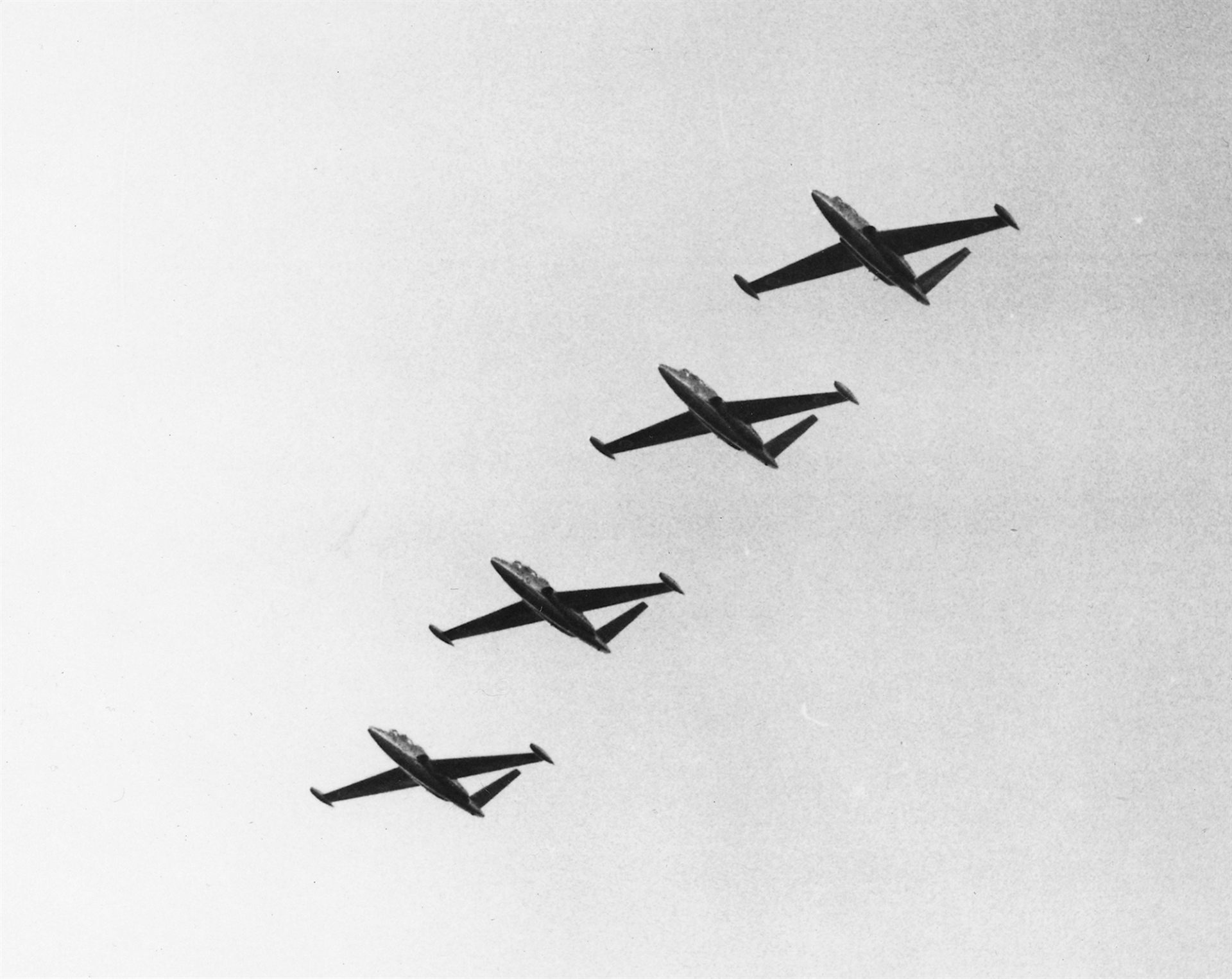
Pictured: Finnish Air Force Fouga CM.170 Magister jet trainers flying in formation, from the Finnish Aviation Museum's collection, dating to the same operational era as the Pori incident — not a photograph of the actual encounter. No photograph of the objects themselves, of Tukeva's specific aircraft in flight that day, or of the ground scene at Pori Airport during the sighting is known to survive; period Fouga Magister trainers were not equipped with gun cameras, and no ground witness is recorded as having photographed the objects.
Theoretical Alignment
Pori aligns moderately with a genuinely exotic-craft hypothesis: multiple credentialed military witnesses independently described structured, maneuvering objects that outperformed a jet trainer and reportedly held radar contact, criteria this catalogue weighs heavily. The alignment is capped well below the site's highest-scoring cases because no witness described occupants, a defined solid hull at close range, or any propulsion signature — only a formation of pale spheres that accelerated away. The low Psycho-Social figure reflects the unusually disciplined, multiply-corroborated nature of the report (trained pilots, ATC staff, and a flight controller all describing a consistent object set in real time) rather than a single startled individual's impression.
Background
Pori Airport, on Finland's southwestern coast in the historical province of Satakunta, has served both civilian and military aviation since the Second World War, when it hosted German Luftwaffe operations during the Continuation War. By 1969, in the middle of the Cold War, Finland maintained a policy of strict military neutrality (the "Paasikivi–Kekkonen line") under the terms of its 1948 treaty obligations with the Soviet Union, while continuing to operate its own small, professionally trained air force equipped in this period with French-designed Fouga CM.170 Magister jet trainers — a type Finland eventually built 62 of under license and flew for three decades, from 1958 to 1988, primarily for basic and advanced pilot instruction. April 12, 1969 was, by every account located for this file, an unremarkable training day: Finnish Defence Forces personnel were conducting a routine live gunnery and bombing-practice exercise from Pori Airport, with at least two Fouga Magisters airborne or preparing to fly, crewed by trainee pilots Tarmo Tukeva and Jouko Kuronen. Nothing in the surviving record suggests either man expected, or was primed to expect, anything unusual that day; the case's entire documentary basis is what each of them, plus an unnamed flight controller and an estimated 20 to 25 additional personnel on the ground, subsequently reported seeing and hearing within the space of a few minutes around midday.
Complete Timeline
| Date | Event |
|---|---|
| 1958–1988 | Finland operates the French-designed Fouga CM.170 Magister as its standard basic jet trainer, eventually building 62 of the 80 it flew under license. |
| April 12, 1969, around midday | A Finnish Defence Forces bombing/gunnery training exercise is underway at Pori Airport; trainee pilots Tarmo Tukeva and Jouko Kuronen are airborne or preparing to fly. |
| Same day | A flight controller spots seven pale-yellow, round objects hovering at an estimated 1,500–3,000 meters and radios Tukeva to break off and investigate. |
| Same day | Tukeva climbs toward the objects in his Fouga Magister; Kuronen, taxiing and preparing for an unrelated flight, independently observes the same objects and overhears the radio traffic. |
| Same day | As Tukeva closes to within visual range, unable to judge exact distance for lack of reference points, the seven objects abruptly organize into a formation and accelerate north at a speed Tukeva's 700 km/h jet cannot match, reportedly against or across winds near 100 knots (~185 km/h) at altitude. |
| Same day, roughly a minute later | Undetermined radar returns are separately reported approximately 200 kilometers north at Vaasa. |
| 1969 | The case receives limited domestic press attention as a curiosity; no independent Finnish government UFO-investigation body exists to formally open a file, unlike the contemporaneous U.S. Project Blue Book. |
| 1970 | Finnish UFO researcher Tapani Kuningas includes the Pori sighting in his survey Ufoja Suomen taivaalla ("UFOs in Finland's Sky"), one of the first published treatments of the case. |
| 1982 | Finnish public broadcaster Yle's 16-part radio documentary series Mystillistä, hosted by Eila Sandborg and Osmo Jokinen, devotes its second episode to the Pori case, featuring Kuronen and researcher Kuningas. |
| 1992 | Finnish filmmaker Juhan af Grann's internationally distributed documentary featuring Tukeva's own account of the pursuit is released; secondary sources describe the film receiving a UFO-festival honor in Las Vegas, though this file could not independently confirm that award through a primary source. |
| March 12, 2009 | Yle Uutiset publishes "Porin ufohavainto puhuttaa yhä" ("Pori's UFO sighting is still being talked about"), with Kuronen again publicly confirming the sighting's authenticity on the record. |
| May 8, 2012 | The Finnish Defence Forces' own in-house magazine, Ruotuväki, publishes a retrospective confirming the Pori case as the only UFO sighting the Finnish Air Force has ever officially acknowledged, widely reported the same day by Ilta-Sanomat and Uusi Suomi. |
| 2020s | The case remains a fixture of Finnish UFO literature and continues to be cited by the Finnish UFO Researchers Association (Suomen Ufotutkijat ry / FUFORA) as the country's single most credible documented encounter. |
The Alert: Seven Objects Over the Runway
By every account located for this file, the first person to notice anything unusual was the unnamed Finnish Defence Forces flight controller directing that day's bombing-practice exercise from the ground at Pori Airport. Looking up into a clear, sunny midday sky, the controller spotted seven pale, yellowish objects — described in the original radio call, according to at least one translated Finnish-language account, simply as "balloons" — hovering in a loose group at an altitude the controller estimated at roughly 1,500 to 3,000 meters, seemingly motionless above the airfield. Jouko Kuronen, a second trainee pilot who happened to be taxiing his own Fouga Magister in preparation for an unrelated cross-country navigation flight to Kuopio, has said in multiple later interviews that he personally overheard the controller's radio call and, repositioning his own aircraft for a better view, saw the same seven objects for himself directly from the ground before either jet had closed the distance. Kuronen's account is the case's single most important piece of independent corroboration: it establishes that at least two trained observers, one airborne and one on the ground, saw a consistent object set at the same moment, before Tarmo Tukeva's closer approach could have shaped or contaminated a shared description.
The controller radioed Tukeva, already airborne on his bombing-practice run, with an instruction to break off and investigate. Tukeva turned his Fouga Magister toward the objects and began climbing, and it was only as he closed the distance that his own account started to diverge from the initial "balloon" framing: to Tukeva, the objects looked less like simple gas-filled balloons and more like discrete, roughly spherical or disc-shaped bodies, pale yellow in color, arranged with what struck him as a deliberate, evenly spaced formation rather than the loose scatter one would expect of free-floating balloons drifting independently on the wind. Radioing back his own assessment, Tukeva reported, in a transmission later reconstructed by Finnish researchers and journalists rather than preserved as a verbatim recording, something close to: "They are standing still over this field — altitude approximately 1,500 to 3,000 meters — and there appear to be seven of them." Crucially, Tukeva was candid from the start about the limits of his own perception: with nothing else in the sky to use as a scale reference, he could not confidently judge either the objects' true size or his exact distance from them, a caveat every serious later treatment of the case, including this one, has preserved rather than smoothed over into false precision.
The Pursuit and the Instant Departure
As Tukeva's Fouga Magister — a subsonic jet trainer capable of roughly 700 km/h in level flight — continued climbing toward the object group, the seven bodies did something no ordinary balloon cluster should have been able to do: they broke their loose hovering arrangement and organized themselves into what Tukeva and later secondary accounts describe as a deliberate formation, then accelerated away to the north at a rate that instantly outran his aircraft. Multiple Finnish-language sources describe the flight controller narrating the departure over the radio in real time, telling Tukeva in words to the effect of "you won't catch them — they're disappearing into the northern sky," a live, contemporaneous account rather than a memory reconstructed only after the fact. Tukeva himself later summarized the moment starkly: despite his own jet closing at roughly 700 km/h, the departing objects made his aircraft feel as though it were standing still by comparison. Several accounts add a specific and, if accurate, significant detail: this acceleration occurred against, or at minimum unaffected by, reported winds near 100 knots (roughly 185 km/h) at the objects' operating altitude — a wind field strong enough that any genuine free-floating balloon should have been rapidly and visibly displaced by it well before Tukeva ever arrived on the scene, let alone capable of outrunning a jet after the fact.
No source located for this file describes Tukeva firing on, photographing, or making physical contact of any kind with the objects; his role throughout was strictly investigative, at the flight controller's direction, and ended the moment the objects were no longer visually trackable. The entire airborne portion of the encounter, from the initial radio call to the objects' disappearance to the north, appears from every account to have lasted only a few minutes.
The Vaasa Radar Returns: What the Record Actually Supports
The detail most often cited as clinching corroboration for the Pori case is also the detail this file must handle with the most care. According to multiple secondary sources, including the Finnish UFO Researchers Association's own English-language case summary, undetermined radar returns were reported approximately 200 kilometers north of Pori at Vaasa within roughly one minute of the objects' departure — a striking coincidence of both direction and timing, since Vaasa sits almost directly along the northward heading the objects were last seen taking. It is entirely reasonable to read this as strong circumstantial support for the reality of what Tukeva and Kuronen reported: an independent radar facility, staffed by personnel with no reason to coordinate a story with Pori, logged something unexplained in almost exactly the right place at almost exactly the right time.
What the documentary record does not support, and what this file will not overstate, is any claim that the Pori and Vaasa detections were formally cross-referenced into a single, continuous, verified track of the same seven objects. No source consulted for this file — not the Finnish or English Wikipedia summaries, not the Yle news coverage, not the Ruotuväki/Ilta-Sanomat/Uusi Suomi 2012 reporting, and not the Finnish UFO Researchers Association's own case file — describes air-traffic controllers at the two airfields comparing notes with each other in real time on April 12, 1969, or a subsequent joint military report reconciling the two radar logs into one confirmed plot. English-language secondary sources routinely compress this into language implying the objects were directly "tracked" from Pori to Vaasa; the primary Finnish reporting is more careful, describing the Vaasa detection as a separately reported, "undetermined" set of radar images rather than a confirmed handoff. Readers should treat the Vaasa returns exactly as the strongest available circumstantial evidence for the case's reality — consistent with, and unlikely to be coincidental alongside, the Pori sighting — without treating them as independently verified proof that the identical seven objects were mechanically tracked across 200 kilometers of Finnish airspace by two coordinated radar systems.
Silence, Then a Voice: 1969 to 2009
Unlike the American UFO wave of the same era, Finland in 1969 had no standing government body analogous to Project Blue Book tasked with formally investigating and adjudicating UFO reports, so the Pori sighting never generated an official case file in the sense that, for example, the Mantell or Gorman cases did within the U.S. Air Force bureaucracy. What documentation exists from the earliest period comes almost entirely from private Finnish UFO research: Tapani Kuningas, then a young researcher who would go on to co-found the Finnish UFO Researchers Association (Suomen Ufotutkijat ry) and edit its Ultra magazine, included the case in his 1970 survey Ufoja Suomen taivaalla, gathering it alongside roughly seventy other Finnish sightings using a standardized report form within a year of the event. The case resurfaced in 1982 on Finnish public broadcaster Yle's radio documentary series Mystillistä, whose second of sixteen episodes was devoted to Pori, featuring an interview with Jouko Kuronen alongside Kuningas. A decade later, filmmaker Juhan af Grann's 1992 internationally distributed UFO documentary carried Tarmo Tukeva's own account of the chase to an audience well beyond Finland's borders, well before the internet made such cases easy to cross-reference. Through all of this, the case remained a matter of private research and broadcast journalism rather than anything resembling institutional acknowledgment — a status that would not change for another two decades.
Breaking the Institutional Silence: 2009 and 2012
The turning point for Pori's official status came in two stages. On March 12, 2009, Yle Uutiset published "Porin ufohavainto puhuttaa yhä" ("Pori's UFO sighting is still being talked about"), in which Jouko Kuronen — by then a retired officer who had gone on to command Lappeenranta Air Base — once again confirmed the essential facts of the sighting on the record, decades after the event and with nothing to gain from maintaining or embellishing a story if it were untrue. Kuronen's own summary of his position has remained consistent across every interview located for this file: he does not offer an explanation for what he and Tukeva saw, and says plainly that he doubts anyone ever will, while being equally clear that he stands by the reality of the observation itself.
The more significant development came three years later. On May 8, 2012, Ruotuväki — the official in-house magazine published by and for the Finnish Defence Forces, not an independent tabloid or a fringe UFO outlet — ran a retrospective feature on the case, reported the same day by both Ilta-Sanomat ("Ruotuväki: Ilmavoimien lentäjät tekivät merkittävän ufo-havainnon 60-luvulla," "Ruotuväki: Air Force pilots made a significant UFO sighting in the 60s") and Uusi Suomi ("Ruotuväki: Kaksi ilmavoimien lentäjää kohtasi 7 tulipalloa taivaalla," "Ruotuväki: Two Air Force pilots encountered 7 fireballs in the sky"). The substance of the reporting has been repeated consistently across every subsequent Finnish- and English-language source located for this file: Pori is the only UFO sighting whose authenticity the Finnish Air Force has ever officially acknowledged. It is worth being precise about what that acknowledgment actually is and is not. It is not a formal government determination that the objects were extraterrestrial, and it is not an open investigative file with continuing resources behind it — Finland still has no standing UFO-investigation office comparable to France's GEIPAN or the United States' AARO. What it is, per Ruotuväki's own reporting, is an institutional concession that two of the Air Force's own trained pilots, its own flight-control staff, and its own radar equipment recorded something genuine and still unexplained, rather than a fabrication, a hoax, or a simple misidentification the Air Force felt comfortable closing the file on. Ruotuväki's own proposed candidate explanation, discussed in detail in the Conventional Explanation Candidate section below, leaned toward foreign reconnaissance aircraft rather than any exotic origin — but the magazine notably did not reach for the case's own folk name and suggest ordinary weather balloons, a mundane explanation the objects' recorded behavior had already made difficult to sustain.
A small number of secondary UFO-interest sources add two further claims worth recording here with appropriate caution, since neither could be independently corroborated through a primary Finnish source for this file. One account, published by the paranormal-interest outlet Anomalien.com and citing the Finnish UFO Researchers Association as its own source, states that the Finnish Air Force confirmed the case in writing via an official letter, signed by an information chief, stating that the seven objects "were never explained in any normal way." The same account additionally states that Tukeva died of a heart attack roughly two weeks after publicly discussing the case. This file has not been able to independently verify either the specific letter or the circumstances or timing of Tukeva's death through a primary Finnish news or genealogical source, and readers should weigh both claims as unverified secondary reporting rather than established fact, alongside everything else in this case that rests on secondary Finnish- and English-language sourcing rather than a preserved primary document.
The "Seven Balloons" Name — And Why the Objects Were Almost Certainly Not Balloons
The case's enduring Finnish nickname, Porin seitsemän ilmapalloa ("The Seven Balloons of Pori"), is one of the more misleading case names in this catalogue, and untangling where it came from is itself informative. The word "balloons" appears to originate not from any considered scientific assessment but from the flight controller's own first, off-the-cuff description of seven round objects seen at a distance — a natural, everyday word for "large, pale, round things hanging in the sky" radioed to Tukeva before anyone had taken a closer look. Once Tukeva actually closed the distance, his own on-the-record description shifted to "ball- or disc-shaped objects," a more neutral morphological description that stops short of committing to any specific material or means of flotation. The behavior that followed — a coordinated shift into formation and an acceleration to a speed that outran a 700 km/h jet, reportedly against or unaffected by winds near 185 km/h at altitude — is not behavior any known balloon, weather or otherwise, is physically capable of. A free gas balloon has no means of self-propelled acceleration and cannot organize into formation with six others on cue; it drifts passively with the wind field it is embedded in, and a wind that strong at that altitude would have visibly displaced genuine balloons well before Tukeva's jet ever arrived. Ruotuväki's own 2012 institutional retrospective implicitly acknowledged as much: rather than endorsing the folk name, the Finnish Defence Forces' preferred candidate explanation was foreign reconnaissance aircraft, not balloons of any kind. The name has simply outlived the explanation it once implied, surviving as a colloquial label the way "flying saucer" survives in English long after most reports involve no saucer shape at all.
Kuronen's Later Career and the Weight of a Consistent Witness
Jouko Kuronen's trajectory after 1969 is one of the more unusual features of this case within the broader UFO literature: witnesses to famous sightings do not typically go on to hold senior command positions within the same military that, decades later, would publicly confirm their story. Kuronen's rise to command Lappeenranta Air Base gave him both institutional standing and, presumably, exactly the kind of professional exposure that would make an officer cautious about repeating an unverifiable, career-adjacent claim in public more than once. He did so at least three times across four decades — in the 1982 Mystillistä radio interview, again for Yle in 2009, and implicitly once more through the 2012 Ruotuväki feature that drew on Air Force records touching his and Tukeva's original statements — with a notably consistent core account each time and no discernible embellishment of the kind that crept into some other Cold War-era cases over similar timeframes. Kuronen's own final word on the matter, offered in the 2009 Yle interview, has been widely quoted since: he cannot explain what he saw, and doubts anyone ever fully will, but has never wavered on the reality of the sighting itself.
Key Researchers
- Tapani Kuningas (1945–2009) — Founding chairman of the Finnish UFO Researchers Association (Suomen Ufotutkijat ry) and editor-in-chief of Ultra magazine, who included Pori in his 1970 survey Ufoja Suomen taivaalla within a year of the sighting and discussed it again on Yle's 1982 Mystillistä radio documentary.
- Juhan af Grann (1944–2023) — Finnish film director whose internationally distributed 1992 UFO documentary carried Tarmo Tukeva's own account of the pursuit beyond Finland's borders.
- Teemu Kammonen — Journalist whose May 8, 2012 Uusi Suomi report on the Ruotuväki feature brought the Finnish Air Force's official acknowledgment of the case to a wider national audience.
- Suomen Ufotutkijat ry (FUFORA, the Finnish UFO Researchers Association) — The country's principal UFO research organization, which continues to characterize Pori in its own published case summaries as one of Finland's most credible documented encounters.
Key Witnesses
Tarmo Tukeva
Flying a Fouga Magister jet trainer on a bombing-practice sortie, Tukeva was radioed by a flight controller and directed to investigate seven objects hovering over Pori Airport. Closing to visual range, he described the objects as pale yellow and ball- or disc-shaped, candidly noted he had no reference points to judge their exact size or distance, and watched them accelerate to a speed his 700 km/h jet could not match. He later recounted the encounter publicly, including in a 1992 internationally distributed documentary.
Jouko Kuronen
A second trainee pilot preparing for an unrelated navigation flight, Kuronen overheard the flight controller's radio traffic and independently observed the same seven objects from the ground before Tukeva's jet closed the distance. He went on to a career culminating in command of Lappeenranta Air Base and has repeatedly and consistently confirmed the sighting on the record across four decades, most notably in a 2009 Yle interview, while maintaining that he cannot explain what he saw.
Unnamed Flight Controller
The first person to spot the objects, this controller radioed Tukeva to break off his training run and investigate, then narrated the objects' formation and high-speed departure over the radio in real time. No source located for this file preserves his name, a genuine gap in the public record rather than an omission by this catalogue.
Pori Airport Ground Personnel (~20–25 witnesses)
Secondary Finnish-language accounts, including the Finnish UFO Researchers Association's own case summary, describe an estimated twenty to twenty-five additional military personnel present at Pori Airport during the training exercise who also observed the object group, in addition to Tukeva, Kuronen, and the flight controller. None are individually named in any source consulted for this file.
Tapani Kuningas
Not a witness to the sighting itself, but the researcher most responsible for its early documentation, Kuningas included Pori in his 1970 survey Ufoja Suomen taivaalla within a year of the event and discussed the case again on Yle's 1982 Mystillistä radio documentary. His early involvement is a large part of why the case has a documented paper trail predating the Finnish Air Force's own 2012 acknowledgment.
The Five Observables Assessment
The Five Observables framework, developed by former AATIP director Luis Elizondo, is used to classify UAP encounters by performance characteristics exceeding known technology of their era. Applied to Pori, the framework returns a genuinely mixed result:
Assessment: Anti-Gravity Lift is rated speculative: no witness described any visible means of support or propulsion, yet the objects held a stationary hover in a wind field strong enough to displace a genuine balloon, which is itself an open question this file cannot resolve either way. Instant Acceleration is rated present, the case's strongest observable: multiple independent witnesses, including a trained jet pilot mid-pursuit, agreed the objects went from a stationary hover to outrunning a 700 km/h aircraft within moments. Hypersonic Velocity is rated speculative rather than present because no instrument on either aircraft or on the ground produced a measured speed figure — only Tukeva's relative impression that his own jet seemed to stand still by comparison, which implies a high but not necessarily hypersonic true airspeed. Low Observability is rated absent: the objects were plainly visible in clear daylight to an estimated 20-plus witnesses over several minutes, the opposite of a stealthy signature. Trans-Medium travel is rated absent; despite Pori's coastal location, no transition between air and water, or any other medium, was ever reported.
Evidence Assessment
Supporting Anomalous Origin
- Two independent, trained military pilots — one airborne, one on the ground — described a consistent object set, with Kuronen's ground observation occurring before Tukeva's closer approach could have shaped a shared account.
- An on-duty flight controller narrated the objects' formation and high-speed departure over the radio in real time, not as a memory reconstructed after the fact.
- The objects' reported acceleration to outrun a 700 km/h jet, against or unaffected by winds near 185 km/h at altitude, is not behavior any known balloon can produce, and no aircraft of the era is documented as capable of that same instant transition from a silent stationary hover.
- Undetermined radar returns reported roughly 200 kilometers north at Vaasa within about a minute of the objects' departure form a striking, if not formally verified, temporal and directional coincidence.
- The Finnish Defence Forces' own in-house magazine publicly confirmed in 2012 that this is the only UFO sighting the Finnish Air Force has ever officially treated as authentic and unexplained — an institutional admission with no obvious motive to fabricate.
Supporting Conventional Explanation
- No photograph, film, radarscope printout, or any other instrumented data product from the sighting is known to survive; the entire case rests on personnel statements rather than preserved physical or recorded evidence.
- The flight controller who first spotted the objects and directed the intercept remains unidentified in every source located for this file, leaving a real gap in the credentialing of the case's single most consequential witness.
- The Pori and Vaasa radar detections have never been shown, in any source located for this file, to have been formally cross-referenced into one confirmed track; the correlation remains circumstantial rather than proven.
- The Finnish Air Force's own preferred explanation, per Ruotuväki's 2012 reporting, leans toward foreign reconnaissance aircraft rather than any exotic origin — a mundane candidate the case's parent institution itself has never ruled out.
- Tukeva's own inability to judge the objects' size or distance for lack of reference points leaves the case's core performance claims — how large, how far, how fast in absolute terms — resting on inference rather than measurement.
Why "Credible"
This file rates Pori CREDIBLE rather than "Verified" or "Disputed" because its corroboration is genuinely stronger than a single-witness account while stopping well short of the instrumented, cross-confirmed proof "Verified" would require anywhere on this site. What favors credibility: two trained military pilots, one airborne and one independently on the ground, gave consistent accounts of an object set performing behavior — a stationary hover against a strong wind, followed by coordinated formation flight and an acceleration that outran a 700 km/h jet — that no balloon and no aircraft of the era is documented as capable of; an on-duty flight controller narrated the event over the radio in real time rather than reconstructing it afterward; both Pori's own radar and, independently, undetermined returns at Vaasa some 200 kilometers away logged something at almost exactly the right place and time; and, most unusually for any case in this catalogue, the sighting's parent institution — the Finnish Defence Forces itself, through its own in-house magazine — has publicly confirmed the sighting's authenticity as its only officially acknowledged UFO case, a form of institutional corroboration this site has almost nowhere else to compare it against. What keeps the file below "Verified": no photograph, radarscope printout, or other physical data product survives; the flight controller, the case's most operationally significant witness, remains unnamed in every source located for this research; the Pori-to-Vaasa radar correlation, while suggestive, has never been documented as a single formally cross-referenced track rather than two separately reported detections; and the Finnish Air Force's own preferred mundane explanation — foreign reconnaissance aircraft, addressed in full below — remains a live, unresolved possibility that the institution acknowledging the case has itself never ruled out. A case this consistently corroborated by credentialed, on-duty witnesses and this unusually endorsed by its own parent military institution, yet still missing every piece of preserved physical or instrumented proof, is exactly the profile "Credible" exists to describe on this site.
Sensor & Instrumentation Detection Profile
Pori is one of relatively few Cold War-era European military cases to combine an airborne visual pursuit with contemporaneous radar contact, though the instrumentation record is thinner than it first appears. Jouko Kuronen and later secondary accounts describe the objects as tracked by Pori airfield's own ground-control radar during the sighting, and at least one account additionally references onboard radar aboard Kuronen's own Fouga Magister, though Finnish-language secondary sources are not fully consistent on whether this was airfield radar, aircraft radar, or both operating together. No radarscope photograph, printed track, or raw plot from either system is known to have survived or been published; the record rests entirely on after-the-fact personnel statements rather than a preserved instrumented data product. Separately, and this is the detail requiring the most caution, undetermined radar returns were reported roughly 200 kilometers north at Vaasa within about a minute of the Pori objects departing north — a striking temporal and directional coincidence, but not, on the documentary record located for this file, a confirmed single continuous track reconciled between the two independently staffed radar facilities. No source consulted for this file describes Pori and Vaasa controllers cross-checking scope data with each other in real time, nor a subsequent joint report merging the two logs. The honest reading is that Vaasa's returns are suggestive corroboration of direction and timing, not proof that the same seven objects were continuously tracked across 200 kilometers of Finnish airspace.
Environmental & Geospatial Context
April 12, 1969 was clear and sunny over southwestern Finland, with light winds at the surface — conditions good enough for unobstructed daylight observation by the estimated 20 to 25 personnel present at Pori Airport for the training exercise. The meteorological detail that matters most to this case sits higher up: multiple accounts describe strong winds, variously reported as exceeding 100 knots or specifically near 185 km/h, at the 3,000-meter altitude band where the objects were reportedly holding position. That figure is directly relevant to every conventional-balloon theory examined later in this file, since a free-floating balloon at that altitude in that wind field would be expected to drift rapidly downwind rather than hold a stationary hovering position relative to the ground, and could not plausibly then accelerate to outrun a 700 km/h jet moving against or across that same wind. Geospatially, Pori sits on Finland's southwestern coast facing the Gulf of Bothnia, roughly 200 kilometers south of Vaasa, itself on the same coastline further north — a stretch of airspace that, during the Cold War, sat inside Finland's officially neutral but closely monitored buffer between NATO Norway/Sweden and the Soviet Union, a detail directly relevant to the reconnaissance-aircraft theory discussed below.
Observer Credibility & Occupational Profile
Every named and unnamed witness in the Pori case was, at the moment of the sighting, an active-duty or trainee member of the Finnish Defence Forces performing an assigned duty — there is no civilian witness pool to weigh separately, which narrows the case's total corroboration compared to something like the Washington, D.C. flap but concentrates it among observers with direct aviation training. Tarmo Tukeva, the primary airborne witness, was a trainee combat pilot already qualified to fly solo bombing-practice sorties in a jet trainer, giving his in-flight description of the objects' relative motion and his own aircraft's inability to close the distance real technical weight; a pilot in that position is precisely the kind of witness this catalogue treats as highly credible on questions of relative speed and performance, even when he is candid, as Tukeva was, about being unable to judge the objects' absolute size or distance for lack of reference points. Jouko Kuronen, the second pilot, observed independently from the ground and cockpit while preparing for an unrelated flight, then went on to a career culminating in command of Lappeenranta Air Base — a career trajectory that gives his repeated, decades-later public confirmations of the sighting (in 1982, 2009, and again around 2012) unusual institutional standing for a UFO witness. The unnamed flight controller who first spotted the objects, directed Tukeva's intercept, and narrated the chase over the radio was performing an official air-traffic-control function in real time, not recalling a private sighting after the fact, and the additional 20 to 25 personnel reportedly present lend numerical weight even though none are individually named in any source located for this file — a genuine gap in the documentary record, not a case built on a handful of loosely corroborated accounts.
Physical & Material Assays
No physical evidence connected to the objects themselves was ever recovered, and none is claimed in any source consulted for this file — nothing fell, landed, or left a trace, consistent with an object set that departed under its own power rather than crashing or being brought down. No photograph or film of the objects is known to survive: 1969-era Fouga Magister trainers of the type Tukeva flew were not fitted with gun cameras for a training sortie of this kind, and no ground witness is recorded as having had a camera in hand. The only physical objects connected to the case at all are the aircraft themselves and the airfield's own radar equipment, neither of which produced any physical trace evidence beyond the personnel statements already described in the Sensor & Instrumentation section above.
Historical Precedents & Archive Matches
Pori sits within a well-documented pattern of Cold War-era jet-pursuit and radar-visual UFO cases on both sides of the Iron Curtain, and this file's Related Cases section below draws several direct parallels: the 1948 Gorman Dogfight over Fargo, North Dakota, in which a National Guard pilot pursued a maneuvering light that outperformed his fighter; the 1976 Tehran UFO Incident, in which Iranian Air Force F-4 Phantoms lost weapons and instrument systems while closing on a radar-visual target; and the 1989–1991 Belgian UFO Wave, in which Belgian Air Force F-16s were scrambled against radar-confirmed triangular objects over NATO airspace. What distinguishes Pori within that pattern is its institutional aftermath: unlike Gorman, Tehran, or the Belgian Wave, none of which their respective air forces have ever formally and publicly certified as an authentic, unexplained sighting in an official publication, the Finnish Air Force did exactly that through its own in-house magazine, Ruotuväki, decades later — making Pori a useful comparison point for how differently otherwise structurally similar Cold War military UFO cases have been treated by their parent institutions. Within Finland specifically, Pori is also the case most frequently cited by Tapani Kuningas and the Finnish UFO Researchers Association (Suomen Ufotutkijat ry, later branded FUFORA) as the country's single best-documented encounter, discussed in Kuningas's 1970 survey Ufoja Suomen taivaalla within a year of the sighting itself.
Material Analysis
The Pori case has no physical or material evidence to analyze, and no source consulted for this file claims otherwise. Nothing fell, landed, or was recovered from the object group; there is no debris, no soil anomaly, no radiological reading, and no metallurgical or isotopic assay of any kind connected to the sighting. The only physical objects directly involved were the two Fouga Magister jet trainers and the ground-based radar equipment at Pori Airport, and neither aircraft is reported to have suffered any electromagnetic interference, engine anomaly, or instrument malfunction of the kind documented in cases like the 1976 Tehran UFO Incident. This absence cuts in both directions for assessing the case: it removes an entire category of physical-evidence corroboration this catalogue weighs heavily in cases like the crash-retrieval files, but it is also fully consistent with an object set that departed the area under its own apparent power rather than crashing, malfunctioning, or leaving any trace behind — exactly what a genuinely controlled craft, rather than an inert balloon or a damaged aircraft, would be expected to do.
Supporting a Genuinely Unusual Stimulus
- The absence of debris or wreckage is consistent with an object set that left the area under controlled power rather than crashing or being brought down, unlike cases where a mundane object (a balloon, a damaged aircraft) is later recovered.
- No electromagnetic interference or instrument malfunction aboard Tukeva's aircraft is reported, meaning nothing in the material record contradicts his account, even though nothing directly proves it either.
Supporting a Mundane, Undocumented Origin
- The total absence of any photograph, radar printout, or physical trace means the case cannot be independently forensically verified by this or any other researcher today; every conclusion rests on secondhand personnel statements.
- An undocumented foreign reconnaissance aircraft or balloon-borne sensor package, if genuinely present in Finnish airspace during a Cold War military exercise, would also be expected to leave no recoverable physical trace once it departed the area, making the absence of evidence equally consistent with a mundane military overflight.
The Conventional Explanation Candidate: Foreign Reconnaissance Aircraft
The explanation the Finnish Defence Forces itself has floated, per Ruotuväki's 2012 reporting, is that the Pori objects and similar reports elsewhere in Finland "may have been due to transnational spy planes or aircraft" — foreign reconnaissance overflights rather than anything exotic. This candidate deserves serious weight precisely because it comes from the institution with the most complete access to Finland's own Cold War-era airspace-monitoring and intelligence records, and because the geopolitical context genuinely supports it: Finland in 1969 occupied a sensitive strip of officially neutral airspace directly between NATO Norway and Sweden to the west and the Soviet Union to the east, precisely the kind of corridor where both NATO and Warsaw Pact reconnaissance assets are documented to have operated with some regularity during this period, testing Finnish air defenses and radar coverage without provoking the direct confrontation an overflight of Soviet or NATO territory proper would have risked. Ruotuväki's own note that comparable Finnish sightings tended to cluster over bodies of water during active military exercises is consistent with a foreign asset timing its activity to coincide with, and be partially obscured by, Finland's own scheduled training operations.
Where the Reconnaissance-Aircraft Theory Falls Short
No specific aircraft type, operator nation, or documented sortie has ever been publicly identified as responsible, by the Finnish Defence Forces or by any researcher whose work this file located — the theory remains a plausible institutional hypothesis rather than a confirmed identification, exactly as Ruotuväki's own hedged "may have been" language suggests. More fundamentally, the theory struggles against the specific performance details in Tukeva's and Kuronen's accounts: a formation of seven distinct objects transitioning from a silent, stationary hover directly into an instant, coordinated high-speed departure is not flight behavior any single reconnaissance aircraft, manned or unmanned, of 1969-era design is documented as capable of, and no source describes anything resembling a conventional aircraft silhouette, engine noise, or contrail among the seven objects at any point in the encounter.
Weather Balloons (the Case's Own Folk Name)
Despite giving the case its enduring nickname, ordinary weather or research balloons are, on the evidence in this file, the weakest of the three candidates rather than the strongest. As detailed in the dedicated section above, a passive balloon has no means of coordinated formation movement or self-propelled acceleration, and the reported wind conditions at the objects' operating altitude — near 100 knots, roughly 185 km/h — should have visibly displaced any genuine balloon cluster well before Tukeva's jet arrived, let alone permitted it to then outrun a 700 km/h aircraft. Even Ruotuväki's own 2012 institutional retrospective did not reach for this explanation, instead pointing toward reconnaissance aircraft — a telling signal from the one party with the closest access to the original 1969 investigative record.
Optical or Radar Artifact / Temperature Inversion
A third, more general candidate proposes that some combination of an atmospheric optical effect and a radar artifact — a temperature inversion producing anomalous propagation or a mirage-like effect over the Gulf of Bothnia's coastal waters, compounded by a coincidental, unrelated radar anomaly at Vaasa roughly one minute later — could account for the sighting without requiring any physical object at all. This candidate is the least well-supported of the three: it requires treating two trained pilots' consistent visual descriptions of seven discrete, formation-flying bodies as a shared optical illusion, offers no mechanism by which an atmospheric artifact would appear to "accelerate" and depart on a specific compass heading, and does not explain the flight controller's real-time radio narration of the objects' departure as though tracking a genuine, moving target. No source consulted for this file has seriously advanced this explanation as more than a generic possibility.
Foreign Reconnaissance Aircraft
InconclusiveThe Finnish Defence Forces' own preferred candidate, geopolitically plausible, but never matched to a specific identified aircraft or sortie.
Weather Balloons
ImplausibleThe case's own folk name, but contradicted by the objects' reported behavior against strong high-altitude winds.
Optical or Radar Artifact
ImplausibleUnsupported by any source and inconsistent with the consistent multi-witness visual description.
Related Cases
Confirmed Documents & Official Records
Contemporary news coverage of the Finnish Defence Forces' own in-house magazine Ruotuväki confirming the Pori case as the only UFO sighting the Finnish Air Force has ever officially acknowledged as authentic.
UNCLASSIFIED — Public Institutional PublicationFinland's national public broadcaster's news report featuring on-the-record confirmation of the sighting from witness Jouko Kuronen, forty years after the event.
UNCLASSIFIED — Public Broadcast ArchiveYle's permanent Living Archive feature on the case, drawing on the 1982 Mystillistä radio documentary and subsequent reporting.
UNCLASSIFIED — Public Broadcast ArchiveSearch Government & Archival Sources Directly
Further Reading — Recommended Literature
The UFO Encyclopedia, 4th Edition
The definitive global UFO reference work, useful for situating a single-nation case like Pori within the wider pattern of Cold War-era military radar-visual encounters catalogued worldwide.
Above Top Secret: The Worldwide U.F.O. Cover-Up
A wide-ranging survey of international military UFO encounters and official government responses, useful context for evaluating how differently, or similarly, national air forces have handled cases like Pori.
UFOs: Generals, Pilots, and Government Officials Go on the Record
A journalistic compilation of firsthand pilot and military testimony from multiple countries, directly relevant to a case built almost entirely on the credibility of two trained air force pilots.
Dimensions: A Casebook of Alien Contact
Vallée's international casebook approach, examining sightings and their cultural treatment across many countries, offers a useful comparative framework for a case whose official Finnish institutional acknowledgment is unusual within the wider UFO literature.
Northern Lights: High Strangeness in Sweden
Though focused on Sweden rather than Finland, this is one of the only English-language deep dives into the same Cold War-era Nordic pattern of military-adjacent UFO encounters that Pori exemplifies, useful regional context for readers without access to Finnish-language sources.
Essential Viewing
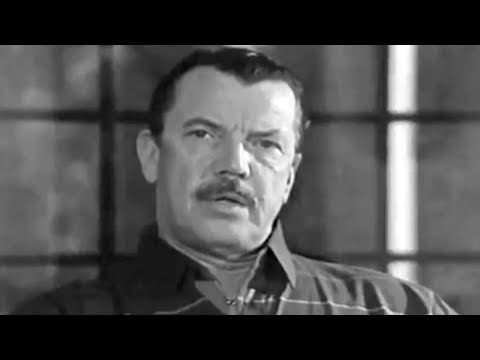
Pilot Tarmo Tukeva talks about the 1969 UFO sighting in Pori, Finland
Archival footage of Tukeva himself describing the pursuit, hosted by Eyes On Cinema, a channel this site's editorial standards treat as a reliable source for period UFO-witness footage.
Porin UfO tapaus
A Finnish-language case summary devoted specifically to the Pori sighting, for readers wanting the domestic Finnish framing of the story alongside this file's English-language treatment.
UFO CASE That Was Confirmed by FINNISH AIR FORCE (1969)
A case-specific overview of the Pori sighting and the Finnish Air Force's official acknowledgment, covering the same core narrative documented in this file.
Sources
- "Finnish Air Force UFO sighting," Wikipedia (English). en.wikipedia.org
- "Porin seitsemän ilmapalloa," Wikipedia (Finnish). fi.wikipedia.org
- Yle Uutiset. "Porin ufohavainto puhuttaa yhä," March 12, 2009. yle.fi
- Yle Elävä Arkisto. "Porin taivaalla nähtiin 1960-luvulla Suomen ainoa ufo-tapaus, jonka todenperäisyyden ilmavoimat on myöntänyt." yle.fi
- Kammonen, Teemu. "Ruotuväki: Kaksi ilmavoimien lentäjää kohtasi 7 tulipalloa taivaalla," Uusi Suomi, May 8, 2012. uusisuomi.fi
- Ilta-Sanomat. "Ruotuväki: Ilmavoimien lentäjät tekivät merkittävän ufo-havainnon 60-luvulla," May 8, 2012. is.fi
- Eksopolitiikka.fi. "Porin seitsemän ilmapalloa 12.4.1969." eksopolitiikka.fi
- Findance.com. "Suomessa on vain yksi virallisesti tunnustettu UFO-havainto — ilmavoimat havaitsivat uskomattoman ilmiön," December 13, 2019. findance.com
- Suomen Ufotutkijat ry (FUFORA). "The Seven Balloons of Pori," Some Significant Finnish UFO Cases. fufora.fi
- HandWiki. "Finnish Air Force UFO sighting" (mirror). handwiki.org
- The UFO Database. "Tarmo Tukeva." theufodatabase.com
- Anomalien.com. "Most Well-Known Finnish UFO Cases," May 20, 2015. anomalien.com
- NoManZone.com. "UFO Sightings in Finland," February 26, 2025. nomanzone.com
- Gomez, Cristina. "Government Archives Reveal Nordic UFO Encounters," Medium. medium.com
- Gomez, Cristina. "Finnish Pilots Say UFOs Are Real. Radar Data Finally Proves They're Right," Medium (mirrored at UFO News). ufonews.co
- "Fouga CM.170 Magister," Wikipedia. en.wikipedia.org
- "Pori Airport," Wikipedia. en.wikipedia.org
- "Vaasa Airport," Wikipedia. en.wikipedia.org
- "Juhan af Grann," Wikipedia. en.wikipedia.org
- "Tapani Kuningas," Wikipedia (Finnish). fi.wikipedia.org
- Wikimedia Commons. "Fouga CM-170 Magisters flying in a formation," Finnish Aviation Museum collection, CC BY 2.0. commons.wikimedia.org
- Kuningas, Tapani. Ufoja Suomen taivaalla, Kustannus Oy Rajatieto, 1970.
See something inaccurate? Have additional information or sources?
Suggest an Edit →Last Updated: August 2026