
Project Condign Summary
This case file investigates a document, not a sighting. Between 1996 and December 2000, the UK Ministry of Defence's Defence Intelligence Staff secretly commissioned a single classified study — codenamed Project Condign and formally titled Unidentified Aerial Phenomena in the UK Air Defence Region — to determine whether three decades of accumulated British UAP reports held any value to defence intelligence. Marked Secret UK Eyes Only and kept from public view for six years, the roughly 460-page, four-volume report concluded that the existence of UAP displaying performance "well beyond" any known aircraft was "indisputable," yet attributed the overwhelming majority of unexplained sightings to a poorly understood natural phenomenon it called "buoyant plasma formations." Its author was never named in the report itself, and the Ministry of Defence went to considerable lengths over the following two decades to keep that identity out of print. Declassified in redacted form in 2006 after a Freedom of Information fight, partially re-redacted for another twelve years, and only substantially un-redacted in mid-2026, Condign now sits at the center of a genuine three-way argument: mainstream physicists who consider its plasma explanation scientifically unvalidated, ufologists who believe it dismissed a residue of genuinely anomalous cases, and its own chief FOI campaigner, who has separately concluded the report's real institutional purpose may have been to justify shutting down British government UAP monitoring altogether.
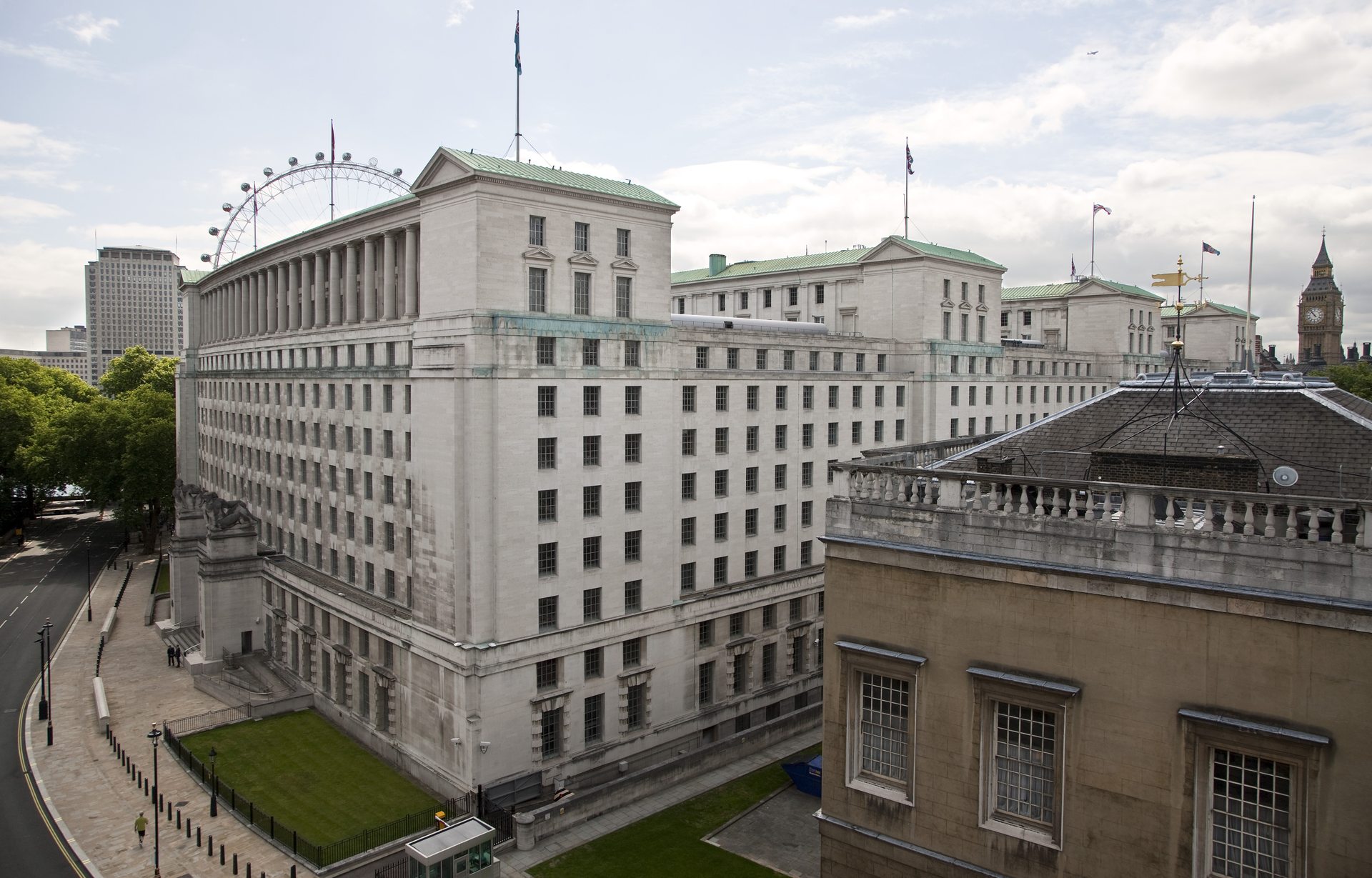
Pictured: the Ministry of Defence Main Building on Whitehall, London — the seat of the department whose Defence Intelligence Staff commissioned, housed, and ultimately acted on Project Condign, not the report itself or its still-anonymous author. No public-domain or rights-clear photograph of the report's own cover page, of the DI55 offices where it was drafted, or of the man widely reported to have written it is known to exist; the MoD has never released an official portrait of him, and he has consistently declined to be photographed or interviewed on the subject.
Theoretical Alignment
Project Condign is a rare case file on this site whose own conclusions actively argue against the Extraterrestrial Hypothesis for the large majority of the reports it reviewed, while stopping well short of a purely psychological dismissal. Its author explicitly frames the residual, unexplained category as a natural-but-poorly-understood atmospheric physics problem — "buoyant plasma formations" analogous to ball lightning — rather than as either alien technology or simple misperception. That framing places the report itself closest to a Natural Phenomenon / Psycho-Social hybrid position on this site's theoretical spectrum, even though the underlying UAP reports it reviewed span the full range of hypotheses ufologists have proposed elsewhere. Both extraterrestrial-hypothesis proponents and mainstream atmospheric physicists have separately rejected the plasma explanation as inadequate on its own terms, for different and sometimes opposite reasons detailed later in this case file.
Background
Britain's engagement with the UFO question long predates Project Condign. The Air Ministry established the Flying Saucer Working Party in 1950 to assess the small but growing number of sighting reports reaching the government, producing a brief, dismissive report that nonetheless found its way to Winston Churchill's desk after he personally inquired about the subject following the 1952 Washington flap. Public and press interest never fully subsided, and by the late 1960s the Ministry of Defence had formalized a standing intelligence function — the branch that became known as DI55, part of the Directorate of Scientific and Technical Intelligence within the Defence Intelligence Staff — tasked with logging sighting reports as they arrived, chiefly to rule out genuine defence concerns (foreign incursions, novel adversary technology) rather than to resolve the phenomenon itself. This intelligence function operated in parallel with, and largely separate from, a public-facing "UFO desk" within the MoD's Secretariat branch that handled correspondence with members of the public and the press — the post Nick Pope held from 1991 to 1994, and which later became closely associated in popular reporting with "the MoD's UFO man," despite never having DI55's actual intelligence access or mandate.
By the mid-1990s, several high-profile British cases — above all the December 1980 Rendlesham Forest incident, whose existence had become widely known through investigative journalism and FOI-adjacent leaks well before any formal MoD release — combined with sustained tabloid press interest to put real pressure on the department to explain what, if anything, its files actually contained. Against that backdrop, a 1996 internal MoD policy review examined how UAP sighting reports were being handled and concluded that DI55's decades of accumulated data had never been the subject of any dedicated analytical study — only routine logging. The review recommended commissioning exactly such a study, with two explicit aims stated in the report's own executive summary: first, to determine whether the accumulated reports revealed any evidence of a genuine threat to UK airspace; and second, should the opportunity arise, to identify any potential military technologies of intelligence interest. DI55 selected a single outside consultant — regarded within the branch as the closest thing it had to an in-house UAP expert — to conduct the study, granting that individual privileged access to the full DI55 archive. That consultant began work in 1996 and delivered the completed four-volume report in December 2000, a four-year undertaking conducted almost entirely by one person.
Complete Timeline
| Date | Event |
|---|---|
| 1950 | The Air Ministry's Flying Saucer Working Party is established; its findings are later briefed to Prime Minister Winston Churchill. |
| 1967 | The Ministry of Defence's Defence Intelligence Staff begins formally and continuously logging UAP sighting reports through the branch that becomes known as DI55. |
| 1977 | The RAF Boulmer radar-visual sighting is logged in the DI55 archive Condign would later review. |
| December 1980 | The Rendlesham Forest incident occurs; the resulting Halt memo becomes one of the most cited documents in DI55's files. |
| 1991–1994 | Nick Pope staffs the MoD's separate, public-facing UFO desk — a role distinct from DI55's intelligence function, but often conflated with it in later press coverage. |
| 1996 | An internal MoD policy review concludes DI55's accumulated UAP archive has never been analytically studied and recommends commissioning a dedicated assessment; DI55 selects a single outside consultant, widely reported to be Ron Haddow, to conduct it. |
| April 16, 1998 | The report's author writes an internal memo stating he is "particularly looking ahead" to his "expected recommendation" that DI55 be removed from UAP monitoring — more than two years before the study's stated completion date. |
| December 2000 | The completed four-volume, approximately 460-page report, Unidentified Aerial Phenomena in the UK Air Defence Region, is delivered to DI55 under the classification Secret — UK Eyes Only. |
| c. 2000–2001 | DI55 quietly ceases dedicated UAP monitoring in line with the report's central recommendation, though the separate public UFO desk continues operating. |
| September 2005 | Researchers David Clarke and Gary Anthony file a Freedom of Information Act request for the still-secret study. |
| May 15, 2006 | The MoD publicly releases a redacted version of the report, with sections withheld under FOIA Sections 26 (Defence), 27 (International Relations), and 40 (Personal Information). |
| 2007–2013 | The National Archives releases the wider UK MoD UFO Files collection (209 files, 1947–2009) in batches, providing further context for Condign's own institutional archive. |
| January 2018 | Following a lengthy series of administrative delays, the MoD sends David Clarke a further set of redacted "DI55 UFO policy" files ahead of their transfer to The National Archives, expanding on Condign's institutional background. |
| 2018–2020 | Researcher Nick Redfern's published research, later cited by multiple outlets, is the first to publicly name Ron Haddow as the report's likely author; the MoD's press office is separately reported to have informally confirmed the identification to journalists without going fully on record. |
| November 2009 | The MoD announces closure of its separate, public-facing UFO desk and sightings hotline — a distinct decision from DI55's earlier internal stand-down, but one frequently conflated with it in press coverage. |
| Summer 2023 | Searches of MoD "legacy information systems and local physical record holdings" locate a complete, unredacted three-volume copy of the report, after an earlier copy had reportedly been accidentally destroyed during a prior scanning and digitization effort. |
| June 2026 | Previously redacted sections of the report are released, revealing DI55's own speculation about two rumored American classified aircraft programs ("Aurora"/"Astra" and the so-called "TR-3B") as a possible explanation for some UK sightings during the Gulf War era — while the report itself states there is no hard evidence either program ever existed. |
Commissioning the Study: From Policy Review to a Single Author
The decision that produced Project Condign was, on its own terms, a modest bureaucratic one: a routine internal review asking whether an existing data-logging function was being put to any analytical use. What makes the resulting study unusual is how DI55 chose to answer that question. Rather than assembling a panel, commissioning outside academic expertise through a competitive process, or referring the archive to one of the UK's defence research establishments, DI55 turned to a single individual already known to the branch as an informal in-house authority on the subject — a consultant whose day-to-day expertise was in radar, electronic warfare, and air defence systems rather than atmospheric physics, psychology, or the sociology of anomalous-experience reporting, but who had evidently built a personal interest in and reputation for engaging with the UAP question specifically. That single individual was given, in the report's own words, free access to all DI55's UAP-related material, and worked essentially alone for roughly four years.
This authorship model matters directly to how the report should be weighed as evidence. Unlike France's COMETA report, published the following year with roughly thirty named contributors spanning radar engineering, aerospace physics, and gendarmerie liaison, Condign's conclusions rest entirely on one person's synthesis of the material, subject to no formal peer review, no dissenting-opinion process, and no requirement that a second qualified reviewer sign off on its central scientific claim. That does not make the report worthless — DI55's own institutional judgment that this individual was its most qualified available resource on the subject is itself a real data point, and the resulting document is considerably more substantive and specific than the brief, dismissive assessments the department had previously offered the public. But a single-author classified study occupies a genuinely different evidentiary category than either a multi-witness sighting or a multi-authored expert panel, and this case file's credibility assessment reflects that difference directly.
Ron Haddow and the Politics of an Anonymous Author
The Ministry of Defence never named Project Condign's author in the report itself, and has never formally confirmed his identity on the record in the more than two decades since. The individual widely, though unofficially, identified as the author is Ron Haddow, whose reported biography aligns closely with the "high security clearance, evident scientific training" description the report gives of its own writer. According to that reporting, Haddow joined the RAF at eighteen in 1954, was posted to RAF Cranwell in 1977 as a guided-weapons specialist, completed a PhD in 1982 on the probability of detecting and tracking radar targets in clutter, and by the 1990s had risen to Chief Scientist for Systems at GEC-Marconi, then Britain's premier defence electronics company, while separately serving as a consultant-analyst to a Ministry of Defence department and advising on aspects of the American "Star Wars" missile-defence program during the 1980s. In October 2000, a scientist matching this description — described only as a "government spokesman" at the time — was one of two scientists invited to address the International Christian Embassy's Feast of Tabernacles conference in Jerusalem, where he outlined the view that most UFO sightings stem from "poorly understood phenomena" including natural and man-made plasmas, a talk that closely previews Condign's own conclusions delivered just weeks before the finished report was submitted.
The identification itself has a documented but genuinely uncertain provenance. Researcher David Clarke has stated he learned the author's identity by around 2009 but chose not to publish it at the time on ethical grounds, given the individual's evident wish for privacy. Author Nick Redfern's subsequent published research is widely credited as the first to put the Haddow attribution into print. Following the MoD's 2018 release of further "DI55 UFO policy" files, journalists at more than one national newspaper are reported to have separately approached the Ministry's press office and received informal, off-the-record confirmation that Haddow was indeed the report's author — without the MoD ever issuing that confirmation as an official, attributable statement, and with at least one journalist reportedly choosing not to publish the detail regardless. Haddow himself, by all accounts still living as of the mid-2020s and in advanced age, has consistently declined to discuss the report publicly, telling researchers he wishes to maintain "a low profile." This case file follows the same standard applied throughout by the researchers who have investigated it most closely: treating the Haddow identification as the best-supported and most widely repeated attribution available, while explicitly flagging that it has never been placed on an official government record and should not be presented with more certainty than the evidence actually supports.
Structure and Methodology of the Report
The finished document runs to roughly 460 pages across four volumes: an Executive Summary and main analytical report, followed by supporting annexes containing case data, technical background material, and bibliographic references. Its stated methodology was almost entirely a documentary literature review rather than new field investigation: the author worked through DI55's accumulated archive of roughly 10,000 reports collected since the late 1960s, cross-referencing the more detailed and multiply-corroborated cases (particularly those with radar returns, photographic material, or reports of physiological or mechanical effects) against a separate body of published scientific literature on atmospheric electrical phenomena, ball lightning, earthquake lights, and related natural plasma effects. Reports judged straightforwardly explainable — aircraft, satellites, astronomical objects, balloons, and known aerial displays — were set aside early; the report's real analytical energy is directed at the smaller residual category that resisted those conventional identifications.
For that residual category, the report's core methodological move is to propose a single unifying physical mechanism rather than treating each unexplained case individually: a natural, electrically-charged atmospheric plasma, of a kind the author argues is analogous to (but scientifically distinct from and better sustained than) commonly reported ball lightning. The report explicitly frames this as a hypothesis rather than a confirmed finding, stating in its own text that "the conditions and method of formation of the electrically-charged plasmas and the scientific rationale for sustaining them for significant periods is incomplete and not fully understood" — an admission that has become, depending on who is citing it, either evidence of intellectual honesty about the limits of the report's own central claim, or evidence that the claim was never rigorously established in the first place.
The "Buoyant Plasma" Explanation
Project Condign's most consequential and most widely quoted finding is unambiguous on one point and much less certain on almost everything else: "That UAP exist is indisputable," the report states, and such phenomena "clearly can exhibit aerodynamic characteristics well beyond those of any known aircraft or missile — either manned or unmanned." Having granted that much, the report immediately pivots away from any exotic-technology or extraterrestrial interpretation, concluding that "no evidence exists to suggest that the phenomena seen are hostile or under any type of control, other than that of natural physical forces." Its proposed mechanism for the residual, radar-corroborated, structured-appearing cases is what it terms "buoyant plasma formations" — rare, naturally occurring masses of ionized atmospheric gas, potentially triggered by specific meteorological or geological conditions (including, the report speculates, tectonic strain producing earthquake-light-like effects, or atmospheric disturbance from meteor entry), capable of persisting and moving in ways that could be visually mistaken for a solid, controlled craft.
The report goes further than simply proposing a visual illusion. It argues these plasma formations could generate genuine electromagnetic fields strong enough to produce radar returns, interfere with vehicle ignition and aircraft electrical systems, and — in its most speculative and most heavily criticized passage — stimulate the temporal lobe of nearby human observers, potentially inducing perceptual distortions, false memory formation, and an exaggerated sense of the encounter's duration or intensity. The report explicitly does not claim witnesses are lying or fabricating their accounts; its framing is that witnesses are reporting a genuine, powerful experience, but one whose apparent structure, intelligence, and menace may be partly a product of the plasma's physiological effects on the observer rather than solely a description of an external craft's true properties. The MoD's own public framing of the report on release emphasized the reassurance implicit in this conclusion: a ministry spokesman described the department as remaining "open-minded" while stating it had "no evidence which substantiates the existence of these alleged phenomena" as genuine third-party technology, aerial coverage that ran under headlines announcing that "little green men have not visited the Earth in flying saucers."
The 1998 Memo: A Predetermined Conclusion?
The single most damaging document to Condign's claim to disinterested scientific rigor is not a piece of external criticism at all, but the author's own internal correspondence. A memo dated April 16, 1998 — more than two and a half years before the study's stated December 2000 completion date — has the author writing plainly that he was "particularly looking ahead to my expected recommendation, that DI55 should no longer be involved in UAP monitoring." In the same memo, he anticipated the very question that critics would go on to ask once that recommendation became public: whether the absence of continued official interest meant the MoD now knew, for certain, what these phenomena actually were, or was quietly aware of classified aircraft programs that could account for at least some of them. The report's final published recommendation restates the same conclusion in near-identical terms: "it should no longer be a requirement for DI55 to monitor UAP reports as they do not demonstrably provide information useful for Defence Intelligence."
The significance of this timing gap is genuinely disputed rather than simply damning. One reading, favorable to the report, is that a scientist four years into an exhaustive review of an inherently repetitive, low-value dataset can reasonably form a strong provisional view of where the analysis is heading well before the final document is typeset — and that writing down that expectation in an internal memo is unremarkable, not evidence of bad faith. The less favorable reading, advanced most directly by David Clarke in his own later analysis of the declassified files, is that DI55's actual institutional goal from the outset may have been bureaucratic rather than scientific: to generate a document with enough technical plausibility to justify quietly exiting a monitoring function the branch had already decided, on resource and priority grounds, it no longer wanted to perform — with the plasma hypothesis functioning less as a rigorously tested finding and more as a scientifically dressed justification for a decision effectively made in 1998. Notably, DI55's own superiors reportedly accepted only the report's central "stand down monitoring" recommendation while declining to act on most of its other suggestions, including a proposal to investigate whether plasma phenomena might have novel military applications — a selective adoption pattern consistent with the recommendation itself, rather than the surrounding scientific argument, being the institutional priority all along.
Standing Down DI55: Policy Consequences
Whatever its underlying motivation, Condign's practical policy effect was real and specific. Sometime around 2000–2001, in direct response to the report's central recommendation, DI55 ceased its dedicated function of monitoring and analytically assessing incoming UAP reports, on the stated grounds that the reports demonstrably provided no information of value to defence intelligence. This is a materially different and earlier decision than the more widely reported November 2009 announcement that the MoD would close its separate, public-facing UFO desk and telephone hotline — a distinct function, staffed at different times by officials such as Nick Pope, that had continued operating for nearly a decade after DI55's own internal decision. Press coverage and even some later secondary sources have sometimes blurred these two separate closures into a single event; this case file treats them as sequential but distinct consequences of the same underlying institutional judgment that UAP reports carried no defence intelligence value, first acted on quietly within DI55 around 2000, and only made fully public with the closure of the citizen-facing desk nine years later.
Declassification: FOI, Redaction, Rediscovery, and Un-redaction (2006–2026)
Project Condign's classification history is almost as eventful as its content. Marked Secret — UK Eyes Only on completion in December 2000, the report remained entirely outside public view for nearly five years until researchers David Clarke, a Sheffield Hallam University academic, and Gary Anthony, a former British UFO Research Association astronomical consultant, filed a Freedom of Information Act request in September 2005. The MoD released a redacted version on May 15, 2006, withholding material under FOIA Section 26 (Defence), Section 27 (International Relations), and Section 40 (Personal Information) — the last of these the legal basis for concealing the author's identity, which remains formally unconfirmed by the government to this day.
The story did not end there. A further batch of MoD files specifically concerning "DI55 UFO policy" was promised to David Clarke in writing, but was delayed for years by what he has described as a series of administrative hold-ups and unexplained excuses before finally arriving in redacted form in January 2018, shortly before transfer to The National Archives. Separately, an original complete, unredacted copy of the report was reportedly destroyed by accident during an earlier MoD scanning and digitization project — a loss that appeared, for a time, to have permanently foreclosed full disclosure of the withheld sections. That changed in the summer of 2023, when a fresh MoD search of "legacy information systems and their local physical record holdings" located a complete, unredacted three-volume copy after all. Review of that copy for possible further public release proceeded slowly, and it was not until June 2026 — within the past two months of this case file's publication — that substantial additional un-redaction occurred, revealing that DI55's own analysis had speculated about two rumored American classified aircraft programs, the "Aurora"/"Astra" reconnaissance concept and the so-called "TR-3B," as a possible explanation for a subset of UK sightings during the Gulf War era, while explicitly noting there was "zero hard evidence" either program had ever actually existed in that form. This most recent release is a live reminder that, more than a quarter-century after the report was completed, its full contents are still not entirely public.
Press Reception
British press coverage of the 2006 release leaned heavily on the report's reassuring headline conclusion rather than its more ambiguous internal detail. Coverage syndicated internationally — including Al Jazeera's own report at the time, headlined "British military zaps UFO theories," and quoting the MoD directly — framed the story primarily as an official debunking, with one widely used opening line declaring flatly that "little green men have not visited the Earth in flying saucers." Outlets emphasized the plasma explanation as a tidy, scientifically respectable-sounding closure to a subject the tabloid press had spent decades sensationalizing, with limited attention paid at the time either to the report's own admission that its plasma mechanism was "not fully understood," or to the fact that the study's core recommendation had apparently been anticipated by its author more than two years before the study was finished. David Clarke himself, speaking shortly after the 2006 release, offered a more measured assessment than most of the coverage his own FOI work had generated, noting that the report "clears up many of the rumours surrounding UFOs" by ruling out claims of secret international UFO-data-sharing agreements or recovered alien artifacts held by the UK government — a genuinely useful negative finding, even if it fell well short of resolving the underlying phenomenon.
Scientific and Methodological Criticism
The most sustained scientific critique of Condign targets its central plasma mechanism directly, and comes from voices with no particular stake in the UFO subject's more exotic interpretations. Critics have noted that "plasma" and "ball lightning" explanations for structured, maneuvering aerial phenomena were extensively proposed and, in the view of many physicists, thoroughly debunked as inadequate by mainstream skeptical researchers (prominently the American skeptic Philip Klass) as far back as the 1960s, making Condign's revival of a broadly similar mechanism, without new empirical validation, a genuinely retrograde methodological step rather than a scientific advance. The physical objection is straightforward: known ball-lightning and plasma phenomena in the peer-reviewed literature are typically small, short-lived, visually simple, and prone to rapid dissipation or explosive collapse, characteristics that do not obviously scale up to explain sustained, structured, apparently solid objects executing controlled maneuvers and returning coherent radar signatures over extended periods. David Clarke's own later, more critical assessment of the report — delivered years after his initial, more measured 2006 comments — put the underlying scientific problem plainly: "the fact remains that 'plasmas' are no more valid than extraterrestrials as a scientific explanation for the unexplained residue of UFO sightings," precisely because neither explanation had, in his view, actually been established through rigorous, falsifiable, independently replicated science.
A second, more procedural criticism concerns the report's complete absence of peer review. Because it was drafted by a single security-cleared consultant working inside a classified intelligence structure, Condign never passed through the ordinary mechanisms — independent replication, adversarial review by specialists in atmospheric physics or plasma dynamics, publication in an indexed scientific journal — that would normally test a novel physical hypothesis of this kind before it was treated as authoritative. Its status as a government intelligence product gave it institutional weight in press coverage that a scientifically equivalent claim from an independent academic paper, lacking that same institutional backing but subjected to genuine peer scrutiny, likely would not have received.
Ufologist Criticism: Dismissing the Residue
Criticism from the ufology research community runs in almost the opposite direction from the mainstream scientific critique, but converges on the same underlying judgment: that the plasma hypothesis is not adequate to the evidence. Researchers within UFO circles have argued that Condign effectively recycled a discredited or at minimum unproven explanatory framework specifically because doing so allowed the report to avoid engaging seriously with the strongest cases in its own archive — multiply-witnessed, radar-corroborated sightings involving apparent controlled maneuvering, near-instantaneous acceleration, or sustained formation flying, none of which a diffuse, short-lived atmospheric plasma mass straightforwardly explains. The objection is not that Condign found mundane explanations for the great majority of reports — UAP researchers on this site's own Evidence Assessment sections routinely accept that most reports resolve to aircraft, satellites, and astronomical misidentifications — but that having isolated a smaller, better-documented residual category precisely because it resisted those ordinary explanations, the report then closed the case with a mechanism its own text admits is barely understood, rather than acknowledging the residue as a genuinely open scientific question deserving continued, better-resourced study. Researcher Paul Mantle, among others, has summarized the underlying disagreement bluntly: there is no single explanation for the UFO phenomenon, making a report that leans on one poorly-validated mechanism to close out an entire monitoring function feel, to many in the research community, less like resolution than administrative convenience dressed in technical language.
Key Researchers & Commentators on Condign
David Clarke's role in this case file is unusually large for a "researcher" entry, because virtually everything publicly known about Condign beyond the 2006 redacted release itself passed through his sustained, multi-year FOI campaign. A Sheffield Hallam University academic and consultant to The National Archives on its wider UK MoD UFO Files release, Clarke filed the original 2005 request with Gary Anthony, secured the 2018 further release after years of delay, and has since separately argued in his own analysis that the report's real institutional function may have been to justify winding down DI55's monitoring role rather than to settle the underlying science — a critique made more credible, not less, by the fact that Clarke was also the person most responsible for getting the plasma explanation into public view in the first place. Nick Pope, who staffed the MoD's separate public UFO desk from 1991 to 1994 and was involved in the early-1990s internal discussions about whether trend analysis of the UAP archive could be valuable to defence intelligence, has stated plainly that while he was "instrumental in the setting up of this study," he left his MoD post several years before Condign's 2000 completion and was not its author, despite recurring claims to the contrary within parts of the UFO research community. Researcher Nick Redfern's published work is widely credited with first placing the Ron Haddow attribution into print, while researcher Gary Anthony's parallel FOI involvement, though less publicly visible than Clarke's, was integral to securing the report's initial 2006 release.
Legacy and Continuing Relevance
More than a quarter-century after it was completed, Project Condign continues to shape how Britain's UAP archive is understood, largely because no comparable follow-up study has since been undertaken. Its practical institutional legacy — the winding-down of dedicated DI55 monitoring, followed nine years later by closure of the public UFO desk — means the report functions, in effect, as the last word the UK government has issued on the subject at any comparable scale, even though its central scientific claim remains unvalidated and its process has drawn serious criticism from both directions. Its recurring citation in later British case files, including this site's own entries on Rendlesham Forest and other archived DI55 cases, reflects its status as the fullest surviving synthesis of what the British state's intelligence apparatus actually thought about UAP reports across three decades of collection — whatever the reader ultimately concludes about whether that synthesis was genuine science, institutional convenience, or some mixture of both. The 2023 rediscovery of a complete unredacted copy, and the further partial un-redaction in June 2026, suggest the report's full documentary record is still not closed, more than a quarter-century after it was written.
Key Witnesses
Project Condign involved no eyewitnesses of its own — it is a documentary intelligence analysis, not a sighting report. In place of witness testimony, the figures below are the individuals whose research, authorship, or institutional roles are the actual substance of this case file.
Ron Haddow
A former RAF serviceman (from age 18 in 1954) with a career spanning guided weapons work at RAF Cranwell, a 1982 PhD on radar target detection in clutter, and eventual promotion to Chief Scientist for Systems at GEC-Marconi, Haddow is the individual most widely and consistently identified — though never on an official government record — as Project Condign's sole author. If the attribution is correct, his professional background in radar and electronic warfare gave him genuine relevant technical grounding for assessing sighting reports involving radar returns and electromagnetic interference. He has never publicly confirmed authorship, has declined interview requests, and has told researchers he wishes to maintain "a low profile" in his advanced age.
David Clarke
Clarke's September 2005 Freedom of Information request, filed jointly with Gary Anthony, is directly responsible for Condign's 2006 public release; his subsequent multi-year effort secured the further 2018 "DI55 UFO policy" files and continues to inform the fullest independent account of the report's institutional history. His own critical assessment — that the report's plasma mechanism is scientifically unvalidated and that its real institutional function may have been to justify DI55's withdrawal from UAP monitoring — is treated in this case file as the most credible and best-documented skeptical reading available, precisely because it comes from the researcher who did more than anyone else to make the underlying documents public in the first place.
Gary Anthony
Anthony filed the September 2005 Freedom of Information request for Project Condign jointly with David Clarke, contributing his own background in astronomical misidentification analysis to the pair's subsequent examination of the released report.
Nick Pope
Pope has stated he was "instrumental in the setting up of this study" through early-1990s internal MoD discussions about whether systematic trend analysis of the UAP sighting archive could hold defence-intelligence value — discussions that predate and helped set the stage for the 1996 policy review that formally commissioned Condign. He left his MoD post years before the report's 2000 completion, however, and has directly and repeatedly stated he is not its author, despite recurring misattributions within parts of the UFO research community.
The Five Observables Assessment
Project Condign made no first-hand observation of any craft; the framework below therefore assesses the flight characteristics the report itself attributes to the strongest cases within DI55's own archive that it reviewed — principally the Rendlesham Forest and RAF Boulmer incidents — not any independent finding generated by the study itself.
Assessment: Because Condign is a document review rather than a first-hand account, this grid measures the report's own emphasis and source material rather than an independent DI55 finding. The one observable the report engages with directly and extensively — low observability, in the specific sense of radar and instrument confusion — is also the one its plasma hypothesis is most directly built to explain, which is itself a useful clue to how the report's central argument was constructed.
Evidence Assessment
Supporting the Report's Seriousness
- It is a genuine official UK government intelligence product, commissioned by DI55 (Defence Intelligence Staff) with direct access to roughly three decades of accumulated UAP sighting reports — institutional access no private researcher or association has ever matched.
- Its widely (though unofficially) reported author, Ron Haddow, held genuine, verifiable senior expertise in radar, electronic warfare, and air defence systems — directly relevant technical grounding for assessing sighting reports involving radar and electromagnetic anomalies.
- The report explicitly and directly states that "UAP exist" and can display performance "well beyond" any known aircraft — an unusually candid admission from an official government study, not a simple dismissal.
- The study represents a genuine, multi-year (1996–2000) sustained effort rather than a cursory internal memo, and its narrow conclusions had real, verifiable, and lasting policy consequences.
- The MoD's own subsequent institutional actions (standing down DI55 monitoring, later closing the public UFO desk) show the report was treated seriously at the policy level, not simply filed away.
Supporting Skepticism of the Report's Conclusions
- The report was written by a single anonymous author, without peer review, dissenting-opinion process, or independent scientific replication — a categorically weaker evidentiary structure than a multi-authored panel such as France's COMETA.
- A dated internal memo (April 16, 1998) shows the author anticipating his central "stand down monitoring" recommendation more than two years before the study's stated completion, raising a genuine, documented question about whether the conclusion preceded the analysis.
- The report's own text admits its central "buoyant plasma" mechanism rests on a formation process that is "incomplete and not fully understood" — the central explanatory claim is explicitly unvalidated by the report's own admission.
- Mainstream physicists and skeptical researchers have separately criticized the plasma/ball-lightning explanation as a scientifically discredited framework recycled without new empirical support, inadequate to explain sustained, structured, radar-corroborated maneuvering objects.
- Ufologist researchers have separately argued the same mechanism inadequately explains precisely the residual, best-documented cases the report itself isolated as most resistant to conventional identification.
- The author's identity has never been placed on an official government record, precluding the kind of direct, attributable scrutiny and interview-based verification normally applied to a document of this evidentiary weight.
- DI55's superiors reportedly adopted only the report's central "cease monitoring" recommendation while declining most others, a selective-adoption pattern consistent with institutional convenience having driven the decision more than the surrounding scientific argument.
Why "Disputed"
Project Condign earns a DISPUTED classification because, like COMETA, a fair assessment of the document splits sharply depending on which axis is weighted, though for almost the opposite reasons. Judged purely on institutional pedigree, Condign outranks COMETA: it is a genuine UK government intelligence product, commissioned through an official internal policy process, authored by someone DI55 itself regarded as its most qualified available resource, and drawing on direct access to a decades-long official sighting archive no private researcher has ever matched. Its practical policy consequences — the winding-down of DI55's monitoring function, and years later the closure of the public UFO desk — were real and lasting, not merely claimed.
Judged as scientific or methodological work, however, the report has serious, well-documented weaknesses that go beyond ordinary academic disagreement: it was produced by a single anonymous author with no peer review, no dissenting-opinion process, and no independent replication of its central physical claim; its own text admits that claim rests on a mechanism that is "not fully understood"; a dated internal memo shows the author anticipating his central recommendation more than two years before the study concluded, directly supporting the reading that the conclusion preceded rather than followed the analysis; and mainstream physicists and ufologists alike — for different and largely opposite reasons — have separately rejected the plasma explanation as inadequate to the report's own strongest cases. What is not disputed: DI55 genuinely commissioned and completed a four-year study; its widely reported author held real, relevant technical expertise; the report explicitly affirms rather than denies that UAP exist and can outperform known aircraft; and its declassification history — a 2006 redacted release, a delayed 2018 further release, a 2023 rediscovery of a lost unredacted copy, and a 2026 partial un-redaction revealing internal speculation about classified American aircraft — shows a government still working through what, exactly, it is prepared to say about its own most substantial UAP study a quarter-century after commissioning it.
Sensor & Instrumentation Detection Profile
DI55 generated no new sensor data of its own during the study; its "instrumentation" was second-hand access to roughly 10,000 UAP reports the branch and its predecessors had accumulated since the late 1960s, including a subset with corroborating ground and airborne radar returns, gun-camera and photographic material, and reports of electromagnetic interference with vehicle and aircraft systems. The report's central sensor-related claim is that its proposed plasma mechanism could itself generate false or ambiguous radar returns and could disrupt aircraft electrical and ignition systems — an explanation its own text admits rests on an incompletely understood physical mechanism rather than on any new instrumented detection Condign itself performed.
Environmental & Geospatial Context
Not applicable in the conventional sense used for a single sighting elsewhere on this site: the study itself was conducted entirely inside Ministry of Defence offices in Whitehall, London, not in the field, and involved no site visits or original environmental data collection. Geospatially, its subject matter — UAP reports across the entire UK Air Defence Region — is nationwide rather than localized to any single site, and its proposed plasma mechanism is explicitly framed as a general atmospheric-physics phenomenon rather than one tied to any specific terrain, coastline, or weather system, unlike geographically-anchored British cases such as Rendlesham Forest or the RAF Boulmer radar sighting.
Observer Credibility & Occupational Profile
This is the most contested dimension of the entire case file, because unlike COMETA's roughly thirty named contributors, Project Condign was the work of a single officially unnamed author — described in the report itself only as an MoD consultant with high security clearance and "evident scientific training." That author is widely, though not officially, reported to be Ron Haddow, a former GEC-Marconi Chief Scientist for Systems with a career in radar, electronic warfare, guided weapons, and air defence dating to RAF service from 1954, and a PhD on the probability of detecting and tracking radar targets in clutter. If that attribution is correct, Haddow's professional credentials in exactly the disciplines (radar physics, electronic warfare, air defence systems) most relevant to assessing UAP sighting reports are genuinely substantial — but a single-author intelligence assessment, produced without peer review and without the multi-disciplinary committee structure COMETA used, carries inherently less corroborative weight than either a multi-witness sighting or a broadly-authored report, regardless of how credentialed that one author was.
Physical & Material Assays
Project Condign performed no independent laboratory testing, sample collection, or physical evidence analysis of its own. Its entire evidentiary basis is the documentary UAP report archive DI55 had compiled since the late 1960s, supplemented by the author's own research into existing published literature on ball lightning, atmospheric plasmas, and related natural electrical phenomena. Where individual UK cases in that archive included physical traces (compressed vegetation, burn marks, or radiation readings, as in the December 1980 Rendlesham Forest incident), Condign did not re-examine that evidence directly; it treated such cases as data points within its wider statistical and theoretical argument rather than as objects of renewed forensic study.
Historical Precedents & Archive Matches
Project Condign did not emerge from nowhere; it was the fourth major phase of official British government engagement with the UAP question. The Air Ministry's Flying Saucer Working Party produced a briefing for Prime Minister Winston Churchill after the 1952 Washington DC radar-visual flap, itself later declassified through the efforts of researchers including David Clarke. From 1967, the Ministry of Defence's Defence Intelligence Staff maintained a standing branch, eventually designated DI55, that quietly logged and lightly assessed incoming sighting reports without any sustained analytical study of the accumulated data. A separate, lower-profile public "UFO desk" within the MoD Secretariat (S4, later Sec(AS)) handled correspondence with the public and press, staffed at different times by officials including Nick Pope from 1991 to 1994; that desk was entirely distinct from DI55's own intelligence-focused archive, and the report itself later drew a sharp distinction between the two functions. Specific archived cases the report is known to have reviewed include the Rendlesham Forest incident of December 1980 and the July 1977 RAF Boulmer radar-visual sighting, among thousands of lower-profile reports. Internationally, Condign sits alongside France's COMETA report (1999) as one of only a small number of nation-state UAP studies of comparable scale and seriousness ever undertaken — though the two differ sharply in authorship model, official status, and conclusion.
Material Analysis
There is no physical or trace evidence associated with Project Condign itself — no soil samples, no metallurgical residue, no photographic plates gathered or tested by the study's own author. As with the COMETA report, this absence is not a gap in the record; it reflects exactly what kind of document Condign is: a documentary and theoretical review, not a field investigation. Any physical-evidence claims connected to specific cases the report reviewed — the trace and radiation-related evidence associated with Rendlesham Forest, for instance — were produced by the original investigating personnel at the time of those incidents, years or decades before Condign existed, and were not independently re-tested or re-analyzed by DI55's author as part of this study.
Supporting the Report's Use of Archival Evidence
- The underlying DI55 sighting archive the report drew on was itself compiled through genuine, decades-long official government data collection, not fabricated or exaggerated by the report's author.
- The author correctly attributed archived physical-evidence cases to their original investigating units rather than claiming any new forensic finding as the study's own work.
Supporting Skepticism of the Report's Evidentiary Basis
- Project Condign performed no independent physical, chemical, or radar-forensic analysis of any kind during its four years of work.
- The report's central plasma hypothesis is a theoretical proposal, not a laboratory-tested or independently replicated physical finding — no plasma of the type and persistence the report describes has ever been directly measured or produced under controlled conditions.
- No chain-of-custody review or renewed forensic examination of any archived case's original physical evidence was conducted as part of this study.
The Conventional Explanation Candidate: What Was Project Condign Really?
Because this case file concerns a document rather than a sighting, its "Conventional Explanation Candidate" section asks a different question than usual: not "what conventional phenomenon explains an observed object," but "what is the most plausible explanation for why this particular report exists, in this particular form, with this particular conclusion." Three candidate explanations deserve serious evaluation, each supported by real evidence in the declassified record.
A Sincere, if Methodologically Thin, Single-Author Scientific Assessment
The most straightforward reading is that DI55 genuinely wanted to know whether its accumulated archive held defence value, tasked its most qualified available in-house resource with finding out, and received back a good-faith, if scientifically underpowered, attempt at a unifying physical explanation for the residual unexplained cases. This explanation accounts for the genuine radar/electronic-warfare expertise widely attributed to the author, the real four-year duration of the work, the report's own candid admission that its central mechanism is not fully understood (an unusual thing to write if the goal was simply to manufacture a convenient cover story), and the report's explicit refusal to claim the phenomena are proven non-existent or hostile.
A Bureaucratic Device to Justify Winding Down DI55's Monitoring Role
David Clarke's own later analysis of the declassified files supports a more institutionally cynical reading: that DI55's actual goal, evident in the author's own April 1998 memo anticipating the study's central recommendation more than two years before completion, was to generate a technically plausible justification for exiting a monitoring function the branch had already informally decided it wanted to shed. This explanation accounts for the documented timing gap between the memo and the study's stated completion, for DI55 superiors' selective adoption of only the "cease monitoring" recommendation while declining most others, and for the persistent difficulty, even after two decades of FOI pressure, in getting any part of the British government to formally confirm even the author's identity — behavior more consistent with managing institutional exposure than with confidently standing behind a scientific finding.
Genuine Evidence That Most UAP Are an Unrecognized Natural Phenomenon
The report's own preferred reading of its evidence — that a genuine but poorly understood natural plasma phenomenon explains the great majority of unexplained UK sightings — remains a position some atmospheric scientists and Condign's few public defenders continue to hold. This explanation is not disproven by anything in this case file: rare atmospheric electrical phenomena more exotic than commonly witnessed lightning plausibly do exist and remain incompletely characterized in the peer-reviewed literature. But it is also not established by anything in Condign itself, since the report generated no new laboratory data, no controlled replication, and no independent physical measurement of the specific "buoyant plasma" mechanism it proposes — leaving this explanation as a genuinely open scientific hypothesis rather than either a confirmed finding or a debunked one.
Sincere, Methodologically Thin Assessment
InconclusiveConsistent with the author's genuine relevant expertise and the study's real four-year duration, but weakened by the total absence of peer review and by the report's own admission that its central mechanism is unvalidated.
Bureaucratic Justification for Standing Down DI55
Highly PlausibleDirectly supported by a dated 1998 memo anticipating the study's central conclusion years before completion, and by DI55's own selective adoption of only that one recommendation — the strongest documented reading available.
Genuine Unrecognized Natural Phenomenon
InconclusiveNot disproven, but not established by Condign itself: the report proposes rather than demonstrates its plasma mechanism, and no independent physical measurement of it has ever been produced.
Related Cases
Confirmed Documents & Official Records
The official Kew catalogue record for the surviving DI55 UFO policy file containing Project Condign material, noted by the Archives as "the only surviving copy of this file."
Open Document (redacted); Retained Until 2019, opened April 25, 2019The National Archives' preserved capture of the Ministry of Defence's own original publication page for the redacted Project Condign report, released under the Freedom of Information Act 2000.
UNCLASSIFIED (redacted release)The full scanned text of the redacted report as released by the Ministry of Defence, preserved on the Internet Archive.
UNCLASSIFIED (redacted release)The Ministry of Defence's own current description of its Grade I listed Whitehall Main Building, the department whose Defence Intelligence Staff commissioned Project Condign.
UNCLASSIFIEDSearch Government Archives Directly
Further Reading — Recommended Literature
The UFO Files: The Inside Story of Real-life Sightings
Written by the researcher whose FOI campaign brought Project Condign into public view, this is the fullest single account of the MoD's declassified UFO archive, including the Condign study's origins and conclusions, from the person best positioned to write it.
Open Skies, Closed Minds
The memoir of the MoD's own former public UFO desk officer, offering a first-hand account of the department's internal culture and the early-1990s discussions about UAP archive analysis that helped set the stage for Condign's 1996 commissioning.
The Rendlesham Forest UFO Conspiracy
Redfern's research is widely credited as the first to place the Ron Haddow attribution for Condign's authorship into print, and this book situates that finding within the wider British MoD UFO-file landscape Condign itself draws on.
How UFOs Conquered the World: The History of a Modern Myth
Clarke's broader cultural history of UFO belief provides useful skeptical framing for evaluating why an official government study's plasma explanation satisfied almost no one, on either side of the debate it was meant to settle.
UFOs and Government: A Historical Inquiry
A scholarly, multi-author history of government engagement with the UFO question across several nations, providing comparative institutional context for weighing Condign against COMETA, the U.S. Condon Report, and other national studies.
Essential Viewing
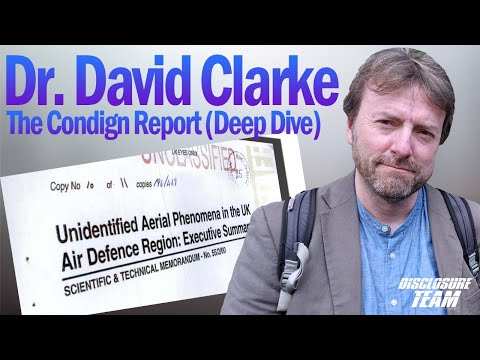
Dr. David Clarke — The U.K. Condign Report
The academic researcher whose FOI campaign brought Project Condign into public view discusses the report's origins, its plasma explanation, and its declassification history directly.
Revealing Britain's UFO Project Condign | Nick Pope
Former MoD UFO desk officer Nick Pope discusses Project Condign's origins and his own role in the early discussions that led to it being commissioned.
Sources
- UK Ministry of Defence / Defence Intelligence Staff (DI55), Unidentified Aerial Phenomena in the UK Air Defence Region (Project Condign), completed December 2000, released 2006. Full scanned text: Internet Archive, Volumes 1–3.
- Internet Archive, "Full text of Project Condign" — OCR transcript used to verify direct quotations from the report.
- The National Archives (UK), "Copy of DEFE 24/3155: UFO policy; with redactions" — official Kew catalogue record.
- UK Government Web Archive, preserved capture of the MoD's original 2006 publication page for the redacted report.
- The Black Vault, "Project Condign — The Full Condign Report" (mirrored full PDF, 465pp).
- David Clarke, "The Real UFO Project", drdavidclarke.co.uk (December 14, 2020; archived).
- David Clarke, "CONDIGN UN-REDACTED", David's Substack (2026) — on the June 2026 partial un-redaction and its Aurora/TR-3B speculation.
- David Clarke, "LOST AND FOUND", David's Substack — on the destroyed original copy and its 2023 rediscovery.
- UAP Media UK, "Out of the Shadows? The Ministry of Defence's Real UFO Expert" — on the Ron Haddow attribution and his professional background.
- UAP Media UK, "Why Britain's MoD Closed the UFO Files" — on the April 1998 memo and DI55's stand-down decision.
- Nick Pope, "Project Condign", official site — on his own role in the study's early origins and his non-authorship.
- Al Jazeera, "British military zaps UFO theories" (May 8, 2006).
- Phys.org, "Classified MoD report reveals the secrets behind UFOs" (May 2006).
- Patrick Gross, "UFOs at Close Sight: The Condign Report" — independent critical commentary on the plasma explanation and press coverage.
- Wikipedia, "Project Condign" — used lightly for orientation and cross-checking dates against primary sources.
- UK MoD Defence Equipment & Support, "MOD Whitehall London" — description of the Ministry of Defence Main Building.
- Wikimedia Commons, "Ministry of Defence MoD Main Building, London" (photo: Harland Quarrington / Crown Copyright, Open Government Licence v1.0) — hero image source.
- Nick Redfern, The Rendlesham Forest UFO Conspiracy: A Close Encounter Exposed as a Top Secret Government Experiment (Lisa Hagan Books, 2020) — earliest published attribution of Condign's authorship to Ron Haddow.
- David Clarke, The UFO Files: The Inside Story of Real-life Sightings (The National Archives, 2009).
- Key-Figures Registry, The Omni Ledger, David Clarke and Nick Pope profiles — cross-referenced institutional history.
- Case File, The Omni Ledger, COMETA Report Context — comparative international document case.
- Case File, The Omni Ledger, Rendlesham Forest Incident — primary case within DI55's own reviewed archive.
See something inaccurate? Have additional information or sources?
Suggest an Edit →Last Updated: August 2026