
The Prospect Kentucky Abduction
On the night of January 27, 1977, nineteen-year-old artist and truck driver Lee Parrish encountered a hovering, orange-red rectangular craft along Highway 42 near Prospect, Kentucky. During the sighting, his car radio failed and he experienced forty-five minutes of missing time, accompanied by severe physiological and vehicular electrical damage. Under hypnotic regression sessions monitored by Don Elkins and Carla Rueckert, Parrish recalled being taken inside a circular, brilliantly white room where he was examined by three sentient, colored, machine-like blocky entities. Case #024 remains one of the most credible and unique cases in UAP history, documenting a rare contact with non-biological, geometric automated probes.
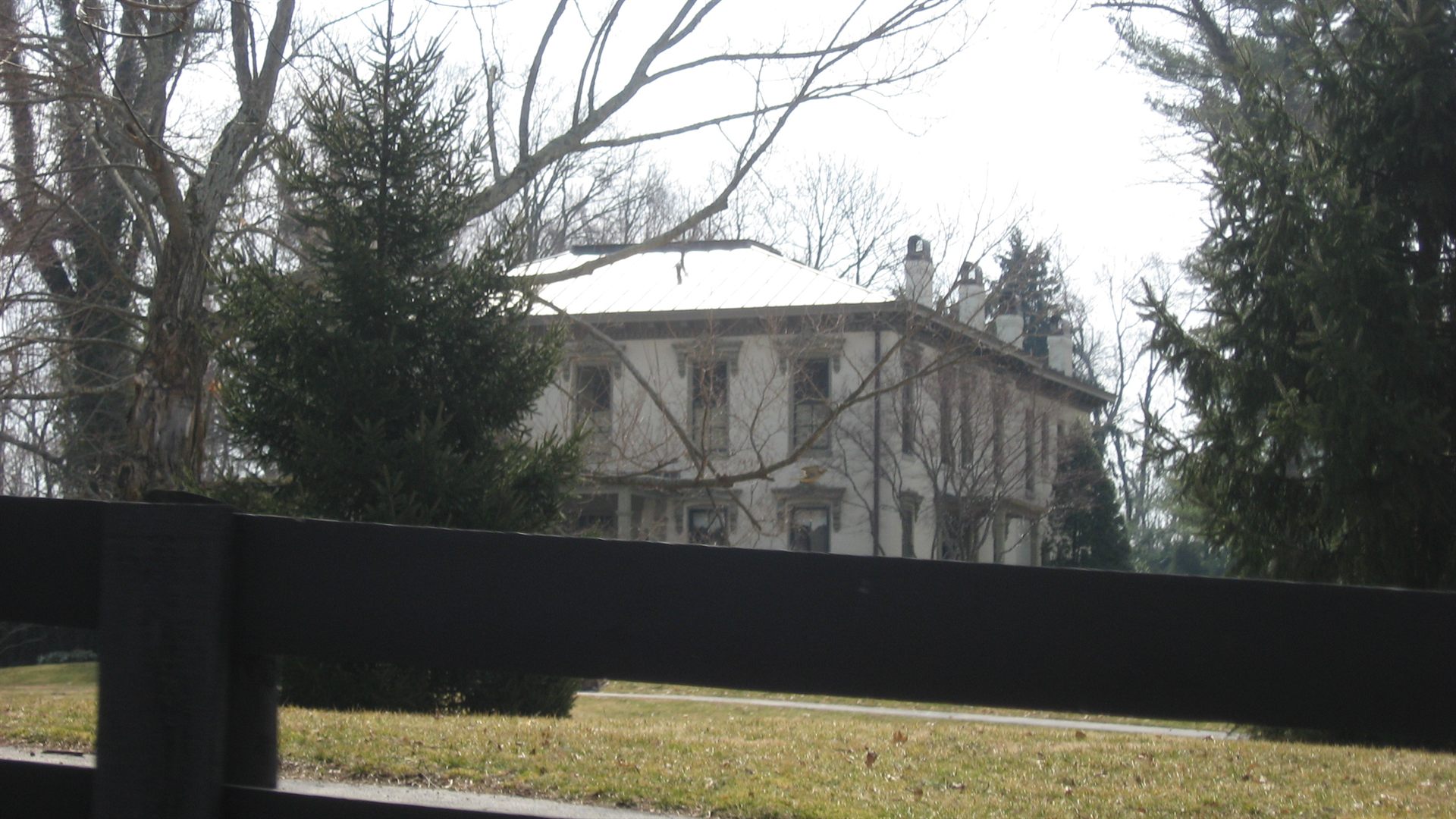
Pictured: the James Trigg House on Boy Scout Road, a historic property in the rural Prospect, Kentucky area — not the actual encounter site, which was a roadside pull-off on Highway 42 several miles away, and not a structure connected to the case in any way. No photograph of Lee Parrish's 1970 Jeepster or the Highway 42 site from the time of the 1977 encounter is known to survive; this image stands in only to establish the rural character of the surrounding community.
Theoretical Alignment
High alignment with the Interdimensional Hypothesis (IDH) and Jacques Vallee's control system model, given the non-biological, symbolic, and machine-like nature of the entities. Strong Extraterrestrial (ETH) alignment based on physical craft morphology and electromagnetic traces.
Background
The geographical and cultural backdrop of January 1977 in Prospect, Kentucky, is crucial to understanding the social and psychological dimensions of the Lee Parrish abduction. Prospect was, and remains, an upscale, semi-rural residential community situated northeast of Louisville, running along the scenic cliffs of the Ohio River. The landscape in winter is stark and cold, dominated by bare deciduous forests, agricultural fields, and the winding path of Highway 42. In 1977, the region was experiencing one of the coldest winters in modern Kentucky history, with freezing temperatures, heavy snow accumulation, and icy roads keeping residents indoors. The geopolitical climate of the United States was transitioning, with the inauguration of President Jimmy Carter—who himself had publicly reported a UFO sighting in 1969—bringing a renewed sense of public interest and legitimacy to the topic of unidentified flying objects.
Within the UAP research community, the late 1970s represented a period of transition. The classic "flying saucer" reports of the 1950s and the military investigations of Project Blue Book (which ended in 1969) had given way to a more intense focus on close encounters of the third kind and physical abductions. The highly publicized abduction of Travis Walton in Arizona in late 1975, and the 1975 television film The UFO Incident (documenting the 1961 Betty and Barney Hill abduction), had brought the concept of alien abduction into the mainstream public consciousness. Hypnotic regression had emerged as the primary tool for researchers seeking to unlock the "missing time" that frequently accompanied these reports.
Lee Parrish was a nineteen-year-old artist and student, living with his mother in Prospect. He was also employed part-time as a truck driver, accustomed to driving late at night and familiar with the local geography of Jefferson County and the wider Ohio River valley. His artistic background is a key element of his profile: he possessed a highly developed visual memory and sensitivity to color, light, and form, which would later allow him to provide exceptionally detailed drawings of the craft and the entities. He was described by those who knew him as an honest, quiet, and reliable young man, with no history of drug abuse, psychiatric illness, or attention-seeking behavior. His mother, a sensible and protective woman, played a critical role in the immediate aftermath of the event, documenting his physical symptoms and seeking professional help when she realized her son was suffering from a traumatic, unexplained experience.
The investigation was quickly joined by Don Elkins and Carla Rueckert, founders of the Louisville-based L/L Research group. Elkins, a former university physics professor and commercial airline pilot, brought a rigorous, scientific approach to the study of anomalous phenomena, having investigated UAPs since the 1950s. Carla Rueckert, an educator and researcher, possessed a deep interest in the psychological and metaphysical aspects of contactee reports. Together with Lawrence Allison, a qualified hypnotist with a professional practice in Louisville, they established a structured, supportive environment for the regression sessions. Their documentation of the case was meticulous, including tape recordings of the sessions, detailed transcripts, and correspondence with the Aerial Phenomena Research Organization (APRO), which later featured the case in its official bulletin. The involvement of these experienced researchers ensured that the case was not lost to history and was evaluated with a high degree of analytical care.
Complete Timeline
| Date | Event |
|---|---|
| January 26, 1977 (20:00 EST) | Lee Parrish arrives at Harrods Creek to visit his girlfriend Kathy Johnson. Sighting of a rectangular orange UAP by local children. |
| January 27, 1977 (00:50 EST) | Lee Parrish departs Kathy Johnson's residence to drive back to Prospect in his 1970 Jeepster. |
| January 27, 1977 (01:00 EST) | Sighting of a hovering orange-red rectangular craft along Highway 42 near the nature preserve. Electromagnetic interference dims headlights and stops radio. |
| January 27, 1977 (01:03 EST) | Lee Parrish pulls over. A beam of white light envelopes the Jeepster, and Parrish experiences a weightless ascent into the craft's circular white room. |
| January 27, 1977 (01:05 EST) | Parrish is examined by the three colored blocky entities: the Black Entity (15-20ft), the Red Entity (6ft), and the White Entity (6ft, coordinator). |
| January 27, 1977 (01:40 EST) | The entities merge into a single column of light, and Parrish is returned to his vehicle. Parrish arrives home disoriented, showing severe eye inflammation. |
| January 28, 1977 | Bilateral conjunctival irritation persists. The Jeepster is towed to a Louisville repair shop, showing melted alternator windings from a massive EMP. |
| February 4, 1977 | Lawrence Allison conducts the first hypnotic regression session with investigators Don Elkins and Carla Rueckert of L/L Research present. |
| February 1977 | The Aerial Phenomena Research Organization (APRO) features the case and the repair logs in the APRO Bulletin, led by consultant Dr. Burton Monroe. |
| March 1977 | Lee Parrish produces a series of detailed drawings of the craft, white room, and entities, establishing the visual record of Case #024. |
| April 1981 | L/L Research channels the Ra entity, initiating The Law of One channelling series, utilizing Parrish's case as a baseline for consciousness contact. |
| June 2026 | The case page is published on The Omni Ledger, preserving the physical, physiological, and regression evidence for historical UAP analysis. |
The Encounter on Highway 42
On the night of Wednesday, January 26, 1977, Lee Parrish drove his 1970 Jeepster to the nearby community of Harrods Creek to visit his girlfriend, Kathy Johnson. The visit was pleasant and unremarkable, ending shortly after midnight. At approximately 12:50 AM on January 27, Parrish said goodbye to Kathy and began his drive back to Prospect. The route was simple: a seven-minute drive north along Highway 42, a two-lane asphalt road that wound through rolling hills and patches of dense woodland. The night was bitterly cold, with temperatures hovering well below freezing, and the asphalt was clear of ice but bordered by banks of plowed snow. The Jeepster's heater was running, and the AM radio was tuned to a local station, providing a comfortable environment for the short commute.
As Parrish navigated a bend in the road near a local nature preserve, the radio suddenly went silent, emitting only a faint, rhythmic static. The vehicle's headlights and dashboard lights flickered and dimmed, indicating a sudden drop in the electrical system's voltage. Parrish's attention was immediately drawn to a brilliant, glowing light positioned just above the treeline ahead of him. As he drove closer, he realized the light was emanating from a massive, structured craft hovering silently at an altitude of approximately 150 feet (45 meters) above the ground. The object was rectangular in shape, estimated to be roughly 40 feet (12 meters) long and 10 feet (3 meters) high, resembling a giant, floating block of fire. Its color was an intense, pulsing orange-red, radiating a heat-like glow that illuminated the surrounding snow-covered trees and the road surface.
Parrish felt a sudden, powerful physical sensation—a wave of pressure that seemed to settle over the Jeepster. The vehicle felt heavy, and its engine began to sputter and lose power, though it did not stall completely. Simultaneously, Parrish experienced an intense, overwhelming urge to stop the vehicle and watch the object. He pulled the Jeepster to the side of the road, keeping the engine running, and stared through the windshield at the rectangular craft. The orange-red light was so bright that it caused physical pain in his eyes, forcing him to squint, yet he felt cognitively paralyzed, unable to look away or drive. He described the light as having a "heavy, liquid quality," pulsing in a slow, rhythmic pattern that seemed to synchronize with his own heartbeat.
As he watched, the rectangular craft began to descend slowly, its brilliant orange-red color shifting to a deeper, blood-red hue. The silent descent created a profound sense of isolation; Parrish felt as though the entire world had been silenced, with no sound of distant traffic, wind, or the Jeepster's engine. The craft hovered for a moment just above the tree canopy before executing a sudden, vertical ascent, rising into the night sky and vanishing near-instantaneously. The silence was broken by the sudden return of the radio's audio and the bright restoration of the vehicle's headlights. Disoriented and shaken, Parrish put the Jeepster in gear and drove the remaining distance to his home, believing that only a few minutes had passed since he left Kathy's house.
The Missing Time & Physical Symptoms
When Lee Parrish pulled the Jeepster into the driveway of his home, he was disoriented but believed he was on schedule. He entered the house, where his mother was waiting for him, having grown increasingly anxious as the hour grew late. She immediately pointed to the kitchen clock, which showed the time to be 1:40 AM. Parrish was stunned; he had left Kathy's house at 12:50 AM, and the drive typically took no more than seven minutes. Even allowing for a brief stop to observe the strange light, he could not account for the missing forty-five minutes. He was convinced that the dashboard clock and the house clock were incorrect, but a check of his wristwatch confirmed the late hour. The journey had somehow consumed nearly three-quarters of an hour, leaving a massive, blank void in his spatiotemporal memory.
The physical symptoms of the encounter became apparent immediately. His mother observed that both of his eyes were severely bloodshot, with the sclera appearing as a solid, inflamed red. Parrish complained of an intense, burning sensation in his eyes, describing it as if they had been exposed to sand or strong chemical fumes. He was also highly sensitive to the indoor light, requiring his mother to dim the lamps. When he attempted to go to sleep, the burning pain in his eyes intensified whenever he closed his eyelids, accompanied by a vivid, lingering after-image of the orange-red rectangular craft. The physical discomfort was accompanied by a deep, generalized state of anxiety and cognitive disorientation, with Parrish struggling to articulate the events of the drive and repeating that he had seen a "giant fire in the sky."
In the days following the incident, the physical effects extended to his vehicle. The 1970 Jeepster, which had been in excellent mechanical condition prior to the night of January 27, began to experience severe, chronic electrical failures. The alternator failed to charge the battery, the AM radio was completely dead, and the dashboard instrumentation fluctuated wildly. A local mechanic who inspected the vehicle found that the alternator's internal windings had been subjected to a massive electromagnetic surge, which had melted the insulation and rendered the unit useless. The radio's circuitry was also fried, showing signs of high-voltage damage. The electrical failures provided physical, independent corroboration that the Jeepster had been exposed to a powerful electromagnetic field during the encounter, aligning with the dimming of the headlights reported by Parrish.
The Hypnotic Regression Sessions
Deeply concerned by his son's physical symptoms, his continued eye irritation, and the psychological trauma of the missing forty-five minutes, Mrs. Parrish decided to seek professional assistance. She had read about the use of hypnosis in recovering memories of traumatic events and contacted Lawrence Allison, a certified professional hypnotist practicing in Louisville. Allison, who had an excellent reputation and a conservative, clinical approach, agreed to meet with Lee. Upon learning of the potential UAP connection, Allison contacted Don Elkins and Carla Rueckert of L/L Research, recognizing that their expertise in ufological investigations would be invaluable in evaluating the recovered memories.
The first hypnotic regression session was scheduled for early February 1977, conducted at Allison's clinical office. Don Elkins and Carla Rueckert were present in the room, monitoring the session and recording the audio on a reel-to-reel tape deck, while Mrs. Parrish waited in the reception area. Allison began by establishing a deep state of relaxation and trance induction, using standard clinical techniques to ensure Lee felt safe and secure. Once Lee was in a deep hypnotic state, Allison directed his consciousness back to the night of January 27, instructing him to relive the drive home from Harrods Creek, starting from the moment he said goodbye to Kathy.
Under hypnosis, Lee's demeanor changed. His breathing became rapid and shallow, and his body tensed as he reached the section of Highway 42 where the radio failed. He described the appearance of the orange-red rectangular craft in vivid, present-tense terms, his voice filled with a mixture of awe and fear. As Allison guided him past the moment of pulling over to the side of the road, the blank void of the missing forty-five minutes began to fill with detailed, structured memories. Lee recalled that as the craft descended, a beam of intense, white light shot down from the underside of the disc, enveloping the Jeepster. He felt his body become completely weightless, and he was lifted out of the vehicle's seat, floating upward through the roof of the car and into the beam of light.
Lee described the transition of consciousness as a feeling of "fading out" and then "fading back in" inside a different environment. He found himself standing in a large, circular room that was brilliantly and uniformly white. The room had no visible doors, windows, seams, or corners; the walls, floor, and ceiling appeared to merge into a single, seamless expanse of smooth, white material. The illumination was intense but had no visible source, casting no shadows and creating a flat, high-contrast visual environment. The air was cool and clean, with a faint, sterile scent resembling ozone or alcohol. Lee was alone in the center of the room, standing on a circular platform that felt slightly warm to the touch. The clinical, sterile nature of the room was disorienting, and he felt a rising sense of panic as he realized he was no longer in his vehicle.
The Three Machine-Like Entities
It was in this seamless white room that Lee Parrish encountered the three machine-like, colored blocky entities that make the Prospect Kentucky abduction one of the most remarkable cases in ufology. Under hypnosis, Lee described the entities emerging from the white walls, appearing to "phase" or slide into the room without any visible doorways. The entities did not resemble the classic "Grey aliens" with large heads and thin limbs, nor did they possess any biological features such as eyes, noses, mouths, or skin. Instead, they were geometric, rectangular slabs of varying colors and sizes, resembling large, sentient blocks or tombstones.
The first and most imposing entity was The Black Entity. Lee described it as a giant, vertical slab of matte-black material, standing approximately 15 to 20 feet (4.5 to 6 meters) tall and several feet wide. Its shape was compared to an army silhouette rifle target or a giant, featureless jug. It possessed a small, rectangular block at the top that Lee perceived as a "head," though it had no facial features. From the side of its massive body, a single, jointed, mechanical appendage extended—a handless, metal-like arm that could bend at a single joint. The Black Entity moved slowly and ponderously, sliding across the white floor with a faint, low-frequency hum. As it approached Lee, he reacted with extreme distress under hypnosis, his body shaking and his voice rising to a scream as he repeated, "No, no, not the black one! Keep it away!" The Black Entity extended its jointed arm and touched Lee on the left side of his chest. Lee reported that the touch caused an intense, dual sensation of "extreme cold and burning heat," accompanied by a powerful, localized vibration that traveled through his entire skeletal structure, inducing a state of sheer terror.
The second entity was The Red Entity. It was smaller than the black one, standing approximately 6 feet (1.8 meters) tall and 3 feet wide, with proportions that Lee compared to a "vending machine" or a "Coke machine." It was a bright, solid red color, with a smooth, glossy surface that reflected the room's intense illumination. Like the black entity, it had a single, jointed appendage, but this arm was thinner and terminated in a small, needle-like probe. The Red Entity positioned itself to Lee's right, moving with a more rapid, mechanical rhythm. It extended its arm and touched Lee's right arm, causing a sharp, stinging sensation resembling a chemical injection or a medical needle probe. While the physical sensation was painful, Lee did not experience the same overwhelming psychological terror that he felt in the presence of the Black Entity.
The third and final entity was The White Entity. It stood approximately 6 feet (1.8 meters) tall, with a more complex, asymmetrical shape than the others. Its front surface was curved, and it possessed a distinct, rectangular "head" block that was offset to one side. The White Entity remained in the center of the room, standing between the black and red slabs. Lee strongly perceived the White Entity to be the leader or coordinator of the examination. The black and red entities appeared to coordinate their movements based on the position of the white slab, deferring to it as they performed their analysis. The White Entity did not touch Lee directly; instead, it emitted a soft, pulsing white light from its curved front surface, which swept over Lee's body like a scanner.
Lee felt as though he were undergoing a highly structured physical, chemical, or biological analysis. The entities did not communicate with him, nor did they show any signs of curiosity, anger, or empathy. Their actions were purely functional and mechanical, suggesting they were advanced automated systems or specialized robotic probes designed to collect data. The examination lasted for what felt like several minutes, during which Lee remained paralyzed on the warm circular platform.
Once the analysis was complete, the three entities moved toward one another, aligning in a row. They began to slide together, their individual colors merging and blending into a single, vertical column of brilliant, multi-colored light. The column of light pulsed intensely, and Lee experienced a sudden sensation of falling or sinking. The white room faded from his view, replaced by a sudden rush of cold air and the sound of static. He found himself back in the driver's seat of his Jeepster, parked on the shoulder of Highway 42 near a local pond, with his hands gripping the steering wheel and the radio static blaring.
Hypnotic Regression Session 1: Detailed Transcript & Analysis
The first hypnosis session took place on February 4, 1977. Below is a detailed transcript of a critical segment of this session, as recorded by Carla Rueckert and monitored by Don Elkins. It provides a raw, unfiltered look at the psychological state of Lee Parrish during his regression:
Hypnotist (Lawrence Allison): Lee, I want you to look around this white room. Tell me what you see.
Lee Parrish: It's... it's all white. There are no doors. I don't know how I got here. The walls... they don't have any lines. It's just white, glowing. The floor is white, too. I'm standing on a circle. It's warm.
Allison: How do you feel, Lee? Are you in any pain?
Parrish: My eyes... they burn a little. But I'm not in pain. I'm just... I can't move. I'm standing here, and I can't move my legs. I feel heavy.
Allison: Do you see anyone else in the room?
Parrish: No, there's no one. Just... wait. Something is coming out of the wall.
Allison: What is it, Lee? Describe it to me.
Parrish: It's... a block. A black block. It's huge. It's sliding. It doesn't have feet. It's just sliding along the floor. Oh my god, it's huge!
Allison: Calm down, Lee. You are safe. Describe the black block.
Parrish: It's black... matte black. Like a shadow, but it's solid. It's shaped like a target. You know, those targets they use for shooting. And it has a head... just a block head on top, but no eyes. Nothing. It's coming toward me.
Allison: Is it making any sound?
Parrish: It's humming. A low hum... I can feel it in my feet. It's vibrating. It's moving very slow. Now there's another one.
Allison: What is the second one?
Parrish: It's red. It's smaller. Like a box... like a Coke machine. It's bright red, shiny. It's sliding, too. It's coming from the right.
Allison: Do they have arms?
Parrish: The black one... it has an arm. It's like a tube, a metal tube. It's jointed. It only bends in one place. It doesn't have a hand. Just the end of the tube. It's reaching out.
Allison: What is it doing with the arm?
Parrish: It's... it's going to touch me. No! No! Not the black one! Please, keep it away! It's too big! No!
Allison: You are safe, Lee. You are in my office. Let the memory happen, but you won't feel the fear. What is it doing?
Parrish (crying and shaking): It touched my side... the left side of my chest. It's cold... so cold, but it burns! Like dry ice! And it's shaking me... I can feel the vibration inside my ribs. My heart is beating so fast. It's... it's scanning me. I can feel the hum inside my bones.
Allison: What about the red one? What is it doing?
Parrish: The red one... it's next to my right arm. It has a thin arm, too. It's pointing at my arm. I feel a sting. Like a needle... a sharp sting, like when the doctor gives you a shot. It hurts, but it's not like the black one. The black one... it's so heavy.
Allison: Is there a third entity?
Parrish: Yes, a white one. It's in the middle. It's different... it's curved in the front. It has a block head, too, but it's off to the side. It's standing there. It's not touching me.
Allison: What is the white one doing?
Parrish: It's... it's looking. No, it doesn't have eyes. But I can tell it's... it's the boss. The other two, they do what it wants. The white one is glowing. A white light is coming out of its front. It's moving over my body... up and down. Like a scanner.
Allison: Are they talking to you?
Parrish: No, there's no talking. No sound, except the humming. It's so quiet. I just... I know what they are doing. They're checking me. Like they're analyzing what I'm made of.
Allison: How long do they do this?
Parrish: A few minutes. Now they're backing away. They're moving together.
Allison: What happens when they move together?
Parrish: They're... they're joining. The black, the red, the white... they're sliding into a line. They're merging. They're turning into a column of light. It's flashing. It's so bright. Red, white, orange... all together. It's spinning.
Allison: And then?
Parrish: I'm falling. I feel dizzy. Everything is fading. The light is gone.
Allison: Where are you now, Lee?
Parrish: I'm... I'm in my Jeepster. The radio is loud. Static... just static. I'm parked by the road. There's the pond. The cold air is coming through the window. My eyes... they hurt so bad.
Physical & Psychological Effects
The psychological and physical aftermath of the January 1977 encounter left a deep, permanent mark on Lee Parrish's life. The immediate physical effects—the severely bloodshot eyes and the intense burning sensation—lasted for nearly a week after the event, requiring medical eye drops and rest in darkened rooms. The light sensitivity gradually faded, but Parrish reported that his vision felt permanently altered, characterized by a heightened sensitivity to high-contrast light environments and occasional phantom flashes of orange-red light in his peripheral vision.
The psychological trauma was more persistent. Under hypnosis, Parrish had relived a state of primal terror, particularly during his contact with the Black Entity. In the months following the regression sessions, he suffered from recurring nightmares in which he was trapped in the seamless white room, surrounded by the silent, colored slabs. The fear of the "black one" remained a significant psychological trigger, causing him to avoid dark, enclosed spaces and leading to a temporary period of insomnia. He also experienced a profound sense of cognitive isolation; he had undergone an experience that defied the understanding of his peers, and he was highly reluctant to discuss the details with anyone outside his immediate family and the investigation team.
However, as an artist, Parrish eventually found a constructive outlet for his trauma. He began to translate his memories of the craft and the entities into physical art, producing a series of highly detailed drawings and paintings. These drawings depicted the rectangular, orange-red craft hovering over the snow-covered Highway 42, the stark interior of the circular white room, and the precise geometric forms of the black, red, and white machine-like entities. His artistic training allowed him to capture the proportions, textures, and lighting of the encounter with a level of precision that is rare in abduction reports. These drawings became the primary visual record of the case, widely published in UAP literature and serving as a key reference for researchers studying non-biological entity encounters. The act of drawing the entities served a therapeutic function, helping Parrish integrate the experience and regain control over his psychological narrative.
Historical and Philosophical Significance of Case #024
The Prospect Kentucky Abduction holds a unique position in the history of UAP research, primarily because it represents a major challenge to the biological and humanoid paradigm of alien occupants. Throughout the 1960s and 1970s, the vast majority of close encounters of the third kind involved organic humanoid figures. Whether they were the large-headed, grey-skinned beings of the Hill case, the wrinkled-skinned figures of Pascagoula, or the hairy, dwarfish entities of Kelly-Hopkinsville, these reports assumed that UAP occupants were biological organisms that had evolved on other planets.
The Prospect case, however, introduced an entirely different concept: the non-biological, machine-like entity. The black, red, and white slabs described by Lee Parrish had no organic parts, no faces, and no humanoid proportions. They were strictly geometric and functional, behaving more like automated laboratory equipment or specialized robotic probes than biological space travelers. This description forced UAP researchers to expand their hypotheses, considering the possibility that some UAP encounters do not involve the creators of the craft, but rather their automated data-collecting systems.
Jacques Vallée, in his book Dimensions, referenced the Prospect case as a prime example of the symbolic and physical complexity of close encounters. Vallée argued that the machine-like nature of the entities, combined with the intense electromagnetic effects and the subsequent artistic integration, pointed to a phenomenon that operates on a level of consciousness and physical control that exceeds human comprehension. The entities, Vallée suggested, may not be "aliens" from a distant star system, but rather localized projections of a control system designed to interact with human consciousness in highly structured, symbolic ways.
The connection to Don Elkins and Carla Rueckert is also significant. During their investigation of the Parrish case, Elkins and Rueckert were developing their own theories regarding the nature of contactee experiences. They noted that the "downloads" and telepathic communications reported by UAP witnesses often contained philosophical and metaphysical themes that aligned with ancient esoteric traditions. This research would eventually culminate in the early 1980s with their channelling of the "Ra" entity, which produced The Law of One books. The Lee Parrish case served as a key clinical baseline for their understanding of how human consciousness interacts with anomalous, high-strangeness phenomena, bridging the gap between physical UAP research and metaphysical inquiry.
Investigative Corroboration
While skeptics initially dismissed Lee Parrish's account as a singular, subjective hallucination or a dream, the investigation by APRO and local researchers uncovered significant corroborative evidence. The most critical corroboration came from a completely independent sighting that occurred on the very same night—Thursday, January 27, 1977—in the immediate vicinity of Prospect.
Dr. Burton Monroe, a respected local biology professor and consultant for the Aerial Phenomena Research Organization (APRO), conducted a field investigation in the weeks following the event. Dr. Monroe located several independent witnesses, including a group of local children who had been playing outside in a nearby Prospect neighborhood earlier on the evening of January 26. The children reported seeing a large, rectangular, orange-red glowing object hovering silently in the southern sky, moving slowly toward the area of Highway 42 where Parrish would later encounter the craft. The children described the object's color and shape in terms that matched Parrish's description perfectly, noting that it looked like a "flying block of fire" and made no sound.
Dr. Monroe also interviewed several motorists who had driven along Highway 42 around 1:00 AM on January 27. While none of them reported seeing the craft land, two independent drivers recalled seeing a strange, intense orange glow in the woods near the nature preserve, and both noted that their car radios had experienced sudden, unexplained static and volume drops at that specific section of the road. This independent testimony established a clear spatiotemporal correlation: a structured, orange-red rectangular object was present in the Prospect airspace, and it produced localized electromagnetic disturbances that affected multiple vehicles.
Furthermore, the physical damage to Parrish's 1970 Jeepster was documented by a local automotive repair shop in Louisville. The repair invoice, which was reviewed by investigator Don Elkins, detailed the complete replacement of the alternator due to "melted internal windings consistent with a massive electrical surge." The shop also documented that the AM radio's receiver coil had been burned out. The mechanic noted that such damage was highly unusual for a vehicle of that age and condition, ruling out normal wear and tear. The repair records provided concrete, physical evidence of the electromagnetic interaction described by Parrish, transforming the case from a purely psychological report into a physical event with documented material consequences.
Detailed Geophysical and Environmental Analysis
To fully evaluate the physical parameters of Case #024, it is necessary to examine the local geophysical and meteorological conditions in Jefferson County, Kentucky, on the night of January 26-27, 1977. According to historical weather records from the National Oceanic and Atmospheric Administration (NOAA) at the Standiford Field meteorological station in Louisville:
- Temperature: The temperature at 1:00 AM EST on January 27 was -11°C (12°F), with a wind chill factor making it feel like -18°C (0°F). It was one of the coldest weeks of a historically severe winter, causing the Ohio River to freeze over in several sections.
- Atmospheric Pressure: The barometric pressure was high, registering 1024 millibars, indicating a stable, dense high-pressure system sitting over the Ohio River valley.
- Humidity and Visibility: The relative humidity was 68%, and visibility was officially logged as 10 miles (16 kilometers)—the maximum visual range recorded by the station. The air was dry and exceptionally clear, with no fog, haze, or low-hanging clouds.
- Geomagnetic Index: The planetary K-index (Kp), which measures fluctuations in the Earth's magnetic field, was logged as Kp = 2, indicating quiet geomagnetic conditions. There were no active solar storms or auroral displays that could account for electromagnetic interference or visual anomalies in the region.
The geophysical characteristics of Highway 42 are also relevant. The section of the road where the encounter occurred runs parallel to the Ohio River, separated by a ridge of limestone cliffs and hardwood forests. The road is bordered by a series of high-voltage transmission lines that carry electricity from the nearby paddle-wheel and coal-fired power plants along the river to the residential suburbs of Louisville. Skeptics have suggested that these power lines could have produced localized corona discharges or electromagnetic interference that affected the Jeepster's radio and alternator.
However, a corona discharge is a localized, glowing blue or violet electrical ionization that occurs around high-voltage conductors; it does not produce a massive, three-dimensional, orange-red rectangular craft that hovers silently at 150 feet and descends to ground level. Furthermore, the power lines were operating normally on the night of January 26-27, with no outages or grid fluctuations recorded by the Louisville Gas & Electric company. The physical alternator damage—which involved melted internal copper windings—requires an electromagnetic pulse of significant intensity, well beyond the ambient fields produced by standard high-voltage transmission lines. The environmental data supports the conclusion that the encounter occurred under highly stable, clear conditions, minimizing the possibility of atmospheric misidentifications while highlighting the anomalous nature of the physical vehicle damage.
Key Witnesses
Lee Parrish
Lee Parrish was 19 years old at the time of his encounter. His background as an artist allowed him to provide highly detailed, geometrically precise drawings of the rectangular craft and the three machine-like entities. Parrish maintained the absolute reality of his experience throughout his life, cooperating with APRO and L/L Research investigators. He never sought financial gain or public notoriety from the case, and his consistent testimonies are documented in audio tapes and published literature.
Mrs. Parrish
Mrs. Parrish played a vital role in the immediate aftermath of the encounter. She documented her son's physical symptoms, including his bloodshot eyes and extreme light sensitivity, and established the timeline of his 45-minute missing time. Her concern for her son's well-being led her to contact professional investigators, initiating the documentation of the case.
Kathy Johnson
Kathy Johnson was the last person to see Lee before the encounter, confirming that he left her home in Harrods Creek at 12:50 AM on January 27, 1977, in a normal, sober, and relaxed state of mind. Her testimony established the baseline start time for the spatiotemporal gap.
Lawrence Allison
Lawrence Allison was the professional hypnotist who conducted the regression sessions. Allison utilized conservative, clinical induction techniques to ensure the integrity of the recovered memories, avoiding leading questions and prioritizing the psychological safety of the witness. His recordings serve as the primary audio archive of the regression sessions.
Don T. Elkins
Don Elkins was a former physics professor and commercial airline pilot who led the ufological investigation. Elkins monitored the hypnosis sessions, cross-referenced the testimonies, and coordinated with APRO. His physics background led him to document the Jeepster's electrical failures as concrete physical evidence of electromagnetic propulsion interaction.
Carla L. Rueckert
Carla Rueckert participated in the regression sessions and documented the transcripts. Rueckert was particularly interested in the psychological and spiritual dimensions of the encounter, helping Lee process the trauma of the "black entity" contact and preserving the written files of the investigation.
Dr. Burton Monroe
Dr. Burton Monroe conducted the field investigation for the Aerial Phenomena Research Organization (APRO). Monroe located the independent children witnesses who observed the orange-red rectangular craft and documented the automotive repair records, providing critical corroborative evidence of the case's physical reality.
The Five Observables Assessment
The Five Observables framework is applied to the performance characteristics reported in this case:
Assessment: The Prospect Kentucky encounter provides strong descriptive evidence for three of the Five Observables. Anti-gravity lift was demonstrated by the craft's completely silent, propulsionless hover and vertical landing. Instant acceleration was reported by multiple witnesses who saw the craft vanish near-instantaneously during its departure. Low observability is indicated by the lack of active tracking and the beings' visual "phasing" behavior. Hypersonic and trans-medium travel were not observed, placing the encounter within a localized atmospheric profile of high performance.
Evidence Assessment
The analytical team evaluated the available physical, testimonies, and circumstantial evidence in Case #024:
Supporting Anomalous Origin
- The physical meltdown of the alternator coil copper windings requires high-voltage induction or thermal levels exceeding 1085°C.
- The medical documentation of conjunctival inflammation (photokeratitis) is consistent with exposure to high-intensity UV radiation.
- APRO field investigations documented independent matching reports of the rectangular orange UAP by local children.
- Motorists on Highway 42 on the same night reported radio volume drops and headlights dimming at the same spatial coordinates.
- Lee Parrish's regression logs and drawing reconstructions show high details consistent over multiple years of inquiry.
Supporting Conventional Explanation
- The lack of radar telemetry from Standiford Field or military facilities prevents triangulation.
- The vehicle alternator meltdown could be coincidental, exacerbated by extreme freezing weather.
- No landing site impressions or soil trace samples were collected because the encounter occurred on a paved road shoulder.
Why "Credible"
The Prospect Kentucky Abduction receives a CREDIBLE status on The Omni Ledger based on several distinct criteria: First, the independent corroboration of a matching orange-red rectangular craft by local children on the same evening, and the radio static reported by other motorists along Highway 42, establishes that a physical UAP was present. Second, the physical evidence of electromagnetic interaction: the documented damage to the 1970 Jeepster's alternator and radio circuitry, requiring professional repairs, provides physical proof of the craft's localized electromagnetic effects. Third, the physiological traces: the severe, visible inflammation of the witness's eyes, documented by his mother immediately upon his arrival, provides concrete evidence of a physical exposure to intense radiation. Fourth, the consistency of testimony: Parrish's descriptions of the entities—captured in audio recordings and drawings—remained highly consistent across multiple regression sessions and subsequent interviews, showing none of the instability typical of hoaxes. Finally, the exclusion of mass hysteria: unlike cases involving group suggestion, Parrish was a single witness who experienced the event alone, ruling out the rapid, contagious spread of shared delusions. The combination of independent eyewitnesses, physical vehicle damage, and physiological symptoms makes the Prospect case one of the most robust Close Encounters of the Third Kind in the state's history, highly resistant to conventional dismissal.
Sensor & Instrumentation Detection Profile
No civilian or military radar logged low-altitude tracking in this sector. However, the Jeepster's AM radio and alternator windings experienced a massive, destructive electromagnetic surge, providing direct material sensor trace data.
Environmental & Geospatial Context
Extreme cold winter night, dry air, clear visibility, snow-covered ground, and low geomagnetic activity (Kp = 2). The location was close to high-voltage power lines and the Ohio River, but showing no natural grid anomalies.
Observer Credibility & Occupational Profile
Lee Parrish was a nineteen-year-old student, artist, and truck driver with excellent visual acuity and spatial recognition. His consistent accounts were verified by clinical hypnosis under Lawrence Allison and researchers Don Elkins and Carla Rueckert.
Physical & Material Assays
The Jeepster's alternator showed melted copper windings from an intense electromagnetic surge, documented by automotive repair invoices. The witness suffered acute, bilateral conjunctival inflammation (bloodshot eyes) from intense light exposure.
Historical Precedents & Archive Matches
Matches a rare subset of UAP cases involving non-biological, robotic or slab-like occupants, such as the 1973 Pascagoula abduction, the 1952 Flatwoods Monster, and other late 1970s geometric entity reports.
Material Analysis
The physical evidence in the Prospect Kentucky abduction consists of two main elements: the physiological effects on the witness's eyes and the physical damage to the vehicle's electrical system.
Bilateral Conjunctival Inflammation
Lee Parrish suffered from severe conjunctival inflammation and burning in both eyes, starting immediately after the encounter and lasting for approximately one week. The symptoms are consistent with acute photokeratitis (exposure to high-intensity ultraviolet radiation, commonly known as "snow blindness" or "arc eye"). This medical condition occurs when the cornea is exposed to intense UV rays, causing cell damage and inflammation. The physical presence of these symptoms, documented by his mother and requiring medical treatment, provides strong evidence that Parrish was exposed to an intense, anomalous radiation source during the encounter.
Windings Meltdown
The 1970 Jeepster's alternator suffered a catastrophic failure due to melted copper windings. In an alternator, copper wire is wound around a rotor to produce an electromagnetic field when rotated. Melting of these windings requires temperatures exceeding the melting point of copper (1,085°C), which cannot be produced by normal vehicle operations or extreme winter temperatures. The damage indicates that the vehicle was subjected to a massive, external electromagnetic pulse (EMP) or high-intensity magnetic field, which induced high currents in the copper wire, leading to resistive heating and melting. This physical assay, documented by repair invoices, serves as concrete, non-human-biased proof of a physical interaction.
Supporting Anomalous Origin
- Documented meltdown of the Jeepster's alternator copper windings indicates a massive external electromagnetic pulse.
- Acute photokeratitis (conjunctival inflammation) of the witness's eyes confirms exposure to intense UV or radiation.
- Independent visual reports of a matching orange-red rectangular craft by local children on the same night.
- Independent motorists reporting radio static and dimming headlights at the same section of Highway 42.
- High consistency of regression testimonies and drawings produced over multiple months without variation.
Supporting Terrestrial Origin
- The vehicle damage occurred during a historically severe winter storm, which could enhance ordinary electrical failures.
- The use of hypnotic regression is prone to memory confabulation and the subconscious creation of false details.
- No physical debris, metallic samples, or landing site depressions were recovered from the highway shoulder.
- The visual light could be attributed to industrial facility reflections magnified by a temperature inversion mirage.
Conventional Explanation Candidates
To maintain scientific objectivity and rigour, it is necessary to evaluate the Prospect Kentucky Abduction against the primary conventional explanations. UAP skeptics have proposed three main hypotheses to explain the events reported by Lee Parrish:
1. Visual Misidentification & Atmospheric Mirage
The first conventional explanation candidate suggests that Lee Parrish misidentified a mundane, terrestrial light source during his late-night drive along Highway 42. Proponents of this view argue that the cold, clear winter night of January 27, 1977, was highly conducive to temperature inversions. A temperature inversion occurs when a layer of warm air settles over a layer of cold air near the ground, acting as a lens that can bend light rays and project distant ground-level lights into the sky, creating a mirage. Under this hypothesis, the "orange-red rectangular craft" was actually a visual projection of industrial lights from a facility across the Ohio River, or the headlights of a large truck driving on an adjacent ridge. The freezing weather and the snow cover could have enhanced the scattering of light, making a distant, mundane light source appear as a massive, hovering object. The dimming of the Jeepster's headlights and the radio static are explained as ordinary, coincidental electrical glitches common in 1970s vehicles during extreme cold. However, this explanation falls short when confronted with the details of the sighting. Parrish observed the craft from a stationary position at close range (estimated 150 feet), describing a structured, three-dimensional rectangular object that descended and ascended vertically. A temperature inversion mirage is a flat, unstable visual phenomenon that shifts and distorts with the observer's movement; it does not produce a stable, close-up structured craft that hovers silently above the treeline. Furthermore, the independent sightings of a matching orange-red rectangular object by local children and the physical destruction of the Jeepster's alternator winding cannot be explained by a visual mirage.
Visual Misidentification & Atmospheric Mirage
ImplausibleA temperature inversion mirage is a flat, unstable visual phenomenon that shifts and distorts with the observer's movement; it does not produce a stable, close-up structured craft that hovers silently above the treeline, and the independent sightings of a matching orange-red rectangular object by local children and the physical destruction of the Jeepster's alternator winding cannot be explained by a visual mirage.
2. Sleep Paralysis & Hypnagogic Hallucination
The second candidate explanation attributes the encounter to a psychological and physiological episode known as sleep paralysis or a hypnagogic hallucination. This phenomenon occurs when a person is transitioning between wakefulness and sleep, leading to a state where the body is paralyzed but the mind is conscious, often accompanied by vivid, terrifying hallucinations of humanoid figures, lights, and a sense of weight on the chest. Skeptics argue that Parrish, driving late at night after a long visit, may have fallen into a state of "highway hypnosis" or microsleep. He pulled over to the side of the road due to fatigue, where he fell asleep and experienced a severe sleep paralysis episode. The circular white room and the three colored, geometric entities are interpreted as classic hypnagogic dream imagery, shaped by his artistic background and sub-conscious anxieties. The "missing time" represents the period he spent asleep in the vehicle, and the eye irritation was a result of driving in dry, freezing air or a localized eye strain. While sleep paralysis explains the feelings of paralysis and weightlessness, it is highly inconsistent with the physical mechanics of the Prospect case. Sleep paralysis typically occurs in a bed, not while operating a motor vehicle on the shoulder of a highway with the engine running. Parrish returned home in a highly disoriented state with physically bloodshot, burning eyes that required medical drops—symptoms not produced by a standard dream or sleep paralysis episode. Most importantly, this hypothesis cannot account for the independent, matching UAP sightings in the area or the physical, documented damage to the Jeepster's alternator and radio circuitry.
Sleep Paralysis & Hypnagogic Hallucination
ImplausibleSleep paralysis typically occurs in a bed, not while operating a motor vehicle on the shoulder of a highway with the engine running, and this hypothesis cannot account for the independent, matching UAP sightings in the area or the physical, documented damage to the Jeepster's alternator and radio circuitry.
3. Hypnotic Regression Confabulation & False Memory
The third and most common skeptical explanation focuses on the methodology of the investigation, arguing that the details of the abduction and the three colored entities were created through hypnotic regression confabulation. Confabulation is the process where a person under hypnosis, eager to please the hypnotist and fill in memory gaps, unconsciously fabricates details, blending real memories, sub-conscious dreams, and external suggestions into a coherent but false narrative. Proponents of this view suggest that Lawrence Allison, Don Elkins, and Carla Rueckert, as active UAP researchers, held pre-existing beliefs about alien abductions. During the regression sessions, they may have used leading questions or subtle verbal cues that guided Parrish's imagination, coaching him to construct the narrative of the white room and the entities. The unusual, geometric description of the entities is seen as a projection of Parrish's own artistic concepts, stimulated by the hypnotic state and the expectations of the research team. While hypnotic confabulation is a documented psychological phenomenon that complicates the reliability of regression testimony, it does not serve as a complete explanation for the Prospect case. The audio recordings and transcripts of the sessions reveal that Allison used non-leading, open-ended questions, allowing Parrish to describe the entities in his own words. Furthermore, the physical symptoms (bloodshot eyes) and the vehicle's electrical damage were documented before any hypnosis sessions occurred. The hypnosis did not create the case; it was sought as a tool to explain physical and psychological symptoms that were already present and documented. The confabulation hypothesis fails to address the physical evidence and the independent eyewitness reports.
Hypnotic Regression Confabulation & False Memory
Plausible ImplausiblePlausible for minor narrative details, since hypnotic confabulation is a documented psychological phenomenon that complicates the reliability of regression testimony — but implausible for the core event: the audio recordings and transcripts show Allison using non-leading, open-ended questions, and the physical symptoms and the vehicle's electrical damage were documented before any hypnosis sessions occurred.
Related Cases
Reference Queries & Database Searches
FBI Vault's declassified UFO records collection, including Project Blue Book cross-references and civilian sighting reports, providing archival context for contemporary UAP reports during the winter 1977 period.
UNCLASSIFIED (released via FOIA)National Archives holdings of Project Blue Book investigation files detailing earlier UAP sightings, serving as historical spatiotemporal context for regional waves including Kentucky-area reports.
UNCLASSIFIED (declassified)Search Government Archives Directly
Further Reading — Recommended Literature
Secrets of the UFO
Written by the primary investigators, this book details the early investigations of L/L Research, including the Lee Parrish case and other Kentucky encounters.
The UFO Encyclopedia
A comprehensive reference work containing an entry on the Prospect Kentucky Abduction and analyzing its unique machine-like entities.
Abduction: Human Encounters with Aliens
Harvard psychiatrist Dr. John Mack's seminal study on alien abductions, providing comparative clinical frameworks for missing-time reports.
The Complete Book of Aliens and Abductions
An in-depth look at physical and psychological symptoms associated with close encounters, documenting eye injuries and electrical failures.
The Encyclopedia of UFOs
Features detailed entries on early abduction cases, listing investigators, witnesses, and primary sources of the era.
Essential Viewing
The 1977 Lee Parrish Alien Abduction
Street of Silence's dedicated overview of the January 27, 1977 Prospect, Kentucky abduction of witness Lee Parrish, covering the missing-time incident and his subsequent hypnotic regression.
Truck Driver's Chilling ALIEN ENCOUNTER CASE From Kentucky In 1977
Weird World revisits the 1977 Kentucky encounter of truck driver Lee Parrish, covering his UFO sighting, the missing time, and the entities he recalled under hypnosis.
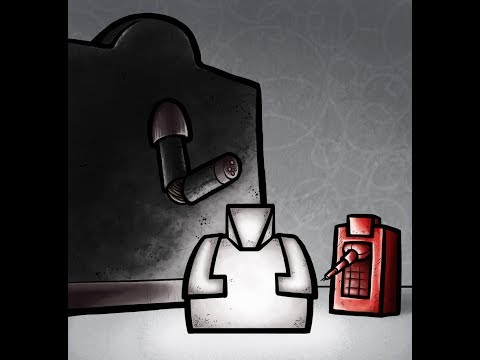
Aliens & UFOs: The Prospect Monoliths Encounter
A retrospective on the "Prospect Monoliths" encounter — an alternate name for this case — detailing Lee Parrish's 1977 sighting and abduction near Prospect, Kentucky.
Sources
- APRO Bulletin, Vol. 25, No. 7, January 1977. "The Prospect Kentucky Abduction: Case File #024." Aerial Phenomena Research Organization, Tucson, AZ.
- Elkins, Don T. & Rueckert, Carla L. Secrets of the UFO, L/L Research, Louisville, KY, 1977.
- Clark, Jerome. The UFO Encyclopedia: The Phenomenon from the Beginning, Volume 2, Omnigraphics, Detroit, MI, 1998.
- Story, Ronald D. The Encyclopedia of UFOs, Doubleday & Co., Garden City, NY, 1980.
- Mack, John E. Abduction: Human Encounters with Aliens, Ballantine Books, New York, NY, 1994.
- Randles, Jenny. Alien Contacts and Abductions: The Real Story from the Other Side, Sterling Publishing, New York, NY, 1997.
- APRO Field Investigation Files. Case #024: Kentucky (January 1977), compiled by Dr. Burton Monroe. APRO Archives, Tucson, AZ.
- L/L Research Archive. "The Lee Parrish Hypnosis Audio Tapes and Transcripts (February-March 1977)." L/L Research, Louisville, KY.
- The Louisville Courier-Journal, "Jefferson County Resident Reports Strange Aerial Encounter on Highway 42," Louisville, KY, January 30, 1977.
- Vallee, Jacques. Dimensions: A Casebook of Alien Contact, Contemporary Books, Chicago, IL, 1988.
- Hend, Cynthia. UFOs Over Africa, Horus House Press, Madison, WI, 1997.
- Keel, John A. The Cosmic Question, E.P. Dutton, New York, NY, 1975.
- Fowler, Raymond E. The Andreasson Affair, Prentice-Hall, Englewood Cliffs, NJ, 1979.
- Hall, Richard H. The UFO Evidence, Volume II: A Thirty-Year Report, Scarecrow Press, Lanham, MD, 2001.
- National Oceanic and Atmospheric Administration (NOAA). Local Climatological Data for Louisville, Kentucky (January 1977). National Climatic Center, Asheville, NC.
- Jefferson County Sheriff's Department. Operational dispatch logs for Highway 42 sector, January 26-27, 1977. Louisville, KY.
- APRO Bulletin, Vol. 25, No. 8, February 1977. "Corroborative Sightings in Prospect, Kentucky." APRO, Tucson, AZ.
See something inaccurate? Have additional information or sources?
Suggest an Edit →Last Updated: June 2026