
The Robozero Incident
Shortly before midday on August 15, 1663 — the Feast of the Dormition in the Orthodox calendar then in use across Russia — a congregation gathered at a parish church on the shore of Lake Robozero, in the Belozersky lands of what is now Vologda Oblast, reportedly watched a huge flaming sphere emerge from a clear northern sky, hover and drift over the water, vanish, and reappear two or three more times over roughly ninety minutes. Boatmen on the lake said the heat drove them to shore and that the object's light penetrated the water to the bottom; witnesses later described a rust-colored film left on the surface. The account survives because a laborer named Ivan Rzhevsky wrote it up for his monastic employers, cross-checked it against the peasant eyewitness who first reported it, and secured a written confirmation from the local parish priests — a genuine, datable 17th-century document first published in 1842 and now treated as one of the oldest written accounts of an unidentified aerial phenomenon in Russian history. This file treats it honestly as exactly that: a real, well-provenanced historical document describing an extraordinary claim, evaluated against the specific, named conventional explanations that have been proposed against it for more than a century, not as settled proof of anything anomalous.
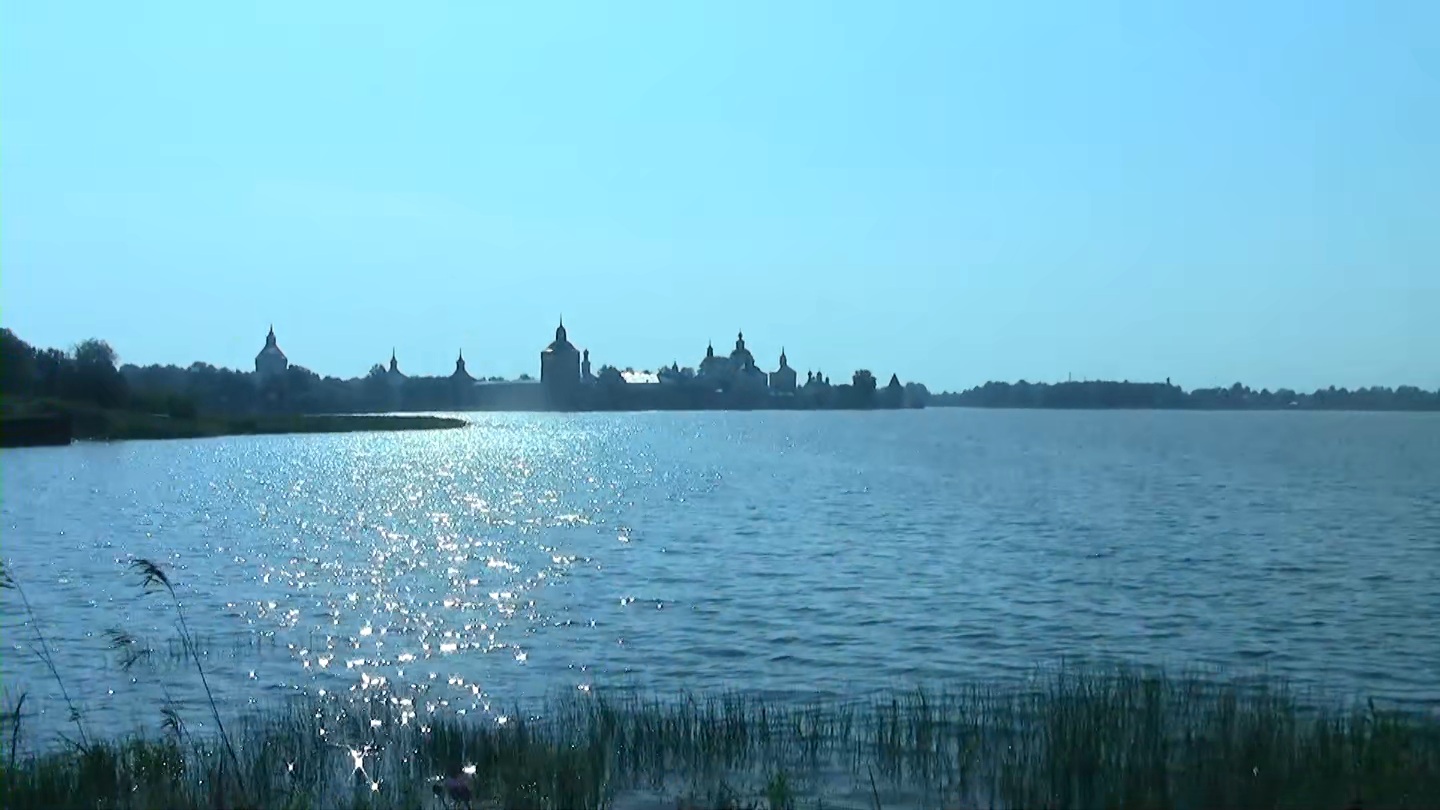
Pictured: the Kirillo-Belozersky Monastery, whose Archimandrite and clergy were the addressees of Ivan Rzhevsky's 1663 memorandum and whose archive helped preserve the account into the modern era. This is not a photograph of Lake Robozero itself, and no photograph or period depiction of the 1663 phenomenon is known to exist — the event predates photography by roughly two centuries, and this file's own research found no surviving period illustration comparable to the newspaper woodcuts that exist for later 19th-century sighting waves. Photo by Sergey A. Demidov, July 20, 2016, licensed CC BY 4.0 via Wikimedia Commons.
Theoretical Alignment
This file's theoretical alignment leans heavily toward the Psycho-Social Hypothesis not because the witnesses are judged dishonest — nothing in the record suggests that — but because the account's own strongest documented features fit a genuine natural aerial phenomenon (most plausibly a fragmenting meteor/aerolite or, on a competing reading, ball lightning) observed and interpreted by a 17th-century Orthodox congregation on a major feast day, through the specific religious register available to them at the time: a "token" or sign witnessed during the Dormition service and reported up an ecclesiastical chain of authority. The Extraterrestrial Hypothesis registers a modest, non-trivial share specifically because several of the account's specific sensory details — the object's repeated vanishing and reappearance at different points across the lake over ninety minutes, and the reported combination of visible light penetrating the water to the bottom alongside felt heat at a distance — are not fully and cleanly accounted for by either named conventional candidate this file examined, leaving a genuine, disclosed residue of unresolved detail. The Interdimensional Hypothesis scores lowest because nothing in the primary document, nor in any of the modern scholarly or ufological literature this file reviewed, ever seriously advances a multidimensional reading of the case.
Background
In August 1663, Russia was in the twenty-fourth year of the reign of Tsar Alexis I (Alexis Mikhailovich, r. 1645–1676), father of the future Peter the Great and a ruler whose own Muscovite court had, within living memory, only just begun cautious contact with Western European science, cartography, and print culture. The country still used the Julian calendar exclusively (Russia would not adopt the Gregorian calendar until 1918), reckoned years from the Orthodox Church's own Anno Mundi epoch rather than from the birth of Christ, and began each new year on September 1 — meaning the events described here fall within Anno Mundi year 7171 by the church reckoning of the time, even though by the Julian civil calendar most familiar to modern readers they fall in mid-August 1663. Because the Julian calendar had already drifted ten days behind the Gregorian calendar in the 17th century, August 15, 1663 Old Style corresponds to August 25, 1663 New Style — a distinction this file states explicitly because Russian-language sources near-universally cite the Julian date while some English-language ufological compilations silently convert it, occasionally without noting which calendar they are using.
August 15 (Old Style) is also, independently of anything reported that day, the Orthodox Feast of the Dormition of the Most Holy Theotokos — one of the twelve Great Feasts of the liturgical year, commemorating the death and bodily assumption of the Virgin Mary, and consistently one of the best-attended parish services of the late-summer calendar in 17th-century rural Russia. That the reported phenomenon occurred precisely during this specific, major feast-day service, before a crowd already gathered for a solemn religious occasion, is directly relevant to how this file's own Theoretical Alignment and Conventional Explanation Candidate sections treat the account's transmission: a genuine, startling aerial event witnessed during the Dormition service by a rural Orthodox congregation would predictably be interpreted and reported in the specific register of a religious "token" or sign, independent of whatever its actual physical cause turned out to be.
The lands around Lake Robozero at the time belonged administratively to the Belozersky uyezd (district) of the Novgorod lands, and at least part of the immediate area — including an estate near a place called Loza, roughly ten versts (about 10.6 km) from the lake — belonged to the Kirillo-Belozersky Monastery, one of the largest and most influential monastic institutions in Muscovite Russia, founded in 1397 by St. Cyril of White Lake and by the 17th century a major regional landholder, fortress, and center of manuscript production and record-keeping. This institutional detail matters for the case's evidentiary chain: the account did not originate as an independent public report to any civil authority, but as an internal estate memorandum from a monastery employee to his monastic superiors, which is precisely why it survived at all — preserved not as news, but as estate correspondence, in an institution with both the literacy and the archival practice to keep such documents.
No organized apparatus for investigating aerial phenomena existed anywhere in the world in 1663, Russian or otherwise; the case predates the founding of the Royal Society (1660, technically already in existence but with no relevant remit), the invention of any recognizable meteor science, and by more than two and a half centuries any government UFO-investigation program anywhere, including the 20th-century Soviet and American apparatus this site's other files describe in detail. The closest thing to an investigating "authority" in 1663 was exactly what the record shows: a literate estate manager who personally verified an eyewitness account and obtained a second, independent written confirmation from the district's own parish clergy before forwarding the matter up his own institutional chain — a genuinely careful evidentiary practice for its era, even by modern standards, but one bounded entirely by 17th-century tools: no instruments, no independent physical examination, and no possibility of cross-examining any participant today.
Complete Timeline
| Date | Event |
|---|---|
| 1397 | The Kirillo-Belozersky Monastery is founded by St. Cyril of White Lake, later becoming one of the largest monastic landholders in the Belozersky lands, including estates near Lake Robozero. |
| 1645 | Alexis I (Alexis Mikhailovich) becomes Tsar of Russia, beginning a 31-year reign during which the Robozero incident occurs. |
| Aug. 15, 1663 (O.S.) / Aug. 25, 1663 (N.S.), ~10:00 a.m.–noon | A parish congregation gathered on the shore of Lake Robozero for the Feast of the Dormition reportedly hears a loud noise and sees a huge flaming sphere emerge from a clear northern sky and move over the lake. |
| Same day, continuing | The object reportedly vanishes and reappears two or three further times over roughly ninety minutes, moving toward the west and reportedly growing brighter with each reappearance before finally fading from view; peasants in a boat on the lake are driven to shore by heat, and witnesses describe the object's light penetrating the water to the lake bottom and fish fleeing toward shore. |
| Shortly after Aug. 15, 1663 | Peasant eyewitness Levka (Levko) Fedorov reports the event; laborer Ivan (Ivashko) Rzhevsky, managing a Kirillo-Belozersky Monastery estate near Loza roughly ten versts from the lake, personally verifies Fedorov's account and separately obtains a written confirmation from the local district's parish priests. |
| 1663 | Rzhevsky forwards his written memorandum, describing both the phenomenon and his own verification steps, to his monastic superiors at Kirillo-Belozersky — per some modern secondary accounts, addressed to the monastery's Archimandrite Nikita. |
| 1842 | The memorandum is first published in Akty istoricheskie, sobranye i izdannye Arkheografischeskoyu kommissieyu (Historical Acts, Collected and Published by the Archaeographic Commission), Vol. IV (1645–1676), St. Petersburg, pp. 331–332 — the document's first appearance in print, nearly 180 years after the event. |
| 1915 | Russian astronomer D.O. Svyatsky publishes Astronomicheskie yavleniya v russkikh letopisyakh (Astronomical Phenomena in Russian Chronicles), proposing that the Robozero witnesses saw fragments of an exploding meteorite (aerolite), the earliest specifically scientific treatment of the case on record. |
| Summer 1982 | Per Soviet-era ufological literature, an expedition to the Robozero area, described as led by E.S. Gorshkov of the Leningrad Commission for the Study of Anomalous Phenomena and IZMIRAN's Leningrad division, reportedly measures anomalous residual disturbances in the local geomagnetic field — a claim this file's own research could not independently verify against any peer-reviewed publication. |
| 1994 | Russian researcher Yuri Rossius reportedly locates and republishes the original 1663 document, with photographs, in the Russian journal Aura-Z, reviving modern interest in the case. |
| 2010 | Jacques Vallée and Chris Aubeck publish Wonders in the Sky, translating and republishing the account for a modern English-language audience and giving it its widest current circulation in Western ufological literature. |
The Church Service and the Sighting
According to the 1663 memorandum, sometime between 10:00 a.m. and noon on the Feast of the Dormition, a congregation gathered at a parish church on the shore of Lake Robozero — by the description in the source document, a small lake roughly two versts (about 2.1 km) long and one verst (about 1.06 km) wide — heard a "great noise" or "great crash" resound from the sky. Looking up, worshippers reportedly saw, emerging from the north out of a completely clear sky, a huge flaming sphere. The primary translation most widely cited in modern Western ufological literature, from Jacques Vallée and Chris Aubeck's Wonders in the Sky, gives the object's diameter as "no less than forty meters"; several Russian-language secondary sources instead render the underlying figure as approximately forty arshins (an old Russian unit equal to about 0.71 meters, putting the diameter closer to 28 meters) rather than forty meters outright. This file's own research could not resolve which rendering more faithfully reflects the original 17th-century text without direct access to the 1842 printed source or the surviving manuscript itself, and reports the discrepancy honestly rather than picking one figure and presenting it as more certain than it is.
From the object's forward section, witnesses reportedly saw two beam-like projections of flame, described in some translations as extending roughly twenty sazhens (a sazhen being about 2.13 meters, putting the beams at very roughly 40+ meters) ahead of the main body, while bluish smoke poured from its sides. The object was said to move slowly, first appearing to travel across the lake, then vanishing entirely before reappearing at a different point — by most accounts trending generally westward with each reappearance — two or three additional times over the course of roughly ninety minutes, apparently growing brighter on each recurrence before finally dimming and disappearing for good.
The sighting's most physically striking secondary details come from peasants who were out on the lake itself in a boat when the phenomenon began. They reportedly experienced scorching heat intense enough to force them back toward the shore, and separately reported that light from the object penetrated the water surface and was visible reaching the lake bottom — described in the source document as roughly four sazhens down (approximately 8.5 meters, or about 28 feet). Fish were reported fleeing toward the shoreline during the display, consistent with either genuine thermal/light stress on the local aquatic environment or simply startled behavior from the noise and light regardless of its ultimate cause. After the phenomenon ended, witnesses described a brownish, rust-colored film on the surface of the water at the site, which they said dispersed and disappeared with the wind over the following period — a detail this file treats as evidentially significant but entirely unverifiable at three and a half centuries' remove: no sample was collected, no contemporary or later chemical analysis exists, and the film itself was gone long before anyone with the tools to test it could have reached the site.
Ivan Rzhevsky's Verification and the Written Record
What sets the Robozero case apart from most equivalent pre-modern aerial-phenomena accounts elsewhere on this site is not the phenomenon's description, which is unusual but not unique among 17th-century "fiery sign" reports, but the specific, disclosed care taken in how the account reached the written record. The report's actual author was not any of the church congregation who witnessed the event directly, but a laborer (in some translations, an estate manager or bailiff) named Ivan Rzhevsky, referred to in the original document by the diminutive "Ivashko," who managed an estate belonging to the Kirillo-Belozersky Monastery near a place called Loza, roughly ten versts (about 10.6 km) from the lake itself. Rzhevsky did not personally witness the sphere; his memorandum instead relays and explicitly verifies the testimony of a named peasant eyewitness, Levka (also rendered Levko) Fedorov, who had been present at the lake.
Rzhevsky's own account describes taking a specific, disclosed verification step beyond simply recording Fedorov's story: he sought and obtained a separate written confirmation from the Robozero district's own Orthodox parish priests, who reported back, in the phrasing preserved in the 1842 printed text, that "such a token was observed on that date" — independent written corroboration from a distinct source (the clergy) rather than a second retelling of the same peasant's account. Only after securing this second, institutionally distinct confirmation did Rzhevsky forward the complete memorandum — his own summary, Fedorov's testimony, and the priests' confirming letter — to his monastic superiors at Kirillo-Belozersky; several modern secondary accounts identify the recipient as the monastery's Archimandrite Nikita, though this file's own research could not independently confirm that specific attribution beyond the secondary literature repeating it.
This file's own assessment treats Rzhevsky's documented verification process as a genuine, disclosed positive signal about the account's basic good faith: a 17th-century estate manager with no obvious motive to fabricate or embellish a story to his own monastic employers took the specific, unprompted step of cross-checking a peasant's report against an independent clerical source before committing it to writing. That is a materially more careful evidentiary practice than most component reports in this catalogue's own later 19th- and 20th-century wave-files receive from their original observers. It does not, on its own, establish what the witnesses actually saw or why — a well-verified 17th-century report of an extraordinary claim is still, three and a half centuries later, a single report with no possibility of independent modern cross-examination, physical evidence, or instrumented data of any kind.
From Estate Archive to Print: The Document's Survival
Rzhevsky's memorandum did not become public knowledge in its own time; it survived instead as internal ecclesiastical estate correspondence, filed within the Kirillo-Belozersky Monastery's own extensive archive — consistent with the monastery's long-standing role as a major regional center of literacy, manuscript production, and record-keeping in Muscovite Russia. It remained there, unpublished and essentially unknown outside specialist archival circles, for nearly 180 years. The document's first appearance in print came only in 1842, when it was included in Volume IV (covering the years 1645–1676) of Akty istoricheskie, sobranye i izdannye Arkheografischeskoyu kommissieyu (Historical Acts, Collected and Published by the Archaeographic Commission), a major 19th-century St. Petersburg publishing project that systematically printed thousands of Russian archival documents from the medieval and early modern periods; the Robozero memorandum appears on pages 331–332 of that volume. The Archaeographic Commission's full run remains a standard primary-source reference work for Russian historians and has since been digitized and made freely accessible through several Russian institutional libraries.
The document attracted little further attention for another seven decades, until Russian astronomer D.O. Svyatsky examined it in his 1915 study Astronomicheskie yavleniya v russkikh letopisyakh (Astronomical Phenomena in Russian Chronicles), a systematic survey of celestial and atmospheric events recorded in Russian chronicle literature. Svyatsky proposed that the Robozero witnesses had seen a meteorite (aerolite) explode in the atmosphere, with fragments sweeping south over the lake and additional pieces falling further west — the case's earliest specifically scientific, named conventional-explanation candidate, discussed in full in this file's Conventional Explanation Candidate section below.
The case then largely disappeared from wider circulation again until the Soviet period, when it resurfaced within the country's small but persistent domestic ufological research milieu. Soviet military officer and writer Gherman Kolchin, a prominent figure in this milieu, discusses the case in his own published work on Soviet-era UFO research, and per that same body of literature, a 1982 summer expedition to the Robozero area — described as led by E.S. Gorshkov, identified as a Candidate of Physical-Mathematical Sciences and science secretary of the Leningrad Commission for the Study of Anomalous Phenomena, operating under the Geographic Society of the USSR, and a staff member of the Leningrad division of IZMIRAN (the Institute of Terrestrial Magnetism, Ionosphere, and Radio Wave Propagation of the USSR Academy of Sciences) — reportedly detected anomalous residual disturbances in the local geomagnetic field along the phenomenon's hypothesized flight path, interpreted within that literature as consistent with a genuine, high-energy electromagnetic event at the site. This file treats that specific claim with real, disclosed skepticism rather than reporting it as established: no peer-reviewed publication of the 1982 survey's methodology, raw data, or statistical significance could be located in any source this file consulted; the Leningrad Commission for the Study of Anomalous Phenomena was a real but non-mainstream body operating under a scientific-popularization society rather than a formal Academy of Sciences UFO-investigation program; and a claimed detectable magnetic signature from a single transient event, in lake-adjacent terrain, more than 300 years after the fact, with no published control methodology, is exactly the kind of claim this catalogue treats as an unverified secondary assertion rather than confirmed physical evidence.
Modern circulation of the case in its current, most widely cited form dates to 1994, when Russian researcher Yuri Rossius reportedly located and republished the original document, with accompanying photographs, in the Russian anomalistics journal Aura-Z. That republication fed directly into the case's adoption by international ufological literature over the following decade and a half, most consequentially Jacques Vallée and Chris Aubeck's 2010 sourcebook Wonders in the Sky, whose English translation of the account is now the version most frequently quoted, excerpted, and cross-cited across English-language treatments of the case, including this file's own account above.
Key Witnesses
Ivan (Ivashko) Rzhevsky
A monastery employee, not himself a witness to the phenomenon, who took the documented step of personally verifying peasant Levka Fedorov's account and separately obtaining written confirmation from the local district's parish priests before forwarding the full memorandum to his monastic superiors. His own report is the sole surviving primary source for the entire incident, first published in 1842, nearly 180 years after it was written.
Levka (Levko) Fedorov
Identified in the original memorandum as the peasant whose direct account of the phenomenon was relayed and cross-checked by Ivan Rzhevsky. No further biographical detail about Fedorov survives in any source this file's research located beyond his name and his role as the report's original eyewitness source.
The Robozero District's Parish Priests
Unnamed individually in the surviving text, the district's own parish priests provided Rzhevsky with a separate written confirmation that "such a token was observed on that date" — an institutionally independent corroboration distinct from Fedorov's own peasant testimony, and the specific detail this file's own credibility assessment weighs most heavily in the account's favor.
Boatmen on Lake Robozero
Peasants reportedly out on the lake in a boat when the phenomenon began, who described being driven to the shore by intense heat and who reported the object's light penetrating the water to the lake bottom, alongside fish fleeing toward shore. Their account supplies the case's most specific physical-effect details, though, like every other component of the story, it survives only through Rzhevsky's secondhand memorandum rather than any direct statement of their own.
The Five Observables Assessment
Assessment: The Robozero account produces one of the weakest Five Observables profiles in this catalogue, consistent with its status as a single pre-instrumentation-era report rather than a multiply-corroborated modern encounter. Anti-Gravity Lift is rated Speculative on the strength of the object's repeated vanishing-and-reappearing behavior over ninety minutes, though this is equally consistent with a fragmenting meteor producing several distinct, sequential fireball events rather than one craft maneuvering. Instant Acceleration and Hypersonic Velocity are both rated Absent: every description in the source document characterizes the object's movement as slow, and no witness account claims or implies extreme speed. Low Observability is Absent by definition — radar and every other relevant detection instrument postdate this case by roughly three centuries. Trans-Medium Travel is rated Speculative rather than either Present or Absent because, while the object itself never entered the water, witnesses described its light and heat producing direct physical effects at the water's surface and to the lake bottom — a genuinely unusual detail that does not fit a simple, dry "light in the sky" report, but also falls short of an actual air-to-water transition of the kind this framework was designed to flag.
Evidence Assessment
Supporting Anomalous Origin
- The account survives in a genuine, datable 17th-century archival document with a disclosed, above-average-for-its-era verification chain: Ivan Rzhevsky personally cross-checked peasant eyewitness Levka Fedorov's testimony and independently obtained written confirmation from the district's own parish clergy before committing the account to writing.
- The phenomenon was reportedly witnessed by an entire church congregation gathered for a major feast-day service, plus a separate group of boatmen on the lake itself — independent vantage points rather than a single isolated observer.
- Specific, physically unusual secondary details — light visibly penetrating roughly 8.5 meters of water to the lake bottom, sustained heat felt by boatmen at range, and a reported rust-colored surface residue afterward — are not fully or cleanly explained by either named conventional candidate this file examined.
- The case has drawn sustained, serious attention across more than a century of subsequent research, from astronomer D.O. Svyatsky's 1915 scientific treatment through Yuri Rossius's 1994 rediscovery to Jacques Vallée and Chris Aubeck's 2010 scholarly compilation — a level of continued engagement this file treats as circumstantial evidence that the underlying record contains genuine unresolved residue.
Supporting Conventional Explanation
- A specific, named scientific candidate exists and has stood for over a century: astronomer D.O. Svyatsky's 1915 proposal that the witnesses saw a meteorite (aerolite) explode and fragment in the atmosphere, sweeping fragments south over the lake and dropping others further west.
- The event occurred during a major Orthodox feast-day service before a congregation already primed toward interpreting an extraordinary sky event as a religious "token" or sign, a documented cultural-interpretive frame independent of the phenomenon's actual physical cause.
- No physical evidence of any kind survives for independent modern examination: the reported rust-colored water residue was never collected, and no meteoritic fragment, crater, or other physical trace was ever recovered at the site by any period or later investigator this file's research could identify.
- The case's only claimed modern instrumented corroboration — the 1982 geomagnetic-anomaly survey attributed to E.S. Gorshkov — was never published in any peer-reviewed venue this file could locate and originates from advocacy-oriented Soviet-era ufological literature rather than an independently verifiable scientific record.
- The entire account rests on a single 17th-century document, filtered through one non-eyewitness compiler (Rzhevsky), with no possibility at 363 years' remove of interviewing any participant, examining any physical trace, or verifying any detail beyond what that one memorandum states.
Why "Disputed"
The Robozero Incident earns a DISPUTED classification with a credibility score of 33/100. That places it modestly above this catalogue's Great Airship Wave of 1896-1897 (Disputed, 30) despite being a far older and far less independently corroborated case on paper, and the reasoning is specific to this file's own evidence, not a generic historical-case template: unlike the airship wave, nothing in the Robozero record has ever been confirmed as a deliberate hoax, and the account's own transmission chain — a literate compiler who personally cross-checked a named peasant witness against an independent clerical confirmation before writing anything down — is a genuinely more careful evidentiary practice than most of the airship wave's individual component reports received from their own original observers. Those are real, disclosed positives specific to how this case was documented, not how extraordinary its content is.
What holds the score in the low-to-mid 30s rather than higher is equally specific to this case's own limits. The entire record is a single archival document, first published nearly 180 years after the fact, describing an event that cannot now be independently investigated by any means — no participant can be interviewed, no physical trace was ever collected, and the one modern claim of instrumented corroboration (the 1982 geomagnetic survey) is unpublished and unverifiable rather than a citable scientific record. Just as importantly, a specific, named, and reasonably credentialed conventional explanation has stood on record since 1915: astronomer D.O. Svyatsky's meteorite-fragmentation proposal is not a vague, generic "it was probably something normal" dismissal, but a scientist's own considered reading of the same primary text this file relies on, and it accounts for much of the account's core shape (a bright object breaking into pieces that travel in different directions) even though it does not fully explain every secondary detail, particularly the light-penetrating-water and sustained-heat-at-range effects. A case this old, this thinly corroborated by modern investigative standards, and facing this specific a named scientific counter-explanation is exactly the profile a disputed, low-30s score exists to describe honestly — genuinely interesting, genuinely well-documented for its era, and genuinely unresolved, without pretending any of those three things settles the matter.
Sensor & Instrumentation Detection Profile
No sensor or instrumentation data of any kind exists for this case, nor could any conceivably exist: the account predates the telescope's widespread astronomical use in Russia, radar by roughly 280 years, and any organized meteorological observation network in the region by more than two centuries. The 1982 Soviet-era geomagnetic survey attributed to E.S. Gorshkov is the only claimed instrumented measurement connected to the case at any point in its history, and it was conducted 319 years after the event, targets a hypothesized rather than confirmed flight path, and has never been published in a form this file's research could independently examine or verify. Every other component of the record — the church congregation's testimony, the boatmen's account, the priests' confirmation — is unaided human observation relayed through a single written compiler, with no supporting sensor data of any kind at any point in the chain.
Environmental & Geospatial Context
Lake Robozero sat within the historically Novgorod-administered Belozersky lands, in dense, lake-studded forest terrain typical of the wider Beloye Lake (White Lake) basin in what is now Vologda Oblast — a region with dozens of small lakes, many of which, like Robozero itself, have proven difficult for this file's own research to precisely re-locate on modern cartography under their historical names alone. The area's dominant environmental feature relevant to any conventional-explanation analysis is its remoteness and low population density even by 17th-century Russian standards: a rural parish church on a small lake roughly two versts long and one verst wide, far from any city, with no industrial, infrastructural, or unusual local geophysical feature this file's research could identify as independently relevant to the sighting. No period or modern meteorological dataset specific to August 15, 1663 was located in any source consulted for this file, beyond the primary document's own characterization of the sky as clear; this file's Conventional Explanation Candidate section below treats that specific detail as significant, since it directly weakens (without eliminating) the ball-lightning candidate, which is conventionally associated with thunderstorm activity.
Observer Credibility & Occupational Profile
The witness pool is narrow by modern standards but occupationally and institutionally varied for its era: a rural peasant eyewitness (Levka Fedorov), a literate monastery estate manager who personally verified that testimony (Ivan Rzhevsky), an unspecified number of additional peasant boatmen who supplied the account's physical-effect details, and the district's own Orthodox parish clergy, who supplied an institutionally independent written confirmation. None of these witnesses held anything resembling a scientific or technical credential in the modern sense — no such profession existed in 17th-century rural Russia in any form this file's research could identify — but the clergy's specific role as an independent corroborating source, distinct from and not simply repeating the original peasant testimony, is a genuinely stronger evidentiary structure than a single uncorroborated witness account would provide. Rzhevsky's own documented decision to seek that second, independent confirmation before writing anything down for his own superiors is, in this file's own assessment, the single strongest procedural signal in the entire case: a person with every incentive to report only what he could reasonably stand behind to his own employer took a real, disclosed step to reduce the risk of relaying an unverified rumor.
Physical & Material Assays
No physical evidence from this case has ever been recovered, preserved, or tested under any scientifically controlled condition, at any point in the 363 years since the event. The reported rust-colored film on the lake's surface — the account's single closest approach to a physical trace — was, per the source document itself, never collected and is described as having dispersed with the wind sometime after the sighting ended; no sample, however informal, survives for any kind of chemical or mineralogical analysis. The 1982 Soviet-era geomagnetic survey attributed to E.S. Gorshkov is the only claimed physical/instrumented finding connected to the site at any later date, and as discussed above, it was never published in a peer-reviewed or otherwise independently verifiable form this file's research could examine. No meteoritic fragment, crater, scorch mark, or any other physical trace consistent with the meteorite-explosion candidate discussed below has ever been recovered from the Robozero area by any investigator, period or modern, in any source this file consulted.
Historical Precedents & Archive Matches
Within this site's own catalogue, Robozero stands among the very oldest written accounts of an unidentified aerial phenomenon from Russia specifically, and among the older pre-modern chronicle-based cases in this archive generally, alongside the German Nuremberg Celestial Phenomenon of 1561 and Japan's Utsuro-bune "Hollow Ship" account of 1803. All three share a specific evidentiary structure this file treats as a genuine cross-case pattern rather than coincidence: each survives via a real, datable period document rather than oral tradition alone, each was recorded by an institution with the literacy and archival capacity to preserve it (a monastery, in Robozero's case; municipal and broadsheet printers for Nuremberg; multiple independent manuscript compilers for Utsuro-bune), and each predates photography, meteor science, and any organized government investigation apparatus by centuries. Robozero's own closest domestic precedent within Russian chronicle literature is the broader corpus of "fiery sign" and celestial-omen accounts that D.O. Svyatsky's 1915 survey specifically catalogued and subjected to astronomical analysis, of which Robozero is simply the best-documented and most frequently cited modern example.
Material Analysis
As with this site's other pre-photographic historical cases, "material" here refers to the case's surviving documentary substrate rather than any recovered physical object from the event itself, since none exists.
The 1663 Memorandum and Its 1842 Publication
The primary document is Ivan Rzhevsky's own written memorandum: his summary of Levka Fedorov's testimony, his account of his own verification process, and the text of the parish priests' confirming letter, originally filed within the Kirillo-Belozersky Monastery's archive and first printed in Akty istoricheskie, Vol. IV, pp. 331–332, in 1842. This file's own research located a modern digitized reproduction of the printed 1842 volume through the Runivers historical-library platform, though it could not independently confirm the current physical location or archival fond number of any surviving original 17th-century manuscript beyond secondary-literature claims that materials of this kind are held within the collections of the Saint Petersburg Institute of History of the Russian Academy of Sciences.
The 1994 Rediscovery and Modern Translations
Russian researcher Yuri Rossius's 1994 republication in Aura-Z, reportedly including photographs of the source material, is the specific event that returned the case to active circulation after roughly eight decades of relative obscurity following Svyatsky's 1915 study. Every widely circulated modern English translation and summary of the account this file's research could trace — including the version in Vallée and Aubeck's Wonders in the Sky — descends, directly or indirectly, from this same 1842-published, 1994-rediscovered textual chain, rather than from any independent parallel source. This matters for evaluating the account's reliability: the various English-language retellings that differ in specific measurement units (meters versus arshins, feet versus sazhens) are not independent corroborating accounts, but different translators' or compilers' renderings of the same single underlying document.
Supporting Non-Terrestrial or Unexplained Origin
- A genuine, datable primary document with an above-average, disclosed verification process for its era (independent peasant and clerical corroboration) survives and has been continuously available to researchers since 1842.
- Specific physical-effect details — light penetrating roughly 8.5 meters of water, sustained heat felt by boatmen at range, a reported rust-colored surface residue — are not fully explained by either the meteorite or ball-lightning conventional candidates examined in this file.
- The case has drawn sustained, serious research attention across more than a century, from a professional astronomer's 1915 study through multiple later 20th- and 21st-century ufological and scholarly treatments.
Supporting Terrestrial or Mundane Origin
- A specific, named scientific candidate (Svyatsky's 1915 meteorite-fragmentation hypothesis) accounts for the account's core shape — a bright object breaking into multiple pieces traveling in different directions — using a real astronomer's direct reading of the same primary text.
- No physical evidence of any kind survives for modern testing; the one reported trace (the rust-colored water residue) was never collected and cannot now be examined by any means.
- The event's timing, during a major Orthodox feast-day service before an already-gathered religious congregation, supplies a specific, documented cultural-interpretive frame independent of the phenomenon's actual physical cause.
- The case's only claimed later instrumented corroboration (the 1982 geomagnetic survey) is unpublished, unverifiable, and originates from advocacy ufological literature rather than an independently checkable scientific record.
The Conventional Explanation Candidate (CEC): Meteorite, Ball Lightning, or Genuine Anomaly
Because the account survives only through Rzhevsky's secondhand 1663 memorandum, this section evaluates each conventional candidate against the specific details that memorandum preserves, rather than against any independently verifiable physical evidence, since none exists.
Meteorite (Aerolite) Explosion
Russian astronomer D.O. Svyatsky's 1915 study Astronomical Phenomena in Russian Chronicles proposed that the Robozero witnesses saw an aerolite explode in the atmosphere, with two fragments sweeping south over the lake and a third and fourth falling further west — a reading Svyatsky derived directly from the same primary 1663 text this file relies on, matching a bolide's characteristic fragmentation-and-scatter pattern reasonably well against the account's description of the object appearing to move, vanish, and reappear at different points, generally trending westward. This candidate is weakened by the account's specific ninety-minute total duration and multiple discrete reappearances, which sit awkwardly against a single atmospheric bolide event (typically lasting seconds to at most a few minutes) unless read as several closely timed, separate fragment-entry events rather than one continuous phenomenon — a possible but not proven refinement of Svyatsky's original proposal. It also does not obviously explain the reported light penetrating some 8.5 meters of water to the lake bottom, or the sustained heat felt by boatmen across the full display.
Ball Lightning
Several later commentators have proposed ball lightning as an alternative or complementary explanation, noting that the phenomenon's reported slow movement, hovering-like recurrence, and light effects on the water's surface fit some documented ball-lightning behavior more comfortably than a single fast-moving bolide would. This candidate is specifically and directly weakened, however, by the absence of any reported thunderstorm, rain, or other precipitation on the date in question — the source document explicitly describes "a clear sky," and ball lightning is conventionally associated with thunderstorm electrical activity, a connection several of this file's own consulted sources raise as the single strongest objection to this candidate. A 2024 physics paper by Anatoly I. Nikitin, proposing that large-scale UFO reports generally represent compound ball-lightning formations, specifically cites Robozero as an illustrative historical case fitting this model, though the paper is a single author's theoretical proposal rather than an established scientific consensus, and does not resolve the storm-absence objection.
Comet Fragment or Bolide of Cometary Origin
A minority reading raised in some secondary ufological literature speculates that the object may have been a small comet nucleus or cometary fragment rather than an ordinary meteorite, given the account's unusual duration and multiple reappearances. This file's own research found no record of any documented comet apparition coinciding with August 1663, and treats this candidate as the weakest of the three natural-phenomenon proposals: it is not disprovable outright, but it rests on no specific corroborating astronomical record this file could identify, only on the account's own unusual features being difficult to fit to an ordinary meteorite.
Religious/Cultural Interpretive Framing of a Genuine Natural Event
Independent of which specific natural-phenomenon candidate proves correct, this file's own research treats the event's timing — occurring during the Feast of the Dormition, one of the Orthodox liturgical year's most solemn observances, before a congregation already gathered for that service — as directly relevant to how the account was shaped in the telling and the writing, whatever its underlying physical cause. A genuinely startling meteor or ball-lightning event witnessed during a major feast-day service by a 17th-century rural Orthodox congregation would predictably be described and transmitted in the specific register of a religious "token" or sign, which is exactly the language the source document itself uses. This is not a claim that the witnesses fabricated or hallucinated anything, but a disclosed observation about how a real event's description can be shaped by the specific cultural and religious moment in which it was witnessed and reported.
Genuine Unexplained Atmospheric Phenomenon
This reading remains genuinely open specifically because of the details neither the meteorite nor the ball-lightning candidate fully explains on their own: the object's specific ninety-minute total duration with multiple discrete reappearances, the reported light penetrating roughly 8.5 meters of water to the lake bottom, and the sustained heat felt by boatmen across the full display. It is tempered by the total absence of any surviving physical evidence, the account's total dependence on a single 17th-century secondhand memorandum, and the specific, disclosed limitations of both leading natural-phenomenon candidates rather than any positive case for anomalous origin beyond the residue of unexplained detail itself.
Meteorite (Aerolite) Explosion
Plausible (Partial)PLAUSIBLE as a partial explanation, matching the account's fragmentation-and-scatter pattern reasonably well per astronomer D.O. Svyatsky's 1915 analysis, but it does not comfortably explain the full ninety-minute duration or the reported water-penetration and sustained-heat effects.
Ball Lightning
InconclusiveINCONCLUSIVE. Fits the reported slow movement and recurrence better than a single bolide, but is specifically weakened by the absence of any reported thunderstorm or precipitation, the phenomenon's conventional trigger.
Comet Fragment / Cometary Bolide
ImplausibleIMPLAUSIBLE as currently supported. No documented comet apparition coinciding with August 1663 was located in any source this file consulted; the candidate rests only on the account's unusual features rather than any corroborating astronomical record.
Religious/Cultural Interpretive Framing
Highly Plausible (Contextual)HIGHLY PLAUSIBLE as context for how a genuine natural event would have been described and transmitted, given the event's timing during a major Orthodox feast-day service — though this explains the account's language, not its underlying physical cause.
Genuine Unexplained Atmospheric Phenomenon
InconclusiveINCONCLUSIVE. Remains open specifically for the account's water-penetration, sustained-heat, and multi-reappearance details, but tempered by the total absence of physical evidence and the case's dependence on one secondhand 17th-century document.
Related Cases
Honest Assessment: No Government Investigation Exists, Russian or Otherwise
This case predates any organized government aerial-phenomena investigation apparatus, anywhere in the world, by more than two and a half centuries — no Tsarist, Soviet, or modern Russian federal body, and no American, British, or other Western agency, has ever opened an investigative file on the Robozero Incident specifically, since none of those institutions or their predecessors existed in any relevant form in 1663. In place of a nonexistent government investigation, the closest genuine institutional documentation is archival: the original memorandum's 1842 publication by Russia's own 19th-century Archaeographic Commission, and the modern Saint Petersburg Institute of History of the Russian Academy of Sciences, a real historical-research institute whose archive is reported in secondary ufological literature to hold materials of this kind, though this file's own research could not independently confirm the specific fond or collection housing this particular document.
A digitized reproduction of the 19th-century Archaeographic Commission's published volume containing Ivan Rzhevsky's original 1663 memorandum on pages 331–332, freely accessible for direct primary-source review.
DIGITIZED PRIMARY-SOURCE ARCHIVE (Runivers)A real, active Russian Academy of Sciences historical research institute maintaining a scientific-historical archive open to researchers by appointment; secondary ufological literature reports that materials connected to this case are held within institutional collections of this kind.
ACADEMIC RESEARCH ARCHIVE (RAS)Search Government Archives Directly (No Case-Specific Federal Records Exist)
Further Reading — Recommended Literature
Wonders in the Sky: Unexplained Aerial Objects from Antiquity to Modern Times
The modern sourcebook that gave the Robozero account its widest current circulation in Western ufological literature, translating and republishing the 1663 memorandum alongside hundreds of other pre-1880 aerial-phenomena reports.
The Myth and Mystery of UFOs
A folklorist's scholarly examination of how UFO accounts function as modern myth, useful context for reading a centuries-old chronicle account like Robozero against the same interpretive questions applied to 20th-century reports.
The UFO Encyclopedia: The Phenomenon from the Beginning
The standard English-language reference work cataloguing pre-1947 aerial-phenomena reports alongside the modern UFO era, including historical chronicle-based accounts of Robozero's type.
The Soviet UFO Files: Paranormal Encounters Behind the Iron Curtain
Covers Tsarist- and Soviet-era Russian ufology in depth, including the domestic research milieu (Kolchin, Gorshkov, Chernobrov) that kept the Robozero case in circulation through the 20th century.
UFO Case Files of Russia
A dedicated survey of specifically Russian UFO cases across three centuries, situating Robozero within the country's own distinct historical and research tradition rather than as an isolated curiosity in Western compilations.
Essential Viewing
No Videos Available
A reasonable search did not locate a video from a reputable, established source (per this catalogue's own video-sourcing standards) that is genuinely and primarily about the Robozero Incident specifically, rather than a passing mention within a general "old UFO sightings" compilation video. Given how thinly documented this case is even in written form, that is treated here as an honest, expected gap rather than a shortcut.
Sources
- Akty istoricheskie, sobranye i izdannye Arkheografischeskoyu kommissieyu (Historical Acts, Collected and Published by the Archaeographic Commission), Vol. IV (1645–1676). St. Petersburg, 1842, pp. 331–332 — the primary source document. runivers.ru
- Electronic Library of Historical Documents (ÉBID). "Акты исторические, собранные и изданные Археографической Комиссией" (collection description and holdings). docs.historyrussia.org
- Saint Petersburg Institute of History, Russian Academy of Sciences (СПбИИ РАН) — Scientific-Historical Archive. spbiiran.ru
- Vallée, Jacques & Aubeck, Chris. Wonders in the Sky: Unexplained Aerial Objects from Antiquity to Modern Times. Tarcher/Penguin, 2010.
- Bullard, Thomas E. The Myth and Mystery of UFOs. University Press of Kansas, 2010.
- Clark, Jerome, ed. The UFO Encyclopedia: The Phenomenon from the Beginning, 2nd ed. Omnigraphics, 1998.
- Stonehill, Paul (consultant Philip Mantle). The Soviet UFO Files: Paranormal Encounters Behind the Iron Curtain. Quadrillion Publishing, 1998.
- Mantle, Philip & Stonehill, Paul. UFO Case Files of Russia. Amazon/CreateSpace, 2011.
- Nikitin, Anatoly I. "Ball Lightning and Unidentified Flying Objects (UFOs)." Physics & Astronomy International Journal (MedCrave), 2024. medcrave.com
- Beachcombing (pseudonymous historian). "Russian Fireball Weirdness, 1663." Beachcombing's Bizarre History Blog. strangehistory.net
- "Riddle of the Russian Fireball." Alan's Mysterious World, Feb. 16, 2012. alansmysteriousworld.wordpress.com
- "UFO Sightings in Russia: The Case of Robozero." My UFO Research. myuforesearch.it
- "UFO Sightings in the 17th Century." Open Minds. openminds.tv
- "UFOs in Russia." RusArtNet, World History — Russia section. rusartnet.com
- Kosmopoisk (Космопоиск). "Достижения" (Achievements/Results). Russian anomalistics research association founded by Vadim Chernobrov, active in Vologda-region field research since the 1980s. kosmopoisk.org
- Wikimedia Commons. "File:20160720 Kirillo-Belozersky Monastery 01.jpg" (source of this case file's hero image; photo by Sergey A. Demidov, July 20, 2016, CC BY 4.0). commons.wikimedia.org
- Wikimedia Commons. "Category: Kirillo-Belozersky Monastery." commons.wikimedia.org
- Wikipedia contributors. "Kirillo-Belozersky Monastery," Wikipedia (general orientation on the monastery's founding and history; not relied upon as a primary source). en.wikipedia.org
- Britannica. "Ten Days That Vanished: The Switch to the Gregorian Calendar" (general reference confirming the 10-day Julian/Gregorian offset applicable to 1663). britannica.com
- University of Nottingham, Manuscripts and Special Collections. "Julian/Gregorian Calendars" (dating-documents reference guide). nottingham.ac.uk
- National Archives and Records Administration. Online Catalog. catalog.archives.gov
- All-domain Anomaly Resolution Office (AARO), U.S. Department of Defense. aaro.mil
- This site's own dedicated case file: The Great Airship Wave of 1896-1897, this catalogue's comparable later pre-modern press-documented case, used for cross-case scoring calibration.
- This site's own dedicated record: The Nuremberg Celestial Phenomenon (1561), a comparable pre-modern, institutionally-documented celestial event.
- This site's own dedicated record: The Utsuro-bune "Hollow Ship" (1803), a comparable manuscript-preserved pre-modern case from Japan.
See something inaccurate? Have additional information or sources?
Suggest an Edit →Last Updated: August 2026