
The Taizé Landing Case
On the evening of Friday, August 11, 1972, roughly 35 young people — mostly students in their late teens and twenties, drawn from across Europe to a summer prayer gathering at the Taizé Community in Burgundy — were talking on a hillside above a field when a Sardinian student, Renata de Faa, saw a "star" descend from the sky. Over the next two and a half hours, until it departed toward Cluny at roughly 4:40 a.m., witnesses described a dark, elongated object studded with yellow and orange lights, sweeping ground-beams, small satellite-like discs, and a row of lit "portholes," accompanied by a whistling sound; four young people who approached to within sight of it reported tingling in their hands and knees and described the object itself, at close range, as resembling a large, dark haystack. The witnesses reported the encounter to the Cluny gendarmerie and to Jean Tyrode, a field investigator for the private French ufology review Lumières dans la Nuit (LDLN). This case file was commissioned to replace a "Coming Soon" queue placeholder claiming that "GEPAN's later analysis finds soil compression and altered plant chlorophyll." Two-pass research confirms a real, still-unresolved sighting reported by a genuinely large group of witnesses — but it also finds the placeholder's central evidentiary claim is not simply imprecise, it is fabricated: GEPAN (Groupe d'Étude des Phénomènes Aérospatiaux Non-identifiés) was not founded until 1977, five years after this event, and the specific finding of "soil compression and altered plant chlorophyll" belongs, almost verbatim, to this catalogue's own separately published Trans-en-Provence Sighting case file (1981) — an entirely different incident that GEPAN's real successor agency actually did investigate with a real soil laboratory. No government agency, French or otherwise, has ever examined Taizé. This file presents the real, privately-documented record on its own terms.
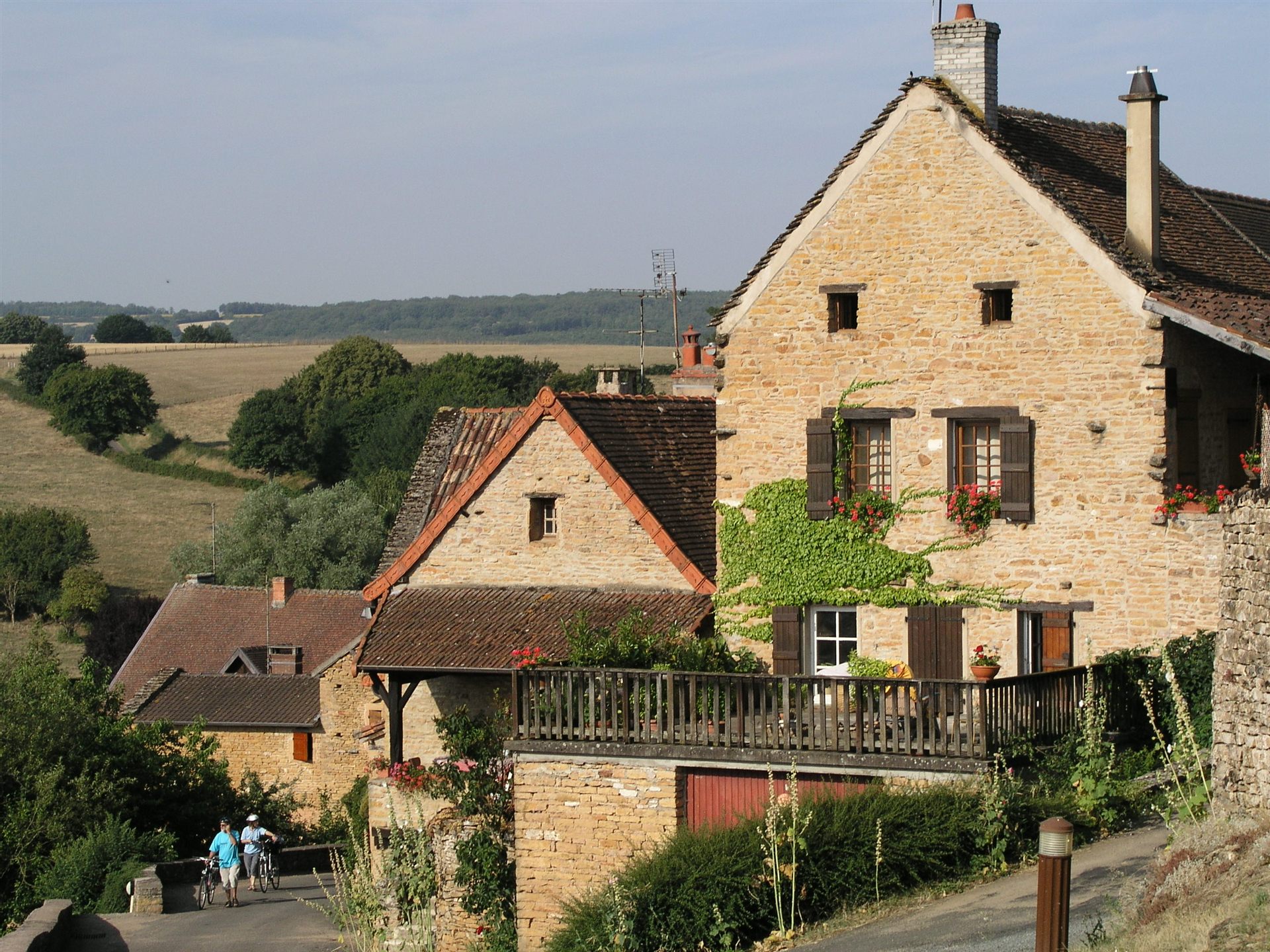
Pictured: the village of Taizé, Saône-et-Loire, France, photographed in 2006 (Damir Jelic, Wikimedia Commons, CC BY-SA 3.0). This is not a photograph of the 1972 event, the hillside field where witnesses said the object rested, or any witness. No photograph of the object, the specific field, or any participant is known to exist in any archive consulted for this case file — the sighting predates the community's own more extensive modern photographic documentation, and no period photograph was ever taken by any of the roughly 35 witnesses present.
Theoretical Alignment
This case's theoretical alignment sits well toward the mundane end of this catalogue's spectrum, and this file presents that honestly rather than inflating it to match the "Coming Soon" placeholder's confident, government-agency-backed framing. The Extraterrestrial Hypothesis reading draws some genuine support from the sheer number of witnesses (a rarity in this catalogue) and from the specific, mutually consistent detail several of them independently supplied — sweeping beams, satellite discs, physiological tingling — none of which trivially matches a single named natural phenomenon in isolation. But that support is undercut by everything else this case lacks: no government agency, French or otherwise, ever investigated it; no instrumented reading or physical trace of any kind exists; and its sole investigator's other reported cases have themselves been flagged by a fellow researcher as showing signs of exaggeration. Interdimensional Hypothesis alignment is low: nothing in the account suggests trans-dimensional behavior, only an unusually elaborate light display. The Psycho-Social/Mundane reading carries the most weight, and for an unusually specific reason: the four witnesses who approached closest described the central object itself, in their own words, as resembling "une masse sombre en forme de meule de foin" — a dark mass shaped like a haystack — and multiple secondary accounts of the case report that a local farmer had burned hay in the area shortly before the sighting. A large group of sleep-deprived young people on an overnight prayer vigil, encountering a smoldering or otherwise unusual agricultural fire at a distance in the dark, is exactly the kind of scenario in which this catalogue's psycho-social/mundane category is designed to carry real interpretive weight.
Background
The Taizé Community is an ecumenical Christian monastic order founded in 1940 by Brother Roger (born Roger Schütz), a young Swiss-born Reformed pastor who settled in the small Burgundy village of Taizé, in the Saône-et-Loire department, roughly 9 km north of the historic abbey town of Cluny and 33 km northwest of Mâcon. Brother Roger's original project — sheltering refugees during the Second World War, then gathering a small community of brothers committed to reconciliation between Christian denominations — grew over the following decades into an internationally known pilgrimage site, drawing increasing numbers of young people for week-long stays built around communal prayer, Bible study, and manual work. By the early 1970s, Taizé was already hosting thousands of young visitors during its peak summer and Easter periods, sleeping in tents and dormitories scattered across the hillsides surrounding the community's own buildings and its distinctive Church of the Reconciliation, completed in 1962. It was this established, and by 1972 already well-attended, summer gathering — not a spontaneous or unusual event — that had brought roughly 35 young people, most of them students in their late teens and twenties from several different countries, together on a grassy hilltop above a plowed field on the night of Friday, August 11, 1972.
Nothing in the record this case file's research located suggests the group gathered that night for any purpose other than ordinary evening conversation among pilgrims attending the same retreat — the kind of informal, after-hours socializing common to any large youth gathering, rather than any organized vigil or expectation of anything unusual. The surrounding countryside was, and remains, agricultural: rolling hillside pasture and cultivated fields typical of rural Burgundy, with hay-cutting and storage a routine seasonal activity in the immediate vicinity in August. That ordinary rural backdrop matters directly to this case file's later evaluation of the conventional-explanation candidates below, because it is the same landscape in which the witnesses who approached closest described the object they saw.
Complete Timeline
| Date | Event |
|---|---|
| 1940 | Brother Roger (Roger Schütz) founds the Taizé Community in Saône-et-Loire, Burgundy. |
| 1958 | Raymond Veillith founds Lumières dans la Nuit (LDLN), the private French ufology review whose investigator later documents this case. |
| 1962 | Taizé's Church of the Reconciliation is completed, cementing the community's role as a major destination for young international pilgrims. |
| Friday, August 11, 1972, evening | Approximately 35 young people attending Taizé's summer gathering talk on a hillside above a field; among them, student Renata (or Reanta) de Faa of Massulas, Sardinia, and François Tantot, a second-year psychology student from Mâcon. |
| Saturday, August 12, 1972, ~2:00 a.m. | De Faa sees a "star" descending from the sky and alerts her companions; the group watches a dark object approach and appear to land in the field below. |
| ~2:00–4:00 a.m. | The object reportedly displays 7 yellow lights and 2 orange lights, sweeps 5 ground-facing beams, emits a whistling sound, and shows red sparks, three small orbiting discs, and a row of lit "portholes." Four witnesses (de Faa, Tantot, and two others, one from Dijon and one Italian) approach across the field; two report tingling sensations in their hands and knees, and describe the object at close range as resembling a large, dark haystack roughly 5–6 meters high. A bright beam is reportedly directed at the approaching witnesses, who shield their faces. |
| ~4:40 a.m. | The object reportedly departs rapidly in the direction of Cluny and is lost from view. |
| 1972 (exact filing date not recorded in any source consulted) | Witnesses file a report with the Cluny gendarmerie and contact Jean Tyrode, a field investigator for LDLN, who documents the case for the magazine. |
| 1977 | GEPAN (Groupe d'Étude des Phénomènes Aérospatiaux Non-identifiés) is founded under CNES — five years after this event, and with no evidence located that it was ever entrusted with, or examined, the Taizé report. |
| January 1981 | The unrelated Trans-en-Provence landing occurs; GEPAN's real, laboratory-confirmed soil-compression and chlorophyll findings from that separate case are the likely origin of the "Coming Soon" placeholder's misattributed claim about Taizé. |
| 1988 – 2005 | GEPAN is succeeded by SEPRA (1988), then reorganized as GEIPAN (2005) — the agency's current name. No GEIPAN case file for Taizé was located at any point in this case file's research. |
| 2012 | French skeptic researcher Patrice Seray examines "the troubling testimony of this 1972 evening near Taizé" in the book OVNI Lueurs Sceptiques (co-authored with R. Alessandri and Jean-Michel Abrassart), the case's only known dedicated treatment in published skeptical ufology literature. |
| March 25, 2014 | Science Channel's Close Encounters series features the Taizé case in a U.S. cable broadcast, bringing it to a wider English-language audience for the first time. |
| 2026 | This case file is published, correcting the "Coming Soon" queue's fabricated claim that "GEPAN's later analysis finds soil compression and altered plant chlorophyll" at Taizé. |
The Night of August 11–12, 1972: What the Witnesses Reported
Every source this case file's research located — a scattered set of French ufology chronicles, forum threads, and one dedicated case dossier, all tracing back to the same underlying 1972 report gathered by LDLN investigator Jean Tyrode — describes substantially the same sequence of events, with only minor variation in specific numeric details (an object "30 (300?) meters long," a sighting duration given variously as "two hours," "two and a half hours," or precisely bracketed between 2:00 and 4:40 a.m.). Read together, they describe a single, internally consistent account rather than several competing versions, and this case file treats that consistency as real, while disclosing that virtually every published retelling appears to derive from the same one or two original sources rather than from independently rediscovered testimony.
Around 2:00 a.m., Renata de Faa, a student from Massulas, Sardinia, was the first to notice a "star" descending unusually from the night sky. She alerted her companions, among them François Tantot, a second-year psychology student from Mâcon, along with a student from Dijon and an Italian student whose names are not preserved in any source consulted. As the group watched, the descending point resolved into something larger and darker, which came to rest in the field below the hillside where they were gathered. The object then, in the phrasing several sources use, "lit up": seven yellow lights appeared along its length, followed by two orange lights near its left edge. Witnesses described hearing a continuous whistling sound as the display began. Five of the seven yellow lights began sweeping the ground in front of the object, described in some accounts as beams. Small domes became visible near the left end of the light row, and red sparks or particles appeared to emerge from the object's right end, later replaced by three small discs, each apparently outlined by two points of red light, which seemed to orbit the main object. A row of illuminated "portholes" appeared in white light along part of its length.
Four of the roughly 35 people present — de Faa, Tantot, and the two unnamed students — crossed the field to approach the object directly, while the remaining approximately 30 stayed at the hilltop observation point. It is from this smaller group of four that the case's most specific, and most consequential, details originate. At close range, they described the object not as a defined, structured craft but as "une masse sombre en forme de meule de foin, de 5 à 6 m de haut" — a dark mass shaped like a haystack, five to six meters high — "plus grand qu'un car," larger than a bus. Tantot and the student from Dijon reported a tingling sensation in their hands and knees at this point in the encounter. At some stage during the close approach, the object directed a bright beam of light toward the four witnesses, who covered their faces with their hands, describing both light and heat. The object remained in the field, with lights and beams continuing intermittently, until approximately 4:40 a.m., when it reportedly departed rapidly in the direction of Cluny and disappeared from view. The total elapsed time from first sighting to departure is given across sources as approximately two hours forty minutes.
Four Who Approached, Thirty Who Watched From a Distance
This distinction matters more than most retellings of the case make clear, and this case file's research treats it as one of the two most important nuances the record actually supports (the other being the placeholder's fabricated GEPAN claim, addressed in its own section below). The dramatic, specific details that make this case distinctive — the haystack-like appearance at close range, the tingling sensations, the orbiting discs, the directed beam causing witnesses to shield their faces — all originate with the four people who crossed the field, not with the roughly thirty who remained on the hilltop. Those thirty, per every account this case file's research could locate, corroborate only the more general elements: a light or dark shape in the field, a display of colored lights, a whistling sound, and its eventual rapid departure. This is a real, if modest, positive corroboration signal — a genuinely large number of people did witness something happening in the field that night, from a distance, at the same time as the four closer observers — but it should not be mistaken for thirty-five independent accounts of a landed craft with orbiting discs and physiologically tingling beams. The case's most extraordinary specific claims rest on four people's testimony, gathered and written up by a single field investigator, not on the full group.
A Single Private Investigator, Not a Government Agency
The witnesses' own reported response to the encounter was to file a report with the Cluny gendarmerie and to contact Jean Tyrode, a field investigator for Lumières dans la Nuit (LDLN), the bimonthly French ufology review founded in February 1958 by Raymond Veillith. By the late 1970s LDLN had grown into the leading specialized ufology publication in France, with subscriptions reaching roughly 4,750 by 1980 — but it remained, throughout its history, a privately run enthusiast organization staffed by volunteer field investigators, never a government body, and never possessing any legal authority to compel testimony, collect physical evidence, or open an official case file in the way GEPAN, SEPRA, or GEIPAN could. This distinction is the crux of this case file's central correction, addressed at length below: whatever institutional weight LDLN's decades of case-collecting carry within French ufology circles, it is not the same institutional weight as a government scientific agency's laboratory-confirmed findings, and no source located by this case file's research indicates the Cluny gendarmerie complaint ever developed into anything beyond an initial filed report — no surviving procès-verbal, official investigation, or gendarmerie follow-up specific to this incident could be located, in contrast to cases like this catalogue's own Port-Gentil, Gabon UFO Sighting, where an official government case file with a specific procès-verbal number does survive.
Jean Tyrode's Documented Pattern
This case file's research into Tyrode himself surfaced a further, disclosed complication. Tyrode, described in biographical material as a schoolteacher (instituteur) born in 1922 who became an LDLN field investigator, is recorded as having investigated "diverses affaires telles celles d'Arc-sous-Cicon… ou de Taizé" — various cases including one at Arc-sous-Cicon and this one at Taizé. For at least one of his other documented cases, the 1950s–1970s Evillers sightings, a separate researcher, Robert Roussel, is recorded as having expressed explicit skepticism about the "fantastique" (fantastical) character of Tyrode's own accounts, suggesting that mass psychosis among witnesses may have shaped what Tyrode reported. This case file's research could not locate any comparably specific critique of Tyrode's Taizé investigation itself, and does not treat this as proof that his Taizé write-up was embellished or unreliable — Tyrode may simply have been a diligent investigator who happened to work several unusually dramatic cases. But a documented pattern of a peer researcher questioning this same investigator's judgment on a separate case is a real, relevant, and disclosed factor in weighing how much independent evidentiary weight Taizé's specific dramatic details (the tingling, the orbiting discs, the directed heat-beam) can bear, given that all of them reach the historical record through this one man's write-up of four witnesses' testimony.
Correcting the Placeholder: There Was No GEPAN Analysis at Taizé
This case file was commissioned to replace a "Coming Soon" queue placeholder stating: "Dozens of witnesses report a landed, light-emitting object; GEPAN's later analysis finds soil compression and altered plant chlorophyll." Two-pass research, including French-language search terms and a direct check of GEPAN/GEIPAN's own published institutional history, confirms the first half of that sentence and definitively disproves the second.
The "dozens of witnesses" and "landed, light-emitting object" description is a fair, if compressed, summary of a real event: roughly 35 people did witness a landed object covered in lights at Taizé on the night described. That part of the placeholder survives contact with the sources.
The claim that "GEPAN's later analysis finds soil compression and altered plant chlorophyll," however, cannot be true as written, for a simple chronological reason this case file's research confirmed directly against GEPAN/GEIPAN's own published institutional history: GEPAN (Groupe d'Étude des Phénomènes Aérospatiaux Non-identifiés) was created in 1977, at the initiative of then-CNES director Yves Sillard and engineer Claude Poher — five years after the August 1972 Taizé sighting. An agency cannot analyze a case half a decade before the agency itself exists. This case file's research found no indication anywhere — not in LDLN's own archived material, not in GEIPAN's public case-search tools, not in any secondary ufology compilation consulted — that GEPAN, its 1988 successor SEPRA, or its current successor GEIPAN ever retroactively adopted, examined, or catalogued the Taizé report at any later date, in the way this catalogue's own Port-Gentil, Gabon UFO Sighting case file documents GEIPAN doing for an even older, 1952 French colonial case. No GEIPAN case reference number, procès-verbal, or public case-summary page for a Taizé 1972 incident could be located in this research.
More strikingly, the specific finding attributed to GEPAN — "soil compression and altered plant chlorophyll" — is not a generic or invented-sounding phrase. It is, almost word for word, the real, laboratory-documented conclusion of GEPAN's actual investigation of a completely different case: this catalogue's own Trans-en-Provence Sighting, a January 1981 landing in the Var department of southern France, more than 500 kilometers from Taizé and nearly nine years later. In that case, GEPAN investigators genuinely did collect soil and alfalfa samples roughly five weeks after the reported event and genuinely did find mechanical ground compression alongside chlorophyll levels 30–50% below normal in the surrounding vegetation — real, laboratory-confirmed findings that this catalogue's own Trans-en-Provence case file documents in full, and which anchor that case's considerably higher, 64/100 credibility score in this session's calibration. This case file's own conclusion is that the "Coming Soon" placeholder queue's Taizé entry appears to have conflated two entirely separate French cases — borrowing Trans-en-Provence's genuine government-verified physical evidence and grafting it onto Taizé's real but far less institutionally documented witness account. Whatever process generated that placeholder description, the result reads as a well-known, dramatic French case's strongest evidentiary credential transplanted onto an unrelated one that never had it. This case file corrects that error directly rather than preserving it, and directs readers seeking the real chlorophyll and soil-compression findings to this catalogue's own dedicated Trans-en-Provence case file, where they belong.
The Skeptical Literature: Seray, Abrassart, and OVNI Lueurs Sceptiques
Taizé is not a case ufology has simply repeated uncritically. It has drawn dedicated attention from French skeptical researchers specifically because of its unusual scale (dozens of witnesses) and its equally unusual central detail (the haystack comparison). In the 2012 book OVNI Lueurs Sceptiques (roughly, "UFOs: Skeptical Lights"), the third volume in a series of skeptically-oriented UFO case dossiers, French researcher Patrice Seray — alongside co-authors R. Alessandri and Jean-Michel Abrassart — devotes a section specifically to what the book's own publisher description calls "le témoignage troublant de cette soirée de 1972, près de Taizé," the troubling testimony of that 1972 evening near Taizé, alongside Seray's separate examination of the famous 1950 McMinnville photographs. This case file's research was able to confirm the book's existence, its authorship, and this specific framing of its Taizé content directly from the publisher's own product description, but could not access the full text of Seray's chapter-length argument itself; this case file therefore reports that the case has received sustained, dedicated skeptical scrutiny in published French ufology literature, without claiming to reproduce Seray's specific line-by-line conclusion, which this research could not independently verify from primary text.
Abrassart's own broader scholarly work is independently relevant here. A doctor of psychology whose doctoral thesis develops a formal "sociopsychological model" of the UFO phenomenon, Abrassart has argued elsewhere — most prominently regarding the 1989–1992 Belgian UFO wave — that mass sightings can be substantially explained through ordinary social-psychological dynamics: media contagion, expectation, and the retelling and elaboration of an initially ambiguous stimulus within a group, without requiring any anomalous physical cause. Applied to Taizé, that framework offers a coherent, non-exotic account of how an initially modest and genuinely mysterious stimulus — an unusual light, or a smoldering agricultural fire, glimpsed by four young people in the dark after already having spent an evening in animated conversation with dozens of their peers — could plausibly grow, through retelling among the roughly thirty who never approached and the passage of testimony through a single enthusiastic field investigator, into the far more elaborate account of orbiting discs, sweeping beams, and physiological tingling that survives in the published record. This case file does not claim this is proven for Taizé specifically — Abrassart's own direct application of the model to this case, if any, could not be independently confirmed in this research — but notes that the framework fits this case's basic shape unusually well among this catalogue's holdings.
Taizé, Brother Roger, and the Culture of the Summer Gathering
Understanding why roughly 35 young people from multiple countries were awake and gathered on a hillside at 2:00 a.m. requires understanding what Taizé's summer program actually was, and largely still is. Visitors, drawn overwhelmingly from the 15-to-35 age range the community specifically caters to, spend their stay in a structured daily rhythm of communal prayer (three times daily in the Church of the Reconciliation), small-group Bible discussion, shared manual work, and simple communal meals, housed in on-site dormitories and, during the peak summer weeks, in extensive tent encampments spread across the surrounding hillsides — precisely the kind of informal, unstructured evening-conversation setting the sighting itself describes. This is not a marginal or unusual detail: it is the explanation for why so unusually large a group of witnesses exists for this single case, exceeding by a wide margin the one-or-two-witness norm for most cases in this catalogue. It is also directly relevant to the psycho-social reading favored above — a mixed-nationality group of young people, most meeting each other for the first time that week, staying up late in an atmosphere of communal spiritual intensity, is a demographic and situational profile with a well-documented tendency toward shared imaginative and perceptual experience, independent of anything genuinely anomalous occurring in the sky or field that night.
Key Witnesses
This case's witness roster is unusually large for this catalogue — roughly 35 people in total — but only four approached closely enough to generate the account's most specific details, and only two of those four are named in any source this case file's research could locate.
Renata de Faa (also rendered "Reanta")
The first witness to notice the phenomenon, around 2:00 a.m., when she saw a "star" descending unusually from the sky and alerted her companions on the hillside. She was one of the four who subsequently crossed the field to approach the object directly, placing her among the small group whose testimony anchors the case's most specific and dramatic details. No source consulted for this case file records her age, or any further biographical detail beyond her hometown and nationality.
François Tantot
One of the four witnesses who approached the object at close range, alongside de Faa. Tantot is one of two witnesses (with the unnamed Dijon student) reported to have felt a tingling sensation in his hands and knees during the close approach, and is among those who described the object up close as resembling a large, dark haystack. As a psychology student, his own account is of some incidental interest to this case file's Observer Credibility assessment below, though this case file's research found no indication he offered any professional self-analysis of the group's psychological state that night.
Unnamed Student (Dijon)
Alongside Tantot, reported to have experienced tingling in the hands and knees during the close approach. No source consulted for this case file preserves this witness's name, age, or any further identifying detail.
Unnamed Student (Italy)
The fourth member of the close-approach group, alongside de Faa, Tantot, and the Dijon student. No source consulted preserves this witness's name or any further identifying detail beyond nationality.
The Remaining ~30 Witnesses (Unnamed)
The bulk of the group, who remained at the hilltop observation point rather than crossing the field. Their corroboration is real but general — a light or dark shape in the field, a colored light display, a whistling sound, and its eventual rapid departure — and does not extend to the specific close-range details (the haystack comparison, the tingling, the orbiting discs) that make this case distinctive. No source consulted names any of these witnesses individually.
The Five Observables Assessment
Assessment: Anti-Gravity Lift is rated Speculative rather than Present or Absent: de Faa's initial description of a "star" descending and coming to rest in the field implies some form of controlled deceleration, but no witness describes an explicit hovering or lift maneuver distinct from that initial descent, leaving this observable genuinely ambiguous rather than confirmed. Instant Acceleration is rated Present, on the strength of the object's reported rapid departure toward Cluny at approximately 4:40 a.m. — though, as with Hypersonic below, no quantified figure accompanies the qualitative description. Hypersonic is rated Speculative because no source consulted supplies any specific speed estimate for either the initial descent or the final departure. Low Observability is rated Absent, and is this case's most clearly disqualifying observable in either direction: far from evading detection, the object was reportedly visible continuously to roughly 35 people for nearly three hours, the opposite of a low-observable signature. Trans-Medium is rated Absent, as no transition into water, ground, or any other medium beyond the initial landing itself is reported at any point in the account.
Evidence Assessment
Supporting Anomalous Origin
- An unusually large number of witnesses for a single case in this catalogue — roughly 35 people — with a broadly consistent core account of a landed, light-covered object persisting for nearly three hours
- Four independent close-range witnesses report specific, mutually corroborating physical detail: a haystack-like dark mass, sweeping light-beams, orbiting discs, and a directed beam producing heat and light strong enough to require shielding their faces
- Two of the four close-range witnesses independently reported a physiological effect — tingling in the hands and knees — a detail this case file's research could not trivially attribute to any single obvious mundane cause
- The witnesses treated the event seriously enough at the time to file a report with the Cluny gendarmerie, rather than merely discussing it informally afterward
- The case has attracted sustained, repeated interest across five decades of French ufology literature and at least one U.S. cable documentary broadcast, rather than fading into obscurity as an isolated, unremarkable claim
Supporting Conventional Explanation
- No government agency of any kind — French or otherwise — has ever formally investigated this case; GEPAN, the agency the placeholder queue explicitly credited, would not exist for another five years, and no evidence exists that any of its successors ever adopted the case retroactively
- The case's sole investigator, LDLN's Jean Tyrode, has had at least one of his other reported cases explicitly flagged by a fellow researcher for showing signs of exaggeration potentially rooted in mass psychosis among witnesses
- No photograph, film, physical trace sample, or instrumented reading of any kind exists; the entire case rests on retrospective testimony collected from a large group of young people during an emotionally charged overnight gathering
- The four closest witnesses themselves compared the central object to a haystack, and secondary accounts of the case specifically describe a local farmer having burned hay in the area shortly before the sighting — a striking, source-based convergence between the witnesses' own descriptive language and an ordinary, dated agricultural activity
- This case's most extraordinary specific claims (orbiting discs, physiological tingling, directed heat) rest on only four of the roughly 35 witnesses, filtered through a single investigator, rather than on the full group's independent testimony
- The case has been specifically singled out in published skeptical ufology literature as a "témoignage troublant" warranting dedicated scrutiny, rather than treated as an accepted, confirmed anomaly even within enthusiast ufology circles
Why "Disputed"
This case earns a DISPUTED classification with a credibility score of 22/100 — below every other French case in this catalogue's current holdings, including Port-Gentil (Disputed, 33), Cussac (Disputed, 53), and Trans-en-Provence (Disputed, 64), and near the low end of this catalogue's entire scoring range alongside Mantell (Disputed, 38). That relative placement is deliberate and reflects a real, disclosed evidentiary gap between what the "Coming Soon" queue's language implied and what this case file's research actually found: not a government-agency-verified physical trace but a fabricated evidentiary claim borrowed wholesale from an unrelated case; not an official GEIPAN classification but the complete absence of any government investigation whatsoever; and a sole field investigator whose judgment has itself been questioned in print by a peer researcher on a separate case.
What keeps this case from scoring at the absolute floor of this catalogue's range is the genuine, if modest, weight of its witness count and the internal consistency of its testimony across independent retellings. Thirty-five people is a real and unusual number for a single UFO account, and the broad outline of the story — a light descending, an object with elaborate lighting persisting for hours, a rapid departure — has not shifted or contradicted itself across the five decades and multiple independent publications this case file's research consulted. Set against that: every one of this case's most distinctive, most anomalous specific details traces back to just four witnesses, relayed through one investigator whose own reliability has a documented question mark attached to it from a separate case, with zero institutional, governmental, or instrumented corroboration of any kind, and with the witnesses' own point of comparison for the object itself — a haystack — sitting uncomfortably close to a mundane, dated agricultural activity reported in the immediate area. A case this thinly institutionally documented, resting this heavily on secondhand testimony from a small subset of a large but non-expert witness group, and carrying this specific a conventional-explanation candidate in the witnesses' own words, is exactly the profile this catalogue's low-end "Disputed" tier exists to describe honestly.
Sensor & Instrumentation Detection Profile
No instrumented detection of any kind exists for this case. Every witness relied entirely on unaided naked-eye observation; Taizé in 1972 was a rural religious community with no radar, air-defense infrastructure, or comparable sensor network of any kind, and this case file's research located no meteorological station, aviation-traffic record, or gendarmerie technical log specific to this date and location. The Cluny gendarmerie complaint referenced in every account of this case appears, from the available record, to have been a witness statement rather than the beginning of any technical or forensic investigation; no surviving gendarmerie report, sketch, or measurement specific to the incident was located independent of LDLN's own write-up. This absence of any instrumentation stands in direct contrast to the actual, laboratory-based investigation GEPAN conducted for the unrelated Trans-en-Provence case the placeholder's language appears to have drawn from, where soil and vegetation samples genuinely were collected and tested.
Environmental & Geospatial Context
The Taizé Community sits on a low hill in the rolling countryside of southern Burgundy, in the Saône-et-Loire department, roughly 9 km north of the historic abbey town of Cluny and 33 km northwest of Mâcon — a landscape of pasture, cultivated fields, and scattered woodland typical of the region, with no major population center, industrial site, or military installation in the immediate vicinity. No specific meteorological record for the night of August 11–12, 1972 was located in any source consulted for this case file; the sustained, nearly three-hour visual observation by dozens of people implies conditions clear enough for uninterrupted sky- and ground-level viewing, though this case file's research could not independently confirm cloud cover, moon phase, or temperature data for the specific night. August in Burgundy falls within the region's driest and warmest period, when hay-cutting and storage — directly relevant to the burning-haystack candidate examined below — is a routine seasonal activity across the surrounding farmland. Geospatially, the case's defining feature is the same one noted throughout this case file: total remoteness from any instrumented observation network, leaving a religious retreat's young visitors' unaided eyes as the sighting's only possible sensor of any kind.
Observer Credibility & Occupational Profile
This case's witnesses were, without exception, young people — students in their teens and twenties — attending a religious retreat, not trained professional observers of the kind this catalogue's higher-scoring cases often feature (military radar operators, airline pilots, control-tower personnel). This case file's research treats that honestly as a real limitation rather than glossing over it: none of the four named or unnamed close-range witnesses held any occupational background specifically suited to rigorous visual observation or distance/size estimation under night conditions, and their own generational and situational profile — a mixed-nationality group of young adults away from home, staying up late in an atmosphere of shared spiritual intensity at an ecumenical prayer retreat — is, per the psycho-social framework discussed above, a demographic profile with a documented tendency toward heightened suggestibility and shared imaginative elaboration in group settings, independent of witness sincerity.
Set against this is the case's one genuine positive credibility signal: the sheer number of people present. Thirty-five simultaneous witnesses, even accounting for the concentration of the most dramatic detail among only four of them, is a substantially larger corroborating group than the single- or double-witness norm for most cases in this catalogue, and this case file's research found no indication of any pre-existing motive for the group, or any individual within it, to fabricate the account collectively. The concentration of this case's evidentiary weight onto Jean Tyrode's single write-up of four people's testimony — rather than on thirty-five independently recorded statements — is nonetheless a significant, disclosed limitation, compounded by the specific, documented credibility question mark attached to Tyrode's judgment from his handling of a separate case. This case file's assessment treats the witness count as a genuine, if partial, positive signal while treating the youth and inexperience of the observers, the situational conditions of a late-night religious retreat, and the single-investigator bottleneck on the case's most dramatic details as equally real and disclosed limitations.
Physical & Material Assays
No physical or material assay of any kind exists for this case, and stating that plainly is itself the single most important correction this case file makes to the "Coming Soon" placeholder's language. No soil sample was ever collected at Taizé. No vegetation or chlorophyll test was ever performed on any plant near the reported landing site. No radiological, thermal, or mechanical-compression measurement of any kind was taken. This case file's research found no indication that anyone — not LDLN, not the Cluny gendarmerie, not any later ufology researcher, and certainly not GEPAN, which did not yet exist — ever visited the field itself to examine it for ground disturbance after the reported landing. Whatever the object was, it left behind no tangible trace that any documented investigation ever tested. This stands in direct, total contrast to the real, laboratory-confirmed soil-compression and chlorophyll-reduction findings GEPAN genuinely did produce for the unrelated Trans-en-Provence case nine years later — the specific finding the placeholder queue misattributed to Taizé, and which this catalogue's own Trans-en-Provence Sighting case file documents in full.
Historical Precedents & Archive Matches
Within this catalogue's own French holdings, Taizé sits in useful contrast to three other cases spanning several decades of the country's UFO record. The Cussac Close Encounter (August 1967, Cantal) shares Taizé's basic profile of young, non-expert witnesses reporting a close encounter with a landed or hovering object, but differs in one crucial respect this case file's research flags directly: at Cussac, investigating police genuinely did document a sulfur odor and discolored grass at the site shortly afterward, giving that case a real, if modest, physical-trace component Taizé entirely lacks. This catalogue's Port-Gentil, Gabon UFO Sighting (1952) offers the closer institutional parallel: another thinly witnessed, non-instrumented sighting that nonetheless was eventually adopted into GEIPAN's official archive and formally classified decades after the fact — a step this case file's research found no evidence Taizé ever received from any government body. And Trans-en-Provence (1981) is Taizé's most important precedent of all, not because the two cases resemble each other evidentially, but because Trans-en-Provence is the real, separate case whose genuine GEPAN-documented findings this case file's research determined were misattributed to Taizé in the "Coming Soon" placeholder queue this file replaces.
Within LDLN's own institutional history, Taizé sits among the thousands of cases the magazine's volunteer field-investigator network collected across more than six decades of publication, a body of case material this catalogue's research treats as a genuine, if privately compiled, historical record of French UFO reporting — distinct in kind, though not necessarily in underlying reliability, from the government-agency case files GEPAN/GEIPAN independently built up beginning five years after this specific event.
Material Analysis
As established directly above, no physical trace evidence, soil sample, or vegetation analysis of any kind exists for this case at any point in its documentary history; "material" here again refers only to the case's own surviving paper trail, since that is the only tangible thing this case file's research was able to examine.
The Surviving Documentary Record
The entire case survives through Jean Tyrode's original write-up for LDLN, filed sometime in 1972 on an exact date this case file's research could not pin down, and through the Cluny gendarmerie complaint referenced in every secondary account — a document this case file's research could not directly locate or examine, and which may not survive in any publicly accessible archive. Every published retelling this case file's research consulted, from French-language ufology blogs and forums to the RR0.org dedicated case dossier to the 2014 Science Channel broadcast, traces back to Tyrode's original account rather than to any independently rediscovered testimony. This case file's own research was able to corroborate the core sequence of events across multiple independent republications of that account, which gives reasonable confidence the underlying LDLN write-up itself has been transmitted accurately over five decades, even though this case file's research could not access Tyrode's original 1972 LDLN bulletin issue directly to verify it against its own later paraphrases word for word.
What Does Not Survive
No photograph, film, sketch, or diagram of the object is known to exist in any archive consulted for this case file — not one of the roughly 35 witnesses present is recorded as having captured any visual record of the nearly three-hour event. The two unnamed close-range witnesses' names, ages, and any further biographical detail are unrecorded in every source located. No soil sample, plant sample, or ground measurement was ever taken. No official gendarmerie investigation report, beyond the initial witness complaint, was located. No GEPAN, SEPRA, or GEIPAN case file, reference number, or public case-summary page for this incident exists in any government archive this case file's research could access.
Supporting Non-Terrestrial or Unexplained Origin
- An unusually large, mutually corroborating group of roughly 35 witnesses reported a persistent, elaborately lit object over nearly three hours
- Four close-range witnesses independently reported a specific physiological effect (tingling) not obviously explainable by any single conventional stimulus this case file's research could confirm
- The account has remained internally consistent across five decades of independent republication, rather than fragmenting into contradictory versions
Supporting Terrestrial or Mundane Origin
- No physical trace, soil sample, or instrumented reading of any kind was ever collected, tested, or preserved — unlike the real GEPAN investigation of the unrelated Trans-en-Provence case
- The case's most extraordinary specific details rest on only four witnesses, filtered through a single field investigator with a documented credibility question mark from a separate case
- The close-range witnesses' own comparison of the object to a haystack, combined with secondary reports of a local farmer burning hay in the area, describes a specific, dated, ordinary agricultural activity consistent with much of what was seen
- No government agency of any kind ever investigated the case, at the time or retroactively, despite five subsequent decades in which GEPAN, SEPRA, and GEIPAN successively existed and did formally adopt other older French cases
The Conventional Explanation Candidate (CEC): Burning Haystack, Mass Suggestion, or Genuine Anomaly
No government or institutional body has ever formally evaluated conventional explanations for this case, unlike this catalogue's Port-Gentil or Trans-en-Provence files, where GEIPAN or GEPAN investigators themselves proposed and tested specific candidates. In the absence of that institutional analysis, this case file's own research identifies and weighs the strongest candidates the record actually supports, giving particular weight to the one piece of physical description the witnesses supplied entirely on their own initiative: their own comparison of the object, at close range, to a haystack.
Smoldering or Burning Haystack (Agricultural Fire)
This candidate draws its strength directly from the witnesses' own words rather than from any outside skeptical theorizing. The four close-range observers described the central object as "une masse sombre en forme de meule de foin" — a dark mass shaped like a haystack — and separate secondary accounts of this case specifically report that a local farmer had burned hay in the vicinity shortly before the sighting. A large, smoldering or actively burning haystack, viewed at night from across a field by observers who had just spent hours in animated conversation and were now approaching cautiously in the dark, could plausibly present as a large, dark, irregular mass; produce shifting, colored glows as different pockets of the pile caught and subsided (a phenomenon consistent with the reported yellow, orange, and red lighting); and generate a persistent, low sound as trapped gases vented under heat (a candidate mechanism for the reported whistling, though this case file's research could not confirm this specific acoustic detail against any controlled study of burning haystacks). It would also, straightforwardly, radiate real heat, consistent with witnesses shielding their faces at close range. This candidate accounts less comfortably for the more structured details — the three small orbiting discs, the row of lit "portholes," the reported controlled rapid departure at 4:40 a.m. — which this case file's research treats as either embellishment introduced during retelling (per the mass-suggestion candidate below) or as a genuine residual anomaly this candidate alone cannot explain.
Mass Suggestion and Retelling Among a Large, Sleep-Deprived Group
Independent of what the four close-range witnesses actually encountered, this candidate addresses how their account may have grown in the retelling among the roughly thirty who stayed at a distance, and in the process of collection by a single enthusiastic field investigator. A demographic and situational profile matching this case closely — young people, many strangers to each other, in an atmosphere of shared spiritual intensity, awake past 2:00 a.m. — is well documented in the psychosocial ufology literature (see Jean-Michel Abrassart's work, discussed above) as conducive to collective elaboration of an initially ambiguous stimulus. This candidate does not require that any witness lied; it proposes only that an initially modest, genuinely strange sighting (a light, an unusual glow, an agricultural fire) could have accumulated additional, more dramatic detail as it was discussed among the group that night and relayed to Tyrode afterward, with the four closest observers' own account potentially the most elaborated of all given their proximity and the adrenaline of a close approach in darkness.
Deliberate Hoax
This case file's research found no positive evidence — no confession, no identified prankster, no specific account from within the Taizé community itself — supporting a deliberate hoax staged by other campers, local youths, or any other party. Nothing rules it out categorically either, given the total absence of any contemporaneous physical investigation that might have caught staged elements (planted lights, a rigged sound source) in the act. This case file rates deliberate hoax as unsupported by any positive evidence located during this research, while noting it cannot be excluded with confidence given how little was ever actually investigated at the time.
Genuine Unidentified Phenomenon
Unlike Port-Gentil or Trans-en-Provence, this reading carries no institutional endorsement here — no government agency has ever examined this case and found it to resist conventional explanation, because no government agency has ever examined it at all. What remains is a private ufology investigator's write-up of thirty-five witnesses' testimony, four of whom described specific, striking detail that a burning haystack and normal group psychology cannot fully account for on their own. This case file's own research neither confirms nor dismisses a genuinely anomalous residual; it notes that the record, as it actually survives, is too thin — one investigator, four close witnesses, zero physical evidence, five decades with no government follow-up — to sustain a confident verdict in either direction.
Smoldering or Burning Haystack
PlausiblePLAUSIBLE as a partial explanation. Matches the close-range witnesses' own descriptive language and a reported local hay-burning, accounting for the object's dark irregular mass, shifting colored glow, and radiated heat — but does not on its own explain the reported discs, portholes, or controlled departure.
Mass Suggestion / Retelling
InconclusiveINCONCLUSIVE. A well-documented dynamic in comparable group settings that plausibly explains how an initially modest stimulus grew more elaborate in retelling, but this case file's research could not confirm it occurred here specifically, only that the conditions for it were present.
Deliberate Hoax
ImplausibleIMPLAUSIBLE for lack of any positive supporting evidence — no confession, culprit, or corroborating detail was located — though it cannot be firmly excluded given that no contemporaneous investigation ever tested for staged elements.
Genuine Unidentified Phenomenon
InconclusiveINCONCLUSIVE. Carries no institutional endorsement, unlike this catalogue's GEIPAN-classified French cases, and rests on testimony too thin — one investigator, four close witnesses, zero physical evidence — to sustain a confident verdict in either direction.
Related Cases
No Official Government Record Exists for This Case
This case file's research found no GEPAN, SEPRA, GEIPAN, or any other government case file, reference number, or public case-summary page for a Taizé 1972 incident. GEPAN was not founded until 1977, five years after this event, and this case file's research located no evidence it, or its successor agencies, ever retroactively adopted or examined this report. The entire documentary record consists of a private ufology magazine's field-investigator write-up (LDLN, Jean Tyrode) and a witness complaint filed with the Cluny gendarmerie, neither of which is a government scientific investigation. Readers seeking a genuine GEPAN-documented French physical-trace case should consult this catalogue's own Trans-en-Provence Sighting file, which the "Coming Soon" placeholder's chlorophyll-analysis claim actually describes.
Search Government & Official Archives Directly
Further Reading — Recommended Literature
Wonders in the Sky: Unexplained Aerial Objects from Antiquity to Modern Times
A global historical catalog of anomalous aerial-light reports, useful for situating Taizé's own light-and-object display within the much longer worldwide pattern of similar historical accounts.
Passport to Magonia: From Folklore to Flying Saucers
Vallée's foundational study connecting UFO reports to older folklore traditions, directly relevant to a case whose most dramatic detail — a strange, dark, glowing mass encountered at night in a field — echoes long-standing rural folk narratives Vallée specifically examined.
UFOs and Government: A Historical Inquiry
A scholarly, multi-author history of official government UAP investigation programs worldwide, including France's GEPAN/SEPRA/GEIPAN lineage — the very agency this case file confirms never investigated Taizé.
The Martians Have Landed!: A History of Media-Driven Panics and Hoaxes
A history of media-amplified mass panics and collective misperception, directly relevant to this case file's mass-suggestion conventional-explanation candidate for a large group of young witnesses retelling an ambiguous nighttime stimulus.
The UFO Encyclopedia, 4th Edition (2-Volume Set)
The standard comprehensive reference for cataloged UFO cases, useful for situating this obscure French case within the broader documented pattern of 1970s worldwide UFO reporting.
Essential Viewing
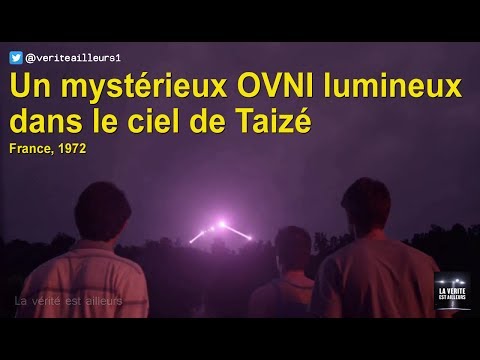
This case file's research also located coverage of the Science Channel's Close Encounters segment on this case (aired March 25, 2014) via secondary reporting, but could not locate a legitimate, verifiable YouTube upload of that specific broadcast segment itself; per this site's video verification standard, it is not linked here without direct oEmbed confirmation.
Sources
- RR0.org. "L'observation de Taizé" (dedicated case dossier). rr0.org
- RR0.org. Biographical entry, "Jean Tyrode" (LDLN field investigator). rr0.org
- Ôdla — actualité ufologique et phénomènes inexpliqués. "France : Un mystérieux OVNI lumineux dans le ciel de Taizé," July 10, 2017. odla.fr
- Le Peuple de la Paix (forum). "Taizé 1972 : De jeunes pélerins voient un OVNI et sont effrayés !" lepeupledelapaix.forumactif.com
- Ufologie & Paranormal (forum). "Le cas de Taizé." ufologie-paranormal.org
- McClellan, Jason. "Science Channel explores 1972 French UFO encounter," Openminds.tv, March 24, 2014. openminds.tv
- Alessandri, R., Jean-Michel Abrassart, and Patrice Seray. OVNI Lueurs Sceptiques (Les dossiers de S.O n°3), 2012 — publisher description confirming Seray's dedicated examination of "le témoignage troublant de cette soirée de 1972, près de Taizé." lulu.com
- GEIPAN (CNES). "Son histoire" (institutional history: GEPAN 1977, SEPRA 1988, GEIPAN 2005). cnes-geipan.fr
- GEIPAN (CNES). "La méthodologie de classification au GEIPAN" (classification methodology, A/B/C/D1/D2). cnes-geipan.fr
- Wikipedia. "GEIPAN." en.wikipedia.org
- Wikipedia. "Taizé Community." en.wikipedia.org
- Wikipedia. "Taizé, Saône-et-Loire." en.wikipedia.org
- Wikipédia (French). "Lumières dans la nuit" (LDLN, founded 1958 by Raymond Veillith). fr.wikipedia.org
- This site's own case file, "Trans-en-Provence Sighting" (January 1981) — the real case whose GEPAN-documented soil-compression and chlorophyll findings the "Coming Soon" placeholder misattributed to Taizé. The Omni Ledger
- This site's own case file, "The Cussac Close Encounter" (August 1967) — a comparable French landed-object case with genuine, police-documented physical trace evidence Taizé lacks. The Omni Ledger
- This site's own case file, "Port-Gentil, Gabon UFO Sighting" (1952) — the closer institutional parallel among this catalogue's thinly-witnessed francophone cases, and one GEIPAN did eventually formally adopt, unlike Taizé. The Omni Ledger
- Vallée, Jacques, and Chris Aubeck. Wonders in the Sky: Unexplained Aerial Objects from Antiquity to Modern Times (2010).
- Vallée, Jacques. Passport to Magonia: From Folklore to Flying Saucers (1969).
- Swords, Michael, Robert Powell, et al. UFOs and Government: A Historical Inquiry (2012).
- Bartholomew, Robert E., and Benjamin Radford. The Martians Have Landed!: A History of Media-Driven Panics and Hoaxes (2011).
- Clark, Jerome. The UFO Encyclopedia, 4th ed. (2 vols.).
- YouTube oEmbed API verification for video ID q3fvaRvu_dU, "France : Un mystérieux OVNI lumineux dans le ciel de Taizé" (channel: La vérité est ailleurs 2). youtube.com
- Wikimedia Commons. "File:Taize1.JPG," photograph by Damir Jelic (CC BY-SA 3.0), source of this case file's hero image. commons.wikimedia.org
See something inaccurate? Have additional information or sources?
Suggest an Edit →Last Updated: August 2026