
Todmorden Police Encounter
In the last hour before dawn on November 28, 1980, on-duty West Yorkshire police constable Alan Godfrey was searching for stray cattle on Burnley Road at the edge of Todmorden when he came upon a rotating, domed, disc-shaped object hovering low over the road, blocking his path. His patrol car's VHF radio and personal UHF handset both failed. After a burst of light, he found himself further down the road with fifteen to thirty minutes he could not account for. Investigators later documented a dry, swirled circular patch on the otherwise rain-soaked road surface and split soles on his police-issue boots. Eight months later, a series of hypnotic regression sessions produced a detailed abduction narrative — a bearded, Biblical-looking figure called Yosef, small robot-like assistants, and a black dog — that drew national tabloid attention and prompted West Yorkshire Police to require Godfrey to undergo a psychiatric fitness-for-duty evaluation, which found him mentally sound. The case remains one of the most discussed and most credentialed witness accounts in British ufology, precisely because its two layers — a corroborated physical encounter and a hypnosis-derived abduction story — carry very different evidentiary weight.

Pictured: Todmorden Town Hall, the market town's civic centerpiece, straddling the historic Yorkshire–Lancashire border in the Calder Valley. This is not the actual sighting site, which lies on Burnley Road at the edge of town near open moorland, and no photograph of that specific stretch of road on the night in question is known to exist; this general town photograph is presented honestly as such. Photo by David Ward, via Geograph/Wikimedia Commons, licensed CC BY-SA 2.0.
Theoretical Alignment
This case's theoretical weighting has to account for two very different bodies of evidence sitting inside one file. The initial sighting — a solid, structured object at close range, corroborating physical traces, and equipment failure — is the kind of account that has historically driven Extraterrestrial-hypothesis interpretation, giving ETH a real, non-trivial alignment here. The abduction material, however, emerged exclusively from hypnotic regression conducted eight months after the fact, a method mainstream psychology does not treat as a reliable way to recover accurate memories (see the Observer Credibility section below) and one closely associated with exactly the kind of narrative confabulation the Psycho-Social hypothesis is built to explain. That split is the reason this file weights PSH highest of the three frameworks while still crediting ETH more than this site typically does for a purely hypnosis-derived narrative: the sighting itself, stripped of the later hypnosis sessions, is a comparatively strong, if single-witness, physical encounter case in its own right.
Background
To weigh this case fairly requires understanding three things: who Alan Godfrey was and what his job that night actually involved, what kind of town Todmorden is and why the wider Pennine region was already primed for UFO reports by late 1980, and what came before Godfrey's own sighting in the same small area just five months earlier.
Alan Godfrey and West Yorkshire Police
Alan Godfrey was, in November 1980, a serving police constable with West Yorkshire Police, based in Todmorden. In the early hours of November 28, he was on a routine overnight patrol and had been asked to look into reports of cattle that had strayed from a local farm, a mundane task that took him along Burnley Road toward the edge of town near open moorland. As a uniformed, on-duty officer with an official reason to be exactly where he was, Godfrey occupies an unusually well-documented occupational position among UFO witnesses generally: his movements that night were, in principle, subject to police radio logs, patrol records, and the expectations of a professional job, all of which give this case a baseline of institutional structure that a purely private, unwitnessed sighting would not have.
Todmorden: A Mill Town on the Yorkshire–Lancashire Border
Todmorden is a market and former textile-mill town in the Calder Valley, in the metropolitan borough of Calderdale, West Yorkshire. The town historically straddled the border between the counties of Yorkshire and Lancashire until an 1888–1889 local government reorganization placed it entirely within the West Riding of Yorkshire, and it still carries a visibly mixed architectural and cultural character as a result. Its economy grew rapidly in the late 18th and 19th centuries around cotton-weaving mills, powered first by the fast-flowing streams of the surrounding Pennine hills and later by steam, with the Fielden family — whose member John Fielden was the MP chiefly responsible for the Ten Hours Act of 1847 limiting factory working hours — among the town's most prominent industrialists. The Rochdale Canal, the first trans-Pennine canal, reached Todmorden in 1804, and the Manchester and Leeds Railway's Summit Tunnel connected the town to the wider rail network in 1841, giving Todmorden strong transport links in both directions across the Pennines. The town's most distinctive landmark, the 121-foot Stoodley Pike Monument, stands on the moors roughly 2.5 miles east of the town center and commemorates the end of the Napoleonic Wars (rebuilt in its present form after the Crimean War), dominating the skyline above the valley — a visible reminder that Todmorden sits in genuinely dramatic, high, exposed Pennine moorland terrain immediately adjacent to its built-up center, terrain of exactly the kind that later investigators would examine for radar shadowing, unusual local lighting, and line-of-sight effects relevant to Godfrey's sighting.
The Pennine UFO Wave
Godfrey's sighting did not occur in isolation. Beginning in mid-1980, the Pennine hills of northern England, spanning parts of West Yorkshire, Lancashire, and Greater Manchester, saw a documented cluster of UFO reports that British researcher Jenny Randles would go on to chronicle at length in her 1983 book The Pennine UFO Mystery. By the time of Godfrey's own encounter, Todmorden and the surrounding area had already received substantial UFO-related press coverage that year, giving the town a reputation, which persists in British ufology and in later journalism to this day, as one of the UK's most concentrated UFO "hotspots." This site's own analysis treats the pre-existing local wave as directly relevant context on two sides of the argument at once: it means Godfrey's own report did not appear in a vacuum of purely personal, idiosyncratic testimony, since broadly similar reports from unrelated observers were already accumulating in the same area; but it also means the possibility of press-driven expectation, regional rumor, and a generally UFO-primed local imagination cannot be ruled out as contributing to how quickly and specifically an ambiguous nighttime light or object might be interpreted.
The Zigmund Adamski Case, and Godfrey's Own Prior Role in It
Five months before his own sighting, in June 1980, a 56-year-old Polish-born coal miner named Zigmund Adamski, resident in Tingley, West Yorkshire, went missing from his home while out shopping. Five days later, at 3:45 PM on June 11, his body was found lying on top of a coal heap in a Todmorden coal yard, roughly five hours after the yard had last been in use. His clothing was unusually clean given the sooty surroundings, his suit was fastened incorrectly, his hair was oddly short and freshly cut despite his days-long disappearance, his watch, wallet, and ring were missing, and his skin bore unusual burns treated with a yellow-green ointment that toxicology testing was unable to identify. The coroner recorded an open verdict, finding the medical cause of death to be a heart attack while stating that where Adamski had been and what led to his death "could not be answered."
This site's own research found a detail considerably more specific than the loose geographic and temporal proximity often cited between this case and Godfrey's own encounter: by multiple, independently reported accounts, Alan Godfrey himself was one of the police officers who attended the scene and discovered Adamski's body at the coal yard, less than a mile from where he would have his own UFO sighting five months later, and is quoted describing the dead man's eyes as wide open, reflecting "a look of sheer terror," with Godfrey himself later remarking that the body appeared "as if he had been placed there by someone or something." This is a real, documented, first-hand connection between Godfrey and the Adamski case, not merely a coincidence of shared geography, and this site's own analysis treats it as directly relevant context for weighing Godfrey's later sighting: by the time Godfrey encountered his own object on Burnley Road, he had personally been present at, and personally found deeply unsettling, one of the most publicized unexplained deaths in recent local memory, a experience that plausibly primed exactly the kind of heightened alertness and readiness to interpret an ambiguous nighttime object in dramatic terms that some skeptical researchers have proposed as a contributing factor to his own encounter. This site's research nonetheless found no evidence of any specific causal or investigative link between Adamski's actual death and the object Godfrey later reported — no named investigator has proposed that the same physical phenomenon caused both events — and treats the connection as a real, documented biographical fact about Godfrey himself rather than as evidence the two incidents share a common origin.
Complete Timeline
| Date | Event |
|---|---|
| 1888–1889 | Local government reorganization places Todmorden, previously split between Yorkshire and Lancashire, entirely within the West Riding of Yorkshire. |
| Mid-1980 | A wave of UFO reports begins across the Pennine hills of West Yorkshire, Lancashire, and Greater Manchester. |
| June 6, 1980 | Zigmund Adamski disappears from his home in Tingley, West Yorkshire. |
| June 11, 1980, 3:45 PM | Adamski's body is found on a coal heap in a Todmorden coal yard under unexplained circumstances; Alan Godfrey is one of the attending officers; the coroner later records an open verdict. |
| November 28, 1980, c. 5:00–5:30 AM | Sighting begins. PC Alan Godfrey, searching for stray cattle on Burnley Road at the edge of Todmorden, encounters a rotating, domed disc hovering low over the road. His patrol car's VHF radio and personal UHF handset both fail. |
| Same morning | Following a burst of light, Godfrey finds himself roughly 100 yards further along the road, with 15–30 minutes he cannot account for; the object is gone. |
| Same morning, shortly after | Godfrey reports the sighting at Todmorden police station and sketches the object from memory; a dry, swirled circular patch is later found on the otherwise rain-soaked road, and the soles of his boots are found split. |
| Same night, separately | A driver near Cliviger, several miles away, and a separate Halifax police patrol both report unrelated bright lights or glows in the same general period, cited by later investigators as loosely corroborating a wider aerial phenomenon that night. |
| Within days | West Yorkshire Police release Godfrey's report to the local press; national tabloid coverage follows. |
| Early 1981 | British researcher Jenny Randles begins investigating the case, interviewing Godfrey and cataloguing other regional reports. |
| c. July 1981 | Under hypnotic regression conducted by a Manchester-based psychiatrist, Godfrey recalls being drawn into the craft by a beam of light, examined, and questioned by a bearded figure he identifies as "Yosef" and several small robot-like assistants. |
| 1981, later sessions | Further hypnosis sessions with different therapists are conducted and, in some cases, video-taped, producing additional narrative detail. |
| 1981 | West Yorkshire Police require Godfrey to undergo a psychiatric evaluation to assess his fitness for duty; he is found to be psychologically sound. |
| 1983 | Jenny Randles publishes The Pennine UFO Mystery, the definitive early investigative account of the case and the wider regional wave. |
| 1984 | Godfrey leaves West Yorkshire Police, citing a physical injury sustained during an unrelated crime-prevention incident as the immediate cause, while later stating the UFO case had made his position within the force untenable. |
Detailed Narrative
A Routine Patrol for Missing Cattle
By Godfrey's own consistent account, the night of November 27–28, 1980 began as an entirely ordinary overnight shift. He had been asked to follow up on a report of cattle that had strayed from a farm near the edge of Todmorden, a mundane rural policing task that took him out along Burnley Road in the direction of open moorland shortly before dawn. He was alone in his patrol car, driving slowly in the dark, when he saw what he first took to be a double-decker bus stopped in the road ahead — a detail this site's own analysis treats as genuinely useful, since it documents Godfrey's own first, ordinary interpretive instinct before any stranger explanation formed.
The Object Itself
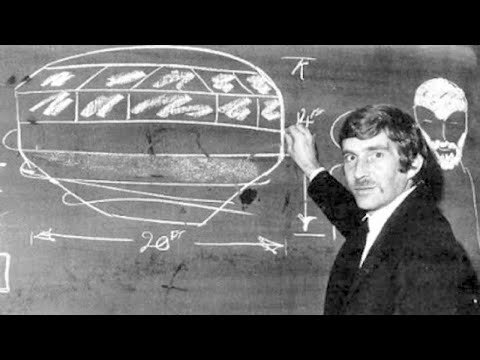
As Godfrey drove closer, he says the shape resolved into something entirely different: a solid, metallic-looking, disc-shaped object with a raised dome on top and, by some accounts, a row of windows or lights around its middle, roughly 20 feet in diameter, rotating slowly and hovering a short distance above the road surface, directly blocking his path. He stopped his car and, by his own account, took out his accident report pad and made a quick sketch of the object's shape, a detail this site's own methodology treats as a genuinely valuable contemporaneous record, since a sketch made in the moment, before any elaboration or media exposure, is a stronger piece of evidence than a purely verbal recollection given after the fact.
Radio Failure
Godfrey has stated that as he observed the object, both his patrol car's VHF radio and his personal UHF handset ("batphone") stopped working, cutting him off from any means of immediately radioing for backup or corroboration. Equipment failure of this kind is a recurring feature of close-range UFO reports generally and is treated by proponent researchers as a signature electromagnetic-interference effect; this site's own analysis notes, without asserting either explanation is correct, that VHF/UHF police radio equipment of this era was not uncommonly subject to genuine, purely mundane dead zones, terrain shadowing (directly relevant given the surrounding hilly Pennine terrain described in the Environmental & Geospatial Context section below), and battery or hardware faults unrelated to any external phenomenon, and that no independent technical fault report or radio engineer's inspection of Godfrey's specific equipment from that shift is known to survive in any published source this site's research could confirm.
The Missing Time
Godfrey's account continues that the object then departed in a sudden burst of light, after which he found himself further along Burnley Road — by most published accounts, roughly 100 yards from where he had originally stopped — with the object gone and no clear memory of the intervening period. Comparing the time on his dashboard clock or watch to what he judged should have elapsed, Godfrey and later investigators estimated a gap of somewhere between 15 and 30 minutes he could not account for. This missing-time detail is, along with the physical trace evidence described below, one of the two pieces of the case that exist independently of the later hypnosis sessions, resting instead on Godfrey's own immediate, waking recollection and simple arithmetic against a clock.
Physical Trace Evidence
Following his shift, Godfrey reported the encounter to his colleagues and to investigators who visited the site. Two specific physical details were documented: a circular patch of road surface at the reported hover location that was dry and marked with a swirled pattern, in contrast to the surrounding road, which had been thoroughly soaked by heavy rain earlier that night, and the discovery that the soles of Godfrey's police-issue boots had split, in a manner some investigators described as consistent with having been dragged or scraped against a rough surface. This site's own analysis treats both details as genuinely significant, if imperfect, physical corroboration: unlike a purely testimonial claim, a road surface's dryness pattern and a boot's physical condition are, in principle, externally verifiable facts, independent of Godfrey's own memory or credibility. Their evidentiary weight is nonetheless limited by the absence of any published contemporaneous forensic photograph, laboratory analysis, or chain-of-custody documentation of either the road patch or the boots in any source this site's research could locate; both details are known to this site principally through investigators' and Godfrey's own later descriptions rather than through an independently preserved and testable physical record.
Same-Night Corroboration, Loosely Construed
Investigators, including Jenny Randles, subsequently identified other reports from the same general night and region: a motorist near Cliviger, several miles from Todmorden, reported a brilliant white object in the sky, and a separate Halifax police patrol reported observing an unusual blue-white glow descending into a valley. Neither of these reports placed its observer at Godfrey's own location, and neither is independently confirmed to describe the same object Godfrey saw rather than a separate, unrelated phenomenon; this site's own methodology therefore treats them as loose, regional, same-night corroboration of a broader unusual aerial phenomenon in the area that night, a real but modest evidentiary asset, rather than as direct, co-located eyewitness confirmation of Godfrey's specific encounter.
The Hypnotic Regression Sessions
Approximately eight months after the sighting, in the summer of 1981, Godfrey underwent hypnotic regression conducted by a Manchester-based psychiatrist, with further sessions following, using different therapists, some of which were video-taped. Under hypnosis, Godfrey described being struck by a beam of light that drew him, seemingly weightless, into the craft; waking on what felt like an examination table inside a room resembling an ordinary house rather than a futuristic interior, in the presence of a large black dog; and being approached by a bearded, human-looking man whom Godfrey named "Yosef," dressed in clothing Godfrey described as distinctly Biblical in style, who communicated with him telepathically. Assisting Yosef, in Godfrey's hypnotic account, were several small, robot-like beings "the size of a five-year-old lad," with heads he described as shaped like a lamp. Notably absent from Godfrey's account, as multiple researchers have pointed out, were the more clinical or invasive procedures — fluid sampling, physical probing — common to many other publicized abduction narratives of the era; Yosef instead asked Godfrey a series of questions and made vague reference to a future encounter, and by some accounts appeared to repair or address a pre-existing physical injury from Godfrey's police work.
Godfrey's Own Ambivalence
Perhaps the single most important detail bearing on how this case should be read is Godfrey's own stated position on the hypnosis material, expressed consistently over subsequent decades: he maintained that his original sighting of the object itself was real, but stated explicitly that he could not determine whether the specific narrative that emerged under hypnosis represented a genuine memory, a dream, a fantasy, or some mixture of all three. This site's own analysis treats Godfrey's own candor on this point as a meaningfully positive credibility signal distinct from the question of whether the hypnotic content itself is reliable: a witness actively promoting his own most sensational material as unquestionably true would be a different, and more skeptically-weighted, kind of case than one whose central witness has himself always flagged the hypnosis-derived portion as genuinely uncertain.
National Press and the Force's Response
Within days of the initial sighting being reported, and considerably more so once the hypnosis sessions produced the abduction narrative, the case attracted heavy national tabloid coverage, turning Godfrey into a recognizable, if reluctant, public figure; he later appeared on the BBC's Breakfast Time programme in 1984 alongside actor Colin Baker. West Yorkshire Police, faced with a serving constable whose name was now nationally associated with an alien abduction story, required Godfrey to undergo a psychiatric evaluation specifically to assess his fitness for continued duty. That evaluation found him psychologically sound and healthy, with no diagnosed mental illness or capacity issue — a genuinely significant, independently documented finding that directly counters any suggestion the case originated in a diagnosable psychiatric disturbance, even as it says nothing about whether the specific content of either the sighting or the hypnosis sessions was accurate. Godfrey has said that his position within the force nonetheless became difficult to sustain, describing being effectively pushed toward retirement; he left West Yorkshire Police in 1984, officially citing a physical injury sustained during an unrelated crime-prevention intervention, while stating in later interviews that the UFO case had made continuing in the role untenable regardless.
Key Witnesses
Alan Godfrey
The case's sole primary witness. An on-duty, uniformed officer with an official reason to be on Burnley Road that night, Godfrey made a contemporaneous sketch of the object, reported it through normal police channels rather than to the press first, and underwent and passed a police-ordered psychiatric fitness evaluation. He has consistently maintained the reality of the original sighting while explicitly expressing uncertainty about the reliability of the abduction narrative that later emerged under hypnosis — a distinction this site's own analysis treats as central to fairly weighing the case. He left the police force in 1984 and has continued to discuss the case publicly in the decades since.
Jenny Randles
A prominent British ufologist and, at the time, an investigator affiliated with the British UFO Research Association, Randles began investigating the case within weeks of the original report, interviewing Godfrey directly and cataloguing other reports from the same regional wave. Her 1983 book The Pennine UFO Mystery remains the most detailed and widely cited independent investigative account of the case, and her involvement is treated by this site's own methodology as a genuine, positive credibility factor: the case was examined by an experienced outside investigator relatively soon after the event, rather than being reconstructed years later purely from press cuttings.
Zigmund Adamski
Not a witness to Godfrey's own later UFO sighting, but directly connected to this case through Godfrey's own prior professional involvement: Godfrey was one of the officers who discovered Adamski's body at a Todmorden coal yard in June 1980, an experience discussed at length in the Background section above. No named investigator has proposed that the same underlying phenomenon caused both Adamski's death and Godfrey's later sighting, and this file does not treat the two events as sharing a common cause; it does treat Godfrey's personal, first-hand prior exposure to the unsettling and still-unexplained Adamski case as directly relevant psychological and biographical context for his own encounter five months later.
The Five Observables Assessment
The Five Observables framework, developed by the Pentagon's Advanced Aerospace Threat Identification Program to describe performance characteristics beyond known conventional technology, is applied here to Godfrey's own directly witnessed sighting; it does not meaningfully apply to the separate hypnosis-derived abduction narrative, which describes no comparable flight-performance characteristics of its own.
Assessment: Godfrey's directly witnessed sighting registers genuine, if limited, performance-anomaly characteristics on this framework: a large, solid-appearing object holding a stationary hover close to the ground with no visible means of lift is a real, distinctive claim, independent of anything that emerged later under hypnosis. Its departure "in a burst of light" is treated as only speculatively an instant-acceleration event specifically because Godfrey's own missing time means he did not consciously witness the moment of departure itself, only its result. This case is unusual within this site's archive in that its most dramatic material (the abduction narrative) is analytically separate from its Five Observables profile, which concerns only the earlier, directly witnessed portion of the encounter.
Evidence Assessment
Supporting an Anomalous Origin
- The primary witness was an on-duty, uniformed police officer with an official, mundane reason to be at the exact location and time of the sighting, a genuinely unusual degree of occupational credentialing among UFO witnesses generally
- Godfrey made a contemporaneous sketch of the object before any press exposure or elaboration, a stronger form of documentation than purely verbal recollection given after the fact
- A dry, swirled circular patch was documented on an otherwise rain-soaked road surface at the reported hover location, and Godfrey's police-issue boot soles were found split
- Independent investigator Jenny Randles began examining the case within weeks, rather than years, of the event, and documented other, non-colocated reports of unusual aerial activity in the same region the same night
- Godfrey underwent and passed a police-mandated psychiatric fitness evaluation, ruling out a diagnosable mental-health explanation for the original report
Supporting a Conventional/Mundane Origin
- The case rests on a single witness with no second officer or civilian present at the actual sighting location, unlike several of this site's other credentialed-witness British cases
- The sighting occurred just before dawn, after a night shift, in conditions of fatigue that some skeptical commentators have specifically flagged as relevant to visual misperception
- No independent forensic photograph, laboratory report, or chain-of-custody record of the road-surface patch or the boots is known to survive in any published source this site's research could locate, limiting how rigorously either detail can be independently re-tested today
- The case's most dramatic content — the abduction narrative itself — originates entirely from hypnotic regression conducted eight months after the fact, a technique mainstream psychology does not consider a reliable method of memory recovery (see Observer Credibility below)
- Godfrey's own account of a nearby UFO-shaped roadside attraction, the "Futuro House" discussed in the Conventional Explanation Candidate section below, and the possibility of a misidentified double-decker bus glimpsed while tired, have both been proposed by skeptical researchers as at least partial contributing factors to the initial misperception
Why “Disputed”
This case is stamped Disputed and scored 50/100 because it genuinely contains two evidentiarily distinct layers that pull in different directions, and this site's methodology scores the case as a whole rather than crediting only its strongest or only its weakest component. The initial sighting carries real, above-average evidentiary weight for a single-witness case: an on-duty, credentialed police officer, a contemporaneous sketch, documented (if not fully forensically preserved) physical trace evidence in the form of the road-surface patch and the split boots, equipment failure, and loose same-night regional corroboration from unrelated observers. Weighed purely on its own, that portion of the case would sit meaningfully above this site's weakest single-witness photographic and testimonial cases.
Working powerfully against a higher score is the case's second layer: the abduction narrative that gives Todmorden its lasting national notoriety originates entirely from hypnotic regression conducted eight months after the event, a technique this site's own editorial standard treats with the same caution the mainstream psychological literature applies to it generally (see Observer Credibility below) — not because Godfrey is presumed to be lying, but because hypnosis is independently documented to be capable of generating detailed, sincerely-held, but factually inaccurate memories, particularly under conditions of prior media exposure to UFO abduction narratives circulating widely by 1981. Godfrey's own consistent, decades-long refusal to assert the hypnotic content as definitely real is treated by this file as a genuine credibility asset for Godfrey personally, but it does not resolve the underlying reliability problem with the method itself. The case also remains a single-witness account at its evidentiary core: no second officer, and no civilian, was present at the actual hover site to independently corroborate the object's appearance, and the loose same-night reports from Cliviger and Halifax describe different observers at different locations rather than a shared, mutually confirming vantage point.
Set against this site's own calibration of comparable British cases — RAF Boulmer (Credible, 73/100, multiple co-located, occupationally credentialed witnesses plus independent radar corroboration) and Ilkley Moor (Disputed, 27/100, a single anonymous witness whose own hypnosis-derived abduction narrative cannot be checked against any independently verified identity or occupation at all) — Todmorden sits meaningfully above Ilkley Moor, precisely because Godfrey is a named, occupationally verifiable witness whose initial sighting carries independently documented physical trace evidence Ilkley Moor's case simply does not have, while sitting well below Boulmer, which benefits from multiple simultaneous credentialed witnesses and genuine radar corroboration that Todmorden's single-officer, radar-silent encounter cannot match. A 50/100 score reflects a case whose foundational sighting is genuinely one of British ufology's stronger single-witness accounts, held down specifically and substantially by a nationally famous second layer built on a method this site's own standards, consistent with the mainstream scientific literature, cannot treat as reliable evidence of what actually happened during the missing time.
Sensor & Instrumentation Detection Profile
No radar, photographic, or other independent instrumented record of the object itself is known to exist. The only instrumentation directly involved in the case is Godfrey's own patrol car VHF radio and his personal UHF handset, both of which he reports failed during the encounter; no independent radio-engineering fault report or technical inspection record of that specific equipment from that shift is known to survive in any source this site's research could confirm, leaving the failure's cause — genuine external interference, ordinary equipment fault, or terrain-related dead zone — formally undetermined. This site's own research found no publicly available Royal Air Force or civil air-traffic radar log from the relevant early-morning hours over the Calder Valley that has been directly checked against Godfrey's reported sighting time and location by any named investigator; unlike RAF Boulmer's radar-corroborated case elsewhere in this site's archive, Todmorden's core sighting was never cross-checked against any independent electronic detection system.
The case's later hypnotic regression sessions do constitute a form of recorded evidence in their own right — several were audio- or video-taped, per multiple published accounts — but this site's methodology treats hypnosis recordings as a record of what Godfrey said under a specific psychological technique during the session itself, not as an instrumented detection of the original event; this distinction is discussed further in the Observer Credibility section below.
Environmental & Geospatial Context
Todmorden sits in the Calder Valley, a narrow, steep-sided valley cutting through the South Pennines, with moorland rising sharply on both sides of the town and the 121-foot Stoodley Pike Monument visible on the skyline roughly 2.5 miles to the east. This terrain is directly relevant on several fronts: steep valley walls and high surrounding moorland are well understood to create genuine VHF/UHF radio propagation dead zones and shadowing effects independent of any external phenomenon, a mundane factor this site's research flags as at least worth weighing against the radio-failure detail described above, even though no specific engineering study of Burnley Road's own radio coverage that night is known to this site. The same terrain also means that lights on distant hillsides, reflections off wet road surfaces (the area had experienced heavy rain that night, per the same accounts that describe the hover-site patch as unusually dry), or unusual local ground lighting could, in principle, produce visually striking but ultimately mundane nighttime phenomena in a valley of this shape, though no such specific mundane source has been positively identified for Godfrey's own sighting by any investigator.
The Pennine UFO wave discussed in the Background section above gives this specific stretch of West Yorkshire and adjoining Lancashire a documented cluster of independent, contemporaneous reports through 1980, a genuinely unusual regional pattern this site's research could not attribute to any single identified cause (military exercise, specific astronomical event, or coordinated hoax) but that is well-documented in Jenny Randles's own contemporaneous investigative work. No major military airfield, radar installation, or industrial facility directly adjacent to the Burnley Road sighting site was identified by this site's research as a specific contributing factor; RAF Church Fenton and other regional air-traffic infrastructure lie a considerable distance away, and this site found no published record of any specific aircraft, weather balloon, or other officially-logged aerial activity checked against Godfrey's reported sighting time by any named investigator, official or independent.
Observer Credibility & Occupational Profile
Alan Godfrey's occupational status as a serving, on-duty police constable is the single strongest credibility factor in this case, and this site's own methodology weighs it heavily and explicitly: unlike the great majority of single-witness UFO reports, Godfrey's presence at the exact time and place of the sighting is independently explicable by an ordinary, verifiable professional duty (responding to a stray-cattle report), rather than resting solely on his own say-so about why he happened to be there. His decision to report the sighting through normal police channels, make a contemporaneous sketch, and continue serving as a police officer for several years afterward despite the reputational risk of doing so, are all treated by this site's methodology as real, if not conclusive, positive credibility signals. His own consistent refusal, across decades of interviews, to assert the hypnosis-derived abduction content as definitely and literally true is a further credibility asset specific to Godfrey personally, distinct from the separate question of the hypnosis method's own reliability.
The single most important credibility caveat in this entire case, and one this site's editorial standard requires stating plainly rather than passing over, concerns the scientific status of hypnotic regression itself as an evidence-recovery method. Mainstream psychology does not regard hypnosis as a reliable technique for accurately recovering suppressed or forgotten memories; the American Psychological Association and equivalent professional bodies have long noted that hypnosis can increase a subject's confidence in a recalled memory without increasing its actual accuracy, and can facilitate confabulation — the sincere, non-deliberate construction of detailed false memories — particularly when a hypnotized subject has had prior exposure, however incidental, to cultural narratives (press coverage of other UFO abduction cases, for instance) that could supply ready-made narrative material for the mind to draw on while in a highly suggestible state. This is not a claim that Godfrey lied, was mentally unwell (his own force-mandated psychiatric evaluation found the opposite), or acted in bad faith at any point; it is a claim about the general, well-documented limitations of the specific technique used to generate the abduction narrative, limitations that apply regardless of the individual subject's honesty or sanity. This site's own standards, consistent across its published archive (compare the treatment of hypnotic regression in this site's Ilkley Moor Incident file), require that any case file relying on hypnosis-derived testimony state this limitation explicitly rather than treating a hypnotic recollection as equivalent in evidentiary weight to a waking, contemporaneous account — exactly the distinction this file draws between Godfrey's original sighting and his later hypnotic narrative.
Physical & Material Assays
Two physical details are documented in this case: the dry, swirled circular patch on the otherwise rain-soaked road surface at the reported hover location, and the split soles of Godfrey's police-issue boots. Neither detail is supported, in any source this site's research could confirm, by a surviving laboratory analysis, forensic photograph with documented chain of custody, or independent materials-testing report; both are known principally through descriptions given by Godfrey and by investigators who examined the site and the boots after the fact, rather than through a preserved, independently re-testable physical sample or record. This is a genuine, acknowledged limitation on how rigorously this site's own research could evaluate either detail: a dry patch on a wet road is consistent with several possible causes (a parked vehicle's own heat or exhaust, localized drainage or wind-shadowing effects, or an unusual and currently unexplained source), and a boot's split sole is, on its own, also consistent with simple material wear and age rather than necessarily any single dramatic cause; without a preserved sample or original examination report, this site's research could not adjudicate between these possibilities with confidence in either direction.
Historical Precedents & Archive Matches
Within this site's own published archive, this case's closest comparisons are its fellow British police/credentialed-witness files and its fellow hypnosis-derived-narrative files, two categories that only partially overlap.
Comparison to RAF Boulmer
This site's RAF Boulmer Sighting file (Credible, 73/100) involves multiple simultaneous, occupationally credentialed military witnesses and independent radar corroboration — a stronger evidentiary combination than Todmorden's single officer and radar-silent encounter can offer, which is the central reason this site's own scale places Boulmer well above Todmorden despite both cases sharing a credentialed-witness structure.
Comparison to Ilkley Moor
This site's Ilkley Moor Incident file (Disputed, 27/100) shares this case's basic two-layer structure — an initial encounter followed by a hypnosis-derived abduction narrative — and this site's own standard treatment of hypnotic regression's reliability problems, discussed above, applies equally to both files. The decisive difference is witness verifiability: Godfrey is a named, occupationally documented police officer whose initial sighting carries physical trace evidence, while Ilkley Moor's witness has never been publicly identified even by pseudonym-holder Peter Hough, making any independent assessment of that witness's occupation, character, or motive impossible in a way it is not for Godfrey. This is the single largest reason Todmorden scores nearly twice as high as Ilkley Moor on this site's own scale.
The Berwyn Mountains Comparison
This site's Berwyn Mountains Incident file (Disputed, 23/100) offers a useful contrast of a different kind: a genuine, officially-recorded natural event (a magnitude 3.5 earthquake, independently logged by the British Geological Survey) sits at the root of a case that nonetheless grew, through local rumor and later retelling, into a "Welsh Roswell" crashed-UFO legend with a documented event but a heavily embellished popular narrative built on top of it. Todmorden's own structure inverts this pattern in one important respect: unlike Berwyn, no single, independently-logged mundane event (an earthquake, a specific aircraft movement, a specific meteor) has ever been positively identified as the root cause of Godfrey's own sighting, even as the case's later, most sensational content (the abduction narrative) is, like Berwyn's crashed-UFO elaboration, a later addition built on top of the original, comparatively modest core report.
A Broader Pattern in Early-1980s British Abduction Cases
Godfrey's hypnotic regression sessions occurred within a few years of the broader popularization of the alien-abduction narrative in Western ufology generally, following the 1975 Travis Walton case in the United States and preceding the extensive academic attention John Mack and other American researchers would give the phenomenon later in the 1980s and 1990s. This site's own research treats the general timing and content of Godfrey's hypnotic narrative — missing time, an examination-like scenario, a humanlike central figure, and small assistant beings — as broadly consistent with the wider abduction-narrative template already circulating in UFO literature and, to some extent, popular culture by 1981, a pattern directly relevant to, though not conclusive proof of, the confabulation-under-hypnosis explanation discussed above and in the Conventional Explanation Candidate section below.
Material Analysis
As detailed in the Physical & Material Assays section above, this case's only physical trace evidence — the dry road-surface patch and Godfrey's split boot soles — is documented only through descriptive accounts rather than a preserved, independently testable sample or surviving laboratory report. No soil sample, metallurgical residue, or biological trace evidence associated with the object itself is known to have been collected or tested.
Supporting Non-Terrestrial or Genuinely Unexplained Origin
- A dry, swirled circular patch was documented on an otherwise rain-soaked road surface at the exact hover location Godfrey independently reported, a specific and unusual physical detail no skeptical explanation this site's research located has fully and specifically accounted for
- Godfrey's split boot soles were documented shortly after the encounter, a physical detail independent of his own testimony about what he saw
- The equipment failure, missing time, and physical trace details together form a cluster of independently-observable circumstantial facts around a credentialed, on-duty witness, rather than resting on testimony alone
Supporting Terrestrial/Mundane Origin
- Neither physical detail (the road patch, the boots) is supported by a surviving independent laboratory analysis or forensic chain-of-custody record, limiting how conclusively either can be attributed to any specific cause
- A dry patch on a wet road and a split boot sole are each individually consistent with mundane, non-anomalous causes (localized drainage/wind effects; a parked vehicle; simple material wear) that cannot be ruled out without the missing forensic record
- The case's most dramatic content originates entirely from a memory-recovery technique — hypnotic regression — that mainstream psychology does not consider reliable, independent of any question about the physical trace evidence specifically
The Conventional Explanation Candidate: A Misperceived Object, Confabulated Hypnotic Memory, or Genuine but Terrestrial Craft
This site's research identifies three genuinely distinct conventional explanations proposed for different layers of this case, each addressing a different part of Godfrey's overall account.
Misidentification of an Ordinary Object (Double-Decker Bus / Futuro House)
Several skeptical commentators have proposed that Godfrey, tired after a long night shift and driving in poor pre-dawn light, briefly misidentified an entirely ordinary object — his own first impression of "a double-decker bus" is often cited directly — and that this misperception was compounded by the presence, not far from Todmorden, of a distinctive UFO-shaped roadside building known as the "Futuro House," a prefabricated 1960s plastic dwelling literally built in a flying-saucer shape, which some researchers have proposed could have contributed to an ambiguous nighttime silhouette being interpreted as a genuine craft. This site's own analysis finds this candidate only partially persuasive: it offers a plausible account of an initial, brief misperception, but does not on its own explain the sustained, close-range, structured description Godfrey went on to give, the documented physical trace evidence, or the reported equipment failure, all of which would require this initial misperception to have then compounded with several further independent, mundane coincidences to produce the full reported account. This candidate gains some additional, if still circumstantial, support from Godfrey's own documented prior involvement in the Zigmund Adamski case discussed in the Background section above: an officer who had personally discovered a deeply disturbing, still-unexplained body five months earlier, less than a mile from where he would later have his own sighting, plausibly approached an ambiguous nighttime object on the same stretch of road in a heightened, primed psychological state, a real if unprovable contributing factor to how quickly an initial "double-decker bus" impression might have escalated into a fully structured craft description.
Fatigue, Suggestion, and Confabulated Hypnotic Memory
Independent of what Godfrey actually saw on the road, the abduction narrative that emerged under hypnosis is well explained, in this site's own assessment, by the general, well-documented unreliability of hypnotic regression as a memory-recovery technique, discussed at length in the Observer Credibility section above. A tired witness undergoing a genuinely uncertain, anxiety-provoking missing-time experience, then repeatedly hypnotized months later in a cultural environment already saturated with prior UFO abduction narratives circulating in the press and in books, is squarely the profile in which confabulation is understood to be most likely, independent of any conscious dishonesty on the witness's part. This site's assessment rates this candidate as the strongest and best-evidenced explanation specifically for the hypnosis-derived content of the case, while explicitly not extending that same explanation to Godfrey's original, waking sighting, which the hypnosis-reliability critique does not directly address.
A Genuine but Terrestrial (Human-Made) Craft
A smaller number of commentators have proposed that Godfrey may have encountered a genuine, physical, but entirely terrestrial craft — whether a classified military test vehicle, an early remotely piloted drone, or some other human-made object not publicly acknowledged at the time. This site's own research found no specific, positively identified terrestrial aircraft or craft programme that has been documented as active in the immediate Calder Valley area on the night in question, and no official statement from the Ministry of Defence or any other UK government body acknowledging such activity; this candidate is therefore treated as a live but entirely unproven possibility, structurally similar to how several other British military-adjacent UFO cases in this site's archive treat an unconfirmed, classified-technology explanation.
Misidentified Ordinary Object
InconclusivePlausible for an initial brief impression, but does not on its own explain the sustained, structured close-range description, physical traces, or equipment failure Godfrey went on to report.
Confabulated Hypnotic Memory
Highly PlausibleThe strongest, best-evidenced explanation specifically for the abduction narrative, consistent with mainstream psychology's own well-documented reliability problems with hypnotic regression — though it does not itself explain Godfrey's original waking sighting.
Genuine Terrestrial (Human-Made) Craft
InconclusiveA live but entirely unproven possibility; no specific classified programme or aircraft has ever been identified or acknowledged as active in the area that night.
Related Cases
Official Records & Research Guides
The National Archives' own guide to locating Ministry of Defence UFO correspondence and sighting-report files, the series in which any official record of Godfrey's report would have been filed if formally forwarded to the MoD.
A released Ministry of Defence UFO-report file covering the same general period as Godfrey's sighting; this site's research found no confirmation that Godfrey's specific report is individually identifiable within it, since observer names and addresses were routinely redacted from this series before release.
Further Reading — Recommended Literature
The Pennine UFO Mystery
The definitive, contemporaneous investigative account of Godfrey's sighting and the wider 1980 Pennine UFO wave, written by the researcher who investigated the case within weeks of the event.
Abducted: How People Come to Believe They Were Kidnapped by Aliens
A Harvard psychologist's research-based examination of how sincere, sane, non-deceptive people can come to hold vivid false memories of alien abduction, directly relevant to this file's treatment of Godfrey's hypnosis-derived narrative.
Abduction: Human Encounters with Aliens
A Harvard psychiatrist's sympathetic, clinically-grounded study of abduction experiencers, useful as a counterpoint academic perspective on how the hypnosis-derived narrative genre this case exemplifies has been treated within psychiatry.
Out of the Shadows: UFOs, the Establishment and the Official Cover-Up
Draws on declassified Ministry of Defence files to document how the British government establishment handled UFO reports of this era, directly relevant to this case's own minimal official record.
The Complete Book of UFOs: 50 Years of Alien Contacts and Encounters
A broader survey by two of British ufology's most prominent investigators — the same Peter Hough who later investigated this site's Ilkley Moor Incident file — situating Todmorden within the wider history of British UFO investigation.
Essential Viewing
Sources
- Jenny Randles, The Pennine UFO Mystery (Granada Publishing, 1983) — the primary contemporaneous investigative account of this case
- UFO Evidence, “Police constable Alan Godfrey's abduction in West Yorkshire, England” — case summary and background
- Patrick Gross, ufologie.patrickgross.org, “The Alan Godfrey abduction, November 28, 1980” — detailed chronology and case archive
- ScaredyCatSkeptic, “The Bizarre Case of the Todmorden UFO Abduction” — skeptical analysis, hypnosis reliability critique
- We Are the Mutants, “The Alan Godfrey Abduction Case, 1980” — case history and cultural context
- Yorkshire Live (Huddersfield Examiner), “Todmorden policeman who reported 'UFO death riddle' reveals how it ruined his life” — Godfrey's own later reflections on the case's personal impact
- Wikipedia, “Todmorden” — town history, geography, and industrial background
- Wikipedia, “Stoodley Pike” — the monument overlooking the town and valley
- The National Archives (UK), UFOs Research Guide — official guide to Ministry of Defence UFO files
- The National Archives (UK) Discovery catalogue, DEFE 24/1954: UFO reports; with redactions — catalogue entry
- American Psychological Association, background on hypnosis and memory reliability — general professional consensus cited via Susan Clancy's and other published clinical literature on confabulation under hypnotic regression
- Discovery UK, “The Unsolved Death of Zigmund Adamski: UFO Abduction or Foul Play?” — background on the related 1980 Todmorden death
- Strange Outdoors, “The mysterious disappearance and death of Zigmund Adamski and the Todmorden UFO” — detailed background on the Adamski case
- YouTube (oEmbed-verified), Eyes On Cinema, “Policeman Alan Godfrey on witnessing a diamond-shaped UFO and being abducted by aliens, Nov 28, 1980” — archival interview footage
- Wikipedia, “Alien abduction” — general background on the abduction-narrative genre and its academic and skeptical literature
- Wikipedia, “Calderdale” — metropolitan borough geography
- This site, case-files/ilkley-moor-incident.html — comparative West Yorkshire hypnosis-derived abduction case
- This site, case-files/raf-boulmer-1977.html — comparative multi-witness, radar-corroborated British credentialed-witness case
- This site, case-files/berwyn-mountains-1974.html — comparative British case involving a genuine recorded natural event embellished into legend
- This site, key-figures.html, entries on Jenny Randles and Peter Hough — researcher backgrounds and other cases investigated
- This site, locations/index.html, entry on Todmorden — town geography and background
See something inaccurate? Have additional information or sources?
Suggest an Edit →Last Updated: August 2026