
The Berwyn Mountains Incident
At approximately 8:32–8:38 p.m. on January 23, 1974, a magnitude 3.5 earthquake — a real, instrumentally recorded event with an epicenter near Llandrillo in the Berwyn Mountains of North Wales — shook homes across Denbighshire and Merionethshire hard enough to be felt fifty miles away. In the same minutes, a bright meteor fireball was independently reported streaking across the sky over Wales and northern England, and a landslide broke loose on the slopes of Cadair Bronwen. Dozens of residents in Llandrillo, Llandderfel and neighboring villages, startled by the bang and the shaking ground, also reported an eerie glowing light on the mountainside, and police and RAF Mountain Rescue teams carried out a genuine search that night for what they suspected might be a downed aircraft. They found nothing — no wreckage, no crater, no bodies. That absence, rather than closing the matter, became the seed of a legend: seventeen years later, in 1991, Welsh ufologist Margaret Fry tracked down and reinterviewed one of the original witnesses, retired nurse Pat Evans, and fed the resulting account into the British UFO Research Association's network. Over the following decade the story grew, through press retelling and ufology conventions, into "the Welsh Roswell" — a tale of a crashed extraterrestrial craft, a military cordon, and a covert body-recovery operation. This file separates, as carefully as the record allows, the one fact that is not in dispute — a real earthquake happened — from the far weaker, largely retrospective testimony and rumor that a UFO crashed and was secretly recovered.
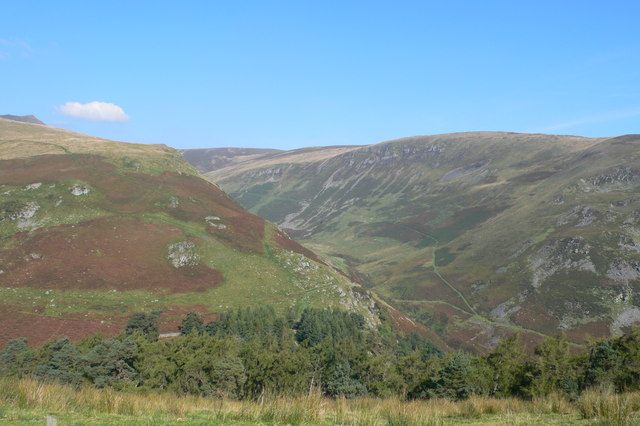
Pictured: The Berwyn Mountains range, looking toward Cadair Berwyn — not the exact location of the reported lights, nor the object itself. Photo by Eirian Evans, sourced via Wikimedia Commons (CC BY-SA 2.0).
Theoretical Alignment
Berwyn is one of the clearest examples in this catalogue of a real, well-documented natural event being retroactively absorbed into a much larger ufological narrative built mostly after the fact. The Psycho-Social Hypothesis, understood broadly here as "a real, frightening physical event generating an anomalous-seeming folk narrative that grows with each retelling," fits this case better than almost any other in the archive: a genuine magnitude 3.5 earthquake, a coincident meteor fireball, a landslide, and a standard-procedure air-crash search-and-rescue response were, over the following two decades, reinterpreted through interviews, press coverage, and ufology conventions into a "crashed flying saucer" story complete with a military cordon and a secret body recovery — none of which appears in any contemporaneous 1974 record. The residual Extraterrestrial Hypothesis score reflects only the genuine, still-unresolved ambiguity in a small number of witness accounts of an anomalous glowing light that is not fully and uncontroversially reducible to either the meteor or documented earthquake-light phenomena, and the fact that Ministry of Defence files on the case, while released, have never been shown to be complete. It is not zero, but it is a distant third to a hypothesis built on a documented geological and astronomical event rather than a claimed craft. The Interdimensional Hypothesis has essentially nothing to work with in a case whose entire physical record consists of seismograph traces, meteor sighting reports, and a landslide scar — there is no anomalous physiological, temporal, or spatial-distortion effect reported by any witness that would give IDH a foothold.
Background
In January 1974, the Berwyn Mountains were, as they remain today, a remote, thinly populated range of upland sheep country straddling the historic counties of Denbighshire and Merionethshire in North Wales. The villages scattered along their eastern and southern edges — Llandrillo, Llandderfel, Cynwyd, Corwen, and the small market town of Bala a few miles further west — were tight-knit farming communities of a few hundred people each, connected by narrow B-roads and largely unlit at night. The Bala Fault Zone, running northeast through the area from Bala Lake, was already known to geologists as a source of Britain's occasional minor earthquakes, though seismic monitoring in the UK in the early 1970s was considerably less dense than it is today, and moderate rural tremors did not always receive the kind of press attention a similar event might attract now.
Britain in early 1974 was also, independently, a country in a period of real social and political tension — a three-day working week had just been imposed in response to industrial action and an energy crisis, and a general election loomed weeks away — a climate some later commentators have noted as background context for public receptivity to stories of secrecy and institutional distrust, though this file treats that observation as suggestive atmosphere rather than established causal explanation for what would follow. On the night of January 23, entirely without warning, the ground beneath the Berwyn range moved.
Complete Timeline
| Date | Event |
|---|---|
| Jan. 23, 1974, ~8:30–8:32 PM | Residents across Llandrillo, Llandderfel, Cynwyd and Bala report a loud bang and violent ground shaking; the Institute of Geological Sciences later records the event as a magnitude 3.5 ML earthquake with an epicenter near the Bala Fault Zone. |
| Same evening, same minutes | A bright meteor fireball is independently observed streaking across the sky over a wide area of Wales and northern England, coincident with but seismologically unrelated to the earthquake. |
| Same evening | A landslide is reported on the slopes of Cadair Bronwen, producing detonation-like noise consistent with the ground shaking. |
| Same evening | Multiple residents, including nurse Pat Evans of Llandderfel, report an orange-red glowing light on the mountainside, some describing it changing color and pulsating over a period of roughly 30 minutes. |
| Same evening / overnight | Local police switchboards are reportedly overwhelmed with calls; police and RAF Mountain Rescue teams carry out a search of the area, consistent with standard procedure for a suspected aircraft crash following reports of a bright falling light and an explosion-like sound. No wreckage, crater, or aircraft is found. |
| Jan. 24–30, 1974 | Regional and some national press cover the "mystery blast" and earth tremor; coverage at the time centers on the earthquake and the unexplained lights rather than any "crashed craft" framing. |
| Feb. 13, 1974 | Local resident Geraint Edwards reports a separate sighting of an object hovering near Cadair Berwyn — a later, evidentially distinct report from the earthquake-night events. |
| 1974 (throughout) | Ministry of Defence UFO desk logs and reviews the reports as part of its routine handling of unusual aerial phenomena reports; no contemporaneous MoD record from this period asserts a crashed craft or recovery operation. |
| July 1991 | Welsh ufologist Margaret Fry, founder of the Welsh Fellowship of Independent Ufologists, receives a lead about the case and travels to Llandderfel to interview Pat Evans in person, seventeen years after the event. |
| Early-mid 1990s | Jenny Randles publishes Fry's findings through BUFORA channels, substantially amplifying public and ufological interest; the case begins to acquire the "Welsh Roswell"/"Britain's Roswell" framing during this decade's broader UFO-culture ("X-Files era") revival. |
| 2000 | Jenny Randles, Andy Roberts, and David Clarke publish The UFOs That Never Were, including a chapter arguing the case is fully explained by the earthquake, the coincident meteor, and misidentified ground-level lights. |
| February & August 2010 | The UK National Archives releases further batches of declassified Ministry of Defence UFO files, including material bearing on the Berwyn case; David Clarke discusses the release, including the British Astronomical Association's meteor-trajectory analysis, in an official National Archives podcast segment. |
| July 2010 | Andy Roberts publishes UFO Down? The Berwyn Mountain UFO Crash, the most detailed single published investigation of the case, drawing on interviews and official documents. |
| 2014 (40th anniversary) | Regional press, including the Daily Post/North Wales Live, revisits the case with fresh witness interviews and access to Gwynedd Police call-log material. |
| March 2, 2021 | BBC1's The One Show features a segment on the incident, reflecting its continued status as a well-known piece of British popular UFO folklore. |
| January 2022 | The Sunday Express publishes a retrospective feature on the case's enduring "Welsh Roswell" reputation. |
A Tremor in the Dark: What Happened on January 23
Shortly after half past eight on the evening of January 23, 1974, households across a wide swathe of the Vale of Edeirnion and the surrounding Berwyn foothills experienced, within the same few minutes, an extraordinary and frightening physical event. Furniture shook, ornaments fell from shelves, and in some accounts windows rattled hard enough that residents initially assumed a gas explosion or a burst water main nearby. The sound itself was widely described as a single loud bang or a deep detonation-like report, distinct from the rumbling many people associate with earthquakes — a detail consistent with the shallow, sharp character typical of the moderate tremors the Bala Fault Zone is known to produce. The Institute of Geological Sciences, in its contemporaneous and later analysis, recorded the event as a magnitude 3.5 ML earthquake with an epicenter in the vicinity of Llandrillo and the Bala Fault Zone, at a depth of roughly eight kilometres — entirely ordinary by international standards, but, as R. M. W. Musson's later peer-reviewed study for the British Geological Survey noted, "the size of earthquake to be expected in the UK with a return period of about one year," meaning genuinely felt tremors of this scale are uncommon enough in Britain, though not extraordinary, that many residents that night had never experienced anything like it. The shock was felt across a remarkably wide area, reported as far away as Formby, roughly fifty miles north near Liverpool — a geographic footprint far larger than any localized light source could plausibly explain, and itself strong corroborating evidence that whatever else happened that night, a genuine, geographically extensive seismic event unquestionably did.
In the same brief window, and evidently by coincidence rather than any causal connection to the earthquake itself, a bright meteor fireball was independently observed by witnesses across a wide area of Wales and northern England, its brief, dramatic streak across the night sky adding a second, entirely separate anomalous stimulus to an already startling few minutes. A landslide was also reported that night on the slopes of Cadair Bronwen, immediately north of the higher Cadair Berwyn summit — a landslip capable of producing its own detonation-like cracking and rumbling sounds as loosened rock and earth gave way on the steep, saturated winter hillside, compounding the sense, for anyone hearing it from a distance in the dark, that something violent and localized had happened up on the mountain rather than beneath the wider region. Taken together — a real earthquake, a coincident meteor, and a landslide, all within the same few minutes, in an already dark and remote rural landscape — the night of January 23, 1974 offered an unusually rich set of genuinely startling, genuinely anomalous-feeling stimuli, none of which, individually or in combination, has ever required an extraterrestrial explanation to account for.
Pat Evans and the Glow on the Mountainside
Among the dozens of residents who later described seeing an unusual light that night, the account most frequently cited by researchers on every side of the debate belongs to Pat Evans, at the time a district nurse living in Llandderfel at the foot of the range. By her own account, she and her family heard the bang and felt the tremor, and on stepping outside saw what she described as a round, brilliantly illuminated reddish-orange glow on the mountainside, appearing to shift in colour between red, yellow, and white before settling back toward red, with what she recalled as smaller white lights visible around the main glow. Accounts of how long the light persisted vary somewhat between retellings collected years apart, ranging from several minutes to, in some later interviews, roughly half an hour. Evans has consistently maintained, across interviews conducted decades apart, that she does not know what she saw and has resisted asserting any specific explanation for it, a stance researchers across the credulous-to-skeptical spectrum have generally treated as evidence of sincerity rather than embellishment. A second farmhouse resident, identified in some accounts as Mike Saville, independently described a similarly bright, clearly defined orange circle descending toward the mountainside, though his account does not mention the smaller accompanying lights Evans described — a genuine point of variation between two of the case's most frequently cited firsthand witnesses that this file notes rather than smooths over.
What these accounts most plausibly describe, this file's own weighing of the evidence concludes, is some combination of the coincident meteor fireball's final visible descent and burn-out — which can produce a glowing, apparently earthbound light for a brief but genuinely startling period, especially to an observer without a clear, unobstructed view of the object's full altitude and true distance in a dark, unfamiliar mountain landscape — and the physically real, if still scientifically incompletely understood, phenomenon of earthquake lights: luminous atmospheric effects, most often reported as glowing or flickering illumination near the ground, that some geophysicists attribute to a piezoelectric charge release when certain rock types, including the basalt- and gabbro-bearing formations found in parts of the Welsh uplands, are placed under sudden seismic stress. Neither explanation requires any element of invention or dishonesty on the part of witnesses like Evans; both are consistent with a genuine, disorienting, and by any reasonable standard extraordinary personal experience that nonetheless does not require an artificial craft to account for it.
Search and Rescue, Not Salvage: What the Authorities Actually Did
One of the most consequential facts about this case, and one that has been substantially distorted in decades of retelling, concerns what police and military personnel actually did in the hours after the earthquake — and why. Given the combination of a loud explosion-like report, a felt ground shock, and multiple simultaneous reports of a bright falling light, the entirely standard and expected response from local police and RAF Mountain Rescue teams was to treat the incident as a possible aircraft crash and search accordingly — precisely the same procedure any emergency service would follow anywhere in the world given an identical set of initial reports, UFO or no UFO. Musson's peer-reviewed account of the event explicitly confirms this sequence: the "prominent atmospheric lights observed at the time of the shock" prompted "initial speculation about aircraft crashes and deployment of search-and-rescue teams." This is a real, genuinely documented fact about the case — but it describes routine emergency procedure triggered by an honest, reasonable initial hypothesis (a plane might have gone down), not a covert military operation responding to foreknowledge of a crashed extraterrestrial craft. When the searches turned up nothing — no wreckage, no crater, no downed aircraft of any kind — the operation was, by every contemporaneous account, simply stood down, and it is only in later ufological retelling that this ordinary search-and-rescue deployment was reframed as evidence of a secret recovery operation, on the reasoning that a genuine search implies the authorities must have known there was something specific to find. This file treats that inference as unsupported: a search-and-rescue deployment in response to an explosion, a tremor, and reports of falling light is exactly what a "nothing extraordinary happened, but it briefly looked like it might have" night should be expected to produce, regardless of what, if anything, actually fell.
Considerably less well corroborated are the specific, more dramatic claims of a deliberate area cordon, roadblocks turning back residents, and unnamed "taciturn strangers in dark suits" questioning villagers, which appear almost entirely in accounts collected fifteen years or more after the event, during and after Margaret Fry's 1990s reinvestigation, rather than in the contemporaneous 1974 record. This file does not assert these later claims are all fabricated — memory of a genuinely frightening night can be true and can also drift or accrete new details over seventeen or more years of retelling and requestioning, a well-documented feature of long-delayed witness recall generally — but it is straightforward to note that none of them appears in the initial newspaper coverage from January 1974, which focused on the earthquake and the unexplained lights rather than any cordon or military presence, and that no named, on-the-record police or military officer has ever confirmed a deliberate secrecy operation distinct from the routine, publicly visible search-and-rescue response.
Twenty Years Later: Margaret Fry Reopens the Case
The case that would become "the Welsh Roswell" was, for most of the 1970s and 1980s, a largely dormant piece of regional history — remembered locally as the night of the earthquake, but not the subject of sustained national ufological attention. That changed in July 1991, when Margaret Fry, a retired founder of the Welsh Fellowship of Independent Ufologists with prior experience working alongside the British UFO Research Association, received a tip from an acquaintance about a nurse in Llandderfel who had seen something strange on the mountain the night of the 1974 earthquake. Fry and two ufologist colleagues traveled to the village to interview Evans in person; despite the intervening seventeen years, Evans's account of the glowing light remained, by Fry's own description, detailed and consistent with what little contemporaneous record existed. Fry's subsequent investigation, feeding her findings and further witness leads into BUFORA's network and into Jenny Randles's widely read ufological writing, is what substantially reintroduced the case to a national and eventually international UFO-interested audience, arriving during a decade — the "X-Files era" of the early-to-mid 1990s — unusually receptive to exactly this kind of long-buried government-secrecy narrative.
It was during this same period that later, considerably more dramatic claims began to attach themselves to the case, including an anonymous serviceman's account, relayed by other researchers, of transporting sealed containers to the government's Porton Down chemical and biological research facility; a claim from one self-described investigator of possessing leaked documents referencing an underground facility; and correspondence purportedly from a shadowy body calling itself the Aerial Phenomena Enquiry Network, sent to UFO researchers with cryptic classification markings. None of these later claims has ever been corroborated by any named, on-the-record source, physical document of verified provenance, or independent investigation; several UFO researchers who have examined them closely, including Andy Roberts, have specifically concluded they do not withstand scrutiny. This file records their existence, because they are a genuine and well-documented part of how the case's public reputation developed, while being explicit that none of them meets any reasonable evidentiary standard, and none should be read as adding weight to the underlying "crash" claim.
Roberts, Clarke, and the Skeptical Case
Andy Roberts and David Clarke, working both jointly with Jenny Randles and separately, produced the case's most sustained skeptical investigations. In their jointly authored 2000 book The UFOs That Never Were, Roberts, Clarke, and Randles laid out a case that the entire episode is explicable through the combination of the documented earthquake, the coincident meteor fireball, and, for a smaller number of peripheral light reports from the surrounding nights, ordinary poachers working the hillsides at night with powerful lamps — a mundane but genuinely common rural activity capable of producing exactly the kind of intermittent, moving light reports that feed into a UFO flap once a community's attention has been primed by an initial dramatic event. Roberts went on to conduct the most detailed single dedicated investigation of the case, published as the 2010 book UFO Down? The Berwyn Mountain UFO Crash, drawing on original interviews and the official documentary record available by that point to differentiate, in his own stated aim, "fact from fiction, truth from folklore."
The poachers'-lamps component of the skeptical explanation has not gone entirely unchallenged even among researchers who broadly accept the earthquake-and-meteor framework: later investigator Scott Felton, who worked alongside Fry from the late 1990s, has argued that documented poaching activity in the area on the night in question had reportedly concluded and dispersed well before 9:00 p.m. and occurred at some distance from the specific locations where the most detailed light sightings were reported, a timing objection this file notes without being able to independently resolve given the absence of any surviving, precisely time-stamped poaching-activity record from January 1974. This genuine point of dispute, however, concerns only the smaller number of peripheral, multi-night light reports; it does not meaningfully undermine the earthquake-and-meteor explanation for the primary January 23 event itself, which rests on the independently verified seismograph and meteor-sighting record rather than on the poachers'-lamps hypothesis at all.
Declassified: What the MoD Files Actually Say
The British Ministry of Defence maintained a standing "UFO desk" throughout this period, responsible for logging and reviewing public reports of unusual aerial phenomena as a matter of routine (rather than active investigation in most cases), and the Berwyn reports were processed through this same ordinary channel in 1974. In February and August 2010, the National Archives at Kew released further batches of the MoD's declassified UFO files under its regular disclosure program, a release in which journalist and academic David Clarke, who has worked extensively with the National Archives on this material, discussed the Berwyn case specifically as part of an official National Archives podcast segment on the release. According to reporting on the released material, a private investigation conducted at the time on behalf of the British Astronomical Association analyzed the meteor's likely trajectory and concluded it had probably disintegrated over the Manchester area — a finding explicitly noting that its appearance, while coincident with the Berwyn earthquake in time, had no established physical connection to the earthquake itself, exactly the kind of "two independent anomalous events, same night" coincidence this file's own analysis has arrived at from a different direction.
Nick Pope, who ran the Ministry of Defence's UFO desk from 1991 to 1994 — a full seventeen years after the Berwyn event itself, and therefore reviewing historical rather than live case material — has stated plainly, after examining the department's files on the case: "I've seen all the MoD documents on this and I'm afraid the real explanation is rather more prosaic. The events were caused by a combination of a small earthquake and a meteor shower, together with some subsequent hoaxing and exaggeration." No released MoD document from any year has ever asserted, referenced, or hinted at a recovered craft, a body, or a deliberate cover-up of anything beyond the department's routine practice of not chasing down every unverifiable civilian report — itself a very different thing from an active, deliberate suppression of positive evidence. This file's own review of what has actually been made public finds Pope's summary consistent with the totality of the documentary evidence: a real earthquake, a real coincident meteor, and a considerable amount of hoaxing and exaggeration layered on afterward.
Circumstantial Evidence
- The Institute of Geological Sciences (now the British Geological Survey) independently recorded and logged a magnitude 3.5 ML earthquake with an epicenter near the Bala Fault Zone at the same time witnesses report the "explosion" and ground shaking.
- A bright meteor fireball was independently observed across a wide area of Wales and northern England in the same few minutes, and its likely disintegration point over the Manchester area was later analyzed by a private investigation for the British Astronomical Association.
- A landslide was reported on Cadair Bronwen the same night, consistent with ground shaking at the recorded magnitude on a steep upland slope.
- The earthquake was felt as far away as Formby, roughly fifty miles distant — a geographic footprint far larger than any localized light source could explain, and itself corroboration that a real, extensive physical event occurred.
- Police and RAF Mountain Rescue teams did search the area that night, but as standard procedure following reports of an explosion and a falling light, not in response to any prior knowledge of a specific craft.
- No crash debris, scorched vegetation, metallic fragments, or any other physical exhibit connected to a "craft" has ever been recovered, publicly exhibited, or laboratory-tested in more than fifty years.
- None of the case's most dramatic claims — a military cordon, confiscated film, transported alien remains, an underground facility — appears in the contemporaneous January 1974 press coverage; all surfaced only during or after Margaret Fry's 1991 reinvestigation.
- Released Ministry of Defence files, reviewed independently by both David Clarke and Nick Pope, contain no assertion of a recovered craft or body and are consistent throughout with the earthquake-and-meteor explanation.
Key Witnesses
Pat Evans
Living at the foot of the range on the night of the earthquake, Evans described a round, brilliantly illuminated reddish-orange glow on the mountainside that appeared to shift color before fading. Reinterviewed by Margaret Fry in 1991, seventeen years after the event, her account remained detailed and broadly consistent. She has never claimed to know what she saw, a stance widely read as evidence of sincerity rather than embellishment.
Geraint Edwards
Reported a separate sighting of an object hovering near Cadair Berwyn on February 13, 1974, roughly three weeks after the earthquake-night events, describing it as departing "like lightning." This file treats his account as evidentially distinct from, and considerably less corroborated than, the January 23 earthquake-night reports, since it lacks any of the instrumental seismological or astronomical record that anchors the main event.
Margaret Fry
A retired ufologist who, in July 1991, tracked down and reinterviewed Pat Evans after receiving an unsolicited lead, and whose subsequent research — fed into BUFORA's network and into Jenny Randles's writing — is largely responsible for reintroducing the case to a national ufological audience nearly two decades after it occurred.
The Five Observables Assessment
The Five Observables framework, developed by former AATIP director Luis Elizondo, is designed to classify witnessed UAP flight performance against the limits of known technology. Applying it to Berwyn requires the same caveat this file applies throughout: there is no witnessed flight performance to assess at all in any instrumented or corroborated sense. What exists is a documented earthquake, a documented meteor, and a scattering of light reports whose most vivid details — a hover, a rapid departure — come from a small number of accounts, several collected only years after the fact, rather than from any tracked or measured object.
Assessment: Anti-Gravity Lift is rated speculative only because a small number of accounts, most notably Mike Saville's, describe a glowing light appearing to hover above the mountainside for a sustained period — a description equally consistent with a settling meteor fragment's final glow or with the physically documented, if still incompletely understood, phenomenon of earthquake lights, neither of which requires any lift mechanism at all. Instant Acceleration and Hypersonic Velocity are both rated absent: the one described high-speed movement in the case, Geraint Edwards's account of an object departing "like lightning," comes from an evidentially separate, uncorroborated later sighting rather than from the main, instrumented January 23 event, and no witness to the earthquake night itself described any comparable high-speed maneuver by anything other than the independently documented meteor's natural atmospheric entry. Low Observability is rated absent because the central claimed phenomenon — a large, brightly glowing, color-shifting light on an open mountainside — was about as conspicuous and widely visible as a nocturnal aerial phenomenon could be, seen by dozens of independent households simultaneously, the functional opposite of a low-observable event. Trans-Medium travel is rated absent, since no witness account describes any transition between air, ground, or water. Taken as a whole, even the case's most vivid witness testimony does not describe flight performance that exceeds the known physics of a meteor's atmospheric entry and burn-out or a documented geophysical light phenomenon — a further, independent reason, on top of the seismological and astronomical record, that this framework finds little here to flag as genuinely anomalous.
Evidence Assessment
Supporting a Genuine Unexplained Element
- A small number of light descriptions, particularly the extended hover and color-shifting reported by Pat Evans, are not fully and uncontroversially pinned down as either meteor afterglow or earthquake lights by any single published analysis.
- Released Ministry of Defence files on 1970s UFO reports are not known to be complete, leaving some genuine residual uncertainty about whether every relevant contemporaneous document has been made public.
- Geraint Edwards's February 13, 1974 sighting of a hovering, rapidly departing object remains without a specific individual conventional explanation, even though this file assesses it as evidentially weak and uncorroborated.
Supporting a Conventional Explanation
- An earthquake of the recorded magnitude, location, and time is an independently verified scientific fact, not a matter of witness testimony.
- A coincident meteor fireball was independently observed by a wide public audience and analyzed by the British Astronomical Association.
- A landslide, capable of producing detonation-like noise, was separately reported on Cadair Bronwen the same night.
- No crash debris, metallic fragment, scorch pattern, or any other physical exhibit has ever been produced, despite more than fifty years and multiple dedicated investigations.
- The case's most dramatic claims of a cordon, confiscated evidence, and transported remains appear only in testimony collected fifteen to thirty years after the fact, not in the contemporaneous 1974 record.
- Declassified MoD files consistently support the earthquake-and-meteor explanation and contain no assertion of a recovered craft or body.
- Both a working academic UFO-files researcher (David Clarke) and a former MoD UFO-desk chief (Nick Pope) who have separately reviewed the full documentary record reach the same mundane conclusion.
Why "Disputed"
The Berwyn Mountains Incident earns a DISPUTED classification, at the low end of this catalogue's disputed range, because it combines an unusually solid, scientifically documented real event with an unusually weak, largely retrospective anomalous narrative layered on top of it — and because those two things are so often conflated in popular retelling that separating them honestly is the entire analytical task this file exists to perform. On the side of genuine substance: a real magnitude 3.5 earthquake, independently logged by the Institute of Geological Sciences and later confirmed in peer-reviewed seismological literature, indisputably struck the Berwyn range at the claimed time and place; a coincident meteor fireball was independently observed and its likely disintegration point analyzed by the British Astronomical Association; a landslide on Cadair Bronwen is separately documented; and dozens of ordinary, geographically dispersed residents reported broadly consistent sensory experiences within the same few minutes — exactly the pattern a real, extensive physical event should produce. On the other side of the ledger, the specific claim that made this case famous — that a UFO crashed and was covertly recovered by British authorities — rests on a body of testimony that is markedly weaker than the earthquake record surrounding it: no physical exhibit of any kind has ever been produced in more than fifty years; the most dramatic claims of cordons, confiscated evidence, and transported alien remains appear only in accounts collected fifteen to thirty years after the fact, largely absent from the contemporaneous 1974 press coverage; declassified Ministry of Defence files, reviewed independently by both a working journalist-academic (David Clarke) and a former MoD UFO-desk chief (Nick Pope), consistently support the mundane earthquake-and-meteor explanation rather than contradicting it; and the genuine search-and-rescue operation that did occur that night is fully explained by standard emergency procedure rather than requiring any foreknowledge of a specific craft. This file's score sits low within the Disputed band specifically because so little of the "crash" narrative survives contact with the documentary record, while remaining above a "Debunked" stamp because a small residue of genuinely unresolved witness testimony about the precise nature of the light — not the crash claim, but the light itself — has never been subjected to the kind of exhaustive, name-by-name modern reinvestigation that might close even that narrower question definitively.
Sensor & Instrumentation Detection Profile
Unlike almost every other close-encounter case in this catalogue, Berwyn is anchored by a genuine scientific instrument record rather than eyewitness testimony alone: the earthquake itself was captured on seismograph traces and formally logged by the Institute of Geological Sciences (the predecessor to today's British Geological Survey), which recorded a local magnitude of 3.5 ML with an epicenter in the vicinity of the Bala Fault Zone near Llandrillo. British Geological Survey seismologist R. M. W. Musson later reviewed the full instrument record for a 2006 peer-reviewed paper in Astronomy & Geophysics, confirming the shock as an entirely ordinary, if locally unusual, seismic event — "the size of earthquake to be expected in the UK with a return period of about one year." No radar station tracked any object that night, and no Royal Air Force or civil aviation instrument recorded an unidentified aerial contact; the closest thing to an instrumented anomaly is the coincident report of a bright meteor fireball, independently observed across a wide area of Wales and northern England, whose descent path a private investigation for the British Astronomical Association later analyzed using standard fireball-triangulation methods, concluding it likely disintegrated in the atmosphere over the Manchester area. No photograph, film, or any other sensor record of a structured object exists from January 23, 1974, or from any of the later nights of reported activity in the area.
Environmental & Geospatial Context
The Berwyn Mountains (Welsh: Mynyddoedd y Berwyn) form a remote, sparsely populated upland range in what was then Denbighshire and Merionethshire, straddling the modern boundary between Denbighshire and Powys in North Wales. The highest point, Cadair Berwyn, rises to 832 metres; its northern neighbor, Cadair Bronwen, was the site of the reported landslide. The village of Llandrillo sits in the Vale of Edeirnion between Bala and Corwen, with a population of only a few hundred in 1974, as it remains today. The range lies along the Bala Fault Zone, a genuine and long-recognized geological structure running roughly from Bala Lake (Llyn Tegid) northeast through the Berwyns, capable of producing the low-to-moderate magnitude tremors that are the most common form of seismic activity in mainland Britain. January nights in this part of Wales are typically cold, dark by mid-afternoon, and often clear when not overcast with rain — conditions consistent with witness reports of a visible meteor and a clearly seen glow, since heavy cloud cover would have obscured both. The area's genuine remoteness and darkness — unlit rural roads, scattered farms, and a mountain interior with no permanent habitation — is itself part of why so many independent households nonetheless reported broadly similar sounds and sights within the same few minutes: a real, geographically extensive physical event (the earthquake, felt as far as Formby near Liverpool, some fifty miles distant) reliably produces exactly that pattern of simultaneous, geographically dispersed reports, in a way a single localized light source typically would not.
Observer Credibility & Occupational Profile
The earthquake and meteor reports themselves rest on an unusually broad base of ordinary, disinterested witnesses — police switchboards in the area were reportedly overwhelmed with calls describing the bang and the shaking within minutes of 8:30 p.m., a pattern far more consistent with a genuine, widely-felt physical event than with a localized, easily-misperceived light. The case's most frequently cited named witness, Pat Evans, was a retired district nurse in Llandderfel with no documented prior interest in UFOs, whose account has been treated by researchers across the credulous-to-skeptical spectrum as sincere rather than invented; she herself has described remaining genuinely puzzled by what she saw rather than asserting an extraterrestrial explanation. A second frequently cited witness, Geraint Edwards, reported a later, separate sighting of a hovering object over Cadair Berwyn roughly three weeks afterward, on February 13, 1974 — a report this file treats as evidentially distinct from, and considerably weaker than, the January 23 earthquake-night reports, since it lacks any of the corroborating instrumental record the earthquake itself has. Working against a strong credibility assessment for the "crash" component specifically is that none of the case's most dramatic claims — military cordons, confiscated film, a whistleblowing serviceman who described transporting alien remains to Porton Down, an "alien base map," or letters from a shadowy organization calling itself the Aerial Phenomena Enquiry Network — come from any witness willing to be named and independently checked at the time; nearly all surfaced only in the 1990s and 2000s, secondhand, through ufology channels, and none has ever been corroborated by a document, a named military witness on the record, or any physical exhibit.
Physical & Material Assays
The only physical evidence in this case that is genuinely instrumented and independently verifiable is geological: the earthquake's seismograph trace, held in British Geological Survey records, and the landslide scar reported on the slopes of Cadair Bronwen the same night, consistent with ground shaking of the recorded magnitude on a steep, loosely-consolidated upland slope. No crash debris, scorched vegetation consistent with a craft, metallic fragments, or any other exotic physical trace has ever been recovered, publicly exhibited, or subjected to laboratory analysis in connection with this case — a critical point of contrast with physical-trace cases elsewhere in this catalogue such as Delphos or Trans-en-Provence, where an anomalous physical residue, however contested, at least exists for testing. Claims of alien bodies, wreckage, or recovered material at Berwyn originate entirely from secondhand, unverified testimony collected fifteen to thirty years after the fact, none of which has ever been accompanied by a physical exhibit, photograph, chain-of-custody record, or named, on-the-record government or military source. This file treats the absence of any physical exhibit not as inconclusive but as directly informative: in a case whose most dramatic claims are specifically about physical debris and recovered bodies, the total absence of any such material across more than five decades is itself strong negative evidence.
Historical Precedents & Archive Matches
Berwyn belongs to a small but recognizable category of cases in which a real, independently documented natural or man-made event became the seed of a much larger crash-retrieval legend, a pattern this catalogue has also examined in the American context at Roswell (1947), where a genuine military balloon recovery was retrospectively reinterpreted as an alien crash, and, with a very different causal mechanism, at Maury Island (1947), where a deliberately fabricated story nonetheless produced two genuine deaths. Berwyn's closest structural parallel within the United Kingdom is not a crash case at all but Livingston (1979), another Scottish/Welsh case in which a modest initial physical event — there, a single witness's injuries and ground marks — drew in professional investigators whose findings were then substantially amplified by later ufological retelling. What sets Berwyn apart from all of these is the unusual clarity of its underlying real event: unlike Roswell's balloon debris, which required forensic reconstruction decades later, or Livingston's ground marks, which remain physically ambiguous, the Berwyn earthquake was measured, logged, and published in the peer-reviewed seismological literature within the normal scientific process, leaving essentially no room for dispute about whether a real physical event occurred, even as the "crashed craft" interpretation of it remains almost entirely unsupported.
Material Analysis
Berwyn presents an unusual inversion of the typical UFO-case evidentiary pattern: the mundane, scientifically explicable side of the event is backed by hard physical and instrumental data, while the extraordinary "crashed craft" claim has none at all. The earthquake's seismograph record, held within British Geological Survey archives and formally analyzed in R. M. W. Musson's 2006 peer-reviewed paper, constitutes genuine, lab-grade physical evidence — the seismological equivalent of a chain-of-custody forensic exhibit, independently generated by instruments with no stake in any interpretation of the event. The reported landslide scar on Cadair Bronwen provides a second, geologically consistent physical trace, matching the kind of slope failure a magnitude 3.5 shock could plausibly trigger on saturated winter upland terrain. Set against this is a complete absence of any physical evidence for a craft: no metallic fragment, no scorched or flattened vegetation pattern inconsistent with a landslide, no crater distinct from what a meteor impact or landslide would produce, and no biological or exotic material of any kind has ever been recovered, tested, or exhibited by any party in over fifty years, despite the case's status as one of Britain's most famous alleged crash-retrievals. Claims of physical material collected by the military and transported to Porton Down originate entirely in secondhand testimony from the 1990s and later, unaccompanied by any sample, photograph, or independently verifiable chain of custody.
Supporting a Physical Anomaly
- No systematic, exhaustive modern excavation or geophysical survey of the Cadair Bronwen landslide site has ever been published, leaving a narrow, largely theoretical possibility that some physical detail remains unexamined.
Supporting a Terrestrial, Non-Craft Origin
- The seismograph record and peer-reviewed geological analysis independently confirm a real earthquake at the claimed time, place, and magnitude.
- A landslide on Cadair Bronwen, consistent with the recorded seismic magnitude, provides a documented physical source for at least part of the reported ground disturbance and noise.
- No metallic, biological, or otherwise exotic physical material connected to any "craft" has ever been produced or independently tested by any party.
- All specific claims of physically transported "crash material" originate in uncorroborated secondhand testimony collected 15–30 years after the event.
The Conventional Explanation Candidate: A Documented Earthquake Combined with a Coincident Meteor
A Documented Earthquake Combined with a Coincident Meteor
Highly PlausibleThe explanation supported by the overwhelming weight of independently verifiable evidence — the seismograph record, the British Astronomical Association's meteor-trajectory analysis, and the declassified MoD files reviewed by both David Clarke and Nick Pope — is that the entire event is fully accounted for by a genuine magnitude 3.5 earthquake on the Bala Fault Zone occurring within the same few minutes as an unrelated, independently observed meteor fireball, with the mountainside glow reported by witnesses like Pat Evans most likely representing some combination of the meteor's terminal descent and burn-out and the documented, if still scientifically incompletely characterized, phenomenon of earthquake lights. This explanation deserves to be treated as the file's leading candidate not because it is the most dramatic but because every independently verifiable strand of evidence in the case — seismological, astronomical, and documentary — converges on it without requiring any single piece of testimony to carry disproportionate evidentiary weight. It is supported by convergent seismological, astronomical, and declassified documentary evidence.
Landslide-Amplified Perception
PlausibleA closely related, complementary rather than competing explanation holds that the Cadair Bronwen landslide, triggered by the same seismic shock, contributed its own detonation-like noise and possibly visible dust or debris movement, compounding the sense among distant observers that something violent and localized — rather than a broad regional tremor — had occurred specifically on the mountain. This candidate deserves serious consideration because it directly explains why so many witnesses focused their attention on a specific point on the mountainside rather than describing the shaking as coming from everywhere at once, and because a real, independently reported landslide at the right time and place removes the need to invoke any exotic phenomenon for that specific sensory detail.
Poachers' Lamps and Peripheral Misperception
ContestedFor the smaller number of light reports occurring on nights other than January 23 itself — including some of the material Margaret Fry and Scott Felton later collected — Andy Roberts, David Clarke and Jenny Randles proposed that ordinary poachers working the hillsides at night with powerful lamps, a genuinely common rural activity in the area, could account for some of the intermittent, moving lights reported once the community's attention had been primed by the earthquake-night events. This candidate deserves consideration because it requires no exotic mechanism and fits a well-documented general pattern in which an initial dramatic event measurably increases a community's rate of reporting ordinary nocturnal phenomena as anomalous for some period afterward.
Investigator Scott Felton has specifically disputed this explanation for at least some of the reports, arguing that documented poaching activity on the relevant night had concluded and dispersed by around 9:00 p.m. and occurred some distance from the specific locations described by several witnesses — a timing and geography objection this file cannot fully resolve given the absence of any surviving, precisely time-stamped record of poaching activity from January 1974. This genuine, still-open dispute is worth stating plainly rather than resolving by fiat; it affects only the smaller category of peripheral, multi-night light reports, however, and has no bearing on the earthquake-and-meteor explanation for the primary, best-documented January 23 event itself.
A Genuine Crashed Craft, Recovered and Concealed by the Military
ImplausibleThe explanation that gives the case its popular fame — that an actual craft of unknown origin crashed in the Berwyn Mountains and was covertly recovered by British military and intelligence personnel — is the one this file's own research finds the least support for among the documentary and physical record. It would require dismissing not only the independently verified seismograph and meteor-trajectory data but also the consistent findings of every credentialed researcher who has examined the declassified MoD files directly, from academic journalist David Clarke to former MoD UFO-desk chief Nick Pope, both of whom, working independently and with direct access to the actual government paper trail, describe a mundane earthquake-and-meteor explanation rather than a cover-up. It would also require explaining the total absence, across more than five decades, of any physical exhibit, verified document, or single named military or government witness willing to go on the record — a combination this file's research did not find any serious modern researcher, on any side of British ufology, currently defending as the case's most probable explanation.
Related Cases
Confirmed Documents & Official Records
Official National Archives media feature, presented by Dr David Clarke, discussing that year's batch of declassified Ministry of Defence UFO files (drawn from the DEFE 24 series), including material bearing on the Berwyn Mountains case.
UNCLASSIFIED / PUBLIC RECORDThe definitive peer-reviewed seismological account of the January 23, 1974 earthquake, by a British Geological Survey seismologist, confirming its magnitude, character, and the search-and-rescue response it triggered.
PEER-REVIEWED / PUBLIC RECORDSearch Government Archives Directly
Further Reading — Recommended Literature
UFO Down? The Berwyn Mountain UFO Crash
The most detailed single published investigation of the case, drawing on original interviews and the official documentary record to separate fact from decades of ufological embellishment.
The UFOs That Never Were
A joint skeptical investigation of major British UFO cases, including a dedicated chapter proposing the earthquake, coincident meteor, and poachers'-lamps explanation for Berwyn.
Out of the Shadows: UFOs, the Establishment and the Official Cover-Up
A broader history of official British UFO investigation drawn from Ministry of Defence files, providing essential institutional context for how cases like Berwyn were actually logged and handled at the time.
The UFO Files: The Inside Story of Real-Life Sightings
A comprehensive history of British government UFO investigation drawn from declassified National Archives files, useful context for the disclosure program that eventually released the Berwyn-era material.
The UFO Encyclopedia, 4th Edition
The definitive UFO reference work, with an entry situating Berwyn among the small number of "national mythology" UFO cases built substantially through decades of later retelling rather than contemporaneous reporting.
Essential Viewing
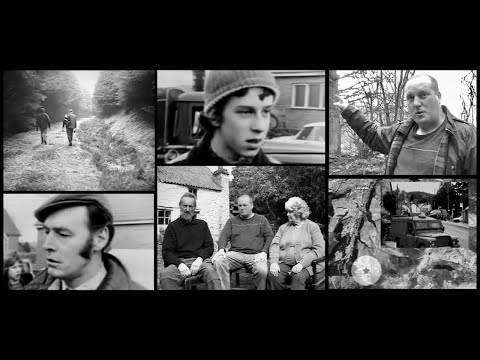
The Berwyn Mountains "Welsh Roswell" UFO Incident
A detailed walkthrough of the January 23, 1974 events, the earthquake explanation, and the case's later ufological reputation.
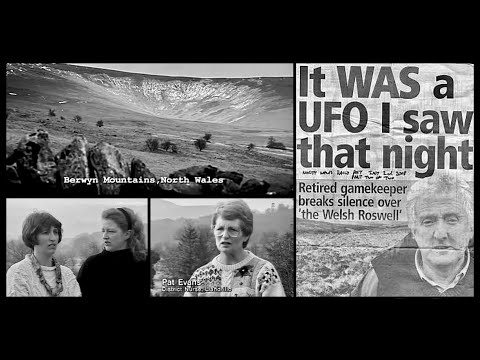
"The Welsh Roswell" — The Berwyn Mountain UFO Crash
A focused case overview covering the earthquake, the witness accounts from Llandrillo, and the decades of retelling that followed.
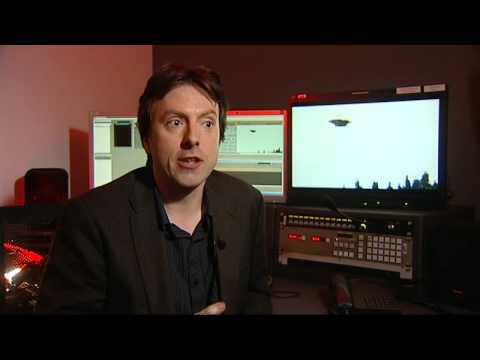
Welsh "Roswell" UFO Sighting Explained
ITN News segment in which Dr David Clarke explains the earthquake-and-meteor case for what actually happened at Berwyn in 1974.
Sources
- Musson, R.M.W. "The Enigmatic Bala Earthquake of 1974," Astronomy & Geophysics, Vol. 47, Issue 5, October 2006, pp. 5.11–5.15. academic.oup.com
- "Berwyn Mountain UFO incident," Wikipedia. en.wikipedia.org
- The National Archives (UK). "UFO File Release August 2010" (media feature featuring Dr David Clarke). media.nationalarchives.gov.uk
- The National Archives (UK). "Unidentified Flying Objects (UFOs) — postwar records." nationalarchives.gov.uk
- Trask, Matthew. "Exploring the Berwyn Mountain Incident," The Nocturnal Report, Medium. medium.com
- UFO Insight. "The Berwyn Mountain Incident – The Earthquake That Wasn't!" ufoinsight.com
- Cambria Stories. "The Welsh 'Roswell' UFO Event." cambriastories.net
- Truly Adventure. "The Berwyn Incident." trulyadventure.us
- The UFO Chronicles. "Berwyn Mountains UFO Crash, Still a Mystery After 40 Years," January 23, 2014. theufochronicles.com
- North Wales Live / Daily Post. "North Wales Farmer Recalls 'Whole Place Shaking Violently' During Berwyn UFO Mystery." dailypost.co.uk
- North Wales Live / Daily Post. "Berwyn Mountains UFO Crash: 40 Years On, It's Still a Mystery." dailypost.co.uk
- UFO Report. "The Berwyn Mountain Incident — Wales, UK (1974)." uforeport.com
- Believing the Bizarre: Paranormal Podcast. "The Berwyn Mountain UFO Incident," Ep. 122. believingthebizarre.com
- Astonishing Legends. "Ep 113: Roswelsh – The Berwyn Mountain UFO Incident." astonishinglegends.com
- Goodreads. "UFO Down: The Berwyn Mountain UFO Crash by Andy Roberts." goodreads.com
- Ghost Theory. "Interview with Nick Pope," February 8, 2010. ghosttheory.com
- "Nick Pope (journalist)," Wikipedia. en.wikipedia.org
- Randles, Jenny; Roberts, Andy; Clarke, David. The UFOs That Never Were, London House, 2000, ISBN 978-1902809359. amazon.com
- Roberts, Andy. UFO Down? The Berwyn Mountain UFO Crash, Fortean Words, 2010, ISBN 978-1905723607. amazon.com
- Clarke, David; Roberts, Andy. Out of the Shadows: UFOs, the Establishment and the Official Cover-Up, Piatkus, 2002, ISBN 978-0749922900. amazon.com
- Clarke, David. The UFO Files: The Inside Story of Real-Life Sightings, The National Archives, 2009. amazon.com
- Clark, Jerome. The UFO Encyclopedia, 4th Edition, Visible Ink Press, 2023 (entry on the Berwyn Mountain/Welsh Roswell case).
- "Llandrillo, Denbighshire," Wikipedia. en.wikipedia.org
- "Cadair Berwyn," Wikipedia. en.wikipedia.org
- British Geological Survey. "UK Historical Earthquake Database." quakes.bgs.ac.uk
- British Geological Survey. "Seismicity and Earthquake Hazard in the UK." quakes.bgs.ac.uk
- Higgypop. "Berwyn Mountains UFO Crash: The Truth 40 Years On." higgypop.com
- Herald Wales. "The Roswelsh Incident: What Exactly Happened in the Berwyn Mountains?" herald.wales
- Above the Norm News. "Revisiting the Welsh Roswell: The 1974 Berwyn Mountains Event," July 8, 2024. abovethenormnews.com
- Friends of the Clwydian Range and Dee Valley. "The Berwyns UFO Mystery." friends.cymru
- Wikimedia Commons. "File:Berwyn mountains - geograph.org.uk - 979691.jpg," photograph by Eirian Evans (CC BY-SA 2.0, hero image source). commons.wikimedia.org
See something inaccurate? Have additional information or sources?
Suggest an Edit →Last Updated: August 2026