
USS Theodore Roosevelt: The "Gimbal" & "GoFast" Encounters
Beginning in the summer of 2014 and continuing into the spring of 2015, F/A-18F Super Hornet aircrew of the USS Theodore Roosevelt (CVN-71) Carrier Strike Group reported near-daily radar and infrared contacts with unidentified objects during training operations off the coast of Virginia and Florida. Two of those encounters, recorded on the jets' ATFLIR targeting pods on January 21, 2015, produced the videos now known as "Gimbal" and "GoFast" — footage the Pentagon would not officially confirm as authentic for another five years. Alongside the 2004 USS Nimitz "Tic Tac" video, they became the most widely viewed and scrutinized UAP evidence ever released by the U.S. government. They are also, honestly, among the most contested: a rigorous, quantitative 2025 Pentagon analysis and independent parallax research have each concluded that at least one of the two videos shows nothing more exotic than a slow, wind-blown object at high altitude — a conclusion this case file treats as seriously as the testimony that first made the footage famous.
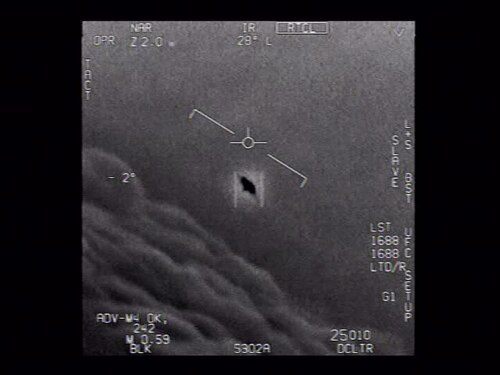
Pictured: an actual ATFLIR infrared still frame from the "Gimbal" video, the Pentagon-declassified January 21, 2015 encounter recorded by a Navy F/A-18F Super Hornet, showing the tracking reticle locked on the dark, rotating oblong object against a cloud layer, with the pod's own sensor readouts visible around the frame. This is a direct, official Navy-released image of the actual object from the actual incident, not a reconstruction.
Theoretical Alignment
The case aligns only moderately with the Extraterrestrial Hypothesis: official government confirmation and radar/IR corroboration lend it institutional weight most UFO reports never receive, but a rigorous, quantitative 2025 Pentagon resolution for GoFast and a well-supported optical-artifact explanation for Gimbal push meaningful probability toward ordinary misperception (PSH) of conventional aircraft, balloons, or drones rather than genuinely novel technology.
Background
By the time the USS Theodore Roosevelt (CVN-71) departed Naval Station Norfolk on January 8, 2015, to begin a Composite Training Unit Exercise (COMPTUEX) with Carrier Strike Group 12 and Carrier Air Wing 1 (CVW-1), its aircrews had already spent roughly six months reporting something unusual. Sometime around the summer of 2014, Strike Fighter Squadron 11 (VFA-11), the "Red Rippers," began flying F/A-18F Super Hornets recently upgraded with the AN/APG-79 Active Electronically Scanned Array (AESA) radar — a substantial capability jump from the older mechanically scanned sets it replaced, feeding a new situational-awareness (SA) display that could paint contacts with far greater fidelity than before. Within weeks of the upgrade, pilots flying training missions in the Navy's W-72 Warning Area and adjoining airspace off Virginia Beach began seeing objects on that SA display that did not correlate with any known air traffic: unidentified contacts, sometimes singly and sometimes in apparent clusters, appearing at altitudes up to roughly 30,000 feet, exhibiting no radar cross-section consistent with a conventional aircraft, and showing none of the infrared exhaust plume a jet or missile would produce.
Lieutenant Ryan Graves, then a junior F/A-18F pilot with VFA-11, would later become the wave's most visible on-record witness. Graves and roughly half a dozen other Red Rippers aircrew told The New York Times in 2019 that the objects appeared "almost daily" from the summer of 2014 through March 2015, described by different pilots as everything from small spheres to a "cube inside a clear sphere" to, in a few reports, structured, rotating shapes very close to what the Gimbal video would later show. None of the pilots involved had any prior public interest in UFOs; several worried, at the time, that reporting them would harm their careers, and safety concerns rather than curiosity ultimately drove the formal reports up the chain of command. It was against this backdrop — not an isolated single-night sighting, but a sustained, unit-wide pattern spanning two carrier deployments' worth of training cycles — that the Theodore Roosevelt's January 2015 COMPTUEX produced the two specific ATFLIR recordings that would eventually reach the public: "Gimbal," showing a bright, apparently rotating oblong shape hanging above a cloud layer while aircrew remark on "a whole fleet" of similar contacts on their radar, and "GoFast," showing a small object that appears, at first glance, to be skimming the ocean's surface at extraordinary speed. Both were logged on January 21, 2015, according to dates the Navy itself later released under the Freedom of Information Act, suggesting the two videos may document activity from the same broader mission window rather than two unrelated, isolated events.
The Theodore Roosevelt's January 2015 COMPTUEX was, by design, a large and complex undertaking. Carrier Air Wing 1 embarked nine separate squadrons for the work-up, including VFA-11 "Red Rippers," VFA-136 "Knighthawks," and VFA-211 "Checkmates" flying F/A-18E/F Super Hornets, the Marine Corps' VMFA-251 "Thunderbolts," electronic-attack squadron VAQ-137 "Rooks," airborne early-warning squadron VAW-125 "Tigertails," logistics squadron VRC-40 "Rawhides," and helicopter squadrons HSM-46 and HS-11 — in total, dozens of aircraft operating simultaneously in the same training blocks off the Virginia and Florida coasts, a level of routine airspace traffic that both makes the "whole fleet" radar corroboration more meaningful (multiple independent aircraft and sensor operators, not one crew alone) and gives conventional-explanation researchers a legitimate reason to ask how confidently any single contact can be distinguished from ordinary exercise clutter.
What happened next took years. Unlike the 2004 Nimitz case, whose FLIR footage became public relatively quickly through firsthand pilot interviews, the Gimbal and GoFast videos spent nearly three years as classified or unofficially circulated material before Christopher Mellon, a former Deputy Assistant Secretary of Defense for Intelligence, obtained copies and routed them — alongside the Nimitz footage — to both The New York Times and the newly formed To The Stars Academy of Arts & Science (TTSA), whose national security affairs advisor he had become. That chain of custody, the Navy's initially ambiguous public position on the clips' authenticity, and the five-year gap between the encounters themselves and their formal 2020 declassification are as much a part of this case's story as the objects the aircrews actually filmed.
It is also worth situating the wave in its immediate geopolitical moment. 2014 was the year of Russia's annexation of Crimea and the beginning of the war in eastern Ukraine, a period during which U.S. and NATO military planners grew newly attentive to the possibility of foreign reconnaissance and electronic-warfare activity near American training ranges, including unmanned platforms designed to probe sensor capabilities without triggering an obvious military response. That context does not resolve what the Roosevelt's aircrews actually saw, but it is part of why the reports were taken seriously as a potential adversary-technology or airspace-security concern inside the Navy well before they became a public UFO story — the initial working hypothesis among some aircrew and commanders, according to later reporting, was not "alien craft" but "foreign drone" or a simulated adversary asset built into the exercise itself — a mundane if still serious possibility that remains formally on the table alongside the balloon, aircraft-glare, and sensor-artifact explanations examined later in this case file.
Complete Timeline
| Date | Event |
|---|---|
| Summer 2014 | VFA-11 "Red Rippers" F/A-18F Super Hornets, recently upgraded with AN/APG-79 AESA radar, begin logging unidentified contacts on their situational-awareness displays during training operations off Virginia Beach. |
| Summer 2014 – March 2015 | Unidentified objects are reported by multiple aircrew "almost daily," per later testimony — a sustained pattern rather than an isolated sighting, prompting internal Navy safety concerns. |
| January 8, 2015 | USS Theodore Roosevelt (CVN-71), Carrier Strike Group 12, and Carrier Air Wing 1 depart Naval Station Norfolk to begin COMPTUEX. |
| January 21, 2015 | The "Gimbal" video is recorded by an F/A-18F Super Hornet's ATFLIR pod: a bright, apparently rotating oblong object is tracked above a cloud layer while aircrew audio remarks, "There's a whole fleet of them. Look on the SA!" |
| January 21, 2015 | The "GoFast" video is recorded, per the Navy's own later-released case dates: a small object appears in ATFLIR infrared to skim the ocean surface at extreme apparent speed as the jet's targeting pod struggles to maintain a lock. |
| December 16, 2017 | The New York Times (Leslie Kean, Ralph Blumenthal, Helene Cooper) publishes its exposé on the Pentagon's Advanced Aerospace Threat Identification Program (AATIP) and the 2004 Nimitz "FLIR1" video, obtained via Christopher Mellon. Gimbal and GoFast are not yet public. |
| March 9, 2018 | To The Stars Academy of Arts & Science (TTSA), with Mellon as national security affairs advisor and Luis Elizondo among its principals, publicly releases the GoFast video, describing it as an authentic 2015 Navy encounter off the East Coast; the Gimbal video follows in the same release wave. |
| May 26, 2019 | The New York Times publishes "'Wow, What Is That?' Navy Pilots Report Unexplained Flying Objects," the first extensive on-record account of the wider 2014–2015 wave, naming Ryan Graves and quoting several of his squadronmates. |
| September 2019 | Navy spokesman Joseph Gradisher confirms to reporters that the leaked videos are genuine and that the Navy designates their contents as "unidentified aerial phenomena," while noting the footage had not been formally cleared for public release. |
| April 27, 2020 | The Department of Defense officially declassifies and releases all three videos — FLIR1, Gimbal, and GoFast — via a public statement from spokesperson Sue Gough, ending five years of ambiguity about their authenticity. |
| May 16, 2021 | Ryan Graves appears on 60 Minutes (CBS, Bill Whitaker), describing near-daily UAP contacts by his squadron throughout 2014–2015 and calling the phenomenon a flight-safety issue. |
| June 25, 2021 | The Office of the Director of National Intelligence releases its "Preliminary Assessment: Unidentified Aerial Phenomena," folding the 2014–2015 East Coast reports into a broader 144-case dataset, the large majority of which remain formally unresolved. |
| May 17, 2022 | The House Intelligence Subcommittee on Counterterrorism, Counterintelligence, and Counterproliferation holds the first public congressional UAP hearing in over 50 years; Ronald Moultrie and Scott Bray testify and reference the broader Navy pilot reporting pattern. |
| July 26, 2023 | House Oversight Committee hearing, "Unidentified Anomalous Phenomena: Implications on National Security, Public Safety, and Government Transparency." Ryan Graves testifies under oath alongside David Grusch and David Fravor, describing the 2014–2015 activity and near mid-air-collision safety hazards in training airspace. |
| September 14, 2023 | NASA's UAP Independent Study Team releases its final report, using GoFast as a worked example of how motion parallax can make a slow, distant object appear to move at extraordinary speed. |
| March 8, 2024 | The All-domain Anomaly Resolution Office (AARO) releases its Historical Record Report Volume I on past U.S. government UAP-related activity. |
| February 6–20, 2025 | AARO publishes its official "GoFast Case Resolution" methodology card: using only the telemetry visible in the video itself, it concludes the object was most likely a wind-blown balloon or small UAS near 13,000 feet altitude, moving at 5–92 mph with the wind — not exhibiting anomalous performance. |
| 2025–2026 | Gimbal itself remains without an official AARO case resolution. A camera-relative infrared-glare explanation proposed by analyst Mick West and others remains the leading technical counter-hypothesis but continues to be disputed by proponents of the anomalous interpretation. |
The 2014–2015 East Coast Wave: "It Was a Daily Occurrence"
What makes the Gimbal and GoFast videos different from most single-incident UFO footage is that neither was, by the aircrews' own account, an isolated event. According to the 2019 New York Times account and Ryan Graves' later congressional testimony, VFA-11's radar and infrared contacts began not long after the squadron's Super Hornets received their AN/APG-79 AESA radar upgrade in 2014, and continued at a strikingly high frequency — described by Graves as occurring "every day for at least a couple years" across his squadron's rotations — through the winter and into the following spring. Pilots reported objects that could climb to roughly 30,000 feet, showed no visible engine or exhaust plume on infrared, and in some accounts appeared to remain stationary against 120-knot winds aloft, behavior that struck experienced aircrew as inconsistent with any aircraft, balloon, or drone they were familiar with. Crucially, the reports were not limited to one or two individuals: multiple pilots and weapons systems officers across VFA-11 and other CVW-1 squadrons logged contacts independently, on different sorties, often cross-corroborating each other's radar returns in real time from separate cockpits — the same pattern of simultaneous, multi-witness sensor confirmation that gives the case its institutional weight, whatever the objects ultimately prove to be.
The frequency of the sightings created a genuine flight-safety problem long before it became a media story. Graves has testified that pilots came within roughly 100 feet of a near mid-air collision with one of the unidentified objects on at least one occasion, and that the objects' presence in an actively used training corridor — airspace where multiple armed fighter aircraft operate at high speed and close proximity — represented a real operational hazard regardless of what the contacts turned out to be. That safety framing, more than any claim about extraterrestrial origin, is what eventually pushed the reports up the Navy's chain of command and, years later, drove Graves to found Americans for Safe Aerospace and testify before Congress: his consistent public position has been that pilots needed a formal, stigma-free reporting pathway for a real aviation hazard, not that he could identify what the objects were.
Sensor-Only Contacts: How Gimbal and GoFast Differ from Nimitz
One distinction worth making explicit, since it is easy to lose in casual comparisons of the "big three" videos: the 2004 Nimitz encounter involved direct, unaided-eye visual observation — David Fravor and Alex Dietrich both maneuvered close enough to see the "Tic Tac" object with their own eyes before and independent of any camera footage. Gimbal and GoFast are, by contrast, sensor-only encounters: in neither case has any aircrew member described seeing the object directly with the naked eye at close range; what exists is ATFLIR infrared imagery captured at a distance the crews themselves estimated in the range of 10 to 30 nautical miles, well beyond what the unaided eye could resolve into a defined shape. This matters for how the case should be weighed. It removes one entire category of potential witness testimony — direct visual morphology, lighting, and proximity effects — that anchors cases like Nimitz or the Coyne helicopter incident, and it means that, unlike those cases, virtually the entire evidentiary weight of Gimbal and GoFast rests on the correct interpretation of instrument data rather than corroborated direct observation. That is precisely the kind of evidence most vulnerable to the optical and parallax artifacts Mick West and AARO have each proposed, and it is a legitimate part of why this case is rated differently than encounters built on direct multi-witness visual sightings.
The Gimbal Video: "There's a Whole Fleet of Them"
The video that became known as "Gimbal" runs roughly 34 seconds and shows a grainy, monochrome ATFLIR infrared view: a bright, oblong or disc-like shape appears to hang above a layer of clouds, seemingly rotating end over end while the targeting reticle tracks it. Cockpit audio captures two aircrew members reacting with evident surprise, at one point exclaiming — in the phrase that has since become the video's signature quote — "There's a whole fleet of them. Look on the SA!", referring to their radar situational-awareness display, which the crew describes as showing multiple additional contacts beyond the one being visually tracked. The object itself displays no visible wings, exhaust, or other conventional aircraft features in the available footage, and its apparent rotation, filmed from a distance TTSA and other researchers have estimated at around 10 nautical miles, is the detail that gave the clip its name.
Both the "whole fleet" radio call and the rotation itself became central to the case's subsequent debate. Proponents point out that the aircrew's real-time radar cross-check — not just a visual impression, but an independent instrument confirming multiple simultaneous contacts — is difficult to dismiss as simple misperception, and that the footage was later formally confirmed as authentic, unaltered Navy sensor data by the Pentagon itself. Skeptics, most prominently analyst Mick West, argue that the "rotation" is not physical at all: because an ATFLIR pod uses a gimbal-mounted camera that must continuously re-orient itself to keep a moving target centered in frame as the tracking jet maneuvers, any infrared glare around a distant, ordinary aircraft's engine exhaust — larger and brighter than the aircraft itself in thermal imaging — will appear to rotate in lockstep with the camera's own gimbal motion, not with any actual movement of the object. West's analysis notes that the object's apparent spin correlates precisely with visible changes in the tracking display's own orientation indicators, which he argues would be an extraordinary coincidence if the rotation were a real physical property of a craft roughly 20–30 miles away rather than a camera-relative optical artifact.
The GoFast Video: Skimming the Waves — Or Not
"GoFast" is the more visually dramatic of the two clips: a small, indistinct object appears to streak just above the ocean surface at extraordinary apparent velocity as the F/A-18F's ATFLIR pod struggles to keep it centered, with cockpit audio capturing the aircrew's astonishment at how quickly it appears to be moving. For years after its 2018 release, the object's apparent low-altitude, high-speed flight past the wave tops was treated by many observers — including some Pentagon officials in informal comments — as one of the strongest visual arguments for genuinely exotic performance in the entire UAP video record.
That reading has not survived close, quantitative scrutiny. Independent analyst Mick West was first to publish a detailed rebuttal, arguing from the numbers actually displayed on screen — the ATFLIR's own range, closure-rate, and depression-angle readouts — that the object was not skimming the water at all but was in fact roughly 13,000 feet in the air, and that its startling apparent speed across the frame was a parallax illusion: exactly the effect of watching a nearby object rush past a train window while a distant one appears to crawl, except that in this case the pilots' own camera view lacked any visible foreground reference to break the illusion. Once the actual range and altitude were factored in, West calculated the object's true ground speed at a fraction of what it appeared to be on screen — consistent, he argued, with a balloon or other slow-moving object drifting with high-altitude wind rather than any powered, maneuvering craft.
What makes GoFast unusual among UAP cases is that this skeptical analysis has since been substantially validated by the government's own review. In February 2025, the Pentagon's All-domain Anomaly Resolution Office (AARO) published a formal "GoFast Case Resolution" methodology card, working independently from the same on-screen ATFLIR telemetry, historical wind data for the recording location and date, and basic trigonometry. AARO's published conclusion: the object was most likely at an altitude near 13,000 feet, not near the ocean surface, and its true speed — factoring in the roughly 69-mph westerly winds recorded aloft that day — fell somewhere between 5 and 92 miles per hour, consistent with a balloon or small unmanned aerial system drifting with the wind rather than any powered flight, let alone anomalous performance. AARO explicitly stated the object "did not move at anomalous speeds." The convergence of an independent civilian analyst's 2020 parallax calculation with the Pentagon's own 2025 quantitative resolution, using broadly similar methodology and arriving at closely matching numbers, is among the more solid pieces of the conventional-explanation case anywhere in modern UAP literature — though it applies specifically to GoFast, and does not resolve Gimbal, which remains an open case.
The Proponents' Rebuttal: Disputing AARO's Resolution
AARO's February 2025 GoFast case resolution did not end the debate; it intensified it. Documentary filmmaker and UAP researcher Jeremy Corbell, who has spent years reporting on leaked and officially released military UAP material, publicly called the resolution "an insult to anybody paying attention," arguing that reducing a widely studied encounter to a wind-blown balloon strained credulity given how confidently the original aircrew had reacted to the object in real time and how long the footage had stood as one of the government's own flagship examples of anomalous performance. Corbell and other proponents have also pointed to a broader pattern of friction between disclosure advocates and AARO's institutional leadership — including public disputes with former AARO director Sean Kirkpatrick and deputy director Timothy Phillips over the office's handling of witness testimony in other cases — as reason to treat any single AARO case resolution with some caution rather than as the final word.
This case file treats that pushback as a legitimate part of the record rather than dismissing it, while also noting what it does not do: no proponent has yet published a competing quantitative reconstruction of GoFast's altitude, speed, or trajectory using the video's own telemetry that produces a genuinely anomalous result. The criticism to date has been aimed primarily at AARO's institutional credibility, its historical candor with Congress, and the broader context of the case, rather than at a specific, checkable mathematical error in the February 2025 methodology itself. That distinction matters: a rebuttal that challenges an institution's trustworthiness is a different kind of argument than one that challenges its math, and readers evaluating this case should weigh the two separately. As of this writing, no independent reconstruction has overturned AARO's 5–92 mph, roughly 13,000-foot altitude estimate for GoFast on its own numerical terms — though Gimbal, notably, has faced no equivalent official resolution to dispute in the first place.
From Leak to Official Release: Mellon, TTSA, and the New York Times
Unlike the Nimitz footage, which reached the public relatively directly through firsthand pilot interviews, Gimbal and GoFast followed a more circuitous and, at the time, controversial path to public view. Christopher Mellon, a former Deputy Assistant Secretary of Defense for Intelligence who had grown frustrated with the government's institutional reluctance to seriously investigate UAP reports, obtained copies of all three videos through Pentagon contacts and provided them both to The New York Times for its December 2017 AATIP exposé and to the newly formed To The Stars Academy of Arts & Science (TTSA), where he had become national security affairs advisor alongside former AATIP director Luis "Lue" Elizondo. While the Nimitz "FLIR1" video accompanied the initial December 2017 Times story, Gimbal and GoFast were held back and released separately by TTSA beginning in March 2018, framed explicitly as authentic 2015 Navy encounters from the East Coast.
That release sequence briefly became a controversy in its own right. Because the clips had not gone through a formal declassification review at the time TTSA published them, Navy spokesperson Joseph Gradisher told reporters in September 2019 that while the Navy did consider the footage genuine and did designate its contents as "unidentified aerial phenomena," the videos "have not been publicly released by the U.S. Navy and should still be withheld" under classification rules — a position that left the footage in an unusual limbo, simultaneously confirmed as real and treated as improperly disclosed. That ambiguity ended on April 27, 2020, when the Department of Defense issued a formal public statement declassifying and officially releasing all three videos, explaining through spokesperson Sue Gough that the release was intended "to clear up any misconceptions by the public on whether or not the footage that has been circulating was real, or whether or not there is more to the videos," and that a thorough review had determined the unclassified release would not compromise sensitive capabilities or ongoing investigations.
Congress, AARO, and the Broader Disclosure Debate
Gimbal and GoFast did not stay confined to internal Navy channels or niche UFO media. The May 2021 60 Minutes segment featuring Ryan Graves brought the wider 2014–2015 wave to a mainstream television audience for the first time, a month before the Office of the Director of National Intelligence released its June 2021 "Preliminary Assessment: Unidentified Aerial Phenomena," which folded the East Coast reports into a larger 144-case dataset and noted that the overwhelming majority remained officially unresolved. The following year, on May 17, 2022, the House Intelligence Subcommittee on Counterterrorism, Counterintelligence, and Counterproliferation convened the first public congressional hearing on UAP in over fifty years, with Under Secretary of Defense for Intelligence and Security Ronald Moultrie and Deputy Director of Naval Intelligence Scott Bray testifying about the broader Navy reporting pattern the Gimbal and GoFast cases had helped surface.
The most consequential single appearance came on July 26, 2023, when Graves testified under oath before the House Oversight Committee's hearing on "Unidentified Anomalous Phenomena: Implications on National Security, Public Safety, and Government Transparency," seated alongside Nimitz pilot David Fravor and whistleblower David Grusch in what became the most-watched congressional UAP hearing in history. Graves' written and spoken testimony reiterated the near-daily 2014–2015 pattern, the near mid-air-collision safety hazard, and his central policy argument: that military and commercial aviators needed a formal, non-stigmatized reporting mechanism for encounters like these, independent of whatever the objects ultimately turn out to be. That same testimony helped drive continued congressional funding and oversight for the All-domain Anomaly Resolution Office (AARO), the Pentagon body created in 2022 specifically to consolidate and investigate UAP reports across the services — the same office that would go on to publish the quantitative GoFast resolution in 2025. NASA's own UAP Independent Study Team, in its September 2023 final report, separately cited GoFast as an instructive public example of how easily ordinary phenomena can be misjudged from a moving aircraft, part of the team's broader recommendation that rigorous scientific method, not viral video, should drive future UAP assessment.
AARO's own institutional history runs directly through this case. Congress's fiscal year 2022 National Defense Authorization Act directed the Pentagon to stand up a dedicated body to synchronize UAP-related detection and reporting efforts across the military services, and on July 20, 2022, Deputy Secretary of Defense Kathleen Hicks formally established AARO by expanding and renaming the short-lived Airborne Object Identification and Management Group, naming physicist Dr. Sean M. Kirkpatrick as its first director. AARO's stated mission — to detect, identify, and if possible attribute objects of interest operating in military airspace — was created substantially in response to the flight-safety concerns Graves and his fellow Red Rippers aircrew had first raised years earlier over incidents like Gimbal and GoFast, making the office's eventual 2025 technical resolution of one of the two videos something close to the system closing a loop it was originally built to address.
Navy Reporting Reform: A Lasting Institutional Legacy
Whatever the objects in Gimbal and GoFast ultimately prove to be, one concrete, verifiable outcome of the 2014–2015 wave is a permanent change in how the U.S. Navy formally handles UAP reports. Prior to this period, aircrew who encountered an unidentified object during a training flight had no clear, stigma-free channel to document it beyond an informal safety report, and multiple pilots quoted in the 2019 New York Times account described genuine reluctance to report contacts for fear of being ridiculed or having their flight status questioned. In the years following, the Navy updated its guidance to explicitly authorize and standardize UAP reporting through existing safety and intelligence channels, using the "unidentified aerial phenomena" terminology that spokesperson Joseph Gradisher would later use publicly in 2019. That institutional shift — from an unofficial culture of silence to a formal reporting pathway — is precisely the outcome Ryan Graves has said he was seeking when he founded Americans for Safe Aerospace and testified before Congress, and it represents one of the least disputed, most concretely documented legacies of this entire case, regardless of how the Gimbal-versus-GoFast technical debate is ultimately resolved.
Key Witnesses
Lt. Ryan Graves, USN (Ret.)
The wave's most significant on-record witness. Graves flew F/A-18F Super Hornets with VFA-11 during the 2014–2015 period when the squadron's radar and infrared contacts began, and although he has never claimed to be the specific pilot who filmed either the Gimbal or GoFast footage, he was a serving member of the same squadron and reporting chain and became the wave's principal public spokesman. He first went on record with The New York Times in May 2019, appeared on 60 Minutes in 2021, and testified under oath before the House Oversight Committee on July 26, 2023, alongside David Grusch and David Fravor. His consistent position — that the objects represent a documented flight-safety hazard requiring a formal reporting mechanism, independent of any claim about their ultimate origin — has been widely credited with legitimizing the modern UAP conversation within military and aviation-safety circles specifically.
The Anonymous Gimbal & GoFast Aircrews
Unlike Commander David Fravor and Lieutenant Commander Alex Dietrich of the 2004 Nimitz case, the specific aircrew who personally recorded the Gimbal and GoFast footage on January 21, 2015 have never been publicly identified. Some later reporting indicates that at least one anonymous member of the recording aircrew privately described the encounter to congressional staff, recalling that the crew initially assumed the contact was a simulated adversary aircraft built into their COMPTUEX training scenario before concluding it did not match any expected participant. Their continued anonymity is itself a notable feature of the case: it limits independent verification of details attributed to them in secondhand reporting, even as the underlying video and radar data they produced has been directly examined and confirmed as authentic by the Navy and the Pentagon.
Christopher Mellon
The Pentagon insider who obtained copies of the Gimbal, GoFast, and Nimitz videos and routed them to both The New York Times and To The Stars Academy, setting in motion the five-year chain of events that ended in the Pentagon's official 2020 declassification. A career intelligence official who served in senior Defense Department roles under both Republican and Democratic administrations, Mellon has framed his actions as a deliberate effort to force institutional transparency on a subject he believed the government was reflexively stigmatizing rather than seriously investigating.
Mick West
A former video-game programmer turned independent skeptical investigator, West published the first detailed public technical rebuttal of the GoFast video's apparent speed, using only the ATFLIR telemetry visible on screen to argue the object was actually a slow, high-altitude balloon subject to a parallax illusion — a conclusion later closely echoed by AARO's own official 2025 resolution. He separately proposed that Gimbal's apparent rotation is a camera-relative infrared-glare artifact of a conventional aircraft rather than a physical property of the tracked object. His analyses, published through his Metabunk forum and YouTube channel, represent the most detailed and methodologically transparent skeptical treatment either video has received, and this case file treats his conclusions as a serious, load-bearing part of the record rather than a dismissible fringe objection.
The Five Observables Assessment
The Five Observables framework, developed by former AATIP director Luis Elizondo, is used to classify UAP encounters by performance characteristics exceeding known technology of their era:
Assessment: None of the five observables is confidently rated present in this case, a meaningfully different profile than higher-scoring cases like Nimitz or the Coyne helicopter incident, both of which combine direct visual observation with instrumented data in ways that Gimbal and GoFast, as sensor-only encounters, simply cannot. Hypersonic Velocity is explicitly marked contested: it was the headline claim associated with GoFast for years, but AARO's own 2025 quantitative resolution puts the object's true speed at 5–92 mph, and it is rated speculative rather than absent only because the broader 2014–2015 wave included separate pilot reports of objects reaching high altitude quickly that were never captured on video and so cannot be independently verified either way. Anti-Gravity Lift and Instant Acceleration are rated speculative on the strength of aircrew testimony describing objects that appeared to hold position against high-altitude winds or accelerate away abruptly, but neither video provides an unambiguous instrumented measurement of either behavior once camera-relative and parallax effects are accounted for. Low Observability is rated speculative because the objects were picked up cleanly on ATFLIR and, per pilot testimony, sometimes proved difficult to achieve a firm radar lock or IFF response on — a mixed signature rather than a clear case either way. Trans-Medium travel is rated absent: neither video, nor any witness account associated with this case, describes a genuine air-to-water or water-to-air transition.
Evidence Assessment
Supporting Anomalous Origin
- Two independent ATFLIR recordings, each backed by real-time radar cross-checks from multiple aircraft, not a single pilot's uncorroborated account.
- Aircrew audio on Gimbal documents a live, simultaneous radar confirmation of multiple additional contacts ("a whole fleet"), not a purely visual impression.
- Official Department of Defense confirmation of both videos' authenticity and formal designation of their contents as "unidentified aerial phenomena" — an unusually high level of institutional acknowledgment compared to almost any other case in this archive.
- Ryan Graves' sworn 2023 congressional testimony describes a sustained, nearly two-year pattern of contacts across many sorties and multiple aircrew, not an isolated incident.
- Subsequent institutional review — the 2021 ODNI Preliminary Assessment, the 2022 and 2023 congressional hearings, and the creation of AARO itself — treated the broader 2014–2015 wave as a genuine, still largely unresolved dataset rather than dismissing it outright.
- The sheer persistence and reported frequency of contacts (near-daily over roughly two years) is itself an anomaly worth explaining, independent of what any single video shows.
Supporting Conventional Explanation
- AARO's February 2025 GoFast Case Resolution, using only the video's own on-screen telemetry and historical wind data, concluded the object moved at 5–92 mph near 13,000 feet — explicitly "not anomalous."
- Independent analyst Mick West's 2020 parallax calculation for GoFast, reached years earlier by an entirely separate methodology, closely matches AARO's later official numbers.
- Gimbal's apparent rotation is well explained as a camera-relative infrared-glare artifact tracking a conventional aircraft's engine exhaust, a mechanism demonstrable on ATFLIR-type gimbal camera systems generally.
- Neither video contains an unambiguous, instrumented measurement of extreme instantaneous acceleration or genuinely hypersonic speed once relative-motion and glare effects are accounted for.
- The 2014 onset of the wave closely tracks VFA-11's transition to new AN/APG-79 AESA radar and SA display hardware, raising the possibility that at least some contacts reflect new sensor clutter or software artifacts rather than physical objects.
- No independent radar cross-section data, additional sensor confirmation, or physical evidence beyond the recording aircraft's own systems has ever been produced publicly for either video.
Why "Disputed"
Gimbal and GoFast earn a DISPUTED rating because the case combines a genuinely unusual level of institutional corroboration — official Pentagon confirmation of authenticity, radar cross-checks from multiple aircrew, and sworn congressional testimony describing a sustained, unit-wide pattern — with conventional explanations that are, for at least one of the two flagship videos, no longer speculative but quantitatively demonstrated. AARO's 2025 GoFast resolution is not a dismissive hand-wave; it is a worked, numbers-based methodology using the video's own displayed telemetry, cross-checked against independently verifiable historical wind data, that converges closely with an entirely separate civilian analyst's earlier parallax calculation. That level of convergent, transparent, falsifiable conventional analysis is rare in UAP literature and cannot honestly be waved away. At the same time, Gimbal itself has never received an equivalent official resolution: the camera-relative glare explanation is technically serious and well-argued, but it remains a proposed explanation rather than a Pentagon-confirmed one, and the underlying "whole fleet" radar corroboration — multiple simultaneous contacts confirmed by more than one aircrew's instruments, not just a visual impression of one object — has no fully worked conventional explanation of comparable rigor. The broader 2014–2015 wave, meanwhile, sits in its own middle ground: its persistence and multi-witness character make simple hallucination or hoax implausible, but the same timing coincides suspiciously closely with a major radar hardware upgrade, leaving open a real possibility that at least some contacts reflect new sensor artifacts the squadron had not yet learned to filter out. That mixture — strong institutional acknowledgment and multi-witness corroboration on one hand, a genuinely rigorous and partially successful conventional resolution on the other, with real, unresolved technical questions remaining on both sides — is the definition of a disputed case rather than a credible or debunked one. It is worth being explicit about what this rating is not: it is not a claim that the aircrews lied, hallucinated, or behaved unprofessionally, nor is it a claim that AARO's GoFast resolution is beyond question. It is an honest reflection of a record that currently contains one video with a strong, quantitative, twice-independently-derived conventional explanation and one video that does not, sitting inside a wider reporting pattern too persistent and too multiply-witnessed to dismiss outright.
Sensor & Instrumentation Detection Profile
Both videos were captured by the AN/ASQ-228 Advanced Targeting Forward-Looking Infrared (ATFLIR) pod carried by F/A-18F Super Hornets, cross-referenced in real time against each aircraft's AN/APG-79 Active Electronically Scanned Array (AESA) radar and its cockpit situational-awareness (SA) display. Multiple aircraft reported simultaneous returns on their radar displays during the broader 2014–2015 wave. Because the ATFLIR pod overlays live range, bearing, closure-rate, and depression-angle telemetry directly onto the recorded video, both clips are unusually data-rich by UAP-footage standards — rich enough that independent analysts and, later, AARO itself, were able to reconstruct the tracked objects' probable true position and speed years after the fact using nothing but the numbers already burned into the frame.
Environmental & Geospatial Context
Encounters occurred over the winter North Atlantic in restricted military training airspace (principally Warning Area W-72 and adjoining blocks) stretching from off Virginia Beach south to Jacksonville, Florida, during the USS Theodore Roosevelt Carrier Strike Group's COMPTUEX work-up cycle — a period of intentionally dense, multi-aircraft exercise traffic. AARO's 2025 GoFast resolution specifically relied on historical meteorological records for the recording date and location, finding sustained winds near 69 mph from the west at the object's calculated altitude — a figure that turned out to matter a great deal, since it is close to the speed range AARO ultimately attributed to the object itself.
Observer Credibility & Occupational Profile
Career U.S. Navy strike-fighter aircrew — pilots and weapon systems officers with AESA radar and ATFLIR training — logged the contacts; Lt. Ryan Graves later testified under oath before Congress, while the specific aircrew who recorded Gimbal and GoFast have never been publicly named. Unlike many classic UFO cases, none of the reporting aircrew had any prior public interest in ufology, several have said they initially worried reporting the objects would harm their careers, and the reports reached Navy leadership through routine safety channels rather than any deliberate publicity effort — a pattern investigators generally regard as evidence against fabrication, whatever the objects ultimately prove to be.
Physical & Material Assays
No debris or physical material of any kind was recovered from either encounter. The entire evidentiary record consists of two video/audio recordings, associated radar data, and testimony — itself now the subject of extensive independent forensic re-analysis. No radiological, chemical, or metallurgical sampling was ever possible, since neither object was ever approached, intercepted, or downed.
Historical Precedents & Archive Matches
Gimbal and GoFast form two-thirds of the "big three" Pentagon-released UAP videos alongside the 2004 Nimitz "Tic Tac" footage, and directly seeded the modern disclosure movement that produced David Grusch's 2023 testimony and the creation of AARO. They also inaugurated a specific sub-genre within that movement: cases where the government's own subsequent technical analysis, rather than outside skeptics alone, produced the leading conventional explanation — a pattern later echoed in AARO's other published case-resolution reports covering incidents at sites including Al Taqaddam Air Base and Puerto Rico.
Material Analysis
No physical debris, landing trace, or recoverable artifact of any kind exists for this case, and none has ever been claimed by any witness or investigator — both encounters were purely sensor-and-visual, with no ground or sea recovery ever attempted. What this case does have, unusually, is a form of "material evidence" in the video and telemetry files themselves: unlike most UFO footage, which is often low-resolution, secondhand, or of disputed provenance, the Gimbal and GoFast ATFLIR recordings are original-format U.S. Navy sensor data, formally authenticated by the Department of Defense, complete with on-screen range, bearing, and closure-rate telemetry that has allowed multiple independent parties — Mick West, the NASA Independent Study Team, and AARO itself — to conduct genuine, falsifiable forensic reconstruction of the objects' actual flight paths rather than relying on witness estimation alone. That data-rich quality is precisely what allowed AARO's 2025 GoFast resolution to be a quantitative calculation rather than a subjective judgment call, and it is also what has allowed Mick West's Gimbal glare hypothesis to be checked, frame by frame, against the tracking display's own recorded orientation changes. In an evidentiary sense, the "material" being analyzed here is the recording apparatus's own instrument log, not a physical sample — but it has proven considerably more tractable to independent verification than the eyewitness-only testimony that dominates most historical UFO cases.
Supporting a Genuine Anomalous Event
- The recordings are original, DoD-authenticated sensor data rather than secondhand or digitally re-encoded footage of uncertain provenance.
- Radar cross-checks from separate aircraft instruments corroborate at least part of the Gimbal aircrew's visual and infrared observations independently.
- The Navy's own internal designation of the contacts as "unidentified aerial phenomena," rather than a specific identified object, remains formally unretracted for Gimbal specifically.
Supporting a Conventional Origin
- The same on-screen telemetry that makes this case unusually verifiable is exactly what allowed AARO to conclusively recalculate GoFast's true altitude and speed as non-anomalous.
- No independent, cross-platform sensor confirmation (a second aircraft's ATFLIR, shipboard radar, or satellite data) has been publicly produced for either video beyond the recording aircraft's own systems.
- Analysts working from the same public telemetry, using transparent and reproducible methodology, have reached closely matching non-anomalous conclusions for GoFast from two independent directions (West in 2020, AARO in 2025).
The Conventional Explanation Candidate: Parallax-Induced Misperception of a Slow, High-Altitude Object
For the GoFast video specifically, the leading and now officially adopted conventional explanation holds that the object was a balloon or small unmanned aerial system drifting at roughly 13,000 feet, and that its startling apparent speed skimming the ocean surface was an optical illusion produced by parallax — the same effect that makes a nearby object appear to rush past a moving vehicle's window while a distant one seems to crawl. This explanation deserves to be taken seriously not because it is intuitive, but because it has been independently derived twice, using transparent methodology anyone can check against the video's own displayed numbers: first by civilian analyst Mick West in 2020, and again by AARO's own quantitative case resolution in February 2025, with both arriving at closely converging, non-anomalous altitude and speed figures.
Camera-Relative Infrared Glare Artifact (Gimbal)
For the Gimbal video, the leading conventional candidate holds that the tracked object is a conventional aircraft roughly 20–30 miles distant, and that its apparent rotation is not a physical property of the object at all but an artifact of the ATFLIR pod's own gimbal-mounted camera continuously re-orienting to keep a moving target centered in frame, causing the bright infrared glare of the aircraft's engine exhaust — larger and more diffuse than the aircraft itself in thermal imaging — to appear to spin in step with the camera's own rotation. This candidate is well-argued and technically serious, matching the object's apparent spin to visible changes in the tracking system's own orientation readouts, but unlike GoFast, it has not been adopted as an official AARO case resolution; it remains the leading proposed explanation rather than a Pentagon-confirmed one, and it does not, by itself, fully account for the independent radar corroboration of multiple additional simultaneous contacts described in the aircrew's "whole fleet" remark.
Radar/Sensor Transition Artifacts During a New Hardware Rollout
A third, broader candidate addresses the wider 2014–2015 wave rather than either video specifically: it proposes that at least some of the near-daily contacts reported by VFA-11 in this period reflect new clutter, false tracks, or interpretation errors introduced by the squadron's contemporaneous transition to the AN/APG-79 AESA radar and its associated situational-awareness display — a substantially different sensor architecture than pilots had previously flown with, and one that a squadron might take months to fully calibrate their expectations against. This candidate is plausible as a partial contributor to the broader wave and has been raised informally by some technical commentators, but it does not, on its own, explain the specific ATFLIR-visualized objects in either Gimbal or GoFast, since infrared imaging is a separate sensor system from the AESA radar and would not share the same failure mode.
Parallax-Induced Misperception (GoFast)
PlausibleOfficially adopted by AARO, and independently derived twice using transparent, reproducible methodology anyone can check against the video's own displayed numbers — first by civilian analyst Mick West in 2020, and again by AARO's own quantitative case resolution in February 2025.
Camera-Relative Infrared Glare (Gimbal)
InconclusiveTechnically serious, matching the object's apparent spin to visible changes in the tracking system's own orientation readouts, but not officially resolved and does not fully address the radar "fleet" corroboration described in the aircrew's "whole fleet" remark.
Radar/Sensor Transition Artifacts (Broader Wave)
InconclusiveA plausible partial contributor to the broader 2014–2015 wave, but does not address the ATFLIR-visualized objects in either Gimbal or GoFast specifically, since infrared imaging is a separate sensor system from the AESA radar and would not share the same failure mode.
Related Cases
Confirmed Documents & Official Records
The official Pentagon statement formally declassifying and releasing FLIR1, Gimbal, and GoFast, confirming their authenticity after years of unofficial circulation.
UNCLASSIFIEDAARO's official case-resolution library, including the quantitative "GoFast Case Resolution Card" concluding the object moved at 5–92 mph near 13,000 feet altitude — not anomalous performance.
UNCLASSIFIEDOfficial record of the hearing at which Ryan Graves, David Grusch, and David Fravor testified under oath, including Graves' written statement on the 2014–2015 encounters.
PUBLIC RECORDNASA's independent scientific review, which cites GoFast as an illustrative case of parallax-driven misperception and recommends rigorous data-driven methodology for future UAP study.
PUBLIC RECORDSearch Government Archives Directly
Further Reading — Recommended Literature
Imminent: Inside the Pentagon's Hunt for UFOs
A firsthand memoir from the former AATIP director who, alongside Christopher Mellon, helped bring the Gimbal, GoFast, and Nimitz videos into public view.
UFO: The Inside Story of the US Government's Search for Alien Life Here—and Out There
A rigorously reported, even-handed history situating the 2015 Roosevelt videos within the decades-long institutional story of U.S. government UFO investigation.
UFOs: Generals, Pilots, and Government Officials Go on the Record
By the investigative journalist who co-authored the 2017 and 2019 New York Times stories that first brought AATIP and the Roosevelt sightings to public attention.
In Plain Sight: An Investigation into UFOs and Impossible Science
An award-winning investigative journalist's deep dive into military and intelligence-community UAP witnesses, including Navy aircrew from the Roosevelt-era encounters.
Skinwalkers at the Pentagon
An insiders' account of the Defense Intelligence Agency's AAWSAP/AATIP program, the institutional predecessor to the office that eventually vetted and released the Roosevelt videos.
Essential Viewing
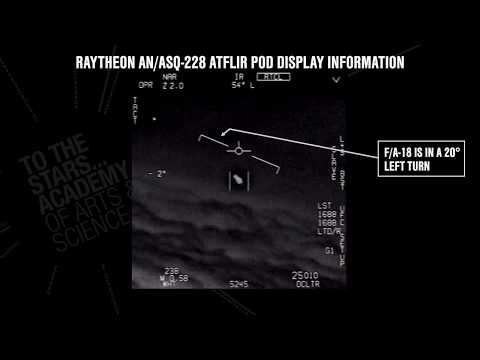
Gimbal: The First Official UAP Footage from the USG for Public Release
The original raw ATFLIR footage, first published by To The Stars Academy of Arts & Science, later formally declassified by the Pentagon.
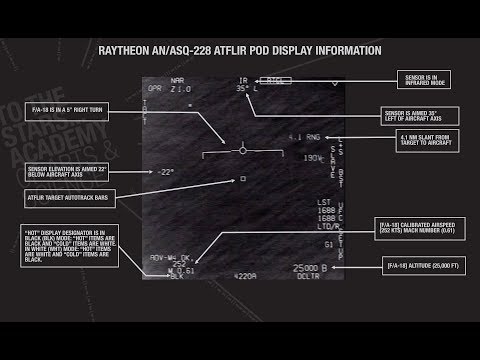
Go Fast: Official USG Footage of UAP for Public Release
The original raw GoFast ATFLIR footage as first released by To The Stars Academy, now Pentagon-declassified.
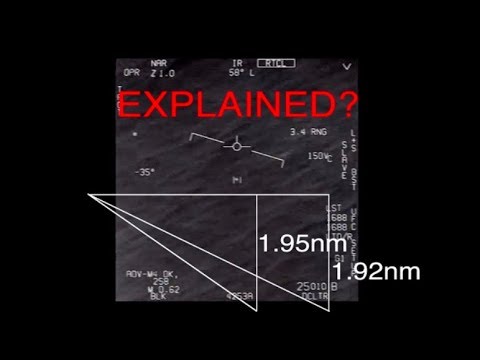
Explained: "Go Fast" UFO Video - Not Low and Not Fast - Like a Balloon!
Mick West's detailed parallax analysis, using only the video's own on-screen telemetry — the technical foundation AARO's 2025 official resolution later echoed.
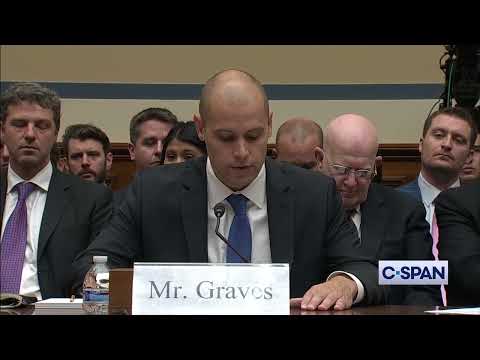
Ryan Graves Opening Statement at Unidentified Anomalous Phenomena (UAP) Hearing
C-SPAN's official recording of Graves' sworn July 26, 2023 congressional testimony on the 2014–2015 East Coast encounters.

Public Meeting on Unidentified Anomalous Phenomena (Official NASA Broadcast)
NASA's official September 2023 broadcast presenting its Independent Study Team's findings, which cite GoFast as a case study in parallax misperception.
Sources
- U.S. Department of Defense. "Statement by the Department of Defense on the Release of Historical Navy Videos," April 27, 2020. defense.gov
- All-domain Anomaly Resolution Office (AARO). "UAP Case Resolution Reports" (includes GoFast Case Resolution Card, Feb. 2025). aaro.mil
- AARO. "GoFast Case Resolution Card Methodology," February 6–20, 2025 (PDF). aaro.mil
- The Black Vault. "Pentagon Releases AARO Report on 'Go Fast' Video Analysis," 2025. theblackvault.com
- The Black Vault. "U.S. Navy Releases Dates of Three Officially Acknowledged Encounters with 'Phenomena.'" theblackvault.com
- Cooper, Helene; Blumenthal, Ralph; Kean, Leslie. "'Wow, What Is That?' Navy Pilots Report Unexplained Flying Objects," The New York Times, May 26, 2019 (republished via Seattle Times wire). seattletimes.com
- Kean, Leslie; Blumenthal, Ralph; Cooper, Helene. "Glowing Auras and 'Black Money': The Pentagon's Mysterious U.F.O. Program," The New York Times, December 16, 2017.
- CBS News. "UFOs Regularly Spotted in Restricted U.S. Airspace," 60 Minutes, May 16, 2021. cbsnews.com
- NBC News. "Navy Confirms Videos Did Capture UFO Sightings, But It Calls Them by Another Name," September 2019. nbcnews.com
- Congress.gov. "Unidentified Anomalous Phenomena: Implications on National Security, Public Safety, and Government Transparency," House Oversight Committee hearing, July 26, 2023. congress.gov
- Graves, Ryan. Written Testimony to the House Committee on Oversight and Accountability, July 26, 2023. congress.gov
- NASA. "NASA Shares Unidentified Anomalous Phenomena Independent Study Report," September 14, 2023. science.nasa.gov
- West, Mick. "That Navy UFO Footage Has an Optical Explanation," PetaPixel, April 28, 2020. petapixel.com
- West, Mick. "'GO FAST' Footage from Tom DeLonge's To The Stars Academy. Bird? Balloon?" Metabunk forum thread. metabunk.org
- West, Mick. "Gimbal UFO - A New Analysis," Metabunk forum thread. metabunk.org
- Wikimedia Commons. "Category:Pentagon UFO Videos" (hosts the original DoD-released Gimbal and GoFast video files as U.S. government public-domain works). commons.wikimedia.org
- Wikipedia. "Pentagon UFO Videos." en.wikipedia.org
- Office of the Director of National Intelligence. "Preliminary Assessment: Unidentified Aerial Phenomena," June 25, 2021.
- Military.com. "Navy Declassifies Its Notorious 'UFO Sighting' Videos," April 27, 2020. military.com
- To The Stars Academy of Arts & Science. "2015 GO FAST Footage" archive page. thevault.tothestarsacademy.com
- Elizondo, Luis. Imminent: Inside the Pentagon's Hunt for UFOs, William Morrow, 2024.
- Graff, Garrett M. UFO: The Inside Story of the US Government's Search for Alien Life Here—and Out There, Avid Reader Press, 2023.
See something inaccurate? Have additional information or sources?
Suggest an Edit →Last Updated: August 2026