
Quantum Entanglement Propulsion Hypothesis
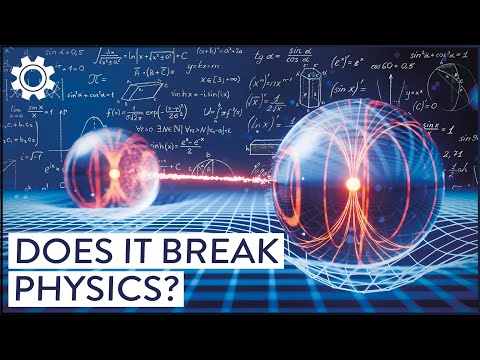
Proposes that a UAP could achieve apparently instantaneous, non-local repositioning by exploiting quantum entanglement — the correlated behavior of separated particles that Einstein called "spooky action at a distance." Entanglement itself is genuine, Nobel Prize-winning, experimentally confirmed physics; the theory's core weakness is that the same field's own foundational no-communication theorem has, for decades, rigorously proven those correlations cannot transmit energy, matter, or information from one place to another.
Contradicted by Its Own Field's Foundational TheoremCore Thesis
If a craft could somehow harness the correlations shared by entangled particles rather than merely measure them, it might, in principle, reposition without physically traversing the intervening distance at any finite speed — but the same body of confirmed physics that discovered and repeatedly verified entanglement also proved, independently and decades ago, that those correlations cannot carry energy, matter, or information between two locations, making this theory's central mechanism the most directly and rigorously contradicted of any propulsion hypothesis on this site.
Origin & History
The quantum entanglement propulsion hypothesis holds that a UAP's most extreme reported kinematic behavior — instantaneous acceleration, apparent disappearance from one location followed by appearance at another with no observed transit, or tightly coordinated multi-object maneuvering — might be explained by a craft somehow exploiting quantum entanglement's non-local correlations rather than by any conventional or even exotic propulsion mechanism moving the craft through the intervening space at all. It is, among the theories this site catalogues, unusual in a specific way: its underlying physical phenomenon, entanglement, is not speculative, fringe, or even contested. It is among the most rigorously confirmed, repeatedly replicated results in the entire history of experimental physics, honored with a Nobel Prize as recently as 2022. What makes this theory nonetheless the most directly contradicted mechanism hypothesis on this site is that the same decades of research establishing entanglement's reality also established, with comparable rigor, a second result — the no-communication theorem — that specifically and deliberately closes off the exact application this theory requires.
The theory's origin traces to a 1935 thought experiment rather than any UAP-related proposal. Albert Einstein, Boris Podolsky, and Nathan Rosen published "Can Quantum-Mechanical Description of Physical Reality Be Considered Complete?" in Physical Review, arguing that quantum mechanics, as then formulated, permitted a disturbing consequence: two particles that had once interacted and become correlated, or "entangled," would continue to exhibit linked measurement outcomes no matter how far apart they later traveled, seemingly requiring some influence to pass between them faster than light could carry it. Einstein, Podolsky, and Rosen treated this not as a genuine physical effect but as evidence that quantum mechanics must be an incomplete description of a deeper, fully deterministic reality — a position Einstein maintained in later correspondence with physicist Max Born, in which he dismissed the effect as "spukhafte Fernwirkung," rendered in English as "spooky action at a distance." For nearly three decades, the EPR paradox remained a philosophical dispute about the interpretation of quantum mechanics rather than an experimentally resolvable question, since no one had yet shown how to actually test whether nature behaved as Einstein's local, deterministic alternative predicted or as standard quantum mechanics predicted.
That changed in 1964, when Northern Irish physicist John Stewart Bell, working at CERN, published "On the Einstein Podolsky Rosen Paradox" in the short-lived journal Physics Physique Fizika, deriving a specific mathematical inequality that any theory based on local "hidden variables" — Einstein's preferred resolution — would have to satisfy, and that standard quantum mechanics predicted would be violated. Bell's theorem transformed a philosophical debate into a concrete, falsifiable experimental question for the first time. Physicist John Clauser, then a postdoctoral researcher at UC Berkeley's Space Sciences Laboratory, working with graduate student Stuart Freedman, ran the first real experimental test in 1972, finding a clear violation of a Bell-type inequality consistent with quantum mechanics rather than local hidden variables. Their apparatus used an atomic cascade source — calcium-40 atoms excited by ultraviolet light and allowed to decay through an intermediate state, emitting two correlated photons in rapid succession — sent in opposite directions through separate linear polarizers set at variable relative angles before being registered by photomultiplier tubes wired to coincidence-counting electronics that recorded only photon pairs arriving within a narrow time window of each other. Freedman and Clauser tested a modified version of the original 1969 Clauser-Horne-Shimony-Holt inequality, adapted to accommodate the real detectors' limited efficiency under an explicit "fair sampling" assumption — that the subset of photon pairs the apparatus actually detected was statistically representative of all pairs emitted, since no detector of the era caught anywhere near all of them. Running the polarizers through a series of relative-angle settings, they measured coincidence rates that matched quantum mechanics' predictions to within experimental error and violated the hidden-variable bound by more than five standard deviations, a result Clauser and Freedman published in Physical Review Letters in April 1972 as "Experimental Test of Local Hidden-Variable Theories." The fair-sampling assumption they relied on remained a genuine, if narrowing, loophole for the next four decades, which is precisely the gap Aspect's and, later, Hanson's, Zeilinger's, and Shalm's experiments were each designed to close. French physicist Alain Aspect's experiments through the early 1980s, most notably his 1982 use of rapidly switching analyzer settings to close the "locality loophole" that critics argued could let a slower-than-light signal account for the correlation, put the result on dramatically firmer ground. Decades of further loophole-closing experiments culminated in a trio of genuinely "loophole-free" tests published within months of each other in 2015: Ronald Hanson's group at Delft University of Technology closed both the locality and detection-efficiency loopholes simultaneously using entangled electron spins in diamond, separated by 1.3 kilometers across the Delft campus; Anton Zeilinger's own group in Vienna, led by Marissa Giustina, achieved a comparable result using entangled photons and ultra-fast, quantum-random-number-generator-controlled detector settings; and a National Institute of Standards and Technology team led by Lynden Shalm achieved a third, independent loophole-free confirmation using a similar photonic setup. That three independent groups, using three different physical systems and measurement techniques, converged on the same result within the same year left no serious remaining doubt: quantum entanglement, and the violation of Bell's inequality it implies, is real, and no remaining experimental loophole offers a plausible escape route back to a local, classical explanation. Clauser, Aspect, and Austrian physicist Anton Zeilinger jointly received the 2022 Nobel Prize in Physics "for experiments with entangled photons, establishing the violation of Bell inequalities and pioneering quantum information science."
Zeilinger's own contribution extended the story in a direction that, on its surface, looks tantalizingly close to what this theory would need. In 1997, his research group at the University of Innsbruck, together with Dik Bouwmeester and a young postdoctoral researcher named Jian-Wei Pan, published the first experimental demonstration of quantum teleportation in Nature — transferring the complete quantum state of one photon onto a second, previously unconnected photon at a distance, using entanglement as a resource. Pan went on to lead China's Micius satellite program, and in 2017 his team at the University of Science and Technology of China reported distributing entangled photon pairs between ground stations 1,200 kilometers apart, more than doubling the previous record and demonstrating that entanglement survives transmission through the vacuum of space, not merely through laboratory-scale optical fiber. Every one of these results is genuine, peer-reviewed, independently replicated physics. None of them, as later sections of this file examine in detail, actually permits sending a signal, a payload, or a craft from one location to another without also sending a second, ordinary, light-speed-limited transmission alongside it.
The specific idea of applying entanglement to propulsion — rather than to communication, cryptography, or computing, the three applications mainstream quantum information science actually pursues — has essentially no serious academic literature behind it. The closest thing to a concrete proposal is a 2016 paper by Brazilian physicists Elio B. Porcelli and Victo S. Filho, "Anomalous Effects from Dipole-Environment Quantum Entanglement," posted to arXiv's general-physics category rather than published in any peer-reviewed venue. Porcelli and Filho report detecting small, otherwise-unexplained forces in magnetic-core and capacitor devices, which they attribute to a proposed entanglement between the devices' internal dipoles and their surrounding electromagnetic environment, and they suggest — in a single, brief, forward-looking remark rather than a worked mechanism — that controlling the effect might eventually enable "a new technology based on electric propulsion of rockets and aircrafts." This is, as far as this file's research has found, the only documented instance of a physicist proposing anything resembling an entanglement-based propulsion mechanism in writing, and it is worth being precise about its status: an unreviewed arXiv preprint reporting a disputed anomalous-force measurement, not a peer-reviewed result, not a working device, and not a claim endorsed by any of the credentialed physicists whose confirmed work this theory otherwise draws on.
Scientific Foundations
This theory rests on one thoroughly confirmed physical phenomenon, one equally thoroughly confirmed theorem that directly forecloses the theory's central application, and two further, genuine results that sit closer to the phenomenon than the theorem but still fall well short of licensing any propulsion mechanism:
1. Quantum Entanglement & Bell Inequality Violation (Confirmed Foundation)
When two particles interact and become entangled, measurements performed on them — even after they are separated by an arbitrarily large distance — show correlations stronger than any theory based on pre-existing, locally determined properties (a "local hidden variable" theory) could produce. Bell's 1964 theorem supplied the precise mathematical inequality distinguishing the two possibilities, and Clauser's 1972 experiment, Aspect's loophole-closing experiments through the 1980s, and the fully loophole-free tests of the mid-2010s have confirmed, with steadily increasing rigor, that nature violates Bell's inequality exactly as quantum mechanics predicts. This is not in scientific dispute, and the 2022 Nobel Prize formally recognized it as settled, foundational physics.
2. The No-Communication Theorem (The Direct Refutation)
This is the single most important fact this theory has to contend with, and it is not a matter of engineering difficulty or insufficient technology — it is a mathematical proof, formalized by physicists Philip Eberhard and G.C. Ghirardi (working separately, with related results from Ghirardi, Rimini, and Weber) between the 1970s and 1980s, that no measurement performed on one half of an entangled pair can be used to send a signal to whoever holds the other half. The reason is structural rather than incidental: when a measurement is performed on one entangled particle, the outcome obtained is genuinely, irreducibly random from the local perspective of the person performing it, and nothing about which specific outcome occurs can be controlled or chosen by that person. What entanglement guarantees is only that the distant particle's own subsequent measurement outcome will be correlated with the first one in a specific statistical pattern — a pattern that only becomes visible once both sets of measurement results are brought together and compared, which itself requires an ordinary, light-speed-limited channel to accomplish. No amount of technological advancement changes this; it is baked into the mathematical structure of quantum mechanics itself, which is precisely why physicists treat it as settled rather than as an open engineering problem awaiting a clever enough solution.
3. Quantum Teleportation (Real, But Still Light-Speed-Limited)
The 1993 protocol devised by Charles Bennett and six co-authors, first experimentally realized by Zeilinger's group in 1997, allows the complete quantum state of one particle to be transferred onto a second, distant particle that shares entanglement with the first. The name is genuinely evocative and, taken out of context, sounds exactly like what this theory would need — but the protocol's actual mechanics make clear why it does not violate the no-communication theorem. Completing a teleportation requires the sender to perform a specific joint measurement on their particle and the one being teleported, then transmit the result of that measurement to the receiver over an ordinary classical channel — radio, fiber optic, or any other signal bound by the speed of light — before the receiver can perform the correct operation on their own entangled particle to complete the transfer. Without that classical transmission, the receiver's particle is in a random, unusable state indistinguishable from noise. Quantum teleportation moves information about a quantum state, never matter itself, and it is exactly as fast as its slowest component, the classical channel, meaning it offers no speed advantage over simply sending the same classical message directly.
4. The ER=EPR Conjecture (Serious Theoretical Physics, Not a Propulsion Mechanism)
In 2013, Leonard Susskind and Juan Maldacena proposed, in a paper titled "Cool Horizons for Entangled Black Holes," that pairs of maximally entangled particles — the "EPR" of Einstein, Podolsky, and Rosen — might be connected by a microscopic wormhole, an Einstein-Rosen bridge (hence "ER"), suggesting a deep structural link between quantum entanglement and the geometry of spacetime itself. This is genuine, actively researched theoretical physics within the holographic-principle and AdS/CFT research programs Susskind helped found, not a fringe claim, and it represents the single most serious point of contact anywhere in mainstream physics between "entanglement" and "wormhole." It implies essentially nothing, however, about macroscopic transportation: the wormholes ER=EPR describes are Planck-scale, non-traversable in the sense any macroscopic object could pass through, and exist between the specific entangled particles under discussion rather than providing any general channel a craft could enter. Susskind has never applied the conjecture to any UAP-related claim, and no serious theoretical-physics literature proposes scaling it into a transportation mechanism of any kind.
Government & Military Programs
This theory's government engagement runs through two genuinely distinct tracks: a mainstream, publicly acknowledged Department of Defense research program with no UAP connection, and one specific, explicitly UAP-motivated document among the Defense Intelligence Agency's declassified AAWSAP research deliverables. DARPA's Microsystems Technology Office announced the Quantum Entanglement Science and Technology (QuEST) program in 2008 as a follow-on to the earlier QuIST program, explicitly funding foundational quantum information science — multi-qubit entanglement, decoherence, quantum cryptography, quantum radar and remote sensing, and quantum-enhanced metrology — with an explicit exclusion of proposals offering only incremental improvement over existing techniques. Nothing in QuEST's public program documentation addresses propulsion, UAP, or any application resembling this theory's central claim; it is included here as the relevant mainstream research context for the same reason DARPA's Casimir Effect Enhancement program appears in this site's Zero-Point Energy Extraction file — a genuine government investment in the underlying physics, running on an entirely separate track from any UAP-specific inquiry.
China's Micius satellite program, formally the Quantum Experiments at Space Scale (QUESS) mission, supplies the clearest example of a state actor treating entanglement distribution as a strategic communications priority rather than a purely academic pursuit. Launched in August 2016 and led by Jian-Wei Pan under the Chinese Academy of Sciences, the roughly $100 million satellite program's stated goals centered on quantum key distribution — using entanglement to generate cryptographic keys that any eavesdropping attempt would provably disturb, not on propulsion or faster-than-light signaling of any kind. Micius has since demonstrated intercontinental quantum-key exchange between China and ground stations in Austria and Italy, and Pan's team has continued extending the satellite's range and reliability in subsequent published work. The program is real, substantial, state-funded evidence that a major government treats entanglement-based technology as strategically important — but its entire published purpose is securing classical communication against eavesdropping, an application fully consistent with the no-communication theorem, since quantum key distribution transmits no information faster than light and instead uses entanglement's correlations only to detect tampering with an otherwise ordinary, light-speed-limited signal.
The UAP-specific track runs through a single, precisely on-topic document: DIRD-16, "The Space Communication Implications of Quantum Entanglement and Nonlocality," one of the 38 Defense Intelligence Reference Documents commissioned under the Defense Intelligence Agency's Advanced Aerospace Weapon System Applications Program (AAWSAP) in 2009 and executed under contract by Robert Bigelow's Bigelow Aerospace Advanced Space Studies (BAASS). The DIA released the document, along with the great majority of the other 38 DIRDs, to its FOIA reading room in March 2022 after sustained public-records pressure. Like this site's other examined DIRDs (the metallic hydrogen and exotic metamaterials file discusses the AAWSAP "Invisibility Cloaking" deliverable), DIRD-16 is a commissioned literature review and theoretical survey addressing whether quantum nonlocality might, in principle, offer a communication channel unconstrained by the speed of light — directly relevant to the interstellar-distance-communication and instantaneous-coordination questions this theory's proponents sometimes raise — rather than a report of original experimental research or an assessment of any specific recovered material or craft. Its existence establishes that a U.S. defense intelligence program judged the general topic of entanglement's space-communication implications formally worth commissioning outside expert review on; it does not establish that any DIRD author endorsed a working nonlocal-communication or propulsion mechanism, and no released DIRD claims to have found one.
Physical Evidence
As with this site's other pure-mechanism theories, this hypothesis has no recovered UAP hardware or debris tied to it; its evidentiary trail is entirely theoretical and, where it touches the physical world at all, runs through laboratory demonstrations of entanglement and teleportation rather than any craft or component. The genuinely existing physical evidence supporting this theory's foundational physics — Aspect's photon-correlation apparatus, Zeilinger's 1997 teleportation setup, Pan's Micius satellite hardware — is real, well-documented, and entirely disconnected from any UAP case file; none of these experiments has ever been claimed by its own researchers to demonstrate anything resembling propulsion, and none involved any UAP-linked material or craft component. Porcelli and Filho's 2016 anomalous-force measurements are the one arguably relevant physical result with a stated aspiration toward propulsion, but they remain an unreplicated, non-peer-reviewed measurement in ordinary capacitors and magnetic cores, not evidence connected to any specific UAP encounter or recovered object.
Crash Retrievals
This hypothesis makes no claim about recovered craft, crash debris, or reverse-engineered hardware of any kind, and no crash-retrieval narrative anywhere in this site's case files describes a component identified as an entanglement-based communication or propulsion device. It addresses only a proposed mechanism for repositioning, not any physical artifact a crash might leave behind, which is itself a notable evidentiary limitation relative to this site's materials-based theories: a genuinely recovered "entanglement drive" component would be a landmark discovery, and no case file anywhere in this catalogue describes one.
Supporting Case Files
Theoretical Alignment
Of the mechanism theories this site catalogues, quantum entanglement propulsion is the one most directly and specifically aimed at a single reported observable: apparent instantaneous acceleration or repositioning, with little to say about hovering, structural properties, or sensor-evasion characteristics that this site's other propulsion and materials theories address. That narrow focus is precisely why the USS Nimitz encounter's Gimbal-adjacent "Tic Tac" object — described by pilot David Fravor as abruptly closing distance and shifting position in a way conventional flight dynamics cannot easily account for — is this theory's most directly relevant case, and why the Kinross Incident's radar-documented merge-and-vanish event over Lake Superior, watched simultaneously by three separate ground stations, is the closest thing in this site's catalogue to a "the object was here, and then every sensor lost it at once" event this theory's non-local repositioning claim would actually predict. The theory is, in principle, fully compatible with this site's other propulsion hypotheses (Vacuum Polarizability, Plasma Sheath/MHD Propulsion, Zero-Point Energy Extraction), since a craft could theoretically combine a conventional or exotic propulsion system for ordinary flight with a separate, additional non-local mechanism reserved for extreme maneuvers — though no case file or theoretical proposal anywhere in the sourced record actually describes such a combined system.
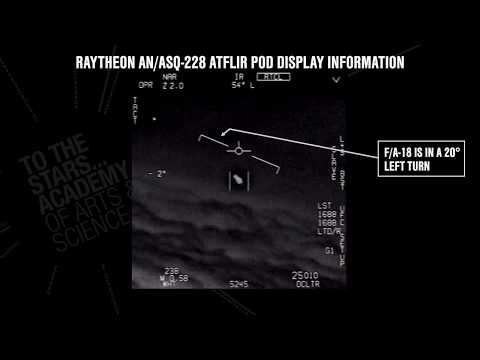
This positioning also clarifies what would, and would not, count as confirming evidence for this specific theory rather than for UAP kinematics generally. A case featuring gradual, if extreme, acceleration — however far beyond conventional aircraft performance — supports propulsion theories describing a continuous, if exotic, application of force, not this theory, which specifically requires an object to reposition without traversing the intervening space in any continuous way at all. Only a genuinely instantaneous transition, with no detected intermediate position at any velocity, however extreme, would actually match this theory's core claim, and even the most extreme kinematics reported in this site's radar-visual case files — including Gimbal and GoFast — describe continuous, if bafflingly rapid, motion rather than a true discontinuity. The Kinross Incident's radar-scope disappearance is the one case in this file's supporting set that describes something closer to an actual discontinuity, though the mundane explanation that the interceptor and its unidentified target simply flew below three ground radars' detection floor together remains fully available and has never been ruled out.
Sensor & Instrumentation Detection Profile
Because this theory proposes a fundamentally different kind of motion — non-local repositioning rather than any continuous trajectory a sensor could track — its most direct instrumentation signature would be a target's confirmed simultaneous loss from multiple independent, cross-checked sensors followed by confirmed reappearance elsewhere with no continuous track connecting the two, a signature genuinely difficult to distinguish from an ordinary radar dropout, sensor malfunction, or the target simply descending below every station's detection floor at once. The Kinross Incident offers the closest documented approach to this signature: three separate ground-radar stations independently tracked the merge and simultaneous loss of both the F-89C interceptor and its unidentified target, a genuinely striking multi-sensor correlation, though the case's own official Air Force explanation — that Moncla's jet crashed independently during a high-speed, spatially disorienting descent while chasing a stray Canadian transport aircraft — requires no non-local mechanism to account for the same radar data. Gimbal and GoFast, by contrast, involved continuous ATFLIR infrared tracking throughout each encounter, with no sensor dropout or discontinuity of the kind this theory's core mechanism would predict; the debate over those two cases centers entirely on how to interpret continuously recorded footage, not on any gap in the sensor record.
No instrumentation anywhere in this site's sourced case-file record has ever recorded a reading its own analysts identify as a confirmed entanglement signature, and this is worth stating plainly because it distinguishes this theory even from this site's other, more speculative energy-source and materials hypotheses: Zero-Point Energy Extraction can at least point to Moddel's 2012 laboratory measurement of a real, if weak, physical signal from his own patented apparatus, and Metallic Hydrogen & Exotic Metamaterials can point to a genuinely created, if since-lost, physical sample. This theory has no comparable laboratory measurement connecting its proposed mechanism to any device remotely resembling a propulsion system; Porcelli and Filho's anomalous-force readings are the closest analogue, and they were measured in ordinary capacitors and magnetic cores with no connection to flight or propulsion testing of any kind.
Environmental & Geospatial Context
As a mechanism theory rather than a location-specific phenomenon, this hypothesis carries no dedicated sighting geography of its own; its physics research anchors are institutional and laboratory-based (Innsbruck, CERN, Stanford, China's Micius satellite ground stations) rather than tied to any recurring geographic hotspot. Its three supporting case files span markedly different settings and eras: the USS Nimitz encounter occurred over the Pacific off the Southern California coast in 2004, Gimbal and GoFast occurred over the Atlantic off the U.S. East Coast in 2015, and the Kinross Incident occurred over Lake Superior in 1953. No shared geography connects them; what connects them, for this theory's specific purposes, is only that each involves a military sensor platform capable of documenting rapid or discontinuous target behavior with more rigor than an unaided civilian witness account could provide.
The three cases also differ sharply in how completely their underlying sensor data has been preserved and made available for independent re-analysis, independent of what that data has so far shown. Gimbal and GoFast benefit from the most complete public sensor record of the three: official Department of Defense release of the original ATFLIR footage in April 2020, allowing independent analysts like Mick West to conduct frame-by-frame parallax and glare analysis using the footage's own embedded telemetry. The USS Nimitz encounter's sensor record is more fragmentary, resting heavily on pilot testimony (David Fravor's account of the object's abrupt repositioning) alongside radar data from the USS Princeton that has never been as fully released or independently re-analyzed as the later Gimbal/GoFast footage. The Kinross Incident sits at the opposite extreme from Gimbal and GoFast: its entire sensor record consists of 1953-era ground-radar logs, long since lost or classified beyond public availability, meaning no modern independent re-analysis of the actual scope data has ever been possible — only secondhand accounts of what the original controllers reported seeing.
Observer Credibility & Occupational Profile
The credentials underlying this theory's core physics are about as strong as this site's source material ever gets: Bell was a career CERN theoretical physicist, Clauser, Aspect, and Zeilinger are Nobel laureates whose prize was awarded specifically for the experimental rigor of their entanglement work, and Jian-Wei Pan's Micius satellite program represents a nationally funded, peer-reviewed, internationally scrutinized research effort. None of these physicists has ever proposed, endorsed, or been publicly associated with any UAP propulsion application of their work, and Zeilinger in particular has been a public, on-record critic of pseudoscientific misappropriations of quantum mechanics, including claims that entanglement enables faster-than-light communication of any kind. This creates an unusual credibility profile relative to this site's other mechanism theories: where Zero-Point Energy Extraction's own patent co-inventor Garret Moddel personally investigated and partially validated his own theory, and Metallic Hydrogen's Isaac Silvera continues to defend his own disputed claim, no credentialed physicist behind this theory's foundational physics has ever defended, or even engaged with, its UAP-specific application. The theory's only documented advocate, Porcelli, published a single non-peer-reviewed preprint mentioning propulsion in one forward-looking sentence, a considerably thinner credibility record than this site's other propulsion hypotheses can point to.
The credibility of this theory's case-file connections rests on a more familiar military and independent-analyst foundation. David Fravor, a Navy fighter pilot with direct visual and radar contact with the Tic Tac object, and Ryan Graves, who gave sworn 2023 congressional testimony about the broader 2014-2015 East Coast encounter wave that produced Gimbal and GoFast, are credentialed military aviators describing firsthand observations rather than physicists proposing a mechanism. Graves, a former Navy F/A-18 Super Hornet pilot with VFA-11 "Red Rippers," testified before the House Oversight Committee's Subcommittee on National Security, the Border, and Foreign Affairs on July 26, 2023, alongside David Grusch and retired Navy Commander David Fravor, telling the panel that unidentified objects — some described by fellow pilots as dark cubes encased within a translucent sphere — were encountered by his squadron on a near-daily basis in training airspace off the Virginia coast during 2014 and 2015, closely tracking the same period that produced the Gimbal and GoFast footage. He testified that these encounters became routine enough that some aircrews stopped filing reports out of concern the incidents would be dismissed or would harm their careers, and he specifically raised the danger of a near-midair collision between a Navy aircraft and an unidentified object as a safety issue separate from any question of the objects' origin. Graves used the hearing to call for a standardized, stigma-free reporting pathway for military and commercial pilots, a position he has continued to advance through Americans for Safe Aerospace, the nonprofit pilot-advocacy organization he founded and leads. His testimony addressed reporting gaps, airspace safety, and firsthand visual and sensor observations; it made no claim, then or since, about any underlying propulsion mechanism, entanglement-based or otherwise, for the objects he described. Mick West's parallax analysis of the GoFast footage, using only the video's own embedded telemetry, represents genuinely rigorous independent technical scrutiny, of a kind this theory's core physics claims have simply never received from any comparable UAP-specific analyst, since no one has proposed a specific, testable "entanglement drive" design for anyone to scrutinize in the first place.
Key Witnesses & Analysts
Two figures anchor the military-sensor side of this theory's supporting case files, occupying firsthand-witness and technical-analyst roles respectively:
David Fravor
The Navy pilot who, in November 2004, made visual and brief radar-lock contact with the "Tic Tac" object during the USS Nimitz carrier group's training exercise, describing an object that appeared to close distance and shift position in a manner he judged inconsistent with any known aircraft's flight dynamics — the case's central first-hand account of the kind of abrupt repositioning this theory attempts to explain.
Mick West
Conducted the widely cited parallax and glare analysis of the GoFast footage using the video's own on-screen telemetry, concluding the object's apparent high speed and low altitude were consistent with a slow-moving, higher-altitude balloon viewed at an angle — a conventional explanation this theory's proponents have never directly rebutted with a competing sensor analysis of their own.
Historical Precedents & Archive Matches
The specific pattern of taking a genuine, headline-grabbing physics discovery and stretching it well past what its own discoverers claim for it has a long history in speculative UAP and fringe-science literature, and entanglement is a particularly clean example because the gap between the real phenomenon and the popular misunderstanding of it is unusually well-documented in the physics-communication literature itself. "Spooky action at a distance" is, on its own, an evocative enough phrase that it has been informally invoked to explain everything from telepathy to remote viewing to interstellar communication, almost always by writers outside the specific technical field, in ways the no-communication theorem directly rules out; physicist and science writer George Musser's own book on the subject exists in large part to correct exactly this category of popular misunderstanding. The pattern echoes this site's treatment of the Casimir effect in its Zero-Point Energy Extraction file: a real, confirmed, mainstream physical phenomenon, discovered and studied for entirely unrelated reasons, later informally extended by UAP-adjacent commentary into an application its own discoverers never proposed and, in this case, a rigorous internal theorem of the same field has already foreclosed.
A useful comparison is the 1989 "cold fusion" episode discussed in this site's Metallic Hydrogen & Exotic Metamaterials file: that claim, at least, proposed a specific, testable experimental setup that failed replication once independent labs attempted it. Stanley Pons and Martin Fleischmann, chemists at the University of Utah, announced at a March 23, 1989 press conference — bypassing peer review entirely — that they had achieved nuclear fusion at room temperature by electrolyzing heavy water (deuterium oxide) using palladium electrodes, reporting excess heat output they said could only be explained by fusion reactions occurring within the palladium lattice. The claim was specific and testable in exactly the way this theory's proponents have never matched: it named the precise materials (palladium cathode, deuterium electrolyte, platinum anode), the claimed mechanism (deuterium nuclei fusing at unusually high density inside the metal's crystal structure), and predicted byproducts (excess heat, plus neutron and tritium emission) that any comparably equipped lab could look for. Within weeks, groups at MIT's Plasma Fusion Center, Caltech, and Georgia Tech attempted replication and found no excess heat beyond measurement uncertainty and no neutron flux above background levels; Caltech chemist Nathan Lewis's team specifically identified calorimetry errors and inadequate accounting for ordinary chemical recombination heat as sufficient to explain Pons and Fleischmann's original "excess heat" readings without invoking fusion at all. By late 1989, a Department of Energy review panel concluded the evidence did not support the fusion claim, and the episode became a standard case study in how a testable, falsifiable, publicly announced experimental claim gets resolved — through independent replication attempts finding a mundane explanation for the same data — when the underlying science establishment is actually given a specific procedure to test. Quantum entanglement propulsion has not even reached that stage; no credentialed researcher has published a specific, testable device design for other physicists to attempt to replicate or refute, which means the theory has never been in a position to fail a replication attempt the way cold fusion did — it remains, instead, in the earlier and in some ways more fundamental position of being ruled out by an existing theorem before any specific device proposal could even be tested. This is a meaningfully different, and more thoroughly foreclosed, evidentiary situation than any other mechanism theory this site catalogues.
Material Analysis
This theory has no exotic-material claim of its own; unlike this site's Metallic Hydrogen & Exotic Metamaterials file, it proposes no special hull composition, fuel, or component, only a proposed mechanism for repositioning that, if it existed, could in principle be built from entirely ordinary materials arranged to create and manipulate entangled particles — the same photonic and superconducting hardware used in real quantum information laboratories, none of it exotic in composition even though the physics it manipulates is subtle. Cross-referenced against this site's case files, the theory predicts no material signature at all, meaning its strongest possible confirming evidence would always be behavioral (a genuinely instantaneous, sensor-documented discontinuity) rather than any physical trace analysis could recover from a crash site or fragment. This is a structural weakness relative to this site's physical-evidence-based theories: Ubatuba's magnesium fragments and ordinary materials-science testing can, in principle, be re-examined indefinitely as instrumentation improves, while this theory's central claim can only ever be tested against sensor data that, in most of this site's older cases, no longer exists in a form modern instruments could re-analyze at all.
Supporting This Hypothesis
- Quantum entanglement itself is genuine, Nobel Prize-winning, repeatedly and rigorously confirmed physics, giving this theory an unusually solid underlying phenomenon by this site's standards
- A specific U.S. defense intelligence document (AAWSAP DIRD-16) was formally commissioned to assess entanglement's space-communication implications
- The Kinross Incident's three-station simultaneous radar loss is a genuinely striking multi-sensor correlation consistent, in principle, with a non-local repositioning event
- The ER=EPR conjecture demonstrates a real, serious theoretical connection between entanglement and spacetime geometry within mainstream theoretical physics
Against This Hypothesis
- The no-communication theorem is a rigorous mathematical proof, not an engineering limitation, and it directly forecloses using entanglement to transmit energy, matter, or information between two locations
- No credentialed physicist has ever proposed a specific, testable entanglement-based propulsion device; the one arXiv preprint that mentions propulsion is unreviewed and unreplicated
- Every credentialed physicist behind this theory's foundational discoveries (Bell, Clauser, Aspect, Zeilinger, Susskind) has never endorsed any UAP application of their work, and some have publicly criticized similar misappropriations
- All three supporting case files describe continuous, if extreme, sensor-tracked motion rather than any confirmed instantaneous discontinuity this theory's core mechanism actually requires
Theory Development Timeline
| Date | Development |
|---|---|
| 1935 | Albert Einstein, Boris Podolsky, and Nathan Rosen publish the EPR paper in Physical Review, describing what Einstein later calls "spooky action at a distance." |
| Nov. 23, 1953 | The Kinross Incident: an F-89C interceptor merges with an unidentified radar target over Lake Superior and both vanish from three ground stations' scopes simultaneously. |
| 1964 | John Stewart Bell publishes his theorem, deriving a testable inequality distinguishing quantum mechanics from local hidden-variable theories. |
| 1972 | John Clauser and Stuart Freedman conduct the first experimental Bell test, finding results consistent with quantum mechanics. |
| 1982 | Alain Aspect's experiments close the locality loophole in Bell tests using rapidly switching analyzer settings. |
| 1993 | Charles Bennett and six co-authors publish the theoretical protocol for quantum teleportation. |
| Nov. 2004 | The USS Nimitz "Tic Tac" encounter: Cdr. David Fravor and other Navy pilots report visual and radar contact with an object exhibiting abrupt repositioning. |
| 1997 | Anton Zeilinger's group, with Dik Bouwmeester and Jian-Wei Pan, achieves the first experimental quantum teleportation. |
| 2008 | DARPA's Microsystems Technology Office announces the Quantum Entanglement Science and Technology (QuEST) program. |
| 2009 | The DIA's AAWSAP program, executed by BAASS, commissions DIRD-16, "The Space Communication Implications of Quantum Entanglement and Nonlocality." |
| 2015 | The Gimbal and GoFast encounters occur off the U.S. East Coast during the broader 2014–2015 wave later described by Lt. Ryan Graves. |
| Nov. 2016 | Elio B. Porcelli and Victo S. Filho post "Anomalous Effects from Dipole-Environment Quantum Entanglement" to arXiv, briefly proposing an entanglement-based propulsion application. |
| 2017 | Jian-Wei Pan's team reports satellite-based entanglement distribution over 1,200 kilometers using the Micius satellite. |
| Apr. 2020 | The Department of Defense officially releases the Gimbal and GoFast footage through the Naval Air Systems Command. |
| Mar. 2022 | The DIA releases the majority of the 38 AAWSAP DIRDs, including DIRD-16, to its FOIA reading room. |
| Oct. 2022 | Clauser, Aspect, and Zeilinger jointly receive the Nobel Prize in Physics for their entanglement experiments. |
Weighing the Evidence
The central scientific critique of this theory is unusually direct compared to this site's other mechanism hypotheses: it is not that the underlying physics is fringe or unconfirmed — entanglement is about as confirmed as physics gets — but that the same body of confirmed physics has already, independently, proven the specific application this theory requires to be impossible, not merely undemonstrated. Where Zero-Point Energy Extraction's proponents have ruled out two of three proposed mechanisms while leaving one open, and Metallic Hydrogen's core claim remains genuinely disputed rather than refuted, this theory's central mechanism runs directly against a settled theorem with no comparable "one surviving approach" for its proponents to fall back on.
Supporting Arguments
- Quantum entanglement is experimentally confirmed to an extraordinarily high degree, recognized by a 2022 Nobel Prize
- A specific defense intelligence document (DIRD-16) shows the topic's space-communication implications were formally judged worth commissioned review
- The ER=EPR conjecture demonstrates genuine, serious theoretical physics linking entanglement to spacetime geometry
- The Kinross Incident's three-station simultaneous radar loss offers a genuinely striking, if not uniquely explicable, multi-sensor correlation
Skeptical Arguments
- The no-communication theorem is a rigorous, decades-old mathematical proof that directly forecloses using entanglement to transmit energy, matter, or information
- No credentialed physicist has published a specific, testable propulsion mechanism; the sole relevant preprint is unreviewed and mentions propulsion only in passing
- Every physicist behind the theory's foundational discoveries has declined to endorse any UAP application, and some have criticized similar misappropriations
- All three supporting case files show continuous sensor-tracked motion, not the instantaneous discontinuity the theory's mechanism requires
Conventional Explanation Candidate
Because quantum entanglement propulsion is a mechanism theory about how a craft might move rather than a claim about a single incident, its Conventional Explanation Candidates evaluate whether the case-file evidence its proponents might cite — extreme or discontinuous repositioning — actually requires non-local physics, or whether long-documented conventional and sensor-artifact explanations account for the same observations just as well.
Sensor Parallax / Optical Artifact (GoFast)
PlausibleMick West's independent analysis, using GoFast's own embedded telemetry, found the object's apparent speed and altitude fully consistent with a slow-moving, higher-altitude balloon subject to parallax — a conventional explanation requiring no non-local mechanism and never directly rebutted with a competing technical analysis.
Simultaneous Conventional Radar Loss (Kinross)
PlausibleThe U.S. Air Force's own explanation — a stray Canadian transport aircraft and an independent, spatial-disorientation-induced crash by the interceptor — accounts for a simultaneous three-station scope loss without requiring any object to actually vanish non-locally, though Canadian officials have long disputed the transport-aircraft identification specifically.
Extreme but Continuous Conventional or Classified Craft Maneuvering (Nimitz)
InconclusiveFravor's account describes rapid, extreme repositioning rather than a confirmed instantaneous discontinuity; whether the underlying cause is a classified conventional platform, an atmospheric or sensor artifact, or something genuinely unexplained remains open, but nothing in the account requires ruling out continuous, if extreme, motion.
Genuine Non-Local Entanglement-Based Repositioning (This Theory's Core Claim)
ImplausibleAs a complete explanation, this remains not merely unsupported but directly contradicted: the no-communication theorem rules out using entanglement to transmit anything between two locations, and no credentialed physicist has proposed a mechanism that avoids this limitation.
Theoretical Assessment Profile
Six-domain evaluation of this hypothesis
Taken together, the three case files this theory draws on illustrate why "instantaneous" is a much harder evidentiary bar to clear than "extremely fast." Gimbal and GoFast, this theory's most thoroughly documented supporting cases, involve continuous ATFLIR tracking throughout, with independent analysis (West's parallax study) offering a specific, testable conventional account of the footage's most striking features; neither case has ever produced a confirmed break in the sensor track the way this theory's mechanism would predict. The Nimitz encounter's core evidence is Fravor's own account of abrupt, if not instantaneously discontinuous, repositioning, resting on pilot testimony and partial radar data rather than the kind of continuously instrumented footage Gimbal and GoFast later provided. Kinross alone offers something closer to a genuine multi-sensor discontinuity — three independent stations losing the same merged target simultaneously — but its own 1953-era sensor data has long since been lost to modern re-analysis, and the U.S. Air Force's conventional explanation, however disputed by Canadian officials on one specific factual point, requires no non-local mechanism to account for the same scope loss. No single one of the three cases, on its own sourced record, requires invoking entanglement-based repositioning rather than a conventional account already on record for it; more fundamentally, even if one did, the no-communication theorem means this theory would still need some presently unknown physics beyond entanglement itself to explain how the repositioning was accomplished.
Key Proponents
Dr. Anton Zeilinger
Led the 1997 first experimental demonstration of quantum teleportation and spent decades conducting increasingly rigorous Bell tests, work recognized with the 2022 Nobel Prize in Physics. Has never proposed or endorsed any propulsion application of entanglement and has publicly criticized comparable pseudoscientific misappropriations of quantum mechanics.
Dr. Leonard Susskind
Co-proposed the 2013 ER=EPR conjecture with Juan Maldacena, establishing a genuine, seriously researched theoretical link between quantum entanglement and spacetime geometry via non-traversable, Planck-scale wormholes. Has never applied the conjecture to any transportation or propulsion claim.
Elio B. Porcelli
Co-author, with Victo S. Filho, of a 2016 non-peer-reviewed arXiv preprint reporting anomalous forces in capacitors and magnetic cores attributed to dipole-environment entanglement, briefly proposing the effect could eventually enable electric propulsion — the only documented instance of a physicist proposing anything resembling this theory's specific mechanism in writing.
Related Cases
Further Reading
Spooky Action at a Distance
A science journalist's deep dive into quantum nonlocality, including a direct, accessible treatment of exactly why entanglement cannot be used for faster-than-light signaling despite its popular misrepresentation as such.
The Age of Entanglement: When Quantum Physics Was Reborn
A dramatized history of the physicists — Einstein, Bohr, Bell, and their successors — who developed and tested the ideas behind quantum entanglement, tracing the EPR paradox to Bell's theorem and beyond.
Black Holes and Time Warps: Einstein's Outrageous Legacy
A Nobel laureate physicist's account of general relativity's most extreme predictions, including traversable-wormhole physics directly relevant to evaluating the ER=EPR conjecture's actual implications.
Physics of the Impossible
A theoretical physicist's ranked survey of speculative technologies — including teleportation and faster-than-light travel — assessing which remain merely difficult versus which current physics rules out entirely.
Imminent: Inside the Pentagon's Hunt for UFOs
The former AATIP director's memoir, providing direct context for the government's broader UAP kinematics investigations that this theory's supporting case files (Nimitz, Gimbal, GoFast) belong to.
Essential Viewing

Sources Cited
- Einstein, A.; Podolsky, B.; & Rosen, N. "Can Quantum-Mechanical Description of Physical Reality Be Considered Complete?" Physical Review 47, 777, 1935.
- Bell, J. S. "On the Einstein Podolsky Rosen Paradox," Physics Physique Fizika 1, 195, 1964.
- Freedman, S. J. & Clauser, J. F. "Experimental Test of Local Hidden-Variable Theories," Physical Review Letters 28, 938, 1972.
- Aspect, A.; Dalibard, J.; & Roger, G. "Experimental Test of Bell's Inequalities Using Time-Varying Analyzers," Physical Review Letters 49, 1804, 1982.
- "The Nobel Prize in Physics 2022," NobelPrize.org press release.
- Bennett, C. H. et al. "Teleporting an Unknown Quantum State via Dual Classical and Einstein-Podolsky-Rosen Channels," Physical Review Letters 70, 1895, 1993.
- Bouwmeester, D.; Pan, J.-W.; Mattle, K.; Eibl, M.; Weinfurter, H.; & Zeilinger, A. "Experimental Quantum Teleportation," Nature 390, 575, 1997.
- Ren, J.-G. et al. "Satellite-Based Entanglement Distribution Over 1200 Kilometers," Science 356, 6343, 2017.
- "No-Communication Theorem," Wikipedia, summarizing the Eberhard and Ghirardi-Rimini-Weber formalizations.
- Maldacena, J. & Susskind, L. "Cool Horizons for Entangled Black Holes," Fortschritte der Physik 61, 781, 2013.
- Porcelli, E. B. & Filho, V. S. "Anomalous Effects from Dipole-Environment Quantum Entanglement," arXiv:1611.02576, 2016.
- "QuEST (Quantum Entanglement Science and Technology)," Wikipedia, citing DARPA MTO program records, 2008.
- Defense Intelligence Agency. DIRD-16, "The Space Communication Implications of Quantum Entanglement and Nonlocality," AAWSAP, 2009 (released via FOIA, 2022).
- "Newly-Released Documents Shed Light on Government-Funded Research Into Worm Holes, Anti-Gravity and Invisibility Cloaks," Vice, 2022.
- "USS Nimitz / Tic Tac Encounter," case file investigation, The Omni Ledger.
- "Gimbal & GoFast (USS Roosevelt)," case file investigation, The Omni Ledger.
- "The Kinross Incident," case file investigation, The Omni Ledger.
- Graves, R. Sworn testimony before the House Oversight Committee's Subcommittee on National Security, the Border, and Foreign Affairs, July 26, 2023.
- Musser, G. Spooky Action at a Distance, Scientific American / Farrar, Straus and Giroux, 2015 (on the no-communication theorem and popular misconceptions of entanglement).
Have corrections, additional research, or peer-reviewed sources? Help improve this entry.
Suggest an Edit