
Barra da Tijuca Sighting
On May 7, 1952, O Cruzeiro magazine photographer Ed Keffel and journalist João Martins produced five photographs of a disc-shaped object over Barra da Tijuca beach, Rio de Janeiro — the sensational "extra" edition that effectively launched modern Brazilian ufology. The Brazilian Air Force privately endorsed the negatives as genuine, but a lighting-and-shadow inconsistency first flagged in the scientific literature in 1963, independently confirmed by the U.S. government's 1968 Condon Report, and finally nailed down by a 2002 on-site physical reconstruction exposed the images as a staged double-exposure hoax — not the later, separate 1958 Trindade Island case, with which this one is frequently confused.
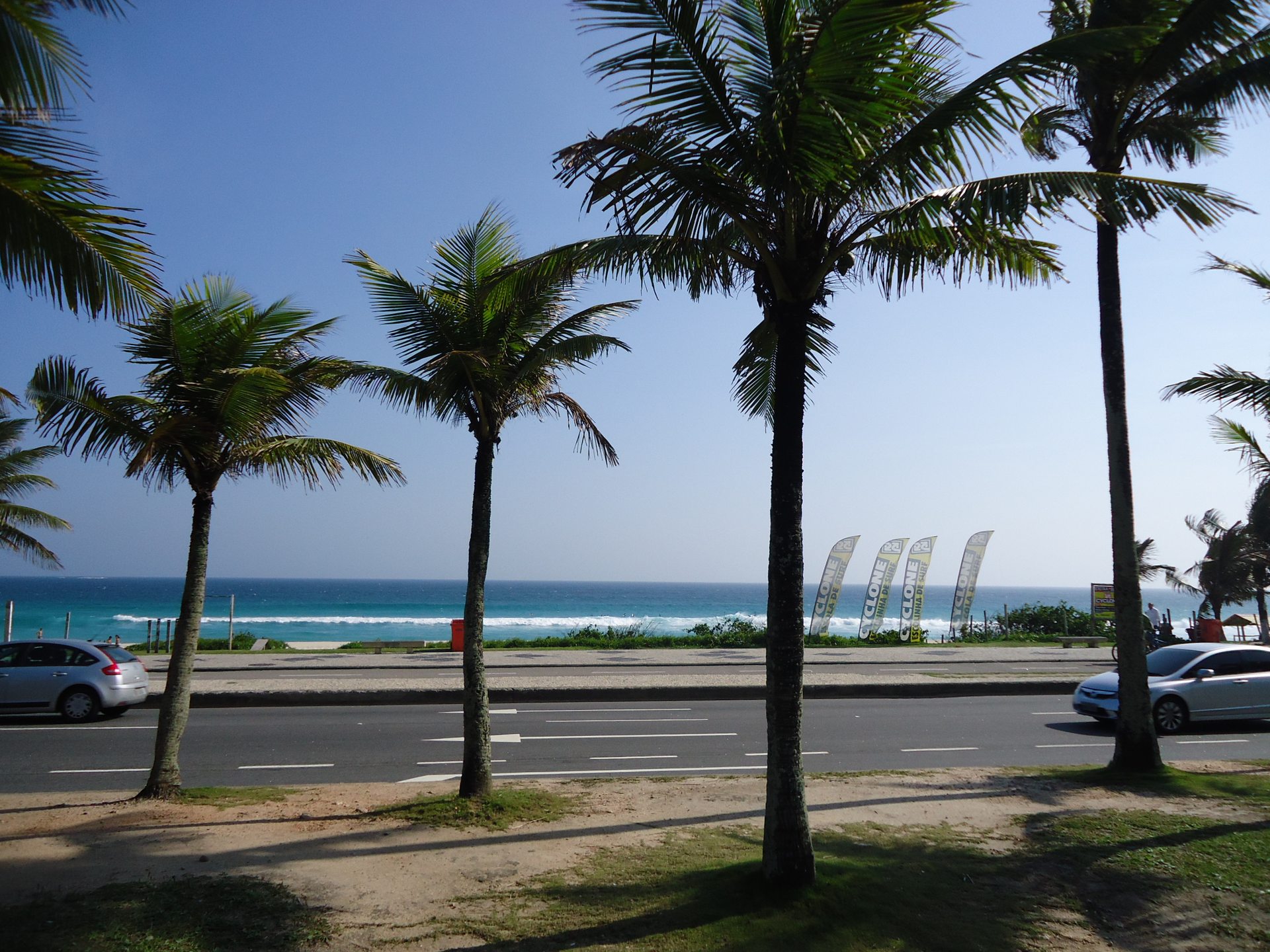
Pictured: present-day Barra da Tijuca beach, Rio de Janeiro — not the original 1952 photographs themselves. The five Keffel/Martins exposures remain the copyrighted property of the O Cruzeiro estate (Diários Associados) and the Brazilian National Archive's declassified case file, so no rights-clear copy could be sourced for reproduction here; the actual images can be viewed via the Google Images link above or the Sources list below.
Theoretical Alignment
This case aligns overwhelmingly with a media-hoax / psycho-social framework rather than any genuine anomalous-craft hypothesis. There is no instrumented data, no radar corroboration, and no physical trace evidence of any kind — only a set of studio-manufactured photographs whose internal optics are physically impossible. The case's real significance is sociological: it demonstrates how a single illustrated-press circulation stunt, endorsed for years by a national air force, can seed an entire country's UFO research culture before the underlying fabrication is fully unwound. To the extent any residual, non-hoax component survives — the unnamed "40 witnesses" the Brazilian Air Force said it located — that testimony corroborates only that some unspecified aerial phenomenon (very plausibly a mundane one, such as a light aircraft, seabird, or a reflection) was seen from the beach that afternoon, not that the specific staged disc in Keffel's negatives ever existed.
Background
By early 1952, the "flying saucer" had been a fixture of the international press for nearly five years. Kenneth Arnold's June 1947 sighting near Mount Rainier had given the phenomenon its name, the Roswell debris story had come and gone as a brief regional sensation, and Project Sign and Project Grudge had already cycled through the U.S. Air Force's early, largely dismissive official posture. None of this had yet produced a comparable sensation in Brazil, then a rapidly modernizing nation whose print media — led by illustrated weeklies modeled on Life and Paris Match — was hungry for exactly the kind of visually spectacular, internationally resonant story a flying-saucer photograph would represent.
O Cruzeiro, published by the Diários Associados media conglomerate controlled by Assis Chateaubriand, was Brazil's dominant illustrated weekly at the time, with a circulation in the hundreds of thousands and a stable of star photographers whose work anchored its identity as a photo-forward newsmagazine. Among them was Ed Keffel (full name Eduardo Keffel, 1903–1994), a veteran staff photographer, frequently paired on assignment with reporter João Martins. The two had an existing professional partnership covering human-interest and feature stories for the magazine's pages, the kind of assignment that gave them wide latitude to travel the city and, crucially, easy access to camera equipment, darkroom facilities, and the editorial trust needed to get a dramatic claim into print quickly and with minimal internal skepticism.
The stretch of coastline they chose, Barra da Tijuca, was in 1952 still a remote, largely undeveloped beach well outside Rio's dense urban core — decades before the planned modern district that exists there today. Its openness and the dramatic backdrop of Pedra da Gávea made it visually striking for a magazine photograph, while its isolation meant there was little chance of an unplanned independent witness contradicting whatever story the two men chose to tell about what had happened there. According to their own account, published in O Cruzeiro days later, they had gone to the area on an unrelated assignment when, at approximately 4:30 PM, Martins spotted an object approaching fast and low from over the ocean that he initially mistook for an aircraft before realizing — in his own words — that it appeared to be "flying sideways." Keffel, carrying his Rolleiflex twin-lens reflex camera, is said to have fired off five exposures in roughly sixty seconds as the object passed overhead, circled near Pedra da Gávea, and disappeared back out over the Atlantic toward the Ilhas Tijucas.
It is worth pausing on just how thin the corroborating record around that account actually is, independent of anything the later photo-forensic analysis would establish. No contemporaneous diary entry, telegram, or internal O Cruzeiro memo describing the sighting as it happened — as opposed to the finished, already-edited magazine account published ten days later — has ever surfaced. The claimed "unrelated assignment" that supposedly brought two of the magazine's staff to a remote beach at exactly the right moment to witness and photograph a five-frame sequence has never been independently specified: no editor, photo desk log, or expense report identifying what that original assignment actually was has been cited in any of the historical accounts this catalogue reviewed. That gap does not, on its own, prove fabrication, but it does mean the case's foundational narrative — that this was a chance encounter rather than a planned shoot — rests entirely on the two interested parties' own uncorroborated word, a full decade before anyone thought to ask them to substantiate it.
Complete Timeline
| Date | Event |
|---|---|
| May 7, 1952, ~4:30 PM | Ed Keffel and João Martins claim to photograph a disc-shaped object over Barra da Tijuca beach, firing five Rolleiflex exposures in about 60 seconds. |
| May 8, 1952 | News of the photographs breaks in Rio de Janeiro; O Cruzeiro's editorial and Diários Associados management move quickly to prepare a special print run. |
| May 17, 1952 | O Cruzeiro publishes an 8-page "Extra" supplement, "Disco Voador na Barra da Tijuca," reproducing all five images; the edition sells out and the story is picked up internationally. |
| Late May 1952 | Brazilian War Minister Gen. Ciro do Espírito Santo Cardoso and U.S. air attaché reportedly visit O Cruzeiro's offices to examine the original negatives; press accounts quote favorable off-the-record assessments of their authenticity. |
| June 1952 | Ciência Popular magazine director Ary Maurell Lobo publishes the first public skeptical suggestion that the images resulted from a "special montage" technique. |
| 1952–1954 | The Brazilian Air Force (FAB), under officers including Col. João Adil de Oliveira, conducts an internal technical review, attempting to reconstruct the sequence with scale models; the review is not made public. |
| November 10, 1954 | Photographer Almiro Baraúna publishes "Um Disco Voador Esteve em Minha Casa..." in Mundo Ilustrado, openly demonstrating how a convincing "flying saucer" photo can be faked with a streetcar token and a double exposure — an explicit, contemporaneous rebuttal of the Barra da Tijuca images. |
| 1959 | The FAB's internal report affirming the photographs' authenticity is publicly revealed for the first time, years after being completed, reportedly via Bank of Brazil official Fernando Cleto's television program O Enigma do Espaço. |
| 1961 | Dr. Olavo Fontes, later APRO's Brazilian representative, attempts to explain away an emerging shadow-direction objection by attributing it to broken foliage — an explanation that does not survive later scrutiny. |
| 1963 | Astronomer Donald Menzel and co-author Lyle Boyd formally identify the case's core flaw in The World of Flying Saucers: the disc is lit from one side while the landscape below is lit from the other. |
| 1968 | The U.S. government-commissioned Condon Report (Case 48) independently re-examines enlargements of the negatives, confirms the Menzel/Boyd lighting discrepancy, and labels the case an "internal inconsistency" masquerading as strong evidence. |
| Early 1980s | Ground Saucer Watch's William Spaulding conducts computer-enhanced digital analysis, again confirming the divergent shadow directions, particularly on the palm tree visible in the fourth exposure. |
| March 2002 | Researchers Claudeir Covo and Paola Covo publish a definitive on-site reconstruction in Revista UFO, calculating that the shadow geometry in the photographs would require the sun to be positioned inside the Atlantic Ocean — a physical impossibility — and proposing the specific double-exposure/miniature-model method used to fake the images. |
The Sighting and the Photographs
The published account, which appeared under Martins's byline in O Cruzeiro's May 17, 1952 "Extra" supplement, described a gray-blue, silent, smokeless disc that arrived from over the Atlantic at high speed, passed directly overhead near Barra da Tijuca, briefly circled in the vicinity of Pedra da Gávea, and then withdrew back out to sea toward the Ilhas Tijucas, all in a little over a minute. Keffel's five black-and-white frames, shot on his Rolleiflex, showed a sharply defined, apparently solid disc with a small central dome, estimated by the magazine's own captions at roughly 50 meters in diameter and 5 meters in height — a scale claim with no independent means of verification, since no other object of known size appeared in any frame to anchor the estimate.
The magazine's own framing was unambiguous about the stakes: O Cruzeiro billed the photographs as "the most sensational documentation ever obtained about the mystery of flying saucers," a claim explicitly designed to travel well beyond Brazil's borders. It succeeded. Within weeks the images had been picked up by wire services and specialist UFO publications abroad, and the Aerial Phenomena Research Organization (APRO) would go on to describe the series for years afterward as among the best, and possibly the single best, photographic UFO evidence then on record — a reputation the case held in international ufology circles for well over a decade before the countervailing technical case caught up with it.
Publication and Public Reaction
The commercial calculation behind the "Extra" supplement was not subtle. O Cruzeiro was Brazil's dominant illustrated weekly, produced by Assis Chateaubriand's Diários Associados conglomerate, and a genuinely sensational, exclusive photo story was exactly the kind of content that drove newsstand sales in the picture-magazine era. The supplement reportedly sold out its print run, and the story dominated conversation in Rio de Janeiro for weeks. Brazil's postwar illustrated press had few precedents for a story with this combination of visual spectacle and claimed institutional corroboration, and the Barra da Tijuca photographs are now widely credited by historians of Brazilian ufology, including researcher Cláudio Suenaga, as the true starting point of the "modern era" of flying-saucer interest in the country — predating by five years the Ubatuba magnesium fragments case and by six years the far more famous Trindade Island photographs.
Press accounts from the period describe an extraordinary official response for what was, on its face, a magazine photo story: Brazilian War Minister General Ciro do Espírito Santo Cardoso and a U.S. Air Force air attaché identified in some Brazilian sources as Colonel Jack Werley Hughes are both reported to have personally visited O Cruzeiro's offices to examine the original negatives, with Hughes quoted as saying, "The negatives are excellent and I cannot question their authenticity." This catalogue treats this specific quotation, sourced to secondary Brazilian ufology histories rather than a surviving primary transcript or U.S. diplomatic record, as a widely repeated but not independently documentable claim — it illustrates the climate of casual official credulity the case benefited from, whether or not the exact wording is verbatim.
The Brazilian Air Force Investigation
The Brazilian Air Force (Força Aérea Brasileira, FAB) opened its own technical review of the negatives, a process historians describe as involving Colonel João Adil de Oliveira and other officers attempting to physically reproduce the photographic sequence, reportedly by throwing a disc-shaped model or pan lid into the air and photographing it in flight to compare the resulting blur and perspective characteristics against Keffel's negatives. FAB investigators are also credited, per period accounts repeated in NICAP's case files, with locating roughly 40 people who said they had been in the vicinity of Barra da Tijuca that afternoon and had seen something in the sky consistent with the newsmen's general description.
Crucially, the FAB's internal conclusion — that the photographs could not be explained away and should be treated as genuine — was not released to the Brazilian public at the time. According to Brazilian ufology histories, the finding remained effectively buried within military channels for roughly seven years, only becoming widely known in 1959 when Bank of Brazil official Fernando Cleto discussed it on his television program O Enigma do Espaço ("The Enigma of Space"). That multi-year gap between the internal finding and its public disclosure meant the "the Air Force says it's real" claim circulated informally in ufology circles for years as an unconfirmed rumor before there was any concrete document to examine — a pattern of delayed, informal disclosure that recurs across multiple Brazilian military UFO cases and that this catalogue's Historical Precedents & Archive Matches section above places in that broader context.
It is also worth stressing precisely what a "the Air Force found no way to disprove it" finding does and does not establish. A period military technical review capable of ruling out a crude studio-lit miniature and double exposure is a materially different, much harder bar than a review capable of assessing shadow-direction geometry down to individual degrees of solar elevation — the kind of precise, source-of-illumination analysis that would not be applied to the case until Menzel and Boyd's 1963 book and the Condon Report's photometric work five years later. The FAB's 1950s conclusion of "authentic" therefore reflects the limits of period photo-forensic technique and institutional scrutiny at least as much as it reflects anything about the photographs themselves.
Almiro Baraúna's Early Mockery (1954)
Two and a half years after the Barra da Tijuca photographs appeared, and four years before he would produce his own far more famous and still-disputed images at Trindade Island, photographer Almiro Baraúna published a pointed piece of media criticism aimed squarely at Keffel and Martins's story. In the November 10, 1954 issue of Mundo Ilustrado (pages 38–39), under the headline "Um Disco Voador Esteve em Minha Casa..." ("A Flying Saucer Was at My House..."), with text by Vinícius Lima, Baraúna demonstrated exactly how a convincing "flying saucer" photograph could be manufactured: two streetcar tokens joined flat-side to flat-side to form a simple disc, lightly sewn and lit with a flashlight to make it photogenic, then combined with the real landscape using a double exposure — first photographing the illuminated model against a dark background, then re-exposing the same, unadvanced frame over an ordinary landscape shot.
Baraúna was explicit that the piece was intended as a rebuttal of the Barra da Tijuca claim specifically, motivated by his own skepticism of Keffel and Martins's story. The irony is one Brazilian ufology historians have noted repeatedly ever since: the same photographer who publicly demonstrated, years in advance and in detail, precisely the double-exposure trick this catalogue's own analysis concludes was used at Barra da Tijuca would go on to produce his own celebrated UFO photographs in 1958, whose authenticity is disputed to this day. Skeptics have cited Baraúna's 1954 article as direct evidence he possessed both the technical skill and a demonstrated willingness to fabricate convincing saucer photographs well before Trindade; his defenders note that demonstrating a hoax technique to debunk someone else's claim is not proof he used the same technique himself four years later. Whatever one concludes about Trindade, the 1954 article stands as a genuine, contemporaneous piece of skeptical analysis of this case, published less than three years after the original photographs and independent of any of the later formal investigations.
The Skeptical Case Builds: Menzel, Condon, and Ground Saucer Watch
The technical objection that would eventually undo the case's credibility took over a decade to surface in the scientific literature. Harvard astronomer Donald Menzel, working with co-author Lyle Boyd, examined the widely circulated fourth exposure for their 1963 book The World of Flying Saucers and identified a discrepancy that, once pointed out, is difficult to unsee: the disc itself appears clearly illuminated from one side, with bold, high-contrast shadowing consistent with strong directional light, while the palm fronds and hillside foliage visible below it in the same frame are illuminated from the opposite side. A single sun, at a single moment, cannot light two objects from opposite directions in the same photograph — the signature of a composite image built from two separately lit source exposures.
Dr. Olavo Fontes, who would later become APRO's Brazilian representative and the central investigative figure in the 1957 Ubatuba and Vilas-Boas cases, attempted an early defense of the photographs in 1961, proposing that the apparent shadow mismatch could be explained by broken or disturbed foliage catching light unpredictably. The explanation did not hold up: it could not account for the consistent, systematic direction of the discrepancy across multiple distinct elements of the landscape, nor for the same pattern recurring across more than one of the five frames.
The U.S. government-funded Condon Report — formally Scientific Study of Unidentified Flying Objects, the University of Colorado UFO Project's 1968 final report to the U.S. Air Force — devoted its own Case 48 to Barra da Tijuca specifically. Its photographic analysts, working from enlargements of the negatives, independently reproduced and endorsed the Menzel/Boyd shadow-direction finding, concluding that the case, though "presented as an example of photographs which have been described as incontrovertible evidence of flying saucers," in fact "contain[ed] a simple and obvious internal inconsistency." Roughly a decade later, William Spaulding of the U.S. group Ground Saucer Watch applied early computer-enhancement digital-image techniques to the photographs and reached the same conclusion, again pointing specifically to the divergent lighting on the palm tree in the fourth frame as the clearest single piece of internal evidence against authenticity.
The Covo Reconstruction and Definitive Debunking (2002)
The most thorough and conclusive analysis came half a century after the original photographs were taken. Brazilian researchers Claudeir Covo and Paola Covo, publishing through the Instituto Nacional de Pesquisas Ufológicas (INPU) and later in Revista UFO (edition 82), did not simply re-examine the existing prints — they traveled to Barra da Tijuca itself, on the same calendar date and at the same time of day as the original claimed sighting, to precisely measure the sun's real elevation and azimuth against the shadow angles visible in Keffel's photographs. Their finding was unambiguous and, unlike a purely qualitative "the shadows look wrong" observation, geometrically decisive: to produce the shadow cast by the object in the fifth photograph given its position in frame, Covo calculated that the sun would have needed to be located inside the Atlantic Ocean — a physical impossibility for any photograph taken from the beach looking out to sea in the mid-afternoon.
Drawing on witness accounts collected in Brazilian ufology's own internal history — including recollections published in the retrospective account Cobras Criadas describing Keffel holding "various meetings" with collaborators, making preparatory drawings and models, and running photographic tests specifically to work out matching light and shadow — Covo's team concluded the most probable production method: a small saucer-shaped model, built and lit under controlled studio conditions, photographed separately, and then combined with a genuine landscape exposure of Barra da Tijuca via double exposure on the same unadvanced frame, the identical technique Almiro Baraúna had publicly demonstrated in 1954. Neither Keffel nor Martins ever issued a full public confession before their deaths, and no surviving contemporaneous internal O Cruzeiro production record has been located to independently confirm the fabrication was ordered or condoned at an editorial level rather than being the two men's own initiative — a genuine, still-open gap in the documentary record that this catalogue does not paper over. What the physical evidence itself no longer leaves open to serious debate is whether the photographs depict something real: the shadow geometry rules that out.
Aftermath and Legacy in Brazilian Ufology
Despite the eventual, thorough debunking, Barra da Tijuca's historical influence on Brazilian ufology was already locked in well before Covo's 2002 reconstruction. The case is the earliest occurrence catalogued in the Brazilian National Archive's own declassified "Unidentified Flying Objects" collection (Fundo Objetos Voadores Não Identificados), a set of roughly 900 FAB case files spanning 1952 to the 2010s that is now digitized and searchable through the Arquivo Nacional's SIAN portal — a testament to how seriously the country's military establishment treated the phenomenon in this case's immediate wake. Reporter João Martins's association with the story, whatever its ultimate merits, gave him enough of a public profile within Brazilian ufology that farmer Antônio Vilas-Boas specifically sought him out by letter in November 1957 after reading his UFO reporting in O Cruzeiro — the direct chain of contact that led Martins to introduce Vilas-Boas to Dr. Olavo Fontes the following February, setting in motion the medical investigation behind this catalogue's own Vilas-Boas case file. In that sense, a hoax perpetrated for newsstand sales in 1952 sits at the direct origin point of the personal and institutional network — Martins, Fontes, and eventually APRO's international ufology apparatus — that would go on to investigate Brazil's genuinely more evidentially interesting cases later in the decade.
The case also left a lasting mark on how Brazilian ufology itself would come to police its own evidentiary standards. Later Brazilian researchers investigating subsequent photographic claims — including some who examined the Trindade Island photographs decades afterward — explicitly cited the Barra da Tijuca precedent, and Almiro Baraúna's own 1954 demonstration, as the reason a shadow-direction and solar-geometry check became a standard, near-automatic first step in evaluating any new Brazilian UFO photograph, rather than an exotic or unusually rigorous technique reserved for special cases. In that narrow, procedural sense, the country's very first great saucer hoax also helped train the skeptical toolkit later used against its far more consequential successors.
Key Researchers & Skeptical Investigators
The technical case against Barra da Tijuca's authenticity was not built by a single debunker but accumulated across roughly five decades through several independent lines of inquiry, each reaching the same conclusion by a different route — a convergence pattern this catalogue treats as considerably stronger evidence than any single analysis, however rigorous, could provide on its own.
Donald Menzel, the Harvard astronomer who had already built a career offering conventional, often optical-refraction-based explanations for reported UFO sightings, was the first to publish the shadow-direction critique in his and Lyle Boyd's 1963 book The World of Flying Saucers. Menzel's broader reputation in ufology is genuinely mixed — several of his other proposed explanations, including his account of the 1952 Nash-Fortenberry sighting, drew serious pushback from other scientists at the time — but the Barra da Tijuca shadow-direction finding does not rest on an interpretive judgment call the way some of his other work does; it is a straightforward optical observation that any careful viewer of the fourth photograph, once alerted to look for it, can verify directly.
The Condon Committee's 1968 report gave the finding its most institutionally significant platform: a study commissioned by the U.S. Air Force and conducted by physicist Edward Condon's University of Colorado UFO Project, intended as a broad, authoritative scientific review of the UFO phenomenon as a whole. Its photographic analysts, working independently of Menzel and Boyd from enlarged prints of the negatives, reached the identical conclusion, giving the shadow-direction critique a second, methodologically distinct confirmation from a formally credentialed government-funded scientific body rather than a single popular-science author.
Ground Saucer Watch, a U.S. civilian research group better known for applying early computer-image-enhancement techniques to UFO photographs (including, in a notable irony, a favorable analysis of the McMinnville/Trent photographs), turned the same digital-enhancement methodology on Barra da Tijuca in the early 1980s under researcher William Spaulding, and again confirmed the shadow mismatch — this time via direct digital pixel analysis of the palm tree and disc regions rather than visual inspection of a print.
The most decisive Brazilian contribution came nearly two decades later still: Claudeir Covo, working with Paola Covo through the Instituto Nacional de Pesquisas Ufológicas, converted five decades of qualitative "the shadows look wrong" observations into a single, quantitative, falsifiable geometric claim by physically returning to the beach at the same time of year and day to measure the sun's true position. That 2002 reconstruction, published in Revista UFO, is the paper this catalogue treats as having definitively closed the case, precisely because it does not depend on subjective visual comparison at all — it is a solar-position calculation that either matches the photographed shadows or, as Covo demonstrated, does not.
Key Witnesses
Ed Keffel
The case's sole photographer, credited with shooting the five disputed exposures on his personal Rolleiflex. A veteran O Cruzeiro staff photographer already established at the magazine before 1952, Keffel is identified by every subsequent Brazilian investigation — including Claudeir Covo's 2002 reconstruction and secondhand testimony collected in Cobras Criadas describing him running preparatory light-and-shadow tests with a model — as the images' actual fabricator. He never issued a full public confession before his death in 1994, and no surviving equipment, negatives outside the published set, or internal production notes have been recovered to independently corroborate the exact staging method beyond the circumstantial and photogrammetric case against the finished photographs.
João Martins
The reporter who co-produced the story with Keffel and wrote the original account for O Cruzeiro, describing the object as initially resembling an aircraft before appearing to fly "sideways." Martins's byline and general credibility as a working journalist lent institutional weight to the claim at the time. He went on to a longer career reporting for the magazine, and his name recognition within Brazilian ufology from this case is what led Antônio Vilas-Boas to contact him directly in 1957, indirectly linking this fabricated case to the far more evidentially significant Vilas-Boas and Ubatuba investigations five years later.
Col. João Adil de Oliveira
The Brazilian Air Force officer most closely associated with the military's period technical review of the photographs, credited with leading attempts to physically reconstruct the sighting using thrown scale models to compare resulting motion-blur and perspective characteristics against Keffel's negatives. The review's internal "cannot rule out authenticity" conclusion was not released publicly for roughly seven years, and its methodology predates the far more decisive shadow-geometry analysis that would come from civilian researchers a decade and more later.
The Unnamed "40 Witnesses"
Period accounts, repeated in NICAP's case files and other secondary ufology histories, describe Brazilian Air Force investigators locating roughly 40 people who said they were in the vicinity of Barra da Tijuca that afternoon and whose accounts of seeing something in the sky were said to broadly match the newsmen's general description. No individual statements, names, or FAB interview transcripts from this group have ever been published, making it impossible to independently assess what, if anything specific to a fabricated disc these witnesses actually corroborated, as opposed to a more mundane aerial sighting coincidentally occurring the same afternoon.
The Five Observables Assessment
The Five Observables framework, developed to characterize genuinely anomalous flight performance reported across credible UAP cases, is applied here for consistency with this catalogue's standard methodology — though this case offers no instrumented flight-performance data of any kind, only a static, fabricated photo sequence:
Assessment: None of the Five Observables are demonstrated by this case. The claimed object's described flight path — approaching from the sea, briefly circling near Pedra da Gávea, and departing back out over the Atlantic — describes only ordinary aerodynamic motion consistent with a thrown or otherwise physically propelled model captured via double exposure, not sustained or instrumented flight of any kind. There is no video, no radar track, and no measured velocity or acceleration data to evaluate in the first place; the "craft" exists only as a static image within five still photographs later shown to be a composite.
Evidence Assessment
Supporting Anomalous Origin
- The photographs were initially examined and privately endorsed as authentic by both Brazilian Air Force technical officers and a reported U.S. air attaché in 1952.
- The Brazilian Air Force claimed to have located roughly 40 independent bystanders whose accounts were said to corroborate seeing something unusual in the sky that afternoon.
- No surviving document has been found in which Ed Keffel or João Martins personally, explicitly confessed to fabricating the images before their deaths.
Supporting Conventional Explanation (Hoax)
- Donald Menzel and Lyle Boyd's 1963 analysis, independently reproduced by the 1968 Condon Report, identified an unresolvable lighting/shadow-direction mismatch between the object and the surrounding landscape in the same frame.
- Ground Saucer Watch's early-1980s computer-enhanced digital analysis reached the identical conclusion via a separate methodology.
- Claudeir Covo's 2002 on-site solar-geometry reconstruction calculated that producing the photographed shadow would require the sun to be positioned inside the Atlantic Ocean, a physical impossibility.
- Photographer Almiro Baraúna publicly demonstrated the exact double-exposure/model technique capable of producing the images as early as 1954, less than three years after the originals were published, explicitly as a rebuttal to this case.
- Secondhand testimony recorded in the retrospective account Cobras Criadas describes Keffel personally conducting preparatory light-and-shadow tests with drawings and models before the claimed sighting.
- The Brazilian Air Force's own favorable 1950s finding was not released publicly for roughly seven years, and its methodology predates the far more rigorous shadow-geometry analysis that ultimately discredited the case.
- The two named witnesses were both salaried O Cruzeiro staff with a direct commercial incentive (newsstand sales) in producing a sensational photo story.
Why "Debunked"
This catalogue rates Barra da Tijuca Debunked with a score of 10/100 — not merely low-confidence, but affirmatively resolved against an anomalous origin. The case fails the most basic evidentiary test a photographic UFO case can be asked to pass: internal physical consistency. A single photograph taken outdoors under natural sunlight cannot show one object lit from the left and its surrounding landscape lit from the right in the same exposure; the only way to produce that result is to combine two separately lit source images. That finding was reached independently at least three separate times across five decades — by Menzel and Boyd working from prints in 1963, by the U.S. government-funded Condon Report working from enlarged negatives in 1968, and by Ground Saucer Watch working from digitized scans in the early 1980s — using three different analytical approaches on three different generations of image-reproduction technology, and all three converged on the same specific defect in the same specific frame. Claudeir Covo's 2002 on-site solar-geometry reconstruction then closed the case definitively by converting a qualitative "the shadows look wrong" observation into a quantitative, falsifiable claim: the sun would need to be inside the Atlantic Ocean to produce the shadow shown. That is not a disputed interpretation of ambiguous data; it is a geometric impossibility.
What keeps this from being scored at the absolute floor is the small residue of genuinely unresolved historical detail: no complete internal O Cruzeiro production record surfaced to confirm exactly how editorial decisions were made, neither Keffel nor Martins left a full first-person confession, and the specific identities and statements behind the Air Force's claimed "40 witnesses" were never published for independent review. None of those open threads bear on whether the photographs are genuine — they don't survive the shadow-geometry evidence either way — but they are real gaps in the documentary record that this catalogue does not consider fully closed. The case's honest, lasting significance is not as evidence of anomalous craft, but as a case study in how quickly an unverified, commercially motivated media claim, once given a veneer of institutional endorsement, can outrun the technical scrutiny needed to catch it — and in how long that scrutiny can take to arrive.
Sensor & Instrumentation Detection Profile
No radar, radiological, or electromagnetic instrumentation of any kind was involved. The entirety of the case's "evidence" is a single roll of black-and-white medium-format film exposed on a Rolleiflex twin-lens reflex camera — a photographic-only case with no corroborating sensor data whatsoever. The closest the case comes to instrumented analysis is retrospective: the Brazilian Air Force's own 1950s photogrammetric reconstruction attempts, the University of Colorado UFO Project's 1968 photometric enlargement of the negatives for the Condon Report, and Ground Saucer Watch's later computer-enhanced digitization — all after-the-fact forensic examinations of the photographs themselves, not sensor data captured during the alleged event.
Environmental & Geospatial Context
Barra da Tijuca is a long, open Atlantic-facing beach on the western edge of Rio de Janeiro's Zona Sul/Zona Oeste boundary, backed by the dramatic granite monolith of Pedra da Gávea and the Tijuca massif. In 1952 it was still sparsely developed — decades before the planned, high-rise neighborhood Lúcio Costa would later design there — making it an isolated, easily controlled location for a staged photo shoot with almost no risk of an inconvenient independent witness wandering into frame. The sighting was timed for late afternoon, with the sun low over the Atlantic: exactly the kind of raking, high-contrast light that makes shadow direction unambiguous in a photograph — and exactly the condition that would make a lighting mismatch between a studio-lit model and a sunlit landscape most detectable, which is precisely what later analysis found.
Observer Credibility & Occupational Profile
The case's only two named witnesses were not neutral bystanders but the two men who stood to gain the most from a sensational scoop: staff photographer Ed Keffel and staff reporter João Martins, both salaried employees of O Cruzeiro, then Brazil's highest-circulation illustrated weekly. Their professional credentials as journalists lent the story an initial veneer of institutional credibility that a random passerby's account would have lacked — the opposite of the usual credibility calculus, in which a witness's independence from the outlet publicizing the story is what matters most. The Brazilian Air Force's claimed roster of roughly 40 corroborating bystanders was never published by name, address, or individual statement, so their occupations and credentials cannot be independently assessed at all; this catalogue treats that number as an unverified official claim, not established data.
Physical & Material Assays
No physical or trace evidence of any kind was ever recovered, claimed, or tested in connection with this case — no debris, no soil anomaly, no radiation reading. The sole surviving "physical evidence" is the original camera negatives themselves, which passed through the hands of O Cruzeiro's editors, Brazilian Air Force (FAB) technical examiners, and eventually the Brazilian National Archive (Arquivo Nacional), where digitized copies are cataloged today. The complete absence of any independent physical corroboration is itself a significant data point against an anomalous origin, and is discussed at length in the dedicated Material Analysis section below.
Historical Precedents & Archive Matches
Barra da Tijuca is widely credited by Brazilian ufology historians as the country's first major "flying saucer" media sensation, arriving less than a year after Kenneth Arnold's 1947 sighting popularized the term internationally. It set the template — a sensational photo, an initial official endorsement, and a slow-burning skeptical unwinding — that would recur, with far more ambiguous results, six years later at Trindade Island, a case this catalogue treats separately and which is frequently confused with this one despite involving an entirely different photographer, location, and set of circumstances. In a remarkable twist, the photographer at the center of the Trindade case, Almiro Barauna, had in 1954 personally published a satirical demonstration of exactly how to fake a Barra da Tijuca-style saucer photo using a streetcar token and a double exposure — four years before producing his own, still-disputed Trindade photographs. The case also indirectly seeded the launch of organized Brazilian ufology: reporter João Martins's reputation from this case is what led farmer Antônio Vilas-Boas to write to him in 1957, setting in motion the chain of events that produced the Vilas-Boas abduction investigation.
Material Analysis
There is no physical or trace evidence associated with this case in any conventional sense — no metal fragments, no soil disturbance, no biological or radiological samples. The only physical objects of forensic interest are the original camera negatives themselves, and it is worth being precise about what analyzing a negative can and cannot tell you. Unlike a soil sample or a metal fragment, a photographic negative cannot be independently dated, chemically assayed, or matched against a known non-terrestrial material signature; it can only be examined for internal consistency — grain structure, exposure characteristics, and, most decisively in this case, the direction and angle of cast shadows relative to a single presumed light source. That is exactly the kind of analysis that ultimately broke the case. No metallurgical, isotopic, or biological testing was ever possible or attempted here, because no physical sample beyond the film itself was ever recovered or claimed.
Supporting Non-Terrestrial Origin
- No physical evidence beyond the photographs themselves exists to evaluate in the first place.
- Period Brazilian Air Force officers privately concluded the negatives showed no obvious signs of tampering by 1950s photo-forensic standards.
Supporting Terrestrial Origin (Fabrication)
- The shadow-direction analysis (Menzel/Boyd 1963, Condon Report 1968, Ground Saucer Watch early 1980s) is itself a form of rigorous physical-evidence testing of the negatives, and it fails the object as genuine.
- Claudeir Covo's 2002 on-site solar-geometry measurement converts that qualitative finding into a quantitative, physically impossible result.
- No debris, residue, electromagnetic trace, or any other independent physical corroboration of an actual craft has ever been reported, consistent with there having been no actual craft present to leave any.
The Conventional Explanation Candidate: Staged Double-Exposure Photomontage
The leading, and this catalogue's assessed, explanation is that Ed Keffel and João Martins deliberately staged the photographs as a circulation-driving media hoax, using a small saucer-shaped model (plausibly, per Almiro Baraúna's 1954 demonstration of the identical technique, something as simple as a joined pair of streetcar tokens) photographed under separate, controlled studio lighting and then combined with a genuine Barra da Tijuca beach landscape via double exposure on the same unadvanced Rolleiflex frame. This explanation accounts for every documented anomaly in the case: the sharp, solid appearance of the disc (a real, nearby, well-lit physical object rather than a distant one), the object's impossible internal lighting relative to the landscape (two separate exposures under two separate light sources), and the total absence of any independent instrumented corroboration (because nothing was actually in the sky to detect). It is also directly corroborated by secondhand testimony describing Keffel personally conducting preparatory light-and-shadow tests with models before the claimed sighting date.
Misidentified Aircraft, Balloon, or Natural Phenomenon
A competing possibility is that Martins and Keffel genuinely observed something mundane — a distant aircraft, a weather balloon, a bird, or an atmospheric optical effect — and separately fabricated or substantially embellished the photographs to dramatize an otherwise unremarkable sighting into a marketable "flying saucer" story. This would explain the claimed roughly 40 corroborating bystanders (who may genuinely have seen something ordinary that afternoon) while still accounting for the demonstrably fabricated photographic evidence. It cannot be fully distinguished from deliberate fabrication from the outset using the evidence available today, since no independent record of what, if anything, was actually visible in the sky that afternoon survives outside the two men's own account.
Genuine Anomalous Craft
The hypothesis that an actual, physically anomalous craft was present and photographed requires the shadow-geometry evidence to be wrong, misapplied, or itself somehow fabricated by three independent analytical efforts spanning nearly 40 years (1963 to 2002) using three different methodologies (visual comparison, government photometric enlargement, and computer-enhanced digitization) that were not coordinated with one another and that all converged on the identical specific defect in the identical frame. No skeptical rebuttal of the shadow-geometry finding itself, as opposed to a defense resting on the Air Force's original, methodologically limited endorsement, has been published in the six decades since Menzel and Boyd first raised it.
Staged Double-Exposure Photomontage
Highly PlausibleConsistent with every documented anomaly in the photographs, directly corroborated by a contemporaneous 1954 public demonstration of the identical technique, and confirmed by three independent shadow-geometry analyses plus a definitive 2002 on-site physical reconstruction.
Misidentified Real Phenomenon, Embellished
InconclusiveCannot be ruled in or out with available evidence; if true, it would explain the bystander testimony without changing the conclusion that the surviving photographic evidence is fabricated.
Genuine Anomalous Craft
ImplausibleWould require rejecting three independent, methodologically distinct shadow-geometry analyses spanning five decades that all identified the same specific physical inconsistency, plus a definitive geometric reconstruction demonstrating a physical impossibility.
Related Cases
Confirmed Documents & Official Records
Reporting confirming that the Brazilian National Archive's "Objetos Voadores Não Identificados" fund — 743 declassified Brazilian Air Force UFO case files digitized via the SIAN system — identifies the Barra da Tijuca/Ed Keffel photographs as its earliest cataloged 1952 case.
The University of Colorado UFO Project's official, U.S. government-commissioned case study of the Barra da Tijuca photographs, independently confirming the Menzel/Boyd shadow-direction inconsistency from enlarged negatives.
Long-standing civilian archive entry compiling contemporaneous press claims, the FAB investigation's reported findings, and the later Menzel/Boyd and Condon Committee skeptical analysis in one case record.
Further Reading — Recommended Literature
The World of Flying Saucers: A Scientific Examination of a Major Myth of the Space Age
The original source of the shadow-direction critique that ultimately unraveled this case — Menzel and Boyd's chapter on Barra da Tijuca is the founding document of the skeptical case against the photographs.
Watch the Skies!: A Chronicle of the Flying Saucer Myth
A rigorous, skeptically minded history of the flying-saucer phenomenon by a Smithsonian aerospace historian, placing early hoax and misidentification cases like this one in their full postwar media context.
The UFO Encyclopedia: The Phenomenon from the Beginning
The standard academic reference work on UFO case history, with detailed, source-cited entries covering both the Barra da Tijuca photographs and the broader Brazilian ufology movement they helped launch.
UFO Sightings: The Evidence
A methodical skeptical casebook demonstrating how photographic UFO evidence is actually tested and, in cases like this one, debunked — useful context for the photo-forensic methods applied to Keffel's negatives.
Contacts in Brazil
A survey of Brazil's most significant UFO cases by a Brazilian researcher, situating Barra da Tijuca as the country's foundational case within the same national ufological tradition that produced Ubatuba, Vilas-Boas, and Trindade.
Essential Viewing
ÓVNIS - caso da Barra da Tijuca, RJ
Published by the Arquivo Nacional (Brazilian National Archive) itself, discussing the case within its declassified "Objetos Voadores Não Identificados" collection.
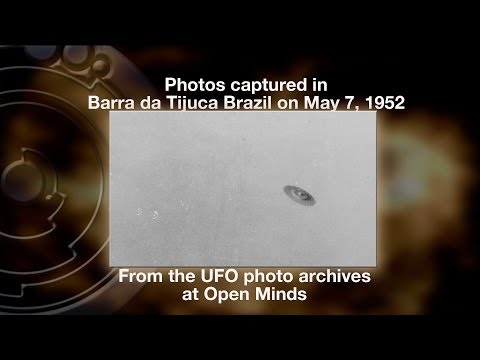
UFO Photos Captured in Barra da Tijuca, Brazil May 7, 1952
OpenMindsTV's English-language rundown of the original claimed sighting, the photographs, and the case's early reception in international ufology.
Sources
- NICAP, "Barra da Tijuca (UFO) Photos" — case file compiling the original 1952 claims, the FAB investigation, and the Menzel/Boyd and Condon Committee skeptical findings.
- University of Colorado UFO Project, "Case 48: Bara Da Tijuca, Brazil," in Scientific Study of Unidentified Flying Objects (Condon Report), 1968 — the official U.S. government-commissioned photographic analysis confirming the shadow-direction inconsistency.
- Ceticismo Aberto, "Caso Barra da Tijuca" — Brazilian skeptical case file detailing the fraud exposure timeline from 1952 through Claudeir Covo's 2002 reconstruction.
- Ceticismo Aberto, "Como forjar fotos OVNI, por Almiro Baraúna" — detailed account of Baraúna's 1954 Mundo Ilustrado demonstration of the double-exposure hoax technique.
- Revista UFO, "Resgatando a história da Ufologia Brasileira" — on the case's foundational role in Brazilian ufology, the FAB investigation led by Col. João Adil de Oliveira, and William Spaulding's Ground Saucer Watch analysis.
- Revista UFO, "A fraude do Caso Barra da Tijuca completou 55 anos" — anniversary retrospective on Claudeir Covo and Paola Covo's INPU/Revista UFO Edition 82 investigation and technical fraud reconstruction.
- Além da Ciência, "Nova análise da montagem fotográfica de um disco voador do caso Barra da Tijuca" — on Covo's March 2002 published analysis and the "sun inside the ocean" shadow-geometry finding.
- Cláudio Suenaga, "Os 70 anos das fotos do disco voador na Barra da Tijuca..." — detailed 70th-anniversary history covering the sighting timeline, the O Cruzeiro "Extra" publication, and the reported War Ministry/U.S. attaché visit.
- Agência Lume, "Os discos voadores da Barra da Tijuca" — on the case's historical framing, Carlos Éboli's contemporaneous public skepticism, and the U.S. Air Force's later confirmation of the hoax.
- TheUFOChronicles, "UFOs Photographed Over Barra da Tijuca, Brazil May 7, 1952" — period-accurate summary of the original claimed sighting characteristics.
- Olhar Digital, "Ovnis: Brasil tem arquivo público de registros; saiba como acessar" — on the Brazilian National Archive's declassified UFO fund and this case's status as its earliest cataloged 1952 file.
- Wikipedia, "UFO sightings in Brazil" — used only for basic chronological orientation within the broader timeline of Brazilian ufology.
- Wikipedia, "Barra da Tijuca" — used only for basic geographic background on the location.
- Wikipedia, "O Cruzeiro" — used only for background on the magazine's ownership, circulation, and prominence in the early 1950s.
- Wikimedia Commons, "Praia da Barra da Tijuca - posto 5.JPG" — CC BY-SA 3.0 photograph (MarciaKB, 2013) used as this case file's hero image, depicting the present-day location.
- Donald H. Menzel & Lyle G. Boyd, The World of Flying Saucers: A Scientific Examination of a Major Myth of the Space Age, Doubleday, 1963 — the founding published source of the shadow-direction inconsistency finding.
- Arquivo Nacional (Brazilian National Archive), "ÓVNIS - caso da Barra da Tijuca, RJ" — official archive video discussing the case and its place in the declassified FAB UFO collection.
- OpenMindsTV, "UFO Photos Captured in Barra da Tijuca, Brazil May 7, 1952" — English-language summary of the original claimed sighting and photographs.
- Aerial Phenomena Research Organization (APRO), case assessment as reported via NICAP — on the international ufology community's initial reception of the photographs as leading photographic evidence prior to their debunking.
- Claudeir Covo & Paola Covo, published analysis, Instituto Nacional de Pesquisas Ufológicas (INPU) / Revista UFO, Edition 82, March 2002 — the definitive on-site solar-geometry reconstruction and technical fraud analysis, as reported in the Além da Ciência and Revista UFO citations above.
See something inaccurate? Have additional information or sources?
Suggest an Edit →Last Updated: August 2026