
Antônio Vilas-Boas Abduction
In the early hours of October 16, 1957, a 23-year-old farmer named Antônio Vilas-Boas was working his family's fields by tractor near São Francisco de Sales, a small municipality in western Minas Gerais, Brazil, when he says a red, star-like light descended out of the sky, resolved into an egg-shaped craft on three extending legs, and put out four small humanoid occupants who dragged him aboard against his resistance. What followed — roughly four hours of reported medical procedures, forced inhalation of a nauseating gas, and a sexual encounter with a female occupant — would not become known to English-language ufology for nearly a decade, but is now recognized as the account that effectively invented the modern "alien abduction" narrative, predating the far more famous Betty and Barney Hill case by four years. Four months after the event, Rio de Janeiro physician Dr. Olavo T. Fontes, the Brazilian representative of the American Aerial Phenomena Research Organization (APRO), examined Vilas-Boas and documented skin lesions, nausea, and other symptoms he judged consistent with mild radiation exposure. That examination remains the case's central piece of physical corroboration — and its central evidentiary problem: Fontes's original clinical notes were never independently published or preserved in full, the case's very first print appearance came four years after the event, in a 1962 Brazilian ufology bulletin, and the story shares specific structural details with contactee literature and a Brazilian magazine account already in print weeks before Vilas-Boas first told anyone. This file presents the full narrative, the medical record as it survives, and the substantial skeptical case against treating it as reliable physical evidence of a genuinely anomalous encounter.

No photograph of Antônio Vilas-Boas from the period of the case, nor any verified public-domain or rights-clear image of his family's farm near São Francisco de Sales, is known to survive or be freely licensed. A photograph circulating online and attributed to him carries disputed, unconfirmed copyright status and is not used here. No image of the claimed craft exists beyond Vilas-Boas's own later sketches, which are copyrighted reconstructions, not photographic evidence.
Theoretical Alignment
The Vilas-Boas case is the foundational text of the abduction narrative, and its Theoretical Alignment scores reflect a case built almost entirely on one man's uncorroborated testimony rather than on any instrumented or multiply-witnessed phenomenon. The Psycho-Social Hypothesis scores highest here, not as an accusation of conscious fraud but because the specific narrative elements — a beautiful, sexually aggressive humanoid female; symbolic markings; a message about a hybrid child — track unusually closely with contactee literature already circulating in Brazil (see Historical Precedents, below) and with archetypal folklore themes researcher Jacques Vallée and others have catalogued across centuries of "seduction by an otherworldly being" stories. The Extraterrestrial Hypothesis retains a real, if modest, alignment because Dr. Fontes's contemporaneous description of skin lesions and systemic symptoms is a genuine physical data point that a pure fabrication would not necessarily require, and because the account's basic shape (landed craft, humanoid occupants, missing time) recurs independently in cases with no plausible connection to Vilas-Boas. The Interdimensional Hypothesis finds almost no purchase in a case with no reported portal, transitional geometry, or dimensional language in the original testimony.
Background
By 1957, the "flying saucer" phenomenon that had begun with Kenneth Arnold's 1947 sighting in the United States had a genuine, independent following in Brazil. Rio de Janeiro's illustrated weekly O Cruzeiro, one of the country's largest-circulation magazines, ran regular features on UFO sightings under journalist João Martins, and American contactee literature — above all George Adamski's claimed 1952 meeting with a Venusian in the California desert, published and widely translated by the mid-1950s — had reached an eager Brazilian audience alongside homegrown reports. In January 1952, Jim and Coral Lorenzen had founded the Aerial Phenomena Research Organization (APRO) in Sturgeon Bay, Wisconsin, and by 1957 the organization's Brazilian representative was Dr. Olavo T. Fontes, a gastroenterologist and professor at Rio de Janeiro's National School of Medicine whose academic post and private practice gave him flexible time to pursue UFO investigations alongside his medical career.
Against that backdrop, a 23-year-old farmer named Antônio Vilas-Boas was working the family land near São Francisco de Sales, a small municipality in the far west of Minas Gerais state near the São Paulo border. The Vilas-Boas family were established farmers with substantial landholdings — not, as the case's early popularizers sometimes implied, subsistence peasants — and Antônio, the second-youngest of ten children born to Jerônimo Pedro Vilas-Boas and Enésia Cândida de Oliveira, worked the fields at night during October, the report's own explanation being simply the region's daytime heat. In the weeks preceding October 16, both Antônio and his brothers separately reported unexplained lights near the farmhouse: on October 5, an intense light brighter than moonlight that appeared to penetrate gaps in the roof before vanishing, witnessed by Antônio and his brother João; and on October 14, a bright red light at the northern edge of the field that emitted intermittent flashes before disappearing, witnessed by Antônio and a second brother, José. Neither precursor sighting involved any humanoid figure, craft landing, or missing time — both are, at most, unexplained aerial light reports, the kind cataloged at hundreds of other locations during the 1950s saucer wave — but Vilas-Boas and his family treated them, after the fact, as a prelude to what followed two nights later.
Complete Timeline
| Date | Event |
|---|---|
| October 5, 1957 | Antônio Vilas-Boas and his brother João see an intense, unexplained light near the farmhouse, brighter than moonlight, that appears to penetrate gaps in the roof before vanishing. |
| October 14, 1957 | Antônio and a second brother, José, see a bright red light at the northern edge of the family's field, emitting intermittent flashes before disappearing. |
| Night of October 15–16, 1957 | Vilas-Boas, plowing alone after dark, reports a red light descending and resolving into an egg-shaped craft with a rotating cupola, landing on three extending legs roughly 50 meters away. |
| ~1:15 AM, October 16, 1957 | Per Vilas-Boas's own account, his tractor's engine and lights fail as he tries to flee; he is seized on foot by a roughly five-foot-tall humanoid in grey coveralls and a helmet, then subdued by three more and dragged aboard the craft. |
| October 16, 1957 (overnight) | Aboard the craft, Vilas-Boas reports being stripped, coated in a gel-like liquid, having blood drawn from his chin, isolated in a chamber where a foul-smelling gas induces vomiting, and later a sexual encounter with a female humanoid occupant. |
| ~5:30 AM, October 16, 1957 | Vilas-Boas says he is released and the craft departs; by his own estimate roughly four hours had elapsed since his capture. |
| Following weeks, late 1957 | Vilas-Boas reports nausea, headaches, burning eyes, and weakness, followed by the gradual appearance of small, hardened, discharging skin lesions on his body. |
| November 1957 | A story involving a landed craft and small humanoid beings appears in the widely read Brazilian magazine O Cruzeiro, independent of Vilas-Boas's account, which he had not yet told to anyone outside his family. |
| November 1957 | Vilas-Boas, having read journalist João Martins's UFO reporting in O Cruzeiro, writes to Martins describing his experience and enclosing a wood model of the craft he says he saw. |
| February 22, 1958 | Martins brings Vilas-Boas to Rio de Janeiro to meet Dr. Olavo T. Fontes, APRO's Brazilian representative, who examines him and documents skin lesions and other symptoms he judges consistent with mild radiation sickness. |
| February 27, 1958 | Five days later, Fontes is visited by Brazilian Naval Intelligence officers who, by his own later account, discuss classified UFO-crash claims and discourage further publicity of his research — an episode this file discusses, with its own real evidentiary limits, in Historical Precedents above. |
| April–June 1962 | The case receives its first known print reference, a summary in Bulletin No. 26/27 of the SBEDV (Sociedade Brasileira de Estudos sobre Discos Voadores), edited by Dr. Walter K. Bühler — more than four years after the claimed event. |
| Early 1965 | Gordon Creighton publishes the first detailed English-language account in the British magazine Flying Saucer Review, introducing the case to international ufology. |
| 1966 | Coral and Jim Lorenzen discuss the case in APRO's published work, further popularizing it in the United States. |
| 1969 | Creighton's full translation and Fontes's supporting commentary are collected in The Humanoids, an anthology edited by Charles Bowen, becoming the case's standard English-language reference text. |
| 1978 | American reporter Bob Pratt begins field research trips to Brazil that include renewed interviews connected to the case; separately, Dr. Bühler states that a Geiger counter had detected radioactive contamination on Vilas-Boas during the 1958 exam, a claim never published in full or corroborated by any 1958 record. |
| January 17, 1991 | Antônio Vilas-Boas dies in Uberaba, Minas Gerais, at age 56, having practiced law, married, and raised four children, still affirming the same account he gave in 1958. |
The Night of October 15–16, 1957
Antônio Vilas-Boas told investigators that he had been plowing his family's fields at night throughout that October, a practical response to the region's punishing daytime heat rather than an unusual habit invented for the story. Working alongside his brother João earlier in the evening, Antônio continued alone after midnight. He described seeing what first looked like a bright, star-like red light in the sky, positioned roughly where the sun would rise, that began moving erratically before descending toward the field. As it dropped lower it resolved, in his account, into a large, roughly egg-shaped or oval object with a red light at its forward end and a rotating, glowing cupola on top. The craft came to rest on three metal legs that extended from its underside, touching down approximately 50 meters from where Vilas-Boas sat on his tractor.
Frightened, he tried to drive away, but the tractor's engine and headlights died almost immediately, a detail that later investigators connected to the electromagnetic-interference motif reported in numerous other close-encounter cases, though no instrument ever measured any field at the Vilas-Boas farm itself. Abandoning the machine, he continued on foot, at which point he said he was seized by a humanoid figure roughly five feet tall, wearing grey coveralls and a helmet with three tubes running to its chest, whose eyes he described as small, pale blue, and whose vocalizations he described as short, sharp, dog-like barks rather than speech. Three more similar beings emerged and helped subdue him; together they dragged him, according to his account, up a short ladder and through an opening into the craft's interior.
Aboard the Craft
Once inside, Vilas-Boas said he was led through a doorway marked with red symbols he could not read but later reproduced from memory for investigators, into a brightly lit, semicircular room. There the occupants removed his clothing, coated much of his body with a colorless, slightly sticky liquid using a sponge, and drew a blood sample from his chin using an unusual instrument he could not clearly describe. He reported being placed alone afterward in a separate chamber, where a thin gas piped into the room caused him to vomit violently — the specific detail he most directly connected, after the fact, to his physical illness in the weeks that followed.
The best-known and most widely discussed element of Vilas-Boas's account came next. He said a nude female occupant, matching the height of the other beings, entered the chamber. He described her as attractive by his own standards, with a small, pointed chin, large blue eyes he compared to a cat's, hair that was long and platinum-blonde-white on her head but visibly red at the underarms and pubic area. According to his account she initiated physical contact and the two had intercourse; she did not kiss in the conventional sense but nipped at his chin, an act he connected to the earlier blood sample. Before being led out, he said, she gestured toward her belly and then upward, a motion he interpreted years later as a claim that she intended to raise a child conceived that night somewhere else — in space, as he put it. Vilas-Boas described feeling used rather than seduced, later characterizing his own role, in a much-quoted phrase, as that of "a good stallion" kept for breeding purposes.
Before his release, he said the occupants gave him what amounted to a brief tour of other compartments, including one with instrument panels and what looked to him like a large clock-face device; he attempted to take the device as physical proof of the encounter but was stopped and prevented from removing anything from the ship. He was returned to the exterior, the ladder was withdrawn, and the craft, by his account, rose and departed rapidly. Vilas-Boas estimated that roughly four hours had passed, placing his release at approximately 5:30 AM, consistent with him arriving home as dawn was breaking.
Two physical artifacts grew out of Vilas-Boas's own attempt to document what he said he had seen. Unable to photograph or otherwise record the craft, he later carved a small wood model of it from memory, the object he eventually enclosed with his first letter to João Martins, and he separately reproduced by hand the red symbols he said marked the interior doorway — a set of angular marks investigators compared, without ever reaching a firm conclusion, to unidentified script rather than any recognizable alphabet. Neither the model nor the symbol reproduction constitutes independent evidence in any evidentiary sense; both are physical objects created entirely from Vilas-Boas's own memory, after the fact, and their only value is as a record of exactly what he described at the time, not as verification that what he described actually occurred. Researcher Peter Rogerson has specifically flagged the physical description of the female occupant as a point of comparison with earlier contactee literature: he noted that Vilas-Boas's description of her face and eyes "suggests a derivation from Adamski, who described his [Venusian] visitor as having slightly slanted eyes," a detail from George Adamski's widely translated 1953 book Flying Saucers Have Landed, which had reached Brazilian readers years before Vilas-Boas's claimed encounter.
The Medical Examination
Vilas-Boas did not go public immediately. He told his immediate family what had happened but, by his own account and that of later investigators, was reluctant to relate the story more widely, fearing ridicule. It was only after reading journalist João Martins's UFO coverage in the Rio de Janeiro weekly O Cruzeiro that he wrote to Martins in November 1957, describing the encounter and enclosing a wood model of the craft he had carved from memory. Martins, already established in Brazilian ufology circles for his own earlier reporting, financed Vilas-Boas's trip to Rio de Janeiro and, on February 22, 1958 — more than four months after the claimed event — introduced him to Dr. Olavo T. Fontes, a gastroenterologist and professor at Rio's National School of Medicine who served as the Brazilian representative of the American Aerial Phenomena Research Organization (APRO).
Fontes's examination is the case's central piece of physical corroboration. He documented abrasions and other injuries on Vilas-Boas's chin, palms, legs, and underarms, certified what he characterized as a complete absence of any sign of mental illness, psychopathy, or a tendency toward superstition or mysticism, and, working from Vilas-Boas's description of the delayed-onset skin lesions — small, hardened, reddish nodules, each discharging a thin yellowish fluid and surrounded by a violet-tinged discoloration — concluded the presentation was consistent with a large, though survivable, dose of ionizing radiation: mild radiation sickness. Fontes forwarded a written report to APRO in the United States; how widely that original report actually circulated, and in what form, is itself contested (see Physical & Material Assays and Sensor & Instrumentation Detection Profile, above) — the case's first known appearance in print did not occur until April–June 1962, in the bulletin of the Brazilian ufology group SBEDV, more than four years after both the claimed event and the examination itself.
Five days after examining Vilas-Boas, on February 27, 1958, Fontes was visited by two officers he identified as Brazilian Naval Intelligence, who, according to his later account, discussed classified information about recovered UFO wreckage at several locations worldwide and cautioned him against further publicizing his research. This episode, taken at face value by early APRO-aligned writers as evidence of a government cover-up validating the case's significance, has drawn its own skeptical scrutiny, discussed in full in the Historical Precedents & Archive Matches section above and the Conventional Explanation Candidate section below.
The Naval Intelligence Visit: A Second, Contested Claim
The February 27, 1958 visit deserves closer examination on its own terms, since it is frequently cited by supporters of the case as independent corroboration of its significance, and has been argued against just as pointedly by skeptical writers examining Fontes's own account of it. As Fontes told it, the two officers described, in general terms, a series of recovered "flying saucer" crashes at locations around the world, along with recovered occupant bodies, and told him this information was so sensitive that even Brazil's own president had not been briefed on it — before instructing him to curtail his UFO research. Analysts who have scrutinized this account, including the detailed review published at Eye of the Psychic, have identified several structural problems with taking it at face value. First is a basic logical tension: officers ostensibly trying to discourage further publicity chose to hand Fontes information far more sensational than anything he had previously possessed, which, if anything, gave him more reason to keep investigating and writing, not less — and indeed Fontes did continue to write extensively for APRO afterward, with no evidence any Brazilian authority ever moved to stop him. Second, the timing invites a specific alternative reading: the visit followed Fontes's Vilas-Boas examination by only five days, and preceded his still-active Ubatuba fragment investigation, at a moment when Fontes was primed to interpret ambiguous signals through the lens of the extraordinary case he had just documented. Third, no document, memorandum, or official record of any such visit has ever surfaced in any Brazilian government archive in the more than six decades since, leaving the claim resting entirely on Fontes's own later, unverifiable retelling — the same evidentiary limitation that runs through nearly every other element of this case.
From Silence to Publication
The gap between the claimed 1957 event and the case becoming known is unusually long even by the standards of 1950s ufology. Fontes's report sat largely unpublicized for years; the earliest confirmed print reference is the SBEDV Bulletin's April–June 1962 summary, credited to editor Dr. Walter K. Bühler. English-language ufology did not learn the story in detail until Gordon Creighton, a British diplomat and longtime contributor to Flying Saucer Review, began publishing translated installments in early 1965 — nearly eight years after the claimed encounter. Creighton's account, together with Fontes's own supporting commentary, was later collected in the 1969 anthology The Humanoids, edited by Charles Bowen, which remains the case's standard English-language primary reference. Coral and Jim Lorenzen popularized the case further for American readers through APRO's own publications during the mid-1960s and 1970s. Beginning in 1978, American journalist Bob Pratt conducted extended field research trips to Brazil, later published as UFO Danger Zone (1996), that touched on the case's continuing place in Brazilian ufology, though Pratt's own most extensive Brazilian fieldwork concentrated on separate, later cases.
Later Life and Legacy
Vilas-Boas did not build a public career around the story. He returned to farming, then studied law, was admitted to the bar, and practiced as an attorney in Minas Gerais for the rest of his working life. He married and had four children. Investigators who spoke with him across the decades — including Bob Pratt in the late 1970s and Brazilian researchers in subsequent years — found his account of the core sequence of events essentially unchanged from his original 1958 telling, a consistency some researchers weigh as evidence of genuine memory and others attribute simply to a well-rehearsed, unfalsifiable narrative repeated over a very long time. He never recanted, never sold the story for significant profit, and maintained his account until his death on January 17, 1991, in Uberaba, Minas Gerais, at age 56. Folklorist Thomas E. Bullard's landmark 1987 study UFO Abductions: The Measure of a Mystery identifies the case as the direct forerunner of the entire modern abduction genre, its structural elements — capture, medical examination, sexual or reproductive content, missing time — recurring in case after case for the following seven decades, including the 1961 encounter of Betty and Barney Hill that would go on to become far better known in the United States.
The case occupies a genuinely unusual position in the wider literature: it is treated seriously, but for very different reasons, by both believing and skeptical scholarship. Within ufology, it stands alongside the Hill case as one of the two founding texts of abduction research, cited by virtually every subsequent investigator working the genre. Within academic and skeptical circles, it functions instead as a foundational case study in how a compelling personal narrative can absorb and re-express existing cultural material: religious-studies scholar David Halperin reads it as an expression of an archetypal "dangerous, beautiful, otherworldly female" figure with roots reaching back centuries before flying saucers existed at all, while sociologist Brenda Denzler's academic study of UFO belief as a modern social and quasi-religious phenomenon treats cases like this one as data points in understanding why people believe, independent of whether the underlying events occurred as described. That two such different scholarly traditions continue to return to the same 1957 farm outside São Francisco de Sales, for almost opposite reasons, is itself a measure of how significant — and how genuinely unresolved — the case remains nearly seven decades later.
Key Witnesses
Antônio Vilas-Boas
The case's sole direct witness to the abduction itself. A 23-year-old farmer from a landowning family at the time of the claimed event, Vilas-Boas is credited by supporters with unusual narrative consistency — his account was recalled in normal waking memory rather than recovered under hypnosis, and its core details remained stable across more than three decades of subsequent interviews. He never profited significantly from the story, never recanted, and maintained the same account until his death in 1991. Critics note that no aspect of his central claim — the capture, the medical procedures, the sexual encounter — has any corroborating witness of any kind.
João and José Vilas-Boas
Two of Antônio's brothers separately reported unexplained lights near the family farm in the days immediately preceding the claimed abduction — João on October 5 and José on October 14, 1957. Neither witnessed anything resembling a landed craft, a humanoid figure, or any element of the abduction narrative itself; their reports are, at most, corroboration that unusual aerial lights were being noticed in the area that month, not corroboration of the abduction claim.
Dr. Olavo T. Fontes
Not a witness to the encounter itself, but the physician whose February 1958 clinical examination produced the case's only documented physical findings: abrasions, delayed-onset skin lesions, and a symptom picture he judged consistent with mild radiation exposure. A credentialed gastroenterologist and medical school professor, Fontes brought genuine professional standing to the case, though his original clinical notes, photographs, and laboratory results were never published in full or made available for independent review, and survive today only through his own summarized reports and later writers' secondhand accounts of them.
João Martins
The O Cruzeiro reporter whose own UFO coverage prompted Vilas-Boas to come forward in November 1957, and who financed his trip to Rio de Janeiro and introduced him to Fontes. Martins was already a known figure in Brazilian ufology, associated with a widely published and later disputed 1952 UFO photograph from Barra da Tijuca, a prior episode some historians of Brazilian ufology cite as relevant context when weighing his role as the case's first outside contact.
The Five Observables Assessment
The Five Observables framework is applied to the performance characteristics reported in this case:
Assessment: Vilas-Boas described a rapid, near-silent departure and a landing on extending mechanical legs that he interpreted as controlled, deliberate flight rather than any conventional aircraft behavior he recognized — the basis for the modest Anti-Gravity Lift and Instant Acceleration scores above. No performance characteristic in this case, however, rests on anything beyond his own unaided description; no instrument recorded speed, altitude, acceleration, or trajectory at any point, and no second party observed the craft in flight at all. Hypersonic motion, deliberate low observability, and any trans-medium transition are simply absent from the account as given, which distinguishes this case sharply from radar-corroborated or multiply-witnessed sightings elsewhere in this catalogue.
Evidence Assessment
Supporting Anomalous Origin
- Vilas-Boas's account was given in ordinary waking memory, without hypnotic regression, and he maintained its core details essentially unchanged across more than three decades of subsequent interviews, up to his death in 1991.
- Dr. Fontes, a credentialed physician and medical school professor, documented real physical findings — abrasions and delayed-onset skin lesions — four months after the claimed event, findings he judged consistent with radiation exposure rather than a documented skin condition he could otherwise identify.
- Vilas-Boas gained little from the story: he sought no sustained payment, pursued no public career built on it, and quietly practiced law in Minas Gerais for decades rather than capitalizing on the notoriety, an unusual pattern among cases later shown to be deliberate hoaxes for money or fame.
- Two of his brothers independently reported unexplained lights near the farm in the days immediately before the claimed abduction, establishing that something unusual, however modest, was already being noticed locally that month.
- The case's structural details — capture, a medical-style examination, missing time — recur independently in later cases with no plausible connection to Vilas-Boas, which some researchers read as support for a shared underlying phenomenon rather than pure invention.
Supporting Conventional Explanation
- Every element of the abduction itself — the craft, the occupants, the procedures, the sexual encounter — rests on the testimony of one uncorroborated witness; no second person saw any part of it.
- A structurally similar story, involving a landed craft and small humanoid beings, appeared in the widely circulated Brazilian magazine O Cruzeiro in November 1957, before Vilas-Boas told his account to anyone outside his family, raising a real possibility of narrative borrowing.
- The case's first known print appearance did not occur until 1962, and its English-language debut not until 1965 — a gap of four and eight years, respectively, that leaves ample room for elaboration, and during which Dr. Fontes's original clinical notes were never published in full or preserved for independent review.
- The single most dramatic instrumented claim in the case — a Geiger-counter reading of radioactive contamination — was first stated publicly only in 1978, twenty-one years after the fact, by SBEDV founder Walter Bühler, and has never been corroborated by any contemporaneous 1958 record.
Why "Disputed"
This file rates the Vilas-Boas case Disputed at 30/100 — a rating that separates the case's undeniable historical importance from the genuine thinness of its evidentiary record. Historically, the case is foundational: it is the direct template for the modern abduction narrative, predates the far more famous Betty and Barney Hill case by four years, and involves a physician's contemporaneous clinical documentation of physical symptoms, which is more than exists for the great majority of testimony-only encounters in this catalogue. Those are real, substantive points in the case's favor, and this file does not minimize them. Set against that, however, is an evidentiary record built almost entirely on a single, uncorroborated witness describing events with no second observer of any kind; a chain of publication so delayed — four years to first print, eight to English-language ufology — that independent contemporaneous verification is now permanently impossible; an original medical file that was never published in full or preserved for outside review, meaning today's readers rely on secondhand summaries of Fontes's findings rather than the findings themselves; a demonstrated, dated overlap between specific narrative elements of Vilas-Boas's account and an already-published Brazilian magazine story and the contactee literature of the period; and the case's single most dramatic physical claim, the Geiger-counter reading, surfacing only two decades after the fact from a secondary source, not from any 1958 record. None of this proves the account false. But it falls well short of the multiply-witnessed, instrumentally corroborated standard this catalogue reserves for a Credible or Verified rating, and the genuine, still-unresolved possibility of embellishment or cultural borrowing keeps this file from rating it any higher than Disputed.
Sensor & Instrumentation Detection Profile
No sensor of any kind — radar, photographic, or otherwise — is associated with the alleged event itself. Rural Minas Gerais in 1957 had no civil or military radar coverage relevant to a low-altitude object over a farm field, and no photograph, home-movie footage, or physical recording device was ever brought to bear on the object Vilas-Boas described. The only instrumentation associated with the case at all entered the record after the fact and in a form this file treats with real caution: a 1978 claim, made twenty-one years after the event by SBEDV founder Dr. Walter K. Buehler and never published in full or independently reproduced, that Dr. Fontes had used a Geiger counter during his 1958 examination and detected radioactive contamination on Vilas-Boas's body and clothing. No contemporaneous 1958 documentation of any Geiger-counter reading has ever surfaced; the claim exists only as Buehler's much later secondhand account. The case's entire detection record therefore consists of one physician's unaided clinical observation of a patient four months after the claimed event, not of any instrument reading made at the time.
Environmental & Geospatial Context
São Francisco de Sales sits in the far west of Minas Gerais state, near the Rio Grande, the river that forms much of the border with São Paulo state, in cattle- and farm-country roughly 550 km from Rio de Janeiro and 500 km from the city of São Paulo. In October 1957 — early spring in the Brazilian interior — nights were typically warm and clear, and Vilas-Boas himself gave the reason he was working at night at all: plowing after dark to avoid the region's punishing daytime heat, a genuinely ordinary agricultural practice in the area rather than an invented detail. Notably, São Francisco de Sales was not yet its own formally incorporated municipality at the time of the claimed encounter; per the town's own official government records, it was only established as an independent municipality on December 30, 1962, five years after the event, meaning the family farm most likely sat administratively within a larger neighboring municipality's boundaries in October 1957, before the area's own local governance, and with it any local record-keeping infrastructure, existed in its present form. No meteorological station existed close enough to the farm to produce verifiable period weather data, no lunar-phase or astronomical reconstruction has ever been rigorously published for the specific claimed time window, and the exact field where the object is said to have landed was never precisely surveyed, mapped, or physically examined by any investigator — Fontes and journalist João Martins interviewed Vilas-Boas in Rio de Janeiro, roughly 550 km away, rather than visiting the farm itself during the initial 1958 investigation.
Observer Credibility & Occupational Profile
Vilas-Boas was, at the time of the claimed encounter, a 23-year-old farmer working land his family owned outright — a detail later investigators sometimes obscured or misunderstood. As Peter Rogerson pointed out in a 1993 Magonia retrospective, much of the case's early credibility rested on a class-based assumption by international ufologists that a "humble," uneducated rural Brazilian peasant simply could not have invented so elaborate a story — when in fact the Vilas-Boas family held enough land to own a tractor, placing them well above subsistence farming, and Antônio himself went on to study law and spent the rest of his working life as a practicing attorney in Minas Gerais, an educated, literate, and articulate witness by any standard. Rogerson noted the ironic reversal this produced: once Vilas-Boas's actual social position became known, some of the same skeptics who had used his presumed poverty as a mark of honesty pivoted to using his eventual professional success as grounds for suspicion instead. Independent of that debate, Vilas-Boas is credited with unusual narrative consistency: unlike many later abduction accounts, his was recalled in ordinary waking memory rather than recovered through hypnosis, and the core sequence of events he described in 1958 remained essentially stable across the decades of interviews that followed, including Bob Pratt's fieldwork in Brazil beginning in 1978. He never recanted, sought no sustained payment or fame from the story, quietly pursued his legal career, married, raised four children, and died in 1991 still affirming the same account.
Physical & Material Assays
The case's only claimed physical evidence is bodily, not material: skin lesions, described by Fontes as small reddish nodules, harder than surrounding tissue and each with a central point discharging a thin yellowish fluid, appearing on Vilas-Boas's body over the weeks following the encounter, alongside nausea, headaches, burning eyes, and general weakness. No soil sample, no landing-gear impression, no burn mark, and no metallic or fabricated debris from the claimed craft was ever recovered, tested, or described in any contemporaneous account — a sharp contrast with a physical-trace case like the Ubatuba magnesium fragments, discovered in Brazil only weeks earlier and investigated by the same Dr. Fontes. What does survive is a set of secondhand descriptions of Fontes's clinical findings, filtered through his own APRO report and its subsequent translations and summaries by Gordon Creighton, Coral Lorenzen, and others — not an independently reviewable original case file, original photographs of the lesions, or original laboratory bloodwork results, none of which have ever been made available for outside verification.
Historical Precedents & Archive Matches
Vilas-Boas is the direct forerunner of every "missing time" abduction case that followed, most famously the 1961 Betty and Barney Hill encounter in New Hampshire, which introduced the pattern to mainstream American culture four years later and which folklorist Thomas E. Bullard's landmark 1987 study UFO Abductions: The Measure of a Mystery treats as continuing, rather than originating, the narrative template Vilas-Boas established: a landed craft, capture by small humanoids, a medical examination, and a genetic or reproductive motive. Within Brazil specifically, the case sits alongside the September 1957 Ubatuba magnesium fragments — investigated by the same Dr. Olavo Fontes within weeks of opening the Vilas-Boas inquiry — as one of the two defining Brazilian UFO cases of the entire 1950s, and precedes the country's later, better-documented waves at Colares (1977) and Varginha (1996). Rogerson's 1993 Magonia analysis further identifies a specific, dated precedent for elements of the story itself: a similar tale, involving a landed craft and small humanoid beings, appeared in the widely read Brazilian magazine O Cruzeiro in November 1957 — weeks before Vilas-Boas first told his own story to anyone outside his family — alongside recognizable echoes of the contactee narratives of American author George Adamski, which had already reached a Brazilian readership by the mid-1950s.
Material Analysis
No physical trace or material sample of any kind survives from this case — a fact this file states plainly because it is itself informative. No fragment of the craft, no soil or vegetation sample from the claimed landing site, no photograph of any lesion, and no preserved laboratory bloodwork or biopsy result from Fontes's 1958 examination has ever been located, published in full, or subjected to independent testing by any outside laboratory, in sharp contrast to the physical-sample-driven Ubatuba magnesium fragments case Fontes investigated only weeks earlier. What exists instead is a clinical description — delayed-onset skin lesions, described secondhand through Fontes's own report and the later summaries of Creighton, the Lorenzens, and Bühler — that was never independently reviewed by another physician at the time, and a claimed but unpublished Geiger-counter reading first mentioned twenty-one years after the fact. The distinction matters: this is not a case where physical evidence exists and its interpretation is contested, as with Ubatuba's magnesium purity; it is a case where the underlying primary documentation itself is not available for anyone to examine.
Supporting Non-Terrestrial Origin
- Fontes's clinical description of the skin lesions — hardened, centrally discharging nodules with surrounding discoloration — is at least broadly consistent with patterns seen in real radiation-related dermatitis, per his own professional judgment as a licensed physician.
- The delayed four-month timeline between the claimed event and the examination did not prevent Fontes from documenting active, still-developing lesions, which argues against the simplest theory that nothing physical happened to Vilas-Boas at all in that period.
Supporting Terrestrial Origin
- Fontes was a gastroenterologist, not a radiologist, dermatologist, or specialist in radiation medicine, and his "consistent with radiation sickness" judgment was never corroborated by a specialist review, a dosimetry calculation, or any laboratory test capable of confirming radiation exposure specifically, as opposed to a range of other possible causes of skin lesions and general malaise.
- No original photograph, biopsy slide, or laboratory report from the 1958 examination has ever been produced, meaning the entire medical claim rests on Fontes's own written summary rather than any independently reviewable primary document.
- The single specific instrumented claim — a Geiger-counter reading — was first stated only in 1978, by a secondary figure (Bühler) rather than Fontes himself in a contemporaneous 1958 record, a twenty-one-year gap that this file treats as a serious, unresolved chain-of-custody problem rather than confirmed data.
The Conventional Explanation Candidate: Cultural Borrowing and Embellished Narrative
Four terrestrial explanations have been seriously proposed for the Vilas-Boas case. This file evaluates each on its own merits below.
Cultural Borrowing & Narrative Embellishment
PlausibleResearcher Peter Rogerson's 1993 Magonia analysis identifies a specific, dated precedent: a story involving a landed craft and small humanoid beings appeared in the widely circulated Brazilian magazine O Cruzeiro in November 1957, before Vilas-Boas told his own account to anyone outside his family, and the narrative also carries recognizable echoes of George Adamski's contactee literature, already popular in Brazil by the mid-1950s. Under this reading, a real but far more mundane nighttime experience — a misperceived light, a vivid dream, or simple embarrassment at time spent away from the farm — may have been elaborated, consciously or not, using narrative material already circulating in the Brazilian press. This does not require Vilas-Boas to be a deliberate liar; confabulation and unconscious elaboration around a real but ordinary kernel of experience is a well-documented phenomenon, and the four-month gap before he told anyone outside his family, followed by a further four-year gap before first publication, provided ample time for a story to sharpen and standardize before it was ever recorded.
Astronomical Misperception (Venus / Meteor) Plus Elaboration
InconclusiveVilas-Boas's own description begins with what he called a "red star" that descended — a classic opening for cases later found to involve a bright planet (Venus is frequently implicated in 1950s "landing" reports) or a meteor low on the horizon. No astronomical almanac reconstruction for the specific claimed time and location has ever been rigorously published for this case, which keeps this candidate genuinely open rather than confirmed. If a real astronomical stimulus did initiate the sighting, it would explain only the earliest seconds of the account and would still require a separate, non-astronomical explanation for everything that followed — the capture, the medical procedures, and the four hours of missing time — making this at best a partial contributor rather than a full account of the case.
Undiagnosed Dermatological or Toxic Reaction (Non-Radiation)
InconclusiveFontes was a gastroenterologist rather than a dermatologist or radiation specialist, and his "consistent with radiation sickness" conclusion was never confirmed by a specialist review or a laboratory test capable of distinguishing radiation dermatitis from other causes — a severe contact reaction to a plant or agricultural chemical, an insect-bite-related infection, or another skin condition common to outdoor farm labor could plausibly produce broadly similar lesions. Without the original clinical photographs, biopsy material, or laboratory results, which were never published or preserved for independent review, this candidate cannot be confirmed, but it cannot be ruled out either — a genuine, permanent gap in the record rather than a resolved question either way.
CIA Psychological Operation ("Operation Mirage")
ImplausibleA 1978 claim by self-described former CIA contact Bosco Nedelcovic, relayed through researcher Richard Reynolds and later echoed by Air Force investigator Richard Doty — a figure with an extensively documented history of spreading disinformation within ufology — holds that Vilas-Boas was sedated and manipulated by a covert American team using a disguised helicopter to simulate the abduction as part of a Cold War psychological-operations program. Brazilian researcher Pablo Villarrubia Mauso's own detailed review of the claim identifies multiple specific anachronisms and inconsistencies that undermine it: the vacuum-tube blood-extraction method described was not developed until decades after 1957, no family member or neighbor near the isolated farm reported hearing a helicopter that night, and the claim's own internal chronology does not account for the precursor light sightings Vilas-Boas's brothers reported before any single-night "operation" could have been staged. Combined with the complete absence of any corroborating document in any declassified U.S. or Brazilian archive, and Doty's specific, well-established reputation as an unreliable source within ufology research, this file rates the claim Implausible — a colorful footnote to the case's later mythology rather than a credible alternative explanation.
Leading Candidate: Cultural Borrowing & Narrative Embellishment remains the single best-supported terrestrial explanation, though this file stops short of treating it as proven; the specific combination of a physician's contemporaneous physical findings and Vilas-Boas's lifelong, unwavering consistency are real complicating factors that a pure-fabrication theory does not fully resolve either.
Related Cases
Confirmed Documents & Official Records
No U.S., Brazilian, or other government agency has ever opened a formal investigative file specifically on the Vilas-Boas case. The claimed February 1958 visit by Brazilian Naval Intelligence officers to Dr. Fontes is known only through Fontes's own later, unverifiable account — no document, memo, or official record of any such visit has ever surfaced in any archive, Brazilian or American. The links below search the general holdings of the relevant U.S. archives directly for any tangential or cross-referenced material.
Search Government Archives Directly
Further Reading — Recommended Literature
Flying Saucer Occupants
APRO's own period reference work, co-credited to the two men most directly responsible for investigating Vilas-Boas in 1958 — the closest thing to a primary published source available in English.
The Myth and Mystery of UFOs
The leading folklorist of the abduction phenomenon situates Vilas-Boas as the narrative template that every later abduction account, including Betty and Barney Hill's, would follow.
Intimate Alien: The Hidden Story of the UFO
A religious-studies scholar's analysis of the UFO phenomenon as cultural myth, discussing Vilas-Boas's account directly as an archetypal "seduction by an otherworldly being" narrative.
Passport to Magonia: On UFOs, Folklore, and Parallel Worlds
The foundational text linking UFO abduction reports to centuries of folklore about capture by otherworldly beings, essential context for evaluating the cultural-borrowing explanation of this case.
UFO Danger Zone: Terror and Death in Brazil
The most extensive English-language field investigation of Brazilian UFO cases, by a journalist who made repeated research trips to Brazil beginning in 1978 and interviewed figures connected to the country's major cases.
Essential Viewing
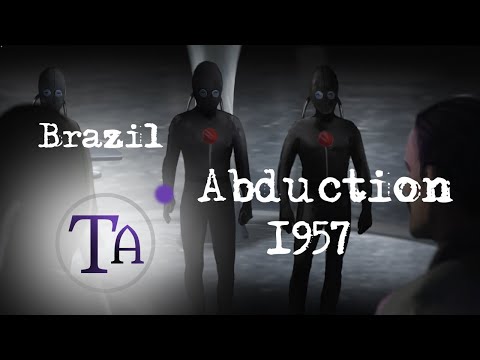
Sources
- Rogerson, Peter. "Fairyland's Hunters: Notes Towards a Revisionist History of Abductions, Part One." Magonia, No. 46, June 1993 (Magonia Archive reprint). magoniamagazine.blogspot.com
- "Doctoring Villas Boas and Aliens on Ice." Eye of the Psychic (Isaac Koi UFO document archive). eyeofthepsychic.com
- Halperin, David J. "Antonio Villas-Boas and the Astounding She-Monster: A Zeitgeist Tale." davidhalperin.net. davidhalperin.net
- Villarrubia Mauso, Pablo. "Abdução de Antônio Villas-Boas: vítima dos extraterrestres ou da CIA?" Portal Vigília, February 21, 2021. vigilia.com.br
- "Antônio Vilas-Boas." Wikipedia, The Free Encyclopedia (used lightly, for cross-checked orientation and dating only; primary claims traced to the sources above and below). en.wikipedia.org
- "Caso Vilas-Boas." Wikipédia, a enciclopédia livre (Portuguese-language edition; used lightly for family and biographical detail). pt.wikipedia.org
- "The Abduction of Antonio Villas Boas." UFOAC. ufoac.com
- "Aerial Phenomena Research Organization (APRO)." Encyclopedia.com, citing the Gale Encyclopedia of the Unusual and Unexplained. encyclopedia.com
- "Boletim: Sociedade Brasileira de Estudos Sobre Discos Voadores (SBEDV)." Banco de Dados Ufológicos e Científicos (BDUC), January 20, 2021. bancodedadosufologicosecientificos.wordpress.com
- "The Surprising Origin of Alien Abduction Stories." Live Science. livescience.com
- Bullard, Thomas E. Author page. University Press of Kansas. kansaspress.ku.edu
- "Localização do Município." Governo Municipal de São Francisco de Sales (official municipal government site; coordinates, altitude, and the municipality's December 30, 1962 formal creation date). saofranciscodesales.mg.gov.br
- Pratt, Bob. UFO Danger Zone: Terror and Death in Brazil. Horus House Press, 1996 (full text). archive.org
- Bullard, Thomas E. UFO Abductions: The Measure of a Mystery. Fund for UFO Research, 1987.
- Bowen, Charles (ed.). The Humanoids: Reports of Landings of Unconventional Aerial Objects and Their Occupants. Henry Regnery Company / Neville Spearman, 1969. (Includes Gordon Creighton's translated account and Olavo Fontes's supporting commentary.)
- Creighton, Gordon. "The Amazing Case of Antonio Villas Boas." Flying Saucer Review, Vol. 11, No. 1, Jan–Feb 1965.
- Lorenzen, Coral & Jim, with Olavo Fontes, M.D. and João Martins. Flying Saucer Occupants. Signet, 1967.
- Vallée, Jacques. Forbidden Science: Journals 1957–1969. North Atlantic Books, 1992.
- Denzler, Brenda. The Lure of the Edge: Scientific Passions, Religious Beliefs, and the Pursuit of UFOs. University of California Press, 2003. ISBN 978-0-520-93027-8.
- Rux, Bruce. Architects of the Underworld: Unriddling Atlantis, Anomalies of Mars, and the Mystery of the Sphinx. Frog Books, 1996, pp. 109–120. ISBN 978-1-883319-46-5.
- Suenaga, Cláudio Tsuyoshi. "Caso Vilas-Boas, 50 anos depois." UFO magazine (Brazil), Issue #137, December 2007.
- Fernandes, Álvaro. Casos de Contatos Sexuais com Ufonautas. 1988.
- Bullard, Thomas E. The Myth and Mystery of UFOs. University Press of Kansas, 2010.
- Halperin, David J. Intimate Alien: The Hidden Story of the UFO. Stanford University Press, 2020.
See something inaccurate? Have additional information or sources?
Suggest an Edit →Last Updated: August 2026