
Stanford, Kentucky Abduction
Just after 11:15 PM on January 6, 1976, three Casey County women driving home from a birthday dinner watched a huge, metallic, dome-topped disc descend onto Highway 78 ahead of their car. Eighty minutes and eight miles later they found themselves in Hustonville, each bearing an identical burn-like mark on the back of the neck, the hood paint on their car blistered, and a shared, independently corroborated account that would go on to survive a police polygraph and years of scrutiny largely intact.
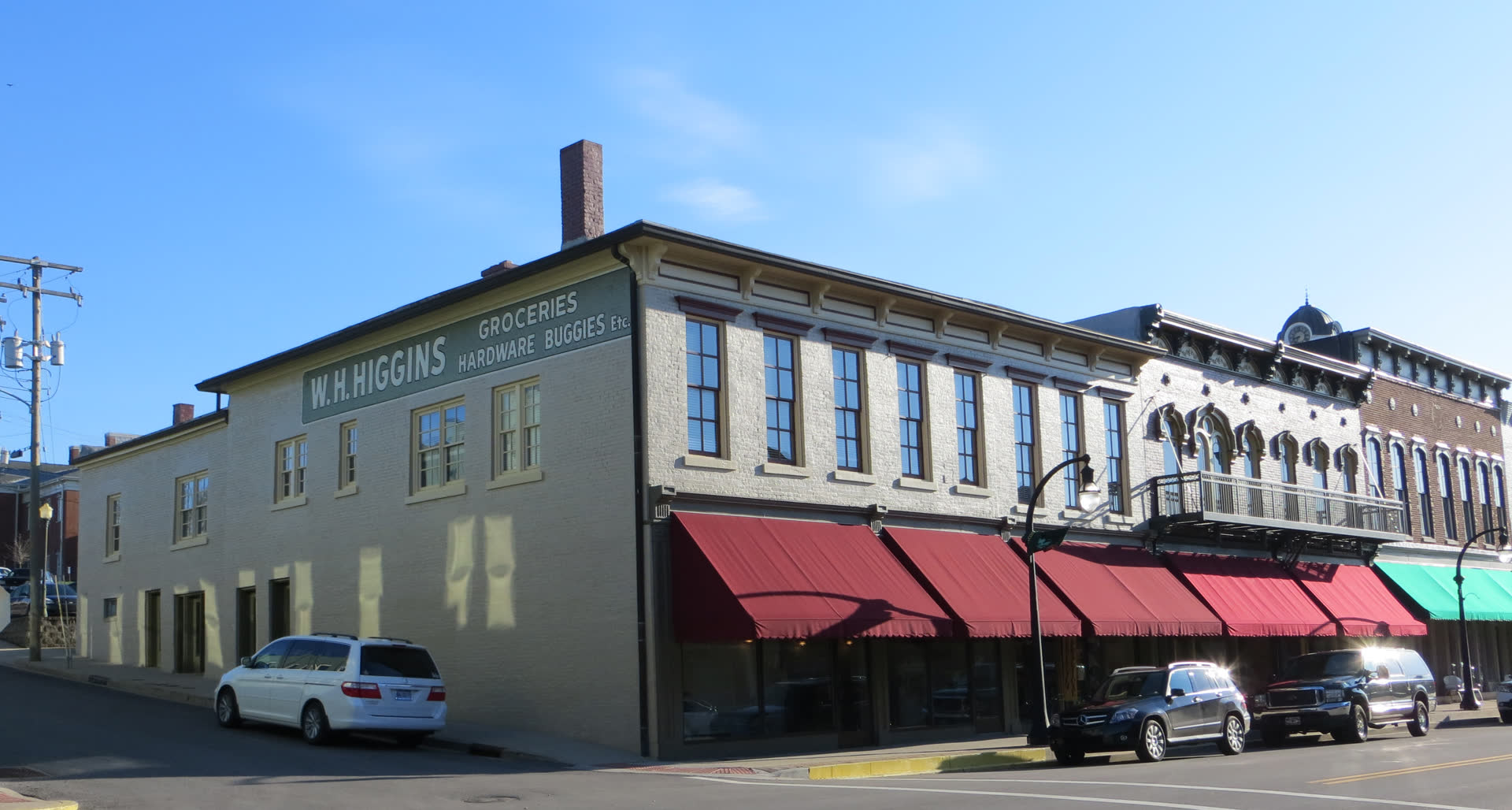
Pictured: the town of Stanford, Kentucky, seat of Lincoln County and the location listed as this case's official site — not the actual encounter, which occurred several miles outside town on the former Route 78 corridor toward Hustonville. No public-domain or rights-clear photograph of the 1967 Chevrolet Nova involved, of the specific highway stretch, or of the witnesses themselves is known to exist; Louise Smith's own hand-drawn sketch of the entities remains the copyrighted property of its Fortean Picture Library/TopFoto distributor.
Theoretical Alignment
The case's structured, physically-interactive craft description (a metallic disc with a lit dome, a ring of red lights, and a directed light beam that produced real thermal marks and paint damage) sits most comfortably inside the classic Extraterrestrial Hypothesis mold that dominated 1970s ufology, and unlike many contact claims of the era it involves no channeled cosmology, no claimed telepathic doctrine beyond simple communication, and no explicit dimensional-travel content that would elevate an Interdimensional Hypothesis reading. At the same time, the specific abduction narrative — the examination table, the silent grey humanoids, the "bullet-shaped" implant, the sense of being inside a mountain — was recovered exclusively through hypnotic regression conducted months after the event, under conditions a trained polygraph examiner himself flagged as methodologically compromised, which is exactly the profile the Psycho-Social Hypothesis would predict for a genuinely anomalous initial stimulus overlaid with an investigator-shaped narrative during recall.
Background
Liberty, Kentucky, the small Casey County seat where all three women lived in January 1976, sits in the rolling farm country of south-central Kentucky, about thirty-five miles from Danville along a network of narrow two-lane state highways with almost no traffic after dark. Mona Stafford, turning 36 that day, had recently divorced and was doing occasional secretarial work for her father, who owned a mobile-home trailer park; she attended Hilltop Church of Christ. Louise Smith, the eldest of the three at 44, was a widow who had raised two children alone, worked as an assistant at the Casey County Extension Office, sang gospel with a group called the Jubilee Echoes, and had bought the 1967 Chevrolet Nova she was driving that night the day before. Elaine Thomas, 48, was a lifelong Casey County housewife married to Otis Thomas, with a grown daughter and three grandchildren, and a member of the Contown Church of Christ. None of the three had any documented prior interest in UFOs, and none had a history of hoaxing or attention-seeking behavior according to every investigator who later interviewed their employers, ministers, and local police contacts.
The geography of the encounter itself is unremarkable in every way except its total darkness after nightfall: Kentucky Highway 78 runs southwest out of Stanford, the Lincoln County seat, through open, gently rolling farmland toward the smaller crossroads community of Hustonville before continuing on to Liberty in neighboring Casey County. The Redwood Restaurant where the women had dinner sat south of Lancaster, on the Danville side of the local road network, meaning their planned route home retraced a stretch of highway all three had driven more times than any of them could count. That utter familiarity with the road is itself part of why the women immediately recognized something was wrong: the eight-mile displacement toward Hustonville, and the missing interval of time, were not vague impressions but a sharp, specific mismatch against a drive they knew by heart.
The broader UFO research landscape the case walked into in 1976 was itself in a period of rapid change. The U.S. Air Force's official Project Blue Book investigation had closed more than six years earlier, in December 1969, leaving no government body positioned to formally investigate a new civilian sighting. Into that vacuum had stepped a handful of independent organizations: the Aerial Phenomena Research Organization (APRO), run since 1952 by Jim and Coral Lorenzen out of Tucson, Arizona; the newer, rapidly growing Mutual UFO Network (MUFON); and the Center for UFO Studies (CUFOS), founded in 1973 by former Blue Book scientific consultant J. Allen Hynek. All three would ultimately compete, sometimes acrimoniously, for access to the Kentucky case. Abduction research itself was still a young and contested sub-field: the 1961 case of Betty and Barney Hill had introduced hypnotic regression as an abduction-investigation tool fifteen years earlier, and Dr. R. Leo Sprinkle, the University of Wyoming counseling psychologist who had regressed Nebraska patrolman Herbert Schirmer for the Condon Committee in 1968, had by 1976 built a reputation as the researcher most experienced in the technique — and the one MUFON's local investigators moved quickly to secure for Kentucky.
The National Enquirer's involvement was not incidental. In 1972, the tabloid — then owned by Generoso "Gene" Pope Jr. — had assembled and financed a "Blue Ribbon UFO Panel" of five credentialed researchers, several of them APRO consultants alongside Hynek himself, and had publicly offered a $50,000 prize for definitive proof UFOs were extraterrestrial. That money, and the broader Enquirer program it funded through the rest of the decade, is the direct reason a supermarket tabloid rather than any university or government body ended up paying for Dr. Sprinkle's travel to rural Kentucky: the same funding model had already bankrolled APRO's investigation of Travis Walton's November 1975 Arizona abduction (which won the paper's own "best case of the year" prize, split between Walton and his logging crew) barely two months before the Kentucky sighting, and would go on to underwrite Sprinkle's hypnosis of Carl Higdon in Wyoming later that same year. The Enquirer's UFO spending, and the Blue Ribbon Panel with it, wound down after 1979 when the paper shifted toward a more mainstream celebrity-focused format.
Complete Timeline
| Date | Event |
|---|---|
| Jan 6, 1976, ~9:00 PM | Mona Stafford, Louise Smith, and Elaine Thomas have dinner at the Redwood Restaurant, south of Lancaster, KY, to celebrate Stafford's 36th birthday. |
| Jan 6, 1976, 11:15 PM | The three women leave the restaurant in Smith's 1967 Chevrolet Nova, heading toward Stanford and then home to Liberty via Highway 78. |
| Jan 6, 1976, ~11:20–11:30 PM | South of Stanford, a huge metallic, dome-topped disc with a ring of red lights descends from the right side of the road; a blue-white beam floods the car's interior. |
| Jan 6–7, 1976, unaccounted interval | The women's last clear memory is being backed into a farm entrance; their next memory is driving on the outskirts of Hustonville, eight miles from where they had just been. |
| Jan 7, 1976, 1:20–1:25 AM | The trio arrives in Liberty — roughly eighty minutes and two hours of total elapsed trip time later than a normal 45-minute drive. |
| Jan 7, 1976, shortly after arrival | Smith discovers matching red, burn-like marks on all three women's necks; the hood paint on her new Nova is found bubbled and its lights inoperative. |
| January–February 1976 | MUFON investigator Jerry Black opens contact with the women; word reaches CUFOS (Hynek) and APRO (the Lorenzens), setting off a three-way competition for access to the case. |
| March 6–7, 1976 | Dr. R. Leo Sprinkle, funded by the National Enquirer, conducts a preliminary hypnotic regression; only Stafford consents, and recalls seeing the object before the session halts. |
| June 23–24, 1976 | Extended hypnotic regression sessions with all three women are held at the Brown Motel in Liberty, again under Enquirer funding, producing the detailed abduction/examination narratives. |
| July 23, 1976 | Lexington Police Department detective James C. Young administers separate polygraph examinations to all three women; all three pass. |
| August 1, 1976 | Smith returns to the encounter site and discovers three rings she habitually wore are missing. |
| September 26, 1976 | Smith finds one of the missing rings — an onyx-and-diamond piece — sitting on her trailer's front step, and inexplicably throws it into a nearby creek. |
| October 1976 | APRO publishes its full investigative writeup of the case in the APRO Bulletin, Vol. 25, No. 4. |
A Birthday Dinner at the Redwood Restaurant
January 6, 1976 was Mona Stafford's 36th birthday, and she marked it with her two closest friends, Louise Smith and Elaine Thomas, over dinner at the Redwood Restaurant, a roadhouse a few miles south of Lancaster, Kentucky, roughly midway on the usual route between their homes in Liberty and the larger town of Danville. Smith drove; she had bought the pale-colored 1967 Chevrolet Nova she was piloting that night only the day before. The three left the restaurant at approximately 11:15 PM for what should have been a routine, well-worn 35-mile drive home along U.S. 27 and Kentucky Highway 78 — a trip the women, all of whom had made it hundreds of times, could ordinarily finish in about 45 minutes.
The Object Over Highway 78
Passing through Stanford and turning onto Highway 78 toward Hustonville, the women first noticed a bright red light in the sky that Stafford initially took for a plane on fire. Within seconds it became clear the object was not an aircraft: descending from the right side of the road to a position directly ahead of and above their car, it resolved into an enormous, metallic, disc-shaped craft — by the women's later, consistent estimate, larger than two houses — with a glowing white dome on top, a ring of red lights encircling its midsection, and a yellow light blinking on its underside. A bluish-white beam of light then shot down from the object and flooded the interior of the Nova, filling the car with what the women described as a fog-like haze and producing an intense, immediate burning sensation in their eyes severe enough that they struggled to keep them open. According to their later accounts, the car itself seemed to come under the object's control, accelerating to speeds as high as 85 miles per hour with none of the three women consciously steering.
Loss of Control and Eighty Minutes Unaccounted For
The women's continuous memory of the drive ends with the car being backed into the entrance of a farm field along the highway. Their next clear memory, by the women's own later description, was the odd sensation of seeing a wide, brightly lit road stretching ahead of the car; within seconds that perception resolved into the ordinary reality of Highway 78, with the three of them shaken and disoriented, recognizing the outskirts of Hustonville — a town roughly eight miles from where the encounter had begun, in the opposite direction of travel from where a normal, uninterrupted drive home would have placed them. They continued on into Liberty, arriving at approximately 1:20 to 1:25 AM. Checking the kitchen clock at Smith's home against the length of the drive, the discrepancy was immediate and severe: a trip that should have taken well under an hour had instead consumed roughly two hours, with some eighty minutes of it — the interval between the farm-entrance memory and finding themselves near Hustonville — entirely unaccounted for.
Arrival in Liberty: The Marks, the Paint, and the First Fear
Once inside, the women began comparing what each had experienced and quickly discovered they all carried the same physical mark: a red, burn-like welt on the back of the neck, roughly three inches long and an inch wide, with sharply defined edges, unblistered but painful to the touch. The marks faded within about two days and were never medically biopsied or otherwise scientifically analyzed at the time, a gap investigators would later flag as a missed opportunity. Outside, the damage to Smith's brand-new car was just as immediate: the paint on the hood had visibly bubbled, and the vehicle's exterior lights had stopped working. In the days that followed, all three women reported unusual physical symptoms — burning skin sensations on contact with water, persistent eye inflammation (worst for Stafford, who sought outside medical treatment for conjunctivitis), an unusual and hard-to-satisfy thirst, heavier cigarette smoking that all three attributed directly to the stress of the experience, and rapid, unintentional weight loss that in Smith's case eventually totaled roughly 28.5 pounds and in Stafford's an initial 17 pounds. Smith also reported bizarre small-scale electrical anomalies at home in the following weeks — her wristwatch's minute hand spinning rapidly around its face, a bedroom alarm clock stopping the moment she touched it — and said her pet parakeet, previously tame, became inexplicably terrified of her alone, repeatedly flying into the side of its cage before dying in March 1976.
Contacting MUFON and the Widening Circle of Investigators
Word of the encounter reached the Mutual UFO Network within days, and MUFON field investigator Jerry Black made initial contact with the three women, beginning the formal case file. As the story circulated, it drew the attention of two larger, sometimes rival organizations almost simultaneously: J. Allen Hynek's Center for UFO Studies, and APRO, whose co-directors Jim and Coral Lorenzen personally called the women to try to ease their anxiety about the case attracting national publicity, promising not to release any hypnosis results without their permission. Investigator Leonard Stringfield, working the case for MUFON alongside Black, and Ohio-based MUFON associate Peggy Schnell, who was brought in specifically to provide a reassuring female presence for the women during the harder interviews, rounded out the early investigative team. The competition for access to the case — and for the right to arrange and fund the hypnosis sessions everyone agreed were the only way to recover the missing eighty minutes — created real friction between the three groups, a dynamic that ultimately favored whichever party could actually pay Dr. Sprinkle's travel costs: the National Enquirer, which retained investigative reporter Bob Pratt and underwrote Sprinkle's involvement in exchange for first-publication rights, a arrangement that would later become one of the case's most-cited points of criticism even though Pratt himself was broadly regarded by other investigators, including skeptical ones, as a careful and honest reporter.
A Note on the Investigative Rivalry
APRO's own published account is candid about the tension: despite having initiated early contact and funded part of the investigation, the Lorenzens found themselves largely excluded from the case's later stages as MUFON and the Enquirer's arrangement with Sprinkle took precedence. APRO nonetheless published its own detailed writeup in the APRO Bulletin, Vol. 25, No. 4 (October 1976), which remains one of the most complete surviving contemporaneous records of the case's evidence and chronology.
Dr. Sprinkle's Hypnotic Regression Sessions
Dr. R. Leo Sprinkle of the University of Wyoming, already the researcher most experienced with UFO-abductee hypnosis in the country following his 1968 work with Herbert Schirmer, flew to Kentucky for a preliminary session on March 6–7, 1976. Only Stafford consented to be regressed at that first sitting; she tearfully recalled the sighting of the object itself but was unable, or unwilling, to progress further under hypnosis that day. Afterward, shown a set of standard entity-type sketches by investigators — a step later flagged as methodologically risky — Stafford identified one shape as resembling what she had glimpsed: "This looks like the light I saw… It was shaped like that head!" The more extensive regression work, covering all three women in depth, took place on June 23–24, 1976, at the Brown Motel in Liberty, again funded through the National Enquirer arrangement. Sprinkle's own published conclusion after the full set of sessions was unambiguous about his clinical read of the women's sincerity, if carefully hedged about the objective reality of what they described: "In my opinion, each woman is describing a 'real' experience," he wrote, adding that the "tentative hypothesis of abduction and examination is the best hypothesis to explain the apparent loss-of-time experience."
What Louise Smith Recalled
Under regression, Smith described being examined on a table and experiencing a fluid material covering her face. Her hypnosis sessions were marked by visible emotional distress — weeping, moaning, tossing her head, shuddering — that eased dramatically at the point in the narrative where she recalled "seeing the street light" again, which investigators interpreted as the moment of her perceived return to the car.
What Mona Stafford Recalled
Stafford's regression produced the case's most detailed examination narrative. She recalled being alone on a white table or bed, observed by a large "eye" accompanied by a bright white light, and held in place by what she described as a "power" or energy rather than physical restraint; her right arm was pinned, and her left leg and ankle were forced beneath her in a position that caused lasting foot pain. She reported sensations of finger pressure on her left hand and being examined by four or five short humanoid figures wearing what she described as surgical masks and garments. At one point she reported what investigators interpreted as either an out-of-body sensation or a perception of watching another woman on a second examination table, and described perceiving a long tunnel, or a view of open sky, as though she had been carried into an area inside a large mountain or volcanic formation. She reported great pain and fatigue during the recalled experience but said she felt physically better, with an improved sense of understanding, the following day.
What Elaine Thomas Recalled
Thomas recalled being separated from her two friends and placed in a chamber with a side window, where she was observed by humanoid figures she described as roughly four feet tall, with dark eyes and grey skin. She reported a disturbing contraption or covering placed around her neck that tightened whenever she attempted to speak, producing a choking sensation — a detail some later researchers have connected to the neck marks all three women bore. She also recalled a small, "bullet-shaped" object, about an inch and a half in diameter, being placed against her left chest, at the exact site where she had already reported a lingering pain and a red spot. She later came to interpret the overall experience as something closer to an intellectual or emotional experiment than a purely physical procedure. As with Smith and Stafford, Thomas described the entities communicating with her telepathically; none of the beings any of the three women described were reported to have a visible mouth.
The National Enquirer's Polygraph Test
James C. Young, a Lexington Police Department detective and professional polygraph examiner, administered separate lie-detector examinations to all three women on July 23, 1976. All three passed without any indication of deception. Young, by his own account a UFO skeptic before taking the case, later said his prior skepticism had been "completely erased" by the examinations. His own written assessment, however, contained a candid and frequently quoted methodological caution: "Prior to the examination of these three persons it was determined by the polygraphist that these persons had been previously interviewed by Dr. R. Leo Sprinkle and the above-mentioned members of the Mutual UFO Network. How much or how little these previous interviews played a part upon what these persons now believe about this alleged encounter cannot be determined by the polygraphist." Young specifically noted that showing standardized alien-entity sketches to witnesses before they produced their own drawings — which MUFON's Stringfield and Black had done ahead of both the polygraph and the hypnosis — was a highly suggestive procedure that skeptics would be justified in citing to question the investigation's reliability. APRO's own bulletin echoed the same concern almost verbatim, noting that "some very suggestive or leading questions were asked by Mr. Stringfield and Mr. Black of MUFON," and that these were "exactly such errors that the skeptics will leap upon in attempts to discredit the investigative procedures."
Why the Sketch-Priming Criticism Matters
The specific procedural error Young and APRO both flagged — showing witnesses a standardized set of entity-type sketches before they had produced their own independent drawings, and before they underwent hypnosis — is not a minor bureaucratic lapse. It is precisely the kind of investigative contamination that later skeptical researchers, most prominently Philip Klass in his own critical survey of the abduction literature, would identify as a recurring, structural weakness across the entire first wave of 1970s hypnosis-based UFO investigation: once a witness has seen a reference image, there is no reliable way to separate what they actually perceived from what they may have unconsciously absorbed and later reproduced under the suggestible conditions of a hypnotic trance. That this criticism surfaces here not from an outside skeptic looking to debunk the case, but from the case's own investigating team and its own hired polygraph examiner — someone with every institutional incentive to declare the women credible rather than flag a weakness in the record — is itself notable, and is a large part of why this case file treats the sketch-priming issue as a genuine, unresolved limitation on the abduction narrative specifically, rather than a talking point to be dismissed.
Corroborating Sightings the Same Night
Independent of the three women's own account, several apparently unconnected local observers reported unusual aerial activity in the same area of Casey and Lincoln counties around the same hour. An anonymous couple reported watching a large, luminous object pass over the Stanford area from their home window at roughly 11:30 PM. Two teenagers separately reported chasing a low-flying UFO by car from the Angel Manufacturing Plant in Stanford toward Danville and reporting the sighting to local police that same night. A farmer whose property lay near the stretch of Highway 78 where the women's encounter began also reported watching an unusually low-flying object that, in his account, shot a white beam of light down to the ground — a detail that closely mirrors the women's own description of the light beam that entered their car.
Independent Corroboration from a Neighbor
A Liberty neighbor, Lowell Lee, provided investigators with a further, more personal thread of corroboration. According to case researchers, Lee confirmed the women's account of the time discrepancy from his own independent observations that night, and separately reported that all three women, questioned apart from one another, produced strikingly similar sketches of the entities they described — a consistency investigators cited as circumstantial support for the sincerity of the underlying experience, even though it does not rule out the sketches having been shaped by the same standardized reference images MUFON had already shown all three women as a group.
Life After the Encounter
The case's aftermath weighed heavily and unevenly on the three women. Stafford in particular struggled with sleep, refused to remain home alone, and told investigators she feared she would not "live to see another birthday." Thomas, watching her two friends' distress, told a local acquaintance she thought "they're ready for a breakdown." Following the hypnosis sessions, all three reported a renewed wave of the same physical symptoms — fatigue, listlessness, skin sensitivity, and burning sensations — that had marked the days immediately after the original encounter, along with new rashes for Smith and Stafford. Smith's difficulties extended into her working life at the Casey County Extension Office. When Smith returned to the encounter site on August 1, 1976 — nearly seven months after the sighting, evidently drawn back to the location as part of her own attempt to process what had happened — she discovered that three rings she habitually wore, including a diamond piece and the onyx-and-diamond ring, were missing from her hand, with no memory of removing or losing any of them. Almost two months later, on September 26, the onyx-and-diamond ring reappeared on the front step of her trailer with no note, no witness, and no explanation offered by anyone in her household or neighborhood for how it had gotten there. Rather than keep it, Smith's immediate reaction was to throw the ring into a nearby creek, a decision investigators recorded without further comment but that later researchers have read as a measure of just how unsettled she remained by an object she now associated directly with the case, months after the visible physical marks themselves had faded. More than three decades after the case first broke, UFO researchers revisiting it noted that none of the three women had ever wavered from, embellished, or walked back their core account, and that their local reputations — corroborated independently by employers, ministers, and police contacts — had remained clean throughout.
Public and Media Reaction
The case reached a national audience primarily through the National Enquirer's own coverage, written by investigative reporter Bob Pratt, whose byline on other Enquirer-funded abduction stories of the period (including Travis Walton's) gave the Kentucky case immediate visibility within the small but growing 1970s abduction-research community even though the tabloid's own reputation for sensationalism became, in turn, one of the case's most durable points of skeptical attack. APRO's competing, more restrained APRO Bulletin writeup in October 1976 offered the movement's internal, less sensationalized version of the same material. In the decades since, the case has become a recurring reference point in popular UFO media — podcasts, YouTube documentary channels, and retrospective articles continue to revisit it specifically because, unlike many contemporaneous abduction claims, it combines multiple witnesses, a same-night physical effect on the witnesses' own vehicle, and a police-administered polygraph result, a combination researchers have repeatedly described as making it "one of the best documented abduction cases in UFO history," even as the same commentators are careful to note that description applies to the quality of the documentation rather than to independent proof of the abduction narrative itself.
Key Witnesses
Louise Smith
The eldest of the three at 44, a widow who had raised two children alone and sang gospel with the Jubilee Echoes. Driving her Nova — purchased the day before — when the object appeared, Smith bore the same neck mark as her friends, watched the car's hood paint bubble and its lights fail, and later reported unexplained electrical anomalies at home and the terror of her own pet bird. Under Dr. Sprinkle's hypnosis she recalled an examination table and a fluid material covering her face.
Mona Stafford
Turning 36 the night of the encounter, divorced and doing secretarial work for her father, Stafford was the first to consent to hypnosis and produced the case's most detailed recollection of an onboard medical examination by several short, masked humanoid figures. She suffered the worst eye inflammation of the three afterward and told investigators she feared she would not live to see her next birthday.
Elaine Thomas
A 48-year-old lifelong Casey County resident married to Otis Thomas, Thomas recalled under hypnosis being separated from her friends and examined by four-foot-tall, grey-skinned humanoids, including a disturbing device placed around her neck and a small object pressed against her chest at the site of a lingering pain she had already reported before the session.
Det. James C. Young
A professional polygraphist and self-described prior UFO skeptic who administered the July 23, 1976 lie-detector tests to all three women, found no evidence of deception in any of them, and publicly credited the case with changing his own views — while also flagging, in his own written report, the risk that MUFON's pre-hypnosis sketch-showing had introduced suggestive contamination into the women's recalled narrative.
The Five Observables Assessment
The Five Observables framework is applied to the performance characteristics reported in this case:
Assessment: The case's strongest "observable" is not the craft's flight performance — which the women, driving at night under acute stress, were poorly positioned to measure with any precision — but the reported takeover of their own vehicle's motion up to 85 mph with no one at the wheel. Beyond that, the object itself was described as large, brightly lit, and highly conspicuous rather than exhibiting the low-observability or hypersonic characteristics catalogued in more instrumented modern cases; this is consistent with a 1970s close-range, low-altitude visual encounter rather than a sensor-tracked high-performance intercept. The absence of any claimed hypersonic or trans-medium behavior is itself worth noting as a point in the case's favor on witness reliability: the women did not describe theatrical, physically implausible flight maneuvers of a kind that would be easy for a skeptic to dismiss outright, but rather a slow, close-range, almost deliberate-seeming approach and pursuit — a comparatively restrained description for an account that nonetheless escalates, under hypnosis, into a full onboard examination narrative.
Evidence Assessment
Supporting Anomalous Origin
- Three independent witnesses gave a consistent core account of the object and the missing time from the first night forward, with no significant divergence over decades.
- All three passed a professional polygraph examination administered by a formerly skeptical detective who found no indication of deception.
- A real, immediately observable physical effect — bubbled hood paint and failed lights on a car purchased the day before — appeared contemporaneously with the reported light-beam exposure, not solely as a later hypnotic recollection.
- All three women developed matching, identically located and sized neck marks noticed independently by each other within minutes of arriving home.
- Several apparently unconnected local residents reported unusual aerial activity in the same specific area within the same approximate half-hour window, independent of the three women's account.
- None of the three women had any documented history of hoaxing, and every character reference gathered by investigators (employers, clergy, local police) was positive.
Supporting Conventional Explanation
- The detailed abduction and examination narrative exists only because of hypnotic regression conducted months after the event, a technique with well-documented confabulation risk.
- MUFON investigators showed the women standardized entity sketches before the women produced their own drawings or underwent hypnosis — a suggestive procedure flagged by the case's own polygraph examiner as a legitimate point of criticism.
- The hypnosis sessions and travel were funded by the National Enquirer in exchange for exclusive first-publication rights, introducing a commercial incentive that, while not proof of fabrication, is a real conflict investigators must weigh.
- No contemporaneous instrumented data (radar, photographs, or film) of the object exists; all sensory evidence is eyewitness testimony.
- The neck marks were never medically biopsied or clinically analyzed at the time, and no laboratory analysis of the bubbled car paint appears to have been performed or published.
Why "Disputed"
This case earns a Disputed rating rather than either Credible or Debunked because its two layers of evidence pull in genuinely different directions. The initial encounter — three consistent witnesses, a same-night physical effect on a car none of them had motive to sabotage, matching marks on all three bodies, independent corroborating sightings from unconnected local residents, and a clean pass on a professional polygraph — is unusually well-corroborated for a single-vehicle nighttime sighting, stronger on witness count and physical evidence than many single-witness cases this site rates as Credible. But the case's most extraordinary content, the abduction and medical-examination narrative that makes it famous, rests entirely on hypnotic regression obtained under conditions its own investigators criticized in writing: leading sketches shown before witness drawings, a multi-month gap between event and recall, and a tabloid-funded arrangement with an obvious commercial stake in a dramatic story. That combination — a strongly corroborated anomalous stimulus paired with a narrative-recovery method known to introduce contamination — is the textbook profile of a Disputed case: not fabricated, not conventionally solved, but not safely elevated to Credible either while its central content remains, by design, unverifiable by any means other than the women's own later-recovered memory. It is worth being explicit about where this case sits relative to other Disputed files on this site: it is materially stronger on witness count, independent same-night corroboration, and contemporaneous physical evidence than a single-witness hypnotic-regression case, which is why its numeric score sits meaningfully above the low end of the Disputed band rather than alongside cases resting on one uncorroborated account.
Sensor & Instrumentation Detection Profile
No radar, camera, film, or other instrumented system is known to have recorded the object. The case's entire evidentiary record consists of eyewitness testimony, a post-hoc police polygraph examination, and clinically-obtained hypnotic recall — there was no FAA, military, or civil-aviation radar track ever associated with the sighting, and the era's rural central Kentucky had no dash-cameras, home security systems, or the ubiquitous smartphone cameras that would likely have generated at least secondary visual evidence had the same event occurred in a later decade. That absence cuts both ways analytically: it means the case can never be cross-checked against an independent sensor record the way, for example, a modern military gun-camera or FLIR-documented encounter can be, but it also means the case predates the era in which skeptics can point to a specific misidentified satellite, drone, or aircraft transponder track as a ready-made conventional explanation, since no such record exists to check the sighting against in either direction.
Environmental & Geospatial Context
The encounter occurred on a stretch of Kentucky Highway 78 between Stanford and Hustonville — open farm country in Lincoln and Casey counties, with rolling hills, scattered woodlots, and minimal artificial lighting away from the small towns themselves. No specific official meteorological station reading for the exact hour of the encounter has been located, though the region's broader January 1976 conditions were seasonally cold; no fog, precipitation, or other weather event that could account for the described lights has been documented in connection with the case. The area sits well outside any major military airspace corridor or restricted-use area, and no nearby air base or testing range has ever been publicly linked to the sighting.
Observer Credibility & Occupational Profile
None of the three women held technical, aviation, or scientific credentials that would carry special evidentiary weight in assessing an aerial phenomenon, but their non-technical, ordinary-life profiles cut in a different, still-relevant direction: investigators found no plausible motive for fabrication, no financial windfall beyond a single tabloid-funded round of hypnosis and travel, and consistently positive character references from employers, church leadership, and law-enforcement contacts across all three women. Smith's own employer at the Casey County Extension Office, her Baptist congregation (where she sang with the Jubilee Echoes gospel group), and local police contacts were all cited by investigators as vouching for her; Stafford, a divorced former arts-and-crafts shop owner active at Hilltop Church of Christ, and Thomas, a lifelong Contown Church of Christ member married to the same man for decades, drew similar unprompted community endorsement. That kind of embedded, decades-long small-town social standing — with a great deal to lose locally and essentially nothing tangible to gain — is itself a soft but real credibility signal in a rural community where reputation carries direct social and economic consequences. Their case is also, unusually for the genre, backed by a professional assessment from someone with direct incentive to disprove them: polygraph examiner James Young specifically described himself as having entered the case a skeptic and left persuaded of the women's sincerity, even while candidly flagging the investigation's procedural weaknesses in the same report. That combination of ordinary witnesses, positive independent character corroboration, and a skeptic's own polygraph endorsement is a genuinely unusual credibility profile among 1970s American abduction cases.
Physical & Material Assays
The case's physical evidence consists of the matching neck marks (roughly three inches by one inch, sharply defined, unblistered, faded within about two days) and the bubbled paint and lights failure on Smith's Nova hood. Neither was subjected to contemporaneous forensic or laboratory analysis: no period photograph of the neck marks or paint damage under professional examination is known to survive in the public record, and no metallurgical, chemical, or thermal analysis of the affected paint was performed or published by any of the investigating organizations. This is a genuine, acknowledged gap in the case's evidentiary record rather than a null result — the physical effects were real enough to be independently witnessed by multiple parties in the immediate aftermath, but were never scientifically tested in a way that could establish or rule out a specific causal mechanism. A modern investigation of an identical claim would likely seek a dermatological biopsy of the neck marks within hours, along with a paint-chemistry analysis to distinguish thermal blistering from a chemical reaction, an electrical fault, or ordinary manufacturing degradation; none of that infrastructure existed, or was mobilized in time, in rural Casey County in January 1976. By the time MUFON, APRO, and CUFOS had each become involved and begun coordinating (and competing over) an investigation, the marks had already faded and the immediate forensic window had closed, leaving only the women's own contemporaneous descriptions and the memories of those who saw the marks and the car firsthand.
Historical Precedents & Archive Matches
The Kentucky case sits within a specific, identifiable wave of mid-1970s American abduction investigations that used hypnotic regression as their primary recovery tool, following the template set by the 1961 Betty and Barney Hill case and refined through Dr. Sprinkle's own subsequent work, including his 1968 regression of Herbert Schirmer and his later 1974 involvement in the Carl Higdon case in Wyoming — a case that shares with Kentucky both Sprinkle's direct involvement and National Enquirer funding of the hypnosis sessions. The reported neck marks also echo Schirmer's own 1967 red welt, discovered in almost identical fashion after a missing-time encounter. No prior UFO reports specific to the Stanford–Liberty–Hustonville corridor itself are documented in the available record, though the same-night corroborating sightings from unconnected local residents indicate the January 6, 1976 event was not perceived in isolation even at the time. Within Kentucky's own UFO history, the case is frequently discussed alongside the state's much earlier and very differently-shaped Kelly-Hopkinsville "goblins" siege of August 1955, a farmhouse encounter with small humanoid figures roughly 75 miles to the west in Christian County, and separated from the Stanford case by more than two decades. The two cases share no direct evidentiary link and involve fundamentally different phenomena — a stationary night-long siege versus a moving-vehicle encounter with missing time — but their shared home state has made Kentucky itself a recurring point of interest in state-by-state UFO catalogs and popular retrospectives of American ufology, despite the two decades separating them and the very different investigative methods each attracted.
Material Analysis
Beyond the neck marks and car paint already described, the case's material record includes several secondary anomalies reported by Smith specifically: a wristwatch whose minute hand was seen to spin rapidly around its face, a bedroom alarm clock that stopped the instant she touched it, and a parakeet that displayed a sustained, apparently genuine fear reaction toward her alone (and no one else in the household) until its death roughly two months after the encounter. The August and September 1976 disappearance and unexplained reappearance of three rings Smith habitually wore adds a further, harder-to-categorize anomaly to the record; no theft, loss-and-recovery, or other mundane account for the rings' movement was ever established. None of these secondary effects were independently verified by any outside party at the time they occurred, and all rest solely on Smith's own contemporaneous report to investigators.
Supporting Non-Terrestrial Origin
- The neck marks, car paint damage, and light failure all appeared within the same short window as the reported light-beam exposure, before any hypnosis or outside suggestion could have shaped the women's account.
- Multiple, independent same-night corroborating sightings in the same immediate area reduce the likelihood that the physical effects trace to an unrelated mundane cause specific to Smith's car alone.
Supporting Terrestrial Origin
- None of the physical evidence — the marks, the paint, or the failed lights — was ever forensically tested, so a mundane cause (a chemical spill, a manufacturing defect in a newly-purchased used car, a skin irritation from cold-weather exposure) cannot be ruled out on the existing record.
- The most extraordinary material claims, including the "bullet-shaped" implant Thomas described and the missing/returned rings, rest entirely on uncorroborated testimony recovered under hypnosis or reported by a single witness with no independent verification.
The Conventional Explanation Candidate: Hypnotically-Contaminated Confabulation of the Abduction Narrative
The strongest conventional candidate does not attempt to explain away the entire case at once, because the initial sighting, the missing time, and the physical marks and car damage are corroborated by more than one independent line of evidence. Instead, it targets specifically the detailed abduction and medical-examination content recovered under hypnosis: months after the event, under commercial (National Enquirer) funding, and after MUFON investigators had already shown the women standardized alien-entity sketches before eliciting their own descriptions — a sequence the case's own polygraph examiner and APRO's own bulletin both independently flagged as methodologically compromised. Under this reading, a genuinely anomalous but far less detailed original stimulus (the light, the missing time, the burning sensation) was elaborated, during regression, into the specific examination-table narrative later reported, shaped in part by investigator prompting and by cultural abduction imagery already circulating after the Hill case.
Deliberate Hoax for Publicity or Payment
Investigators at the time and since have found no credible support for a deliberate fabrication. The women received no significant ongoing income from the case, sought no lasting media career from it, maintained consistent employment and community standing throughout, and passed a polygraph administered by an examiner who began the process skeptical of their claims. The National Enquirer's funding covered specific investigative costs (Sprinkle's travel, the hypnosis sessions) rather than paying the women a windfall, and Bob Pratt, the paper's own investigator, was regarded even by skeptical researchers as an honest reporter uninterested in manufacturing a story.
Misidentification of a Mundane Aerial Object
No conventional aircraft, planet, meteor, or ground-based light source matches the object's described structure — a large, dome-topped disc with a ring of lights that descended, followed the car at close range, and projected a directed beam — closely enough to serve as a satisfying explanation, particularly given the independent, same-night corroborating sightings reported by unconnected observers elsewhere in the same immediate area.
Shared Psychogenic or Traumatic Stress Reaction
A folie-à-trois-style shared delusion, or a straightforward group panic response to a genuinely startling but mundane stimulus, cannot fully account for the contemporaneous physical evidence (the car paint, the light failure, the matching neck marks noticed independently by each woman) without itself requiring an unexplained coincidental cause for those effects, making it, at best, a partial explanation for the psychological aftermath rather than the physical record.
Weighing all four candidates against one another, no single conventional explanation accounts for the complete case, and that is itself the central analytical fact this file's Disputed rating is built on. The hoax and simple-misidentification candidates both fail on the same point: they cannot explain why multiple, independent, reputation-conscious witnesses with nothing to gain converged on the same account, corroborated in part by uninvolved third parties the same night. The hypnotic-contamination and shared-psychogenic-reaction candidates fare better, but only as explanations for the abduction narrative's specific content and the women's later psychological distress — neither one, even taken at full strength, accounts for the bubbled paint on a car purchased the day before, or for three separate women independently discovering identical marks on each other's necks within minutes of arriving home. The honest conclusion is a split verdict: the initial sighting and its physical aftermath resist easy conventional explanation, while the detailed examination narrative recovered later under hypnosis remains genuinely undetermined between a real anomalous memory and an investigator-shaped confabulation of one.
Hypnotic Contamination of the Abduction Narrative
InconclusivePlausible and well-documented as a partial explanation for the specific examination-narrative details recovered months later under compromised hypnotic conditions — but it cannot, by itself, account for the contemporaneous physical evidence from the night of the encounter itself.
Deliberate Hoax
ImplausibleNo credible motive, financial windfall, or behavioral pattern consistent with fabrication was ever identified; all three women maintained consistent accounts, clean reputations, and passed polygraph testing administered by a former skeptic.
Misidentified Mundane Object
ImplausibleNo known aircraft, celestial body, or ground light plausibly matches the object's described structure, close-range behavior, and corroborating independent sightings from unconnected local witnesses that same night. A bright planet or meteor cannot account for a beam of light entering the car, the car's apparent loss of driver control, or a stationary, structured object hovering at close range for an extended period.
Shared Psychogenic Reaction
InconclusiveCannot independently account for the contemporaneous physical marks and car damage without invoking an unexplained coincidental cause, making it at most a partial explanation for the psychological aftermath rather than a complete account of the case.
Related Cases
Confirmed Documents & Official Records
The 94-box public archive of Dr. Sprinkle's complete professional papers, including his UFO-abduction casework broadly. It is the closest thing to a surviving institutional paper trail connected to the case's central hypnotic-regression investigator, though the finding aid available online does not itemize a Kentucky-specific folder by name.
This was never a federal case: Project Blue Book had already closed in December 1969, more than six years before the encounter, so no U.S. Air Force or other federal agency ever opened an official file on it. No FBI, CIA, or military record referencing the Stanford, Kentucky abduction is known to exist; the surviving primary documentary record consists of the APRO Bulletin, Vol. 25, No. 4 (October 1976) writeup, MUFON's own case files, and James Young's polygraph report.
Search Government & Archival Records Directly
Further Reading — Recommended Literature
Abducted!: Confrontations with Beings from Outer Space
Written by APRO's own co-directors, who personally investigated the Kentucky case in 1976 and published its details in that year's APRO Bulletin — the primary-source account closest in time to the events themselves.
Missing Time: A Documented Study of UFO Abductions
The book that first systematized "missing time" as a diagnostic marker of abduction cases, written just five years after the Kentucky encounter defined that same pattern for a national tabloid audience.
The Abduction Enigma
A later, more critical survey of the abduction literature that directly examines the reliability of hypnotic regression and leading-question contamination — the exact methodological issue raised by this case's own polygraph examiner.
UFO Abductions: A Dangerous Game
The leading skeptical critique of 1970s-80s hypnosis-based abduction investigation, laying out in detail the risks of suggestive questioning and sketch-priming that this case's own investigators were separately criticized for.
Alien Abductions: Creating a Modern Phenomenon
An academic literary and narrative analysis of the abduction genre that situates cases like this one within the broader cultural template abduction accounts were already following by the late 1970s.
Essential Viewing
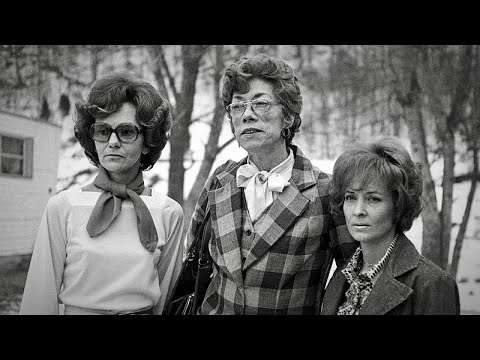
The Stanford, Kentucky Alien Abductions, January 6, 1976
Eyes On Cinema's dedicated case rundown covering the encounter, the missing time, and the subsequent investigation.
Three Women Abducted by Aliens Outside Stanford, Kentucky
A case walkthrough covering the object description, the missing time discovery, and the physical evidence on Smith's car.
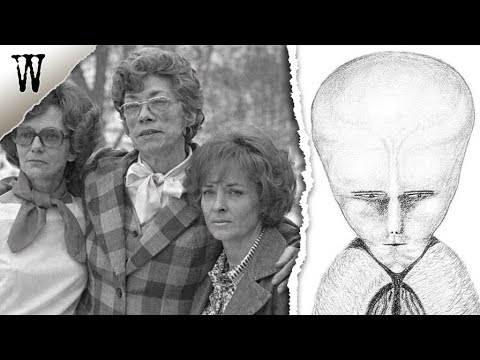
Alien Abduction & Missing Time | 3 Women Share Their Ordeal
A summary treatment of the case's hypnotic-regression recollections and the polygraph outcome.
Sources
- UFO Casebook, "The 1976 Stanford, Kentucky Abductions" by B.J. Booth — detailed narrative and chronology of the encounter and investigation.
- The Black Vault, "The 1976 Stanford, Kentucky Abductions" — case file summary including polygraph and hypnosis session details.
- UFO Evidence, "The Kentucky Abductions — Stanford, Kentucky, United States — January 6, 1976".
- Unexplained Mysteries, "Mysteries Revisited: The 1976 Stanford, Kentucky Alien Abductions".
- Podcast UFO, "A 1976 UFO Encounter in Kentucky".
- Podcast UFO, "A 1976 UFO Encounter in Kentucky — The Evidence" — polygraph examiner James Young's own written assessment.
- WKDQ, "Three Kentucky Women Share Their Alien Abduction Experience from Over Forty-Five Years Ago".
- WKDQ, "Mystery of Three Kentucky Women Abducted by Aliens in 1976".
- UFO Insight, "The 1976 Kentucky Alien Abduction Incident".
- Archives West / Orbis Cascade Alliance, "R. Leo Sprinkle Papers, 1961–2020" finding aid, American Heritage Center, University of Wyoming.
- Wikipedia, "Stanford, Kentucky" — used lightly for orientation on the town's location and setting.
- American Heritage Center, University of Wyoming, "R. Leo Sprinkle" tag archive.
- YouTube (Eyes On Cinema), "The Stanford, Kentucky alien abductions, January 6, 1976".
- YouTube (Quirk Zone), "Three Women Abducted by Aliens Outside Stanford, Kentucky".
- YouTube (Weird World), "Alien Abduction & Missing Time | 3 Women Share their Ordeal".
- Coral E. Lorenzen & Jim Lorenzen, Abducted!: Confrontations with Beings from Outer Space, Berkley Medallion, 1977 — primary APRO investigative account.
- APRO Bulletin, Vol. 25, No. 4 (October 1976) — APRO's full contemporaneous case writeup, as cited by UFO Casebook and The Black Vault.
- Wikimedia Commons, "StanfordKY-Commercial-District.JPG" by Joel Bradshaw (CC0) — hero image source.
- National Archives and Records Administration, NARA Catalog — searched for any federal record; none located.
- FOIA.gov, Federal FOIA Portal — searched for any federal record; none located.
- CIA Reading Room, CIA FOIA Electronic Reading Room — searched for any federal record; none located.
See something inaccurate? Have additional information or sources?
Suggest an Edit →Last Updated: August 2026