
The Foo Fighters (WWII Aerial Phenomena)
Beginning in late November 1944, radar-equipped American night-fighter crews of the 415th Night Fighter Squadron flying over the Rhine Valley began reporting fast, glowing balls of light — nicknamed "foo fighters" — that paced their aircraft through evasive maneuvers under apparent intelligent control. Within weeks the phenomenon had been reported by hundreds of Allied aircrew across two theaters of war, investigated at the highest levels of Allied military intelligence, and publicly linked to a feared secret German weapon before officialdom settled, uneasily, on a range of more mundane — but never fully proven — explanations. Predating Kenneth Arnold's June 1947 "flying saucer" sighting by nearly three years, the foo fighters remain the earliest large-scale, multiply-witnessed, officially investigated UAP wave in modern military history.
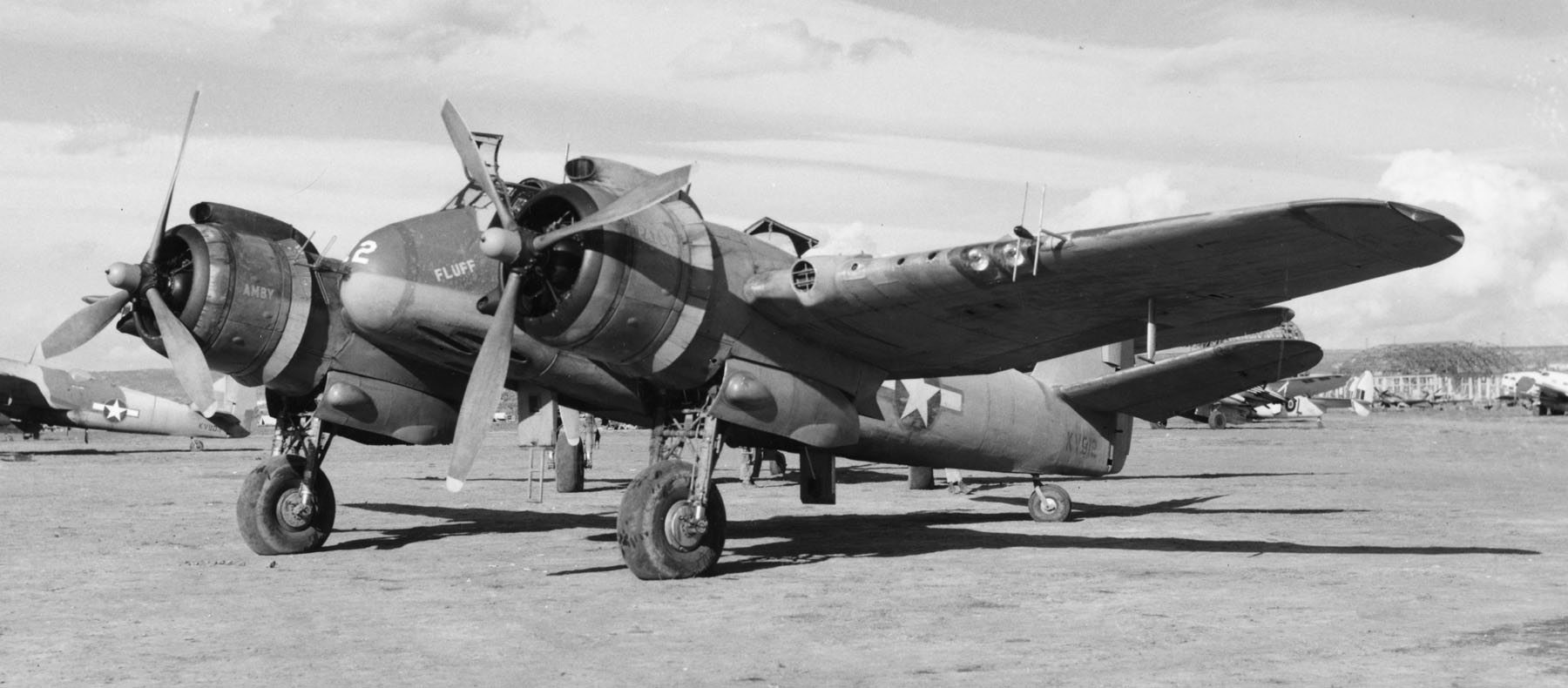
Pictured: a U.S. Army Air Forces Bristol Beaufighter Mk VIf night fighter of the exact type flown by the 415th Night Fighter Squadron over the Rhine Valley in November–December 1944, when the first "foo fighter" sightings were reported — not a photograph of the phenomenon itself. Despite extensive gun-camera and photographic equipment carried by Allied aircrews throughout the war, no authenticated photograph of a foo fighter has ever surfaced; the handful of images sometimes circulated online derive from a disputed 1975 Italian photo-history book and are not treated as genuine by researchers on either side of the debate.
Theoretical Alignment
The foo fighters file does not align comfortably with any single framework on this site's standard three-way scale, and forcing it to would misrepresent the case. The dominant real-world contenders — atmospheric electrical phenomena (St. Elmo's fire, ball lightning, ionized engine exhaust) and autokinetic visual illusion under wartime night-flying stress — are neither exotic (ETH/IDH) nor purely social-psychological delusion (the Psycho-Social score here reflects genuine perceptual physiology under documented flight conditions, not mass hysteria or hoaxing). The modest 15% Extraterrestrial figure reflects that no structured craft, occupant, or technological signature was ever reported by a single witness across hundreds of sightings — only lights. What keeps this case in this catalogue at all, rather than filed as fully solved, is that the leading conventional explanations, examined rigorously below, still fail to account for the full reported behavior: sustained, multi-minute pursuit that tracked an aircraft's own evasive turns at close range, something no known 1944-vintage atmospheric or psychological effect fully replicates.
Background
By late 1944, the air war over Western Europe had entered its final, most intense phase. Allied bomber and fighter forces, having secured air superiority following the June 1944 Normandy invasion and August's Operation Dragoon landings in southern France, were flying deep into German airspace nightly, harassing rail lines, airfields, and troop movements ahead of the advancing ground armies. Night-fighter squadrons like the 415th Night Fighter Squadron, a USAAF unit that had cut its teeth escorting the Sicily and Anzio landings before moving through Corsica to support the invasion of southern France, flew radar-equipped, British-built Bristol Beaufighter Mk VIf aircraft on intruder and interception missions after dark — a role for which the Beaufighter, though officially a stopgap while American-built Northrop P-61 Black Widows entered service, was well suited thanks to its heavy cannon armament and airborne-intercept radar set.
Night flying over enemy territory in winter 1944 was an inherently disorienting, high-stress occupation. Crews operated for hours in total darkness at altitudes where oxygen deprivation, cold, fatigue, and the constant threat of flak and enemy night fighters combined to produce genuine physiological strain — conditions the U.S. Navy would formally study beginning in February 1945, when it launched an investigation into the "degree of visual hallucinations experienced by aviators operating at night," a direct institutional response to reports like those coming out of the 415th. Scattered, less systematically documented reports of unexplained lights pacing aircraft had reportedly circulated among RAF Bomber Command crews over the Ruhr Valley and among Allied pilots in North Africa as early as 1942 and 1943, according to some historical accounts, though these earlier reports were never centrally catalogued or named at the time and are far less rigorously documented than what followed in the final months of 1944. It was the 415th Night Fighter Squadron, flying out of an airfield near Dijon, France, that would turn a scattered folk phenomenon into a formally reported, formally investigated, and ultimately internationally publicized military intelligence matter.
Complete Timeline
| Date | Event |
|---|---|
| 1942–1943 (context) | According to some historical accounts, scattered, less rigorously documented reports of unexplained lights pacing aircraft circulate among RAF Bomber Command crews over the Ruhr Valley and among Allied pilots in North Africa — retrospectively grouped with the "foo fighter" phenomenon, though never centrally catalogued or named at the time. |
| Late November 1944 | First formally reported incident. Over the Rhine Valley north of Strasbourg, a Beaufighter crew — pilot Lt. Edward Schlueter, radar operator Lt. Donald J. Meiers, and intelligence officer Lt. Fred B. Ringwald — reports eight to ten fiery orange lights in a row that maneuver and then vanish as the aircraft closes to intercept. |
| December 13, 1944 | Supreme Headquarters Allied Expeditionary Force (SHAEF) issues a press statement raising the possibility the lights are a "new German weapon," triggering the first wave of public alarm. |
| December 17, 1944 | Near Breisach, a 415th NFS crew reports five or six flashing red and green lights arranged in a "T" formation at roughly 800 feet, closing to about 1,000 feet before vanishing. |
| December 22, 1944 | Near Hagenau (Haguenau), two lights are reported rising from the ground, climbing to the aircraft's altitude, and holding formation on its tail for roughly two minutes — described by the crew as under "perfect control" — before peeling away. |
| Late December 1944 – early January 1945 | Lt. Samuel A. Krasney reports a wingless, cigar-shaped object glowing red, hovering just yards off his aircraft's wingtip for several minutes before disappearing. |
| January 1–2, 1945 | Associated Press war correspondent Robert C. Wilson, having visited the 415th NFS near Dijon, files the wire story that breaks the "foo fighters" nickname to the American public; it runs on the front page of the St. Louis Post-Dispatch and the New York Times, among many other papers. |
| January 2, 1945 | Maj. Gen. Clayton L. Bissell, the War Department's Assistant Chief of Staff for Intelligence (G-2), sends a message formally requesting an explanation for the "red balls of fire accompanying planes in flight termed 'Foo Fighters' by air personnel." |
| January 15, 1945 | Time magazine publishes "Science: Foo-Fighter," reporting pilot accounts alongside early theories ranging from flak-dazzle optical illusion to St. Elmo's fire to speculative German radio-controlled devices. |
| January 16, 1945 | XII Tactical Air Command formally requests further investigation, noting that aircrews are "agitated" and unable to explain what they are seeing. |
| January 30, 1945 | The 415th NFS logs a further sighting of amber lights, roughly a foot in diameter, at 2,000 feet, which vanish the moment the aircraft turns toward them. |
| Winter 1945 | Intelligence Officer Fred B. Ringwald compiles and forwards a consolidated report of fourteen separate 415th NFS incidents to XII Tactical Air Command intelligence staff, who reply in an internal memo: "We have encountered a phenomenon which we cannot explain." |
| March 1945 | The British Air Ministry, having reviewed the accumulated Allied reports, concludes in a memorandum later classified secret that "the whole matter still remains something of an enigma." The file would not be declassified for another 80 years. |
| April 15, 1945 | During a B-29 raid on Tokyo and Kawasaki, gunners of the 21st Bomber Command engage several "fireball" objects with .50-caliber fire; declassified tactical mission reports describe one disintegrating, another spiraling down before exploding, and a third passing through a searchlight beam trailing smoke. |
| 1944–1945 (ongoing) | XX and XXI Bomber Command B-29 crews over the China-Burma-India and Mariana Islands theaters log an estimated 300-plus "ball of fire" sightings from more than 140 individual crew members over the course of the Pacific air campaign. |
| 1948 | The newly formed Project Sign, the U.S. Air Force's first formal UAP investigative body, reviews the wartime foo fighter reports alongside the new postwar sighting wave as part of its broader mandate, treating them as a credible but unexplained historical precedent. |
| August 2, 2026 | Press coverage of newly reviewed Pentagon UAP files highlights the British Air Ministry's WWII-era foo fighter correspondence, by then declassified after eight decades, reaffirming that no wartime investigation on either side ever produced a confirmed technological explanation. |
The First Encounter: A Row of Lights Over the Rhine
The case's founding incident occurred on a late-November night in 1944, as a 415th Night Fighter Squadron Beaufighter crewed by Lt. Edward Schlueter, radar operator Lt. Donald J. Meiers, and intelligence officer Lt. Fred B. Ringwald flew a night intruder patrol over the Rhine Valley near Strasbourg. Ringwald, riding along to observe operational conditions firsthand, spotted what he first took for a formation of enemy aircraft: eight to ten lights, glowing a fiery orange, arranged roughly in a row against the night sky. Schlueter turned the Beaufighter to intercept. As the aircraft closed the distance, the lights maneuvered erratically and then, as had happened to other crews before this incident was ever formally reported, simply winked out. No radar contact was ever established with the objects, despite the aircraft's onboard airborne-intercept set being fully operational and used throughout the intercept attempt.
The crew's account, once filed through squadron intelligence channels, did not initially stand alone. Other 415th NFS crews began coming forward with similar stories from the same general period — some, per Ringwald's later consolidated report, reluctant to speak up for fear of being labeled unreliable or worse, "flak happy," a period slang term for combat fatigue. That reluctance itself is a data point worth weighing: professional military aviators, whose careers depended on a reputation for steady judgment under pressure, had genuine professional incentive to stay silent about anything that sounded like hysteria, yet dozens came forward anyway once it became clear they were not alone.
"Where There's Foo, There's Fire": Naming the Phenomenon
It was Donald Meiers, a Chicago native and avid reader of the daily Chicago Tribune comic strip Smokey Stover, who gave the phenomenon its lasting name. Smokey, the strip's cigar-chomping firefighter protagonist, was fond of the nonsense catchphrase "where there's foo, there's fire" — "foo" itself borrowed from the strip's own invented vocabulary of nonsense words. Meiers began referring to the mysterious lights as "foo fighters," and per most surviving 415th NFS members' own later accounts, credited Meiers specifically as the coiner. The name stuck immediately among the squadron's aircrews and, within weeks, in the American press nationally. Meiers himself, in one of the first detailed pilot accounts published, described the objects vividly: "I turned to starboard and two balls of fire turned with me… We were going 260 miles an hour and the balls were keeping up with us," adding that despite the alarming behavior, "they don't attack us. They just seem to follow us like will-o'-the-wisps."
December Escalation: Breisach, Hagenau, and Krasney's Cigar
Through December 1944, the pace and specificity of reports accelerated. On December 17, a crew near Breisach reported five or six flashing red and green lights arranged in what the crew described as a "T" shape, holding position at roughly 800 feet before closing to about 1,000 feet and then disappearing. Five days later, on December 22, came one of the case's most frequently cited single incidents: two lights were reported rising from the ground near an aircraft, climbing rapidly to match its altitude, and taking up position directly behind its tail for approximately two minutes — behavior the crew characterized, in the language later repeated in official intelligence summaries, as under "complete control" — before the lights "peeled away" and departed on their own.
Lt. Samuel A. Krasney contributed one of the period's more unusual accounts: a wingless, cigar-shaped object glowing red that held position just a few yards off his aircraft's wingtip for several minutes before vanishing — a description notably different in shape from the more common "ball of fire" reports, and one that later researchers have cited as evidence the "foo fighter" label may have been applied, not always precisely, to more than one distinct phenomenon. Other crews described the lights in as many as three distinct configurations by the time Meiers was interviewed at length in early January — some appearing as single balls of fire pacing a wingtip, others in clusters or rows, still others in the geometric "T" or line formations reported at Breisach.
Lt. Wallace Gould, another 415th NFS pilot, offered testimony notable for what it explicitly ruled out: "I thought it was some new form of jet propulsion plane after us," he said of his own encounter, "but we were very close to them and none of us saw any structure on the fire balls." Gould's account is frequently cited in this case's favor precisely because it comes from a witness whose first instinct was to reach for the most obvious conventional explanation available in late 1944 — a German jet aircraft, a real and terrifying new technology Allied aircrew had genuine reason to fear — and who reported that close-range observation ruled it out.
SHAEF's Alarm: "A New German Weapon"
On December 13, 1944, before the phenomenon had a settled name in wider circulation, Supreme Headquarters Allied Expeditionary Force issued a press release publicly floating the possibility that the reported lights represented a new German weapon — a statement that, given the genuine and well-founded Allied fear of German technological surprises late in the war (the V-1 and V-2 vengeance weapons were already an operational reality, and the Messerschmitt Me 262 jet fighter had entered combat that same year), was neither irresponsible nor far-fetched on its face. The statement supercharged both military and, once the story broke publicly weeks later, civilian anxiety, and it is the clearest evidence that the U.S. and Allied intelligence establishment took the phenomenon seriously as a potential hostile technology from a very early stage — not a case of an already-dismissive bureaucracy grudgingly logging a nuisance report, but of senior Allied command genuinely uncertain whether its own aircrews were being tracked and toyed with by a real enemy device.
The Story Breaks: Robert Wilson, the Associated Press, and Time Magazine
In late December 1944, Associated Press war correspondent Robert C. Wilson was dispatched to the 415th Night Fighter Squadron's base near Dijon, France specifically to investigate the growing internal buzz about "foo fighters." His resulting wire story, filed around New Year's, ran on the front page of the St. Louis Post-Dispatch on January 2, 1945 and was quickly picked up by the New York Times and papers across the country and, within days, internationally — including the British Daily Telegraph and the New York Herald Tribune. Wilson's story quoted Meiers at length describing the "three kinds" of foo fighters aircrews had by then catalogued, and it is this story, more than any single internal military report, that fixed the phenomenon and its name permanently in the public record.
Time magazine followed on January 15, 1945 with a short item titled "Science: Foo-Fighter," which situated the pilot testimony alongside the range of explanations then being floated: that the lights might be nothing more than optical illusions or afterimages produced by nearby flak bursts dazzling a pilot's night vision; that they might represent a form of St. Elmo's fire, the corona-discharge phenomenon long familiar to sailors and aviators around masts, propellers, and wingtips; or, more speculatively, that they were radio-controlled, electromagnetically induced, or magnetically guided devices intended to dazzle pilots, serve as flak-aiming points, jam radar, or disable engines. Time's own framing is notable for what it does not do: at no point does the magazine dismiss the reports as fabrication, fatigue, or hoax; every theory floated treats the underlying observations as real and in need of explanation.
Official Channels: The War Department, XII Tactical Air Command, and Ringwald's Fourteen Incidents
The public furor forced a formal response from Washington. On January 2, 1945, Maj. Gen. Clayton L. Bissell, the Army's Assistant Chief of Staff for Intelligence (G-2) — a decorated World War I flying ace who reported directly to Army Chief of Staff George C. Marshall — sent a formal message up the chain requesting a substantive explanation for the "red balls of fire accompanying planes in flight termed 'Foo Fighters' by air personnel." That a general officer of Bissell's seniority personally engaged with the matter within days of the story breaking is itself a measure of how seriously it was being taken at the highest levels of Allied military intelligence, not dismissed as a fringe curiosity.
On January 16, 1945, XII Tactical Air Command formally requested further field investigation, its own internal correspondence noting that aircrews were "agitated" by the continuing sightings and that existing explanations remained unsatisfactory. Over the following weeks, Fred B. Ringwald, the 415th's intelligence officer, compiled a consolidated report cataloguing fourteen separate incidents involving the squadron between December 1944 and early January 1945 and forwarded it up the chain. The reply that came back from XII Tactical Air Command's own intelligence staff has become one of the case's most frequently quoted lines precisely because of its institutional candor: "We have encountered a phenomenon which we cannot explain." No comparably blunt admission of official bafflement survives from any later wave of the U.S. Air Force's postwar UAP investigations, including Project Blue Book at its most forthcoming.
The British Air Ministry conducted a parallel review of the accumulated Allied reports and, in a memorandum dated March 1945 and subsequently classified secret, concluded that "the whole matter still remains something of an enigma." That file was not declassified for eighty years; when 2026 press coverage of newly reviewed Pentagon UAP files revisited the wartime record, journalists confirmed that no wartime or immediate postwar investigation, British or American, had ever produced a confirmed technological identification for the phenomenon — only an extended list of candidate explanations, none conclusively established.
The Pacific Theater: "Balls of Fire" Over Japan
While the European foo fighter reports were making headlines, an independently documented parallel phenomenon was unfolding half a world away. B-29 Superfortress crews of XX Bomber Command, flying long-range missions against Japan first from bases in China and eastern India under Operation Matterhorn and later from the Mariana Islands under XXI Bomber Command, began reporting what unit histories and tactical mission reports simply called "balls of fire" — luminous, orange-red spheres, described by different crews as anywhere from six inches to roughly half the width of a B-29's own fuselage in apparent diameter, that in some accounts simply hung motionless in the sky and in others actively paced the bombers.
The single most detailed documented Pacific incident occurred on April 15, 1945, during a major incendiary raid on Tokyo and Kawasaki. Declassified tactical mission reports from the raid describe gunners engaging four separate "fireball" objects with .50-caliber machine-gun fire: one is reported to have disintegrated outright; a second spiraled down in a controlled-looking descent before exploding; a third passed directly through a searchlight beam and left a visible trail of smoke; the fate of the fourth was not conclusively recorded. Across the full Pacific bombing campaign, officer-level tallies compiled at the time documented more than 300 individual "ball of fire" sightings reported by upwards of 140 separate B-29 crew members — a volume of independent testimony that dwarfs the European reports in raw witness count, even though the Pacific wave has historically received far less attention in popular accounts of the case.
Notably, Colonel William "Butch" Blanchard, who assumed command of the 40th Bombardment Group's B-29s on August 4, 1944 in the China-Burma-India theater under XX Bomber Command before later serving as an operations officer with XXI Bomber Command in the Marianas, commanded within the same organizational structure and general period in which these Pacific fireball sightings were being logged by crews under his command's parent formations. Blanchard would go on, in July 1947, to command Roswell Army Air Field and order the issuance of the famous "flying disc" press release in the Roswell incident — an organizational throughline connecting two of this catalogue's most significant cases that has gone largely unremarked in prior popular treatments of either.
The German and Japanese Side of the Sky
One of the case's most consequential pieces of circumstantial evidence is that the foo fighter phenomenon was not exclusively an Allied experience. Multiple historical accounts describe German Luftwaffe night-fighter and bomber crews reporting broadly similar unexplained lights during the same general period, with some accounts suggesting Japanese aircrew reported comparable phenomena as well. If accurate, that pattern is significant: it means the two opposing high commands each spent real intelligence resources investigating a phenomenon they each initially suspected the other side had developed — and each apparently concluded, independently and without coordination, that the objects were not their own technology. Postwar Allied interrogation of captured German scientists, engineers, and facilities failed to turn up hardware, blueprints, or testimony substantiating any operational German device matching the reported foo fighter behavior, a negative finding that has stood for eight decades.
The Vesco "Feuerball" Claim
That negative finding has not stopped a specific, enduring counter-narrative from persisting in popular UFO literature. Italian aeronautical engineer Renato Vesco, writing years after the war, claimed the foo fighters were in fact a real, deployed German secret weapon he called "Feuerball" ("fireball") — a small, unmanned, gas-jet-propelled device, allegedly operated by specialized SS technical units, designed to disorient Allied bomber crews and interfere with radar. Vesco's claim, examined in detail in this file's Conventional Explanation Candidate section below, has never been corroborated by any captured German document, any surviving hardware, or any other wartime engineer's independent testimony — researchers who have traced the claim's origins, including British UFO historian Kevin McClure, have found that its specific technical details appear to originate solely with Vesco himself, with no earlier or independent German source ever describing anything resembling it.
Postwar Reckoning: The British Air Ministry, Project Sign, and the Lost Report
The war's end did not produce a tidy resolution. According to multiple historical accounts, the U.S. Army Air Forces assembled a formal panel to investigate the accumulated foo fighter reports, but the panel's final report was subsequently lost, leaving no authoritative wartime document that definitively closes the case one way or the other. What survives instead is a paper trail of individual unit reports, press coverage, and the British Air Ministry's own "enigma" conclusion — institutional candor rather than institutional closure. When the U.S. Air Force stood up Project Sign in December 1947, the nation's first formal UAP investigative body, in the wake of the postwar "flying saucer" wave that followed Kenneth Arnold's June 1947 sighting, Sign's analysts reviewed the wartime foo fighter reports as part of establishing a longer historical baseline for the new phenomenon they had been tasked with assessing, treating the WWII wave as a credible, unresolved precedent rather than a solved curiosity. The case has continued to surface periodically ever since, cited by name in the Air Technical Intelligence Center's own February 1952 internal correspondence on the unrelated Wonsan-Sunchon incident as an acknowledged historical parallel that had "never been completely explained."
Circumstantial Evidence
- Hundreds of independent Allied aircrew, across two geographically and climatically unrelated theaters of war, reported a phenomenologically consistent core behavior — small, glowing, maneuverable lights pacing aircraft without overt hostile action — over a sustained multi-month period.
- Witnesses reported through formal unit intelligence channels, not to the press or the public, and several accounts describe crews' initial reluctance to report for fear of being seen as unreliable — a genuine professional disincentive to fabricate.
- Senior Allied military intelligence, up to and including Maj. Gen. Clayton Bissell at the War Department G-2 level, engaged with the matter directly and rapidly rather than dismissing it.
- The British Air Ministry conducted an independent parallel review and reached a strikingly similar conclusion of genuine bafflement, despite no coordination with the American investigation.
- According to multiple historical accounts, German aircrew reported a broadly similar phenomenon during the same period, and postwar interrogation of German engineers and facilities found no hardware or documentation substantiating any operational device that could account for it — evidence against, not for, a mundane man-made explanation from either side.
- The Pacific theater's independently logged volume — over 300 sightings from more than 140 B-29 crew members — corroborates the European reports without either theater's aircrew having any contact with the other's testimony at the time.
Key Witnesses
Lt. Edward Schlueter
Pilot of the Beaufighter crew whose late-November 1944 encounter over the Rhine Valley became the case's founding incident. Schlueter turned to intercept the row of orange lights reported by his intelligence officer, closing to a distance at which the objects maneuvered and vanished, with no radar contact ever established despite the aircraft's fully operational intercept set.
Lt. Donald J. Meiers
A Chicago native and the crew member credited by most surviving squadron members with coining the "foo fighters" name after the Smokey Stover comic strip. Meiers gave some of the most detailed and widely quoted pilot testimony in the entire case, describing balls of fire that matched his aircraft's 260 mph airspeed and characterizing their behavior as harmless but persistent, "like will-o'-the-wisps."
Capt. Fred B. Ringwald
Riding along on the founding November 1944 mission specifically to observe operational conditions, Ringwald was the first to spot the row of lights that opened the case. As squadron intelligence officer he subsequently compiled and forwarded the consolidated report of fourteen separate incidents that prompted XII Tactical Air Command's candid admission that the phenomenon could not be explained — the case's most substantial piece of institutional, contemporaneously filed documentation.
Lt. Wallace Gould
Gould's account is notable for explicitly ruling out the era's most obvious conventional suspicion — a German jet aircraft — based on close-range observation: "we were very close to them and none of us saw any structure on the fire balls." His testimony is frequently cited as evidence that at least some witnesses were actively working to identify a mundane cause rather than reaching for the most sensational explanation available.
Lt. Samuel A. Krasney
Reported one of the case's more distinctive encounters: a wingless, cigar-shaped object glowing red that held position just yards off his wingtip for several minutes before disappearing — a morphology notably different from the more common spherical "ball of fire" reports, cited by later researchers as evidence the "foo fighter" label may have covered more than one underlying phenomenon.
Capt. Harold F. Augspurger
A combat-proven Beaufighter pilot who personally shot down a Heinkel He 111 carrying German staff officers in September 1944, Augspurger commanded the squadron throughout the entire foo fighter wave, giving institutional weight to reports filed by pilots serving directly under him. His squadron's Beaufighter, preserved and marked with his aircraft's identity, remains on public display at the National Museum of the United States Air Force.
Maj. Gen. Clayton L. Bissell
A decorated World War I flying ace who by 1944 served as General George C. Marshall's senior intelligence officer, Bissell personally sent the January 2, 1945 War Department message formally demanding an explanation for the foo fighter reports — direct evidence that the matter had reached the most senior levels of Allied military intelligence within days of the public story breaking, rather than being dismissed as a low-level curiosity.
The Five Observables Assessment
The Five Observables framework, developed by former AATIP director Luis Elizondo, is applied here to the performance characteristics reported across the foo fighter wave:
Assessment: Of the five, only Instant Acceleration is rated present, based on the repeated, consistent description of objects vanishing or departing abruptly — most vividly in the December 22, 1944 Hagenau incident, in which two lights that had held formation on an aircraft's tail for roughly two minutes "peeled away" and departed under what the crew called complete control. Anti-Gravity Lift is rated absent because no witness across the entire wave ever reported a structured craft exhibiting a visible lift mechanism — only unstructured lights, a point Wallace Gould's own testimony makes explicit. Hypersonic Velocity is rated absent: every credible speed estimate places the objects matching or only modestly exceeding contemporary aircraft speeds (roughly 250–300 mph in Meiers's own account), not the orders-of-magnitude excess associated with modern hypersonic UAP claims. Low Observability is rated absent, since the defining characteristic of every report is that the objects were brightly, conspicuously luminous — the opposite of stealthy. Trans-Medium travel is rated absent, as no witness in either theater ever reported a transition between air, water, or any other medium. Taken together, the Five Observables framework — designed primarily around modern, sensor-corroborated UAP encounters — classifies this case more as a large-scale Nocturnal Light (NL) wave than as an "advanced craft" encounter, which is itself a meaningful and honest finding rather than a shortcoming of the case.
Evidence Assessment
Supporting Anomalous Origin
- Consistent core behavior — sustained, close-range pursuit that tracked an aircraft's own evasive maneuvers — was independently reported by hundreds of trained military aircrew across two unrelated theaters of war.
- Multiple witnesses, including Wallace Gould, explicitly described ruling out the most obvious period-appropriate conventional suspicion (a German jet aircraft) based on close-range observation.
- Direct machine-gun and cannon fire, brought to bear on the objects on multiple documented occasions in both theaters, produced no recovered wreckage or confirmed kill.
- Senior Allied intelligence officers on both the American and British sides investigated the matter seriously and reached genuine, candidly documented conclusions of bafflement rather than dismissing it.
- According to multiple accounts, German aircrew independently reported a comparable phenomenon, and no postwar investigation on either side ever substantiated a secret device belonging to any nation involved in the war.
- The phenomenon's formal reporting chain — unit intelligence officers, tactical air command, War Department G-2 — is unusually institutional and contemporaneous compared to most UAP cases of any era.
Supporting Conventional Explanation
- No radar contact was established with the objects on repeated occasions despite fully operational airborne-intercept equipment, consistent with a diffuse atmospheric-electrical phenomenon rather than a solid craft.
- No physical evidence, wreckage, or recovered material of any kind has ever been produced in eighty years, despite direct weapons fire against the objects.
- The reporting period coincides precisely with documented, extreme physiological and psychological strain among night-flying combat aircrew, a strain serious enough that the U.S. Navy launched a formal February 1945 study into night-aviator visual hallucination specifically in response to reports of this kind.
- Witness descriptions vary meaningfully in reported shape (spherical balls, "T"-shaped formations, a wingless cigar), a pattern more consistent with several distinct mundane phenomena being folded under one popular label than with a single, consistent craft.
- The one specific, fully worked-out secret-weapon explanation ever proposed — Renato Vesco's postwar "Feuerball" claim — has never been corroborated by any captured document, hardware, or independent witness in eighty years of subsequent research.
Why "Credible"
This file is rated Credible at 62/100. The rating reflects a case built on an unusually broad and unusually well-credentialed evidentiary foundation — hundreds of independent, professionally trained military witnesses, filing through formal institutional channels across two unrelated theaters of war, corroborated by genuine, contemporaneously documented bafflement at the highest levels of both American and British military intelligence — which keeps the score well above cases resting on a single incident or a single witness. It falls short of this catalogue's higher-scoring files, however, because the foo fighters produced no instrumented corroboration of any kind: no radar return, no gun-camera frame, no recovered physical trace, despite direct weapons fire against the objects on multiple occasions. That absence, combined with a real and still-unresolved menu of partial conventional explanations — atmospheric electrical phenomena, misidentified ordnance and exhaust, and documented wartime perceptual physiology — each of which plausibly accounts for a meaningful share of individual reports without cleanly accounting for the sustained, maneuvering, multi-witness-corroborated behavior described in the case's strongest incidents, is exactly the kind of genuinely unresolved tension between strong testimony and weak physical evidence that this catalogue rates as credible rather than either verified or debunked. It is worth stating plainly what makes this file historically distinct from nearly everything else in this catalogue: it predates the "flying saucer" era, the extraterrestrial-hypothesis framing that has dominated UAP discourse since 1947, and even the term "UFO" itself by years, making it one of the very few cases here that can be assessed almost entirely on its own contemporaneous military-intelligence record rather than through the lens of everything that came after.
Sensor & Instrumentation Detection Profile
The foo fighter wave is, with rare exception, a pure human-observation case. Airborne intercept (AI) radar carried aboard the 415th Night Fighter Squadron's Beaufighters and later Northrop P-61 Black Widows was designed to detect metallic aircraft-sized targets, and several crews reported that the lights produced no corresponding radar return at all — itself a data point cited on both sides of the case, either as evidence the objects had no solid mass, or simply as a sign the operators were watching a genuine atmospheric effect too diffuse to reflect a radar pulse. No gun-camera footage of a foo fighter has ever been recovered or authenticated, despite gun cameras being standard equipment on many Allied fighters of the period, and despite USAAF B-29 gunners over Japan directly engaging several objects with .50-caliber fire without producing a single surviving frame of film. The absence of any instrumented detection — radar, camera, or otherwise — is one of the case's genuine evidentiary weaknesses relative to more recent, sensor-corroborated UAP encounters.
Environmental & Geospatial Context
The European sightings clustered over the Rhine Valley and Alsace-Lorraine region during the harsh winter of 1944–45, as Allied forces pushed toward the German frontier following Operation Dragoon and the liberation of southern France — a season and geography with genuine potential for corona-discharge and static-electrical phenomena around aircraft flying through cold, moisture-laden winter air at altitude. The Pacific sightings occurred in a completely different environment: high-altitude, sub-freezing conditions aboard pressurized B-29 Superfortresses on long-range incendiary and precision-bombing runs to Japan from bases in the Mariana Islands and, earlier in the war, China and eastern India under Operation Matterhorn. That the same basic light phenomenon was independently reported across two climatically and geographically unrelated theaters, by aircrew with no contact with one another, is one of the case's most-cited corroborating details.
Observer Credibility & Occupational Profile
The witness pool is unusually deep and unusually credentialed for a UAP case of any era: trained USAAF and RAF pilots, radar/intercept operators, and squadron intelligence officers, many of them combat veterans with kill credits against German aircraft, reporting through formal unit-level intelligence channels rather than to the press or the public. Fred B. Ringwald's consolidated report of fourteen separate incidents, forwarded up the chain to XII Tactical Air Command, represents exactly the kind of institutional, contemporaneously filed documentation that is rare in UAP history generally and essentially unique for an event this early. On the Pacific side, the sheer volume — documented officer-level tallies of some 300 "ball of fire" sightings from more than 140 individual B-29 crew members — makes simple mass fabrication implausible, even as it leaves open which conventional or combination of conventional explanations best accounts for that volume.
Physical & Material Assays
No physical trace, wreckage, or recovered material of any kind has ever been connected to a foo fighter sighting, despite direct machine-gun and cannon fire being brought to bear on the objects on multiple documented occasions in both theaters. This absence is treated in detail in the Material Analysis section below.
Historical Precedents & Archive Matches
The foo fighters occupy a unique historical position: they are frequently cited by later UAP investigators, including Edward J. Ruppelt's Project Blue Book and its 1948 predecessor Project Sign, as the earliest large-scale, officially catalogued aerial anomaly wave, predating Kenneth Arnold's founding 1947 sighting and the term "flying saucer" itself by roughly three years. The 1952 Wonsan-Sunchon UFO Incident file explicitly invoked the WWII "fireball" phenomenon by name in a February 1952 Air Technical Intelligence Center message as a candidate explanation for Korean War-era radar/visual encounters, showing that Air Force intelligence officers themselves treated the foo fighters as an unresolved historical reference point less than a decade later. A further, previously unremarked institutional thread connects this file to Roswell: Colonel William "Butch" Blanchard, who as Roswell Army Air Field's base commander would order the July 1947 "flying disc" press release, commanded the 40th Bombardment Group's B-29s in the China-Burma-India theater during 1944–45, the same organizational period and general theater in which Pacific "ball of fire" sightings were being logged by XX Bomber Command crews.
Material Analysis
No physical debris, trace residue, or recoverable artifact connected to a foo fighter sighting has ever been produced, examined, or catalogued — a genuinely notable absence given that Allied aircrews in both theaters directly fired on the objects with .50-caliber machine guns and, in the case of Allied fighter aircraft equipped with them, 20mm cannon, on multiple separate documented occasions. The April 15, 1945 Tokyo/Kawasaki raid produced the case's most specific reported "hits" — one object described as disintegrating, another spiraling down before exploding — yet no gunner's claim was ever corroborated by recovered wreckage, a photograph, or any physical fragment, despite the raid occurring over territory that would be under Allied control within months. Postwar Allied technical intelligence teams that swept German research facilities, interrogated captured Luftwaffe engineers, and reviewed captured technical documents as part of the broader effort to catalogue Nazi advanced-weapons programs (the same effort that identified the V-1, V-2, and Me 262 jet programs) found no hardware, blueprint, or corroborating testimony describing any device matching the reported foo fighter behavior. That absence of evidence is not, on its own, evidence of an exotic origin — it is equally consistent with the objects never having been solid material objects in the first place, which is precisely the direction the leading conventional explanations point.
Supporting Non-Terrestrial or Unexplained Origin
- Direct, repeated weapons fire from trained gunners in both theaters produced no confirmed kill, no recovered debris, and no photographic evidence of impact damage — consistent with objects that were not conventional solid aircraft.
- Postwar technical intelligence sweeps of German facilities, thorough enough to identify the V-1, V-2, and Me 262 programs, found nothing matching the reported phenomenon.
Supporting Terrestrial/Natural Origin
- The complete absence of any physical trace after eighty years and multiple direct engagement attempts is also fully consistent with an atmospheric-electrical or plasma phenomenon possessing no solid mass to leave a trace or to be damaged by gunfire in the first place.
- No radar return was obtained on repeated intercept attempts by fully functional airborne-intercept radar, a further indicator against a solid, metallic target.
The Conventional Explanation Candidate
Unlike many cases in this catalogue, the foo fighter wave was subjected to real-time, contemporaneous conventional-explanation analysis by the very personnel investigating it — and even eighty years later, historians and skeptical researchers have never converged on one single account. What follows are the five genuinely distinct explanations that have accumulated the most serious historical and technical attention, evaluated individually rather than compressed into a single verdict, since the honest answer is almost certainly that more than one of them is correct for different individual reports folded under the same popular label.
St. Elmo's Fire / Corona Discharge
InconclusiveA well-understood atmospheric-electrical phenomenon in which a strong electric field around an aircraft (a mast, wingtip, or propeller in older nautical and aviation contexts) ionizes surrounding air into a visible glow, St. Elmo's fire was one of the very first explanations proposed in 1945 and remains a serious candidate, particularly for reports of steady, wingtip-hugging light. Its central weakness is one pilots themselves raised at the time: St. Elmo's fire characteristically appears as a bluish-violet glow directly on an aircraft's own extremities, not as a discrete, colored, orange or red sphere holding station at a distance and independently maneuvering — a distinction several 415th NFS witnesses, familiar with genuine St. Elmo's fire from ordinary flying, explicitly drew at the time.
Ball Lightning & Atmospheric Plasma
InconclusiveA related but distinct proposal holds that the lights were a form of ball lightning or free-floating atmospheric plasma — ionized gas capable, under some modern physical models, of persisting as a discrete glowing sphere for longer than a simple electrical discharge. A 2020 physics paper by Chris Allen Broka specifically proposed that an aircraft's own radar could have ionized its hot engine exhaust into a self-sustaining, radar-illuminated plasma trailing the aircraft, a mechanism Broka found physically plausible in principle, though requiring field strengths at the high end of what period airborne radar could plausibly generate. Ball lightning's own natural behavior — typically short-lived, erratic, and poorly understood even today — struggles to account for objects that reportedly held tight, sustained formation through an aircraft's own banking evasive turns for minutes at a time, as at Hagenau on December 22, 1944.
Misidentified Flares, Exhaust & Aircraft
Plausible (partial) Inconclusive (complete)Ordinary wartime aerial ordnance and equipment — ground and air-dropped flares, searchlights, the glowing exhaust of Germany's new Me 262 and Me 163 jet and rocket fighters, or simply other aircraft misjudged at night — almost certainly accounts for some meaningful share of the total reports, and period investigators seriously entertained each candidate. The 415th NFS crews themselves, however, explicitly ruled decoy flares out as familiar, easily distinguished equipment; the Me 163 Komet's few-minutes fuel endurance and total lack of night-flying equipment made it operationally incapable of the sustained pursuits described; and the Me 262, while a genuine and terrifying new threat, did not fly night intercept-style pursuit profiles matching the reported behavior over the relevant period and territory. This candidate is plausible as a partial explanation for a subset of the less-detailed reports, but inconclusive as an account of the case's best-documented, most specific incidents.
Autokinetic Illusion & Combat Fatigue
Plausible (partial) Inconclusive (complete)Folklorist and WWII aviation historian Jeffery A. Lindell's peer-reviewed analysis in Skeptic magazine draws on a genuine, well-documented perceptual physiology finding: the autokinetic effect, in which a stationary point of light against a featureless dark background appears to an observer to move erratically, an illusion the U.S. Navy formally began studying in February 1945 specifically because of its serious operational impact on night aviators, further compounded by even moderate alcohol consumption 48–72 hours before a night mission. This candidate plausibly explains a real share of ambiguous, single-witness, short-duration reports of drifting or "dancing" lights. It is markedly weaker against the case's best-corroborated incidents — reports independently confirmed by multiple crew members aboard the same aircraft, describing lights that tracked an aircraft's own active evasive maneuvers rather than merely appearing to drift on their own, a distinction the autokinetic effect, a purely subjective illusion affecting an individual observer's perception of a genuinely stationary light, cannot produce.
German "Feuerball" Secret Weapon (Vesco Theory)
Implausible / UnprovenPostwar author Renato Vesco's claim that the foo fighters were a real, SS-operated German device called "Feuerball" remains this case's most sensational specific explanation and its weakest. No wartime German document, no captured hardware, no independent engineer's corroborating testimony, and no other historian's independent research has ever substantiated the device's existence in the eighty years since Vesco first published the claim; skeptical historian Kevin McClure's detailed review found that even the technical particulars Vesco attributes to "Feuerball" appear to originate solely with Vesco's own writing, unconnected to any other wartime or postwar German source. It is included in this file's assessment not because it is credible, but because it remains the most-repeated specific "secret weapon" claim in popular treatments of the case and deserves an explicit, on-the-record rejection rather than a silent omission.
Related Cases
Confirmed Documents & Official Records
The record group covering wartime Army Air Forces A-2 (intelligence) files and their postwar USAF successor organization, the institutional home for period documentation of matters like the foo fighter reports.
The Air Force's official postwar UFO investigation record group; Project Sign, Blue Book's 1948 predecessor, explicitly reviewed the wartime foo fighter reports as part of its founding historical review.
The UK government's public archive of Ministry of Defence and Air Ministry UFO-related material, the eventual home of the March 1945 Air Ministry "enigma" memorandum on the foo fighter reports.
Further Reading — Recommended Literature
UFOs Before Roswell: European Foo-Fighters 1940–1945
The most detailed dedicated study of the European foo fighter wave, examining the full range of proposed explanations — including the postwar "secret Nazi weapon" claims by name — in depth; foreword by Sean Cahill, a witness in the 2004 "Tic Tac" Navy encounter.
The UFOs of World War II: Foo Fighters
A general-audience overview spanning both the European and Pacific reports, covering aircrew testimony, the military's investigative response, and the phenomenon's later influence on Cold War-era UFO reporting.
Man-Made UFOs 1944–1994: 50 Years of Suppression
The primary published source for the "Feuerball" secret-weapon claim examined and rejected in this file's Conventional Explanation Candidate section; included here for readers who want to evaluate Vesco's own original argument directly rather than only a secondhand summary of it.
The UFO Encyclopedia, 4th Ed.
The definitive UFO reference work, situating the foo fighter wave within the broader documented history of military aviator UAP encounters that precede and follow it.
Watch the Skies!: A Chronicle of the Flying Saucer Myth
A rigorously skeptical, well-documented history of American UFO cases that traces how the wartime foo fighter reports fed directly into the postwar "flying saucer" mythology, useful as a counterweight to more credulous treatments.
Essential Viewing
Dedicated video coverage of this specific case is thin outside of History Channel-branded properties, which this site's sourcing policy excludes. The single video below, from an established digital publisher, was verified via the YouTube oEmbed API to confirm its title, channel, and availability before inclusion.
Sources
- History.com. "Mysterious UFOs Seen by WWII Airman Still Unexplained." history.com
- Time Magazine Archive. "Science: Foo-Fighter," January 15, 1945. time.com
- Task & Purpose. "The World War II Story of the First Time US Military Pilots Encountered UFOs." taskandpurpose.com
- Historic Mysteries. "What or Who Were The Foo Fighters? Strange WWII Lights In The Sky." historicmysteries.com
- Smithsonian Magazine. "What Were the Mysterious 'Foo Fighters' Sighted by WWII Night Flyers?" smithsonianmag.com
- War History Online. "Foo Fighters Learn to Fly: UFOs of WWII." warhistoryonline.com
- Project 1947. "UFO Reports and Official Documents, 1945" (declassified wartime message excerpts). project1947.com
- Heidner, Nela. "Pentagon UFO Files: What Role Germany Plays." Euronews, August 2, 2026. euronews.com
- The Debrief. "The Foo Fighters: Today's Pilots' Encounters with UAP Are Nothing New." thedebrief.org
- National Archives (NARA). Record Group 341: Records of Headquarters United States Air Force (Air Staff). archives.gov
- National Archives (NARA). Project Blue Book & U.S. Air Force UFO Investigation Records. archives.gov
- The National Archives (UK). "UFO Reports." nationalarchives.gov.uk
- Federal Bureau of Investigation. FBI Vault — declassified UFO-related records search. vault.fbi.gov
- McClure, Kevin. "The Nazi UFO Mythos: Renato Vesco, Feuerball and Kugelblitz." Magonia, 2009. magonia.haaan.com
- Broka, Chris Allen. "Foo Fighters and Microwave Oven Plasma Balls," April 13, 2020. arxiv.org
- Lindell, Jeffery A. "The Real Foo Fighters: A Historical and Physiological Perspective on a World War II Aviation Mystery." Skeptic, Vol. 17, No. 2, pp. 38–43. gale.com
- National Museum of the United States Air Force. "Bristol Beaufighter" fact sheet. nationalmuseum.af.mil
- Wikimedia Commons. "File: 415th Night Fighter Squadron - Bristol Beaufighter.jpg" (U.S. Army Air Forces official photograph, public domain). commons.wikimedia.org
- Wikipedia. "415th Special Operations Squadron" (unit lineage and history). en.wikipedia.org
- Wikipedia. "Foo fighter." en.wikipedia.org
See something inaccurate? Have additional information or sources?
Suggest an Edit →Last Updated: August 2026