
The Trancas Case
On the night of October 21, 1963, sisters Argentina Moreno de Chávez and Yolié Moreno de Colotti, alerted by their teenage maid Dora Guzmán, stepped outside the family's Finca Santa Teresa near Trancas, Tucumán Province, Argentina, and watched as much as forty-five minutes of multiple lighted objects descend along the embankment of the General Belgrano Railway roughly thirty meters from the house. Before the night was over their parents, Antonio Moreno and Teresa Kairuz de Moreno, and their ranch foreman had joined them as witnesses from inside the darkened house, while neighboring farmer Francisco Tropiano independently watched brilliant lights over the same rail sector from his own property, and Trancas physician Dr. René Vera reported a further, separate mass of lights over the tracks the following night. Where the nearest object had hovered, investigators the next morning found a scorched, roughly circular impression in the earth and, scattered across a wide radius, thousands of small white spheres. A 2.343-gram sample was delivered to the Instituto de Ingeniería Química at the National University of Tucumán, where chemist Dr. Walter Gonzalo Tell determined the material to be 96.48% calcium carbonate and 3.51% potassium carbonate — an entirely mundane compound, but one genuinely subjected to disinterested, credentialed laboratory analysis rather than simply asserted. Widely cited in the global ufology literature as a "super-classic" case — one whose broad strokes reportedly reached Steven Spielberg's production team for Close Encounters of the Third Kind — Trancas has also drawn a serious, still-debated conventional rival: researcher Roberto Banchs's argument that the family witnessed a nighttime Argentine Army convoy, complete with searchlights, moving along the same rail corridor during a genuine, dated anti-guerrilla training exercise that week — a hypothesis itself disputed by fellow researcher Capt. Daniel Perisse. Nine named witnesses, real institutional chemistry, and a serious unresolved conventional counter-explanation make Trancas one of the clearest examples in this catalogue of a case that is genuinely strong on testimony and genuinely contested on interpretation at the same time.
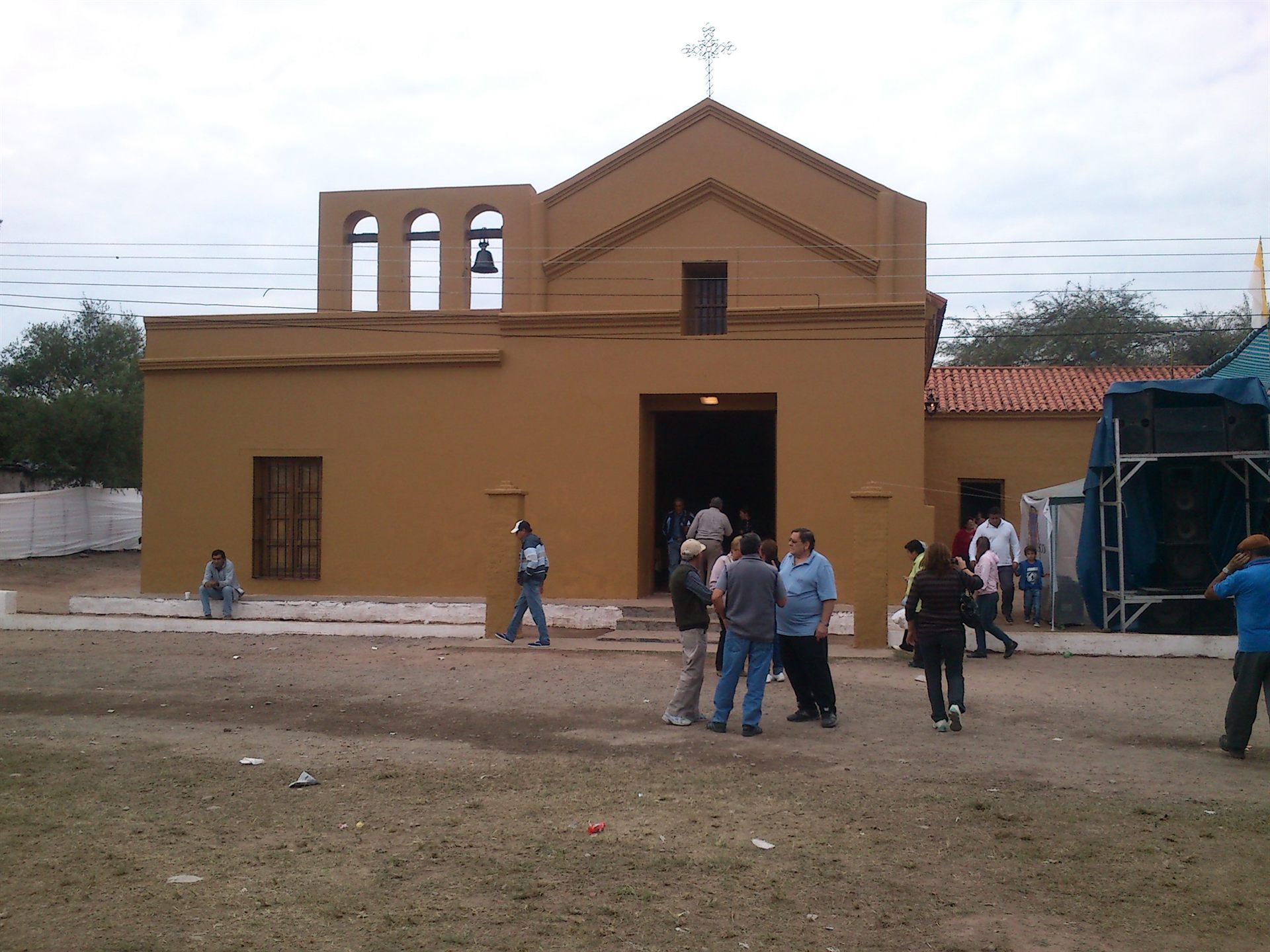
Pictured: the Church of the Sacred Heart, a National Historic Monument in the town center of Trancas, Tucumán Province — not a photograph of the Moreno family's Finca Santa Teresa or the General Belgrano rail embankment roughly three kilometers outside town where the October 21, 1963 sighting actually took place. No public-domain or rights-clear photograph of the finca itself, the rail crossing, or any of the Moreno family is known to exist; this image instead documents the town whose name the case has carried in global ufology literature for more than six decades.
Theoretical Alignment
Trancas earns a real, if middling, Extraterrestrial Hypothesis score on the strength of its multi-witness corroboration and lab-tested physical trace — both genuinely present, unlike many single-witness "classic" cases — but that score is capped by the mundane composition of the material itself and by a documented, dated conventional rival explanation. The Psycho-Social score is comparatively high for the opposite reason from most cases in this catalogue: not because the witnesses were an untrained crowd prone to a single shared misperception, but because the case's own primary investigator flagged real differences in narrative elaboration between the three sisters, and because the story's most extraordinary later details — dozens of humanoid silhouettes, a projected "hologram" — appear inconsistently across retellings in a way that is a documented pattern of testimonial embellishment over six decades of retelling and international press attention, discussed at length below.
Background
In October 1963, sisters Argentina Moreno de Chávez and Yolié Moreno de Colotti traveled with their young children from Rosario, in Santa Fe Province, to visit their parents, Antonio Moreno and Teresa Kairuz de Moreno, at the family's Finca Santa Teresa, a rural property roughly three kilometers outside the small town of Trancas in far northern Tucumán Province. A third sister, Yolanda Moreno, was already at the family home, along with the household's teenage domestic employee, Dora Guzmán. The finca sat along the meter-gauge main line of the General Belgrano Railway, which ran north from the provincial capital toward Salta and Jujuy, separated from the house by an open pea field and a wire boundary fence.
Argentina in October 1963 was in the final weeks of a fragile, closely watched electoral transition — the military-controlled government of General Juan Carlos Onganía's predecessors was preparing to hand power to a civilian president, Arturo Illia, who would be inaugurated that same month — and the country's armed forces maintained an active internal-security posture in its northern provinces that would, within a few years, harden further into the counter-guerrilla campaigns of the mid-1960s. That posture is directly relevant to this case: as discussed at length in the Conventional Explanation Candidate section below, researcher Roberto Banchs later documented genuine Argentine Army training exercises active in the wider Tucumán–Salta rail corridor during the same week in October 1963, a real historical backdrop this file treats as a serious, if ultimately contested, candidate explanation rather than a coincidence to be dismissed outright.
The institution that would eventually test the case's physical evidence, the National University of Tucumán, was already a well-established public university by 1963, founded in 1914 in San Miguel de Tucumán and organized, by the time of the sighting, into more than a dozen schools spanning engineering, the natural sciences, medicine, and agronomy. Its Instituto de Ingeniería Química — the Institute of Chemical Engineering, housed within the university's school of exact sciences and technology — maintained a working chemical-industrial laboratory of the kind any regional industry (Tucumán's economy has long centered on sugar-cane processing, a chemistry-intensive agricultural industry) would have had reason to rely on for routine materials testing. That institutional infrastructure, ordinary as it was, is precisely what made it possible for a rural family's claim to be checked against a real, disinterested chemical measurement within 48 hours, a level of institutional access many contemporaneous rural UFO reports elsewhere in the world simply did not have.
Complete Timeline
| Date | Event |
|---|---|
| October 17–26, 1963 | Per researcher Roberto Banchs's later archival research, Argentine Army units conduct anti-guerrilla training exercises in the wider Tucumán–Salta rail corridor during this window — the period cited in his subsequent conventional-explanation hypothesis. |
| October 21, 1963, ~7:00 PM | The private generator supplying Finca Santa Teresa fails, leaving the house without electric light for the evening. |
| ~9:30–10:00 PM | Dora Guzmán alerts the Moreno sisters to unusual noises and powerful lights near the rail-line fence roughly 30 meters from the house. |
| Shortly after | Argentina, Yolié, and Dora go out to the yard and observe as many as six lighted objects along the embankment; the nearest, a disc-shaped object with a domed upper section and visible rivets, descends toward the tracks amid a white mist. |
| During the sighting | Argentina directs a flashlight at the nearest object; witnesses report its light shifting from white to violet and a beam or wave of heat reaching the group, which they say caused Dora's burns and forced a retreat toward the house. |
| Same period | Parents Antonio Moreno and Teresa Kairuz de Moreno, along with foreman José Acosta, are drawn outside or to the windows by the commotion and become witnesses in their own right; the household reports the interior temperature climbing sharply and a lingering sulfur-like odor. |
| ~10:00–10:15 PM | Neighboring farmer Francisco Tropiano, on his own property nearby, independently observes intense lights over the same sector of rail line. |
| ~10:15–10:40 PM | The lights and objects depart; the direct sighting, by the family's own estimate, lasted approximately 40–45 minutes in total. |
| October 22, 1963 (morning) | The family reports the incident to Trancas police; investigators examine the site and find a scorched, roughly circular ground impression and thousands of small white spheres scattered across a wide radius. |
| Night of October 22–23, 1963 | Dr. René Vera, a physician at the Trancas hospital, independently reports observing a large number of similar lights — by his own account, dozens — over the same rail sector. |
| October 22–23, 1963 | A 2.343-gram sample of the white residue is delivered to the Instituto de Ingeniería Química at the National University of Tucumán. |
| October 23, 1963 | Dr. Walter Gonzalo Tell completes his chemical analysis, reporting the sample as 96.48% calcium carbonate and 3.51% potassium carbonate. |
| Late 1963 | Argentine Navy officer Capt. Omar Roque Pagani, working through the Navy's UFO-analysis desk, conducts an early official inquiry into the case, one of the first documented instances of Argentine military engagement with a civilian UFO report. |
| 1963–1976 | Civilian researchers, chiefly Dr. Oscar A. Galíndez, compile press clippings, correspondence, and military and scientific documents into what later becomes known as the "Trancas File." |
| November/December 1974 | Galíndez publishes "Los asombrosos fenómenos de Trancas" in OVNIS magazine — the account that achieved the widest international distribution and remains the case's most cited early synthesis. |
| 1977 | Steven Spielberg's Close Encounters of the Third Kind is released; Yolié Moreno de Colotti later stated she personally authorized elements of the family's account to be drawn on for the film, cementing the case's international profile. |
| Late 1980s–1990 | Roberto Banchs publishes his conventional-explanation study, arguing the family witnessed a nighttime Army convoy and searchlights during the documented October 1963 exercises. |
| 1990 | Capt. Daniel Perisse publishes a rebuttal, disputing that the specific regiments active in the area that week possessed the mechanized or armored equipment Banchs's hypothesis requires. |
| 2005 | Researcher Guillermo Daniel Giménez, director of Planeta UFO, publishes a fresh documentary review of the case's full archival record. |
| 2018–2023 | Yolié Moreno de Colotti, by then the last surviving direct adult witness, gives further interviews to Tucumán press reaffirming her account in old age. |
| October 2023 | Tucumán newspapers mark the case's 60th anniversary with retrospective coverage, reaffirming its status as one of Argentina's most cited UFO cases. |
The Power Fails, Then the Lights Appear
By the family's own account, the evening of October 21, 1963 began with an entirely mundane inconvenience: the private generator that supplied electricity to Finca Santa Teresa failed sometime around seven o'clock, leaving the household to settle in by candlelight or simply to prepare for an early night. Argentina Moreno de Chávez, 28, and her younger sister Yolié Moreno de Colotti had arrived that day from Rosario with their small children to visit their parents and their sister Yolanda Moreno, who lived at the finca. It was the household's teenage domestic employee, Dora Guzmán, 15, who first noticed something wrong: unusual noises outside, and a set of powerful, unfamiliar lights near the fence line that separated the property's pea field from the General Belgrano rail embankment roughly 30 meters away. She called the sisters over.
What the three women found when they stepped into the yard was, by every surviving account, immediately and obviously abnormal. Multiple lighted objects — described across different retellings as numbering between five and six — were positioned at intervals along or above the rail line, switching on and off, some apparently hovering close to the ground. The nearest and most prominent, positioned closest to the fence, descended lower than the others: a disc-shaped object, reported in various accounts as roughly eight meters long and three meters high, its surface metallic and marked with what witnesses described as large rivets or seams around a domed upper section, several small rectangular apertures or windows glowing with intense white light. A billowing, thick white mist or vapor was reported issuing from beneath it as it settled nearer the ground.
The Light Beam and Dora's Burns
What escalated the sighting from a strange light in the distance to a close, personally threatening encounter was, by the witnesses' own account, a reaction to their own actions. Argentina, according to the most consistent element across the family's retellings, aimed a handheld flashlight at the nearest object. In response, witnesses reported, the object's own light abruptly shifted in color — from white to a deep violet — and something the witnesses described as a beam, wave, or discharge of light and heat reached across the intervening distance toward the group. Some versions of the account describe this as a laser-like "solid light" passing through or around objects without being blocked; other versions describe simple, intense radiant heat. What is consistent across every version of the story is the outcome: Dora Guzmán suffered burns to her face, arms, and legs, later characterized in press accounts as first- and second-degree, and was treated the following day at the Trancas hospital. The sudden heat, by the family's account, was severe enough to drive the entire group back toward the house at a run.
The Household Joins: Parents, Grandchildren, and a Rising Temperature Indoors
The commotion outside did not stay confined to the three sisters and their maid for long. Antonio Moreno, 72, and Teresa Kairuz de Moreno, 63, along with the ranch's foreman, José Acosta, were drawn outside or to the windows as the sighting intensified, becoming witnesses to at least the later stages of the same event from a second vantage point closer to the house itself. Several young grandchildren, including an infant, were present inside during this period but are not individually named as independent witnesses in the surviving record, and this file does not attribute testimony to them beyond their documented presence. According to multiple family retellings, the temperature inside the house itself climbed sharply during the encounter — one account puts it at a rise from roughly 16°C to over 40°C — accompanied by a lingering, sulfur-like odor that several witnesses, including Dr. René Vera during his own separate sighting the following night, independently reported.
An Independent Vantage Point: Francisco Tropiano
Roughly ten to fifteen minutes into the Moreno family's ordeal, according to the reconstructed timeline compiled by Dr. Oscar Galíndez, neighboring farmer Francisco Tropiano observed unusually intense lights over the same eastern sector of the rail line from his own property, entirely independent of contact with the Moreno household at the time. Tropiano's corroboration matters for a specific evidentiary reason this file takes seriously: he had no economic, family, or prior social tie to the Morenos that would explain a shared or coordinated account, and his observation, made from a different physical vantage point, is consistent in general character — intense, unusual lights over the rail corridor at roughly the same hour — with what the family itself reported, without duplicating its more elaborate specific details (the domed craft, the color-shifting beam, the burns). That kind of general corroboration from a genuinely independent witness is a real evidentiary asset, even though it cannot by itself confirm the family's most extraordinary specific claims.
The Second Night: Dr. René Vera's Independent Sighting
The case's third independent vantage point arrived the following night. Dr. René Vera, a physician at the Trancas town hospital who had treated Dora Guzmán's burns earlier that day, reported observing a considerably larger number of similar lights — by his own account, several dozen — over the same general stretch of the General Belgrano line on the night of October 22–23, along with the same sulfur-like odor the Moreno family had described. Vera's account is the case's least elaborated witness statement — he offered no description of a solid craft, no claimed beam, and no injury — and this file treats it accordingly, as a genuine, professionally credentialed secondary sighting of unusual lights along the same corridor rather than confirmation of the Morenos' full narrative. Taken together with Tropiano's sighting the night before, Vera's report establishes that whatever was occurring along this stretch of rail line that week was visible, in some form, to at least three separate households over two consecutive nights — a genuinely unusual evidentiary pattern for a civilian UFO case of this era, and one of the specific reasons Trancas is treated in the literature as stronger than a single-family account.
The Morning After: Police, the Circle, and the White Spheres
The Moreno family reported the incident to Trancas police the following morning, and investigators who examined the site found physical confirmation that something had disturbed the ground exactly where the family said the nearest object had hovered: a scorched, roughly circular impression — secondary accounts disagree on its exact size, some giving approximately 8 meters in diameter and others as much as 25 meters — and, scattered across a radius of roughly 30 meters over the rail ballast and the edge of the adjoining pea field, thousands of small white spheres, each about a centimeter across, which crumbled to powder when handled. Several retellings add that the affected ground failed to support plant growth for a period afterward, most commonly cited as several years and in one specific account as long as six, though this file has been unable to locate any contemporaneous agricultural or scientific survey independently verifying that claim; it is treated here as witness and press recollection rather than documented fact.
Into the Laboratory: Dr. Walter Tell and the University of Tucumán
Dr. Walter Gonzalo Tell, a chemical engineer and head of the chemical-industrial laboratory at the Instituto de Ingeniería Química of the National University of Tucumán, personally collected the white spherical material from the site and returned with 2.343 grams of it for analysis. His finding, delivered within two days of the sighting, was unambiguous: the material was 96.48% calcium carbonate, with the remainder — 3.51% — potassium carbonate. This file states plainly what that finding does and does not establish. It is real: a credentialed academic chemist at a genuine public university performed a documented composition analysis on a physical sample collected at the reported site, a level of institutional engagement most UFO physical-trace claims never receive. It is also, chemically, entirely unremarkable: calcium carbonate is the principal component of limestone, chalk, and the caliche deposits common in calcareous soils across much of Tucumán Province, and small amounts of potassium carbonate occur naturally in wood ash, some agricultural amendments, and various industrial residues. Popular retellings of the case have sometimes described this composition as "impossible" or unknown to science; it is neither. What the analysis actually demonstrates is narrower and, this file argues, more defensible: a real, physically collectible white powder was present at the reported site in the days immediately following the sighting, its composition consistent with common calcareous soil or industrial residue rather than any exotic material, and its precise origin — whether deposited by whatever the witnesses saw, or already present in the local caliche-rich ground, or introduced by some other mundane process — was never independently established by any test capable of resolving the question.
Investigation and Publicity: Galíndez, CADIU, and the Navy's Captain Pagani
Two separate investigative threads took up the case in the years that followed. On the military side, Argentine Navy officer Capt. Omar Roque Pagani, working through the Navy's UFO-analysis desk, conducted an early official inquiry — a genuinely unusual level of institutional engagement for a civilian sighting in 1960s Argentina, though one that, like its American Project Blue Book counterpart, produced no public verdict beyond cataloguing the case as unresolved. On the civilian side, Dr. Oscar A. Galíndez, who went on to co-found the Círculo Argentino de Investigaciones Ufológicas (CADIU) with his father in the early 1970s and who also served as the Aerial Phenomena Research Organization's Argentine correspondent, spent more than a decade compiling press clippings, correspondence, and both military and scientific documents into what researchers now refer to as the "Trancas File." His synthesis, "Los asombrosos fenómenos de Trancas," published in OVNIS magazine in November/December 1974, became the case's most widely distributed early account and remains the primary source underlying nearly every later English-language summary of the case, including its frequent international citation as one of the "super-classic" cases of global ufology.
Close Encounters of the Third Kind and the Case's Global Fame
Trancas's international profile owes as much to popular culture as to ufological literature. Multiple published accounts state that Yolié Moreno de Colotti personally granted permission for elements of the family's story to inform Steven Spielberg's 1977 film Close Encounters of the Third Kind, and the claim has circulated widely enough, and for long enough, in both Argentine and international ufology writing that this file records it as a documented and consistently repeated part of the case's own history — while noting, in the interest of precision, that no direct, on-the-record statement from Spielberg or his production has been located confirming which specific real-world cases, among the many "classic" sightings researcher J. Allen Hynek is known to have consulted on for the film, directly shaped its script. What is not in dispute is that the association has followed Trancas ever since, reinforcing its status in Argentine popular memory as the country's defining early UFO encounter.
Key Witnesses
Argentina Moreno de Chávez
The elder of the two visiting sisters, Argentina was the first to shine a flashlight at the nearest object and, by Dr. Galíndez's own contemporaneous assessment, gave the most measured and prudent of the three sisters' accounts. She remained the family's most consistently cited primary source in press coverage of the case for decades afterward.
Yolié Moreno de Colotti
The younger visiting sister and, by most later accounts, the family's principal spokesperson, Yolié gave the most detailed and elaborated testimony of the three sisters, per Galíndez's own published assessment. She later stated she personally authorized use of elements of the family's account for Close Encounters of the Third Kind, and remained, into her eighties, the case's last surviving direct adult witness, giving further interviews to Tucumán press as recently as the early 2020s.
Yolanda Moreno
The sister already living at the family home at the time of the sighting, Yolanda was present for the full encounter alongside Argentina and Yolié. Galíndez's original investigation characterized her account as comparatively disorganized in its sequencing, though he judged it sincere — a documented internal variation in testimonial style this file treats as evidence against a single coordinated or rehearsed account.
Dora Guzmán
The Moreno household's teenage employee was the first to notice the unusual lights and noises and alerted the sisters. During the encounter she suffered burns to her face, arms, and legs, treated the following day at the Trancas hospital — the case's only reported physical injury, and a detail independently referenced by the physician who treated her, Dr. René Vera. Her surname appears in different secondary sources as Guzmán, Martín Guzmán, and Martínez Guzmán, a spelling inconsistency this file has been unable to resolve from the available record.
Antonio Moreno
The family patriarch was drawn into the encounter as it escalated, becoming a witness to its later stages from the house and yard alongside his wife. His advanced age at the time is noted in several accounts as a point in favor of the family's overall credibility, given the physical demands of the reported flight back to the house.
Teresa Kairuz de Moreno
Present at the finca throughout the encounter, Teresa was among the household members drawn outside or to the windows as the sighting intensified, corroborating the general outline of events from a second vantage point within the family's own property.
José Acosta
The property's foreman was present during the later stages of the encounter alongside the Moreno parents. The surviving record attributes no separately elaborated account to him beyond his documented presence as an additional witness on the property.
Francisco Tropiano
Observing from his own property near the Moreno finca, Tropiano independently reported unusually intense lights over the same sector of the General Belgrano rail line at roughly the same hour as the family's sighting. With no family or economic tie to the Morenos, his corroboration is among the case's strongest evidentiary assets, though his account did not duplicate the family's more elaborate specific claims.
Dr. René Vera
The doctor who treated Dora Guzmán's burns reported, on the following night, independently observing several dozen similar lights over the same rail corridor, along with the same sulfur-like odor the family described. A credentialed professional with no prior involvement in the case beyond treating its one injury, Vera's report is the case's clearest secondary corroboration from someone outside the Moreno household or its immediate social circle.
Dr. Walter Gonzalo Tell
Head of the university's chemical-industrial laboratory, Tell personally collected and analyzed the white spherical residue, reporting it as 96.48% calcium carbonate and 3.51% potassium carbonate within two days of the sighting — the case's one genuinely instrumented, institutional data point.
Dr. Oscar A. Galíndez
The case's principal early investigator, Galíndez compiled more than a decade of documentation into the "Trancas File" and published the definitive 1974 synthesis in OVNIS magazine that remains the primary source for nearly every later account of the case. He also served as the Aerial Phenomena Research Organization's Argentine correspondent, connecting Trancas to the broader international UFO research network of the era.
Capt. Omar Roque Pagani
Conducted an early official Argentine Navy inquiry into the case, a genuinely unusual instance of formal military engagement with a civilian UFO report in 1960s Argentina, comparable in kind, though far smaller in scale, to the U.S. Air Force's contemporaneous Project Blue Book.
Roberto Banchs
Argentine researcher who, in the late 1980s and early 1990s, published the case's most serious conventional-explanation challenge, arguing the Moreno family witnessed a nighttime Army convoy and searchlights during a documented anti-guerrilla training exercise active in the region that week, discussed in full in the Conventional Explanation Candidate section below.
Capt. Daniel Perisse
Published a 1990 rebuttal to Banchs's military-convoy hypothesis, arguing the specific Army regiments active in the area that week did not possess the mechanized or armored equipment the hypothesis requires — the case's central, still-unresolved skeptical dispute.
Guillermo Daniel Giménez
Published a 2005 documentary review revisiting the case's full archival record, part of the continued Argentine and international ufological interest in the case more than four decades after the original sighting.
The Five Observables Assessment
The Five Observables framework, developed by former AATIP director Luis Elizondo, is used to classify UAP encounters by performance characteristics exceeding known technology of their era. Applied to Trancas, a case built on close-range visual testimony rather than any measured flight profile, the framework returns a mostly cautious result:
Assessment: Anti-Gravity Lift is rated speculative because witnesses described the primary object hovering low over the rail embankment without any visible rotor, wing, or conventional support — a description consistent with either an unconventional lift mechanism or, as the Conventional Explanation section discusses, with a stationary or slow-moving ground vehicle and searchlight misjudged in scale and distance across an open field at night. Instant Acceleration and Hypersonic Velocity are both rated absent: no witness described the objects moving at extraordinary speed at any point, and their reported behavior — switching on and off, hovering, then departing over roughly forty minutes — is unremarkable on velocity grounds regardless of what caused it. Low Observability is rated absent, since the objects were, by every account, extremely conspicuous and visible to multiple separated witnesses for an extended period. Trans-Medium travel is rated absent; no transition between air, ground, or water was reported by any witness.
Evidence Assessment
Supporting Anomalous Origin
- Nine named witnesses across three physically separate, independent vantage points — the Moreno household, neighboring farmer Francisco Tropiano's property, and Dr. René Vera's separate sighting the following night — corroborate the general presence of unusual lights over the same rail sector on two consecutive nights.
- A physical residue was collected at the reported site and delivered, within roughly 48 hours, to a credentialed university chemistry laboratory — a genuinely disinterested institutional actor with no stake in the case's outcome.
- The original investigator, Dr. Oscar Galíndez, documented real differences in narrative detail and organization between the three sisters' individual accounts, evidence against a single rehearsed or coordinated story.
- Dora Guzmán's burns were treated by a named, identifiable physician the following day — a documented physical injury, whatever its ultimate cause.
- The case prompted an early, if inconclusive, formal inquiry by an Argentine Navy officer, a genuinely unusual level of institutional engagement for a civilian sighting in 1960s Argentina.
Supporting Conventional Explanation
- Researcher Roberto Banchs documented genuine, dated Argentine Army anti-guerrilla training exercises active in the same Tucumán–Salta rail corridor during the exact week of the sighting, involving troop movements and searchlights along the rail line.
- The analyzed residue — 96.48% calcium carbonate, 3.51% potassium carbonate — is chemically ordinary, consistent with common limestone, caliche, or industrial residue rather than any exotic or unexplained material.
- The most elaborate details of the encounter — dozens of humanoid silhouettes, a "hologram" — appear inconsistently across different retellings over six decades, a documented pattern of narrative embellishment rather than a fixed, stable account.
- No radar, photographic, or instrumented evidence of the objects themselves exists; every account of their appearance and behavior rests entirely on unaided visual memory recorded after the fact.
- The exact size of the ground impression is reported inconsistently across sources (8 m versus 25 m in diameter), and the claim that vegetation failed to regrow for years has no independently located contemporaneous agronomic documentation.
Why "Disputed"
This file rates Trancas DISPUTED because its genuine strengths and its genuine weaknesses are both substantial, specific, and well documented rather than one-sided. On the strength side: nine named individuals, across three physically independent vantage points and two consecutive nights, corroborate the presence of unusual lights along the same short stretch of rail line, and a real physical sample from the reported site reached a credentialed university chemistry laboratory within roughly 48 hours — a level of institutional engagement most 1960s civilian UFO reports never receive, closer in kind (if considerably smaller in scale) to the treatment Ubatuba's magnesium fragments or Delphos's soil ring later received. On the weakness side: the analyzed material turned out to be chemically ordinary calcium and potassium carbonate rather than anything genuinely anomalous, meaning the case's one piece of instrumented evidence confirms only that a real powder was present, not that anything exotic produced it; the case's own original investigator documented real variation and elaboration in the witnesses' individual accounts; and researcher Roberto Banchs has identified a specific, dated, geographically matched conventional explanation — a nighttime Army convoy and searchlights on the same rail corridor during a real anti-guerrilla exercise that week — that has never been conclusively defeated, only disputed on the specific point of what equipment the units involved actually carried. A case this genuinely well-corroborated on the human testimony side, yet resting on physical evidence that turns out to be mundane and facing a serious, still-unresolved military explanation, is exactly the kind of file this site's "Disputed" rating exists to describe honestly.
Sensor & Instrumentation Detection Profile
No radar, photographic, or film record of the event exists; detection was entirely by naked eye, across three separated vantage points on a moonlit rural property with no artificial lighting after the estate's private generator failed earlier that evening. The case's only genuine instrumentation is after-the-fact laboratory chemistry: the 2.343-gram residue sample submitted to the Instituto de Ingeniería Química at the National University of Tucumán, where Dr. Walter Gonzalo Tell, head of the institute's chemical-industrial laboratory, ran standard wet-chemistry composition analysis rather than any exotic or specialized test. That is a real, credentialed, disinterested measurement — but it measured an ordinary substance, and no instrument at any point examined the objects themselves, their movement, or their claimed light beams.
Environmental & Geospatial Context
Trancas sits in a valley of the Sierra de Medina foothills in far northern Tucumán Province, near the border with Salta Province, roughly 75 km north of the provincial capital San Miguel de Tucumán. The General Belgrano Railway's metre-gauge main line runs directly past the Moreno family's rural property on its route north toward Salta and Jujuy — a detail with real weight on both sides of this case, since it is both the exact corridor along which the reported objects moved and, as discussed in the Conventional Explanation section below, the same corridor the Argentine Army used that week to move personnel and equipment by rail for anti-guerrilla training exercises in the region. The terrain is open farmland (a pea field lay adjacent to the sighting site) bounded by a wire fence at the rail easement, offering an unobstructed sightline of several hundred meters in every direction — consistent with an event genuinely visible to multiple, separately positioned witnesses, whatever its ultimate cause.
Observer Credibility & Occupational Profile
The witness pool is a family and its immediate rural neighbors rather than trained observers, and this file does not overstate that fact: none of the nine named witnesses held aviation, military, or scientific credentials at the time of the sighting. What the case does have is breadth and independence rarely found together in a civilian encounter of this era — three adult sisters (Argentina Moreno de Chávez, Yolié Moreno de Colotti, and Yolanda Moreno) who gave individually distinct accounts rather than a single rehearsed narrative, their teenage household employee Dora Guzmán, their elderly parents, a ranch foreman, and — crucially — two witnesses with no family or economic connection to the Morenos at all: neighboring farmer Francisco Tropiano, observing from his own land, and Dr. René Vera, a physician at the Trancas hospital who reported an independent mass sighting the following night. The case's original investigator, Dr. Oscar A. Galíndez, is himself worth noting for candor rather than advocacy: his own published account explicitly characterized Yolié's testimony as the most elaborate and detail-rich of the three sisters', Yolanda's as comparatively disorganized, and Argentina's as the most prudent and measured — a documented internal spread of narrative styles that this file treats as a point in the case's favor (independent testimony genuinely varies) rather than a uniform script.
Physical & Material Assays
Trancas belongs to the same evidentiary category as Ubatuba and Delphos in this catalogue: a case built partly around a physical sample that was actually delivered to a credentialed institutional laboratory rather than merely described. The morning after the sighting, investigators found a scorched, roughly circular impression in the ground — reported variously as 8 and as 25 meters in diameter across different secondary accounts, a real discrepancy this file cannot resolve from the available record — at the spot where the nearest object had reportedly hovered, along with thousands of small white spheres, about a centimeter in diameter, scattered across a radius of roughly 30 meters over the rail ballast and adjoining field. Dr. Walter Gonzalo Tell collected 2.343 grams of the material and, working at the National University of Tucumán's chemical-industrial laboratory, determined it to be 96.48% calcium carbonate and 3.51% potassium carbonate. Multiple secondary accounts describe the affected ground as remaining barren for several years afterward (one source specifies roughly six), though this file has found no contemporaneous agronomic survey confirming that claim independently of witness and journalistic recollection.
Historical Precedents & Archive Matches
Trancas sits at the head of a specific and influential lineage in Latin American ufology: a landing-trace case, investigated by civilian researchers and briefly by a military body, that predates and likely shaped the reporting conventions of later, better-known physical-trace cases in the region, including Brazil's 1996 Varginha incident and France's 1981 Trans-en-Provence landing, both of which similarly combine multiple lay witnesses with a scientifically tested physical residue. Within Argentina specifically, Trancas is widely credited — including in Fabio Zerpa's own recollections of the case inspiring his decades-long ufology career — as the country's foundational "classic" case, the reference point against which later Argentine sightings have routinely been compared: multiple sightings near Bahía Blanca the year before, in 1962, including military-base observations; two bright discs reported over Buenos Aires in 1965 that prompted an Air Force jet investigation; a 1973 claimed abduction of a truck driver near Bahía Blanca that Zerpa himself investigated; and the far larger, widely witnessed 1988 sighting over Villa Urquiza, reported by more than 7,500 people. Trancas predates all of these and is consistently cited as the case that established the basic evidentiary template — multiple named civilian witnesses plus a collected physical sample — that later Argentine ufology would continue to hold up as its own domestic standard. The case's material-evidence structure — a physical trace tested by a real university chemistry department — also places it in this catalogue's small cluster of laboratory-verified trace cases alongside Ubatuba, though Trancas differs sharply from Ubatuba in one key respect: where Ubatuba's tested material was genuinely unusual (a strontium-doped, near-pure magnesium the letter-writer was never found to explain), Trancas's tested material is chemically ordinary, and its evidentiary strength rests instead on the breadth of eyewitness testimony surrounding it.
Material Analysis
The physical evidence in this case consists of two elements: a scorched, roughly circular ground impression at the site the nearest object reportedly occupied, and a quantity of small white spheres, roughly a centimeter in diameter, scattered across a radius of roughly 30 meters over the rail ballast and adjoining field. Dr. Walter Gonzalo Tell of the National University of Tucumán's Instituto de Ingeniería Química collected 2.343 grams of the material and determined its composition as 96.48% calcium carbonate and 3.51% potassium carbonate. This is a real, disinterested institutional laboratory result, and this file does not diminish that fact. But the finding itself does not point toward anything unexplained: calcium carbonate is the dominant mineral in limestone, chalk, marble, and the calcareous caliche deposits naturally present in much of Tucumán's soil, and potassium carbonate is a common industrial and agricultural compound, including as a component of some fire-suppression and signaling powders and of wood ash. No isotopic, trace-element, or microstructural analysis of the sample beyond the basic 1963 composition test is known to have been performed or to survive in the public record — a genuine limitation of the available physical evidence, since a modern re-analysis (of the kind Ubatuba's magnesium fragments have received repeatedly since 1957) could in principle help distinguish between a natural soil deposit, an industrial or military residue, and material genuinely associated with the reported object, but no known sample from the case is known to survive for such testing today.
Supporting a Genuine, if Unexplained, Deposit
- The material was collected at the specific reported site within roughly 48 hours and delivered promptly to a credentialed academic laboratory — a real chain of custody, however short, rather than a claim made without any physical corroboration.
- Multiple witnesses across two nights independently reported a similar sulfur-like odor at the site, a secondary sensory detail consistent with, though not proof of, some kind of combustion or chemical process having occurred there.
Supporting a Mundane Origin
- 96.48% calcium carbonate with a potassium carbonate impurity is an entirely ordinary composition for regional limestone, caliche soil, or common industrial/agricultural residues — not a material requiring any exotic explanation.
- No test was ever performed capable of distinguishing a natural soil deposit from material genuinely associated with the reported object, leaving the residue's true origin permanently unresolved rather than confirmed as anomalous.
The Conventional Explanation Candidate: The Banchs Military-Convoy Hypothesis
Banchs Military-Convoy Hypothesis
InconclusiveThe most serious conventional challenge to the Trancas case was published in the late 1980s and early 1990s by researcher Roberto Banchs, who argued that the Moreno family and their neighbors witnessed an Argentine Army convoy — personnel, vehicles, and arc-type searchlights — moving along the General Belgrano rail corridor during a genuine, documented period of anti-guerrilla training exercises active in the wider Tucumán–Salta region during the same week in October 1963. This candidate deserves serious weight, and this file gives it that weight rather than treating it as a footnote: Banchs did not invent the military activity out of whole cloth, but grounded the hypothesis in real archival research into troop movements active in the exact corridor and exact week of the sighting, a level of specificity most skeptical UFO explanations never achieve. A convoy with mounted searchlights, moving slowly along a rail line at night and viewed across an open field by witnesses with no military experience to judge scale, distance, or vehicle silhouette accurately, could plausibly account for multiple bright, intermittent lights along the embankment, and searchlight operation is also a mundane, if speculative, candidate for the reported color shift and heat — though no specific searchlight technology of the era is documented to produce the violet-shift effect described.
The hypothesis's central weakness, identified by fellow researcher Capt. Daniel Perisse in a 1990 rebuttal, is specific and has never been fully resolved: Perisse argued that the particular Army regiments documented as active in the area that week did not, per available unit records, possess the kind of mechanized or armored equipment — described in some retellings of the family's account as resembling "tanks" — that a fully convoy-based explanation would seem to require, and that Banchs's own account did not establish a specific, named unit's movement orders placing vehicles at the exact rail crossing at the exact hour. Perisse's rebuttal does not eliminate a scaled-down version of the convoy hypothesis — foot soldiers, unarmored transport, and searchlights alone remain plausible without armor — but it does mean the hypothesis, as Banchs originally framed it, has never been conclusively proven with matching unit-level documentation, leaving both sides of the dispute short of a fully closed case, in a pattern this file has documented in other files with a strong but not fully substantiated conventional rival, including Thomas Mantell's Skyhook balloon explanation.
Progressive Testimonial Embellishment
InconclusiveA separate, complementary conventional consideration concerns how the story itself changed over sixty years of retelling. The case's own original investigator, Dr. Oscar Galíndez, documented real differences in detail and elaboration among the three sisters' accounts as early as his first interviews, and the most extraordinary specific claims associated with the case in some later, more sensationalized retellings — up to forty humanoid silhouettes, a projected "hologram" — do not appear consistently across the earliest published sources and appear to have entered the case's popular telling gradually, a documented pattern (extensively studied in the broader psychology of eyewitness memory and repeated retelling) that this file treats as a real, if partial, explanation for why the case reads as more elaborate in some modern popular accounts than in Galíndez's own 1974 synthesis.
Related Cases
Confirmed Documents & Official Records
An early, non-public Argentine Navy inquiry into the case, referenced in subsequent civilian research (Galíndez, Carlos Ferguson) but never released as a formal declassified report; no digitized primary document has been located and verified live as of this writing.
STATUS UNCLEAR — NOT PUBLICLY ARCHIVEDNo U.S. government agency has ever investigated or referenced this case; it falls entirely outside American Project Blue Book, CIA, or FBI jurisdiction. The Argentine Navy's early inquiry, discussed above, has not been located in any publicly searchable digitized archive. The links below search the general holdings of major international and Argentine research bodies for any tangential material.
Search Government & Research Archives Directly
Further Reading — Recommended Literature
The UFO Encyclopedia, 4th Edition
The definitive UFO reference work, covering landmark international "classic" cases including South American physical-trace incidents in the same evidentiary category as Trancas.
Wonders in the Sky: Unexplained Aerial Objects from Antiquity to Modern Times
A rigorously sourced global survey of historical aerial-phenomena reports that situates cases like Trancas within a much longer documentary tradition of landing and close-encounter accounts.
Confrontations: A Scientist's Search for Alien Contact
Vallée's own field investigations of physical-trace and close-encounter cases across Latin America and elsewhere, useful comparative context for evaluating Trancas's landing-trace evidence.
UFOs and Government: A Historical Inquiry
A scholarly history of government engagement with UFO reports worldwide, including brief treatment of Latin American military responses comparable to the Argentine Navy's early inquiry into Trancas.
Above Top Secret: The Worldwide U.F.O. Cover-Up
An international survey of UFO cases and alleged government responses that helped introduce Trancas and other Latin American "classic" cases to English-language readers in the late 1980s.
Essential Viewing
Argentinian Town Has One Of The Best Documented Mass UFO Sightings
Discovery's "The Unexplained Files" documentary segment on the Trancas case, covering the family's account and the physical evidence recovered at the site.
Ovnis: El Caso Trancas, Parte 1
Local Tucumán television coverage (El Ocho) of the case, part one, drawing on regional archival research and interviews.
Ovnis: El Caso Trancas, Parte 2
The concluding part of El Ocho's local Tucumán television coverage of the case.
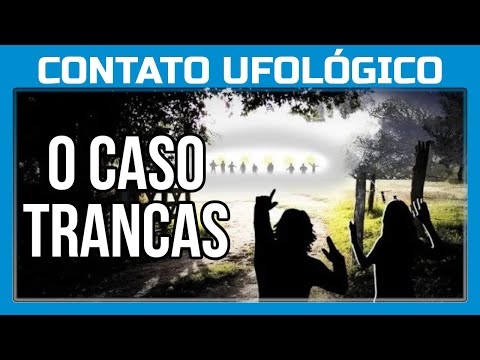
O Caso Trancas
Portuguese-language documentary coverage of the case from Brazilian paranormal-research channel Estranhos Entre Nós, reflecting the case's wider South American profile.
Argentina's Biggest UFO Case—Mass Sightings & Military Reports
An English-language walkthrough of the case that includes discussion of the Argentine military's own engagement with the sighting.
Sources
- Corrales, Scott. "Argentina: The 1963 Trancas Case Revisited," Inexplicata — The Journal of Hispanic Ufology, June 2011. inexplicata.blogspot.com
- Corrales, Scott. "Saucers in My Backyard: Argentina's Trancas Case," Inexplicata — The Journal of Hispanic Ufology, May 2007. inexplicata.blogspot.com
- La Gaceta (Tucumán). "Caso Trancas: la única testigo viva recuerda los ovnis." lagaceta.com.ar
- La Gaceta (Tucumán). "La noche en que el fenómeno OVNI sacudió a Trancas." lagaceta.com.ar
- MDZ Online. "Caso Trancas: la aparición y denuncia del OVNI más impactante de Argentina," January 26, 2022. mdzol.com
- Ferguson, Carlos. "Caso Trancas." carlosferguson.com.ar
- UFO Insight. "The Trancas Incident – UFO Encounter In The Argentine Countryside." ufoinsight.com
- Vision OVNI. "Trancas, Tucumán: El Informe Final, 21 Oct 1963 (2ª Parte)." visionovni.com.ar
- Vision OVNI. "Caso Trancas" (Banchs/Perisse skeptical dispute summary). visionovni.com.ar
- 421.news. "Argentine Ufology Hits Different: Pioneers and Witnesses of UFO Cases." 421.news
- Revista La Otra Realidad (Google Groups repost). "Caso Trancas – Argentina," from Gaceta OVNI. groups.google.com
- Crónica. "Toda la verdad del caso Trancas, el fenómeno OVNI en Tucumán," March 24, 2019. cronica.com.ar
- Contexto Tucumán. "Caso Trancas: uno de los eventos OVNI más famosos en el mundo sucedió en Tucumán en 1963." contextotucuman.com
- Wikipedia. "Trancas, Argentina." en.wikipedia.org
- Wikipedia. "General Manuel Belgrano Railway." en.wikipedia.org
- Wikipedia. "National University of Tucumán." en.wikipedia.org
- Wikimedia Commons. "File:Iglesia de Trancas.jpeg" (hero image source; CC BY-SA 3.0, uploaded by Ignaciogimenez). commons.wikimedia.org
- Living in the Matrix. "Trancas – Argentina UFO Incident: 1963," September 2020. living-in-matrix.blogspot.com
- AboveTopSecret.com forum. "CASE 1963: Trancas (Argentina) Encounter of Multiple UFO on Railroad Track Near a Farmhouse" (community-compiled English-language case summary). abovetopsecret.com
- Clark, Jerome. The UFO Encyclopedia, 4th Edition, Visible Ink Press, 2023.
- Vallée, Jacques & Aubeck, Chris. Wonders in the Sky: Unexplained Aerial Objects from Antiquity to Modern Times, TarcherPerigee, 2010.
See something inaccurate? Have additional information or sources?
Suggest an Edit →Last Updated: August 2026