
The Trumbull County UFO Chase
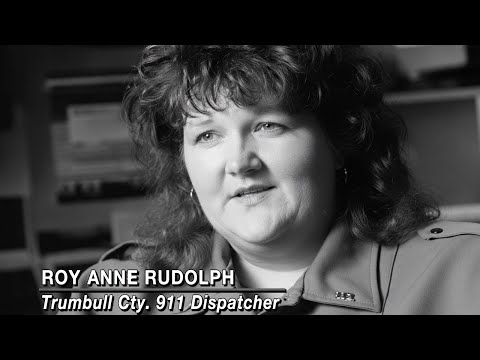
Beginning in the late-night hours of December 13–14, 1994 and continuing through dawn, the 911 dispatch center of Trumbull County, Ohio, just north of Youngstown, was overwhelmed by a wave of calls describing a huge, silent, low-flying, luminous disc. Over the hours that followed, at least fourteen police officers from Liberty Township, Howland Township, Hubbard, Girard, Brookfield Township, Weathersfield Township, and the Trumbull County Sheriff's Office independently radioed in their own visual sightings of the object, and Liberty Township Sergeant Toby Meloro reported that his patrol cruiser's engine, radio, and electrical systems died completely as the object passed low overhead on Samson Road, only to restart on their own once it moved away. Dispatcher Roy Ann Rudolph fielded the flood of calls in real time, at one point telling a caller "everyone in the county has a visual on it that I can hear," while off-duty Brookfield Township Lieutenant James Baker climbed an abandoned radar tower and radioed back that he was watching not one object but three, arranged in a triangle and changing color in unison. The Federal Aviation Administration's Youngstown tower and the nearby Youngstown Air Reserve Station both told dispatchers they had nothing on radar. The case might have vanished into local rumor had a Cincinnati-based UFO investigator, Kenny Young, not spent years tracking down surviving backup copies of the county's own 911 and police-radio tapes — recordings that still exist, have been commercially released, and make Trumbull County one of the very few American UFO cases for which the actual real-time voices of the responding officers and dispatcher, rather than after-the-fact recollection, survive in the public record.

No photograph of the object, and no verified public-domain image of the specific responding cruisers or dispatch center, is known to survive from the night of December 13–14, 1994. The case's entire surviving documentary record is audio, not visual — the 911 and police-radio dispatch tapes themselves.
Theoretical Alignment
Trumbull County is best understood as two overlapping evidentiary categories stacked on top of each other: a short, close-range encounter of real analytical weight (Sgt. Toby Meloro's reported total electrical failure at close range) embedded inside a much longer, county-wide, multi-caller "flap" running the better part of nine hours. The Extraterrestrial Hypothesis alignment is kept in the mid-20s largely on the strength of that opening encounter and the sheer number of independent, professionally accountable law-enforcement witnesses — fourteen or more officers across five-plus departments is an unusually large corroborating pool even by the standards of this catalogue's other police cases. But the alignment is capped well below tiers like Coyne because nothing about the case was captured by any instrument: no radar, no photograph, no maintenance record confirming Meloro's cruiser needed repair, and no contemporaneous written incident report has ever surfaced publicly. The Psycho-Social Hypothesis alignment is comparatively high for exactly the reason Portage County's is: a genuine, sudden, adrenaline-charged initial sighting broadcast in real time over open police channels to a dozen-plus other cars on a slow winter night is close to a textbook substrate for perceptual contagion, in which later callers and officers, primed by dispatcher chatter describing "a UFO," reinterpret ordinary lights — aircraft, stars, flares, or each other's high-beam headlights reflecting off low winter cloud — as confirmation of the same object. The Interdimensional Hypothesis finds essentially nothing to work with: no occupant contact, no missing time, and no reported medium transition, only an intensely bright, silent, conventional-seeming aerial object.
Background
Trumbull County sits in Ohio's Mahoning Valley, in the northeastern corner of the state along the Pennsylvania border, its county seat at Warren and its largest population concentrated in the townships and small cities ringing Youngstown to the south. By December 1994 the region's industrial base — built for a century on steel manufacturing along the Mahoning River — had been in steep decline for well over a decade following the mill closures of the late 1970s and 1980s, and the Youngstown Air Reserve Station in nearby Vienna Township, home since 1961 to Air Force Reserve airlift operations, remained one of the area's more visible ongoing military presences. It was into this quiet, blue-collar corner of northeastern Ohio, on a routine overnight patrol shift a little over a week before Christmas, that Trumbull County's 911 dispatch center began fielding a call volume no one on duty that night had ever seen before.
According to Kenny Young's later reconstruction, the surviving recorded segment of dispatch traffic runs from just before midnight into the early morning hours of Wednesday, December 14, 1994, though numerous secondary retellings describe reports beginning as early as 11:00 PM the previous evening and the full wave of activity, including earlier and later related calls, spanning something closer to nine hours in total. The dispatcher on duty, Roy Ann Rudolph, began receiving scattered reports of strange lights from residents near the Liberty Township–Girard–Churchill area; within a short time, patrol officers from multiple surrounding jurisdictions who had initially laughed off the calls — Sgt. Toby Meloro later recalled, "I was drinking some coffee when we started getting calls about a UFO, and we laughed about it" — were themselves reporting the same object over the air.
Complete Timeline
| Date | Event |
|---|---|
| Two weeks prior | Isolated reports of unusual lights are logged by the Trumbull County 911 center in the same general area, according to Kenny Young's later research. |
| Evening before | Additional isolated UFO-type reports are received the night before the main wave, per Young's reconstructed timeline. |
| December 13, 1994, ~11:00 PM | Scattered resident calls describing bright, silent lights begin reaching the Trumbull County 911 center, per multiple secondary accounts of the case's overall nine-hour window. |
| December 14, 1994, shortly before/after midnight | Dispatcher Roy Ann Rudolph is fielding a rapidly escalating volume of calls; the surviving recorded segment of dispatch audio begins around this point. |
| Shortly after midnight | Sgt. Toby Meloro of the Liberty Township Police Department, initially skeptical, responds toward Samson Road and independently sights a huge, circular, intensely bright object. |
| Same period | As Meloro's cruiser closes to within roughly a quarter mile of the object, his engine, radio, and electrical instrumentation reportedly fail completely; systems return to normal once the object departs. |
| Overnight | Officers from Howland Township, Hubbard, Girard, Weathersfield Township, Brookfield Township, and the Trumbull County Sheriff's Office separately radio in sightings of a large, silent, luminous object; Rudolph remarks over the air that "everyone in the county has a visual on it that I can hear." |
| Overnight | Off-duty Brookfield Township Lieutenant James Baker drives out, climbs an abandoned radar tower for a better vantage point, and reports observing three objects arranged in a triangular formation, cycling in unison through red, yellow, blue, and green. |
| Overnight | Dispatchers place calls to the Youngstown-area FAA control tower and to the Youngstown Air Reserve Station; both report nothing unusual on radar or in scheduled flight operations. |
| ~6:00 AM | The surviving dispatch recording ends as the overnight shift winds down and reports taper off with the approach of daylight. |
| December 14, 1994 and following days | No known contemporaneous newspaper report of the incident has surfaced; officers reportedly preferred not to be publicly associated with a night spent chasing lights, and the case does not enter the public record at the time. |
| 1996–1998 | Kenny Young, a Cincinnati-based MUFON state section director, learns of the incident and begins tracking down witnesses and any surviving documentation, eventually confirming the December 14, 1994 date after the original tapes are found to be missing from the county's primary archive. |
| May 1998 | A Trumbull County 911 telecommunicator, acting independently rather than through official department channels, locates backup copies of the original dispatch recordings and provides them to Young. |
| Following Young's FOIA requests | Requests for official government or department records relating to the incident are denied, leaving the recovered audio tapes as the case's primary surviving documentary record. |
| 1999 | Young discusses the Trumbull County tapes on Art Bell's nationally syndicated Coast to Coast AM radio program (February 26, 1999), bringing the case to a national audience for the first time. |
| 2011 | Syfy's docudrama series Paranormal Witness dramatizes the incident as "The Dangerous Game/Trumbull County UFO" (Season 1, Episode 5), featuring reenactments built around Rudolph's and Meloro's real accounts. |
| January 31, 2005 | Kenny Young dies in Cincinnati, Ohio, at age 38, after a nine-year struggle with leukemia he had kept largely private. |
| Various dates, 2010s–2020s | The recovered 911 and police-radio audio is repackaged and re-released commercially in multiple audio formats, cited by researchers as one of the field's clearest examples of surviving real-time UFO-related dispatch audio. |
"We Laughed About It": The Calls Begin
By his own later account, Sgt. Toby Meloro was working an unremarkable overnight shift for the Liberty Township Police Department, a small suburban force covering the built-up township directly north of Youngstown, when the first calls began coming in describing lights in the sky. "I was drinking some coffee when we started getting calls about a UFO, and we laughed about it," Meloro recalled. It was, on its face, the kind of call that gets logged and forgotten by most overnight shifts — a resident excited about an aircraft, a bright planet, or a distant flare. What made this particular night different was the sheer rate at which the calls kept coming, and the fact that they were arriving from callers scattered across multiple townships who had no way of coordinating a story with one another. Dispatcher Roy Ann Rudolph, working the county's central 911 line, found herself cross-referencing an escalating number of simultaneous reports, all describing some version of the same thing: a huge, bright, silent object moving low over the townships north of the city.
Sgt. Toby Meloro's Encounter on Samson Road
Whatever skepticism the officers on duty had going into the shift did not survive direct observation. As Meloro drove south on Samson Road, in the words later attributed to him, he saw "a giant object, circular in shape, and intensely bright in the center section," hovering at what he judged to be a low altitude and moving with a slow, deliberate motion rather than the fixed, straight-line path of a conventional aircraft. He reported it made no sound whatsoever — "I heard not a sound from the UFO" — and that its central light was too bright to look at directly. As he closed to within roughly a quarter mile of the object, his cruiser's engine died, followed by his radio and, in most retellings, his dashboard electrical systems generally. For a period his account describes as genuinely frightening precisely because it left him alone, unable to communicate, and stalled on a public road beneath an object he could not identify, Meloro sat in a dead vehicle bathed in the object's light. According to his account and the recovered dispatch audio, his cruiser's systems came back on their own, without any intervention on his part, once the object moved off — the same "it simply stopped" pattern reported in a number of other reported vehicle-interference cases, including Levelland.
Roy Ann Rudolph and a County-Wide Wave
What distinguishes Trumbull County from a single startled officer's isolated account is the volume and geographic spread of what followed. As additional patrol units in Howland Township, Hubbard, Girard, Weathersfield Township, and the Trumbull County Sheriff's Office began independently keying their radios to report the same or a very similar object, Rudolph, working to keep track of a rapidly multiplying number of simultaneous callers and units, is recorded remarking that essentially every patrol car on duty that night had eyes on something. "Everyone in the county has a visual on it that I can hear," she told one caller, a line that has since become the single most-quoted moment on the surviving tape precisely because it captures, in real time and without any narrative embellishment, just how quickly a single officer's report metastasized into a shared, county-wide event. Civilian callers, in parallel, continued phoning in their own descriptions — a man reporting what he initially took for "fire coming out of the back of a plane," a mother and daughter reporting motionless lights hanging silently in the sky — adding lay corroboration to the professional testimony arriving over the radio.
Lieutenant James Baker Climbs the Radar Tower
Among the more distinctive individual accounts to emerge from the wave belongs to Lieutenant James Baker of the Brookfield Township Police Department, who was off duty and monitoring the escalating radio traffic from home. Rather than simply take the reports at secondhand, Baker drove out to get a look for himself and climbed an abandoned radar tower in the area — a decommissioned installation left over from an earlier era of regional air-defense infrastructure — reasoning that the added elevation would give him an unobstructed vantage point over the surrounding countryside. What he reported seeing from the top of the tower went beyond what any single ground-level witness had described: not one object, but three, arranged in a triangular formation with the central light positioned slightly higher than the two flanking it, and all three, in his account, changing color "in unison and purposely" through red, yellow, blue, and green. Baker's account is one of the case's most analytically important, both because his choice to physically climb a tower for a better view is difficult to reconcile with simple copycat suggestion, and because the triangle-formation, synchronized color-shift description he gave does not straightforwardly match Meloro's single, red-centered, rotating disc — raising the real possibility that the county-wide wave, taken as a whole, involved more than one stimulus rather than a single object crossing the entire county over nine hours.
Checking the FAA and the Air Reserve Station
As the volume of reports continued, dispatchers placed calls outward to the two most obvious sources of an authoritative, instrumented answer: the regional FAA control tower serving Youngstown-area airspace, and the Youngstown Air Reserve Station itself, only a handful of miles from where several of the sightings were occurring. In both cases the answer that came back was a negative: the FAA tower controller reported nothing unusual on radar within a roughly sixty-mile radius centered on Youngstown, and a base representative identified in some secondary retellings as Captain John Keytack stated flatly that no aircraft, "experimental or otherwise," were flying out of the reserve station that night. One retelling of the incident includes an unnamed Hubbard police officer's dry aside about the base itself — "This air base out here is one of the best kept secrets in the whole damnable country" — a remark that has been read by different audiences in opposite ways: as pointed suspicion of a classified test program by researchers sympathetic to an anomalous explanation, or as gallows humor from an exhausted overnight officer by more skeptical readers. Neither reading can be verified from the audio alone, and no documentary evidence beyond the recorded radio exchange itself has ever surfaced to settle which the officer actually meant.
A Case Almost Lost: The Missing Tapes and Kenny Young's Investigation
For nearly two years after the night itself, the Trumbull County incident existed only as local rumor among the officers and dispatchers who had lived through it, most of whom, understandably reluctant to have their names publicly attached to a night spent chasing unexplained lights, never went to the press. It was Cincinnati-based UFO investigator Kenny Young — a Ohio MUFON state section director known even among skeptical colleagues for a careful, "just the facts" investigative style — who first learned of the case secondhand and set out to determine whether it had actually happened as described, and if so, on what date. Young's initial inquiries ran into a specific and telling obstacle: the county 911 center's own primary archive of recordings from around the reported date could not be located. Rather than treat that as a dead end, Young continued working the case for roughly two more years, eventually locating individual telecommunicators who, acting independently of any official department authorization, had separately kept backup copies of the original recordings. In May 1998, one of those telecommunicators provided Young with the tapes, allowing him to confirm definitively that the incident had occurred on the night of December 13–14, 1994, and to begin the process of piecing together, name by name and department by department, exactly which officers had been involved.
Young's subsequent Freedom of Information Act requests seeking any official written record of the incident — incident reports, radio logs beyond the audio itself, internal department correspondence — were denied, a result he documented on his own research site without ever obtaining a clear explanation for the denial. This is one of the case's genuine, unresolved evidentiary gaps: it is not established publicly whether no such written record was ever created in the first place, whether one exists but was withheld, or whether records from a routine 1994 shift were simply not retained long enough to survive a request filed years later. Young interviewed the involved officers directly and, according to those who worked with him, came away convinced they were describing what they genuinely believed they had seen, without detecting any evidence of a coordinated hoax. He never claimed to have identified what the object actually was.
The Tapes Enter the Public Record
Once recovered, the Trumbull County dispatch audio took on a life of its own within American ufology, precisely because so few well-known UFO cases have any surviving audio of this kind at all. Young discussed the tapes publicly on Art Bell's widely syndicated late-night radio program Coast to Coast AM on February 26, 1999, introducing the case to a national listening audience for the first time. In the years that followed, the recordings were repackaged in several different commercial audio releases — among them a compact-disc and audiobook edition titled 911 UFO Recordings: The Trumbull County Sightings, and a companion print volume, UFO Encounter Trumbull County 911 — both built directly around transcriptions and excerpts of the original dispatch traffic rather than secondhand narration. The case's profile rose further in 2011, when Syfy's docudrama series Paranormal Witness dramatized the incident, under the title "The Dangerous Game/Trumbull County UFO," as the second half of its Season 1, Episode 5 broadcast, built around reenactments of Rudolph's and Meloro's accounts and credited both by name. Unlike many UFO cases whose retellings drift progressively further from the documented original the more times they are repeated, Trumbull County has the unusual property that anyone can, in principle, go back and listen to the actual source recording rather than relying on any single investigator's or broadcaster's paraphrase of it — though, as with any decades-old secondhand-sourced audio, the chain of custody between the original 1994 recording, the "backup" copy recovered in 1998, and the versions now commercially available has itself never been independently forensically audited.
What Nine Hours of Sightings Might Actually Explain
The case's own greatest analytical challenge is its duration and geographic spread. A single, close-range, multiply-witnessed encounter lasting a few minutes — the kind of event Coyne or the opening minutes of Portage County represent — is difficult to explain away with any single mundane trigger precisely because it is tightly bounded in time and space. A wave of reports stretching across five or more townships and, by some accounts, as long as nine hours is a fundamentally different kind of evidentiary object: it plausibly represents not one continuous sighting of one craft, but an unknown mixture of an initial genuine stimulus (whatever Meloro actually encountered on Samson Road), subsequent independent misidentifications of ordinary stimuli (aircraft on approach or departure from the nearby Air Reserve Station and regional airport, bright winter stars and planets low on the horizon, or distant roadway or industrial lighting), and a substantial contagion effect in which officers and residents alike, having just heard a dispatcher and fellow officers describe "a UFO" over an open, shared radio channel, became primed to interpret whatever they subsequently saw through that same frame. Lt. Baker's triangle-formation, synchronized-color account is difficult to reconcile with Meloro's single rotating disc under a single-object theory, which itself is suggestive evidence that more than one stimulus was involved across the night, even if Meloro's own opening encounter resists easy dismissal.
Circumstantial Evidence
- At least fourteen law-enforcement officers across five or more Trumbull County jurisdictions independently reported observing the same or a very similar object over a single overnight shift, with no apparent prior coordination.
- Sgt. Toby Meloro's reported total electrical failure occurred at close range and was described over a recorded radio channel essentially in real time, rather than reconstructed afterward from memory.
- Dispatcher Roy Ann Rudolph's own recorded, unscripted remarks — made as a professional clearinghouse for information rather than an interested party — corroborate the sheer scale and simultaneity of the reports she was receiving.
- Both the FAA's Youngstown-area control tower and the Youngstown Air Reserve Station independently reported nothing on radar or in scheduled flight operations that could account for the sightings.
- The county's own primary archive of the dispatch recordings went missing, and the case was only substantiated years later because independently held backup copies happened to survive — a genuine near-loss of primary evidence that argues against the tapes having been fabricated or staged after the fact for publicity.
- Kenny Young, a MUFON section director with a reputation among peers for skeptical rigor, investigated the case for roughly two years and came away describing the officers as credible witnesses, without ever claiming to have identified the object.
Legacy: Ohio's "Real Audio" UFO Case
Within American ufology, Trumbull County has carved out a specific and durable niche not because it is the most dramatic police UFO case on record — Portage County's 85-mile, two-state pursuit and Coyne's instrument-documented helicopter climb both arguably outrank it on sheer strangeness — but because it is one of vanishingly few cases where researchers and the public alike can listen to the actual, unedited voices of the witnesses reacting to the event as it happened, rather than relying on any single investigator's, journalist's, or broadcaster's retelling. That distinction is what has driven the case's ongoing commercial and media life more than two decades after the fact: repeated audio and print releases built directly around the recovered tapes, a national radio audience introduced to the case by Kenny Young on Coast to Coast AM in 1999, and a dramatized Paranormal Witness episode in 2011 that, unusually for the genre, credited its real subjects by name rather than fictionalizing them. For researchers specifically interested in evaluating the reliability of eyewitness testimony under stress, the case functions almost as a natural experiment: because the raw audio survives, later listeners can assess witness certainty, hesitation, and cross-corroboration directly, rather than through a chain of secondhand paraphrase — a rare quality that keeps the case in active circulation within UFO research communities even though, by the more conventional metrics of radar returns or physical trace evidence, it remains no more resolved today than it was in 1994.
Key Witnesses
Sgt. Toby Meloro
The first officer to independently sight the object at close range, on Samson Road shortly after midnight, and the only witness whose account includes a reported vehicle malfunction — his cruiser's engine, radio, and electrical systems reportedly failing completely as the object passed low overhead before restoring themselves once it departed. His account, delivered originally over a recorded police radio channel rather than after the fact, anchors the case's most analytically significant minutes.
Roy Ann Rudolph
The dispatcher on duty for the bulk of the overnight wave, Rudolph fielded a rapidly escalating volume of simultaneous calls from both civilians and patrol officers describing the same object, cross-checked competing descriptions in real time, and placed the calls to the FAA and the Youngstown Air Reserve Station that returned negative radar and flight-traffic results. Her own recorded remark — "everyone in the county has a visual on it that I can hear" — is the case's single most-cited line and a rare example of a professional dispatcher's unscripted, real-time reaction preserved on tape rather than reconstructed afterward.
Lt. James Baker
Monitoring the escalating radio traffic from home, Baker chose to drive out and climb an abandoned regional radar tower for a better vantage point, from which he reported observing three objects in a triangular formation cycling in unison through red, yellow, blue, and green — a description that both corroborates the general scale of the wave and complicates any single-object explanation for the entire night.
Kenny Young (1966–2005)
A Cincinnati-based cable-television info-channel coordinator by profession and an independent UFO investigator known for a careful, deliberately skeptical "just the facts" approach, Young spent roughly two years tracking down the incident's exact date after learning of it secondhand, ultimately locating a backup copy of the county's own missing dispatch tapes in May 1998 and interviewing the involved officers directly. His Freedom of Information Act requests for any official written record of the incident were denied. Young died of leukemia on January 31, 2005, at age 38.
Approximately Ten to Fourteen Additional Officers
Beyond Meloro, Rudolph, and Baker, Rudolph's own on-air estimate and the surviving dispatch audio indicate that ten or more additional officers across at least five further departments radioed in their own independent sightings of the object or objects over the course of the night. Most of these officers are identifiable on the tape only by department, unit number, or first name rather than full legal identity, meaning the widely repeated figure of "14–15 officers" reflects Rudolph's contemporaneous impression rather than a roster later confirmed name by name.
The Five Observables Assessment
The Five Observables framework, developed by former AATIP director Luis Elizondo, is used to classify UAP encounters by performance characteristics exceeding known technology of their era. As with other purely visual, non-instrumented sightings in this catalogue, Trumbull County is an imperfect fit: everything below reflects what more than a dozen witnesses impressionistically described from the ground over several hours, not anything independently measured by radar or onboard instrumentation.
Assessment: Anti-Gravity Lift is rated speculative because the object Meloro and others described hovered and moved at low altitude with no visible wings, rotors, or other conventional means of support — consistent with an unconventional lift mechanism, but based entirely on unaided nighttime visual observation rather than any instrumented reading. Instant Acceleration is rated speculative on similarly thin grounds: several accounts describe the object departing quickly once it moved off, but no radar or other timed measurement exists to confirm any specific rate of change, and the description is far less detailed or consistent than, for example, Coyne's instrument-documented climb. Hypersonic Velocity is rated absent, since no witness described anything approaching supersonic performance, only low, deliberate movement punctuated by a comparatively ordinary-sounding departure. Low Observability is rated absent and distinctively so: virtually every account emphasizes how intensely bright and conspicuous the object was, bright enough that Meloro described being unable to look directly at it, the opposite of a stealthy or hard-to-detect craft. Trans-Medium travel is rated absent, as the entire event took place in open air with no reported transition between air, water, or any other medium. Taken together, the observable profile is that of a highly visible, silent object exhibiting behavior consistent with either an unconventional craft or, especially once Baker's separate triangle-formation sighting and the sheer nine-hour duration are factored in, more than one conventional stimulus reinterpreted through a rapidly spreading shared expectation.
Evidence Assessment
Supporting Anomalous Origin
- Fourteen or more independent, professionally accountable law-enforcement witnesses across multiple jurisdictions converged on a broadly consistent description without coordinating beforehand.
- The real-time, recorded 911 and police-radio audio survives largely intact, meaning the case does not rest on any single investigator's or broadcaster's after-the-fact paraphrase of what witnesses said.
- Sgt. Meloro's reported vehicle electrical failure occurred at close range and was reported essentially contemporaneously with the encounter itself.
- Two independent official channels — the FAA tower and the Air Reserve Station — returned negative radar and flight-traffic checks rather than offering an immediate mundane identification, which some researchers read as evidence the object was not a conventional tracked aircraft.
- Investigator Kenny Young, known for a skeptical rather than credulous approach, interviewed the witnesses directly and found no evidence of a coordinated hoax.
Supporting Conventional Explanation
- The reported nine-hour duration and multi-township geographic spread of the wave is difficult to reconcile with a single continuously observed craft, and is far more consistent with a rolling mixture of an initial trigger plus subsequent, independently misidentified conventional stimuli.
- No radar, photograph, film, or physical trace corroborates any witness's account; the FAA and Air Reserve Station checks are themselves only known through the same dispatch audio they are meant to corroborate, rather than through an independently released official document.
- No maintenance record or independent mechanic's report has ever been produced to confirm Meloro's cruiser actually required post-incident repair, leaving the vehicle-malfunction claim as testimony alone.
- Lt. Baker's triangle-formation, synchronized-color account does not straightforwardly match Meloro's single rotating disc, suggesting the night's reports may not describe one consistent object.
- Much of the "fourteen or more officers" figure rests on Dispatcher Rudolph's own contemporaneous impression rather than a roster of individually confirmed names, and Kenny Young's own FOIA requests for any official corroborating paperwork were denied, leaving key claims formally unverifiable through government records.
Why "Disputed"
The Trumbull County UFO Chase earns a DISPUTED rating on this site's scale because it combines a genuinely unusual evidentiary asset — surviving, real-time, unedited audio of the event as more than a dozen professional witnesses experienced it, rather than any reconstructed or paraphrased account — with an equally genuine set of open evidentiary problems that no investigator, including the case's own most dedicated researcher, has ever closed. On the strength side: fourteen or more law-enforcement officers across five-plus departments, plus a professional dispatcher with no stake in the outcome, converged on a broadly consistent description of a huge, silent, low-flying luminous object within a single overnight shift; Sgt. Meloro's reported vehicle failure was described essentially contemporaneously over a recorded channel rather than reconstructed later; and Kenny Young, a researcher with a reputation for skepticism rather than credulity, spent years confirming the basic facts and interviewing witnesses directly without ever finding evidence of a hoax. On the other hand, no radar, photograph, film, or physical trace corroborates any account; the case's central negative radar and flight-traffic checks are known only through the same audio they are meant to support rather than an independently released document; no maintenance record has ever surfaced to confirm the reported cruiser malfunction; Lt. Baker's three-light, triangle-formation sighting does not obviously match Meloro's single disc, suggesting more than one stimulus across the long night; and a formal government records request came back empty. That combination — a case with unusually strong, unusually well-preserved raw testimonial evidence, but nothing beyond testimony to corroborate it, spread across a duration long enough to invite real doubt about whether it describes one phenomenon or several — is precisely what "disputed" is built to capture.
Sensor & Instrumentation Detection Profile
No radar system, camera, or automated sensor is known to have recorded the object at any point across the nine-hour window. Multiple secondary accounts describe the 911 center placing calls to the Youngstown-area FAA control tower during the wave, and being told the tower's scope — covering a roughly sixty-mile radius centered on Youngstown — showed no unusual traffic. A parallel call reportedly went to the nearby Youngstown Air Reserve Station, home at the time to the Air Force Reserve's 910th Airlift Wing, where a security or duty officer identified in some retellings as Captain John Keytack stated that no aircraft, "experimental or otherwise," were flying out of the base that night. As with Portage County's missing Air Defense Command log, none of these negative radar and flight-line checks have ever been independently documented in a released, examinable form — they survive only as secondhand statements relayed over the dispatch audio itself, meaning the case's one quasi-instrumented data point (a real-time denial of radar contact from two separate facilities) is itself only verifiable through the same audio record that documents the sighting, rather than through an independently obtained FAA or Air Force paper trail. Investigator Kenny Young's own Freedom of Information Act requests seeking any official record of the incident were denied, meaning no government document has ever surfaced to confirm or supplement what the dispatch tapes themselves captured.
Environmental & Geospatial Context
The sightings unfolded across the built-up, semi-suburban townships that ring Youngstown on its northern edge — Liberty Township, which borders Youngstown directly to the south and the villages of Girard and Churchill within its own limits, and Howland Township, immediately east of Warren, the Trumbull County seat — along with Hubbard, Weathersfield, and Brookfield townships further out. This is a markedly different environment from most classic rural "police chase" UFO cases like Portage County: it is a populated, road- and streetlight-dense corridor along the Mahoning River valley, within a few miles of the Youngstown Air Reserve Station at Vienna Township (roughly eleven miles north of Youngstown and home to Air Force Reserve airlift operations since the early 1950s) and the adjoining Youngstown-Warren Regional Airport, both of which host regular civil and military air traffic that a startled nighttime observer could plausibly misjudge in speed, altitude, or configuration. December nights in the Mahoning Valley are long, clear-sky viewing windows are common between winter storm systems, and the same low, high-pressure clarity that makes stars and planets unusually crisp near the horizon in this part of Ohio in mid-December is also the atmospheric backdrop against which a slow-moving aircraft's landing lights, or a distant flare, can appear far larger, closer, and stranger than they are.
Observer Credibility & Occupational Profile
The case's central credibility asset is, as with Portage County and Exeter, occupational: the primary witnesses were on-duty police officers and a professional 911 dispatcher with no apparent history of UFO interest and an obvious professional disincentive to report something implausible over an open, recorded radio channel. Sgt. Toby Meloro of the Liberty Township Police Department was the first officer to report a close-range encounter and the only one whose account includes an alleged physical effect on his vehicle. Off-duty Brookfield Township Lieutenant James Baker, monitoring the traffic from home, chose to drive out, climb an abandoned radar tower, and report what he saw directly over the radio rather than simply relaying rumor. Dispatcher Roy Ann Rudolph is a uniquely valuable witness precisely because her job was to remain a neutral clearinghouse for information, not to interpret it, and her own recorded reactions and cross-checking of multiple simultaneous callers' descriptions is what gives the tape its evidentiary texture. Against this, the case's credibility is diluted by scale: unlike Portage County's five named, individually identifiable officers, Trumbull County's "fourteen or more officers" figure comes from Rudolph's own on-air estimate rather than a roster investigators later confirmed name by name, several officers who spoke over the radio that night are only identifiable by department or first initial in the surviving audio, and no department appears to have filed a surviving written incident report naming every observer, leaving much of the witness pool professionally credible in aggregate but individually unverifiable.
Physical & Material Assays
The case produced no debris, no landing trace, and no laboratory-testable sample of any kind, and no investigator has ever claimed otherwise. Its closest analogue to physical evidence is Sgt. Meloro's reported total electrical failure — engine, radio, and dashboard instruments — as the object passed low overhead, with systems reportedly returning to normal on their own once it moved off. Unlike the Coyne helicopter's permanently disrupted magnetic compass, which required a documented parts replacement that itself entered the aircraft's maintenance record, no vehicle-repair log, mechanic's report, or departmental maintenance record confirming Meloro's cruiser needed any post-incident service has ever been published or referenced by any investigator, including Kenny Young himself. The claim rests entirely on Meloro's own account, delivered originally over a recorded radio channel and later repeated in interviews, which gives it real immediacy but leaves it without the independent paper trail that gave Coyne's compass anomaly its added evidentiary weight. The case's one genuinely durable physical artifact is the dispatch audio itself: a set of analog cassette or reel recordings that were, according to Young's own account, reported "missing" from the county 911 center's primary archive and only recovered because backup copies had separately survived in the hands of individual telecommunicators.
Historical Precedents & Archive Matches
Trumbull County sits in the same lineage as Portage County (1966) and the Killian sighting (1959) as a third major northeastern-Ohio case built on professional, on-duty testimony rather than amateur or contactee claims — and, remarkably, the Killian case's own corroborating radar check took place at Youngstown, Ohio just a few miles from where the 1994 wave unfolded, a geographic coincidence researchers have occasionally noted without ever proposing a causal connection between the two thirty-five-years-apart events. It is also a direct structural cousin of the reported-vehicle-interference cases catalogued elsewhere on this site, most notably Levelland (1957) and Coyne (1973), both of which pair multi-witness sighting testimony with a reported mechanical or electromagnetic effect on a vehicle. Where Trumbull County is genuinely unusual within this catalogue is its evidentiary format: it is one of the very few American cases for which the actual, unedited, real-time voice recordings of the responding officers and dispatcher — rather than any after-the-fact written report, press account, or investigator's paraphrase — survive and are commercially available to the public, placing it alongside a small handful of "real audio" UFO cases prized by researchers for exactly that reason.
Material Analysis
Trumbull County produced no debris, no landing trace, and no recoverable physical sample of any kind, and no witness or investigator has ever claimed otherwise. Its one candidate piece of "material" evidence is not a substance but a document format: the surviving 911 and police-radio dispatch audio itself, an analog recording whose evidentiary status depends entirely on chain of custody. That chain has real gaps. The county's own primary archival copy of the recordings from the incident date was, according to Kenny Young's account, missing when he first went looking for it roughly two years after the fact; what survives is a backup copy independently retained by a telecommunicator and handed over in May 1998, nearly four years after the original recording was made. No forensic audio analysis establishing the backup tape's authenticity, continuity, or freedom from editing has ever been published by any independent laboratory. This does not mean the tape is inauthentic — multiple named participants, including Rudolph and Meloro, have subsequently confirmed their own voices and the substance of what they said on it — but it does mean the recording's evidentiary weight rests on witness confirmation of its accuracy rather than an independently verified, unbroken chain of custody from the original recording device to the copies now commercially available.
Supporting the Tape's Authenticity
- Named participants, including Dispatcher Rudolph and Sgt. Meloro, have subsequently confirmed their own voices and statements on the recovered recording in later interviews and the 2011 Paranormal Witness dramatization.
- The tape's content — hesitant, overlapping, unpolished real-time radio traffic — is consistent in tone and structure with genuine emergency-dispatch audio rather than a scripted reenactment.
- The recording's near-loss and years-later recovery from an independently held backup, rather than a clean, immediately available original, is not the pattern one would expect from a fabrication staged for publicity.
Supporting Caution About the Record
- No independent forensic audio examination of the surviving tape's continuity or freedom from editing has ever been published.
- A nearly four-year gap between the original recording and the backup copy's recovery leaves the intervening chain of custody undocumented.
- The recording documents what witnesses said they were seeing, not the object itself — it corroborates that a large-scale, multi-department radio event genuinely occurred, but cannot independently confirm what any individual caller actually observed.
The Conventional Explanation Candidate: An Initial Misidentification Amplified by Radio Contagion
Initial Misidentification Amplified by Radio Contagion
Partially Plausible InconclusiveThe most analytically serious conventional explanation for Trumbull County does not try to identify a single mundane object responsible for the entire nine-hour wave, but instead proposes that an initial genuine misidentification — plausibly a military or civil aircraft on approach to or departure from the nearby Youngstown Air Reserve Station or Youngstown-Warren Regional Airport, a bright flare, or an unusually prominent star or planet low on the winter horizon — was reported by early callers in terms dramatic enough to prime dispatcher Rudolph's subsequent radio traffic, and that officers and residents across the following hours, primed by hearing "UFO" repeated over an open, shared channel, increasingly reinterpreted a range of ordinary nighttime stimuli through that same frame. This candidate deserves serious weight because it is the only explanation that accounts for the case's most distinctive and hardest-to-explain-away feature under any single-craft theory: its sheer duration and geographic spread across five-plus jurisdictions.
Its central weakness is Sgt. Meloro's own opening encounter. A misidentified aircraft or bright planet cannot plausibly explain a report of total engine, radio, and electrical failure at close range — whatever else happened over the following hours, Meloro's account, delivered essentially in real time over a recorded channel by a professional officer with no apparent motive to fabricate, describes something a distant light source cannot produce. The theory also does not fully explain Lt. Baker's specific triangle-formation, synchronized-color-change description, which is a more structured and unusual claim than typical misidentified-aircraft reports tend to produce, even accounting for a primed, expectant observer.
Classified Military Activity
InconclusiveA second candidate, favored by researchers more sympathetic to an anomalous explanation and hinted at in the unnamed Hubbard officer's on-tape remark about the Air Reserve Station being "one of the best kept secrets," holds that the object represented a classified test aircraft or program based at or transiting near the reserve station. This candidate cannot be entirely ruled out given the base's real military function, but it has never been substantiated by any released document, and Kenny Young's own FOIA requests seeking any relevant government record were denied rather than fulfilled with a redacted or explanatory response, leaving the theory unfalsifiable in either direction rather than actively supported.
Deliberate Hoax
ImplausibleA third, far less credible theory would hold that the entire event was some kind of coordinated hoax or prank. This candidate struggles badly against the case's basic facts: no hoax device, balloon, or projection apparatus capable of producing a huge, silent, color-shifting light visible simultaneously across multiple townships has ever been proposed with any specificity, and no plausible mechanism exists for a prank to independently fool fourteen or more on-duty police officers across five separate departments who had no advance knowledge of, or coordination with, one another. Kenny Young's own direct interviews with the officers led him to describe them as credible rather than complicit.
Related Cases
Confirmed Documents & Official Records
National Archives finding aid covering UAP-related textual holdings; useful starting point given that no federal document specific to the Trumbull County incident has ever been located, and investigator Kenny Young's own FOIA requests on the case were denied.
UNCLASSIFIEDSearch Government Archives Directly
Further Reading — Recommended Literature
911 UFO Recordings: The Trumball County Sightings
An audio release built directly around the recovered Trumbull County 911 and police-radio dispatch tapes — the actual primary-source recordings this case file is centered on, rather than a secondhand retelling.
UFO Encounter Trumbull County 911
A dedicated print treatment of the case built around transcriptions and analysis of the same recovered dispatch audio, one of the few book-length works devoted solely to this incident.
UFO Frontier
An anthology of investigator Kenny Young's unpublished case files, compiled posthumously by fellow researcher S. Patrick Feeney and covering the police and government UFO incidents — including Trumbull County — that defined Young's career.
The UFO Encyclopedia, 4th Edition
The definitive UFO reference work, situating Trumbull County within the broader history of American multi-witness police sighting waves and 1990s-era UFO reporting.
Watch the Skies!: A Chronicle of the Flying Saucer Myth
A rigorously skeptical, well-documented history of American UFO cases and reporting patterns, useful context for evaluating how mass sighting waves like Trumbull County's can develop and spread.
Essential Viewing

Trumbull County UFO Incident: Police & 911 Radio Traffic (12/14/1994)
Excerpts of the actual recovered dispatch audio — the case's primary-source evidence, presented directly rather than through narration.
Police Dispatch Recordings of the 1994 Trumbull County UFO Sightings
A further presentation of the recovered dispatch audio from the Eyes On Cinema channel, one of this site's established reputable sources.

Night of the Unknown: The Youngstown Ohio UFO Encounter: Trumbull County
A dedicated case-analysis episode from the Deceptive Reality podcast, walking through the timeline, witnesses, and open questions.
Sources
- NICAP (National Investigations Committee on Aerial Phenomena). "The Trumbull County Disturbance." nicap.org
- UFO Insight. "The Multiple Witness Trumbull County UFO Incident." ufoinsight.com
- Booth, B.J. "1994: The Trumbull County, Ohio, UFO Incident," UFO Casebook, March 28, 2010; republished at Think About It Docs. thinkaboutitdocs.com
- UFO Casebook. "1994 — The Trumbull County, Ohio, UFO Incident." ufocasebook.com
- Young, Kenny. "Cincinnati! — UFO Research" (Trumbull County Q&A). kenny.anomalyresponse.com
- Young, Kenny. "UFO Research: Cincinnati" (Trumbull County case page 2). kenny.anomalyresponse.com
- Rense, Jeff. "Amazing Trumbull County 911 Police UFO Chase Recordings," originally published 1995, updated 2017. rense.com
- Rense, Jeff. "Kenny Young (1966–2005) Dies At Age 38." rense.com
- Strieber, Whitley (Unknown Country). "UFO Investigator Kenny Young Dead." unknowncountry.com
- Wikiquote. "Kenny Young." en.wikiquote.org
- Paranormal Witness Wiki (Fandom). "Trumbull County UFO." paranormal-witness.fandom.com
- Syfy. "Episode Recap: The Dangerous Game/Trumbull County UFO," Paranormal Witness Season 1. syfy.com
- Syfy. "Roy Ann Rudolph," Paranormal Witness subject profile. syfy.com
- IMDb. "Paranormal Witness: Trumbull County UFO/The Dangerous Game" (TV Episode, 2011). imdb.com
- The Paracast Community Forums. "Trumbull County — Police UFO Chase 1994" (discussion thread with background on Kenny Young's investigation and archived research site). theparacast.com
- Wikipedia. "Liberty Township, Trumbull County, Ohio." en.wikipedia.org
- Wikipedia. "Howland Township, Ohio." en.wikipedia.org
- Wikipedia. "Trumbull County, Ohio." en.wikipedia.org
- Wikipedia. "Youngstown Air Reserve Station." en.wikipedia.org
- Amazon.com. "UFO Encounter Trumbull County 911," OvniLab (product listing). amazon.com
- Amazon.com. "911 UFO Recordings: The Trumball County Sightings," Reality Entertainment (audiobook listing). amazon.com
- Amazon.com. "UFO Frontier," Kenny Young & S. Patrick Feeney (book listing). amazon.com
- Clark, Jerome. The UFO Encyclopedia, 4th Edition, Visible Ink Press, 2023.
- Peebles, Curtis. Watch the Skies!: A Chronicle of the Flying Saucer Myth, Smithsonian Institution Press, 1994.
See something inaccurate? Have additional information or sources?
Suggest an Edit →Last Updated: August 2026