
Vandenberg AFB Missile Disabling Incident
In the fall of 1964 — the exact date is itself disputed — an Air Force telescope-camera crew stationed atop Anderson Peak near Big Sur, California filmed a routine Atlas missile reentry-vehicle test launched from Vandenberg Air Force Base, roughly 100 miles down the coast. According to the crew's officer-in-charge, 1st Lt. Robert Jacobs, the footage showed a small, disc-shaped object with a raised dome fly into frame, circle the missile's dummy nuclear warhead, and fire four distinct beams of light at it moments before the warhead tumbled off course and fell into the Pacific short of its target. Jacobs says he was shown the film the next day by photo interpreter Maj. Florenz Mansmann, in the presence of two or three unidentified men in plain suits, and told never to describe what he had seen as a UFO again; the film itself, he maintains, was cut from the reel and flown out of Vandenberg that same day and has never resurfaced publicly. Base engineer Kingston George, the project engineer for the very same test, has disputed this account in two Skeptical Inquirer articles (1993 and 2009), arguing the footage in fact showed the ordinary, classified deployment of decoy reentry vehicles and radar-defeating chaff — ordinary in the sense that this class of Cold War missile-defense countermeasure was routinely tested during this exact period, though the specific test itself remained classified. Researcher Robert Hastings has published a detailed rebuttal of George's account, and the Pentagon's All-domain Anomaly Resolution Office (AARO), reviewing the case in its 2024 Historical Record Report, could not recover the film at all and instead floated a third possibility: an unrelated antiballistic-missile intercept test that happened to occur at a similar time and place. Unlike this site's more heavily documented missile-base case files, this one rests almost entirely on the recollections of two named Air Force officers, an equally named engineer's rebuttal, and a government review that could confirm none of it — a genuinely thinner evidentiary record than the Malmstrom, Minot, or Ellsworth files this case is frequently discussed alongside.
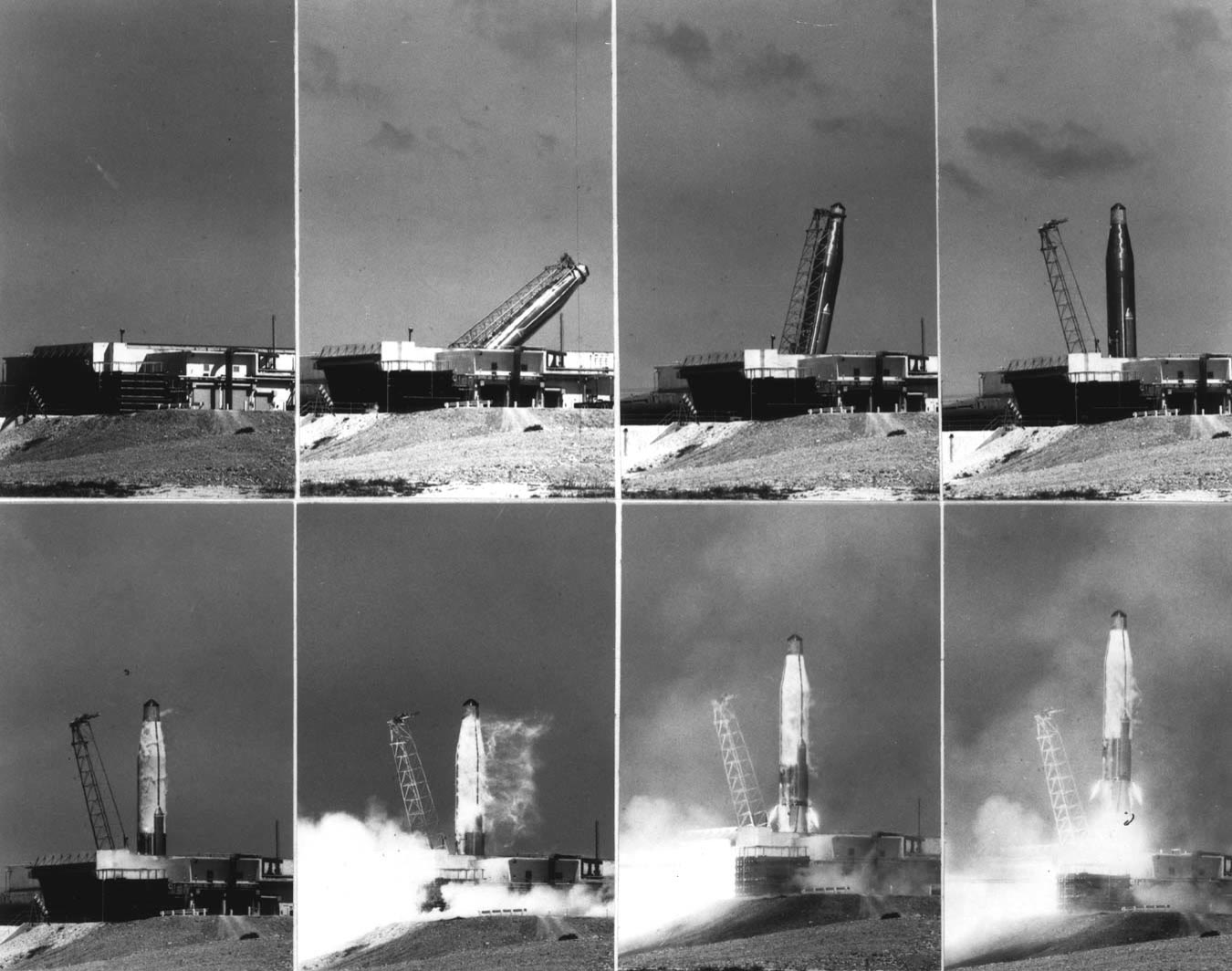
Pictured: a U.S. Air Force photograph of an Atlas D ICBM launch sequence at Vandenberg Air Force Base, taken in April 1960 — not a photograph of the disputed 1964 test itself, and not documentation of the object Robert Jacobs's crew says they filmed. No photograph or frame of the alleged footage has ever been made public; the film Jacobs and Mansmann describe has never resurfaced, and this image instead documents the same missile family and launch facility involved, at an earlier date.
Theoretical Alignment
This file rates the Extraterrestrial Hypothesis alignment low relative to this site's stronger nuclear-site cases: the core claim — an intelligently controlled craft firing directed-energy beams at a reentry vehicle — is dramatic, but it rests on the recollection of a single primary witness (corroborated only partially, and only after the fact, by a second officer who did not operate the camera himself) rather than on any surviving instrumented data. The Psycho-Social alignment is unusually significant here, more so than in most of this site's other missile-base files, because the case's public life has been shaped for over forty years by tabloid-magazine origins, a self-described campaign of harassment against the primary witness, a genuinely irreconcilable dispute over even the test's date and missile type, and a documented government review that could neither confirm nor disprove any version of events because the central physical evidence — the film itself — has never been produced by anyone, on any side of the dispute. Interdimensional framing has essentially no purchase on this case; nothing in any account, pro or con, invokes dimensional transition, and this file rates it accordingly.
Background
Vandenberg Air Force Base, on California's Santa Barbara County coast near Lompoc, became the U.S. Air Force's primary West Coast missile-testing installation after its 1957 activation, purpose-built to fire intercontinental ballistic missiles southward and westward down the Pacific Missile Range — later formalized as the Western Test Range — toward an impact zone near Kwajalein Atoll in the Marshall Islands, roughly 5,000 miles distant. Unlike Cape Canaveral's eastward-launching Atlantic range, Vandenberg's geography let planners test the full performance envelope of an ICBM's reentry vehicle (RV) — the cone-shaped section carrying the weapon, or in test flights, an instrumented dummy standing in for one — without overflying populated landmasses. Through the early-to-mid 1960s, Vandenberg supported a heavy schedule of Atlas and Titan ICBM test launches, alongside the developmental work behind what would become the Minuteman force based at Malmstrom, Minot, Ellsworth, Warren, and other missile wings this site has separately documented.
A critical, and at the time deeply classified, dimension of this testing program concerned reentry-vehicle survivability against an emerging Soviet anti-ballistic-missile (ABM) threat. If Soviet radar could reliably distinguish a real incoming warhead from decoys, an ABM interceptor could be aimed at the real target and the entire deterrent value of America's ICBM force would be undermined. The Air Force and its contractors spent the early-to-mid 1960s testing exactly this problem: releasing decoy reentry vehicles alongside the real one, along with clouds of metallic chaff and other radar-reflective countermeasures, timed to separate from the missile's forward section during reentry in a way that would confuse an adversary's tracking radar as to which object was the actual warhead. This was neither a hypothetical nor a rare occurrence — it was standard, if highly classified, Cold War missile-defense-countermeasure testing, and it is the technical backdrop against which this case's central dispute plays out.
The Air Force's 1369th Photographic Squadron existed to document exactly this kind of test: long-range telescopic and image-orthicon television cameras, operated from carefully chosen high-elevation sites along the coast, tracked and recorded a missile's reentry-vehicle separation and descent in enough optical detail to let engineers verify countermeasure performance afterward. 1st Lt. Robert Jacobs, a University of California, Davis-trained photographic engineer serving out an Air Force commission after being drafted, was the squadron's officer-in-charge of photo-optical instrumentation and, by his own account, oversaw exactly this kind of remote tracking-camera deployment in the fall of 1964 — on a peak above Big Sur, roughly 100 to 130 miles up the coast from Vandenberg, using a telescope system built around a Boston University-designed optical assembly and an image-orthicon television camera feeding a 35mm motion-picture recorder. Maj. Florenz Mansmann, a photo interpreter attached to Vandenberg's own Office of the Chief Scientist, was the officer tasked with reviewing this kind of tracking footage after the fact, frame by frame, to extract the engineering data it contained. And Kingston George, a civilian Air Force operations analyst who had taken a position at Vandenberg in 1961 and would go on to spend three decades there working on the base's optical, radar, and telemetry tracking systems, was — by his own account, later corroborated by no one on any side of the dispute — the project engineer directly responsible for the reentry-vehicle test that Jacobs's crew filmed. All three men's accounts of what happened next, told and retold across more than four decades, are the entire evidentiary record this case rests on.
Complete Timeline
| Date | Event |
|---|---|
| 1957 | Vandenberg Air Force Base is activated as the Air Force's primary West Coast ICBM test range, firing down the Pacific Missile Range toward Kwajalein Atoll. |
| 1961 | Kingston George accepts a civilian Air Force operations-analyst position at Vandenberg, beginning a three-decade career on the base's optical, radar, and telemetry tracking systems. |
| Fall 1964 (disputed date) | An Atlas missile reentry-vehicle test is launched from Vandenberg. A telescope-camera crew of the 1369th Photographic Squadron, under 1st Lt. Robert Jacobs, films the test from a tracking site atop Anderson Peak, Big Sur. |
| Fall 1964 (day after launch, per Jacobs) | Jacobs says Maj. Florenz Mansmann screens the developed footage for him in his office at Vandenberg's Office of the Chief Scientist, in the presence of two or three unidentified men in plain suits, and instructs him never to describe what he saw as a UFO. |
| 1964 (same period) | Jacobs says the film itself is physically cut from the reel and flown out of Vandenberg the same day; he is later offered, and rejects as technically implausible for 1964, a cover explanation involving experimental laser tracking. |
| 1982 | Jacobs goes public for the first time, in a National Enquirer article titled "UFO Spied on Space Missile — and I Captured It on Film." |
| 1985 | Jacobs's account receives a longer treatment in OMNI magazine. |
| 1983–1987 | Mansmann corroborates key elements of Jacobs's account — a disc-shaped object with a raised, glowing dome — in letters to researchers including Lee Graham, Peter Bons, and T. Scott Crain Jr. |
| January 1989 | Jacobs publishes his own detailed written account in MUFON UFO Journal No. 24, describing the object's maneuvers, the four light beams, and the warhead's tumble into the Pacific. |
| Winter 1993 | Kingston George publishes "The Big Sur 'UFO': An Identified Flying Object" in Skeptical Inquirer, identifying the object as decoy reentry vehicles and chaff and dating the launch to September 22, 1964, under the name "Buzzing Bee." |
| 2006 | Robert Hastings publishes a detailed rebuttal, "A Shot Across the Bow: Another Look at the Big Sur UFO Incident," in the International UFO Reporter, disputing George's account of the film's viewing timeline and the telescope's resolving power. |
| 2007–2008 | Hastings's book UFOs & Nukes: Extraordinary Encounters at Nuclear Weapons Sites incorporates the Big Sur case within its broader documentation of nuclear-site UAP claims. |
| January–February 2009 | George publishes a second Skeptical Inquirer article, "'Buzzing Bee' Missile Mythology Flies Again," responding directly to Hastings. |
| 2019 | Researcher Joseph Durso files a Mandatory Declassification Review request seeking the original footage; no film is produced. |
| 2019 | Jacobs and Hastings co-author Confession: Our Hidden Alien Encounters Revealed, in which Jacobs discusses the incident's personal toll alongside his account of the encounter itself. |
| October 19, 2021 | Jacobs appears by video at a Robert Hastings-organized press event held in connection with the National Press Club, describing the incident publicly alongside other former military witnesses to nuclear-site UAP claims. |
| April 2023 | Then-AARO Director Sean Kirkpatrick testifies before Congress that AARO has found no evidence of extraterrestrial technology in any case it reviewed; Jacobs later states Kirkpatrick separately characterized his own account as a misidentification of chaff and decoys. |
| March 2024 | AARO's Historical Record Report, Volume I, addresses the case directly, stating it could not recover the alleged film but could "correlate the general time and location with an antiballistic missile test, which could have been the genesis for this observation." |
| 2025 | Jacobs issues a public statement disputing AARO's characterization of the case and disputing a claim, which he attributes to AARO officials, that original 35mm/45mm film had been recovered and reviewed; he maintains the film was removed from Vandenberg the day of the incident and could not have been reviewed by AARO decades later. |
The 1369th Photographic Squadron and the Big Sur Tracking Site
The Air Force's need to document Atlas and Titan reentry-vehicle tests optically, rather than rely solely on radar and telemetry, drove the choice of remote, elevated camera sites along the California coast capable of a clear line of sight to a missile's flight path many miles offshore. Anderson Peak, a 4,098-foot summit in the Santa Lucia Range within what is now the Los Padres National Forest, offered exactly that: an unobstructed sightline down the coast toward Vandenberg's launch complexes and, more importantly, toward the missile's reentry corridor as its warhead and any released countermeasures descended toward the Pacific. The tracking system Jacobs's crew operated combined a large optical telescope — described in different accounts as built around a Boston University-designed folded-Gregorian assembly — feeding an image-orthicon television tube, the most light-sensitive video-camera technology of its era, recorded in turn on 35mm motion-picture film. This was demanding, specialized instrumentation work: George himself, writing decades later as the project's engineer, would describe the optical system as capable of resolving objects at several hundred nautical miles' distance, a specification directly relevant to the dispute over whether the crew could have resolved fine detail on a warhead-sized object at that range at all.
Jacobs, by his own account and by the biographical details later confirmed in multiple interviews, was an unusual figure for this kind of assignment: trained in photographic engineering at UC Davis and with prior civilian experience at major Hollywood studios before his Air Force service, he brought both technical camera expertise and, later in life, a career pivot into academic media studies that gave him an unusually public, sustained platform from which to keep discussing the case for the rest of his life. He has consistently identified himself by name, rank, and unit throughout more than four decades of retelling — a level of sustained, on-the-record consistency about his own identity and role that is not, in itself, in dispute anywhere in this case's literature, even among his sharpest critics.
Jacobs's Account: A Disc, a Dome, and Four Beams of Light
According to the account Jacobs has given consistently since 1982, the crew's cameras were tracking the Atlas missile's dummy warhead through its final approach and separation sequence when a second object entered the frame from off to one side. He has described it as a classic "flying saucer" shape — two shallow dish forms joined rim to rim, with a smaller, ball-shaped dome rising from the center of the upper surface — that appeared to fly what he has called a "relative polar orbit" around the warhead package at a velocity he estimated, based on the frame-to-frame motion visible in the footage, at roughly 18,000 miles per hour, a speed broadly consistent with the reentry-vehicle's own velocity at that altitude. As the object completed its circuit of the warhead, Jacobs says it discharged four distinct, intensely bright flashes of light at roughly the four cardinal points of its orbit — strikes bright enough, he has said, to visibly overload or "bloom" the image-orthicon tube's sensor at each impact point, a specific and checkable claim about the recording equipment's own behavior rather than a purely subjective visual impression. Immediately afterward, in his account, the dummy warhead tumbled out of its planned trajectory and fell into the Pacific Ocean hundreds of miles short of its intended impact point, while the disc-shaped object accelerated away and left the frame.
Jacobs has been explicit that his interpretation — that the object had deliberately and successfully disabled the warhead with some form of directed-energy weapon, "possibly a plasma beam" in his own phrasing — was his own conclusion drawn from watching the footage, not something told to him by anyone else in advance. He has also been explicit, across decades of retelling, that he does not know what the object actually was, only what its recorded behavior appeared to be: an object that entered the frame under its own apparent control, maneuvered around a moving target with a precision he found inconsistent with any aircraft or missile technology he was aware of in 1964, and departed the frame under power immediately after the warhead's failure. This sequencing — object enters frame, circles target, fires, target fails, object departs frame — is the specific narrative structure that the case's skeptical explanation has to account for, not merely the presence of unexplained bright objects near the warhead in general.
The Screening: Mansmann, the Men in Grey Suits, and a Warning
Jacobs says he was summoned the following day to the office of Maj. Florenz Mansmann, the Office of the Chief Scientist's photo interpreter, where the developed film was screened. Present, in Jacobs's account, were Mansmann, one or two other Air Force officers, and two or three men in plain grey suits whom Jacobs was not introduced to and has since described, in later retellings, as CIA officers — an identification he acknowledges he inferred rather than confirmed at the time. When Jacobs volunteered that what they had filmed was a UFO, he says Mansmann told him flatly: "You are never to say that again." He recalls being offered, as a cover story to use if ever questioned about the footage, an account involving experimental laser tracking equipment — an explanation Jacobs has pointed out for decades cannot be technically accurate, since practical laser technology was barely a few years old in 1964 and nothing resembling a laser-tracking capability of the kind described existed in any Air Force optical-tracking inventory at that time. Jacobs says the film itself was physically cut from the reel with a pair of scissors in his presence and flown out of Vandenberg by special aircraft that same day, and that he never saw it, or any copy of it, again.
Mansmann's own role in the case has become, over time, nearly as scrutinized as Jacobs's. He did not operate the camera himself and was not present at the Big Sur tracking site during the launch; his documented involvement begins at the screening the following day, reviewing footage that had already been developed and delivered to him for technical interpretation. In a series of letters written between 1983 and 1987 to researchers investigating the case, Mansmann corroborated, in writing and in his own words, that the object he reviewed on film was disc-shaped with a raised, glowing central dome — a description that substantially matches Jacobs's. This corroboration is the single strongest piece of evidence on the anomalous side of this case's ledger: it comes from a second named, credentialed officer, independently documented in his own contemporaneous correspondence rather than reconstructed decades later, and it specifically describes a coherent solid object rather than a diffuse debris cloud. It is also, however, corroboration of what the film appeared to show under Mansmann's own frame-by-frame review with a magnifying loupe, not corroboration of what caused the warhead's failure or of what the object actually was — a distinction this file's research found is not always preserved in secondary retellings of the case.
Going Public: From the National Enquirer to MUFON
Jacobs did not speak publicly about the incident for eighteen years after it occurred. When he finally did, in 1982, his outlet of choice was the National Enquirer — a decision that has shaped the case's credibility in ufological and skeptical circles ever since, regardless of what one concludes about the underlying claim. A tabloid byline does not, on its own, make an account false, but it did mean the story entered public awareness already coded as sensational entertainment rather than a serious intelligence-community disclosure, and Jacobs has spent much of his subsequent public life pushing back against exactly that framing. A more detailed treatment followed in OMNI magazine in 1985, and Jacobs's own most complete written account — the version most subsequent researchers, including Hastings, have relied on for the specific technical details of the object's maneuvers — appeared in MUFON UFO Journal No. 24 in January 1989, by which point Mansmann's corroborating letters to independent researchers had already begun accumulating in the case's private research files.
It was only after this slow, decades-long path into public awareness that the case attracted its first serious institutional scrutiny — not from the Air Force, which has never published any public investigation record of the incident that this file's research could locate, but from a private citizen with direct personal knowledge of the underlying test.
Kingston George and the Decoy/Chaff Rebuttal
Kingston George's intervention in this case is unusual among the skeptical explanations catalogued across this site's missile-base files, because George is not an outside debunker working from secondhand material: he identifies himself as the actual project engineer for the specific 1964 Atlas test Jacobs's crew filmed, a role that would have given him direct, contemporaneous, classified knowledge of exactly what countermeasure package that particular launch was carrying. Writing in the winter 1993 issue of Skeptical Inquirer, George identified the launch as an Atlas test he called "Buzzing Bee," dated it to September 22, 1964, and argued that what Jacobs's camera had actually recorded was the test's own decoy reentry vehicles and chaff, deployed exactly as designed to confuse enemy tracking radar. In George's account, some of the decoy hardware's Styrofoam packing material separated and tumbled along with the decoys themselves, creating a visually confusing cluster of bright, reflective objects near the real warhead as sunlight glinted off their surfaces — what he described as specular reflection rather than any object glowing or emitting light on its own. George further argued that the warhead itself, at the image-orthicon system's actual resolving power at that range, would have appeared as an object only a few thousandths of an inch across on the camera's sensor — two or three scan lines, in his description — making it implausible, in his view, for the footage to have shown the kind of structured, dome-topped disc shape Jacobs and Mansmann both described.
George's account of the aftermath differs sharply from Jacobs's on a critical point: George has written that the discovery that decoy-deployment mechanisms produced a detectable, distinguishable visual signature was itself the source of the classified alarm that followed — not a UFO, but a real and serious concern that Soviet ground-based optical tracking might be able to use the same visual signature to distinguish real warheads from decoys, defeating the entire purpose of the countermeasure program. In George's telling, this is why "everyone who was at the telescope site or had seen the film had to be identified" and questioned, and why the film was reclassified Top Secret — a security response to a countermeasure-effectiveness problem, not to a UFO encounter. George has also stated that he personally viewed the same film himself, some weeks after the incident, as part of his own engineering review of the test.
The Hastings-George Feud
Researcher Robert Hastings has published a detailed, point-by-point rebuttal of George's account, most fully in a 2006 International UFO Reporter article and subsequently in his own book UFOs & Nukes, arguing on several specific grounds that George's version cannot be reconciled with the documented record. First, Hastings argues that George's claim to have viewed the film himself "a few weeks" after the launch directly contradicts Mansmann's own account that the film was confiscated and flown out of Vandenberg the same day it was screened for Jacobs — if Mansmann's timeline is accurate, Hastings argues, George could not have seen the same reel weeks later through ordinary channels. Second, Hastings notes that George's own 1993 article dates the incident to September 22, 1964, while Mansmann, in his correspondence with researchers, specifically identified the date as September 15 — a discrepancy Hastings treats as evidence that George may be describing a different launch entirely rather than correcting Jacobs's account of the one Jacobs and Mansmann actually witnessed. Third, Hastings disputes George's characterization of the telescope's resolving power, citing a 1964 Air Force technical report, authored by George himself in his engineering capacity, describing the system as designed to record "minute events following propellant depletion" at distances of 300 to 800 nautical miles — a stated capability Hastings argues is inconsistent with George's later claim that the system could resolve only indistinct points of light at the roughly 475-nautical-mile range Hastings calculates for the warhead's position at the moment of the alleged encounter. Fourth, Hastings emphasizes that Mansmann's own description has consistently specified that the object entered the frame from outside, rather than emerging from the missile's own payload section as George's decoy-release scenario would require.
Hastings has gone further still, arguing in his own published work that Skeptical Inquirer's longtime editor, Kendrick Frazier, carried an undisclosed conflict of interest because of a decades-long career in public-relations work for Sandia National Laboratories, a U.S. nuclear-weapons design facility, while being identified in the magazine's own masthead only as a "science writer." This file treats that specific charge as Hastings's own characterization rather than an independently established fact; a public-relations career at a national laboratory does not, on its own, establish that any specific article was compromised, and this file's research did not locate independent reporting substantiating a direct link between that career history and the editorial handling of George's two articles specifically. It is included here because it is a real, published part of the case's own literature and because it illustrates how thoroughly personal this particular technical dispute has become on both sides — a pattern this file also flags, in the interest of even-handedness, when evaluating Jacobs's own credibility below.
For his part, George's second article, published in the January/February 2009 Skeptical Inquirer under the title "'Buzzing Bee' Missile Mythology Flies Again," responded directly to Hastings, restating his original technical case and adding that Jacobs, lacking the security clearance required to be briefed on the classified specifics of the decoy/chaff countermeasure package being tested, would have had no way to correctly interpret what his own camera had recorded even while sincerely believing he had filmed something else entirely. Neither man has, as of this file's research, publicly retracted or substantially revised his position.
A Cost to Speaking: Harassment and Career Fallout
Jacobs has described, across multiple interviews and in Confession: Our Hidden Alien Encounters Revealed (2019), his account of the personal toll the case took on him after 1982: threatening phone calls, a 1986 explosion he attributes to his mailbox being targeted, and what he describes as the loss of multiple academic positions that he attributes to a deliberate campaign to discredit him professionally. This file cannot independently verify the specific causal link between these events and the Big Sur case — harassment and career setbacks can have many causes, and Jacobs's own account of causation here is, by its nature, difficult to test against any independent record. It is presented here, as with the Frazier conflict-of-interest claim above, as part of the case's documented self-narrative rather than as an independently corroborated fact, in keeping with this file's general practice of distinguishing what a witness or researcher has said from what has actually been externally verified.
What is more straightforwardly verifiable is that Jacobs went on to complete a Ph.D. in dramatic art at UC Santa Barbara and to hold a long-running faculty position in the Communication Department at Bradley University in Peoria, Illinois — a mainstream academic career that continued in parallel with, rather than being ended by, his public advocacy on this case, whatever the specific professional costs he attributes to it may have been.
2021 and the National Press Club
On October 19, 2021, Jacobs participated by video in a press event organized in connection with Robert Hastings's long-running effort to bring named, credentialed military witnesses of nuclear-site UAP claims before the press — the same broader initiative that produced the 2010 and 2021 National Press Club events built around the Malmstrom AFB missile-shutdown witnesses. Jacobs described the Big Sur incident to reporters largely consistent with his decades-old written account — a disc-shaped craft approaching the dummy warhead at roughly 8,000 miles per hour by this later estimate, circling it, and firing a beam of light downward onto it — while voicing frustration at the ridicule his account had attracted: "We've been ridiculed; we've had our lives disrupted. This is more than just being ignored." His appearance placed the Big Sur case, for the first time, alongside the more heavily corroborated Malmstrom, Minot, and Warren nuclear-site accounts in a single public forum, even though the underlying evidentiary records of these cases differ substantially in strength, as this file's own comparison in its credibility assessment below makes explicit.
2024–2025: AARO's Review and Jacobs's Rebuttal
The Pentagon's All-domain Anomaly Resolution Office (AARO), established in 2022 to review historical and contemporary UAP claims across the U.S. government, addressed the Big Sur case directly in its March 2024 Historical Record Report, Volume I. AARO's own stated conclusion is notably narrow: the office reported that it "has not been able to recover the alleged film of the ballistic missile reentry vehicle being shot down by a UAP in 1964," but that it "was able to correlate the general time and location with an antiballistic missile test, which could have been the genesis for this observation." This is neither an endorsement of Jacobs's account nor a confirmation of George's decoy/chaff explanation; it is a third, distinct possibility — that what the crew filmed may have been an American or allied ABM interceptor test, a genuinely separate missile-defense activity from the decoy/chaff countermeasures George describes, and one that would arguably fit Jacobs's description of "another object" flying into frame under its own power somewhat better than a stationary or expanding decoy debris field would. AARO's report does not resolve which explanation, if either, is correct, and its own language stops well short of definitively identifying the ABM-test hypothesis as an established fact rather than a plausible correlation.
Jacobs responded publicly and specifically to AARO's treatment of his case in 2025, disputing a characterization he attributes to then-AARO Director Sean Kirkpatrick — that Jacobs had simply "mistaken what I saw as chaff and a few decoys," a characterization Jacobs says relied on George's Skeptical Inquirer article rather than any independent AARO investigation. Jacobs has also specifically disputed a claim he attributes to AARO officials that original 35mm or 45mm film from the incident had been located and reviewed, stating flatly that no such film could have existed at Vandenberg for AARO to review decades later, since Mansmann's own account has the film removed from the base the same day it was screened. This file was unable to independently verify the specific wording AARO used in any direct communication with Jacobs, since AARO's own published Historical Record Report text is considerably more limited and hedged than the stronger claims Jacobs attributes to individual AARO officials in his public statements; both AARO's own report language and Jacobs's disputed characterization of what officials told him separately are presented here as distinct, individually sourced claims rather than a single settled account.
Key Witnesses
1st Lt. Robert M. Jacobs
The case's sole primary eyewitness to the alleged encounter itself, Jacobs has maintained a consistent core account — a disc-shaped, domed object circling a dummy warhead and firing beams of light at it — across more than forty years of retelling, from a 1982 National Enquirer article through a 2025 public rebuttal of AARO's review. He went on to a Ph.D. in dramatic art and a faculty career at Bradley University, co-authoring Confession: Our Hidden Alien Encounters Revealed (2019) with Robert Hastings.
Maj. Florenz J. Mansmann Jr.
Mansmann reviewed the disputed footage frame-by-frame the day after the test and, per Jacobs, screened it for him in the presence of unidentified men in plain suits before warning him never to call it a UFO. In letters to researchers written between 1983 and 1987, Mansmann corroborated in his own words that the object he examined was disc-shaped with a raised, glowing dome — the case's single strongest piece of second-party corroboration, though he did not operate the camera himself and was not present at the tracking site during filming.
Kingston A. George
By his own account the project engineer directly responsible for the specific 1964 Atlas reentry-vehicle test Jacobs's crew filmed, George has argued in two Skeptical Inquirer articles (1993, 2009) that the footage shows the test's own decoy reentry vehicles and chaff countermeasures, not a craft. His direct, named, technically credentialed involvement in the actual test makes his rebuttal considerably stronger than an outside skeptic's would be — though Hastings has raised specific, documented objections to details of George's own account, including the date he assigns the launch and his description of when he personally viewed the film.
The Five Observables Assessment
The Five Observables framework, developed by former AATIP director Luis Elizondo, is used to classify UAP encounters by performance characteristics exceeding known technology of their era. This case poses a specific evidentiary challenge for the framework: every observable claim here derives from one witness's visual impression of a now-inaccessible film, reviewed decades after the fact, rather than from any instrumented sensor data.
Assessment: Anti-Gravity Lift is rated speculative: Jacobs describes an object executing a controlled orbital path around a moving target with no visible means of propulsion, but this rests entirely on his visual interpretation of the footage rather than any flight-performance instrumentation. Instant Acceleration is rated speculative on the strength of Jacobs's description of the object "racing" out of frame immediately after the alleged energy discharge, again a visual impression rather than a measured figure. Hypersonic Velocity is rated speculative rather than absent because Jacobs has given a specific numeric estimate — roughly 18,000 miles per hour in his 1989 account, later given as roughly 8,000 miles per hour in 2021 — though the inconsistency between his own two figures itself undercuts confidence in either as a precise, reliable measurement rather than a rough visual impression of speed relative to a known reentry vehicle. Low Observability is rated absent: no radar data of any kind, confirming either detection or non-detection of the object, has been located by this file's research on any side of the dispute. Trans-Medium travel is rated absent; no medium transition is described in any account. Overall, this file finds the Five Observables data here thinner and more single-source-dependent than in this site's better-documented missile-base cases, a direct consequence of the case's total reliance on visual testimony about a film no one but the original participants has ever examined.
Evidence Assessment
Supporting Anomalous Origin
- Two named, credentialed Air Force officers — Jacobs and Mansmann — independently describe a coherent, structured disc-shaped object with a raised dome, not merely a diffuse cluster of bright debris, in written accounts predating any organized ufological pressure to conform their stories to one another.
- Mansmann's corroboration exists in contemporaneous written letters to independent researchers dated 1983–1987, rather than being reconstructed solely from decades-later interviews.
- Jacobs's account of the film being physically confiscated and flown out of Vandenberg the same day is consistent with the total, decades-long absence of any public copy of the footage despite sustained researcher interest and at least one formal 2019 declassification-review request.
- AARO's own 2024 review, the only formal government re-examination of this case located by this file's research, explicitly states it could not recover the film and could not conclusively identify a mundane cause, rather than affirmatively endorsing George's decoy/chaff explanation.
- Jacobs's core account of the object's behavior — entering frame, circling the target, discharging light, and departing under power — has remained substantially consistent from 1982 through 2025, even as peripheral details (the exact date, the object's estimated speed) have varied across retellings.
Supporting Conventional Explanation
- Kingston George, the case's leading skeptical voice, was himself the project engineer for the actual test in question — a level of direct, credentialed, contemporaneous technical involvement that is considerably stronger than the typical outside-skeptic rebuttal found in other UAP cases.
- Decoy reentry vehicles and radar-defeating chaff were a real, routinely tested part of American ICBM countermeasure development in exactly this period, making George's proposed explanation technically plausible on its own terms rather than an invented cover story.
- The case's core facts — even the launch date and missile designation — are disputed among the primary participants themselves (Jacobs, Mansmann, and George have each given different dates), a level of basic factual instability well beyond ordinary memory imprecision about a dramatic event.
- Jacobs's own account has evolved on specific quantitative details, including the object's estimated velocity, across his 1989 and 2021 retellings.
- No physical evidence of any kind — a surviving frame of film, a photograph, a radar log, or an official investigation record — has ever been produced by anyone on any side of this dispute, leaving the entire case dependent on personal recollection more than forty years after the fact.
Why "Disputed"
This file rates the Vandenberg AFB Missile Disabling Incident DISPUTED, and specifically rates it well below this site's more heavily corroborated nuclear-site case files, such as Malmstrom. The distinction matters: Malmstrom rests on multiply-corroborated testimony from an entire missile-combat-crew shift, a declassified unit history, and a classified engineering investigation with direct physical access to the failed hardware. This case rests on one primary eyewitness, one secondary witness who reviewed film he did not personally record, and a rebuttal from a technically credentialed but similarly single-source skeptic — with no surviving film, no radar data, no official investigation record, and not even agreement among the participants themselves on the date of the event. What keeps this file from rating the case lower still, toward "Open" or "Debunked," is that Mansmann's corroboration is real, written, and contemporaneous rather than invented after the fact; that George's own rebuttal, however technically strong, has documented internal inconsistencies (the date discrepancy, the disputed film-viewing timeline) that Hastings has specifically identified and that this file's research could not resolve in George's favor; and that AARO's own 2024 review, the only government reassessment on record, explicitly declined to endorse George's explanation and instead proposed a third, unconfirmed possibility of its own. A case where the government's own most recent review could neither recover the central evidence nor confidently settle on a mundane explanation is not a case this file can respectably call closed, even though it is also, honestly, one of the thinnest-documented files in this site's missile-base catalogue.
Sensor & Instrumentation Detection Profile
This case's entire evidentiary record consists of a single reel of optical tracking film, recorded through an image-orthicon television camera and a telescope system operated by the 1369th Photographic Squadron, and no copy, frame, or still photograph derived from that film has ever been made public. No radar log, no telemetry record, and no independent instrumentation of any kind — on either the anomalous or the conventional side of the dispute — has been located by this file's research. This stands in sharp contrast to this site's Malmstrom and Minot files, where at minimum a declassified unit history or wing telemetry log corroborates that something measurable occurred, independent of what witnesses believed they saw. Here, even that baseline layer of instrumented corroboration is missing; the case depends entirely on the recollections of the small number of people who personally viewed the film before it disappeared, and on the disputed technical specifications (the telescope's actual resolving power at the range in question) that both Jacobs's supporters and George himself have cited in mutually contradictory ways.
Environmental & Geospatial Context
The reentry-vehicle test itself occurred over the Pacific Ocean off the central California coast, tracked from a remote mountaintop site rather than from Vandenberg Air Force Base itself — a genuinely unusual geospatial arrangement among this site's missile-base cases, most of which involve on-site security personnel reporting an object at the missile facility itself. The roughly 100-to-130-mile separation between the launch site and the camera position at Anderson Peak means no witness in this case was physically near the object or the warhead at the moment of the alleged encounter; everyone's knowledge of what happened derives entirely from a telescopic optical recording of an event occurring many miles away and, in the reentry vehicle's case, largely over open ocean. No specific weather or atmospheric conditions for the night in question were located in any primary account reviewed for this file, though clear sightlines would have been a practical operational requirement for the tracking mission to have been attempted at all, suggesting favorable viewing conditions are likely even though they are not explicitly documented.
Observer Credibility & Occupational Profile
All three central figures in this case held genuine technical credentials directly relevant to their testimony. Robert Jacobs was a university-trained photographic engineer serving as a commissioned Air Force officer in a role specifically responsible for missile-test optical instrumentation — not a layperson describing an unfamiliar recording system, but the officer in charge of it. Florenz Mansmann held a specialized photo-interpretation role whose entire professional function was extracting reliable technical detail from exactly this kind of tracking footage. Kingston George, for his part, brought arguably the strongest single credential in the entire case: direct, contemporaneous, classified engineering responsibility for the actual test in question, sustained into a long subsequent career as a nationally recognized expert in optical and telemetry tracking systems. This unusual credentialing profile cuts in a particular direction for this case: it means that both the anomalous account and its leading rebuttal come from people with genuine, direct, professional command of the relevant technology, rather than one side being expert and the other lay — but it does not resolve the dispute, since expert witnesses disagreeing about what a piece of film shows is a familiar problem in any technical field, and neither Jacobs's nor George's account has been checked against an independent, disinterested third party's review of the same footage, because no one outside the original small circle of participants has ever had access to it.
Physical & Material Assays
No physical evidence connected to this case has ever been recovered, examined, or made public. The dummy warhead itself, per every account on record, fell into the Pacific Ocean and was never retrieved; no wreckage, debris, or trace material from either the warhead or the alleged disc-shaped object has ever been described by any witness, let alone tested by any laboratory. The film that is the case's sole physical artifact has never been produced by Jacobs, Mansmann, George, the Air Force, or AARO in more than sixty years, and a 2019 Mandatory Declassification Review request specifically seeking it did not result in its public release. This file finds the total absence of any recoverable physical evidence — not merely of the object, but of the film documenting it — to be one of the case's most significant, and most honestly acknowledged, evidentiary weaknesses.
Historical Precedents & Archive Matches
This case sits within the same broader "UFOs and Nukes" research tradition this site documents in depth on its dedicated theory page, alongside the more heavily corroborated Malmstrom AFB (1967), Minot AFB (1968), Ellsworth AFB (1953), F.E. Warren AFB (2010), and Loring AFB nuclear-storage cases — all part of researcher Robert Hastings's decades-long project of documenting alleged UAP activity at American nuclear weapons facilities. Unlike those files, however, this case does not involve on-site security personnel reporting an object near operational nuclear weapons; it involves a single remote camera crew documenting a test missile's unarmed dummy warhead from many miles away. This file's own review of the other published missile-base cases on this site found no case that mentions the Vandenberg/Big Sur incident directly, confirming this is a genuinely distinct location and incident rather than a duplicate of material already covered elsewhere on the site — though AARO's own 2024 report treats Vandenberg alongside Malmstrom, Ellsworth, and Minot as one of several bases whose former personnel it interviewed regarding nuclear-site UAP claims generally, indicating the government's own historical review groups these cases together even though their individual evidentiary records differ substantially.
Material Analysis
Because no physical trace evidence, debris, or recovered film exists in this case, "material analysis" here necessarily concerns the technical plausibility of the two competing accounts of what the optical recording itself would have shown, rather than any laboratory-testable substance. On the anomalous side, Jacobs and Mansmann's shared description of a coherent, dome-topped disc shape is a specific, falsifiable visual claim: it describes one structured object, not a debris field, and it has remained consistent between the two men's independent accounts. On the conventional side, George's decoy/chaff explanation is grounded in a real, documented Cold War missile-countermeasure technology — the deliberate release of decoy reentry vehicles and chaff to defeat enemy tracking radar was genuinely tested during this exact period at Vandenberg, and George's own professional role gave him direct, classified knowledge of it. The specific tension between these accounts, which this file's research found is not always drawn out clearly in secondary treatments of the case, is that a chaff-and-decoy release would be expected to produce an expanding, diffuse cluster of separate reflective objects rather than a single coherent shape performing a controlled orbital maneuver around the warhead — George's explanation accounts well for "multiple bright objects appeared near the warhead" but less naturally for "one object flew a controlled circuit around the warhead and discharged light from four distinct points," the specific structure Jacobs and Mansmann both describe.
Supporting a Genuine, Unresolved Anomaly
- Two independent, credentialed witnesses describe a single, structured, dome-topped disc rather than a diffuse debris cluster, a specific detail that resists easy reconciliation with a simple decoy/chaff release.
- AARO's own 2024 review, the most recent formal government reassessment, explicitly declined to confirm George's decoy/chaff explanation and instead proposed a distinct, unconfirmed alternative of its own.
Supporting a Mundane (if Unconfirmed) Cause
- Decoy reentry vehicles and radar-defeating chaff were genuinely, routinely tested at Vandenberg during this exact period, and George's direct professional role on the specific test in question gives his explanation real technical grounding rather than speculation.
- No independent instrument data of any kind exists to confirm the "structured single object" interpretation over a "debris cluster misread as one object" interpretation; the entire dispute rests on visual impression rather than measurement.
The Conventional Explanation Candidate: Decoy Reentry Vehicles and Chaff
The explanation with the strongest direct technical grounding, and the one advanced by the person with the most direct professional knowledge of the actual test, holds that Jacobs's camera recorded the deliberate, classified release of decoy reentry vehicles and radar-defeating chaff from the Atlas missile's payload section — a real, routinely tested Cold War missile-defense countermeasure, not a hypothetical one, and one that would explain both the presence of multiple bright, reflective objects near the warhead and the classified security response that followed. It deserves serious weight because Kingston George is not an outside skeptic reconstructing events from published accounts; he identifies himself as the project engineer for this specific test, giving him a level of direct, contemporaneous, classified access to the actual test parameters that no other participant in this dispute, including Jacobs himself, has claimed.
Where the Decoy/Chaff Explanation Falls Short
Its central weakness is structural rather than technical: a chaff-and-decoy release is expected to produce an expanding, diffuse debris field of multiple separate objects, not the single, coherent, dome-topped disc shape that both Jacobs and, independently, Mansmann describe performing a controlled circuit around the warhead. George's explanation also carries specific, documented internal inconsistencies that Hastings has identified and that this file's research could not resolve in George's favor: George's stated date for the launch (September 22) does not match Mansmann's (September 15), and George's account of personally viewing the film "a few weeks" after the incident is difficult to reconcile with Mansmann's account of the film being removed from Vandenberg the same day it was screened for Jacobs. Neither inconsistency disproves George's underlying technical explanation, but both undercut confidence that his account of the specific test he is describing is the same test Jacobs and Mansmann are describing.
AARO's Antiballistic-Missile-Test Hypothesis
A second, more recently offered candidate, drawn from AARO's own 2024 Historical Record Report, holds that the crew may have filmed an unrelated antiballistic-missile intercept test that happened to correlate in general time and location with the Atlas launch. This candidate is notable primarily because it comes from the only formal government review of the case on record, and because a distinct, maneuvering interceptor vehicle would arguably fit Jacobs's description of "another object" entering the frame under its own power somewhat more naturally than a debris cloud would. Its weakness is that AARO's own language is explicitly a correlation, not a confirmed identification — the office states only that the general time and location "could have been the genesis" of the observation, a considerably weaker claim than George's specific, named identification of the exact test and countermeasure package involved, and one AARO's own report does not develop with any further technical detail.
Tabloid Origin, Memory Drift, and a Genuinely Contested Record
A third candidate, implicit in the case's skeptical literature more broadly, holds that Jacobs's account, whatever its origin, has been shaped over more than four decades of retelling by the same ordinary human memory processes that affect any dramatic, decades-old recollection — a possibility this file finds is lent some real support by the documented drift in Jacobs's own velocity estimate between 1989 and 2021, and by the case's origin in a tabloid publication that, whatever the underlying truth, created strong incentives toward a more dramatic telling than a plainer one might have been. This candidate does not, on its own, explain Mansmann's independent, contemporaneous written corroboration of the disc-and-dome description, which predates any sustained public pressure on Jacobs to embellish his account and comes from a second named officer with his own professional stake in an accurate technical description.
Decoy Reentry Vehicles & Chaff (George)
InconclusiveTechnically well-grounded in real, documented Cold War countermeasure testing and advanced by the actual project engineer, but weakened by unresolved date and film-viewing-timeline discrepancies Hastings has specifically identified.
Antiballistic-Missile Test (AARO, 2024)
UnconfirmedThe only candidate to come from a formal government review, and structurally a closer fit to a discrete maneuvering object than a debris field — but explicitly offered by AARO itself only as an unconfirmed time/location correlation, not a confirmed identification.
Memory Drift & Tabloid-Origin Embellishment
Partially PlausibleSupported by real, documented inconsistency in Jacobs's own velocity estimates across retellings, but does not account for Mansmann's independent, contemporaneous written corroboration of the same disc-and-dome shape.
Related Cases
Confirmed Documents & Official Records
AARO's first comprehensive historical review; page 33 states the office could not recover the alleged 1964 Vandenberg film but could correlate the general time and location with an antiballistic-missile test.
UNCLASSIFIED (declassified/public release)National Archives finding aid for the Project Blue Book records transferred from Wright-Patterson AFB (Record Group 341); no Blue Book file specific to this incident has been located, but this remains the standard starting point for Air Force UFO-record research.
UNCLASSIFIED (declassified)Search Government Archives Directly
Further Reading — Recommended Literature
UFOs and Nukes: Extraordinary Encounters at Nuclear Weapons Sites
The definitive reference on the UAP-nuclear connection, incorporating the Big Sur/Vandenberg case within its broader documentation of alleged nuclear-site UAP activity across dozens of American military installations.
Confession: Our Hidden Alien Encounters Revealed
Jacobs's own co-authored account of the incident and its personal toll, alongside Hastings's parallel documentation of nuclear-site encounters — the closest thing this case has to a primary-source book.
UFOs: The Public Deceived
A foundational work of organized UFO skepticism from a longtime Aviation Week editor, useful for understanding the broader skeptical tradition — typified by Kingston George's own Skeptical Inquirer articles — that this case's conventional explanation belongs to.
The Government UFO Files: The Conspiracy of Cover-Up
A survey of declassified and disputed U.S. government UFO records, useful context for evaluating the CIA-confiscation and classification claims central to Jacobs's account of the film's disappearance.
The UFO Encyclopedia, 4th Edition
The definitive UFO reference work, with an entry situating the Big Sur/Vandenberg case within the broader landscape of Cold War-era missile-test UAP claims and their skeptical rebuttals.
Essential Viewing
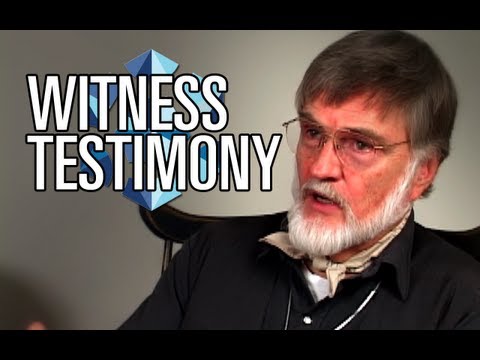
UFO Destroys Vandenberg Missile — Prof. Robert Jacobs Testifies
Direct, on-camera testimony from Robert Jacobs describing the 1964 incident in his own words.
Cold War UFO Mystery: The Vandenberg Missile Test Encounter
A documentary-style walkthrough of the 1964 incident, the Jacobs/Mansmann account, and its Cold War missile-testing context.
UFO Nuclear Missile Shootdown (Big Sur UFO Incident)
Jimmy Akin's Mysterious World lays out both Jacobs's account and George's decoy/chaff rebuttal in a balanced, source-driven analysis.
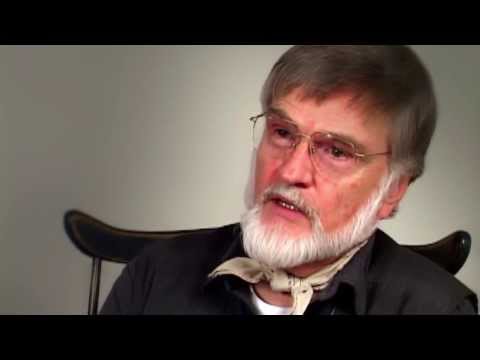
UFO Shot Down a Missile Over Vandenberg AFB!
A case-focused overview of the incident's timeline, the disputed film, and the competing explanations.
Sources
- "Big Sur UFO," Wikipedia (comprehensive incident summary with citations to Skeptical Inquirer, Military.com, and the Wall Street Journal). en.wikipedia.org
- "Robert Hastings (ufologist)," Wikipedia (biography and research history). en.wikipedia.org
- George, Kingston A. "The Big Sur 'UFO': An Identified Flying Object." Skeptical Inquirer 17, no. 2 (Winter 1993). skepticalinquirer.org
- George, Kingston A. "'Buzzing Bee' Missile Mythology Flies Again." Skeptical Inquirer 33, no. 1 (January/February 2009). skepticalinquirer.org
- Kingston A. George, author biography and article index. Skeptical Inquirer. skepticalinquirer.org
- Hastings, Robert. "Deep Denial or Disinformation? Kingston George and the Big Sur UFO Incident." UFOs & Nukes research site. ufohastings.com
- Jacobs, Robert. "UFO Shot Down Our Missile." MUFON UFO Journal, No. 24 (January 1989), archived by NICAP. nicap.org
- All-domain Anomaly Resolution Office (AARO). "Report on the Historical Record of U.S. Government Involvement with UAP, Volume I" (2024), via Wikisource. en.wikisource.org
- AARO Historical Record Report, Volume I (2024), page 33, transcribed via Wikisource (the specific page addressing the Vandenberg/Big Sur film and the antiballistic-missile-test correlation). en.wikisource.org
- Tritten, Travis. "Air Force Veterans Who Are UFO True Believers Return to Newly Attentive Washington." Military.com, October 19, 2021 (Jacobs's 2021 National Press Club-adjacent appearance). military.com
- The UFO Chronicles. "Officer Who Filmed UFO Downing Missile Sets the Record Straight" (2025). theufochronicles.com
- The UFO Chronicles. "Fmr. Lt. Robert M. Jacobs, Who Captured UFO on Film, Takes AARO to Task" (2025, Jacobs's rebuttal of AARO's 2024 characterization). theufochronicles.com
- Metabunk. "Explained: Video of Vandenberg UFO Shooting Down ICBM [Reenactment]" (technical/skeptical discussion thread, including clarification that a widely circulated video is a dramatized animation, not the alleged original footage). metabunk.org
- AstronomyUFO.com. "The Big Sur 'UFO': An Identified Flying Object" (mirror of George's 1993 Skeptical Inquirer article with additional technical annotation). astronomyufo.com
- UFOCasebook.com. "The Big Sur UFO Filming: 1964 (Vandenberg AFB)" (case summary and timeline). ufocasebook.com
- Liberation Times. "Did a UFO Sabotage a Cold War Missile Test? The Evidence Is Buried in the Archives" (archival research into the specific launch date, missile serial number, and operation name). liberationtimes.com
- National Archives (NARA). Project Blue Book Records Research Guide. archives.gov
- Wikimedia Commons. "Atlas-ICBM-Erection-Large.jpg" (U.S. Air Force photograph, public domain, source for this file's hero image). commons.wikimedia.org
- The Omni Ledger. "UFOs & Nuclear Weapons" theory page (site cross-reference; broader Hastings missile-base research program). omniledger internal
- Hastings, Robert L. UFOs & Nukes: Extraordinary Encounters at Nuclear Weapons Sites, AuthorHouse, 2008 (revised 2017) — incorporates the Big Sur/Vandenberg case.
- Hastings, Robert L., & Jacobs, Bob. Confession: Our Hidden Alien Encounters Revealed, Independently Published, 2019.
- Klass, Philip J. UFOs: The Public Deceived, Prometheus Books, 1983.
- Randle, Kevin D. The Government UFO Files: The Conspiracy of Cover-Up, Visible Ink Press, 2014.
- Clark, Jerome. The UFO Encyclopedia, 4th Edition, Visible Ink Press, 2024 (Big Sur/Vandenberg incident entry).
See something inaccurate? Have additional information or sources?
Suggest an Edit →Last Updated: August 2026