
Advanced Aerospace Threat Identification Program
Beginning in 2007, then–Senate Majority Leader Harry Reid directed roughly $22 million in classified defense appropriations toward a Pentagon effort that studied U.S. military encounters with unidentified aerial phenomena, most of the money flowing through Bigelow Aerospace Advanced Space Studies (BAASS), a contractor arm of billionaire Robert Bigelow's aerospace company. Military counterintelligence officer Luis Elizondo says he directed the program, by then known as the Advanced Aerospace Threat Identification Program (AATIP), from roughly 2010 until his October 2017 resignation in protest of what he called excessive secrecy — a specific claim the Department of Defense has since disputed in part, even while confirming that AATIP itself was real and did investigate UAP. The program's existence, and much of what it had studied, became public for the first time in a December 16, 2017 Pentagon-focused exposé published simultaneously by The New York Times and Politico, accompanied by the now-famous "GoFast" and "Gimbal" Navy cockpit videos. That disclosure reshaped the modern UAP disclosure movement and set in motion a direct institutional lineage — the UAP Task Force (2020), the Airborne Object Identification and Management Synchronization Group (2021), and today's All-domain Anomaly Resolution Office, or AARO (2022) — that still exists. This site classifies the case Credible, 68/100: AATIP's basic existence, funding, and Reid's central role in creating it are not seriously in dispute; what remains genuinely unresolved is both the substance of what the program actually found about UAP and the precise, still-contested shape of its own internal leadership and structure.
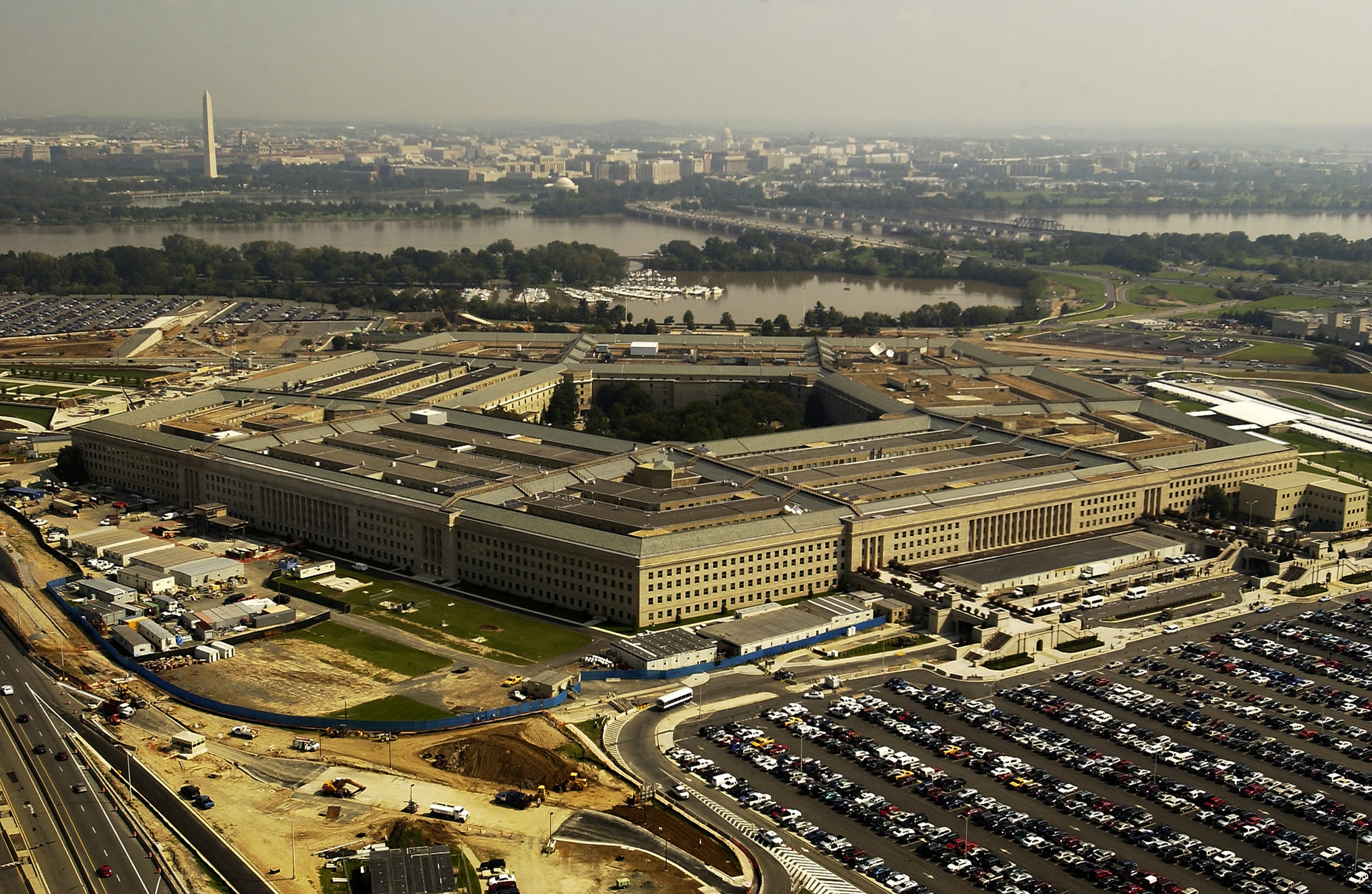
Pictured: an aerial view of the Pentagon, headquarters of the U.S. Department of Defense — where AATIP's director worked, per contemporaneous reporting, "on the fifth floor of the Pentagon's C Ring." This is a general view of the building rather than a photograph of any specific AATIP office, meeting, or document, none of which are known to have a rights-clear published photograph. U.S. Navy photo by Tech. Sgt. Andy Dunaway, public domain, via Wikimedia Commons.
Theoretical Alignment
These percentages describe how AATIP's own program materials and personnel framed the phenomenon they studied, not an independent verification of any hypothesis by this site. The program's public face — Elizondo's own statement that the phenomena studied "did not seem to originate from any country," and Reid's framing of "highly sensitive, unconventional aerospace-related findings" — leans toward an Extraterrestrial-adjacent reading without ever formally endorsing one. Several of the 38 Defense Intelligence Reference Documents AATIP/AAWSAP commissioned, including Hal Puthoff's and Eric Davis's own published work on traversable-wormhole physics, engage exotic theoretical physics that touches on Interdimensional-adjacent territory, though as legitimate (if speculative) physics papers rather than claims about interdimensional beings. The Psycho-Social allocation reflects the real, well-documented role personal relationships and individual conviction — specifically the Reid-Bigelow friendship and Reid's own account of being personally persuaded by astronaut John Glenn's advice — played in how a single line of classified funding got created and sustained, a very different mechanism from the institutional threat-assessment process that funds most defense programs.
Background
Understanding AATIP requires understanding three separate things that are often collapsed into one in popular retellings: the specific political relationships that created its funding in 2007–2008; the contractor structure, built around Robert Bigelow's companies, that actually spent most of that money; and the separate, later question of who ran the Pentagon-internal program once its initial congressional appropriation ended in 2012.
Harry Reid, Robert Bigelow, and the Origins of the Funding
Harry Reid, the Nevada Democrat who served as Senate Majority Leader from 2007 to 2015, had a long-documented personal interest in aerospace and UFO-adjacent research, which he traced directly to his friendship with Robert Bigelow, the Las Vegas real-estate and aerospace billionaire who founded Bigelow Aerospace and, in 1995, the National Institute for Discovery Science (NIDS) — the same private research organization discussed at length in this site's St. Clair County Triangle Sightings case file. Reid told The New York Times in 2017 that in 2007 Bigelow informed him a Defense Intelligence Agency official had approached him wanting to visit Bigelow's research ranch in Utah, and that Reid subsequently met with DIA officials himself and learned they wanted to start a UFO research program. Reid also cited advice he said he had received years earlier from astronaut and former senator John Glenn, who told him the federal government should be looking seriously into UFO reports, particularly from military pilots. Reid brought the idea to two senior colleagues on defense appropriations, Ted Stevens of Alaska and Daniel Inouye of Hawaii, in what Reid described as "one of the easiest meetings I ever had" — Stevens, a former Army Air Forces pilot, said he had personally been tailed by an unexplained aircraft years earlier and had "been waiting to do this" since his own service. None of the three senators wanted a public floor debate over the funding, so it was folded into the Pentagon's classified ("black money") budget rather than debated openly — a decision Reid explicitly defended rather than apologized for in his 2017 interview.
BAASS and AAWSAP
The congressional appropriation Reid, Stevens, and Inouye secured — just under $22 million, disbursed beginning in late 2008 through 2011 — was administered through the Defense Intelligence Agency and, per contracts The New York Times later reviewed, went overwhelmingly to Bigelow Aerospace Advanced Space Studies (BAASS), a dedicated contractor subsidiary Robert Bigelow created specifically for this work. The formal DIA contract name for this funded research effort was the Advanced Aerospace Weapon System Applications Program, or AAWSAP; "AATIP" is the name that came to describe the Pentagon-internal government office and mission that oversaw and, per Elizondo's own account, eventually outlasted that specific contract. This distinction matters and is frequently blurred in secondary coverage: AAWSAP was BAASS's funded contract work (2008–2010, producing a roughly 494-page compiled report on worldwide UFO sightings, 38 commissioned Defense Intelligence Reference Documents on exotic physics and materials topics, and modified Las Vegas facilities for storing materials program participants described as recovered from UAP encounters), while AATIP is the name most consistently used for the Pentagon office through which Elizondo says he continued this mission, under the Office of the Under Secretary of Defense for Intelligence, after the AAWSAP contract itself lapsed. Engineer Hal Puthoff, who had previously conducted CIA-funded extrasensory-perception research at SRI International, worked as a contractor on this effort and offered The New York Times a memorable framing of the program's own self-conception: "We're sort of in the position of what would happen if you gave Leonardo da Vinci a garage-door opener... He'd try to figure out what is this plastic stuff. He wouldn't know anything about the electromagnetic signals involved or its function."
The Program's Internal Trajectory, 2010–2017
By Elizondo's own account, he joined the effort around 2010 and eventually became its director, continuing to investigate UAP reports brought to him by service members even after AAWSAP's formal DIA contract funding ended in 2012, working out of his Pentagon office alongside his other counterintelligence duties and, he says, in coordination with Navy and CIA officials. In 2009, per a briefing summary The New York Times reviewed, the program's director at the time asserted in an internal Pentagon document that "what was considered science fiction is now science fact," and that the United States was, in the document's own characterization, incapable of defending itself against some of the technologies the program had documented; Reid separately petitioned deputy defense secretary William Lynn III to designate the effort a restricted special-access program, a request that was denied. Elizondo resigned on October 4, 2017, submitting a letter to then–Defense Secretary James Mattis that argued for more serious institutional attention to what he called "the many accounts from the Navy and other services of unusual aerial systems interfering with military weapon platforms and displaying beyond-next-generation capabilities."
Complete Timeline
| Date | Event |
|---|---|
| 2007 | Robert Bigelow tells Sen. Harry Reid that a Defense Intelligence Agency official has approached him about visiting his Utah research ranch; Reid subsequently meets with DIA officials and begins organizing classified appropriations for a UFO research effort. |
| Late 2008–2011 | Congress appropriates just under $22 million, administered by the DIA, for the Advanced Aerospace Weapon System Applications Program (AAWSAP); most funds go to Bigelow Aerospace Advanced Space Studies (BAASS). |
| 2008–2010 | BAASS produces a ~494-page report compiling worldwide UFO sighting data and commissions 38 Defense Intelligence Reference Documents on topics including traversable wormholes, invisibility cloaking, and metallic-hydrogen metamaterials; BAASS modifies Las Vegas facilities to store materials contractors describe as recovered from UAP encounters. |
| 2009 | Reid petitions Deputy Defense Secretary William Lynn III to grant the program restricted special-access status, citing "several highly sensitive, unconventional aerospace-related findings"; the request is denied. An internal briefing summary asserts "what was considered science fiction is now science fact." |
| ~2010 | Luis Elizondo says he takes over direction of the Pentagon-internal program, by this point generally known as AATIP, under the Office of the Under Secretary of Defense for Intelligence. |
| 2012 | The DIA's AAWSAP contract funding formally lapses; the Pentagon later states this marked the program's end. Elizondo maintains that only the funding ended, and that the mission continued informally. |
| Jan. 21, 2015 | The "GoFast" and "Gimbal" ATFLIR video encounters occur during USS Theodore Roosevelt carrier strike group training operations off the U.S. East Coast — later a central part of the program's public disclosure. |
| Oct. 4, 2017 | Elizondo resigns from the Department of Defense, submitting a letter to Defense Secretary James Mattis protesting excessive secrecy and internal opposition to further UAP investigation. |
| Oct. 2017 | Elizondo, Puthoff, and former deputy assistant secretary of defense Christopher Mellon launch To The Stars Academy of Arts & Science, a commercial venture aimed at UAP-related research and public advocacy. |
| Dec. 16, 2017 | The New York Times (Helene Cooper, Ralph Blumenthal & Leslie Kean) and Politico (Bryan Bender) simultaneously publish the program's public disclosure, accompanied by the GoFast, Gimbal, and 2004 Nimitz ("FLIR1") videos; a Pentagon spokesman, Thomas Crosson, confirms AATIP's existence and states it ended in 2012. |
| Apr. 27, 2020 | The Department of Defense officially releases the FLIR1, Gimbal, and GoFast videos, stating the phenomena shown "remain characterized as 'unidentified.'" |
| June 1, 2019 & ongoing | The Intercept's Ken Klippenstein reports that a Pentagon spokesperson disputes Elizondo's specific claim to have directed AATIP, stating Elizondo "had no responsibilities with regard to the AATIP program" during the period in question, while separately confirming AATIP itself existed and investigated UAP. |
| Aug. 2020 | The Department of Defense formally establishes the Unidentified Aerial Phenomena Task Force (UAPTF) under the Office of the Under Secretary of Defense for Intelligence and Security, led by the Department of the Navy. |
| 2021 | The Deputy Secretary of Defense, with the Director of National Intelligence, directs the establishment of the Airborne Object Identification and Management Synchronization Group (AOIMSG) to succeed UAPTF. |
| July 20, 2022 | Per Section 1683 of the FY2022 National Defense Authorization Act, AOIMSG is renamed and expanded into the All-domain Anomaly Resolution Office (AARO), the Pentagon's current standing UAP office. |
| 2024 | AARO publishes its "Report on the Historical Record of U.S. Government Involvement with Unidentified Anomalous Phenomena," Volume I, the most comprehensive official U.S. government historical review of this subject ever published. |
Detailed Narrative
Harry Reid's Own Account
Harry Reid gave The New York Times an unusually candid, on-the-record interview for the December 2017 disclosure story, stating plainly: "I'm not embarrassed or ashamed or sorry I got this thing going. I think it's one of the good things I did in my congressional service. I've done something that no one has done before." He was equally direct about the program's actual epistemic status, cautioning against overclaiming: "If anyone says they have the answers now, they're fooling themselves. We do not know." Reid's account of the program's origin traces a specific, personally mediated chain: his friendship with Bigelow, Bigelow's own report of DIA interest in his Utah ranch research, and Reid's own recollection of astronaut John Glenn's advice years earlier that the government should take military UFO reports seriously. This site's research treats Reid's account as a rare, genuinely candid record of exactly how a classified line of defense spending can originate from a handful of personal relationships and a Senate leader's own conviction, entirely outside any normal institutional threat-assessment process — a mode of program creation this site's research found no close parallel to elsewhere in postwar U.S. UFO-investigation history, including the considerably more bureaucratically conventional Robertson Panel and Condon Report, both discussed further below.
What BAASS Actually Produced
Bigelow Aerospace Advanced Space Studies, under the AAWSAP contract, generated a substantial body of work whose scope is now reasonably well documented through declassified and leaked material: a roughly 494-page compiled report on worldwide UFO sighting patterns and trends; monthly and annual progress reports to the DIA; and 38 Defense Intelligence Reference Documents (DIRDs) commissioned from outside physicists and engineers on speculative advanced-physics topics, including traversable wormholes (authored by Eric Davis), metallic hydrogen and metamaterials, and related exotic-propulsion concepts. BAASS also modified storage facilities in Las Vegas, at Bigelow's direction, to hold materials that Elizondo and program contractors described as having been recovered from UAP-related encounters — a claim this site's research could not independently verify against any published, peer-reviewed materials-science analysis, and one directly connected to the broader, separately documented crash-retrieval allegations later made by whistleblower David Grusch, covered in full in this site's own David Grusch Whistleblower Testimony case file. Researchers under the program also studied individuals who reported physiological effects from close encounters with UAP, examining them for physical changes — a genuine, if similarly unverified-by-outside-science, research thread distinct from the program's better-known video and sighting-report work.
The Elizondo Directorship Dispute
The single most consequential unresolved factual question in this case is not whether AATIP existed — the Pentagon has directly confirmed that it did — but exactly what Luis Elizondo's role within it actually was. Elizondo told The New York Times in 2017 that he directed the program from the Pentagon's C Ring until his October resignation, and that he had personally briefed senior officials and worked with Navy and CIA counterparts after AAWSAP's contract funding ended in 2012. In its initial December 2017 confirmation to Politico's Bryan Bender, the Department of Defense, through spokeswoman Dana White, confirmed that a career intelligence officer, Elizondo, ran the program. But in subsequent reporting, beginning with journalist Ken Klippenstein's June 2019 investigation for The Intercept, a different Pentagon spokesperson, Christopher Sherwood, directly disputed this characterization, stating that "Mr. Elizondo had no responsibilities with regard to the AATIP program" during his time in the Office of the Under Secretary of Defense for Intelligence, up through his resignation. Sherwood did confirm that "AATIP existed, and it did pursue research and investigation into unidentified aerial phenomena" — the Pentagon's dispute is specifically about Elizondo's own personal role and title, not about the program's existence or its basic mission. Klippenstein's reporting also found that Elizondo's own October 4, 2017 resignation letter to Secretary Mattis, which The Intercept obtained and reviewed, does not itself mention AATIP or describe Elizondo as its director, and that no internal memorandum, email, or other document Elizondo has published documents his specific day-to-day connection to the program in the way his own public statements describe. To The Stars Academy representative Kari DeLonge, defending Elizondo's account, stated that Elizondo "took it over in 2010 as Director, he ran it out of the Office for the Secretary of Defense (OSD) under the Under Secretary of Defense for Intelligence (USDI)" — a specific, falsifiable counter-claim that, as far as this site's research could determine, has also never been corroborated by an independent document Elizondo or his defenders have made public. This site's research treats this dispute honestly rather than resolving it in either direction: it is a genuine, still-open disagreement between Elizondo's own account and at least one on-record Pentagon spokesperson's specific denial, not a settled matter either supporting or discrediting Elizondo's broader claims about what the program studied.
The December 2017 Disclosure
On December 16, 2017, The New York Times published "Glowing Auras and 'Black Money': The Pentagon's Mysterious U.F.O. Program," by Helene Cooper, Ralph Blumenthal, and Leslie Kean, alongside a companion piece on two Navy airmen's 2015 encounter; Politico's Bryan Bender published a parallel investigation the same day. The stories were the first public confirmation that AATIP existed, and were accompanied by video the Pentagon authorized for release: footage from a Navy F/A-18 Super Hornet showing what the article's own reporting described as "an aircraft surrounded by some kind of glowing aura traveling at high speed and rotating as it moves," with pilots audibly reacting on the recording ("There's a whole fleet of them," one exclaims). MIT astrophysicist Sara Seager, asked to comment without addressing the program's specific merits, offered a measured framing that this site's research treats as a useful methodological touchstone for the entire case: "When people claim to observe truly unusual phenomena, sometimes it's worth investigating seriously... what people sometimes don't get about science is that we often have phenomena that remain unexplained." Skeptical space-shuttle engineer James Oberg, also asked to comment, was more doubtful of any exotic explanation but did not dismiss the value of investigation outright, noting "there could well be a pearl there" even while emphasizing mundane, terrestrial explanations for most such reports.
GoFast, Gimbal, and Their Later Official Release
Two of the videos most closely associated with AATIP's public disclosure — "GoFast" and "Gimbal" — were recorded during USS Theodore Roosevelt carrier strike group training operations off the U.S. East Coast on January 21, 2015, using Navy F/A-18 ATFLIR targeting pods; a third video, sometimes called "FLIR1," documents the 2004 encounter near San Diego at the center of this site's own separately published USS Nimitz / Tic Tac Encounter case file. All three circulated informally for years (an earlier unauthorized leak dates to 2007, with further circulation following Elizondo's 2017 public emergence) before the Department of Defense officially released and authenticated them on April 27, 2020, through Naval Air Systems Command, stating the release was meant to "clear up any misconceptions" about their authenticity and that the objects shown "remain characterized as 'unidentified.'" This site's own separately published USS Roosevelt / Gimbal & GoFast case file examines these two specific 2015 videos, including the skeptical parallax and glare arguments raised against them, in dedicated depth; this file treats them here specifically as the visual evidence that accompanied AATIP's own public disclosure, not as a full independent analysis of the footage itself.
From UAPTF to AARO
AATIP's institutional lineage did not end with Elizondo's 2017 resignation. In August 2020, the Department of Defense formally established the Unidentified Aerial Phenomena Task Force (UAPTF) under the Office of the Under Secretary of Defense for Intelligence and Security, with the Department of the Navy directed to lead it — the first time the Pentagon publicly acknowledged an ongoing, active UAP investigative office following AATIP's 2012 funding lapse and 2017 disclosure. In 2021, the Deputy Secretary of Defense, in coordination with the Director of National Intelligence, directed the creation of the Airborne Object Identification and Management Synchronization Group (AOIMSG) to succeed UAPTF and broaden coordination across the wider intelligence community; AOIMSG never fully achieved initial operating capability before Congress, via Section 1683 of the National Defense Authorization Act for Fiscal Year 2022, directed its expansion and renaming into the All-domain Anomaly Resolution Office — AARO — which stood up on July 20, 2022, organized around four functional pillars: analysis, operations, science and technology, and strategic communications. AARO's first director, physicist Sean Kirkpatrick, oversaw the office's landmark 2024 "Historical Record Report," the most comprehensive official U.S. government review of UAP-related programs, including AATIP and AAWSAP, ever published; current AARO director Jon T. Kosloski has continued the office's public case-resolution reporting. This site's research treats this direct institutional succession — AATIP to UAPTF to AOIMSG to AARO — as the single clearest piece of evidence that the U.S. government's own internal posture on UAP shifted permanently and durably as a direct consequence of AATIP's 2017 disclosure, regardless of how the separate Elizondo-directorship dispute is ultimately resolved.
Congressional Reaction and the First Public Hearing in 50 Years
AATIP's 2017 disclosure did not immediately produce congressional hearings, but its downstream institutional pressure eventually did. On May 17, 2022, the House Permanent Select Committee on Intelligence's Subcommittee on Counterterrorism, Counterintelligence, and Counterproliferation held an open session on UAP — the first public congressional hearing on the subject since Project Blue Book's own final years in the late 1960s, roughly half a century earlier. Under Secretary of Defense for Intelligence and Security Ronald Moultrie and Deputy Director of Naval Intelligence Scott Bray testified, emphasizing UAP as a flight-safety and national-security reporting concern while stating plainly that the government had found no empirical evidence of extraterrestrial origin or of any foreign adversary having achieved a propulsion breakthrough. The subcommittee's chairman, Rep. André Carson, argued directly that stigma around reporting unusual aerial encounters had itself degraded the quality of military intelligence for years — pilots avoided filing reports, or were mocked when they did, precisely the dynamic Reid had cited back in 2007 as his own original motivation for creating the program this case file documents. This site's research treats the 2022 hearing as the clearest available evidence that AATIP's 2017 disclosure produced lasting institutional change extending well beyond Elizondo's own personal account of it, since neither Moultrie nor Bray had any career connection to AATIP itself and were testifying five years later, under an entirely different administration, about a Pentagon reporting culture the original program had first set out to change.
Key Figures & Officials
Harry Reid
The program's original political sponsor. Reid personally organized the classified appropriation that created AAWSAP/AATIP in 2007–2008 after learning of Robert Bigelow's contact with the Defense Intelligence Agency, later unsuccessfully sought restricted special-access status for the program, and gave one of the only fully on-record senior-government interviews about its origins for the December 2017 disclosure.
Luis Elizondo
The program's public face since its 2017 disclosure, and the central figure in this case's most significant unresolved dispute: his own detailed account of directing AATIP is contradicted in part by a later, on-record Pentagon spokesperson's statement that he "had no responsibilities with regard to the AATIP program." Co-founded To The Stars Academy after his resignation and later published a memoir, Imminent.
Robert Bigelow
The billionaire contractor whose company received most of AAWSAP's roughly $22 million in appropriated funding, and whose personal friendship with Reid is the specific relationship through which the program's funding was created. Told 60 Minutes in 2017 he was "absolutely convinced" of an extraterrestrial presence on Earth.
Hal Puthoff
A former CIA-funded remote-viewing researcher at SRI International who worked as a contractor under the program and later co-founded To The Stars Academy with Elizondo; his public comparison of the program's own epistemic position to giving "Leonardo da Vinci a garage-door opener" is one of the most widely quoted lines from the program's 2017 disclosure.
Christopher Mellon
A senior former Pentagon intelligence official who joined Elizondo and Puthoff in founding To The Stars Academy and has since become one of the most visible advocates for further UAP disclosure legislation, helping bring the GoFast and Gimbal videos and later whistleblower accounts to wider public and congressional attention.
Sean Kirkpatrick
A physicist and former national-laboratory intelligence official who led AARO's landmark 2024 Historical Record Report, the U.S. government's most comprehensive official review of AATIP, AAWSAP, and the broader UAP-program history to date — and who offered his own conventional-physics assessments of several specific UAP claims examined elsewhere on this site.
The Five Observables Assessment
Because this is a case about a government program rather than a single sighting, the Five Observables framework here describes the characteristics documented across AATIP's own best-known released material (the FLIR1, Gimbal, and GoFast videos) rather than a single encounter.
Assessment: AATIP's institutional significance rests less on any single observable than on the fact that a formally chartered Pentagon effort, with real appropriated funding, took these specific characteristics seriously enough to commission dedicated theoretical-physics research into how they might be achieved. This site's research treats that institutional fact — the government funding real inquiry into these performance claims — as itself more significant than any one video's individual evidentiary weight.
Evidence Assessment
Supporting a Genuine, Unresolved Discovery
- The program's existence, funding, and Reid's central sponsoring role are confirmed by contracts, Reid's own on-record 2017 interview, and Pentagon spokesperson statements — not seriously disputed by any party
- The GoFast, Gimbal, and FLIR1 videos were officially authenticated and released by the Department of Defense in 2020, which explicitly declined to offer a conventional explanation and characterized the objects shown as "unidentified"
- Multiple senior former officials (Reid, Puthoff, Mellon) with no obvious continuing financial stake in a specific outcome have given consistent, on-record accounts of the program's seriousness
- The direct institutional succession from AATIP through UAPTF, AOIMSG, and AARO demonstrates the government's own posture toward this subject changed permanently, not as a one-time media event
Supporting a More Mundane or Overstated Reading
- The Pentagon has directly disputed Elizondo's own specific account of his role and title, undermining confidence in some of the more dramatic retellings of the program's internal history
- No independent, peer-reviewed materials-science analysis of the "recovered materials" BAASS reportedly stored has ever been published
- Skeptical analysts (discussed in this site's dedicated Gimbal/GoFast case file) have proposed parallax and camera-glare explanations for at least some of the program's signature released footage
- AARO's own 2024 Historical Record Report found no verifiable evidence that any UAP observation represents off-world technology, a conclusion that directly complicates the strongest interpretations of AATIP's own internal claims
- The program's 38 commissioned physics papers, while genuine, cover highly speculative theoretical territory (traversable wormholes, invisibility cloaking) that several outside physicists have publicly characterized as far removed from mainstream, testable science
Why “Credible”
This case is stamped Credible and scored 68 out of 100. That rating requires separating two questions this site's research treats as genuinely distinct rather than collapsing them, as much popular coverage does. First: did AATIP exist, and was it funded and championed the way Reid, contemporaneous contracts, and multiple on-record Pentagon spokespeople describe? On this question, the evidence is about as solid as documented modern government-program history gets — congressional appropriation records, a named senator's own detailed on-record account, direct Department of Defense confirmation, and a documented, traceable institutional successor lineage running all the way to today's AARO. This site's research treats that question as resolved, not disputed, which is why this case does not carry a low score the way a genuinely uncorroborated claim would. Second, and separately: what did the program actually find, and who specifically ran it during its later years? Here the record is real but incomplete and, in Elizondo's specific case, actively contested by the Pentagon's own public statements — a rare, documented instance of a government spokesperson directly disputing a program's own most publicly visible former official on a specific, checkable factual point. This site's comparison case is David Grusch's own whistleblower testimony (Credible, 73/100): both cases involve a credentialed former government official making dramatic claims about UAP-related programs that the government has neither fully confirmed nor conclusively refuted, but Grusch's account carries the added institutional weight of sworn congressional testimony under formal whistleblower protections, which AATIP's own internal leadership dispute does not have an equivalent to. This case scores below Grusch's specifically because the disagreement over Elizondo's own role is a genuine, publicly documented internal contradiction rather than merely an unconfirmed claim awaiting future corroboration.
Sensor & Instrumentation Detection Profile
Unlike a single-incident case file, this case's "instrumentation" is the body of sensor data AATIP/AAWSAP itself collected and commissioned analysis of, rather than a single set of readings from one event. The program's signature public output consists of ATFLIR (Advanced Targeting Forward-Looking Infrared) pod recordings from Navy F/A-18 aircraft — the GoFast and Gimbal videos from January 2015, and the separately catalogued 2004 FLIR1/Nimitz footage — all later officially authenticated and released by the Department of Defense in April 2020. Beyond this video record, AAWSAP's 38 commissioned Defense Intelligence Reference Documents represent a genuine, if speculative, body of theoretical physics and materials-science analysis, addressing questions like traversable wormholes and metallic-hydrogen metamaterials that program contractors argued were relevant to explaining the performance characteristics reported in UAP encounters. BAASS additionally conducted physiological examinations of individuals reporting physical effects from close UAP encounters, and modified Las Vegas storage facilities for materials described as recovered from encounters — claims this site's research found asserted by multiple program-connected sources but never independently confirmed through any published, peer-reviewed outside laboratory analysis.
Environmental & Geospatial Context
As an institutional program rather than a single sighting, this case has a more limited environmental/geospatial profile than most files on this site, but it is not without relevant detail. AATIP's administrative center was the Pentagon in Arlington, Virginia, specifically, per contemporaneous reporting, an office on the fifth floor of the building's C Ring; its primary contractor operations were based at Bigelow Aerospace facilities in Las Vegas, Nevada, where BAASS stored materials and conducted its research work. The specific military encounters most closely associated with the program's public disclosure occurred at sea, off the California coast near San Diego in 2004 (the USS Nimitz/FLIR1 encounter) and off the U.S. Atlantic coast in January 2015 (the USS Theodore Roosevelt/GoFast and Gimbal encounters) — both documented in this site's own dedicated case files. No single terrestrial environmental factor (weather, terrain, or local infrastructure) is relevant to the program's own institutional existence in the way it would be to a ground-based sighting. Bigelow Aerospace's own Las Vegas campus, on North Executive Air Terminal Drive near Harry Reid International Airport (itself renamed in Reid's honor in 2021, four years after the AATIP disclosure), sits only a short drive from Bigelow's separately owned Skinwalker Ranch research property in Utah, which NIDS purchased in 1996 and which the same broader network of contractors and researchers — Kelleher, Puthoff, and later Elizondo's own To The Stars colleagues — also investigated; this geographic and personnel overlap between the Skinwalker Ranch research effort and AAWSAP/AATIP's own later Las Vegas operations is a genuine, documented continuity in this specific research community's institutional history, not a coincidence of shared geography alone.
Observer Credibility & Occupational Profile
This case's credibility rests on an unusually senior roster of named officials rather than eyewitness testimony. Harry Reid spent three decades in Congress, including eight years as Senate Majority Leader with direct oversight of defense appropriations — among the most institutionally credentialed sources this site has ever cited for a case's founding narrative. Luis Elizondo brings two decades of military counterintelligence experience, though his specific claims about this particular program are, uniquely among this site's key figures, directly disputed by his own former employer on a checkable point of fact. Hal Puthoff and Christopher Mellon each bring genuine, verifiable senior government/intelligence backgrounds (SRI/CIA-funded research and a Senate-confirmed Pentagon intelligence post, respectively) though both also now have an active, ongoing commercial and advocacy interest in the UAP-disclosure movement through To The Stars Academy, a relevant conflict-of-interest consideration this site's research weighs directly rather than ignoring. Robert Bigelow's decades-long personal conviction that Earth has been visited by non-human intelligence, stated most directly on 60 Minutes in 2017, is relevant context for evaluating how BAASS's own research priorities were shaped, independent of the genuine institutional credibility his aerospace company otherwise carries. On the more skeptical/institutional side, AARO director Sean Kirkpatrick brought a doctorate in physics and a national-laboratory intelligence background to his role reviewing AATIP's own historical record, giving his office's more cautious 2024 conclusions real independent institutional weight of their own.
Physical & Material Assays
AAWSAP/AATIP-connected sources, including Elizondo and other program contractors, have described BAASS storing metal alloys and other materials in modified Las Vegas facilities that they characterize as having been recovered from UAP encounters. This site's research was unable to locate any published, peer-reviewed, independent laboratory analysis of these specific materials confirming an anomalous composition or origin; the claim remains, as of this writing, an assertion by program-connected individuals rather than an independently verified scientific finding. This same category of claim connects directly to whistleblower David Grusch's later, separately documented allegations of undisclosed crash-retrieval programs, examined in full in this site's own David Grusch Whistleblower Testimony case file; AARO's own 2024 Historical Record Report specifically addressed and did not substantiate these broader retrieval claims. Separately, BAASS-connected researchers examined individuals reporting physiological effects from close encounters with UAP for physical changes; this site's research found no published outside-verified results from that specific research thread.
Historical Precedents & Archive Matches
Comparison to the Robertson Panel
This site's own Robertson Panel file (Disputed, 40/100) documents the opposite institutional posture from AATIP: a 1953 CIA-convened panel that spent twelve hours reviewing the strongest Project Blue Book cases before recommending a public "debunking" campaign, with one member later admitting the outcome had been effectively set beforehand. Where the Robertson Panel was designed from the outset to reduce public and institutional concern about UFOs, AATIP was created and sustained precisely because Reid and Bigelow believed something genuinely unexplained deserved serious, well-funded institutional attention — a fundamentally different starting posture that this site's research treats as directly relevant to why AATIP scores meaningfully higher despite its own real, documented internal disputes.
Comparison to the Condon Report
This site's own Condon Report file (Disputed, 45/100) documents a structurally similar pattern from 1966–1968: an Air Force-funded University of Colorado study that concluded further UFO study was unwarranted, despite a leaked internal memo and two staff firings suggesting the conclusion had been predetermined. AATIP is again the mirror image of this pattern: rather than a study commissioned to produce a dismissive conclusion, it was a program whose most senior sponsor (Reid) actively pushed for greater secrecy and resources specifically because its findings, in his own words, seemed too significant to leave unprotected. The two cases together illustrate a genuine pattern in this site's own archive: government UFO programs whose institutional starting posture is skeptical tend to produce contested, low-scoring dismissals, while programs whose starting posture takes the subject seriously tend to produce a more genuinely mixed, higher-scoring record — not because either type of program is more scientifically rigorous, but because the later, contested record of each program tends to reproduce its own original institutional bias.
Comparison to Project Blue Book
The New York Times's own December 2017 disclosure article explicitly situated AATIP against Project Blue Book, the Air Force's 1952–1969 UFO study that investigated more than 12,000 reports and left 701 formally unexplained before being shut down in a 1969 memorandum stating continued study "no longer can be justified either on the ground of national security or in the interest of science." AATIP represents, on this site's own assessment, the first large-scale reversal of that 1969 institutional judgment, roughly four decades later — a genuinely significant historical pivot regardless of how the Elizondo-specific leadership dispute is ultimately resolved.
Connection to the USS Nimitz and Gimbal/GoFast Case Files
This site's own USS Nimitz / Tic Tac Encounter (Verified, 96/100) and USS Roosevelt / Gimbal & GoFast (Disputed) case files document the two specific military encounters whose video footage became AATIP's own public face; this file treats those encounters as the evidentiary material AATIP itself studied and later helped bring to public light, while directing readers to those dedicated files for a full independent assessment of the footage's own evidentiary weight.
Material Analysis
The "material" record most directly connected to AATIP consists of the alleged recovered alloys BAASS is reported to have stored in Las Vegas, and the raw sensor data underlying the GoFast, Gimbal, and FLIR1 videos. Neither category has been subjected to a published, independent, peer-reviewed outside analysis this site could locate: the materials claims rest entirely on program-connected sources' own descriptions, and the video/sensor data, while officially authenticated by the Department of Defense as genuine recordings, has been analyzed publicly mostly by advocacy-aligned researchers (concluding the footage shows genuinely anomalous performance) and by independent skeptical analysts such as those discussed in this site's Gimbal/GoFast file (proposing parallax and thermal-camera artifacts as alternative explanations), without a single outside-agreed forensic conclusion either way.
Supporting Non-Terrestrial or Genuinely Unexplained Origin
- The Department of Defense's own official 2020 statement characterized the objects in the released videos as "unidentified" rather than offering any conventional explanation
- Multiple credentialed program contractors (Puthoff, Mellon) maintain, based on their own direct involvement, that the program's findings warrant serious continued attention
Supporting a Terrestrial or Unresolved Origin
- No independent, peer-reviewed laboratory analysis of any claimed recovered material has ever been published
- AARO's own 2024 Historical Record Report found no verifiable evidence supporting an off-world explanation for any UAP case it reviewed, including those connected to AATIP
- Skeptical analysts have proposed specific, testable camera-artifact explanations for at least the Gimbal footage
The Conventional Explanation Candidate: Competing Readings of AATIP Itself
Because this case documents a government program rather than a single sighting, its "conventional explanation" question is really a question about how to read the program's own existence and output, not about misidentifying a single object.
A Genuine, Unresolved Discovery of Anomalous Technology
The reading Reid, Elizondo, Puthoff, and Mellon have each separately advanced in their own public statements: that the program's video, sensor, and materials evidence documents real, unexplained aerospace technology beyond confirmed human capability. This site's research finds this candidate genuinely supported by the Department of Defense's own official 2020 characterization of the released videos as "unidentified" rather than resolved, but not proven by it, since "unidentified" is explicitly a statement of the government's own uncertainty, not a positive finding of exotic origin.
Ordinary Sensor Artifacts, Institutionally Amplified
A more skeptical reading holds that the program's signature video evidence reflects ordinary optical/thermal camera artifacts and human misperception under operational stress, later amplified into a much larger public narrative than the underlying sensor data can actually support. This site's research finds this candidate genuinely argued by credentialed skeptical analysts for specific pieces of footage (detailed in this site's Gimbal/GoFast file) but not established as a comprehensive explanation for the program's full evidentiary record, including its officially authenticated video and its multi-year, multi-contractor institutional structure.
A Personal-Relationship-Driven Earmark With Limited Rigorous Output
A third reading, focused specifically on process rather than content, holds that AATIP/AAWSAP was fundamentally a poorly overseen, personally motivated appropriation — created through a small number of individual relationships rather than institutional threat-assessment processes, and producing a body of speculative theoretical-physics papers of genuinely limited testable scientific value alongside its more substantive video-analysis and reporting-standardization work. This site's research finds this candidate well supported specifically by Reid's own candid account of the program's origins and by outside physicists' documented skepticism of some of the 38 DIRDs' more speculative topics, without this reading requiring any judgment at all about whether the underlying UAP phenomena AATIP studied are themselves real or explicable.
An Overstated Personal Narrative (the Elizondo-Specific Question)
Separate from all three readings above, this site's research treats the specific, documented Pentagon dispute over Elizondo's own role and title as its own distinct candidate explanation for at least part of AATIP's popular narrative: that the program's actual internal structure and findings may be less dramatic, or differently organized, than its most publicly visible former official's own account describes. This candidate is neither proven nor disproven by the available public record, and this site's research treats it as a genuinely open question rather than resolving it in Elizondo's favor or against him.
Genuine, Unresolved Discovery of Anomalous Technology
InconclusiveConsistent with the DoD's own "unidentified" characterization of released footage, but not positively proven by it.
Ordinary Sensor Artifacts, Institutionally Amplified
InconclusiveGenuinely argued for specific footage by credentialed skeptics, but not established as a full explanation of the program's entire record.
Personal-Relationship-Driven Earmark, Limited Rigorous Output
Well-SupportedDirectly supported by Reid's own candid account of the program's origin and by outside physicists' documented skepticism of several commissioned DIRD topics.
Overstated Personal Narrative (Elizondo's Specific Role)
InconclusiveA genuine, documented Pentagon-vs-Elizondo dispute on a checkable point of fact, unresolved by any public document either side has produced.
Related Cases
Official Records & Legislative History
DIA documents confirming AATIP's existence, contractor list, and program scope, released via FOIA and archived at The Black Vault. Already catalogued in this site's own Vault.
The official Pentagon press release establishing the UAP Task Force, AATIP's first publicly acknowledged institutional successor.
The official memo standing up AARO, AATIP's ultimate institutional successor, per Section 1683 of the FY2022 NDAA.
The codified legal text establishing AARO's mandate, reporting requirements, and authority — the direct legislative descendant of the office AATIP's 2017 disclosure helped create.
The Pentagon's own comprehensive 2024 historical review of AATIP, AAWSAP, and the broader U.S. government UAP-program history — already catalogued in this site's Vault under DoD/AARO.
Further Reading — Recommended Literature
Imminent: Inside the Pentagon's Hunt for UFOs
Elizondo's own memoir and account of his time directing AATIP — essential reading, though it should be weighed directly against the Pentagon's own on-record dispute of parts of his account, detailed in this case file.
UFO: The Inside Story of the US Government's Search for Alien Life Here—and Out There
A rigorously sourced, independent journalistic history of AATIP and its predecessor and successor programs, drawing on original archival research and declassified documents.
In Plain Sight: An Investigation into UFOs and Impossible Science
An award-winning investigative journalist's independent examination of AATIP, its personnel, and the broader modern disclosure movement it launched.
UFOs: Generals, Pilots, and Government Officials Go on the Record
Co-authored the actual December 2017 New York Times disclosure story; this earlier book lays out the professional-witness evidentiary standard that reporting was built on.
UFOs and Government: A Historical Inquiry
Essential historical context for situating AATIP against Project Blue Book, the Robertson Panel, and the Condon Report within the longer arc of U.S. government UFO policy.
Essential Viewing
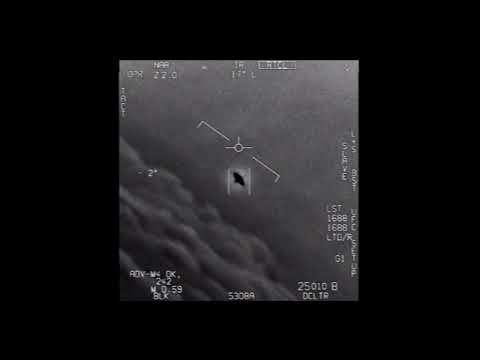
“Pentagon UFOs — FLIR, GIMBAL, GOFAST” — EncountersArchive
The three officially declassified Navy videos most closely associated with AATIP's public disclosure, presented together with their released context.
“What a Pentagon Insider Discovered About UFOs” with Lue Elizondo — Event Horizon
A long-form interview with Elizondo directly discussing his account of AATIP; useful viewed alongside this case file's own discussion of the Pentagon's disputed account of his role.
Sources
- Helene Cooper, Ralph Blumenthal & Leslie Kean, The New York Times, “Glowing Auras and 'Black Money': The Pentagon's Mysterious U.F.O. Program” (Dec. 16, 2017) — the original disclosure story (archival mirror)
- Ken Klippenstein, The Intercept, “The Media Loves This UFO Expert Who Says He Worked for an Obscure Pentagon Program. Did He?” (June 1, 2019) — the Pentagon's on-record dispute of Elizondo's specific role
- Wikipedia, “Advanced Aerospace Threat Identification Program” — consolidated program history, funding, and successor timeline
- Wikipedia, “All-domain Anomaly Resolution Office” — UAPTF/AOIMSG/AARO institutional succession timeline
- Wikipedia, “National Institute for Discovery Science” — NIDS's 2004 disbandment and absorption into BAASS
- U.S. Department of Defense, “Establishment of Unidentified Aerial Phenomena Task Force” (Aug. 14, 2020) — official DoD press release
- U.S. Department of Defense, “Establishment of the All-domain Anomaly Resolution Office” (July 20, 2022) — official DoD establishment memo
- U.S. House of Representatives, 50 U.S.C. § 3373, “Establishment of All-domain Anomaly Resolution Office” — codified statutory text
- AARO / U.S. Department of Defense, official website & “Historical Record Report, Volume I” (2024) — the Pentagon's comprehensive historical review of AATIP and successor programs
- U.S. Congress, House Permanent Select Committee on Intelligence, “Unidentified Aerial Phenomena” Open Hearing Transcript (May 17, 2022) — the first public congressional UAP hearing in roughly 50 years
- Defense Intelligence Agency, AATIP Program Documents (FOIA release) — contractor list and program scope
- This site, vault/index.html, DoD/AARO and DIA/AATIP DIRDs sections — cross-referenced primary document catalog
- This site, case-files/uss-nimitz.html — the 2004 encounter behind the “FLIR1” video
- This site, case-files/uss-roosevelt-gimbal-gofast-2015.html — the 2015 encounters behind the GoFast/Gimbal videos, with dedicated skeptical analysis
- This site, case-files/david-grusch.html — the closest evidentiary comparison case, for calibration
- This site, case-files/robertson-panel.html — a contrasting, debunking-oriented government UFO program, for calibration
- This site, case-files/condon-report.html — a second contrasting predetermined-outcome government study, for calibration
- This site, case-files/st-clair-county-triangle-sightings.html — NIDS's own investigative lineage directly into BAASS/AAWSAP
- Luis Elizondo, Imminent: Inside the Pentagon's Hunt for UFOs (2024) — Elizondo's own account
- Garrett M. Graff, UFO: The Inside Story of the US Government's Search for Alien Life Here—and Out There (2023) — independent journalistic history
- Ross Coulthart, In Plain Sight (2021) — independent investigative account
- Leslie Kean, UFOs: Generals, Pilots, and Government Officials Go on the Record (2010) — professional-witness evidentiary standard
- Michael Swords & Robert Powell, UFOs and Government: A Historical Inquiry (2012) — historical government-policy context
- YouTube (oEmbed-verified), EncountersArchive, “Pentagon UFOs — FLIR, GIMBAL, GOFAST” — the three officially released videos
- YouTube (oEmbed-verified), Event Horizon, “What a Pentagon Insider Discovered About UFOs with Lue Elizondo” — Elizondo's own extended account
- Wikimedia Commons, File: US Navy 030926-F-2828D-089 Aerial view of the Pentagon.jpg — hero image source and license (public domain, U.S. Navy)
- This site, locations/index.html, entry on The Pentagon — institutional background
See something inaccurate? Have additional information or sources?
Suggest an Edit →Last Updated: August 2026