
The Condon Report
This case file investigates a study, not a sighting: from October 1966 to November 1968, a University of Colorado team directed by physicist Edward U. Condon, under a $313,000-and-growing Air Force contract, re-investigated roughly 90 selected UFO cases drawn from Project Blue Book, NICAP, and APRO files, plus fresh field reports as they came in. Its final report, formally titled Scientific Study of Unidentified Flying Objects and universally known as the Condon Report, concluded that "nothing has come from the study of UFOs in the past 21 years that has added to scientific knowledge" and that further extensive study "probably cannot be justified" — the finding the Air Force cited in December 1969 when it closed Project Blue Book for good. That conclusion has been disputed from within the project itself ever since: a leaked 1966 memo from the study's own coordinator described a "trick" to appear neutral while expecting a negative result, two staff members were fired after surfacing it, and the report's own case-by-case findings left roughly a third of the cases it examined without an adequate conventional explanation — a proportion its own director's summary did not mention.
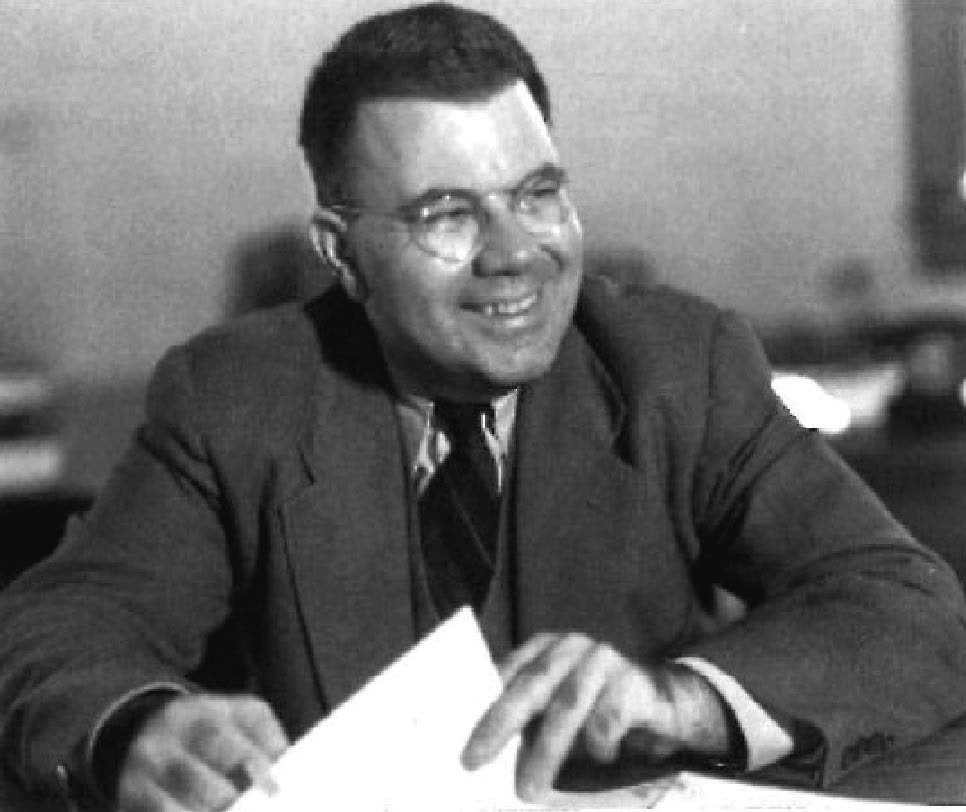
Pictured: physicist Edward U. Condon, in an official National Institute of Standards and Technology (formerly the National Bureau of Standards) portrait from his 1945–1951 tenure as the Bureau's director — not a photograph of the University of Colorado study itself, which is not known to have been documented in any widely available rights-clear photograph. No public-domain image of coordinator Robert Low, the project's Boulder offices, or the report's actual signing has been located for this case file.
Theoretical Alignment
Like the Robertson Panel thirteen years before it, the Condon Report is a major institutional expression of the Psycho-Social Hypothesis, though a more academically grounded one: the study employed a full-time psychologist (David Saunders) and explicitly framed much of the UFO phenomenon as a problem of perception, misidentification, and social contagion rather than physical causation. It gives essentially no weight to the interdimensional framing, absent from 1960s academic and Air Force thinking alike. On the extraterrestrial hypothesis, the report's own text is more measured than its public reputation suggests — Condon's summary states only that "no direct evidence whatever of a convincing nature" exists for extraterrestrial visitation, a narrower and more careful claim than "UFOs are all explained," even though several individual case investigators working under him, including William Hartmann and Gordon Thayer, reached considerably less dismissive verdicts on specific cases than Condon's own conclusion implied.
Background
By early 1966, the U.S. Air Force's UFO investigation arm, Project Blue Book, had been operating for fourteen years under a public mandate to determine whether unidentified flying objects posed any threat to national security — a mandate whose credibility had eroded badly. Astronomer J. Allen Hynek, Blue Book's own scientific consultant since 1948, had spent years privately urging the Air Force to hand the subject to an independent university rather than keep investigating it in-house, and a wave of highly publicized 1966 sightings brought the issue to a head. On March 20, 1966, dozens of witnesses near Dexter and Hillsdale, Michigan reported lights maneuvering over marshland; Hynek's hastily arranged press conference five days later, at which he suggested the lights might be swamp gas igniting, was widely mocked and became a national punchline — a moment he later called one of the most regretted of his career. The ridicule reached Capitol Hill: Michigan congressman (and future U.S. president) Gerald R. Ford publicly demanded a full congressional review of Blue Book, and the resulting House Armed Services Committee hearing on April 5, 1966 put real political pressure on the Air Force to act.
The Air Force's own scientific advisors had already been moving in the same direction. A U.S. Air Force Scientific Advisory Board ad hoc committee, chaired by optical physicist Dr. Brian O'Brien — who also held influential ties to the National Academy of Sciences — had reviewed Blue Book's operations and, in a March 1966 report, recommended that the Air Force contract with a small number of universities for an independent scientific review of UFO reports, rather than continue relying solely on its own in-house analysis. Acting on that recommendation, Col. Ivan C. Atkinson, deputy executive director of the Air Force Office of Scientific Research (AFOSR), wrote to the University of Colorado on August 31, 1966, proposing exactly such a study; physicist Edward Condon, a former director of the National Bureau of Standards with decades of high-level government science experience, was recruited that July to lead it. University of Colorado vice president and dean of faculties Thurston E. Manning signed the formal contract — AFOSR Contract F44620-67-C-0035, funding an initial $313,000 for fifteen months — on October 6, 1966; the university announced the project publicly the next day. The contract's funding ultimately grew past $500,000 as the project's scope and duration expanded.
Condon's own career made him an unusually loaded choice to lead a study the Air Force needed to look unimpeachably credible. Two decades earlier, as director of the National Bureau of Standards, he had spent 1947 to 1954 as one of the most prominent targets of Cold War loyalty politics: the House Un-American Activities Committee branded him a security risk in a 1948 report built almost entirely on guilt-by-association — his prior membership in since-relabeled "communist front" organizations and his advocacy for open scientific exchange with Soviet researchers — and committee chairman J. Parnell Thomas publicly called him the "weakest link" in American security. No evidence of actual espionage or disloyalty was ever produced, and the Department of Commerce's and Atomic Energy Commission's own loyalty boards repeatedly cleared him, but his security clearance was revoked and reinstated multiple times over the following years, and in October 1954 Vice President Richard Nixon publicly touted its final revocation as a victory over "pro-Soviet" scientists. Condon eventually stopped appealing, effectively ending his participation in classified defense research. By 1966, a physicist who had personally endured, and been vindicated against, exactly the kind of institutional suspicion the UFO subject now attracted was, in a sense, the most politically battle-tested available choice to front a study the Air Force needed the public to trust.
What almost no one outside the University of Colorado knew at the time is that the study's operational blueprint had already been drafted before the ink on that contract dried. On August 9, 1966 — three weeks before AFOSR's own formal proposal letter and nearly two months before the contract was signed — project coordinator Robert J. Low, an assistant dean of the university's graduate school, circulated an internal memorandum to two administrators laying out how the study should be structured and presented. That document, whose existence would not become public for nearly two years, is the single most consequential piece of evidence in the entire history of this case file.
Complete Timeline
| Date | Event |
|---|---|
| March 20–21, 1966 | The Michigan "Swamp Gas" UFO Wave and J. Allen Hynek's widely mocked press-conference explanation put intense political pressure on the Air Force to act. |
| March 1966 | The Air Force Scientific Advisory Board's ad hoc committee, chaired by Dr. Brian O'Brien, recommends contracting one or more universities for an independent UFO study. |
| April 5, 1966 | The House Armed Services Committee holds a UFO hearing after Rep. Gerald R. Ford demands a congressional review of Project Blue Book. |
| July 1966 | Physicist Edward U. Condon is recruited to direct a University of Colorado UFO study for the Air Force. |
| August 9, 1966 | Project coordinator Robert Low writes his internal "trick" memo describing how the study could appear objective while satisfying an expectation of a negative result. |
| August 31, 1966 | AFOSR's Col. Ivan C. Atkinson formally proposes the UFO study to the University of Colorado. |
| October 6–7, 1966 | University vice president Thurston E. Manning signs AFOSR Contract F44620-67-C-0035 ($313,000, 15 months); the project is announced publicly the next day. |
| 1966–1967 | Field teams, typically pairing a physical scientist with a psychologist, begin re-investigating current and archival UFO reports. |
| June 1967 | At a Boulder conference, RB-47 pilot Lewis Chase confidentially tells staffer Roy Craig about his 1957 RB-47 encounter, prompting the Committee to open a formal file on the case. |
| Summer 1967 | Atmospheric physicist James E. McDonald learns of Low's August 1966 memo and confronts Condon and Low about it. |
| January 1967 | Air Force liaison Col. Robert Hippler's internal correspondence expresses the service's preference for "anti-extraterrestrial" findings and its desire to close Blue Book, a fact later surfaced by historian Michael Swords. |
| February 9, 1968 | Condon fires principal investigator David Saunders and engineer Norman Levine after the Low memo's contents begin circulating outside the project. |
| April 30, 1968 | NICAP publicly severs ties with the study and releases the Low memo to the press. |
| May 14, 1968 | Journalist John G. Fuller publishes "Flying Saucer Fiasco" in Look magazine, calling the study a "$500,000 trick." |
| May 1968 | Robert Low resigns his coordinator role amid the controversy. |
| July 29, 1968 | Rep. J. Edward Roush chairs a House Committee on Science and Astronautics "Symposium on Unidentified Flying Objects," at which McDonald, Hynek, and Carl Sagan testify; Roush later calls unsuccessfully for a GAO investigation of the study. |
| November 1968 | The completed report is delivered to the Air Force. |
| December 2, 1968 – January 6, 1969 | A twelve-member National Academy of Sciences panel, chaired by Gerald M. Clemence, meets to independently review the report's scope, methodology, and findings. |
| January 8, 1969 | The NAS panel's review is completed, endorsing the study's methodology and conclusions. |
| January 9, 1969 | The report, Scientific Study of Unidentified Flying Objects, is publicly released. |
| December 17, 1969 | The U.S. Air Force formally closes Project Blue Book, citing the Condon Report as its justification. |
Two Years in Boulder: How the Project Actually Worked
Behind its imposing formal title, the University of Colorado UFO Project was a small and, by historian Michael Swords's own description, organizationally chaotic operation. Condon served as director but remained substantially detached from day-to-day fieldwork, a role several colleagues later characterized as more figurehead-scientific-authority than hands-on investigator; an unsent April 1967 draft note in his own papers captured his ambivalence candidly, describing the study as something that "was thrust upon me, and is distracting me." Robert Low, the assistant dean who had drafted the project's founding memo, functioned as its real operational core, managing staff, budget, and case assignments. Beneath them, a rotating team of roughly a dozen scientists and consultants did the actual work: co-principal investigators Stuart W. Cook (psychology), Franklin E. Roach (astro-geophysics), and William A. Scott (psychology) alongside David Saunders; chemist Roy Craig, who led field investigations; electrical engineer Norman Levine; astronomer William Hartmann and physicist Gordon Thayer, who handled photographic and radar-visual cases respectively; and psychologist Michael Wertheimer, among others. Field teams typically paired a physical scientist with a psychologist — a structure the O'Brien Committee had specifically recommended, reflecting the belief that both the physical evidence and the witness's perception needed independent evaluation.
The project drew its roughly 90 detailed case studies from three streams: older Blue Book files reaching back to 1947, fresh reports that came in directly during the study period (some investigated within days by Craig's field teams), and cases contributed by NICAP and APRO before those organizations' relationships with the project soured. The finished report ran to nearly 1,500 pages in its original hardcover printing (965 pages in the mass-market Bantam paperback), organized into case categories covering old reports, new reports, photographic cases, radar-visual cases, and the small number of astronaut-observed sightings. Some 37 scientists in total contributed chapters, sections, or specific case analyses, giving the final document a far broader base of individual scientific judgment than its single-author "Condon Report" nickname suggests — a fact that becomes directly relevant to the discrepancy this case file documents below, between what many of those individual contributors concluded case-by-case and what Condon's own summary chapter told the public.
The Low Memo: "The Trick"
Robert Low's August 9, 1966 memorandum, titled "Some Thoughts on the UFO Project" and addressed to graduate-school dean E. James Archer and vice president Thurston E. Manning, was written to reassure two administrators nervous about the university's reputation that a UFO study could be conducted without embarrassing the institution. Its central passage, quoted in nearly every subsequent account of the controversy, reads: "Our study would be conducted almost entirely by non-believers who, though they couldn't possibly prove a negative result, could and probably would add an impressive body of thick evidence that there is no reality to the observations. The trick would be, I think, to describe the project so that, to the public, it would appear a totally objective study but, to the scientific community, would present the image of a group of nonbelievers trying their best to be objective, but having an almost zero expectation of finding a saucer." Low was not yet the project's coordinator when he wrote it — that appointment came only after the memo — but the language became, once discovered, the single most damaging piece of documentary evidence anyone connected with the study ever produced about its own internal expectations.
The memo sat undiscovered in project files for roughly a year. According to journalist John G. Fuller's account in Look, staff members Norman Levine and David Saunders found and read it sometime in 1967, and concluded it proved the study's outcome had effectively been decided before any case had been reviewed. Atmospheric physicist James E. McDonald, an outspoken UFO researcher independent of the project, also learned of the memo's contents that summer and confronted both Condon and Low about it directly — a confrontation that visibly escalated existing tensions inside the project well before the controversy became public. The memo's language is not, on its own, proof that any individual case investigator behaved dishonestly; Saunders, Hartmann, and Thayer's own case-specific findings, discussed below, are in several instances considerably more open-minded than Low's memo would predict. But it is direct, contemporaneous, written evidence — not a decades-later recollection, as in the comparable Robertson Panel's "reduce public concern" admission — that the project's own coordinator considered a negative finding all but assured before the contract that would fund the study had even been signed.
Firing Saunders and Levine
The memo's fallout came to a head on February 9, 1968, when Condon fired both Saunders and Levine. The immediate trigger was a visiting engineer's report that the two had shown a copy of the Low memo to outside colleagues; Condon's own stated justification framed the dismissals as a response to a breach of internal trust rather than to any disagreement over the study's findings. Saunders and Levine, and many outside observers since, read the timing very differently — as retaliation for surfacing evidence that undercut the project's claimed objectivity, arriving only months before the study's conclusions would be finalized. NICAP formally severed its relationship with the study three months later, on April 30, 1968, publicly releasing the memo; Fuller's Look exposé followed on May 14, and Low himself resigned his coordinator position that same month as the controversy deepened. Saunders and Levine went on to co-author UFOs? Yes! Where the Condon Committee Went Wrong (1968), a detailed insider account arguing the study had been compromised from the outset — Saunders separately built the pioneering UFOCAT computer sightings database that outlived the controversy by decades and remains a foundational tool in UFO case research.
Case by Case: What the Report Actually Found
The single most cited — and most consequential — statistic from the Condon Report is Condon's own: "about 90% of all UFO reports prove to be quite plausibly related to ordinary objects." That figure, taken alone, supports his summary's conclusion that the phenomenon deserves no special scientific urgency. But it describes the roughly 90% of all reports ever received that resolve quickly and unremarkably to balloons, aircraft, astronomical objects, and similar mundane causes — not the smaller, deliberately harder set of roughly 90 detailed cases the project's own scientists spent two years actually investigating in depth. On that harder subset — the cases selected precisely because they had already resisted easy explanation elsewhere — the report's own case-by-case findings were markedly less tidy: critics and later academic reviewers, including physicist James E. McDonald in Congressional testimony, counted more than 30% of the roughly 90 detailed cases as left without an adequate conventional explanation in the report's own text — a proportion Condon's own "Conclusions and Recommendations" chapter never stated in those terms.
Individual staff findings make the gap concrete. William Hartmann's photogrammetric analysis of the McMinnville, Oregon Trent photographs (Case 46) concluded the images were "consistent with the assertion that an extraordinary flying object...flew within sight of two witnesses," while explicitly declining to rule out fabrication — a genuinely open verdict, not a debunking. Gordon Thayer's analysis of the 1956 Lakenheath-Bentwaters radar-visual case (Case 2) went further, judging the probability of "at least one genuine UFO" involved as "fairly high," and separately called the Air Force's own official explanation for the 1957 RB-47 bomber chase "literally ridiculous." According to historian Michael Swords's review of internal project records, 11 of the study's 16 core staff members personally believed, at the project's conclusion, that UFOs still warranted continued scientific study — directly contradicting the dismissive tone of Condon's own public summary. This is the internal tension at the very center of this case file: not that the Condon Report contains no genuine science, but that its own scientific staff's individual findings and Condon's headline conclusion pointed in substantially different directions, and it was the latter, not the former, that reached the public and the Air Force.
Congress, the Press, and the End of Blue Book
The controversy reached the U.S. Capitol before the report was even finished. On July 29, 1968, Indiana congressman J. Edward Roush, a member of the House Committee on Science and Astronautics, chaired a one-day "Symposium on Unidentified Flying Objects," inviting six scientists to testify: J. Allen Hynek, James E. McDonald, Carl Sagan, sociologist Robert L. Hall, civil engineer James A. Harder, and astrodynamicist Robert M. L. Baker Jr. McDonald's prepared statement argued the UFO problem lay genuinely outside current scientific understanding and criticized the still-unreleased Colorado study for examining only a small fraction of the most scientifically puzzling cases on record, including some the project's own staff had investigated but omitted from the final report. Roush, alarmed by what the hearing surfaced, later called for a General Accounting Office investigation into how the study had been conducted; the request was declined.
Once the report was formally released on January 9, 1969, its reception split sharply along the same lines the controversy had already drawn. Mainstream press coverage and much of the general scientific press were laudatory — the journal Science called it "the most thorough and sophisticated investigation ever conducted" on the subject — while researchers who had actually engaged with UFO reports in depth were far more critical. Hynek, writing in the Bulletin of the Atomic Scientists, called the report "voluminous, rambling, poorly organized" and judged that it "settled nothing." In November 1970, a subcommittee of the American Institute of Aeronautics and Astronautics (AIAA) published its own independent review, "UFO: An Appraisal of the Problem," concluding that Condon's summary did not adequately reflect the body of the report and that "the opposite conclusion could have been drawn from the Condon Report's content, namely, that a phenomenon with such a high ratio of unexplained cases (about 30 percent) should arouse sufficient scientific curiosity to continue its study." Despite that dissent, the Air Force's own institutional interest had already been served: Colonel Robert Hippler's internal correspondence from January 1967 had made plain the service's preference for "anti-extraterrestrial conclusions" and its desire to close Blue Book, and on December 17, 1969, it did exactly that, citing the Condon Report as its formal justification.
The National Academy of Sciences Review
Before the report's public release, the Air Force and the University of Colorado arranged for an outside check on the study's own rigor: a twelve-member panel convened by the National Academy of Sciences in late 1968, chaired by Yale celestial-mechanics astronomer Gerald M. Clemence and drawn from institutions including the University of Michigan, Rockefeller University, Stanford, and UCLA, spanning physics, psychology, atmospheric science, and mathematics. Its explicit charge was to "provide an independent assessment of the scope, methodology, and findings" of the Colorado report — not to conduct any new UFO investigation of its own or hear testimony from advocates on either side. After individual review followed by meetings on December 2, 1968 and January 6, 1969, plus correspondence with specialists on individual chapters, the panel concluded that the study's scope was "adequate to its purpose," that its methodology was "well chosen, in accordance with accepted standards of scientific investigation," and that its major recommendations — no new government UFO agency, no case for further general investigation, but continued support for specific atmospheric-science questions the study had raised — were warranted by the evidence presented. It separately endorsed the judgment that "on the basis of present knowledge the least likely explanation of UFOs is the hypothesis of extraterrestrial visitations by intelligent beings."
The NAS panel's endorsement is real and substantive — a genuinely independent, credentialed multidisciplinary body did review the Colorado study's methodology on its own initiative and found it sound, a check the CIA never subjected the Robertson Panel to at the time. But its scope was also explicitly and deliberately narrow: the panel assessed whether the report's methodology was internally sound, not whether Condon's summary conclusions actually followed from the case-by-case findings its own scientists had produced, and it conducted no independent re-investigation of any individual case. A panel built to check a study's methodology is not equipped to catch a mismatch between that study's data and its own author's headline framing of that data — precisely the discrepancy the AIAA subcommittee and McDonald both separately identified.
Key Figures: The Committee, Its Critics, and Its Casualties
The Condon Report has no eyewitnesses of its own — it is a two-year documentary and field-investigation review, not a sighting report. In place of witness testimony, the profiles below are the study's director, coordinator, staff, and the outside reviewers and critics whose individual roles and later statements are the actual substance of the independence debate this case file exists to weigh.
Dr. Edward U. Condon
A former director of the National Bureau of Standards and past president of the American Physical Society, recruited in July 1966 to direct the study despite having no prior UFO-specific expertise. He remained substantially detached from day-to-day fieldwork, authored the report's dismissive "Conclusions and Recommendations," and fired staff members Saunders and Levine in February 1968 after they surfaced coordinator Robert Low's internal memo.
Robert J. Low
The University of Colorado administrator whose August 9, 1966 memo — written before the Air Force contract was even signed — proposed presenting the study as objective to the public while assembling "non-believers" with "an almost zero expectation of finding a saucer." Resigned as coordinator in May 1968 amid the fallout once the memo became public.
Dr. David R. Saunders
Built the pioneering UFOCAT sighting database and was among the staff most convinced individual cases (notably the Mariana film) constituted genuine evidence. Fired by Condon on February 9, 1968 after discovering and circulating the Low memo; co-authored UFOs? Yes! (1968) with Levine.
Norman E. Levine
Discovered the Low memo alongside Saunders and concluded it proved the study's negative outcome had been predetermined. Fired the same day as Saunders; his and Saunders's dismissal became the controversy's most visible public flashpoint once reported by Look magazine.
Roy Craig
Led the study's field-investigation teams, personally re-examined the Mariana film footage, and opened the project's formal RB-47 file after pilot Lewis Chase confided in him at a 1967 Boulder conference. Published his own measured insider memoir, UFOs: An Insider's View of the Official Quest for Evidence (1995), decades later.
William K. Hartmann
Authored the study's photogrammetric analyses of the McMinnville and Mariana photographic cases, reaching cautious, genuinely open verdicts rather than debunking either outright. Went on to a prominent planetary-science career co-developing the giant-impact hypothesis for the Moon's origin.
Gordon D. Thayer
Authored the study's technical analyses of the Lakenheath-Bentwaters and RB-47 radar-visual cases, judging a genuine UFO "fairly high" in probability for the former and calling the Air Force's RB-47 explanation "literally ridiculous" — individual findings sharply at odds with Condon's public summary.
Dr. Gerald M. Clemence
Chaired the twelve-member National Academy of Sciences panel that independently reviewed the finished report's scope and methodology in late 1968, endorsing both as scientifically sound — a review of the study's rigor, not an independent re-investigation of its underlying cases.
Dr. James E. McDonald
Learned of the Low memo independently in 1967 and confronted Condon and Low directly; testified before Congress in July 1968 that the study examined too few of the genuinely puzzling cases and that its public conclusions did not match its own case-by-case findings.
Rep. J. Edward Roush
Chaired the July 1968 Congressional UFO symposium that gave McDonald, Hynek, and Sagan a public platform to question the study before its release, and later sought an unsuccessful GAO investigation into how it had been conducted.
The Five Observables Assessment
The study's own staff made no first-hand observation of any craft; this framework instead assesses the performance characteristics attributed to objects in the specific cases the project's individual investigators evaluated most closely — principally McMinnville, Lakenheath-Bentwaters, and the RB-47 case — not any single unified finding the report itself endorsed.
Assessment: Because the study is itself the evaluating body rather than the observing witness, this grid measures how its own most closely examined source material scored in the judgment of its individual case investigators — not a claim the project's summary conclusion endorsed. Notably, the study's own specialist staff (Hartmann on McMinnville, Thayer on Lakenheath and RB-47) reached more open verdicts on anomalous performance in their individual case chapters than Condon's overall dismissive summary reflects — the same internal tension that runs through this entire case file.
Evidence Assessment
Supporting the Study's Scientific Seriousness
- Some 37 scientists across multiple disciplines contributed to a nearly 1,500-page report — a far larger and more transparent undertaking than the CIA's twelve-hour Robertson Panel review.
- Individual staff investigations, particularly Hartmann's McMinnville photogrammetry and Thayer's Lakenheath and RB-47 analyses, are genuinely careful, technically serious, and reached open rather than dismissive verdicts.
- A twelve-member National Academy of Sciences panel, working independently and with no obligation to endorse the study, reviewed its methodology in detail and found it sound — a level of outside peer review no comparable government-adjacent UFO study on this site received.
- Saunders's UFOCAT database, a direct output of the project, remains a genuinely useful research tool used by ufologists and skeptics alike decades later.
- The report's raw case material — as opposed to its summary framing — was thorough enough that critics on both sides of the UFO debate have mined the same underlying data for entirely opposite conclusions ever since, itself a sign of real underlying documentary substance.
Supporting Skepticism of the Study's Independence and Framing
- Coordinator Robert Low wrote, before the Air Force contract was even signed, that the study should appear objective to the public while assembling "non-believers" with "an almost zero expectation of finding a saucer."
- Staff members David Saunders and Norman Levine were fired within months of the study's conclusion, shortly after surfacing that memo internally.
- Historian Michael Swords found that 11 of the study's 16 core staff members personally believed UFOs still warranted continued study — directly at odds with Condon's own public summary.
- Roughly 30% of the roughly 90 detailed cases the report itself examined were left without an adequate conventional explanation in its own text, a proportion Condon's headline conclusion did not state.
- Air Force liaison Col. Robert Hippler's internal January 1967 correspondence expressed a clear institutional preference for "anti-extraterrestrial" findings and a desire to close Project Blue Book — the same outcome the finished report ultimately delivered.
- The 1970 AIAA subcommittee review concluded the report's own summary "did not adequately reflect the body of the report."
Why "Disputed"
The Condon Report earns a DISPUTED classification on the same case-file-type axis as this site's other government and academic study reviews: not whether any individual UFO case it examined was genuinely anomalous, but whether the study itself functioned as the independent, rigorous scientific review its scale, university affiliation, and National Academy of Sciences endorsement have generally been credited with providing. On the side favoring the study's legitimacy, it was a substantially larger, longer, and more transparent undertaking than any comparable government-adjacent UFO review on this site — two years of fieldwork by roughly a dozen credentialed scientists, spanning 37 total contributors and nearly 1,500 published pages, capped by a genuinely independent National Academy of Sciences methodology review that the CIA never subjected the Robertson Panel to. Individual staff findings, especially Hartmann's and Thayer's, represent real, careful, non-dismissive scientific work that holds up on its own technical merits.
On the other side, the documentary record of predetermination is more direct here than in almost any comparable case: Robert Low's August 1966 memo is a contemporaneous internal document written before the contract funding the study was even signed, not a decades-later recollection like Thornton Page's 1992 account of the Robertson Panel. Two staff members were fired within months of surfacing it. Historian Michael Swords's finding that a majority of the project's own core staff privately disagreed with Condon's public conclusion, combined with the report's own roughly 30% rate of case-by-case non-explanation — a figure the AIAA's own 1970 review said supported the opposite conclusion from the one Condon actually drew — describes a study whose internal findings and public-facing summary diverged in a way the National Academy of Sciences' narrowly scoped methodology review was never positioned to catch, since it assessed how the study was conducted rather than whether its conclusions matched its own data. Those two things being true simultaneously — genuine, often careful science produced by unconflicted individual investigators, sitting inside a project whose coordinator wrote down his expectation of a negative result before it began, and whose headline conclusion diverged from a majority of its own staff's private views — is exactly the condition "Disputed" exists to describe.
Sensor & Instrumentation Detection Profile
The study generated no sensor data of its own from any craft; its "instrumentation" consisted of second-hand access to radar logs, photographic negatives, and physical samples other agencies, witnesses, or the project's own rapid-response field teams had already compiled. Its most substantive instrumented analyses were Gordon Thayer's technical review of Royal Air Force ground-radar logs from the 1956 Lakenheath-Bentwaters case and William Hartmann's photogrammetric and photometric analysis of the McMinnville and Mariana film footage, both performed against the University of Colorado's own optical and analytical equipment rather than any instrument the project deployed in the field. Roy Craig's field teams did carry basic recording equipment to new reports as they came in, but the project fielded no dedicated radar, radiation, or magnetometer network of its own.
Environmental & Geospatial Context
Not applicable in the conventional sense used elsewhere on this site: the study's own work took place primarily indoors, across two years of case-file review, laboratory photographic analysis, and staff meetings at the University of Colorado's Boulder campus, with fieldwork by Craig's teams occurring at the scattered locations of the individual cases under review rather than at any single "incident site" of the study's own. Any geospatial specificity in this case file is inherited from those individual reviewed cases — McMinnville, Oregon; Lakenheath and Bentwaters, England; the RB-47's Gulf of Mexico flight path; and dozens of others scattered across the roughly 90-case docket.
Observer Credibility & Occupational Profile
The study's core staff held genuine, verifiable academic and scientific credentials, if a notably more junior and mixed-discipline profile than the five senior physicists of the Robertson Panel: Edward Condon (former National Bureau of Standards director, past American Physical Society president); psychologists David Saunders, Stuart Cook, William Scott, and Michael Wertheimer; astro-geophysicist Franklin Roach; chemist Roy Craig; astronomer William Hartmann; physicist Gordon Thayer; and electrical engineer Norman Levine. None had a prior public advocacy position on UFOs before joining, a point in favor of individual objectivity even as coordinator Robert Low's own memo, by his own account, assumed the study's non-believing character as a starting premise rather than an outcome. The National Academy of Sciences review panel, chaired by Gerald M. Clemence, added a further layer of senior, independently credentialed scientific review, though one focused on methodology rather than individual witness credibility.
Physical & Material Assays
The study conducted limited independent physical or material testing of its own, largely because most of its roughly 90 cases involved visual, photographic, or radar evidence rather than recovered physical material. Its closest approach to true material analysis was Hartmann's photogrammetric and photometric work on the McMinnville and Mariana films (measuring shadow angles, apparent motion, and exposure characteristics rather than physical samples) and the project's review, via Case 48, of the 1952 Barra da Tijuca photographs, which independently confirmed a 1963 shadow-direction discrepancy first identified by Donald Menzel and Lyle Boyd. The project did not, so far as its own published record shows, commission new metallurgical or soil testing on any physical trace sample.
Historical Precedents & Archive Matches
The Condon Report sits at a pivotal point in the same chain of U.S. government UFO-study efforts this site has already documented: it directly followed and formally superseded Project Blue Book's own fourteen years of Air Force in-house investigation, and its 1953 predecessor in the same lineage, the CIA's Robertson Panel, drew an explicit and frequently cited parallel once its own "reduce public concern" admission became public — both cases turn on a documented gap between a study's institutional mandate and its claimed scientific neutrality, though the Condon Report's Low memo is a more direct, contemporaneous piece of evidence than the Robertson Panel's 1992 recollection. Internationally, France's later COMETA committee and the United Kingdom's Ministry of Defence Project Condign both required this site to weigh a government-linked study's own rigor and independence in the same way, giving all four cases a shared analytical lineage even though each arose from a different national government and a different institutional structure (intelligence agency, university contract, and defense ministry respectively). Within its own case docket, the Condon Report's specific verdicts on McMinnville, Mariana, Lakenheath-Bentwaters, the RB-47 chase, and Barra da Tijuca remain contested reference points in each of those individual case files' own analytical histories.
Material Analysis
There is no physical or trace evidence generated by the study itself in the sense this site applies to a landing-trace or debris case — no soil samples, no metallurgical residue, no recovered fragments held in the project's own custody. Every physical-evidence claim addressed in this case file is inherited, with attribution, from the underlying case files the study reviewed: the McMinnville and Mariana photographic negatives (never held by the University of Colorado itself), the Lakenheath ground-radar logs (RAF property), and the Barra da Tijuca prints. This absence is, as with the Robertson Panel, the defining fact of what kind of document the Condon Report actually is: an analytical review and re-investigation of pre-existing evidence and fresh witness reports, not a generator of new physical evidence in its own right.
Supporting the Study's Use of Physical Evidence
- Hartmann's photogrammetric methodology on the McMinnville and Mariana films is independently checkable against the report's own published measurements and represents genuine, falsifiable technical analysis.
- The Case 48 Barra da Tijuca review independently reproduced an earlier, separately sourced shadow-direction finding (Menzel and Boyd, 1963), a form of cross-validation the study did not have to perform but did.
Supporting Skepticism of the Study's Physical-Evidence Handling
- The project commissioned no new independent metallurgical, isotopic, or soil testing of any physical trace material across its roughly 90 detailed cases.
- Photographic evidence review depended on prints and negatives the University of Colorado never held in its own custody, limiting how much independent re-examination was genuinely possible.
- Several photographic and radar-visual verdicts (Hartmann on McMinnville, Thayer on Lakenheath) reached open, unresolved conclusions that Condon's own summary chapter did not carry forward into its public framing.
The Conventional Explanation Candidate: Assessing the Study's Own Rigor
Because this case file concerns a scientific study rather than a sighting, its "Conventional Explanation Candidate" section asks the same kind of question the Robertson Panel's own CEC asked: not "what conventional phenomenon explains an observed object," but "what is the most plausible characterization of what the Condon Report actually was and did." Three candidate characterizations deserve serious evaluation, each grounded in the documentary record assembled above.
A Genuine, Broad, but Editorially Compromised Scientific Study
The most parsimonious reading consistent with the study's actual technical output is that 37 real scientists conducted substantively serious, individually honest case investigations across roughly two years, but that the process by which those individual findings were synthesized into a single public conclusion was compromised by the coordinator's stated pre-study expectations and the director's own detachment from the underlying work. This explanation accounts cleanly for Hartmann's and Thayer's genuinely open individual verdicts, the report's real technical depth on cases like Lakenheath and McMinnville, and the National Academy of Sciences' independent endorsement of its methodology — none of which a purely fraudulent operation would have needed to produce. It also accounts for the gap between Swords's "11 of 16 staff" finding and Condon's public summary, since editorial framing by a detached director is a plausible mechanism for exactly that kind of divergence. It does not fully explain why Low's memo used the specific word "trick," nor why Saunders and Levine were fired within months of the study's conclusion rather than earlier or not at all.
An Institutionally Directed Study With a Predetermined Negative Conclusion
The competing reading, supported by Saunders and Levine's own book, McDonald's Congressional testimony, and the AIAA's 1970 review, holds that Low's memo describes not a rogue coordinator's private opinion but the study's actual operating premise from before its first case review — a premise Air Force liaison Col. Robert Hippler's own January 1967 correspondence, seeking "anti-extraterrestrial conclusions" and Blue Book's closure, shows the study's funding agency shared. This explanation accounts cleanly for the firings' timing, Low's resignation once exposed, the specific ~30% unresolved-case discrepancy the AIAA flagged, and the fact that the finished report delivered exactly the outcome Hippler's correspondence had hoped for. It does not require any individual case investigator to have acted in bad faith — a coordinator's and a funding agency's shared expectation of a negative result is compatible with Hartmann and Thayer having genuinely, honestly reached more open individual verdicts that simply did not survive into Condon's editorial summary.
A Deliberate Fraud With No Genuine Scientific Content
A stronger claim, occasionally advanced in more advocacy-oriented UFO literature, holds that the entire study was a sham from the outset, with no individual finding deserving to be taken at face value. This explanation is not well supported by the documentary record this case file has assembled: Hartmann's and Thayer's specific, falsifiable technical analyses hold up as genuine science regardless of the project's broader editorial problems, the National Academy of Sciences' independent panel found the methodology itself sound, and Saunders's own UFOCAT database — a direct product of the "compromised" project — remains a respected research tool among researchers who reject Condon's conclusions entirely. The evidence supports a study compromised in its framing and personnel management, not one devoid of genuine scientific content throughout.
Genuine but Editorially Compromised Study
Highly PlausibleConsistent with real technical depth in individual case chapters and the NAS methodology endorsement, though it does not fully explain the specific "trick" language in Low's memo or the timing of the Saunders/Levine firings.
Institutionally Directed, Predetermined Negative Conclusion
Highly PlausibleDirectly supported by Low's contemporaneous 1966 memo, Air Force liaison Hippler's 1967 correspondence seeking the same outcome the report ultimately delivered, Swords's staff-disagreement finding, and the AIAA's own 1970 case-statistics critique.
Deliberate Fraud With No Genuine Content
UnprovenContradicted by Hartmann's and Thayer's specific, falsifiable, individually careful case analyses, the National Academy of Sciences' independent methodology endorsement, and the continued research value of Saunders's UFOCAT database.
Related Cases
Confirmed Documents & Official Records
The complete original three-volume edition of the Condon Report, digitized and hosted by the Internet Archive.
Unclassified; publicly released 1969The NAS panel's own eleven-page independent assessment of the Colorado study's scope, methodology, and findings, chaired by Gerald M. Clemence.
Unclassified; Defense Technical Information Center recordThe full transcript of Rep. J. Edward Roush's Congressional UFO symposium, at which Hynek, McDonald, Sagan, and three other scientists testified ahead of the Condon Report's public release.
Public record; 90th Congress, 2nd SessionThe university's own description of the Edward U. Condon Papers held in its Rare and Distinctive Collections, including the project's original research files.
University archival recordSearch Government Archives Directly
Further Reading — Recommended Literature
UFOs? Yes!: Where the Condon Committee Went Wrong
The insider account by the study's own dismissed principal investigator, reproducing the Low memo in full and arguing the project's public conclusions were decided before its fieldwork began.
UFOs: An Insider's View of the Official Quest for Evidence
A measured, decades-later memoir by the study's own field-investigation leader, offering a more balanced insider perspective than either Condon's summary or Saunders's critique alone.
Watch the Skies!: A Chronicle of the Flying Saucer Myth
A detailed, skeptically-inclined narrative history of American UFO culture that situates the Condon Report within the broader arc of Air Force policy from 1947 through the 1990s.
UFOs and Government: A Historical Inquiry
The most detailed scholarly historical treatment of the Colorado study's founding, internal politics, and aftermath, drawing on the same historian whose research on the project's internal staff divisions is central to this case file.
The UFO Controversy in America
A foundational academic history of American UFO research and government engagement with it, including a detailed treatment of the Condon Report's reception and its role in Project Blue Book's 1969 closure.
Essential Viewing
No Videos Available
Sources
- Edward U. Condon (dir.), "Scientific Study of Unidentified Flying Objects" (the Condon Report), University of Colorado, 1968/1969 — full text mirror, Internet Archive.
- University of Colorado, "Final Report of the Scientific Study of Unidentified Flying Objects Conducted by the University of Colorado", complete three-volume digitized edition, Internet Archive.
- National Capital Area Skeptics, "Condon Report, Section II: Summary of the Study", full-text hosted mirror.
- National Academy of Sciences Ad Hoc Committee, "Review of the University of Colorado Report on Unidentified Flying Objects by a Panel of the National Academy of Sciences", January 8, 1969 (DTIC AD0688541), Internet Archive.
- Project 1947 / Sign Historical Group, "NAS Review of The Condon Report".
- Peter A. Sturrock, "An Analysis of the Condon Report on the Colorado UFO Project", Journal of Scientific Exploration, Vol. 1, No. 1, 1987.
- John G. Fuller, "The Flying Saucer Fiasco", Look magazine, May 14, 1968 — the original public exposure of the Low memo and the Saunders/Levine dismissals.
- David R. Saunders & R. Roger Harkins, UFOs? Yes! Where the Condon Committee Went Wrong (Signet, 1968) — reproduces the full text of Robert Low's August 9, 1966 memorandum.
- U.S. House Committee on Science and Astronautics, "Symposium on Unidentified Flying Objects," Hearings, 90th Congress, 2nd Session, July 29, 1968.
- NICAP, "Hynek: Symposium on UFOs, 29 July 1968" — supplementary hearing materials and commentary.
- James E. McDonald, "UFOs and the Condon Report: A Scientist's Critique," February 12, 1969, hosted by Princeton University.
- American Institute of Aeronautics and Astronautics UFO Subcommittee, "UFO: An Appraisal of the Problem," Astronautics & Aeronautics, November 1970, hosted by Princeton University.
- Michael D. Swords, "The Story of the Colorado Project," historical analysis of the University of Colorado UFO Project's internal records and staff divisions.
- Michael D. Swords & Robert Powell, with Clas Svahn, Vicente-Juan Ballester Olmos, Bill Chalker, Barry Greenwood, Richard Thieme, Jan Aldrich, and Steve Purcell, UFOs and Government: A Historical Inquiry (Anomalist Books, 2012).
- Roy Craig, UFOs: An Insider's View of the Official Quest for Evidence (University of North Texas Press, 1995).
- Curtis Peebles, Watch the Skies!: A Chronicle of the Flying Saucer Myth (Smithsonian Institution Press, 1994).
- David M. Jacobs, The UFO Controversy in America (Indiana University Press, 1975), foreword by J. Allen Hynek.
- University of Colorado Boulder, "The Condon Report: CU Boulder's Historic UFO Study," Coloradan alumni magazine, November 5, 2021.
- University of Colorado Boulder Libraries, "Archives: Edward U. Condon and UFO Studies," April 2, 2018.
- Boulder Reporting Lab, "The U.S. Air Force Once Paid CU Boulder to Study UFOs. Here's What It Found," June 25, 2026.
- Wikipedia, "Condon Committee" — used lightly for orientation and cross-checking dates/membership against primary sources.
- Physics Today / American Institute of Physics, "Edward Condon and the Cold War Politics of Loyalty" — on Condon's 1947–1954 HUAC loyalty investigation prior to the UFO study.
- Wikimedia Commons, "Edward U. Condon" (National Institute of Standards and Technology, public domain U.S. federal government work) — source of this case file's hero image.
- Case File, The Omni Ledger, The Robertson Panel — companion case file on the 1953 CIA study this report is most frequently compared to.
- Case File, The Omni Ledger, McMinnville, Oregon (Trent Photographs) — one of the study's own most closely examined photographic cases.
- Case File, The Omni Ledger, Lakenheath-Bentwaters Radar-Visual Case — the study's most consequential radar-visual case analysis.
- Case File, The Omni Ledger, RB-47 Bomber Chase — the case opened after pilot Lewis Chase confided in Condon Committee staffer Roy Craig.
See something inaccurate? Have additional information or sources?
Suggest an Edit →Last Updated: August 2026