
Albert Bender & the Three Men in Black
In 1952, Albert K. Bender, a factory timekeeper living in Bridgeport, Connecticut, founded the International Flying Saucer Bureau (IFSB), a civilian UFO research club that grew to roughly 600 members worldwide and published a newsletter called Space Review. In late 1953, without public explanation, Bender abruptly shut both down. He later told an IFSB colleague, Gray Barker, that three men in dark suits had visited his home, flashed credentials claiming authority from an unnamed higher power, and warned him, by ordinary speech or telepathy depending on which account one reads, to stop his UFO research entirely. Barker's dramatized 1956 book They Knew Too Much About Flying Saucers turned this claim into the founding account of the "Men in Black" figure now standard across UFO folklore and popular culture — despite Barker's own separately, extensively documented reputation as a UFO writer who fabricated and embellished stories for commercial gain throughout his career. Bender's own much later account, the 1962 book Flying Saucers and the Three Men, offered a substantially different story involving exotic, non-governmental visitors and made no mention of the menacing government-agent framing Barker's book had already made famous. No independent witness, physical trace, or corroborating document exists for any version of the claim; the entire case rests on Bender's own testimony, told at least twice, inconsistently, nine years apart. This site treats the underlying claim as unverifiable rather than actively disproven, while documenting in full why it became one of the most consequential single stories in the history of American UFO folklore.
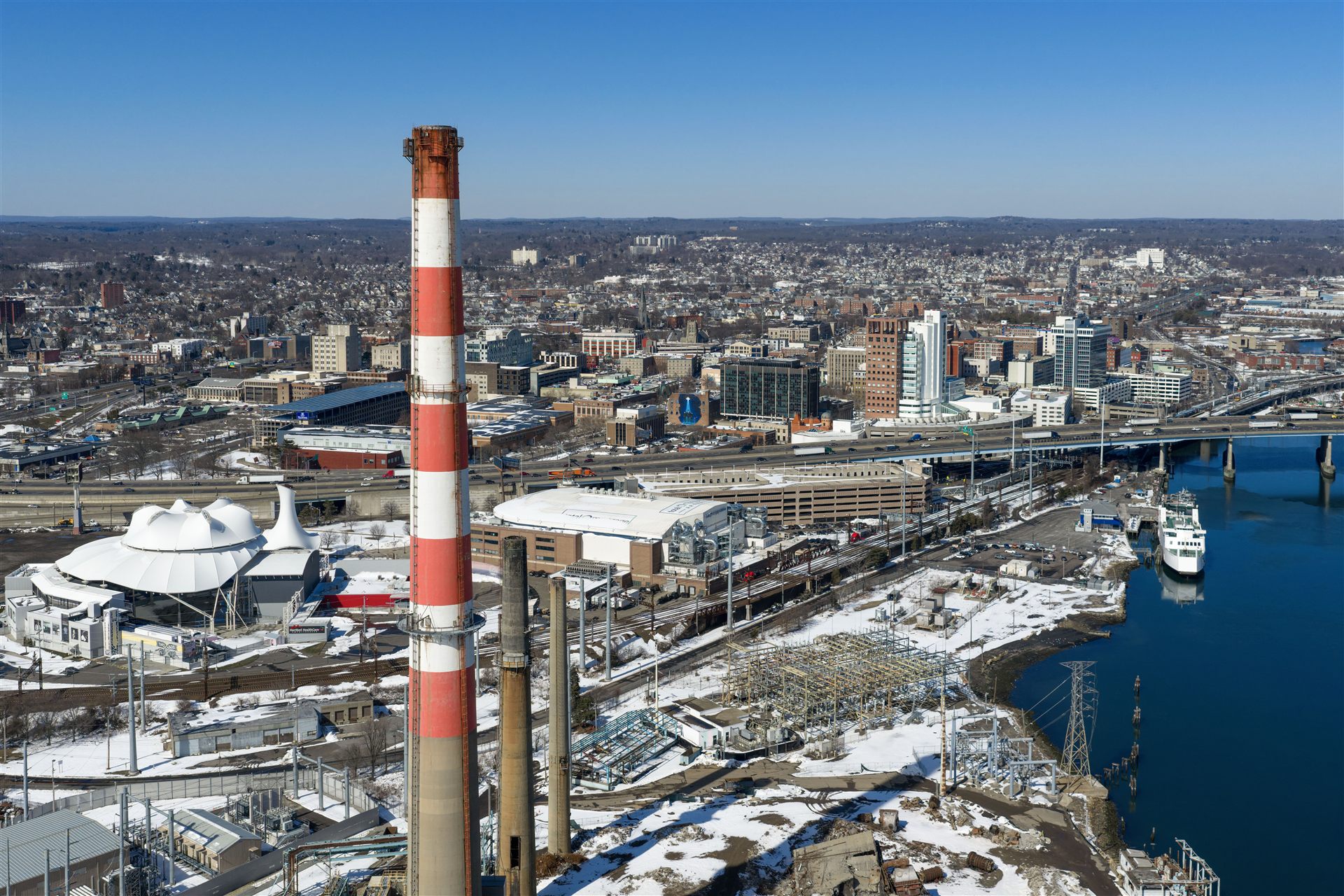
Pictured: downtown Bridgeport, Connecticut, viewed from the Pequonnock River waterfront in 2026. This is not a photograph of the actual event or the claimed visitors — no rights-clear photograph of either exists, since the claim itself is a single, uncorroborated personal account. It is also not a photograph of Bender's own former home at 784 Broad Street, which no longer exists: that block was demolished during the 1950s–60s construction of Interstate 95 and the subsequent State Street Redevelopment Project, and a parking lot now occupies the site. Photo by Quintin Soloviev, via Wikimedia Commons, licensed CC BY 4.0.
Theoretical Alignment
This case aligns predominantly with the Psycho-Social hypothesis, reflecting the overwhelming weight this site's own research places on Bender's personal, subjective, and internally inconsistent account as the sole source for every version of the claim, set against a documented context of organizational stress, occult hobbyist immersion, and a professional promoter (Barker) with direct financial motive to dramatize it. The small IDH allowance reflects Bender's own later account specifically, which described the "three men" in explicitly exotic, non-terrestrial, and non-governmental terms; the smaller ETH allowance reflects that some retellings of that same 1962 account frame the visitors as extraterrestrial rather than interdimensional. Neither residual alignment reflects any independent evidence this site's research located; both track only the content of Bender's own, twice-revised personal narrative.
Background
Understanding why one Connecticut hobbyist's personal claim became a permanent fixture of American UFO folklore requires understanding both the man himself and the specific media apparatus — principally one collaborator with his own well-earned reputation for embellishment — that carried the story to a national audience.
Albert Bender: Timekeeper, Horror Fan, Saucer Enthusiast
Albert K. Bender was born June 16, 1921, in Duryea, Pennsylvania. He served in the U.S. Army Air Corps beginning in 1942 as a dental technician, stationed at Fort George G. Meade, Maryland, and later at Langley, Virginia. After the war he relocated to Bridgeport, Connecticut, settling with his mother Ellen and stepfather Michael Ardolino at 784 Broad Street, and worked as chief timekeeper at the Acme Shear Company, then billed as the world's largest scissors manufacturer. By every account located in this site's research, Bender was a genuinely eccentric personality with a lifelong fascination with horror and the supernatural: he filled his attic living quarters with some twenty chiming clocks and decorated the space as a self-styled "Chamber of Horrors," complete with faux skulls, shrunken heads, sound effects, and outsider art, and he claimed an interest in ancestral witchcraft. This is the specific environment — a single, unmarried hobbyist alone in an attic he had deliberately furnished to evoke dread, already experimenting with self-hypnosis and telepathy "experiments" as part of his saucer research — in which the case's central claimed event later took place.
The International Flying Saucer Bureau
Inspired by the wave of American flying-saucer reports of the preceding years, Bender founded the International Flying Saucer Bureau in 1952, widely credited by UFO historians as the first major civilian UFO research club in the world. Operating out of Bender's own Broad Street home, the IFSB grew to roughly 600 members across multiple countries and published a newsletter, Space Review, carrying sighting reports and speculative theorizing to its membership. Retrospective accounts describe World War I flying ace Eddie Rickenbacker as an honorary member and Albert Einstein as having been invited but declined — details this site's research could not independently verify beyond their repetition in secondary retrospectives, and which it accordingly treats as plausible but unconfirmed color rather than established fact.
A Country Already Watching the Skies
Bender founded the IFSB into a media and cultural environment already primed for exactly this kind of organization. Kenneth Arnold's June 1947 sighting had launched a national wave of press coverage that never fully subsided; the Air Force's Project Sign and its successor Project Grudge were both publicly known to be investigating UFO reports; and a growing number of Americans, inspired by the same coverage, had already begun forming their own small local sighting-report clubs before Bender's own effort became the first to organize on a genuinely international scale. This broader context matters directly to this case: Bender was not inventing civilian interest in UFOs from nothing, he was the first person to successfully organize an already-latent public fascination into a lasting, structured institution, which is itself the reason the IFSB's sudden 1953 collapse became newsworthy at all rather than a private, unremarked-upon event.
World Contact Day
On March 15, 1953, the IFSB organized "World Contact Day," later also called "C-Day": a coordinated experiment in which members worldwide were asked to focus, at a set time (6:00 PM Eastern), on a shared telepathic message intended for any listening extraterrestrial visitors, beginning "Calling occupants of interplanetary craft! Calling occupants of interplanetary craft that have been observing our planet EARTH. We of IFSB wish to make contact with you." The event, whatever its scientific merit, is historically significant in its own right: it directly inspired the title and lyrics of the Canadian band Klaatu's 1976 song "Calling Occupants of Interplanetary Craft," itself covered the following year by the Carpenters in a version that reached the Top 10 in the UK and Canada and number one in Ireland — an unusually direct and well-documented line from Bender's own organization into mainstream 1970s pop music, independent of anything that happened later that same year regarding Bender personally.
Complete Timeline
| Date | Event |
|---|---|
| 1952 | Albert Bender founds the International Flying Saucer Bureau (IFSB) at his home in Bridgeport, Connecticut, and begins publishing the newsletter Space Review. |
| March 15, 1953 | The IFSB conducts "World Contact Day," a coordinated global telepathy experiment aimed at extraterrestrial visitors. |
| Summer 1953 | Bender later describes a period of escalating disturbances — mysterious phone calls, a sulfurous odor, a sense of being watched — preceding the claimed visit; sources differ on whether the visit itself occurred in July or as late as September 1953. |
| Summer/early fall 1953 | The claimed visit. Bender reports that three men dressed entirely in black, resembling clergymen in Homburg-style hats, appeared in his home, flashed credentials citing a "higher authority," and ordered him to cease his UFO research. |
| October 1953 | The final issue of Space Review carries two cryptic notices stating the flying-saucer mystery's source is known but withheld "by orders from a higher source," and warning members "to be very cautious." Bender immediately shuts down the IFSB without further public explanation. |
| November 29, 1953 | The Bridgeport Herald publishes reporter Lem M'Collum's article "Mystery Visitors Halt Research," the only contemporary press account of Bender's claim, describing visitors who "flashed credentials showing them to be representatives of a 'higher authority.'" |
| April 1956 | Gray Barker publishes They Knew Too Much About Flying Saucers (University Books), dramatizing Bender's account and coining the enduring "Men in Black" concept for UFO folklore; the book briefly reaches bestseller lists. |
| 1962 | Barker publishes Bender Mystery Confirmed, extending the story while Bender himself remains publicly silent. |
| 1962 | Bender breaks nine years of silence and publishes his own account, Flying Saucers and the Three Men (Saucerian Press), with an introduction and epilogue by Barker — describing the "three men" in markedly different, more exotic terms than Barker's earlier version. |
| Mid-1960s | Bender relocates to California and largely withdraws from public UFO commentary, later working as a motel manager. |
| 1983 | Barker publishes a third book on the subject, MIB: The Secret Terror Among Us, the year before his own death. |
| 1984 | Gray Barker dies in Clarksburg, West Virginia. |
| 1997 | Lowell Cunningham's comic book series The Men in Black, explicitly inspired by the folklore Barker's book had popularized, is adapted into the first Men in Black feature film, cementing the concept in global mainstream pop culture. |
| March 29, 2016 | Albert Bender dies in California at age 94. |
Detailed Narrative
The Disturbances Begin
By Bender's own later account, the trouble began gradually in the months before the claimed visit itself: strange telephone calls, a persistent sulfurous odor in his attic quarters, telepathically received messages he attributed to unknown sources, and a growing sense of being watched. Some retrospective accounts connect this period directly to the IFSB's own March 1953 World Contact Day experiment, framing the subsequent disturbances as an unintended consequence of the group's own telepathic outreach — a narratively satisfying connection that this site's research notes is Bender's own retrospective framing rather than anything independently documented at the time.
Barker's 1956 Version: Government Agents in Black
The version of events that reached the widest audience, and the one responsible for establishing the "Men in Black" concept in UFO folklore, is Gray Barker's, published in They Knew Too Much About Flying Saucers three years after the claimed events. In Barker's telling, three men dressed entirely in black — resembling clergymen, wearing Homburg-style hats — appeared at Bender's home, flashed credentials identifying themselves as representatives of an unnamed "higher authority," and communicated (in most retellings of Barker's version, by ordinary speech rather than telepathy) a stark warning to cease his UFO research immediately. One line Barker attributed to the visitors became especially widely quoted in later folklore: "I suppose you know you are on your honor as an American. If I hear another word out of your office you're in trouble." The men reportedly confiscated copies of Space Review before leaving. Barker's book frames the visitors as almost certainly government agents — FBI, Air Force, or some unnamed intelligence body — using deliberate intimidation to suppress a civilian UFO researcher who had gotten too close to genuine, classified information.
Physical and Emotional Aftermath
Whatever actually happened, Bender's own reported reaction to it was severe and, by the account of friends and associates cited in multiple retrospective treatments, visibly genuine: he became physically ill, did not eat for three days, and suffered headaches he attributed to the visitors' continuing influence. Associates who knew him at the time reportedly described him afterward as "a changed man." This site's research treats this detail as a genuine complicating factor for any purely cynical reading of the case: whatever the men in black actually were, or whether they existed in the form described at all, Bender's own distress in the aftermath does not read, in the testimony of people who knew him personally, like a casually invented cover story.
The Bridgeport Herald's Contemporary Account
The only contemporary press coverage of any part of this story appeared in the November 29, 1953 Bridgeport Herald, in an article by reporter Lem M'Collum headlined "Mystery Visitors Halt Research." The article reported Bender's own account of visitors who "flashed credentials showing them to be representatives of a 'higher authority,'" and M'Collum's own interpretation at the time leaned toward the visitors being ordinary, if unusually secretive, government officials rather than anything more exotic. Critically, this article documents that Bender was making this specific claim publicly within weeks of the IFSB's shutdown — ruling out the possibility that the "men in black" framing was invented years later purely for Barker's 1956 book — but it is not itself independent corroboration of the visit occurring as described; it is a contemporary record of Bender's own claim, sourced entirely to Bender.
The Metal Disk
Several retrospective accounts, sourced to Bender's own later recollections, add a specific physical detail: the visitors reportedly gave Bender a small metal disk and a code word ("Kazik") by which he could contact them again, instructing him to hold the disk in his palm while speaking the word. No such disk survives, has ever been examined by any independent party, or appears in any contemporary 1953 account, including the Bridgeport Herald's own reporting; it enters the documented record only through Bender's later retelling, and this site's research treats it as an unverifiable narrative detail rather than a genuine physical exhibit.
Bender's Own 1962 Reversal
After nine years of public silence on the subject, Bender broke his silence with his own book, Flying Saucers and the Three Men (1962), published by Barker's own Saucerian Press with an introduction and epilogue from Barker himself. The book's actual account differs substantially from Barker's earlier, already-famous version, and different secondary summaries of it disagree with each other on the specifics — itself a small but genuine piece of evidence about how murky the underlying claim remains even in its author's own telling. Multiple reviews and later encyclopedic treatments describe Bender recounting being taken, via what he called astral projection, to an exotic base of operations (variously described as located on a planet called "Kazik" or in a hidden installation in Antarctica) where the three visitors, now framed as otherworldly rather than as government agents, revealed a broader account of extraterrestrial monitoring and, in some reviewers' characterization, a shadowy governing structure overseeing human affairs from outside conventional national governments. This is a fundamentally different story than Barker's 1956 account of stern, be-suited government men delivering an official warning, and the two accounts are not straightforwardly reconcilable: Barker's version is grounded, if sinister; Bender's own version is explicitly otherworldly and, per its own contemporary 1962 reviewer Riley Crabb, offers comparatively few concrete substantive details despite its exotic framing.
Gray Barker: The Man Who Made the Myth
Gray Barker (1925–1984), a Braxton County, West Virginia native and 1947 Glenville State College graduate, was already an active civilian UFO investigator by the time he became involved with Bender's IFSB, having personally investigated the September 1952 Flatwoods Monster case and published his findings in Fate magazine in January 1953. He was a contributor to Bender's own Space Review before the IFSB's 1953 shutdown, then founded his own competing publication, The Saucerian, and his own imprint, Saucerian Press. Barker's reputation among historians of American UFO literature, entirely independent of this specific case, is that of a genuinely influential but knowingly unreliable narrator who embellished and, on multiple well-documented occasions, outright fabricated stories for commercial and entertainment purposes throughout his career — a reputation directly relevant to weighing how much of the "Men in Black" narrative's menacing, cinematic detail originated with Bender himself versus with Barker's own considerable narrative talents.
Barker's Documented Record of Fabrication
The case for treating Barker's own account with real caution does not rest on inference alone. Barker's own sister said he "wrote the books for the money"; his longtime friend and rival James W. Moseley said Barker "pretty much took all of ufology as a joke," and the two men later admitted their own public feud, staged to help sell both men's competing publications, had itself been a hoax. In 1957, Barker and Moseley fabricated a fake U.S. State Department letter and sent it to contactee George Adamski, an episode Barker later described, apparently without irony, as "one of the great unsolved mysteries of the UFO field" while knowing full well he had created it. Writer John C. Sherwood, who collaborated with Barker on UFO publications as a young man, recounted in Skeptical Inquirer that Barker had encouraged him to strip an explicit fiction disclaimer from a story and add fabricated supporting documents so readers would accept it as real reporting; Barker later wrote to Sherwood, "Evidently the fans swallowed this one with a gulp." In a 1980 letter to skeptic Robert Sheaffer, Barker wrote plainly, "I AM thoroughly dedicated to promoting UFO crackpottery." He later acknowledged that at least one chapter of his own 1970 Mothman book, The Silver Bridge, was "constructed out of whole cloth." None of this proves Bender's own underlying claim is false, but it establishes, on Barker's own words and by the independent testimony of people who knew him, that the single most consequential telling of this story — the one that actually created the "Men in Black" concept for a mass audience — came from a professional embellisher with a self-acknowledged commercial motive to make it as dramatic and commercially successful as possible.
A “Grain of Truth” Amid the Embellishment
Modern historians of the genre, including a 2026 Skeptical Inquirer retrospective on Barker's career, generally credit the Men in Black concept with containing at least a small kernel of genuine period fact beneath Barker's dramatization: government agencies, including the Air Force, are independently documented as having discouraged and occasionally pressured civilian UFO researchers and contactees during the early 1950s, a real Cold War-era institutional posture Barker then inflated into an elaborate, cinematic conspiracy narrative involving sinister, all-knowing agents with supernatural-seeming powers of surveillance. This site's research treats that "grain of truth" framing as a useful, well-sourced way to hold two things at once: a real underlying social dynamic of official discouragement almost certainly existed, while the specific, dramatic form Barker gave it — and the further, still more exotic form Bender's own 1962 book gave it in turn — both rest on evidence this site's methodology cannot verify independently of the two men's own, mutually inconsistent testimony.
Skeptical and Psychological Explanations
Independent of Barker's own credibility, several psychologically grounded explanations for Bender's underlying experience have been proposed by later commentators, and this site's research treats them as serious, non-mutually-exclusive candidates rather than dismissive speculation. One holds that the IFSB and Space Review were, by 1953, in genuine financial difficulty, and that a dramatic "silenced by mysterious visitors" narrative offered Bender a face-saving way to shut down a struggling organization without admitting its more mundane failure. A second, complementary explanation focuses on Bender's own personal circumstances: a single man managing a 600-member international organization essentially alone, from an attic he had personally decorated as a "Chamber of Horrors," while simultaneously experimenting with self-hypnosis and telepathy as part of his own saucer research — a combination of organizational stress, social isolation, and active occult-adjacent practice that several commentators suggest created real conditions for a stress-induced breakdown, a dissociative episode, or a vivid, sincerely believed waking dream or hallucination. Neither explanation requires treating Bender as a deliberate, cynical liar; both are consistent with the testimony of friends who described him as genuinely, visibly frightened afterward.
From Bridgeport to Hollywood
Whatever actually happened in that Broad Street attic, the story's cultural afterlife has been extraordinary and well-documented independent of any question about its underlying truth. Barker's 1956 book directly inspired writer Lowell Cunningham's 1990 comic book series The Men in Black, illustrated by Sandy Carruthers and originally published by Aircel Comics, which was in turn adapted into the 1997 Men in Black film starring Will Smith and Tommy Lee Jones, its sequels, and an animated television spin-off — taking a single Connecticut hobbyist's personal, uncorroborated claim through a fully documented chain of adaptation into a global entertainment franchise worth hundreds of millions of dollars. Scholars of American UFO culture have also traced the concept's influence on The X-Files, whose central "government agents suppressing the truth about extraterrestrial contact" premise closely mirrors the template Barker's book first popularized, with one media historian describing the later series as effectively "a spinoff of the gospel according to Barker." The concept's staying power is also visible in its continued presence in more recent UFO-themed television programming and in the fact that self-reported "Men in Black" encounters, inspired directly or indirectly by Barker's own template, continued to be reported by other UFO witnesses for decades after Bender's own original claim, entirely independent of whatever actually happened to Bender himself in 1953.
Key Witnesses
Albert K. Bender
Bender is both the case's only claimed witness and its only source: every detail of every version of the story, including the two mutually inconsistent tellings he himself later gave nine years apart, originates with him. A genuinely eccentric hobbyist with no scientific, investigative, or journalistic background, he had no documented history of financial or reputational gain motive at the time of his original 1953 claim, though the IFSB's own documented financial difficulties around that same period are a relevant, independently noted complicating factor.
Gray Barker
Not a witness to the claimed event himself, Barker is nonetheless the single most consequential figure in how this case entered and shaped UFO folklore. A West Virginia writer who had already investigated the Flatwoods Monster case the previous year, Barker went on to found his own imprint, Saucerian Press, and to write two further books extending the Bender story (Bender Mystery Confirmed, 1962, and Men in Black: The Secret Terror Among Us, 1983) even as his own sister, friends, and later correspondence with a fellow writer and a prominent skeptic all independently documented his career-long willingness to fabricate UFO material outright for commercial and entertainment purposes. His own extensively documented pattern is directly relevant to weighing how much of his famous, cinematic 1956 account reflects Bender's own original telling versus Barker's own considerable narrative embellishment.
The Five Observables Assessment
The Five Observables framework describes flight-performance characteristics of an observed craft. This case involves no claimed craft of any kind at either version's telling — the entire anomaly, in both Barker's 1956 account and Bender's own 1962 account, concerns the alleged behavior and nature of the "three men" themselves, not any vehicle.
Assessment: This case sits entirely outside the Five Observables framework's intended scope. Even taken at face value, neither Barker's version nor Bender's own later version describes a flying craft exhibiting any of these performance characteristics; the claimed anomaly is a personal visitation, not an aerial encounter, and this site's methodology does not force an unrelated claim into a framework built for a different category of case.
Evidence Assessment
Supporting a Genuine Anomalous Encounter
- Bender made the core claim publicly within weeks of the IFSB's shutdown, per the contemporary November 1953 Bridgeport Herald article, ruling out a purely retroactive invention for Barker's later book
- Friends and associates who knew Bender at the time reportedly described him as genuinely, visibly frightened and "a changed man" afterward, a detail inconsistent with a casually invented cover story
- The specific claim of official-seeming credentials and a warning "on your honor as an American" is consistent with independently documented, real period government discouragement of civilian UFO research
Supporting a Fabricated, Misremembered, or Psychologically Generated Origin
- No independent witness to any visit has ever been identified, in more than 70 years of subsequent research by proponent and skeptical investigators alike
- Bender's own two full-length tellings of the story, nine years apart, are substantially inconsistent with each other on the visitors' basic nature (government agents versus otherworldly beings) and on the telepathic-versus-verbal communication method
- The story's single most famous, detailed, and widely circulated version was authored not by Bender but by Gray Barker, a writer with an extensively documented career-long pattern of fabricating and embellishing UFO stories for profit
- The IFSB and Space Review were reportedly in financial difficulty around the same period, providing an independent, non-paranormal motive for a dramatic organizational shutdown story
- Bender's own documented personal circumstances — social isolation, self-styled occult décor, active self-hypnosis and telepathy experimentation — are independently consistent with conditions that can produce a sincerely believed but non-external subjective experience
- No physical exhibit (including the claimed metal disk) has ever survived for independent examination
Why “Personal”
This case is stamped Personal, rather than Debunked or Disputed, and scored a low 15 out of 100, because it represents a genuinely different evidentiary category than either of those other stamps describes, and this site's own stamp taxonomy is specifically designed to keep that difference visible rather than collapsing every weak case into a single generic "not credible" bucket. A Debunked case, in this site's usage, requires an actual demonstrated falsehood — a confession, a proven fraud, a physical test returning a mundane result, the kind of conclusive resolution this site's own Aztec, New Mexico Crash Claim file documents in detail. Nothing of that kind exists here: no one has ever proven Bender lied, produced a confession, or found a mundane cause definitively accounting for his claimed experience. A Disputed case, by contrast, typically involves competing, independently sourced accounts of a shared event under active argument between multiple credible parties. This case has neither: it has a single, sole witness whose own testimony changed substantially between two full retellings nine years apart, filtered through a documenter (Barker) with an extensively documented professional habit of embellishment, and zero independent corroboration of any kind from any other party at any point in more than seventy years.
That combination — a claim that is neither actively disproven nor genuinely contested by rival credible accounts, resting entirely on one person's own evolving personal testimony — is exactly what this site's "Personal" stamp exists to describe, and this file's score of 15/100 places it squarely alongside this site's other comparable single-witness, uncorroborated personal claims: the Ängelholm UFO Memorial (Personal, 16/100, a single railway worker's uncorroborated and increasingly elaborate 1946 account) and the Fort Benning Abduction Case (Personal, 14/100, a single soldier's memory recovered only under hypnosis 14 years later). This case's score sits within that same narrow band rather than higher, because the underlying claim's own evidentiary weight is, if anything, further undercut by the specific, well-documented unreliability of its primary literary source; it does not score lower still, in this site's own judgment, because Bender's claim carries genuinely outsized historical significance — unlike Ängelholm's purely local monument, this single, unverifiable personal account became the direct origin point of an entire, enduring category of UFO folklore.
Sensor & Instrumentation Detection Profile
No instrumented data of any kind exists for this case. No photograph, audio recording, or physical trace of the claimed visitors was produced by Bender at the time or preserved afterward, and no contemporaneous witness statement independent of Bender's own account describes hearing or observing anything unusual at his home during the claimed visit itself. The claimed metal disk, the case's one specific physical exhibit, does not survive and was never examined by any independent party, weighed, photographed, or subjected to any material analysis; it is known only through Bender's own later retelling, several years after the fact, and cannot be treated as instrumented evidence in any meaningful sense.
Environmental & Geospatial Context
Bridgeport, Connecticut, was and remains a mid-sized industrial and port city on Long Island Sound, roughly 60 miles from New York City, and was at the time of this case one of Connecticut's largest manufacturing centers, home to firms including the Acme Shear Company where Bender himself worked and, at various points, major defense and consumer-goods manufacturers whose wartime and postwar output made the city a genuine center of Cold War-era industrial activity. Bender's own former neighborhood on Broad Street no longer exists in anything like its 1953 form: the block was demolished during the mid-to-late-1950s construction of Interstate 95, and the subsequent State Street Redevelopment Project (1962–1968) razed most of the surrounding area between Main and Lafayette streets, replacing it with commercial and infrastructure development; a parking lot associated with a Southern Connecticut Gas Company facility occupies the approximate site today. This is directly relevant to any modern attempt to physically investigate the case: even if some physical trace of the claimed 1953 visit had ever existed, the location itself has been substantially altered beyond recognition for well over half a century, closing off site investigation as a viable avenue of inquiry in a way not true of most rural or open-land UFO cases in this site's archive. This site's research found no military installation, defense contractor test site, or other federal facility directly adjacent to Bender's own residential block specifically, though Bridgeport's broader industrial base did include Cold War-era defense manufacturing elsewhere in the city, a fact some proponent retellings of the case invoke as circumstantial support for a genuine government-surveillance angle without offering any specific documentary link between that general industrial context and the claimed 1953 visit itself.
Observer Credibility & Occupational Profile
Albert Bender held no scientific, investigative, law-enforcement, or journalistic credential of any kind; his relevant credential, if any, was simply having founded and run a large, genuinely successful civilian hobbyist organization, which speaks to organizational competence rather than to observational reliability regarding a personal, subjective claim. Nothing in the documented record suggests Bender had any history of fabricating claims before 1953, a real point in his favor as an honest reporter of his own subjective experience, whatever that experience actually was; unlike Newton or GeBauer in this site's separately published Aztec crash-claim file, Bender had no pre-existing pattern of financial fraud or confidence schemes for this site's research to weigh against him. Gray Barker, the person most responsible for the claim's public form and lasting fame, presents the opposite credibility profile: an admitted, repeatedly documented professional fabricator of UFO material, working under direct commercial incentive (book sales, subscription revenue for his own competing publication) to make Bender's story as dramatic and marketable as possible. This site's methodology treats Barker's involvement as a serious, specific reason to discount the most vivid, quotable details of the 1956 version (the exact dialogue, the "on your honor as an American" line, the confiscation of newsletters) as more likely to reflect Barker's own literary embellishment than a verbatim transcript of anything Bender himself originally reported. It is worth noting, in fairness to Barker, that his own direct field investigation of the separate 1952 Flatwoods case shows he was capable of methodical, interview-based fieldwork when he chose to practice it; the credibility problem this file identifies is specific to his commercial publishing career and his own later admissions about it, not a claim that he was incapable of genuine research under any circumstances.
Physical & Material Assays
No physical evidence of any kind survives from this case. The claimed metal disk, the story's one specific physical exhibit, does not exist in any documented, examinable form; no soil sample, photograph, fingerprint, or any other trace evidence from the claimed 1953 visit was ever collected or preserved by Bender, by Barker, or by any subsequent investigator, including researchers who later had direct personal access to Bender himself, such as Barker and, briefly, reviewer Riley Crabb around the time of the 1962 book's publication. This is among the thinnest physical evidence records of any case in this site's published archive, a direct consequence of the claim's fundamentally personal, undocumented nature, and it stands in sharp contrast to cases elsewhere in this site's archive where a claim's central physical exhibit, however disputed its interpretation, was at least preserved and made available for someone, at some point, to actually examine.
Historical Precedents & Archive Matches
An Earlier, Smaller Precedent: Maury Island
This site's own Maury Island Incident file (Debunked, 14/100) documents an earlier and less developed "man in black" claim: witness Harold Dahl's June 1947 account of being warned, the day after his own claimed sighting, by a single man in a black suit driving a new black 1947 Buick. Maury Island's own claim predates Bender's by six years but describes only one man delivering an informal warning, not three men delivering a formal, credentialed one; this site's research treats Bender's 1953 account, as popularized by Barker, as the version that actually crystallized the fuller "three men in black" archetype into a fixed, widely recognized form, even though a partial precedent already existed within this site's own published archive.
Gray Barker's Other Case: Flatwoods
This site's Flatwoods Monster file documents Barker's earlier, direct field investigation of the September 1952 Braxton County, West Virginia case, which brought him into UFO research before his involvement with Bender's IFSB began. That file's own account describes Barker documenting visits by "mysterious men in dark suits" to Flatwoods witnesses as well, a detail worth flagging honestly: Barker's 1956 book bundles together material from multiple cases he had separately investigated, and this site's own research treats the Bridgeport/Bender account specifically, not the Flatwoods material, as the version standard UFO histories credit with actually establishing the "Men in Black" concept for a mass audience, since it is Bender's own case that supplies the book's title and its central, most widely retold narrative.
An Origin Point Without a Deep Comparison Bench
Because this case is, by the assessment of most UFO historians, the actual founding account of an entire subsequent folklore category, it has comparatively few true structural precedents within this site's own archive to compare against directly; its closest comparisons are instead other single-witness, personal-testimony cases scored under this site's "Personal" stamp, discussed at length in the Why "Personal" section above. A useful methodological point emerges from comparing this file directly against this site's own Aztec crash-claim file, published in the same research batch: both cases became foundational, widely influential pieces of American UFO mythology almost entirely on the strength of one or two men's own personal storytelling, and both were carried to a national audience by a professional writer eager to publish a dramatic manuscript. The two cases nonetheless resolve very differently under this site's methodology, precisely because Aztec produced an actual criminal fraud conviction and a physically tested, provably mundane exhibit, while Bender's case produced neither a proven falsehood nor a proven truth — only an uncorroborated, twice-revised personal account. This side-by-side comparison is, in this site's own assessment, one of the clearer illustrations available anywhere in its archive of why the specific stamp assigned to a case (Debunked versus Personal) has to track the actual shape of the available evidence rather than simply how skeptical this site's overall conclusion about a claim happens to be.
Material Analysis
This case's material record is, by design of the claim itself, essentially empty. No wreckage, no biological trace, no instrument reading, and no preserved physical exhibit of any kind exists for independent examination. The one specific physical object described in any version of the story — the metal disk supposedly given to Bender — is known only through his own later retelling and was never subjected to any test, weighing, or examination by any third party at any point.
Supporting Non-Terrestrial or Genuinely Unexplained Origin
- None identified. No physical exhibit from this case has ever been available for any form of independent testing.
Supporting Terrestrial/Personal-Testimony Origin
- The entire claim rests on one person's own uncorroborated, twice-revised testimony, with no independent witness, document, or physical trace of any kind
- The claim's one specific physical exhibit (the metal disk) does not survive and was never examined by anyone other than Bender himself
- The claim's most detailed, widely circulated telling was authored by a documented professional embellisher of UFO stories with a direct commercial motive
The Conventional Explanation Candidate: Organizational Stress, Personal Crisis, and Literary Embellishment
Because this case involves no claimed craft and no disputed physical evidence, its "conventional explanation" question is less about identifying a mundane stimulus than about identifying the most plausible mundane account of Bender's own claimed experience and its subsequent transformation into a cultural phenomenon.
A Face-Saving Exit from a Struggling Organization
The IFSB and its newsletter were, per multiple retrospective accounts, experiencing genuine financial strain by mid-1953, a period in which the organization's rapid initial growth had apparently begun to outpace what one unpaid volunteer, running everything out of his own attic, could realistically sustain. A dramatic "silenced by mysterious, officially-credentialed visitors" story offered Bender an unusually compelling way to close a failing hobby organization without any loss of face — explaining a shutdown as externally imposed rather than as an admission of the group's own financial or organizational failure, and doing so in a way that, rather than diminishing Bender's own standing within the UFO research community, actually elevated it considerably by casting him as a martyr who had gotten too close to the truth rather than an organizer who had simply run out of resources.
Psychological Stress and a Genuine, Sincerely Believed Subjective Experience
A complementary, non-cynical explanation treats Bender's own reported distress — illness, days without eating, friends describing him as "a changed man" — as evidence of a real subjective crisis rather than a performance. Managing a 600-member organization single-handedly, in social isolation, from an attic deliberately furnished as a "Chamber of Horrors," while actively experimenting with self-hypnosis and telepathy, describes a set of conditions independently recognized as conducive to genuine stress-induced breakdowns, dissociative episodes, or vivid hypnagogic experiences that the person having them can sincerely believe were externally caused. This site's research treats this candidate as the one most consistent with the specific detail, reported by people who knew Bender personally rather than by Bender himself, that his distress in the aftermath appeared genuine rather than performed — a detail a purely cynical fabrication-for-profit theory has more difficulty accounting for, since Bender himself profited only modestly and indirectly from the story compared to Barker.
Literary Embellishment by Gray Barker
Independent of whatever Bender himself originally experienced, the specific, widely quoted dramatic details that made the story famous — the flashed credentials, the precise warning dialogue, the confiscated newsletters — passed through the hands of a writer with an extensively documented professional pattern of inventing and embellishing UFO material for commercial gain before reaching the public in their most famous form. This candidate does not require Bender's original account to have been false; it only requires recognizing that Barker's 1956 book is a dramatized secondary retelling, not a verbatim transcript, and should be weighted accordingly. The clearest evidence for this candidate is comparative: the same underlying claim, told by Barker in 1956 and then retold by Bender himself in 1962, produced two substantially different stories, and the version with more specific, quotable, cinematic dialogue is the one written by the professional writer rather than the one written by the person who actually claimed to have lived through it.
A Genuine Encounter with Unidentified Visitors
The literal claim — that three genuinely unidentified persons, whether government agents or something more exotic, actually visited Bender and issued a real warning — remains the explanation Bender himself maintained across both of his own accounts. This site's research finds it neither disprovable nor supported by any independent evidence; it survives only as an unverifiable possibility resting entirely on the word of a single witness whose own story changed substantially between 1956 and 1962. Proponents of this candidate point to the genuine, independently documented fact that period government agencies did informally discourage civilian UFO research, arguing this makes a literal visit at least institutionally plausible; this site's research treats that documented background fact as relevant context for why the claim was believable to contemporaries, not as evidence that this specific, unwitnessed visit to this specific home actually took place as described.
Face-Saving Exit from a Struggling Organization
PlausibleConsistent with the IFSB's reported financial difficulty in 1953, though not independently documented in enough detail to confirm as the specific, sole motive.
Psychological Stress / Genuine Subjective Experience
PlausibleConsistent with Bender's documented personal circumstances and with contemporaneous friends' accounts of his genuine, visible distress afterward; cannot be confirmed without access to Bender himself.
Literary Embellishment by Gray Barker
Highly PlausibleDirectly supported by Barker's own extensively documented, self-acknowledged career-long pattern of fabricating and embellishing UFO material for commercial gain.
A Genuine Encounter with Unidentified Visitors
UnprovenNeither disprovable nor supported by any independent evidence; rests entirely on one witness's own twice-revised, mutually inconsistent personal testimony.
Related Cases
Official Records & Research Guides
The FBI's general released file on UFO reports and civilian research groups from 1947–1954. Per multiple secondary accounts, this file includes a 1952 letter on IFSB letterhead and a copy of the January 1953 Space Review issue; the Bureau states its files contain no evidence of any "Bender Affair" or government hush-up operation. No dedicated, separately named Bender file exists in the Vault the way one does for some other, unrelated UFO-adjacent figures.
NARA's federal UFO/UAP records research guide; no record specifically corroborating Bender's claimed 1953 visit was located in this site's research.
Further Reading — Recommended Literature
They Knew Too Much About Flying Saucers
The original, dramatized 1956 account that created the "Men in Black" concept for a mass audience — the single most consequential document in this case's entire history, and the primary text this file weighs against Barker's own separately documented reputation for embellishment.
Flying Saucers and the Three Men
Bender's own, considerably more exotic 1962 account, published nine years after the claimed events and substantially inconsistent with Barker's earlier version — essential reading for seeing the case's own internal contradictions directly in the primary author's own words.
Men in Black: The Secret Terror Among Us
Barker's third and final book revisiting the case, published the year before his death, showing how far the story had already grown beyond either of the two original 1956/1962 tellings by the early 1980s.
The Real Men in Black Behind the Bender Mystery: The FBI File of Alfred K. Bender
A reproduction of Bender's own released FBI file alongside period documents and press clippings — useful for seeing exactly how thin the actual official record on this case really is.
The UFO Encyclopedia, 4th Edition (2-Volume Set)
The standard comprehensive reference for cataloged UFO cases and organizations, useful for situating the IFSB and the Bender case within the broader early history of American civilian ufology.
Essential Viewing
Sources
- Wikipedia, “Albert K. Bender” — biography, IFSB history, and both 1956/1962 accounts
- Wikipedia, “They Knew Too Much About Flying Saucers” — Barker's book, its content, and critical assessment
- Wikipedia, “Gray Barker” — biography and documented history of fabrication
- Bridgeport History Center, Bridgeport Public Library, “Bridgeport's UFO Legacy: Men in Black and the Albert K. Bender Story” — local biographical and site-history detail, including the Bridgeport Herald article and the Broad Street site's later demolition
- Skeptical Inquirer, “Gray Barker's Legacy: Men in Black, the Philadelphia Experiment, and Mothman”, 2026 — critical retrospective on Barker's career and reliability
- West Virginia University Libraries, “Gray Barker and the Men in Black: They Knew Too Much About Flying Saucers” — biography and WVU's Barker archival holdings
- Encyclopedia.com, “Bender, Albert K.” — summary of both the 1956 and 1962 accounts
- Patrick Gross, “UFOs at Close Sight: Albert Bender and the Three Men in Black, a Controversial Story” — detailed chronology and press-coverage analysis
- Federal Bureau of Investigation, Vault, Unidentified Flying Objects files — general 1947–1954 released UFO file, including IFSB-related material
- National Archives, Records Related to Unidentified Flying Objects (UFOs) and Unidentified Anomalous Phenomena (UAPs): Textual and Microfilm — federal UAP records research guide
- Wikipedia, “World Contact Day” — the March 1953 IFSB telepathy experiment
- Wikipedia, “Calling Occupants of Interplanetary Craft” — the song directly inspired by World Contact Day's telepathic message
- CNN, “The Legacy of ‘Men’ in Black” — the folklore's path from Barker's book to the Men in Black film franchise
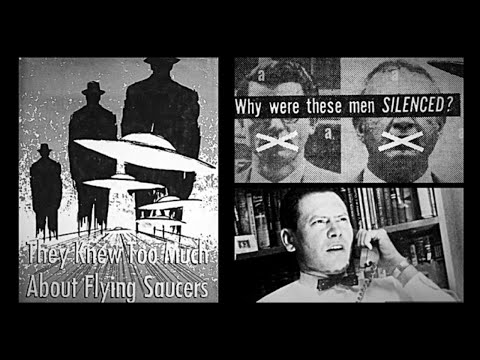
- YouTube (oEmbed-verified), Eyes On Cinema, “‘They knew too much about flying saucers’ Gray Barker talks UFOs and the mystery of the Men in Black” — archival footage of Barker
- Wikimedia Commons, File: Bridgeport, CT skyline.jpg — hero image source and license (CC BY 4.0, Quintin Soloviev)
- This site, case-files/maury-island-1947.html — an earlier, smaller precedent for the “man in black” warning claim
- This site, case-files/flatwoods-monster.html — Gray Barker's earlier field investigation and his role in that separate case
- This site, case-files/aztec-new-mexico-crash-claim.html — a contrasting, conclusively resolved fraud case for comparison against this file's unverifiable personal claim
- This site, locations/index.html, entry on Bridgeport, Connecticut — regional geography and background
See something inaccurate? Have additional information or sources?
Suggest an Edit →Last Updated: August 2026