
The Bornel Conservatory Fireball
On the evening of April 24, 2014, a retired couple in Bornel, a small commune in the Oise, were watching television in their conservatory when the husband's eye was caught by an orange glow through one of the room's skylights. What he saw, and described afterward to GEIPAN, was an incandescent orange sphere fringed with flickering orange flame-like edges, drifting silently across the overcast sky from the east with no visible trail. His first instinct was that he was watching a burning aircraft about to crash, and he told his wife to grab her phone in case the case ever came before a civil aviation inquiry. What stopped him short was the complete absence of any engine noise and the sheer strangeness of the object's flight — and, just before it disappeared behind a line of trees at the edge of the cloud base, he made out a triangular structure to the shape. His wife managed several photographs on her mobile phone in the low light, but only one frame proved usable, and even that image does not conclusively confirm the object's presence — though investigators found no explanation for the glow it does capture using any ambient light source at the scene. GEIPAN's field investigation, conducted within a short window of the sighting, rated both the husband's and wife's testimony "good" consistency and found no conventional explanation that held up; a drone remained the least-implausible candidate but conflicted directly with 2014-era drone technology and French night-flight law. GEIPAN classified the case D1: an unexplained phenomenon of medium strangeness.
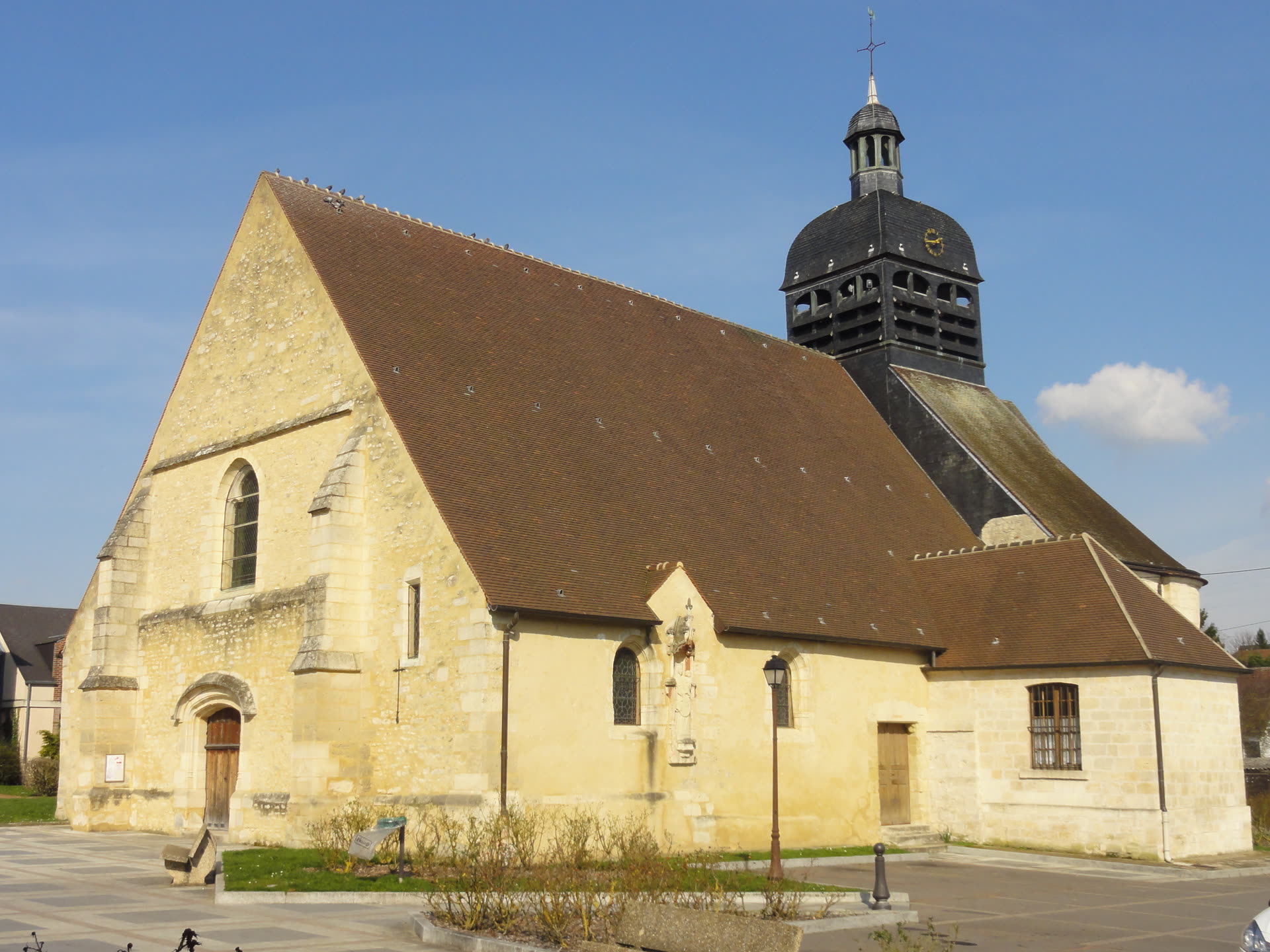
Pictured: the Église Saint-Denis, the parish church of Bornel, Oise — the commune where the sighting occurred, not the disputed photographed object itself. The witnesses' own inconclusive cellphone photograph remains held within GEIPAN's archival case file rather than freely licensed for reproduction here. This image is included only to ground the case's real, verifiable location. Photo by Wikimedia contributor P.poschadel, taken February 26, 2016, released under CC BY-SA 4.0 via Wikimedia Commons.
Theoretical Alignment
This case aligns most strongly with the Extraterrestrial Hypothesis on the strength of a real structural-craft detail — the triangular outline the primary witness made out just before the object disappeared — layered atop an otherwise simple luminous-sphere sighting, a combination GEIPAN's own investigators found difficult to map cleanly onto any known aircraft, balloon, or drone silhouette. Interdimensional alignment is low; nothing in the account involves the kind of morphological transformation, missing time, or boundary imagery IDH proponents typically point to, beyond the same triangular-structure detail already counted toward ETH. Psycho-Social alignment carries modest weight mainly because of the account's genre-typical character — a glowing orange orb witnessed through a domestic window at night is among the single most common UAP report patterns worldwide, and GEIPAN's own file explicitly notes the triangular-structure detail "recalls other similar testimonies," flagging a real, if unproven, possibility of report-pattern influence even as it credits the detail as independently corroborating.
Background
Understanding this case means understanding both the small Oise commune where it occurred and the specific circumstances — a couple settled in for an ordinary evening of television — that put two witnesses, rather than the more typical single observer, in a position to see it.
Bornel: A Rural Commune Transformed by the Railway
Bornel is a commune of roughly 4,800 residents in the Oise department, in the Hauts-de-France region (historically Picardy), about 18 kilometers northeast of Pontoise and within the broader commuting orbit of the northern Paris region. The name itself derives from a Latin root, borda (wooden cabin), by way of Germanic influence, and the earliest documented reference to the settlement dates to the year 751, when Pépin, Mayor of the Palace and father of Charlemagne, confirmed the Abbey of Saint-Denis's possession of "loco qui dicitur Bornello" — "the place called Bornel." The area had earlier hosted the Celtic Bellovaci tribe and Roman settlement, and archaeological work carried out during construction of the A16 motorway uncovered Merovingian-era sarcophagi, dated to around 562 CE, now displayed inside the parish church. Medieval Bornel saw real military history as well: in 1102, King Louis VI besieged the Count of Beaumont near Chambly, Belle-Église, and Bornel, and lost, by contemporary account, nearly his entire army in the defeat.
From 1331 through 1791, Bornel's population held essentially steady at around 500 people across roughly 147 households, remaining a modest agricultural community built on grain, vines, and livestock, with as many as six working water mills at various points in its history. The Industrial Revolution changed that trajectory decisively: the Persan-Méru railway line reached the commune in 1875, and factories followed, including the Louyot works in 1888 and the Vermand works in 1894, driving the population from 582 in 1831 to 1,662 by 1935. On January 1, 2016 — not quite two years after this sighting — the neighboring communes of Anserville and Fosseuse were formally merged into Bornel, expanding it to its present form. The commune's other notable claim to fame is considerably lighter: tennis champion Amélie Mauresmo began her playing career at Bornel's own tennis club at the age of six, before going on to win Grand Slam singles titles and reach the world No. 1 ranking.
An Ordinary Evening, Interrupted
What makes this case structurally different from the majority of GEIPAN's single-witness files is simply the mundane domestic setting in which it occurred: not a lone observer outdoors at night, but a married couple sitting together watching television in their own conservatory, an enclosed glass-roofed room specifically built to let in a view of the sky. That ordinary circumstance is precisely what put two people, rather than one, in a position to potentially observe the same event — even though, as GEIPAN's investigation established, only the husband initially noticed the light through the skylight, with his wife's attention drawn to it only once he called it to her attention and asked her to photograph it.
The commune's own most visible piece of built heritage, the Château du Ménillet, sits at a comfortable remove from the residential area where the sighting occurred, but is worth noting for the layered history it represents: a mid-19th-century construction built on a domain that had earlier belonged to noble families including the Montmorencys and the Malherbes, and which local tradition holds was raised atop the foundations of a still-earlier Gallo-Roman villa. That kind of continuous, centuries-deep occupation of the same patch of ground is typical of the Oise more broadly, a department whose deceptively quiet, rural-suburban present sits atop a much longer and more eventful past — the same tension between an ordinary present-day setting and a genuinely deep local history that runs through this case's own circumstances: two retirees relaxing in a glass conservatory built for exactly this kind of domestic comfort, briefly interrupted by something neither of them could readily explain.
GEIPAN's own published statistics help calibrate how the agency's investigators actually approach a case like this one. The agency receives on the order of 500 witness contacts nationally each year, of which only around 200 proceed to a full, published, investigated case file; of those investigated cases, GEIPAN's own figures indicate roughly 59% are ultimately explained as straightforward misidentifications, with only about 7% remaining unexplained across the agency's full historical caseload, and a shrinking 2% remaining unexplained specifically within the past decade as investigative technique and radar-data access have both improved. A two-witness case earning a "good" (0.76) consistency rating and a genuine, even if inconclusive, photograph sits meaningfully above the median case GEIPAN handles in terms of evidentiary richness, independent of whatever ultimate explanation, if any, is eventually found for it.
Complete Timeline
| Date | Event |
|---|---|
| 751 CE | Pépin, Mayor of the Palace, confirms the Abbey of Saint-Denis's possession of "Bornello" — the earliest documented reference to Bornel. |
| 1875 | The Persan-Méru railway reaches Bornel, triggering the industrialization that transforms the commune's population and economy. |
| April 24, 2014, 22:26 | Sighting begins. T1, watching television in the couple's conservatory, notices an orange light source through one of the room's skylights. |
| April 24, 2014 (moments later) | T1 identifies the source as an incandescent orange sphere with a flame-fringed edge, moving from the east across the overcast sky with no trail; he initially suspects a burning aircraft and asks T2 to photograph it in case of a future civil aviation inquiry. |
| April 24, 2014 (continuing) | T2 takes several cellphone photographs in low-light, difficult conditions (flash activation, shooting through conservatory glass); T1 grows more struck by the total absence of engine noise and the object's overall strangeness. |
| April 24, 2014 (final moments) | T1 makes out a triangular structure to the object's shape shortly before it disappears behind a line of trees at the edge of the cloud base. |
| Shortly after the sighting | The couple files a report with GEIPAN; T1 completes a technical questionnaire describing the sighting in detail. |
| Within a short window following the report | Field investigation. GEIPAN investigators visit the site and conduct a cognitive interview, finding no element counting against either witness's reliability. |
| During the investigation | GEIPAN examines T2's photographs; only one frame is judged potentially usable, and even that image does not conclusively confirm the object's presence, though investigators find no ambient light source at the scene that explains the captured glow. |
| During the investigation | A drone hypothesis is tested and judged the "least bad" candidate but is weighed against 2014-era drone technology and French night-flight/urban-airspace regulations then in force, which made the described flight illegal and technically implausible. |
| Following the investigation | Final classification. GEIPAN closes the case as Class D1: an unexplained phenomenon of medium strangeness, catalogued as case ID 2014-04-50829, with a strangeness rating of 0.70 and a consistency rating of 0.76. |
| January 1, 2016 | The neighboring communes of Anserville and Fosseuse merge into Bornel, expanding the commune to its present territory — a purely administrative change unrelated to the sighting, noted here only as a chronological landmark. |
Detailed Narrative
A Burning Aircraft, or Something Else
T1's very first working hypothesis, formed in the moment, was among the most mundane and urgent possible: he thought he might be watching a stricken aircraft, on fire and descending toward a crash, and his first instinct — asking his wife to photograph it — was explicitly driven by the thought that documentation might later matter to a civil aviation accident inquiry. This detail matters for reading the rest of the case correctly, because it establishes that T1's baseline assumption leaned toward the most conventional explanation available to him, not toward an anomalous interpretation; whatever the object actually was, the witness did not arrive at the sighting already primed to see something extraordinary. What changed his assessment, by his own account, was not a single dramatic detail but an accumulating set of small inconsistencies with the burning-aircraft hypothesis: no engine noise of any kind reached the conservatory despite the object's apparent proximity and the room's large glass skylights, and the object's overall flight characteristics — a slow, level, silent drift — simply did not match how a genuinely damaged, falling aircraft actually behaves in its final moments.
The Object Itself: An Incandescent, Flame-Fringed Sphere
T1's description of the object's appearance was specific and consistent across his initial report and the later field interview: a ball of incandescent orange color, bordered by a fringe of orange flame-like flickers, moving through the overcast sky with no visible trail or exhaust of any kind. The "flame-fringed" detail is worth pausing on, because it is more specific than a simple uniform glowing sphere — it implies an irregular, flickering, fire-like edge around a more solidly orange-colored core, a visual profile that does not straightforwardly match either a simple point-source light (a drone's LED array, for instance) or a classic uniform sky lantern or balloon silhouette. The object moved from the east across the sky, tracked by both witnesses until it passed behind a line of trees at the edge of the cloud layer and disappeared from view.
This specific combination of features — a solid, incandescent core with an irregular, flickering fringe, no trail, and complete silence — is the same general descriptive category GEIPAN's own caseload files under "boules de feu" (fireballs) or luminous spheres, one of the more commonly reported morphologies in the agency's decades of accumulated testimony, alongside discs, triangles, and simple point-source lights. What distinguishes this specific account within that broader category is less the sphere-with-fringe description itself, which recurs across many otherwise unrelated reports, than the specific combination of that description with a second, independently corroborating witness and a real (if inconclusive) photograph — a pairing GEIPAN's own investigators noted is comparatively rare even among its fireball-category reports, the large majority of which arrive as single-witness accounts with no supporting image of any kind.
The Triangular Detail
The single most analytically significant detail in T1's account is the triangular structure he reported making out in the object's shape shortly before it vanished behind the trees. GEIPAN's own file treats this cautiously and honestly on both sides of the question: on one hand, it is an independently reported structural detail consistent with the broader "boomerang" or triangular-craft reporting pattern documented across many UAP cases worldwide, lending it a degree of corroborative weight simply by matching an established category of report rather than describing something entirely sui generis. On the other hand, GEIPAN's investigators explicitly and even-handedly note that this exact triangular pattern is common enough across UAP testimony generally that its recurrence here could, in principle, reflect a kind of cultural reporting "stereotype" — a shape witnesses may be primed, consciously or not, to perceive or describe when trying to characterize a genuinely ambiguous, fast-disappearing light source, rather than a reliable independent signal of the object's true structure. GEIPAN's file does not resolve this tension one way or the other; it simply states both readings plainly, a level of interpretive honesty this site's coverage of comparable single-detail cases has found valuable to preserve rather than flatten into a simpler, more confident conclusion than the source material actually supports.
The Photographs: Genuine, Difficult, and Ultimately Inconclusive
T2's photographs deserve careful, honest treatment, because they occupy a genuinely unusual evidentiary position: more documentation than the large majority of single-witness GEIPAN cases on this site have, yet still short of anything approaching visual confirmation. She took several images on her mobile phone under conditions GEIPAN's own file describes as working directly against a usable result: low ambient light requiring difficult exposure decisions, an activated camera flash that would have washed out or reflected off the conservatory's own glass panes, and the practical need to react and shoot quickly in the dark rather than compose a careful, well-lit photograph. Of the several frames taken, only one was judged potentially usable at all, and even that single image does not conclusively confirm the object's presence in any legible, unambiguous way. What GEIPAN's investigators do note, carefully, is that the glow the photograph does capture does not correspond to any identifiable ambient light source present at the scene — not a streetlight, not an interior light reflecting off the glass, not any other mundane illumination investigators could identify during the field visit. That finding does not prove the photograph shows the reported object, but it does rule out the simplest deflationary explanation (that the image merely shows some ordinary light source misread as anomalous), leaving the photograph in a genuinely inconclusive, rather than simply negative, evidentiary position.
The Field Investigation and Cognitive Interview
GEIPAN's field investigation was conducted within a comparatively short window following the sighting, a timing advantage the case file credits directly for the strength of the consistency rating ultimately assigned. Investigators visited the site, examined the conservatory and its skylights to understand the witnesses' actual sightline and field of view, and conducted a formal cognitive interview with both T1 and T2. That process surfaced no element counting against the reliability of either witness's testimony. GEIPAN's own assessment of T1 specifically credits him with having had substantial, uninterrupted time to observe the object and with "excellent visual acuity tied to his specific professional practice" — a detail GEIPAN's public case summary references without further specifying the profession itself, consistent with its standard witness-anonymization practice, but one its investigators clearly treated as a genuine, relevant credibility factor rather than an incidental detail. T2's account, while described as less rich in independent descriptive detail than her husband's — unsurprising, since her attention was engaged later and she was occupied with attempting photographs rather than purely observing — is credited in GEIPAN's file as reinforcing rather than merely duplicating his testimony, particularly regarding the object's overall silence and its final triangular appearance.
Weighing the Drone Hypothesis Against 2014-Era Reality
GEIPAN's investigators tested a civilian drone as the most plausible conventional explanation available, and their own file describes it candidly as "the least bad" of the hypotheses considered — explicit language acknowledging that even the leading candidate remained weak rather than a confident, well-supported conclusion. Several specific problems undercut it. First, the legal and practical reality of French drone regulation in April 2014: under the Arrêté du 11 avril 2012, the foundational French civil regulation governing unmanned aircraft at the time, night flight was permitted only for tethered captive balloons, and flight over public airspace within built-up residential areas required either remaining within the direct visual line of sight of a licensed remote pilot or specific prior authorization — a night flight of an unregistered drone over a residential street in Bornel would have been both illegal and, per GEIPAN's own reasoning, a genuinely unusual and risky thing for an operator to actually attempt. Second, and independently, no drone technology commercially or hobbyist-available in 2014 is known to produce the specific visual profile described: an incandescent, flame-fringed orange glow rather than discrete point-source LEDs, and a shape that could plausibly be mistaken for a triangular structure rather than a small quadcopter's compact body. GEIPAN's file treats every other candidate hypothesis it considered as weaker still than the already-fragile drone explanation, without specifying each remaining candidate individually in the public summary — a level of detail this case file addresses directly in the Conventional Explanation Candidate section below, working from the object's own described physical characteristics against each of the standard mundane categories GEIPAN routinely tests.
The Verdict: Classification D1
Having found no conventional explanation that survived scrutiny, and having rated both witnesses' testimony "good" consistency (0.76) following a prompt field investigation and cognitive interview, GEIPAN classified the Bornel sighting Class D1: an unexplained phenomenon of medium strangeness, with an official strangeness rating of 0.70. The D1 sub-classification specifically reflects GEIPAN's judgment that the case's corroborating second witness and its genuine, if inconclusive, photographic material lift it above the baseline single-witness, no-documentation D-tier case, without the case quite reaching the higher D2 threshold GEIPAN reserves for accounts with multiple fully independent witnesses, conclusive imagery, or physical ground traces.
Key Witnesses
T1 — The Primary Witness (identity withheld per GEIPAN's standard anonymization practice)
A retired resident of Bornel who first noticed the object's orange glow through his conservatory skylight while watching television with his wife, and who tracked it for a substantial, uninterrupted period until it disappeared behind trees. His initial working hypothesis — a burning aircraft — reflects a genuinely conventional starting assumption rather than an anomalous one, revised only once the object's silence and flight characteristics failed to match that explanation. GEIPAN's investigators credited him with excellent visual acuity tied to his specific professional background, and rated his testimony's consistency "good" following a formal cognitive interview that surfaced no reliability concerns.
T2 — The Corroborating Witness and Photographer (identity withheld)
T1's wife, who was alerted to the sighting by her husband and attempted several cellphone photographs of the object under difficult low-light conditions. Only one of her photographs was judged potentially usable, and even that image remains inconclusive, though GEIPAN's investigators found no ambient light source at the scene that explains the glow it captures. Her own descriptive account, while less detailed than her husband's, independently reinforces his description of the object's silence and its final triangular appearance — corroboration GEIPAN's file credits as strengthening the overall case rather than simply repeating the primary account.
The Five Observables Assessment
The Five Observables framework, developed by the Pentagon's Advanced Aerospace Threat Identification Program to describe performance characteristics beyond known conventional technology, is applied here for comparative consistency across the site's case files. This is a slower-moving, less kinematically extreme case than several comparable GEIPAN files on this site, and its observable profile reflects that.
Assessment: This case registers essentially no AATIP-style kinematic anomaly: the object's entire flight, from first sighting to disappearance behind the trees, was slow, level, and unhurried, with no sudden acceleration, altitude change, or maneuver of any kind. Its genuine anomalies are qualitative rather than kinematic — an incandescent, flame-fringed appearance and complete silence that do not straightforwardly match any conventional aircraft, balloon, or 2014-era drone, plus the independently reported triangular structure. Low Observability is marked only speculative, rather than present or absent, for the simple reason that no radar or other instrumented detection system was ever brought to bear on this sighting at all; unlike the Montluel or Sainte-Foy-de-Peyrolières cases elsewhere on this site, there is no radar record to assess one way or the other.
Evidence Assessment
Supporting an Anomalous Origin
- Two independent witnesses, both rated "good" (0.76) testimonial consistency by GEIPAN following a prompt field investigation and cognitive interview that surfaced no reliability concerns
- A genuine, contemporaneous cellphone photograph exists — rare among the single-witness GEIPAN cases on this site — and investigators found no identifiable ambient light source at the scene that explains the glow it captures
- The primary witness's own starting hypothesis (a burning aircraft) reflects a conventional, non-anomalous baseline assumption, revised only once the object's silence and flight characteristics failed to match it
- GEIPAN's own leading conventional candidate (a drone) is explicitly described in its file as "the least bad" hypothesis, an honest acknowledgment of its own weakness rather than a confident explanation
- The described drone flight would have been both illegal and technically implausible under the French civil aviation regulation (the Arrêté du 11 avril 2012) actually in force in April 2014
- The witness with the more detailed account is independently credited by GEIPAN with excellent visual acuity tied to his professional background
Supporting a Conventional/Mundane or Inconclusive Origin
- The surviving photograph, while genuine, remains inconclusive and does not clearly confirm the object's presence or shape
- The triangular-structure detail, while independently reported, matches a recurring pattern across UAP testimony broadly, which GEIPAN's own file candidly notes could reflect reporting-stereotype influence rather than a confirmed independent structural detail
- No radar or other instrumented data exists for this case at all, leaving the entire evidentiary record dependent on testimony and one inconclusive photograph
- An orange, glowing, silently drifting light seen through a window at night is among the most common UAP report patterns worldwide, several of which have later been explained by mundane sources (sky lanterns, distant fires, atmospheric optical effects) even when GEIPAN's investigators found no such match here
Why "Open"
This case is stamped Open rather than Credible, Disputed, or Debunked because it sits, by GEIPAN's own careful assessment, in exactly that middle evidentiary position: two independently corroborating witnesses and a genuine, if inconclusive, photograph, weighed against a leading conventional hypothesis that GEIPAN's own investigators candidly describe as the "least bad" rather than actually convincing. The case earns real credit beyond the baseline single-witness GEIPAN file: a second witness whose account, though less detailed, independently reinforces the primary witness's description of the object's silence and final triangular shape; a contemporaneous photograph that, however inconclusive, is more physical documentation than most comparable files on this site have; a prompt field investigation and cognitive interview that surfaced no reliability concerns for either witness; and a specific, dated legal and technical basis (the 2012 drone regulation in force at the time) for why the leading conventional candidate remains genuinely weak rather than merely unproven.
Set against that, "Credible" would still overstate the case as it stands: the corroborating photograph never rises above inconclusive, no instrumented or radar data exists at all, and the case's single most distinctive detail — the triangular structure — is honestly flagged by GEIPAN's own file as potentially influenced by a familiar UAP reporting pattern rather than confirmed as an independent structural observation. A case with genuine two-witness corroboration and real, if weak, photographic evidence, investigated promptly and thoroughly, and left with no conventional explanation that survives its own weaknesses, is precisely the state "Open" describes.
Sensor & Instrumentation Detection Profile
This case has no instrumented data of any kind. No radar check, whether civilian air traffic control or military air-defense, was performed or appears anywhere in GEIPAN's published file — a meaningful contrast with the comparable Montluel and Sainte-Foy-de-Peyrolières cases elsewhere on this site, both of which involved at least a partial radar reconstruction. The case's sole physical documentation is T2's set of cellphone photographs, of which only one frame was judged potentially usable, and even that frame remains inconclusive as visual confirmation of the object itself, though GEIPAN's investigators specifically ruled out any identifiable mundane ambient light source at the scene as an explanation for the glow it captures. No audio recording, video, or any other sensor data exists for this sighting.
The absence of any radar check here is worth reading in its proper context rather than as an investigative shortfall. Unlike the Montluel and Sainte-Foy-de-Peyrolières cases, both of which involved a witness account specific and geometrically detailed enough (a matched entry/exit elevation, a defined multi-phase angular traverse) to make a radar cross-check a natural next step, this Bornel sighting's own testimony does not supply the kind of precise bearing, altitude, or timing data that would make a meaningful radar search practical in the first place — a simple, slowly drifting sphere observed through a residential skylight, with no fixed compass bearing or elevation angle recorded by either witness, offers investigators comparatively little to search for in an air-traffic or air-defense radar log even if such a search had been attempted.
Environmental & Geospatial Context
The sighting occurred at night under an overcast sky, with the object seen moving from the east and ultimately vanishing into the cloud base behind a line of trees — conditions that limited visibility of any stars or other celestial reference points but did not prevent a clear, sustained view of the object itself against the cloud layer. Geographically, Bornel sits in a rural-suburban stretch of the Oise department roughly 18 kilometers northeast of Pontoise, within the broader orbit of northern Paris commuter territory, an area of gently rolling agricultural land interspersed with small industrial and rail-linked towns dating to the same 19th-century railway expansion that transformed Bornel itself. No military airbase, major civilian airport, or other aviation facility sits in close proximity to the sighting location, and GEIPAN's file records no local report of any fireworks display, agricultural burn, or other ground-based light source that might account for the object independent of witness testimony.
The broader Oise department, historically part of Picardy and now folded into the Hauts-de-France region, is characterized by exactly this mix of small industrial towns strung along 19th-century rail lines and the open cereal-farming plains that surround them — a landscape shaped as much by the railway-driven industrialization that transformed communes like Bornel in the late 1800s as by the older agricultural rhythms that preceded it. Late April in this part of northern France typically sits in a transitional early-spring weather pattern, with a real likelihood of the kind of overcast, low-cloud-base conditions GEIPAN's file describes for the night of the sighting; the specific detail that the object disappeared into the cloud base itself, rather than simply behind the tree line at ground level, is consistent with a comparatively low cloud ceiling that evening, itself an ordinary springtime occurrence in the region rather than anything unusual worth flagging as a contributing factor to the sighting's strangeness.
Observer Credibility & Occupational Profile
Neither witness's specific occupation is disclosed in GEIPAN's published case summary, consistent with the agency's standard anonymization practice, but the file's own language is notably specific about crediting T1 with "excellent visual acuity tied to his particular professional practice" — a detail GEIPAN's investigators clearly regarded as a genuine, relevant credibility factor even while withholding the underlying profession itself. Both witnesses are described as retirees, cooperated fully with a prompt field investigation and cognitive interview, and are credited with testimony GEIPAN rated "good" (0.76) consistency — among the higher consistency ratings this site has documented across its published GEIPAN cases. T1's own initial working hypothesis (a burning aircraft, prompting a request for documentation in case of a future civil aviation inquiry) reflects a witness whose first instinct leaned toward the most mundane available explanation rather than an anomalous one, a pattern GEIPAN's investigators and this site's own comparative case coverage both treat as a positive, rather than negative, credibility signal.
The case's genuine structural strength, relative to the majority of single-witness GEIPAN files on this site, is precisely that it is not a single-witness file: T2's independent, if less detailed, corroboration of the object's silence and final triangular appearance provides a real cross-check the large majority of comparable cases simply lack. That said, the corroboration here comes from a witness who was alerted to the sighting by her husband rather than noticing it independently and simultaneously — a meaningfully weaker form of corroboration than two witnesses each independently and separately noticing the same object unprompted, though still stronger than no second witness at all.
It is worth being precise about exactly what kind of corroboration this case does and does not offer, since "two witnesses" can describe several evidentially different situations. The strongest possible form — two people, in different locations or simply not interacting, who independently notice and report the same object without either prompting the other — essentially never occurs in domestic sighting reports of this kind, since one person almost always alerts the other. The form actually present here, one witness noticing first and immediately directing a second witness's attention to the same object while it is still visible, is nonetheless meaningfully stronger than no second witness at all: T2 had her own direct, unmediated view of the object for a real portion of its visible duration, formed her own independent description of its silence and shape, and was subject to her own separate cognitive interview by GEIPAN's field investigators, who found nothing in her account that simply echoed her husband's back to them without independent content. That her account is less rich in descriptive detail than his is fully explained by her later start and by her attention being partly consumed by the practical difficulty of operating a phone camera in the dark, rather than by any sign of a less genuine or less independent observation.
Historical Precedents & Archive Matches
Comparing this case against the other GEPAN/GEIPAN-investigated French sightings already published on this site highlights both its distinctive strengths and where its evidentiary profile sits relative to comparable files.
Sainte-Foy-de-Peyrolières (2018) — Two Witnesses and a Photograph, Versus One Witness and Richer Detail
The Sainte-Foy-de-Peyrolières five-phase sighting (Open), published alongside this case, makes an instructive direct comparison: a single witness there produced an unusually dense, five-phase account rated 0.72 consistency, but with no second witness and no photograph of any kind. This Bornel case inverts that trade-off — a real second witness and a genuine, if inconclusive, photograph, rated a slightly higher 0.76 consistency, but a comparatively simpler single-action sighting (an orange sphere drifting and briefly showing a triangular edge) rather than a multi-phase transforming sequence. Neither evidentiary profile is straightforwardly stronger than the other; they represent two different, genuinely complementary categories of single-file corroboration GEIPAN's caseload produces.
Montluel (2022) and Montayral (2015) — The Single-Witness Baseline This Case Exceeds
Both the Montluel cloud-distorting object (Open, 46/100) and the Montayral aerodrome object (Open, 28/100) are single-witness, no-photograph cases — the baseline evidentiary profile the large majority of GEIPAN's D-tier files share. This Bornel case's genuine second witness and real, if weak, photograph place it structurally above that baseline, which is reflected in its D1 (rather than plain D) classification — GEIPAN's own tier specifically reserved for cases carrying some additional corroborating element beyond a single uncorroborated account.
Fauville-Évreux (1978) — Positive Radar Contact, Which This Case Entirely Lacks
The Fauville-Évreux radar sighting (Open, 48/100) carries a weak but genuine positive radar contact, a category of instrumented evidence this Bornel case has no equivalent of at all — no radar check of any kind was performed here. This underscores that this case's evidentiary strength runs entirely through witness corroboration and photographic material rather than any instrumented detection, a meaningfully different evidentiary shape than several other GEIPAN cases on this site.
A Broader Pattern Across This Site's GEIPAN D1/D2-Family Cases
Taken together, the GEIPAN files this site has now published trace out a fairly clear evidentiary spectrum, useful for placing this specific Bornel case in context rather than reading it in isolation. At one end sit the pure single-witness, no-documentation D cases (Montluel, Montayral), whose entire evidentiary weight rests on one account's internal consistency and the thoroughness of GEIPAN's own hypothesis testing. This Bornel case and the Sainte-Foy-de-Peyrolières file published alongside it occupy a middle tier, each adding exactly one additional evidentiary dimension beyond the single-witness baseline — a second, corroborating witness and an inconclusive photograph here; an unusually dense, multi-phase single account with a partial radar check there — without either reaching the higher tier occupied by cases with laboratory-tested physical trace evidence (the Trans-en-Provence sighting) or a full multi-person aircrew account paired with a positive military radar track (the Air France Flight 3532 / Capt. Duboc sighting). Reading this case's D1 classification against that fuller spectrum makes clear that GEIPAN's own tiering system is doing real evidentiary work, not simply assigning a slightly more impressive-sounding label to an otherwise identical file.
Material Analysis
This case involves no physical or trace evidence beyond the witnesses' testimony and T2's photographs. No landing marks, recovered material, or environmental trace of any kind was reported or investigated, and nothing in the account places the object anywhere near ground level or within physical reach at any point — it remained airborne throughout, at a distance and altitude that placed it well beyond any possibility of physical investigation. The single item of physical documentation, T2's usable photograph, is itself digital and non-physical in the sense relevant to material analysis; there is no film negative, print, or other tangible artifact beyond the digital image file GEIPAN's investigators examined.
Supporting Non-Terrestrial Origin
- The photograph's captured glow does not correspond to any identifiable ambient light source at the scene, ruling out the simplest mundane explanation for the image itself
- The object's incandescent, flame-fringed appearance combined with complete silence does not match any conventional aircraft, balloon, or 2014-era drone profile GEIPAN's investigators identified
Supporting Terrestrial Origin
- The complete absence of any physical trace or ground-level evidence is consistent with a purely distant aerial phenomenon that never approached closely enough to leave one
- No mechanical, electromagnetic, or biological secondary effect on either witness or their property is recorded anywhere in the file
The Conventional Explanation Candidate: A Drone, and the Weaker Alternatives
GEIPAN's own file identifies a civilian drone as its leading conventional hypothesis, while explicitly and candidly describing it as "the least bad" of the candidates considered — language that signals real weakness in the leading explanation itself, not just in the rejected alternatives. The drone hypothesis has genuine surface plausibility: a small unmanned aircraft could, in principle, carry a light source, fly silently enough at a distance to explain the lack of engine noise, and be misjudged in shape against a dark, overcast sky. What undermines it are two independent, specific problems rooted in the actual state of French drone technology and regulation in April 2014.
The Regulatory Problem
Under the Arrêté du 11 avril 2012, France's foundational civil regulation governing unmanned aircraft at the time of this sighting, night flight was authorized only for tethered captive balloons, and flight over public airspace within built-up residential areas required either the drone remaining within the direct visual line of sight of a certified remote pilot or specific prior prefectural authorization. A night flight of an unregistered civilian drone over a residential conservatory in Bornel, as this sighting would require, was accordingly both illegal and operationally unusual under the actual rules in force — not an insurmountable objection on its own (illegal flights certainly do happen), but a real, specific, dated regulatory obstacle GEIPAN's investigators weighed directly rather than assuming away.
The Technology Problem
Independent of the legal question, no drone commercially or hobbyist-available in 2014 is known to produce the specific visual profile both witnesses described: an incandescent, flame-fringed orange glow with no discrete point-source lights, and a shape that could plausibly be mistaken for a triangular structure rather than a small quadcopter's compact, symmetrical body. The consumer drone market in April 2014 was still in its early stages: DJI's Phantom and Phantom 2 quadcopters, among the most widely available consumer models of the period, were compact four-rotor aircraft with small, discrete red and green LED position lights at each arm tip — a visual signature of separated, colored point sources, not a single, continuous, incandescent orange glow with a flickering flame-like fringe. No triangular-frame consumer or hobbyist drone design had meaningful commercial presence in France at the time; triangular and other unconventional-frame multirotor designs became more common in hobbyist and racing-drone circles only in the years that followed. A drone sophisticated enough to simulate the described flame-fringed glow convincingly — whether through a diffused light source, a heat lamp, or some other custom rig — would represent a bespoke, non-off-the-shelf modification well outside the ordinary consumer drone use GEIPAN's investigators would reasonably expect to encounter over a residential street in the Oise.
Weaker Alternatives
GEIPAN's public file treats every other conventional candidate it considered as weaker still than the already-fragile drone hypothesis, without itemizing each one in detail in the published summary. Working from the object's own described characteristics against the standard categories GEIPAN routinely tests: a sky lantern, a common source of orange-glow misidentifications worldwide, does not match the reported flame-fringed, structurally triangular appearance or the sustained, controlled-seeming trajectory; a conventional aircraft in distress, T1's own initial hypothesis, is undermined by the total absence of engine noise and by flight characteristics inconsistent with a genuinely damaged, descending aircraft; and a distant ground fire or industrial light source reflecting off low cloud does not explain the object's described independent movement across the sky or its final disappearance behind, rather than persistence at, the tree line.
A Chinese lantern released from some distance away, drifting on a light prevailing wind, would at least explain the object's slow, silent, unhurried motion and its lack of any propulsion noise — but sky lanterns are structurally simple paper-and-wire constructions whose flame sits visibly inside a translucent paper envelope, producing a soft, diffused, roughly conical glow rather than the specific "incandescent sphere with a flame-fringed border" both witnesses described, and a lantern's flame is also typically far less durable over an extended flight than the sustained brightness both witnesses reported observing. None of the weaker candidates GEIPAN's own file gestures toward, in short, accounts for the full combination of details both witnesses independently converged on: color, shape, silence, sustained brightness, and a final triangular structural impression — the same combination that left GEIPAN's own investigators, after testing every conventional category available to them, with no explanation stronger than a hesitant, self-described "least bad" guess.
Civilian Drone
Inconclusive (Least-Bad Candidate)GEIPAN's own leading candidate, but weakened by both the illegal/improbable nature of the implied night flight under 2012-era French drone law and the absence of any 2014-era drone matching the described flame-fringed appearance and triangular structure.
Sky Lantern
ImplausibleA common source of orange-glow misidentifications generally, but does not match the reported flame-fringed, structurally triangular appearance or the object's controlled-seeming trajectory.
Aircraft in Distress
ImplausibleT1's own initial hypothesis, undermined by the total absence of engine noise and by flight characteristics inconsistent with a genuinely damaged, descending aircraft.
Ground Fire / Reflected Industrial Light
ImplausibleDoes not explain the object's described independent movement across the sky or its final disappearance behind, rather than persistence at, the tree line.
Related Cases
Confirmed Documents & Official Records
The official French government investigation summary: both witnesses' testimony, the field investigation and cognitive interview, the photograph analysis, the drone hypothesis assessment, and the final Class D1 determination with published strangeness (0.70) and consistency (0.76) ratings.
GEIPAN's own published definitions distinguishing D1 (moderate consistency, typically a single witness with no photo/video) from D2 (strong consistency, typically multiple witnesses and/or documentation and/or ground traces), clarifying why this case's two-witness, one-inconclusive-photo profile placed it in the D1 tier.
The official French civil aviation regulation in force at the time of this sighting, restricting unmanned aircraft night flight to tethered captive balloons and requiring direct visual line-of-sight or prefectural authorization for flight over built-up areas — the legal basis for GEIPAN's own skepticism toward the drone hypothesis.
Further Reading — Recommended Literature
The Nature of Ball Lightning
A scientific survey of incandescent, self-luminous atmospheric spheres directly relevant to weighing this case's central visual detail — an orange, flame-fringed ball of light — against the closest known natural electrical phenomenon, even though GEIPAN's own file does not identify ball lightning as a tested hypothesis for this specific case.
Ball Lightning: A Popular Guide to a Longstanding Mystery in Atmospheric Electricity
A more recent, accessible survey of luminous atmospheric sphere phenomena, useful comparative background for readers weighing how this case's incandescent, flame-fringed object does or does not resemble established (if still poorly understood) natural electrical phenomena.
Predator: The Secret Origins of the Drone Revolution
A history of drone technology's development, useful context for understanding just how limited civilian and hobbyist drone capability actually was in April 2014, the same year this sighting occurred, and why GEIPAN's own investigators found no drone matching the object's described appearance.
Why People Believe Weird Things: Pseudoscience, Superstition, and Other Confusions of Our Time
A skeptical framework directly relevant to GEIPAN's own candid observation that this case's triangular-structure detail could reflect a recurring UAP reporting pattern rather than a confirmed independent observation — useful for weighing that possibility fairly against the case's genuine corroborating strengths.
How UFOs Conquered the World: The History of a Modern Myth
Clarke's history of recurring UFO reporting patterns and cultural stereotypes provides exactly the kind of background needed to weigh GEIPAN's own honest caveat about this case's triangular-structure detail without dismissing the sighting's genuine two-witness corroboration.
Essential Viewing
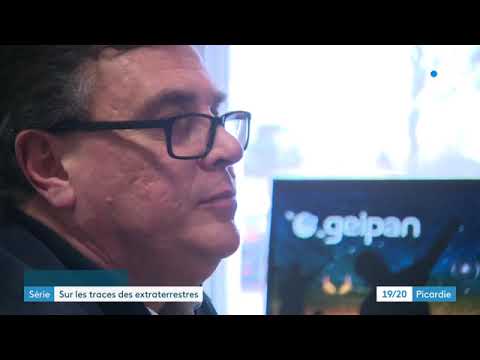
Sources
- GEIPAN (CNES), "BORNEL (60) 24.04.2014", Case 2014-04-50829 — official case summary
- GEIPAN (CNES), official case archive & public portal — geipan.fr
- GEIPAN (CNES), Glossaire du GEIPAN — official classification definitions, including D1/D2 distinction
- GEIPAN (CNES), "Missions, méthodes et résultats" — field investigation and cognitive-interview methodology
- République Française / Légifrance, Arrêté du 11 avril 2012 relatif à l'utilisation de l'espace aérien par les aéronefs qui circulent sans personne à bord — official 2012 French civil drone regulation, in force at the time of this sighting
- Ministère de la Transition Écologique, "Exploitation de drones en catégorie ouverte" — current French drone regulation, night-flight and urban-airspace restrictions (general regulatory principle context)
- Mairie de Bornel, "Histoires" — commune founding, medieval history, Château du Ménillet
- INSEE, "Dossier complet — Commune de Bornel (60088)" — official population and demographic statistics
- Wikipedia (English), "Bornel" — commune geography, 2016 merger with Anserville and Fosseuse
- Wikipédia (français), "Église Saint-Denis de Bornel" — parish church history, Romanesque origins
- This site, case-files/sainte-foy-de-peyrolieres-five-phase-sighting.html — comparative single-witness GEIPAN case published alongside this one
- This site, case-files/montluel-cloud-distorting-object.html — comparative single-witness GEIPAN case with a clean negative radar check
- This site, case-files/montayral-aerodrome-object.html — comparative single-witness GEIPAN D-family case
- This site, case-files/fauville-evreux-radar-sighting.html — comparative GEPAN/GEIPAN positive radar case
- Wikimedia Commons, File: Bornel (60), église Saint-Denis, vue depuis le sud-ouest 2.JPG, photo by P.poschadel (February 26, 2016), CC BY-SA 4.0 — licensing and attribution
- YouTube (France 3 Hauts-de-France), "OVNI en Picardie — Épisode 3 — Les agents du GEIPAN" — oEmbed-verified video, regional GEIPAN field-investigation coverage
- This site, key-figures.html, entry on Claude Poher — GEPAN founding and early institutional history
- This site, key-figures.html, entry on Jean-Jacques Velasco — SEPRA leadership and methodology evolution
- This site, locations/index.html, entry on Toulouse — CNES/GEPAN/SEPRA/GEIPAN institutional headquarters
See something inaccurate? Have additional information or sources?
Suggest an Edit →Last Updated: August 2026