
Extraterrestrial Hypothesis
The dominant framework proposing that UAPs are intelligently controlled craft piloted by non-human beings originating from other star systems — the most widely held and most scientifically contested theory in the field.
Active InvestigationCore Thesis
"We are not alone in the universe. The universe is too vast, too old, and too fecund for the emergence of intelligence to have been a one-time accident on a small blue world orbiting a middle-aged star on the outer arm of an unremarkable galaxy. The extraordinary performance characteristics of these objects — observed by military pilots, confirmed on classified sensors, tracked by multiple navies — imply engineering that is not ours. We did not build them. Someone else did." — Stanton T. Friedman, paraphrased
Origin & History
The modern era of unidentified aerial phenomena inquiry begins on a cloudless afternoon in the Pacific Northwest. On June 24, 1947, private pilot Kenneth Arnold was flying his CallAir monoplane near Mount Rainier, Washington, searching for a lost U.S. Marine Corps C-46 transport aircraft. At approximately 3:00 PM, he observed nine luminous objects flying in a tight formation, moving at an estimated speed of 1,200 to 1,700 miles per hour — faster than any known aircraft of the era. Arnold described their motion as resembling "a saucer if you skip it across the water," and when an Associated Press reporter misread his notes, the term "flying saucer" entered the American lexicon permanently. Arnold himself did not use that term to describe the shape of the objects — he described crescent-like or heel-shaped forms — but the nomenclature stuck. His sighting was corroborated by Fred Johnson, a prospector on Mount Adams who independently observed a similar formation and noticed his compass spinning anomalously as the objects passed. Arnold's account was not that of a sensation-seeking amateur; he was a trained instrument-rated pilot and businessman with no obvious motive for fabrication. His report, taken seriously by Army Air Force investigators, effectively launched the modern era of organized UFO inquiry.
The institutional response was immediate and conflicted. Within weeks the U.S. Army Air Force had launched Project Sign, and by June 1947 the Roswell Army Air Field had reported — then immediately retracted — the recovery of a "flying disc." The culture of official ambiguity that would define the next seventy-five years of government UAP policy was already fully formed. Into this environment stepped a series of civilian researchers who would articulate, defend, and systematize the Extraterrestrial Hypothesis with increasing rigor. The first and most commercially successful was Donald Keyhoe, a retired Marine Corps major with a background in aviation journalism. Keyhoe's 1950 article in True Magazine, followed by his explosive book The Flying Saucers Are Real, sold an estimated 500,000 copies and argued, on the basis of Air Force documents he had obtained, that the U.S. military was concealing evidence of extraterrestrial spacecraft. Keyhoe's methodology was journalistic rather than scientific, but his core claim — that official pronouncements masked a deeper truth — attracted a broad readership and catalyzed the first wave of organized civilian investigation. In 1956 he co-founded NICAP, the National Investigations Committee on Aerial Phenomena, which would become the most influential civilian UFO research organization of the 1950s and 1960s, with a board of directors that included multiple retired generals and admirals.
The most scientifically sophisticated proponent of the ETH in the 1960s was Dr. James E. McDonald (1920–1971), an atmospheric physicist at the University of Arizona's Institute for Atmospheric Physics. McDonald was the kind of credentialed researcher the phenomenon had struggled to attract: he held a doctorate in physics, had served as senior physicist with the Office of Naval Research, and had no prior interest in UFOs before reviewing classified Air Force files in 1966 and concluding, to his own shock, that the unexplained cases could not be attributed to misidentification or natural phenomena. He launched a private investigation, interviewing witnesses and Air Force analysts nationwide, and concluded that the ETH was the most probable explanation for the best-documented cases. His landmark 1968 paper "Science in Default: 22 Years of Inadequate UFO Investigations" — delivered to the American Association for the Advancement of Science — is considered one of the most rigorous scientific arguments for the ETH ever presented. He testified before the U.S. House Committee on Science and Astronautics in July 1968, arguing that the phenomenon deserved genuine scientific attention rather than institutional ridicule. McDonald died by apparent suicide in June 1971, though some researchers have speculated about the circumstances given his high-profile advocacy. His death effectively removed the most credentialed active scientific champion the ETH had ever had.
Stanton T. Friedman (1934–2019) occupied a unique position in the history of the ETH: a trained nuclear physicist who made the theory his life's work. Friedman held an M.Sc. in nuclear physics from the University of Chicago and worked on classified advanced nuclear propulsion systems for companies including Westinghouse, General Electric, TRW, and McDonnell Douglas — giving him both the technical background to evaluate aerospace claims and the security clearance history to understand how classified programs operated. In 1970, after the cancellation of a nuclear aircraft program left him without a project, Friedman became the world's first full-time civilian UFO researcher, a role he would occupy for nearly five decades. His lectures, presented at hundreds of universities and institutions, were notable for their systematic marshaling of evidence: declassified government documents, physics analyses of observed performance parameters, and the Drake Equation as a framework for the probability of extraterrestrial intelligence. His 2008 book Flying Saucers and Science synthesized decades of research and remains a standard reference in the field. Friedman was also the original civilian researcher who investigated the Roswell crash retrieval, locating and interviewing Jesse Marcel Sr. and other witnesses in 1978. He died in May 2019, having never seen official confirmation of the hypothesis he had championed for half a century.
J. Allen Hynek (1910–1986) represents one of the phenomenon's most significant individual narratives: a professional astronomer hired by the Air Force precisely to debunk UFO reports who became, over two decades, one of the ETH's most credible scientific advocates. Hynek, chairman of the astronomy department at Northwestern University and founder of the Dearborn Observatory, was recruited by the Air Force in 1948 as the scientific consultant to Project Sign and then Project Blue Book. His initial posture was frankly dismissive — he coined the mocking term "swamp gas" to explain a series of Michigan sightings in 1966 — but sustained exposure to the raw case files persuaded him that a substantial residue of genuinely anomalous cases resisted conventional explanation. He developed the Close Encounter classification system — CE-I through CE-III — that remains the standard taxonomy for UAP incident categorization. In 1973 he founded CUFOS, the Center for UFO Studies, which conducted rigorous investigation of new cases and maintained a scientific archive. His 1972 book The UFO Experience: A Scientific Inquiry was the first serious academic monograph on the subject and remains in print. Hynek did not publicly advocate the ETH as the definitive answer — he maintained that the phenomenon required study before hypothesis selection — but the thrust of his later work placed the ETH as the leading candidate explanation for the most puzzling cases. He died in April 1986, two years after telling a journalist: "I know there are UFOs — I've seen too many things I can't explain."
The ETH did not exist in isolation. By the late 1960s and early 1970s, competing hypotheses had emerged that would challenge its dominance within the research community itself. Jacques Vallée, working initially alongside Hynek, developed the Interdimensional Hypothesis (IDH), arguing that the phenomenon's characteristics — its historical persistence across all cultures, the absurdity and theatricality of close encounter events, the entities' apparent ability to violate physical law — made an interstellar origin implausible. John Keel developed the Ultraterrestrial concept in parallel. The ETH's proponents responded that these objections, while interesting, did not constitute falsification: sufficiently advanced propulsion could explain apparent violations of known physics, and the frequency of sightings was consistent with an extraterrestrial civilization conducting long-term planetary surveillance. The debate between the ETH and alternative models — particularly the IDH — is today the central theoretical dispute in UAP research, and has sharpened rather than resolved in the decades since.
Scientific Foundations
The ETH is grounded, at its most fundamental level, in a probabilistic argument from the structure of the cosmos. The universe contains an estimated two trillion galaxies, each containing hundreds of billions of stars. The Milky Way alone contains approximately 300 billion stars, and data from NASA's Kepler Space Telescope has established that roughly half of all stars host planetary systems. Earth-sized planets in the habitable zones of their stars — zones where liquid water can exist on a surface — are now estimated to number in the billions in our galaxy alone. The synthesis of amino acids and nucleotides from simple chemistry has been demonstrated in laboratory conditions and observed in meteorites. Life, in other words, does not appear to require miraculous preconditions. The real question is not whether life exists elsewhere — it almost certainly does, in microbial form at minimum — but whether intelligent, technological life has arisen, and whether any such civilization has developed the means and motivation to travel between star systems.
The Drake Equation, formulated by radio astronomer Frank Drake in 1961 for the first SETI meeting at Green Bank, West Virginia, is the standard framework for estimating the number of communicating civilizations in the Milky Way at any given time. It is not a predictive equation — the uncertainties in its variables span many orders of magnitude — but it structures the problem usefully:
N = R* × fp × ne × fl × fi × fc × L
| Variable | Description | Current Estimate |
|---|---|---|
| R* | Rate of new star formation in the Milky Way per year | ~1.5–3 stars/year |
| fp | Fraction of those stars that form planetary systems | ~0.9–1.0 (Kepler data) |
| ne | Average number of habitable planets per system | ~0.4–2.0 |
| fl | Fraction on which life actually emerges | 0.001–1.0 (highly uncertain) |
| fi | Fraction of life-bearing planets where intelligence evolves | 0.001–1.0 (highly uncertain) |
| fc | Fraction that develop detectable/spacefaring technology | 0.01–0.2 |
| L | Lifetime of a civilization in a detectable phase (years) | 100 to 10,000,000 |
| N | Number of detectable civilizations in the Milky Way now | 1 (just us) to millions |
The Fermi Paradox — physicist Enrico Fermi's famous 1950 lunch remark "Where is everybody?" — presents the ETH's sharpest challenge. If intelligent civilizations are statistically common, and if even a fraction develop interstellar travel, the Milky Way should have been colonized or at minimum contacted within a few million years — a geological eyeblink on cosmological timescales. The absence of obvious, unambiguous extraterrestrial signals represents what physicist Hart called the Great Silence, and several resolution categories have been proposed. The Zoo Hypothesis, proposed by John Ball in 1973, suggests Earth is deliberately isolated from contact — we are a wildlife preserve, and the absence of overt communication is the policy of our observers. The Dark Forest theory, popularized by Chinese author Liu Cixin, argues that any sufficiently rational civilization will conclude that broadcasting its location is existential suicide — the galaxy is a dark forest where every civilization is a hunter and every transmitted signal is a vulnerability. Robin Hanson's Great Filter posits that between the formation of rocky planets and the emergence of interstellar civilizations there is one or more extremely improbable steps — and the horrifying question is whether that filter lies ahead of us or behind us. Ward and Brownlee's Rare Earth hypothesis (2000) argues that Earth's particular configuration of factors — large stabilizing moon, plate tectonics, Jupiter acting as a comet shield, galactic position — is so improbable that complex life is vanishingly rare throughout the universe. ETH proponents note, pointedly, that the Great Silence is only paradoxical if one assumes we would recognize contact when it occurred — or that it has not already happened.
Modern astrobiology has progressively expanded the envelope of conditions under which life can survive, dramatically strengthening the probabilistic case for the ETH. Extremophile organisms have been discovered thriving in conditions long assumed lethal: in the highly acidic, sulfur-rich hot springs of Yellowstone, in Antarctic ice sheets, at hydrothermal vents at crushing deep-sea pressures, in alkaline lakes, in the radiation-saturated upper atmosphere, and at temperatures ranging from near absolute zero to above the boiling point of water. The discovery that Deinococcus radiodurans can survive doses of radiation thousands of times beyond lethal human thresholds has overturned assumptions about radiation as a barrier to interstellar spore-transfer. NASA's Europa Clipper mission targets the ice-covered subsurface ocean of Jupiter's moon Europa — estimated to contain twice the liquid water of all Earth's oceans — as a candidate habitat for microbial life. Saturn's moon Titan, with its methane lakes, nitrogen atmosphere, and complex organic chemistry, represents a completely different biochemical paradigm. The James Webb Space Telescope has begun characterizing exoplanet atmospheres for biosignature gases, with early results detecting carbon dioxide in the atmosphere of WASP-39b and raising the sensitivity of future searches for oxygen, methane, and nitrous oxide disequilibria that would indicate biological processes.
Interstellar travel — the physical mechanism the ETH requires — remains the hypothesis's most contested scientific element. The nearest star system, Alpha Centauri, is 4.37 light-years from Earth. At the fastest velocity ever achieved by a human spacecraft (Voyager 1, approximately 17 km/s or 0.006% of light speed), the journey would take approximately 75,000 years. Relativistic travel — accelerating to a substantial fraction of light speed — is physically possible under known physics but requires energy on a scale that dwarfs entire planetary civilizations. The Alcubierre warp drive, proposed by physicist Miguel Alcubierre in 1994, demonstrates that general relativity permits a spacetime metric in which a spacecraft is embedded in a "bubble" that locally contracts space ahead and expands it behind — technically achieving faster-than-light transit without violating local causality — but the energy requirement in its original formulation was equivalent to the rest-mass energy of Jupiter. Subsequent refinements by Harold White at NASA's Eagleworks Laboratories reduced the theoretical energy requirement by orders of magnitude, though practical implementation remains speculative. Traversable wormholes, originally analyzed by Kip Thorne and Michael Morris in their 1988 paper Wormholes in Spacetime and Their Use for Interstellar Travel, offer an alternative: stable tunnels through spacetime connecting distant regions, stabilized by exotic matter with negative energy density. ETH proponents argue that a civilization millions of years more advanced than ours would have had sufficient time to develop propulsion technologies as far beyond our current physics as quantum mechanics is beyond Newtonian mechanics.
Perhaps the most significant recent development in the scientific debate over the ETH is the work of Dr. Avi Loeb, chair of Harvard University's Department of Astronomy. In 2017, the Pan-STARRS survey telescope in Hawaii detected the first confirmed interstellar object passing through our solar system: a cigar-shaped body approximately 400 meters long and 40 meters wide, designated 'Oumuamua. The object's anomalies multiplied under scrutiny. It exhibited non-gravitational acceleration as it departed the solar system — it was speeding up in a way that could not be explained by solar radiation pressure, outgassing, or gravitational influence from any known body. It reflected light with unusual intensity, suggesting an extremely high albedo surface. No cometary tail was ever observed despite its close solar approach. In a 2021 paper in The Astrophysical Journal Letters, Loeb and his coauthor proposed that the anomalous acceleration was consistent with a light sail — a thin, large surface area propulsion system. Loeb subsequently founded the Galileo Project in 2021, a Harvard-based scientific initiative to search systematically for physical evidence of extraterrestrial technological artifacts using a network of calibrated telescopes and sensor arrays. His 2021 book Extraterrestrial: The First Sign of Intelligent Life Beyond Earth brought the ETH into mainstream scientific discourse in a way no academic had attempted since McDonald.
Key Proponents
Stanton T. Friedman
MSc nuclear physics (University of Chicago). First full-time civilian UFO researcher from 1970. Worked on classified nuclear propulsion at Westinghouse and McDonnell Douglas. Original Roswell investigator. Author of Flying Saucers and Science (2008).
Dr. James E. McDonald
Senior physicist, University of Arizona. Delivered landmark "Science in Default" paper to AAAS in 1968. Testified before Congress in 1968. The most credentialed scientist to formally advocate for ETH in the 20th century.
J. Allen Hynek
Chairman of astronomy, Northwestern University. Air Force Blue Book scientific consultant 1948–1969. Developed CE classification system. Founded CUFOS 1973. Author of The UFO Experience (1972). Transitioned from skeptic to advocate through 20 years of case review.
Dr. Avi Loeb
Frank B. Baird Jr. Professor of Science at Harvard. Former chair of Harvard astronomy department. Lead proponent of 'Oumuamua as potential extraterrestrial artifact. Founder, Galileo Project (2021). Author of Extraterrestrial (2021).
David Grusch
Former National Reconnaissance Office and NGA intelligence officer. Lead analyst on UAP task force. Filed Inspector General complaint in 2023 alleging U.S. government operates a multi-decade crash retrieval and reverse-engineering program. Testified before Congress July 26, 2023.
Dr. Garry Nolan
Professor of Pathology, Stanford School of Medicine. Has analyzed biological samples from UAP witnesses and physical materials allegedly associated with UAP incidents. Identified anomalous bismuth-magnesium metamaterials with non-terrestrial isotopic ratios. Advisor to multiple intelligence community UAP programs.
Ryan Graves
Former U.S. Navy F/A-18 Super Hornet pilot. Observed UAPs consistently off the Virginia coast from 2014 onward, with encounters documented on AESA radar and FLIR. Founder, Americans for Safe Aerospace. Testified before Congress July 26, 2023.
Karl Nell
Former Army Colonel and defense industry executive. Served as Army liaison to the UAP Task Force. Publicly confirmed in 2023 that Grusch's allegations were "fundamentally correct" and that a "non-human intelligence" has interacted with Earth — one of the highest-ranking active military figures to make such a public statement.
Key Witnesses & Investigators
Commander David Fravor
Squadron commander who personally piloted an F/A-18 to intercept the Tic Tac-shaped object during the 2004 USS Nimitz encounter, describing its instantaneous acceleration and directional changes firsthand rather than relaying a secondhand account — the direct visual witness whose testimony anchors the ETH's single most-cited case file.
Jim Slaight
VFA-41 "Black Aces" pilot who flew as Fravor's wingman during the same Nimitz intercept, independently corroborating the object's flight characteristics from a second aircraft — the kind of two-witness, two-cockpit corroboration investigators from Blue Book onward have treated as materially stronger than a single observer's account.
Government & Military Programs
Project Sign (1947–1948) was the U.S. Air Force's first formal UFO investigation program, established in the wake of the Arnold sighting and the Roswell incident. The project's analysts, working under strict secrecy, produced a classified report called the Estimate of the Situation — a document that reportedly concluded, after reviewing the highest-quality case files, that the objects were of interplanetary origin. General Hoyt Vandenberg, Air Force Chief of Staff, rejected the conclusion as insufficiently supported and reportedly ordered the document destroyed. Copies are believed to have survived in fragmentary form; Captain Edward Ruppelt, who later headed Project Blue Book, confirmed the document's existence in his 1956 memoir. The destruction of the Estimate of the Situation established the template for the next quarter century of official UFO policy: suppress favorable evidence, publicize mundane explanations, and maintain institutional skepticism regardless of the underlying case quality.
Project Grudge (1948–1952) replaced Sign with an explicitly debunking-focused mandate. Where Sign had been genuinely investigative, Grudge was designed to explain away sightings and reduce public alarm. Its final report concluded that all UFO sightings could be attributed to misidentification of conventional objects, psychological phenomena, or hoaxes — a conclusion reached before the investigation was complete. The project attracted heavy criticism from within the Air Force itself, from analysts who believed the debunking mandate was corrupting the quality of investigation.
Project Blue Book (1952–1969) was the longest-running official U.S. Air Force UFO investigation, and its legacy is deeply ambiguous. Over 17 years, Blue Book catalogued 12,618 reported sightings. Of these, 701 were classified as "unknown" — genuinely unexplained after investigation. The project's scientific quality varied dramatically by leadership: under Captain Ruppelt (1951–53), investigations were rigorous and open-minded; under later administrations, the debunking ethos dominated. The 1966 Condon Report, commissioned by the Air Force and conducted by physicist Edward Condon at the University of Colorado, concluded that continued study was unlikely to be scientifically productive — despite the fact that approximately one-third of the cases reviewed in the study were classified as unexplained by the study's own investigators. The study's conclusions were later shown to have been predetermined: an internal memo from Condon's associate Robert Low, written before the study began, stated that the project's purpose was to give the impression of scientific investigation while reaching a negative conclusion. Blue Book was officially terminated in December 1969.
AATIP (Advanced Aerospace Threat Identification Program, 2007–2012) was the Defense Intelligence Agency program that brought the ETH back into official government consideration. Authorized by Senate Majority Leader Harry Reid at the request of aerospace contractor Robert Bigelow, AATIP received $22 million in funding over five years, managed by DIA intelligence officer Luis Elizondo. The program commissioned 38 Defense Intelligence Reference Documents (DIRDs) on exotic propulsion and aerospace technologies — including papers on traversable wormholes, negative energy, and the psychophysiological effects of UAP encounters on witnesses. The program also reviewed military sensor data from UAP incidents, including the three now-famous videos: FLIR1 (the "Tic Tac" event from the Nimitz carrier strike group, 2004), GIMBAL (from the USS Theodore Roosevelt group, 2015), and GOFAST (same group, 2015). These videos, leaked in 2017 by Elizondo and To The Stars Academy after AATIP was officially defunded, were formally confirmed as authentic by the Pentagon in 2020 — the first official confirmation that military sensors had captured unidentified objects with anomalous performance characteristics.
The UAP Task Force (UAPTF, 2020) and AARO (2022) represent the post-2017 institutional response to mounting congressional and public pressure. The UAPTF, established by the Office of the Secretary of Defense, produced a preliminary assessment in June 2021 that acknowledged 144 reports from military sources and was unable to explain 143 of them. The All-domain Anomaly Resolution Office (AARO), established in 2022 under the National Defense Authorization Act, consolidated UAP investigation across all domains — air, sea, space, and subsurface. AARO's mandate includes both the identification of potential threats and the historical review of past government programs. Its 2024 report concluded it had found no evidence of confirmed UAP crash retrievals or reverse-engineering programs — a conclusion that whistleblowers like David Grusch have disputed as either false or reflecting a deliberate information firewall.
The July 26, 2023 Congressional Hearing before the House Oversight Committee's National Security Subcommittee was the most consequential public UAP event since the 2017 New York Times disclosures. Three witnesses testified under oath: David Grusch, who alleged that the U.S. government operates multiple crash retrieval and reverse-engineering programs and has recovered "non-human biologics"; Commander David Fravor, the Navy pilot who led the 2004 Tic Tac intercept and whose account of the object's behavior — appearing simultaneously at 80,000 feet and sea level, outrunning his F/A-18 without any exhaust plume — was delivered with the flat precision of a military incident report; and Ryan Graves, who described sustained, systematic UAP activity in U.S. military operating areas. Grusch's testimony was protected by the Intelligence Community Whistleblower Protection Act. The hearing produced no government confirmation of his claims, but it catalyzed follow-on legislation requiring the executive branch to declassify UAP-related records.
Physical Evidence
The USS Nimitz Carrier Strike Group encounter in November 2004 off the coast of San Diego is the most extensively documented military UAP case in the public record. For two weeks prior to the visual and video encounter, the Princeton's SPY-1 Aegis radar — one of the most advanced naval sensor systems in existence — had tracked multiple objects operating at 80,000 feet, then dropping to near sea level, before disappearing. The objects were tracked over a 200×100 mile area. On November 14, Commander David Fravor and Lt. Commander Jim Slaight were vectored toward one of the objects. Fravor describes observing a white, featureless, Tic Tac-shaped object approximately 40 feet long, hovering over a churning patch of white water with no visible rotor wash or propulsion. As Fravor descended toward it, the object accelerated toward him, then instantly departed to a pre-briefed rendezvous point 60 miles away — a distance it covered in approximately 0.78 seconds. When a second aircraft (flown by Lt. Chad Underwood) arrived minutes later, the object was there, and Underwood captured the FLIR1 video. The carrier's radar systems subsequently tracked objects at velocities implying Mach 46 — forty-six times the speed of sound.
The Trans-en-Provence case (January 8, 1981, Var department, France) represents the most scientifically documented physical trace evidence case in European history. Farmer Renato Nicolai observed a craft land briefly in his field, leaving two concentric circles burned into the soil. The French government's official UAP investigation agency GEPAN (Groupe d'Étude des Phénomènes Aérospatiaux Non-identifiés) conducted an immediate investigation with scientific rigour unusual for the era: soil samples were collected, analyzed by multiple independent laboratories including the French National Institute for Agronomic Research (INRA), and the results compared to control samples. The findings were extraordinary: the soil at the landing site had been subjected to mechanical compression approximately four times greater than the surrounding area; the biochemical content of the soil had been altered, with chlorophyll levels severely reduced; and alfalfa plants recovered from the site showed chromosome abnormalities consistent with radiation or electromagnetic exposure. GEPAN's published report concluded that a physical object of significant mass had landed at the site, interacted with it in ways that altered the biochemistry of the soil and vegetation, and departed. No conventional explanation was offered.
The Socorro Incident (April 24, 1964, Socorro, New Mexico) is J. Allen Hynek's personal best case — the single report he found most convincing of a genuine landed craft. Police officer Lonnie Zamora, on duty and alone, observed a flame descending into a gully and investigated. He found a smooth, egg-shaped craft on four struts, with two small humanoid figures in white coveralls nearby. As he approached, the figures entered the craft and it departed with a roar and flame. Hynek personally examined the landing site: four indentations in the hard caliche soil, each approximately 8 by 12 inches and 2–3 inches deep, in a pattern consistent with landing legs under significant weight. Burned brush was found at the site. Multiple independent investigators, including Air Force and FBI representatives, confirmed the physical evidence. Hynek wrote in his own case files: "There is no doubt that Lonnie Zamora saw an object which left quite definite physical evidence in the immediate area of his sighting. The soil, burnt brush — these are facts. Zamora is a well-regarded police officer. I have no explanation for this."
Among the most discussed physical materials associated with the UAP phenomenon are the bismuth-magnesium metamaterials analyzed by Dr. Garry Nolan and others. These samples — allegedly recovered from UAP crash or landing sites and provided to researchers through a chain of custody involving military and intelligence community figures — consist of alternating layers of bismuth and magnesium at the macro-scale, a structure with no known commercial or industrial application. Isotopic analysis has reportedly shown that the magnesium in these layers has ratios of magnesium-25 and magnesium-26 that differ significantly from naturally occurring magnesium and from any magnesium produced by industrial processes on Earth. Bismuth-magnesium metamaterials of this specific layered structure were analyzed in published research as potential waveguides for terahertz electromagnetic radiation. Whether these samples genuinely originate from UAP events remains disputed; the chain of custody is not fully documented in the public record.
Crash Retrievals
The allegation that the U.S. government has recovered crashed extraterrestrial craft and biological remains is the most explosive claim within the ETH framework, and the one with the most significant recent institutional development. Historically, several alleged crash retrieval events have circulated in the research community: the Aztec, New Mexico incident (March 1948), in which a saucer-shaped craft was allegedly found on a mesa with sixteen dead occupants; the Kingman, Arizona crash (May 1953), described by Fritz Werner, an engineer for the Air Force Office of Special Investigations who alleged he was brought blindfolded to a crash site and examined a disk-shaped craft; the Kecksburg, Pennsylvania incident (December 1965), in which thousands of witnesses observed a fireball and recovery crews were seen removing a large acorn-shaped object from a wooded area; and the Varginha, Brazil incident (January 1996), in which multiple witnesses including military personnel reported the capture of humanoid creatures in a small Brazilian city.
The 2023 testimony of David Grusch before Congress gave the crash retrieval narrative its highest-level official credibility to date. Grusch, whose intelligence community credentials are unimpeachable, alleged under oath that the U.S. has recovered "non-human" craft on multiple occasions, that a multi-decade reverse-engineering program exists, that individuals with direct knowledge of these programs have been illegally threatened and retaliated against, and that he himself had been subject to retaliation following his Inspector General complaint. Retired Army Colonel Karl Nell publicly stated that Grusch's core claims were "fundamentally correct." The allegations remain unverified in the public record; neither the Department of Defense nor AARO has confirmed them, and the programs Grusch describes would, if genuine, be among the most tightly held secrets in the history of intelligence.
Supporting Case Files
Weighing the Evidence
Supporting Arguments
- Five Observables confirmed on classified military sensors across multiple independent platforms
- Multiple nations — U.S., UK, France, Brazil, China — have independently acknowledged unexplained UAP activity
- Statistical probability of intelligence in a universe with 2 trillion galaxies is overwhelming
- Sworn congressional testimony by intelligence whistleblowers under legal protection
- Physical trace evidence (Trans-en-Provence, Socorro) confirmed by independent scientific investigation
- AATIP program confirmed as real; existence of 38 exotic physics DIRDs confirmed
- Consecutive senior military figures (Fravor, Graves, Nell) affirm genuine anomalous phenomena
- Anomalous isotopic ratios in alleged UAP-associated materials cannot be attributed to known manufacturing processes
Skeptical Arguments
- No confirmed, publicly available, scientifically analyzed extraterrestrial artifact has ever been produced
- The Great Filter may explain why interstellar civilizations are absent rather than hidden
- Many documented UAP cases have been resolved as mundane objects (balloons, drones, sensor artifacts)
- AARO found no confirmed evidence of crash retrieval or reverse-engineering programs
- The energy required for interstellar travel remains prohibitive under known physics
- Government secrecy around UAPs may reflect classified human technology rather than extraterrestrial material
- Chain of custody for alleged crash retrieval materials is not publicly verifiable
Theory Development Timeline
| Date | Development |
|---|---|
| 1947 | Kenneth Arnold's June 24 sighting near Mount Rainier coins the term "flying saucer." Days later, Roswell Army Air Field announces — then retracts within 24 hours — the recovery of a "flying disc," launching the ETH as a live public question. |
| 1947–1948 | The Army Air Force stands up Project Sign, the first official U.S. investigation. Its classified Estimate of the Situation reportedly favored an interplanetary explanation for the best cases before Gen. Hoyt Vandenberg rejected it and ordered it destroyed. |
| 1952–1969 | Project Blue Book catalogs 12,618 sightings over 17 years, closing with 701 classified as genuinely "unknown." |
| 1966–1968 | The Air Force commissions the University of Colorado UFO Project ("Condon Committee"). A leaked internal memo by project coordinator Robert Low, describing a study designed to look rigorous while reaching a predetermined negative conclusion, becomes one of the most cited controversies in UFO research history. |
| Jan 1969 | The Condon Report is published, recommending against further government study despite roughly a third of its own reviewed cases being marked unexplained. Project Blue Book is terminated that December. |
| 2007–2012 | The Defense Intelligence Agency runs the Advanced Aerospace Threat Identification Program (AATIP), commissioning 38 Defense Intelligence Reference Documents on exotic propulsion and aerospace concepts. |
| Dec 2017 | The New York Times reveals AATIP's existence and publishes the FLIR1 "Tic Tac" video, returning the ETH to mainstream press coverage for the first time since the 1970s. |
| 2020 | The Department of Defense formally releases and confirms the authenticity of the FLIR1, GIMBAL, and GOFAST sensor videos. |
| 2021 | ODNI's Preliminary Assessment on Unidentified Aerial Phenomena reviews 144 military incident reports, leaving 143 unresolved. Avi Loeb launches Harvard's Galileo Project to search systematically for physical evidence of extraterrestrial technology. |
| Jul 2022 | A Deputy Secretary of Defense memorandum establishes the All-domain Anomaly Resolution Office (AARO); statutory authority follows under the FY2023 National Defense Authorization Act, signed that December. |
| Jul 26, 2023 | David Grusch, Cmdr. David Fravor, and Ryan Graves testify under oath before the House Oversight Committee. Grusch alleges a multi-decade crash-retrieval and reverse-engineering program. |
| 2023–2024 | The bipartisan Schumer-Rounds UAP Disclosure Act, modeled on the JFK Records Act, advances as an NDAA amendment before its strongest transparency provisions are stripped in conference committee. |
| 2024 | AARO's first historical record review reports finding no verifiable evidence of recovered non-human craft or biologics — a conclusion whistleblowers including Grusch dispute as incomplete. |
Theoretical Alignment
Of every competing framework catalogued on this site, the ETH aligns most directly with the raw sensor signature of the phenomenon rather than with any single anecdotal account. The Five Observables documented above are not incidental to the theory — they are its evidentiary backbone. Trans-medium travel (Observable 05), in which objects tracked by the USS Omaha and Theodore Roosevelt strike groups transition between air and water with no deceleration or hull-profile change, is difficult to reconcile with any human aerospace or submersible design lineage, both of which optimize aggressively for a single medium; a genuinely non-terrestrial engineering tradition, unconstrained by decades of incremental human aerodynamic and hydrodynamic doctrine, is one of the few explanatory categories that accommodates it without special pleading. The acceleration and velocity data make the same case from a different angle: the Nimitz object's descent from 80,000 feet to sea level in roughly 0.78 seconds implies accelerations on the order of 5,000 G, an order of magnitude beyond both human structural tolerance and the airframe limits of any known aircraft, while GOFAST's low-altitude supersonic transit without a sonic boom or thermal plume defies the acoustic and thermodynamic signatures every conventional vehicle produces at that speed. ETH proponents argue these are not isolated sensor glitches but a coherent performance envelope — lift without observable propulsion, acceleration without inertial injury, velocity without drag signature — that is most parsimoniously explained not by undiscovered human engineering, which would still be bound by the same propulsion physics visible in every unclassified aerospace program, but by a technologically mature, non-terrestrial engineering tradition operating on principles we have not yet mastered. Critics counter that "we cannot yet explain it" is not equivalent to "therefore it is extraterrestrial," and that sensor artifacts, parallax error, and classified human platforms remain live alternative readings of the same data — a tension the Weighing the Evidence section above addresses directly.
Sensor & Instrumentation Detection Profile
The ETH's strongest cases are defined by which sensor systems independently corroborated the same object, since single-sensor detections are the most easily attributed to an artifact of that one system. The USS Nimitz encounter (Case #003) is the reference case for full-spectrum corroboration: the Princeton's Aegis SPY-1 phased-array radar tracked the object's position and speed, the Raytheon FLIR1 pod recorded infrared video of its shape and thermal signature, and two separate F/A-18 aircrews visually confirmed it at close range — radar, infrared, and human eyesight agreeing on the same object at the same moment is the specific combination investigators from Project Blue Book through AATIP have treated as the standard for ruling out a single-sensor artifact. The GIMBAL and GOFAST videos add gun-camera-grade optical tracking data with onscreen targeting telemetry, formally confirmed as authentic (not the underlying object's identity) by the Department of Defense in 2020. The Tehran 1976 case (Case #018) is the ETH's clearest example of an object registering on active weapons and instrumentation systems rather than passive sensors alone: an Iranian F-4 Phantom's weapons-targeting radar, UHF communications, and cockpit instruments were disrupted on two separate approaches, a signature the DIA's own contemporaneous report classified as "outstanding" precisely because instrument failure, unlike a visual misidentification, is difficult to attribute to observer psychology. Belgium's 1989–1990 wave contributes ground-based data: F-16 pilots achieved a brief radar lock calculating accelerations understood to be far beyond any known aircraft's tolerance, cross-referenced against more than 13,500 independent civilian visual reports gathered by Belgium's SOBEPS investigators. Across these cases, the ETH's evidentiary strength tracks directly with how many independent detection modalities agree, not with how dramatic any single account is — which is also why the theory's weakest cases (isolated civilian sightings with no radar or instrument record) receive proportionally less weight in the Observer Credibility and Material Analysis sections above.
Environmental & Geospatial Context
ETH-aligned cases cluster around a small number of environmental and institutional settings rather than distributing evenly across geography. The largest cluster sits offshore and over coastal waters — the USS Nimitz encounter off San Diego and the GOFAST video off the Atlantic coast both occurred over open ocean, tracked by carrier strike-group sensor suites with no comparable land-based radar network to cross-check them, which proponents read as evidence the phenomenon favors uncontested maritime airspace and skeptics read as an evidentiary gap that limits independent verification. A second cluster sits directly over active military and nuclear installations — a pattern this site catalogues separately under the UFOs and Nukes theory — where witnesses are uniformly trained personnel operating classified sensor equipment, raising the credibility of the observation while narrowing the sample to people already primed to interpret ambiguous returns as hostile incursions. A third, older cluster sits in the high desert of the American Southwest, exemplified by the 1964 Socorro, New Mexico landing: sparse population, minimal light pollution, and long unobstructed sightlines that make a genuine anomaly easier to observe clearly but also make the terrain itself easier to search for physical traces, which is part of why Socorro remains one of the few ETH cases with corroborated ground evidence. Belgium's 1989–1990 wave and the Tehran 1976 intercept, by contrast, occurred over dense population centers and a national capital respectively — contexts with the opposite tradeoff, abundant independent witnesses but no isolated terrain to examine afterward. No single environmental signature explains the full case record, which is itself an argument skeptics raise against a unified ETH: a genuinely extraterrestrial reconnaissance program's site selection should show some discoverable logic, and to date none has been demonstrated.
Observer Credibility & Occupational Profile
The ETH's evidentiary weight rests less on any single dramatic account than on the occupational range and training of its observers. At the operational end are military radar operators and fighter pilots whose entire professional competency is built on correctly distinguishing real targets from clutter — Commander David Fravor and Lt. Commander Jim Slaight (Nimitz, 2004), Ryan Graves and his squadron off the Virginia coast (2014 onward), and the Belgian Air Force F-16 pilots who achieved a fleeting radar lock during the 1989–1990 wave — all of whom described the objects in the flat, checklist vocabulary of an incident report rather than the embellished language typical of a hoax. At the analytical end are credentialed scientists whose relationship to the hypothesis changed under the weight of evidence rather than starting from belief. J. Allen Hynek was hired by the Air Force in 1948 specifically to debunk sightings and spent two decades doing so publicly — coining the dismissive "swamp gas" explanation for the 1966 Michigan wave — before his own case-file review convinced him a genuine residue of cases resisted every conventional explanation, a reversal he never walked back before his death in 1986. James E. McDonald and Stanton Friedman brought atmospheric physics and nuclear physics credentials, respectively, to the same body of evidence and reached similar conclusions independently. The most consequential recent addition is Avi Loeb, Harvard's former astronomy department chair, who in 2021 founded the Galileo Project explicitly to apply standard observational-astronomy methodology — calibrated multi-spectral telescope arrays, rather than eyewitness testimony — to the search for extraterrestrial technosignatures, arguing that stigma rather than evidentiary weight had kept the subject out of mainstream astrophysics. Government-side credibility is harder to evaluate: intelligence officers like David Grusch and retired officials like Karl Nell carry institutional authority and legal exposure that civilian researchers cannot match — Grusch's claims are legally protected, not verified, by the Intelligence Community Whistleblower Protection Act — but their core factual claims about crash retrieval remain uncorroborated in the public record.
Historical Precedents & Archive Matches
The performance-anomaly signatures central to the modern ETH did not begin with Kenneth Arnold. Allied aircrews flying night missions over Germany and the Pacific in 1944–1945 reported "foo fighters" — small, fast-maneuvering balls of light that paced aircraft formations and executed turns beyond any known fighter's flight envelope, leaving no radar-confirmed evidence of a physical attack. Both Allied and German intelligence independently suspected the other side had developed the technology, and neither found evidence that it had. Half a century earlier, the "mystery airship" wave of 1896–1897 swept the American Midwest and California, with thousands of newspaper-documented witnesses describing cigar-shaped craft with visible occupants, lights, and propellers — years before the Wright brothers' first controlled flight. Historians have never fully resolved the wave into hoax, hysteria, or a genuine unexplained residue, but it prefigures the ETH's central puzzle: technologically advanced, controlled flight reported by ordinary observers with no contemporary means of achieving it themselves. Beyond the aviation era, folklorists and ETH proponents alike have noted structurally similar accounts of sky-based visitors and craft across cultures with no plausible contact with one another, from ancient epic literature to early-modern chronicles such as the 1561 Nuremberg celestial-phenomenon broadsheet describing a mass sighting of spherical and tube-shaped objects. This site treats those accounts as cultural antecedents worth cataloguing rather than as evidence in themselves — the interpretive leap from "people across history have reported anomalous sky phenomena" to "those reports describe the same extraterrestrial visitors" is exactly the leap the ETH must defend, not assume.
Material Analysis
Material evidence for the ETH falls into two categories with very different evidentiary standing: radar-visual-IR corroboration of anomalous flight performance, and claims of recovered physical material. The first category has the strongest chain of custody. Multi-sensor corroboration — the same object independently registering on radar, infrared camera, and the naked eye of a trained observer within a single encounter window — has long been treated by investigators from Blue Book through AATIP as the standard for ruling out single-sensor artifacts and misidentification, because each modality fails differently: radar clutter does not produce a matching IR signature, and neither produces a matching eyewitness narrative on its own. The USS Nimitz encounter meets this standard as thoroughly as any UAP case in the public record, corroborated by the Princeton's Aegis SPY-1 radar, the FLIR1 infrared video, and two independent aircrews. The second category — physical material allegedly recovered from crashed or landed craft — has no comparable chain of custody. The bismuth-magnesium metamaterials examined by Dr. Garry Nolan, reported to show anomalous magnesium isotope ratios, are the most scientifically discussed example, but the samples reached his lab through an undocumented intermediary chain rather than a verifiable recovery event, and the isotopic findings have not been replicated in a peer-reviewed journal with independently verified provenance. This gap — strong instrumentation evidence for anomalous performance, weak custodial evidence for anomalous material — is the central asymmetry any serious evaluation of the ETH has to hold in view.
Supporting This Hypothesis
- USS Nimitz encounter (Case #003, Verified · 96/100) — radar, infrared, and visual corroboration of the same object across two independent aircrews
- Tehran 1976 (Case #018, Verified · 88/100) — F-4 Phantom weapons and instrument systems jammed on approach; the DIA formally classified the case "outstanding"
- Belgian UFO Wave (Case #008, Verified · 91/100) — F-16s achieved a fleeting radar lock on a triangular object tracked by over 13,500 independent civilian witnesses
- Trans-en-Provence (1981) — French agency GEPAN documented mechanically compressed, biochemically altered soil at a landing site, an unusually rigorous physical-trace investigation for its era
- FLIR1, GIMBAL, and GOFAST sensor videos formally confirmed as authentic by the Department of Defense in 2020
Against This Hypothesis
- No publicly released, chain-of-custody-verified physical sample has ever been confirmed by independent peer-reviewed analysis to be of non-terrestrial origin
- AARO's 2024 historical review found no verifiable evidence of recovered non-human craft or biologics, directly at odds with whistleblower testimony
- Anomalous-material claims (bismuth-magnesium metamaterials, alleged Roswell debris) rely on undocumented provenance rather than a verified recovery chain
- A sufficiently advanced classified human aerospace program could in principle produce similar radar/IR performance anomalies without requiring an extraterrestrial origin
- The Fermi Paradox remains unresolved: if interstellar travel and sustained planetary presence are this achievable, their near-total absence from every other line of astronomical evidence is difficult to explain
Theoretical Assessment Profile
Six-domain evaluation of this hypothesis
Conventional Explanation Candidates (CEC)
A rigorous evaluation of the ETH has to weigh the genuine skeptical and alternative explanations for its own strongest evidence, not only for the anecdotal cases at the margins of the report database. Below are the leading conventional candidates that critics and government investigators have raised specifically against the ETH's best-instrumented cases — USS Nimitz, Tehran 1976, and the Belgian Wave — rated for how well each actually accounts for the recorded sensor data without requiring a non-terrestrial origin.
Classified Human Aerospace & Drone Programs
InconclusiveMark Pilkington's Mirage Men research documents that U.S. intelligence agencies have, on multiple occasions, actively encouraged UAP-as-extraterrestrial belief specifically to protect classified conventional aircraft and drone programs from scrutiny. A sufficiently advanced secret human platform could in principle produce radar and FLIR signatures resembling several ETH-cited cases. This candidate remains inconclusive against the strongest cases specifically because the reported kinematics — the Nimitz object's roughly 5,000-G-equivalent descent, GOFAST's supersonic transit with no sonic boom or thermal plume — exceed the airframe and propulsion limits of any known or plausibly extrapolated human aerospace technology.
Sensor Artifacts, Parallax Error & Atmospheric Propagation
InconclusiveRadar clutter, IR sun glint, parallax misjudgment of a distant object's true speed, and atmospheric anomalous propagation (the mechanism physicist August Meessen proposed for the Belgian Wave's radar-tracked 40G turns) can each independently produce apparent physics-defying readings without any real object behaving that way. This candidate is strong against isolated, single-sensor cases, but weaker against USS Nimitz specifically, where the Aegis radar, FLIR1 infrared video, and two independent aircrews' direct visual observation all corroborated the same object — a three-modality agreement a single sensor artifact does not typically produce.
Misperception, Selection Bias & Unresolved Fermi Paradox
PlausibleIndependent of any single case's sensor data, ETH proponents' own concession that most reports in the wider database resolve to conventional explanations, combined with the Fermi Paradox's unresolved tension (if interstellar travel and sustained visitation were this achievable, their near-total absence from every other line of astronomical evidence is difficult to explain), gives this the strongest general-purpose skeptical footing of the three candidates — even though it does not, by itself, resolve the specific multi-sensor cases the ETH treats as its strongest evidence.
Related Cases
Further Reading
Flying Saucers and Science
The definitive ETH argument from a nuclear physicist who spent 40 years compiling evidence. Addresses interstellar travel physics, government secrecy, and the Drake Equation with scientific rigor.
Extraterrestrial: The First Sign of Intelligent Life Beyond Earth
Harvard's leading astrophysicist argues that 'Oumuamua's anomalous non-gravitational acceleration is best explained as a light sail from another civilization, and demands scientific inquiry without institutional taboo.
UFOs: Generals, Pilots and Government Officials Go on Record
A journalist's meticulous compilation of the best-documented UAP cases from military and government sources worldwide — the book that helped spark the 2017 New York Times disclosure.
UFOs and the National Security State, Vol. 1
A historian's comprehensive account of the relationship between UAP evidence and the U.S. national security apparatus from 1941 to 1973, based on declassified documents and FOIA releases.
The UFO Experience: A Scientific Inquiry
The first serious academic monograph on the UAP phenomenon, introducing the Close Encounter classification system and arguing from a scientist's perspective that the evidence demands serious study.
Essential Viewing
LIVE | Congress holds UFO hearing with retired Maj. David Grusch
Intelligence officer David Grusch testifies under oath before the House Oversight Committee that the U.S. government operates a multi-decade crash retrieval and reverse-engineering program. With Commander David Fravor and Ryan Graves. July 26, 2023.
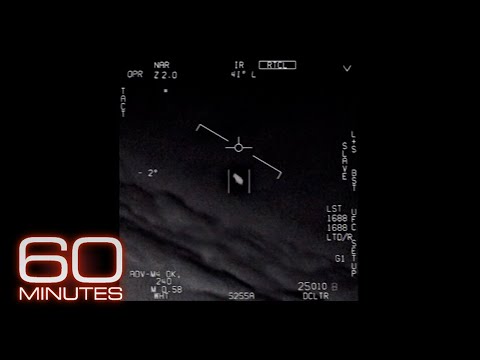
Navy pilots describe encounters with UFOs
Cmdr. David Fravor, the Navy pilot who led the 2004 Nimitz intercept, gives a first-person account of the encounter with surgical military precision.
The Age of Disclosure: Who Actually Controls the UAP Secrets? | w/ Dan Farah | SSHQ
VICE News interviews "The Age of Disclosure" director Dan Farah on the government and intelligence-community sources behind the film's claims of a decades-long UAP secrecy apparatus.
UFOs and the National Security State - Richard Dolan LIVE
Historian Richard Dolan lectures on the decades-long history of U.S. government UAP secrecy, drawing on his book series "UFOs and the National Security State."
Sources Cited
- Arnold, K. (1947). Report to Army Air Force Intelligence. Boise, Idaho: Private submission to AAF.
- McDonald, J. E. (1968). Science in Default: 22 Years of Inadequate UFO Investigations. Paper delivered to AAAS Annual Meeting, Boston.
- Hynek, J. A. (1972). The UFO Experience: A Scientific Inquiry. Chicago: Henry Regnery Company.
- Friedman, S. T. (2008). Flying Saucers and Science. Franklin Lakes, NJ: New Page Books.
- Drake, F. (1961). Project Ozma. Physics Today 14(4), 140–146.
- Loeb, A., & Bialy, S. (2018). "Could Solar Radiation Pressure Explain 'Oumuamua's Peculiar Acceleration?" The Astrophysical Journal Letters, 868(1), L1.
- Loeb, A. (2021). Extraterrestrial: The First Sign of Intelligent Life Beyond Earth. New York: Houghton Mifflin Harcourt.
- Kean, L. (2010). UFOs: Generals, Pilots and Government Officials Go on Record. New York: Harmony Books.
- Dolan, R. M. (2002). UFOs and the National Security State, Volume 1. Charlottesville, VA: Hampton Roads Publishing.
- U.S. Office of the Director of National Intelligence (2021). Preliminary Assessment: Unidentified Aerial Phenomena. Washington, D.C.: ODNI.
- GEPAN (1983). Note Technique GEPAN No. 16: Trans-en-Provence Case. Toulouse: Centre National d'Études Spatiales.
- Alcubierre, M. (1994). "The Warp Drive: Hyper-Fast Travel Within General Relativity." Classical and Quantum Gravity, 11(5), L73–L77.
- Morris, M. S., & Thorne, K. S. (1988). "Wormholes in Spacetime and Their Use for Interstellar Travel." American Journal of Physics, 56(5), 395–412.
- U.S. House Committee on Oversight and Accountability (2023). Hearing: Unidentified Anomalous Phenomena: Implications on National Security, Public Safety, and Government Transparency. July 26, 2023.
- Ward, P. D., & Brownlee, D. (2000). Rare Earth: Why Complex Life Is Uncommon in the Universe. New York: Copernicus Books.
Have corrections, additional research, or peer-reviewed sources? Help improve this entry.
Suggest an Edit