
Aguadilla CBP FLIR Encounter
Late on the night of April 25, 2013, an infrared sensor aboard a U.S. Customs and Border Protection patrol aircraft over Aguadilla, Puerto Rico recorded roughly four minutes of thermal video that would circulate for more than a decade as one of the most viral pieces of UAP footage ever produced by a government sensor — a small object that appeared to streak across the airport, split cleanly into two, and dive beneath the Atlantic. In March 2025, the Pentagon's All-domain Anomaly Resolution Office (AARO) issued a formal case resolution concluding the footage showed two ordinary, low-altitude objects — most likely a pair of drifting sky lanterns — whose apparent speed, splitting, and disappearance were sensor artifacts, not evidence of a single craft's exotic performance.
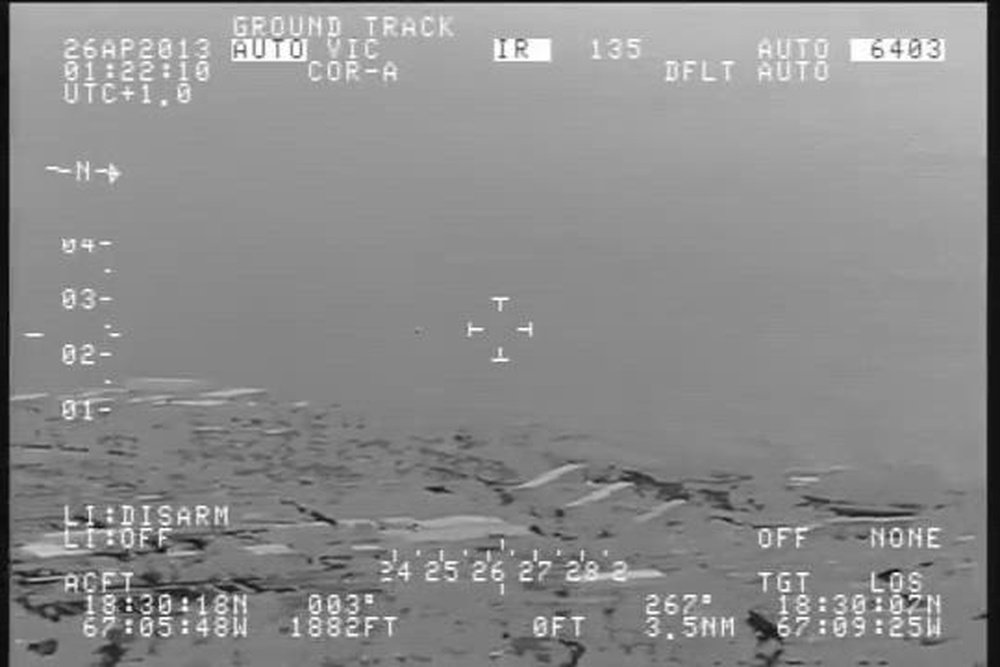
Pictured: an original mid-wave infrared still frame from the actual CBP video at the center of this case, timestamped "26AP2013 01:22:10 UTC+1.0" on its own onscreen ground-track overlay — the same overlay AARO's 2025 reconstruction used to establish the encounter's real chronology. This still is sourced from the U.S. Department of Defense's own official re-release of the footage via the Defense Visual Information Distribution Service (DVIDS), where it is catalogued as public domain.
Theoretical Alignment
This case aligns most strongly with the Psycho-Social Hypothesis, not because any witness fabricated anything, but because the video's decade-long life as "proof" of a transmedium craft depended on a chain of ambiguous, low-resolution sensor data being read through a pre-existing expectation of anomalous behavior — an expectation that a much more mundane, locally routine event (hotels releasing sky lanterns during a beachfront celebration) never got the chance to compete with until AARO's 2025 analysis. The Extraterrestrial Hypothesis retains a modest alignment because the footage originates from a genuine government sensor platform rather than a witness's memory, and because the Scientific Coalition for UAP Studies' (SCU) own quantitative 2015 analysis — whatever its flaws — was a serious, methodologically transparent attempt to characterize the object's motion rather than a bare assertion. The Interdimensional Hypothesis finds essentially no purchase here: nothing in either the original footage or either technical analysis describes a portal, dimensional transition, or comparable phenomenon.
Background
By 2013, Puerto Rico already had a decades-long reputation within American ufology as one of the most consistently active UAP "hotspots" in U.S. territory, a reputation built substantially on the reporting of Jorge Martín, editor of the Spanish-language magazine Evidencia Ovni and a chronicler of a wave of sightings around Puerto Rico's military installations and coastline dating back to the late 1980s, including the Amaury Rivera abduction case and a much older, unverified 1963 claim of a submerged sonar contact off the island's Atlantic Submarine Warfare range. Against that backdrop, U.S. Customs and Border Protection (CBP) — the Department of Homeland Security component responsible for patrolling U.S. borders and coastlines, including by air — routinely flew fixed-wing patrol aircraft fitted with forward-looking infrared (FLIR) sensor turrets along the island's coast as part of ordinary counter-narcotics and border-security operations, unrelated to any UAP-reporting mission.
Aguadilla itself sits on Puerto Rico's far northwestern corner, a municipality built around the site of the former Ramey Air Force Base, a Strategic Air Command installation that closed in 1973 and whose long runway was converted into the civilian/joint-use Rafael Hernández Airport (BQN). The town's economy leans heavily on tourism and a beachfront resort corridor facing the Atlantic — a detail that would become directly relevant to AARO's eventual technical explanation more than a decade later, since local hotels' routine practice of releasing sky lanterns during guest celebrations turned out to be central to the case's resolution. On the night in question, a CBP De Havilland Canada DHC-8 ("Dash 8") twin-turboprop patrol aircraft, part of CBP Air and Marine Operations' fixed-wing fleet and equipped with an infrared/electro-optical sensor turret (independently identified by SCU's later analysis as a Wescam MX-15D), was operating in the vicinity of the airport when its sensor operator noticed and began tracking a faint thermal signature.
Complete Timeline
| Date | Event |
|---|---|
| ~7:48 PM AST, Apr 25, 2013 | Local sunset at Aguadilla, per AARO's 2025 report — the reference point for the "thermal crossover" window the report later cites. |
| ~8:58–9:14 PM AST, Apr 25, 2013 | Per SCU's later FOIA request to the U.S. Air Force 84th Radar Evaluation Squadron, several unidentified radar returns are logged just offshore, north/northwest of Rafael Hernández Airport — a window SCU could not definitively correlate to the later filmed object. |
| ~9:16 PM AST, Apr 25, 2013 | Per SCU's FOIA-obtained flight records, the CBP DHC-8 takes off from Rafael Hernández Airport. |
| ~9:22 PM AST, Apr 25, 2013 (01:22 UTC, Apr 26) | The aircraft's infrared sensor begins recording two small thermal targets near the airport's northeastern side, at an AARO-assessed altitude of roughly 200 m (656 ft) — the start of the surviving ~3 minute 54 second video. |
| ~9:22–9:23 PM AST, Apr 25, 2013 | Per AARO's frame-by-frame reconstruction, the two objects visibly separate from one another at least three distinct times within the first minute of the recording (at approximately 00:29.56, 00:40.76, and 00:47.00 into the clip). |
| Continuing through ~9:25 PM AST, Apr 25, 2013 | The CBP aircraft flies an arc around the airport, climbing roughly 1,725 ft in altitude while the objects drift southwest toward the coast at approximately wind speed; the sensor's viewing angle shifts from side-on to increasingly top-down. |
| End of recording, ~9:26 PM AST, Apr 25, 2013 | The objects' thermal signatures fade into indistinguishability against the Atlantic's own thermal background as the aircraft passes 3,000 ft and enters a layer of scattered cloud; sensor contact is lost over the airport's central parking apron. |
| ~10 minutes after takeoff, Apr 25, 2013 | Per SCU's research, the CBP aircraft, having circled the airport twice, departs the area. |
| Mid-2013 (exact date undetermined) | A source inside Rafael Hernández Airport security leaks the video to Puerto Rican researcher Jorge Martín, who publishes it in ENIGMAS del Milenio magazine and on social media. |
| 2013 (exact date undetermined) | Separately, an acquaintance of the CBP pilot contacts MUFON Florida volunteer Daina Chaviano, who brings the footage to Florida MUFON chapter director Morgan Beall; Beall assembles a small technical review team that becomes the core of the Scientific Coalition for UAP Studies (SCU) investigation. |
| September 2014 | Black Vault founder John Greenewald Jr. receives an anonymous letter enclosing a high-resolution copy of the video, which he posts publicly. |
| August 2015 | SCU publishes a roughly 161–165 page technical report, led by Robert Powell, concluding after more than 1,000 research hours that no known aircraft, balloon, bird, or drone accounted for the object's estimated speed, apparent transmedium travel, and splitting behavior. |
| November 19, 2024 | AARO Director Dr. Jon Kosloski previews the office's findings in testimony before the Senate Armed Services Committee, describing the objects as "likely a pair of balloons or sky lanterns" and attributing the apparent water entry to a loss of thermal contrast. |
| March 19–20, 2025 | AARO formally releases its one-page Case Resolution report, "The Puerto Rico Object" (Case Number 330UAP000010), assessing with high confidence that the objects showed no anomalous behavior and, with moderate confidence, that they were a pair of sky lanterns. |
| April 2025 | SCU posts a public response neither endorsing nor rejecting AARO's sky-lantern conclusion, and submits five specific technical questions to AARO regarding its flight-path modeling, cloud-layer sourcing, and pixel-analysis methodology; AARO acknowledges the inquiry but states it is not yet prepared to respond in detail. |
The Recording: What the CBP Sensor Actually Captured
The surviving video runs just under four minutes, of which the two objects are visibly tracked for roughly two and a half minutes. Displayed in grayscale mid-wave infrared with a standard military sensor overlay — date/time, ground track, sensor mode, targeting reticle, and aircraft/target geographic coordinates burned directly into the frame — the footage shows a small, indistinct thermal signature crossing what is recognizably an airport environment before drifting out toward open water. For most of its first minute, the object reads as a single blob-like signature; as the recording continues and the sensor's zoom and viewing angle shift, the signature repeatedly appears to separate into two distinct, smaller signatures, then seems to rejoin, and finally appears to vanish as the background transitions from land to ocean. It was this final sequence — two objects, having apparently split from one, disappearing over the water — that gave the video its enduring popular framing as evidence of a "transmedium" craft capable of operating in both air and sea.
Two features of the raw footage deserve emphasis before considering either camp's analysis. First, the video's resolution and thermal contrast are genuinely poor by the standards of more famous instrumented UAP cases such as the Navy's 2004 "Tic Tac" encounter or the 2015 Gimbal and GoFast videos — a Dash 8 border-patrol turret is a substantially less capable sensor package than a fighter jet's targeting pod, and the object itself never resolves into any identifiable shape at any point in the recording. Second, and critically, the sensor's own onscreen telemetry — the same ground-track and coordinate overlay visible in the still frame above — is precisely the raw data both SCU's 2015 analysis and AARO's 2025 reconstruction used to try to establish the object's real-world position, altitude, and speed; the dispute between the two organizations is not about what is visible on screen, which neither side disputes, but about how to correctly convert that screen data into a real flight path.
From Leak to Public Record: How the Video Became Public
Unlike most instrumented military UAP footage released through an official declassification process, the Aguadilla video reached the public through two separate, informal leak chains that only later converged. The first began when a source inside Rafael Hernández Airport's own security operation passed the footage to Jorge Martín, who published it in his magazine ENIGMAS del Milenio and via social media, giving the case its first public exposure within Puerto Rico's own UAP research community. The second began separately: an acquaintance of the CBP pilot who had actually flown the mission contacted Daina Chaviano, an established Cuban-born novelist volunteering as a MUFON field investigator in Florida, on the condition that the source's identity be tightly protected. Chaviano brought the tip to Morgan Beall, MUFON's Florida chapter director, who assembled a small team with relevant technical and scientific backgrounds specifically to vet the footage's authenticity before taking the investigation any further — the nucleus of what would become the Scientific Coalition for UAP Studies (SCU).
A third, independent channel opened in September 2014, when Black Vault founder John Greenewald Jr. received an anonymous letter enclosing a high-resolution copy of the footage along with correspondence referencing the aircraft type and sensor specifications and asserting, in the sender's own words, that "alien technology is no doubt under the ocean near Puerto Rico." Greenewald, whose Black Vault archive is built on more than two million pages of FOIA-obtained government records, posted the high-resolution version publicly, giving the case its widest circulation to that point independent of either the Martín or the SCU chain. That the same video reached the public through three separate, mutually corroborating informal channels — rather than a single unverified upload — is one of the stronger circumstantial arguments for the footage's basic authenticity as a real CBP sensor recording, even though none of the three leak sources has ever been officially identified or confirmed by CBP or the Department of Homeland Security.
The Scientific Coalition for UAP Studies Investigation (2013–2015)
Once Beall's team confirmed to its own satisfaction that the video's origin was genuine, the investigation that became SCU's formal report proceeded methodically over roughly two years and, per the group's own accounting, more than 1,000 combined research hours. Led principally by Robert Powell — a semiconductor engineer by training who had previously co-authored MUFON's widely cited 2008 Stephenville Lights radar study — the team performed frame-by-frame analysis of the object's apparent motion, cross-referenced the sensor's onscreen coordinate overlay against the aircraft's own flight track, and filed a Freedom of Information Act request with the U.S. Air Force's 84th Radar Evaluation Squadron seeking any radar data covering the same airspace and time window.
The resulting 161–165 page report, released in August 2015 via SCU's own website, reached conclusions dramatically different from AARO's decade-later resolution. SCU's frame-by-frame reconstruction estimated the object's in-air speed at roughly 40–120 mph (with a median around 80 mph) and its apparent underwater speed — based on SCU's own reading of the footage as showing genuine submersion — at up to 95 mph, averaging 82.8 mph, with what the report described as minimal loss of speed at the moment of water entry. The FOIA'd radar data showed several unidentified returns logged between roughly 8:58 and 9:14 PM local time, just offshore to the north/northwest of the airport — a genuinely unexplained radar signature, though SCU's own report acknowledged real uncertainty about whether these specific returns corresponded to the object later filmed by the CBP sensor, given the imprecision of correlating a radar log with a video's own onscreen telemetry.
SCU's report went on to systematically test, and reject, several conventional explanations on quantitative grounds: recorded regional wind speeds (roughly 8–18 mph depending on altitude) were, in the team's assessment, far too slow to account for the object's estimated velocity and its apparent directional changes, ruling out a simple drifting balloon; the fastest closely comparable large bird, a peregrine falcon in a hunting dive, tops out around 65–69 mph, below the object's estimated speed; and no drone or torpedo system of the era known to the researchers matched the object's combined aerial and underwater performance (the U.S. Navy's experimental "Flimmer" hybrid air/underwater prototype, the closest comparison SCU could identify, was rated for roughly 68 mph in air). The report's own concluding language was unambiguous: the investigators wrote that they found "no explanation for an object capable of traveling under water at over 90 mph with minimal impact as it enters the water, through the air at 120 mph at low altitude through a residential area without navigational lights, and finally to be capable of splitting into two separate objects."
A Decade in Limbo: The Case in Public Memory
Between SCU's 2015 report and AARO's 2025 resolution, the Aguadilla video settled into a durable place in UAP research culture as one of the more frequently cited pieces of "instrumented" evidence — distinct from purely testimonial cases because it came from an identifiable, if unofficial, government sensor rather than a witness's memory, and distinct from cases like Gimbal or GoFast because no U.S. military branch had, for most of that decade, formally acknowledged the footage at all. The case appeared regularly in UAP-focused television and web coverage (including outlets such as Openminds.tv, MysteryWire, and syndicated wire coverage carried by dozens of local U.S. television affiliates), was catalogued by researcher-run archives such as UFOevidence and Enigma Labs, and was periodically revisited by skeptical forums — most notably Mick West's Metabunk community, which by the early 2020s had independently arrived at a "hot air wedding/party lanterns" hypothesis strikingly similar to AARO's eventual official conclusion, based purely on open-source analysis of the released footage. A French aerospace research body, 3AF Sigma2, reportedly agreed at one point to contribute an independent technical review, though this case file's research found no indication that review was ever separately published.
This decade-long limbo is itself relevant to the case's Psycho-Social alignment, discussed above: for roughly ten years, the video's most widely repeated framing — extreme speed, genuine transmedium travel, an object splitting in two — rested almost entirely on SCU's 2015 analysis, with no comparably resourced government counter-analysis in public circulation to weigh against it, even though a plausible mundane explanation (sky lanterns, a known and common local hospitality-industry practice) had already been floated informally by skeptics years before AARO's own report confirmed it as the office's leading hypothesis.
AARO Opens a File: The 2024 Senate Preview
The Puerto Rico case entered AARO's own review process as part of the office's broader mandate, created under the FY2022 National Defense Authorization Act and later codified provisions, to investigate historical and ongoing UAP reports across the U.S. government. On November 19, 2024, AARO Director Dr. Jon Kosloski, a physicist who had joined AARO from a career in the National Security Agency's Research Directorate, previewed the office's findings in open testimony before the Senate Armed Services Committee, discussing the Puerto Rico case alongside AARO's ongoing review of the Navy's 2015 GoFast video and a widely circulated Mount Etna volcanic-eruption clip. Kosloski told the committee the office assessed the Puerto Rico objects as "likely a pair of balloons or sky lanterns," drifting at roughly seven knots and descending to approximately 200 meters, and explained the video's most viral moment in plain terms: "the temperature of the water is equal to the temperature of the object and the camera can no longer distinguish between the two."
That November 2024 testimony was itself a significant milestone in the case's history — the first time any U.S. government official had spoken on the record about the Aguadilla footage since its leak more than a decade earlier — and it previewed, in outline, the same two core findings AARO's formal case resolution would confirm four months later: that the objects' behavior was not anomalous, and that a specific, testable physical mechanism (rather than an appeal to insufficient data) explained the footage's most dramatic-seeming moment.
The Case Resolution Report: AARO's Technical Analysis
AARO's formal report, titled simply "The Puerto Rico Object" and internally logged as Case Number 330UAP000010, was cleared for open publication on March 19, 2025 and dated March 20, 2025. It states AARO's assessment "with high confidence" that the objects "did not exhibit anomalous behavior or transmedium capabilities," and, separately and with a lower, "moderate" confidence, that the objects were a pair of sky lanterns. The report's reconstruction relied on Systems Toolkit (STK) orbital/flight modeling software combined with what AARO calls "Minimum Separation Vectors" analysis, integrating the CBP aircraft's own flight path with the sensor's elevation, azimuth, and slant-angle data to project the objects' real-world position onto a map at every point in the recording.
Reconstructed Speed and Motion Parallax
AARO's STK reconstruction placed the objects' actual speed at approximately 3.6 meters per second (8 mph), moving in a straight line over land — a figure the report notes is consistent with the period's recorded wind speed of 4.4 meters per second (9.8 mph) from the east/northeast. The report attributes the object's dramatic apparent high speed to motion parallax: an optical effect, well documented in aviation and photography, in which a slow-moving or stationary object appears to move much faster than its true speed when viewed from a moving platform, with the effect becoming more pronounced as the observing platform's own speed increases relative to the target. Because the CBP aircraft's own flight speed, its sensor's zoom setting, and the continuously changing relative geometry between aircraft and object were all in flux throughout the encounter, AARO's report argues the same underlying slow, wind-driven drift could plausibly have produced the appearance of a much faster-moving object purely as an artifact of the observing geometry — without requiring the object itself to have moved unusually fast at any point.
Two Objects, Not One Splitting in Two
AARO assesses with high confidence that the video depicts two distinct objects traveling near one another for the entire recording, rather than a single object that later split or replicated. The report's frame-by-frame reconstruction identifies at least three specific, timestamped moments within the video's first minute (approximately 00:29.56, 00:40.76, and 00:47.00) where the two objects visibly separate from each other — evidence, in AARO's reading, that two objects were present from the start rather than one object dividing partway through. The report further argues that the sensor's own viewing geometry changed meaningfully over the course of the recording: as the CBP aircraft climbed and its distance from the objects nearly tripled, the sensor's angle shifted from a low, side-on view (in which two closely spaced small objects would tend to visually merge into one blurred signature) to an increasingly steep, top-down view at higher magnification (in which the same two objects would appear more clearly and dramatically separated). AARO illustrates this directly with three comparison stills from the footage — roughly 00:05, 00:33, and 02:37 into the clip — showing the same pair of objects becoming progressively more visually distinct as the aircraft's altitude and the sensor's zoom increased, without the objects' own separation distance necessarily having changed at all.
The Apparent Water Entry: Thermal Crossover
The report's explanation for the footage's single most viral element — the objects appearing to enter, and disappear beneath, the ocean — rests on a specific, dated physical phenomenon: thermal crossover, in which an infrared sensor loses the ability to distinguish a target from its background once their respective thermal signatures become nearly identical, an effect most pronounced for roughly two hours following a rapid ambient-temperature change such as sunset. AARO's report notes that local sunset at Aguadilla on April 25, 2013 occurred at 7:48 PM, and that the IR sensor recorded the encounter at approximately 9:22 PM — squarely within that two-hour thermal-crossover window. Citing a peer-reviewed 2010 Optics Express study on measured MWIR/LWIR thermal crossover periods, the report concludes that as the objects' background transitioned from warmer land to cooler ocean, and as the sensor's own effective range to the targets nearly tripled, their thermal signature gradually lost contrast against the water until the sensor could no longer register them at all — not because they physically submerged, but because they became thermally indistinguishable from the sea surface. AARO's reconstructed flight path places the objects over land for the entire observed encounter and states plainly that "the objects did not enter the water."
Size, Attribution, and Local Corroboration
Using pixel analysis — comparing the objects' apparent size in frame against objects of known dimension at the same distance — AARO estimated each object at smaller than one meter (roughly three feet) across, with an indistinct overall shape. The report assesses with moderate confidence that the objects were sky lanterns, citing outreach AARO conducted with local hospitality-industry vendors, who confirmed it is common practice for Aguadilla-area hotels and resorts to release sky lanterns during guest celebrations. AARO notes that sky lanterns are typically smaller than one meter in diameter and produce a flickering, gradually weakening thermal signature as their fuel source burns down — a pattern the report states is consistent with the video's own thermal variability — while explicitly caveating that the footage's poor overall quality "reduces AARO's confidence in categorically identifying the objects."
Alternative Hypotheses AARO Considered and Rejected
The report documents three specific alternative hypotheses AARO weighed before settling on its sky-lantern assessment. The first was the anomalous-performance hypothesis itself: in certain frames, the objects appear to pass behind a utility pole visible in the video, which would imply an altitude and speed inconsistent with ordinary drifting objects; AARO's own pixel analysis of this specific claim found that the objects did not actually pass behind the pole, closing off what proponents of the anomalous reading had treated as one of the strongest visual arguments for extreme low-altitude speed. The second was a marine-bird hypothesis, proposed by one of AARO's own interagency partners, who estimated the objects traveled between 35 and 130 mph at an altitude of 300–900 feet, consistent with a pair of birds descending toward the ocean surface; AARO's report considers this "unlikely," noting that the STK reconstruction shows straight-line, wind-speed motion over land rather than a bird's more variable flight path, and that birds viewed at the relevant distance through an infrared sensor would be expected to show visible wing structure or a wingbeat-frequency pulsation in their thermal signature, neither of which appears in the footage. The third was a mylar or "party" balloon hypothesis, also proposed by an AARO partner, under which two balloons tied together and drifting apart and together would explain the visual pattern, with fluctuating brightness attributed to moonlight reflecting off the balloons' surface through intermittent cloud; AARO states it does "not concur" with this specific mechanism, reasoning that an infrared sensor is not physically capable of detecting reflected visible moonlight in the way the hypothesis would require.
Reception: SCU's Response and the Unanswered Questions
Unlike several other AARO case resolutions that drew immediate, sharply worded rebuttals from the researchers whose earlier work they superseded, SCU's public response to the March 2025 Puerto Rico resolution — posted to the organization's own website the following month — was notably measured. Rather than directly disputing the sky-lantern conclusion, SCU stated it "remain[s] committed to a thorough and evidence-based analysis" and would complete its own review once it received additional data, then submitted five specific technical questions to AARO: a request for the underlying 3D flight-path reconstruction data (coordinates and altitude, with stated error margins); the specific source and altitude documentation behind AARO's claimed 3,000-foot cloud layer; the full geometric analysis behind the flight-path reconstruction, again with error margins; any control-tower log or independent military radar data corroborating the encounter; and the detailed results of AARO's own pixel analysis regarding whether the objects passed behind the utility pole. According to reporting on the exchange, AARO acknowledged SCU's inquiry but stated it was "not currently prepared to provide answers" to the specific questions, though it might address them in a future follow-up report.
That exchange leaves the case in a genuinely unusual position within this catalogue: a real government sensor recording, a real and detailed independent technical counter-analysis, and a real and detailed official government rebuttal — but no completed point-by-point technical reconciliation between the two. AARO's report is considerably more granular and falsifiable than a typical dismissive explanation (it specifies exact separation timestamps, cites a peer-reviewed thermal-imaging paper, and directly tests and rejects the utility-pole altitude claim rather than ignoring it), which this case file's research treats as a genuine positive signal for AARO's account's technical seriousness. At the same time, SCU's specific, itemized requests for AARO's underlying coordinate data and error margins remain unanswered as of this case file's research, and wider coverage of the resolution — including a critical NewsNation segment questioning AARO's motives and a Black Vault article juxtaposing the office's sky-lantern conclusion against SCU's earlier findings — shows the case has not achieved the kind of broad, cross-camp consensus that followed some other AARO resolutions.
Key Witnesses
The CBP Flight Crew
The pilot and sensor operator of the CBP DHC-8 patrol aircraft that recorded the video have never been officially identified in any public source consulted for this case file, and CBP itself has never issued a public statement confirming or describing the flight. According to a secondhand account relayed through the SCU investigation's own provenance chain (via an acquaintance of the pilot, rather than a direct on-record statement), the crew initially spotted "a pinkish to reddish light over the ocean" approaching from the south, and Rafael Hernández Airport's control tower reportedly confirmed a visual contact it could not itself identify. This case file's research could not independently verify that secondhand account against any primary CBP or FAA record, and it should be weighed accordingly — as a claim relayed through the leak chain rather than a confirmed, on-record statement.
Rafael Hernández Airport Control Tower Personnel
Per the same secondhand SCU-sourced account, tower personnel are reported to have visually confirmed an unidentified light in the vicinity at the time of the recording. No tower log, transcript, or named controller has been publicly released or independently verified by this case file's research.
The Five Observables Assessment
The Five Observables framework, developed from the Pentagon's own Advanced Aerospace Threat Identification Program criteria, is applied here against both the footage's original popular reading and AARO's 2025 technical rebuttal:
Assessment: Neither analysis, AARO's or SCU's, ever attributed anti-gravity lift or literal instantaneous acceleration to the objects, so both are rated Absent regardless of which camp's speed estimate is correct. Hypersonic performance is likewise rated Absent, since even SCU's own considerably higher speed estimate (up to roughly 120 mph in air) falls far short of any hypersonic threshold. Low Observability is rated Speculative rather than Present or Absent because the object's fading thermal signature is the crux of the entire dispute: AARO attributes it to a well-documented physical sensor limitation (thermal crossover) rather than any intrinsic stealth property, while the footage's original popular reading treated the same fade as evidence the object was actively concealing itself. Trans-Medium travel receives the same Speculative rating for the identical reason — it is the single specific claim AARO's report was built to test, and while AARO's flight-path reconstruction places the objects over land throughout, SCU's own independent analysis and open technical questions to AARO on this exact point remain formally unresolved as of this case file's research.
Evidence Assessment
Supporting Anomalous Origin
- The footage originates from a real, verifiable-in-kind government sensor platform (a CBP patrol aircraft's FLIR turret), not a witness's memory or a private camera of unknown provenance
- SCU's independent, methodologically transparent 2015 analysis — over 1,000 research hours led by an experienced radar-data analyst — concluded the object's speed and behavior matched no known aircraft, balloon, bird, or contemporary drone/torpedo system
- A FOIA'd U.S. Air Force radar log shows several genuinely unidentified returns near the coastline in roughly the same time window, though SCU itself could not conclusively correlate them to the filmed object
- The video reached the public through three separate, mutually independent leak channels (Martín's Puerto Rico source, the Chaviano/Beall/SCU chain, and Greenewald's anonymous letter), a pattern of corroboration unusual for a hoaxed or fabricated recording
- As of this case file's research, SCU's specific, itemized technical questions about AARO's flight-path data, cloud-layer sourcing, and pixel-analysis methodology remain unanswered by AARO
Supporting Conventional Explanation
- AARO's Systems Toolkit reconstruction found the objects' actual drift speed (~8 mph) closely matched the period's independently recorded wind speed (~9.8 mph), a specific, falsifiable, and well-matched quantitative correlation
- AARO's own pixel analysis found the objects did not, in fact, pass behind the utility pole that had been cited as evidence of extreme low-altitude speed — directly testing and rejecting one of the strongest visual arguments for anomalous performance
- The apparent splitting event is documented at three specific timestamps within the first minute of the video, consistent with two objects present from the outset rather than one object dividing
- The timing of the apparent "water entry" (9:22 PM, roughly 94 minutes after 7:48 PM sunset) falls squarely within the well-documented thermal-crossover window during which infrared sensors routinely lose contrast against water backgrounds
- AARO's own outreach confirmed sky lanterns are a common, routine practice among Aguadilla-area hotels, providing a specific, locally grounded candidate source for the objects rather than a generic guess
- No neutral third party has ever independently reproduced SCU's own high underwater-speed estimate, which was derived from the same low-resolution, low-contrast footage both analyses share
Why "Disputed"
This case earns a DISPUTED classification with a credibility score of 40/100, placing it just below Thomas Mantell (Disputed, 38) and the Bonilla Solar Transit Photographs (Disputed, 39) in this catalogue's lower "Disputed" tier, and well below cases with stronger multi-witness corroboration or a less complete conventional rebuttal, such as Gorman Dogfight (Disputed, 58) or the USS Supply/Schofield Report case (Disputed, 46).
On the strength side: this is a real, well-documented event, not a fabricated or hallucinated queue entry — a genuine government sensor recording, corroborated through three independent leak channels, that received a serious, methodologically transparent, 1,000-plus-hour independent technical investigation (SCU's 2015 report) years before any government agency addressed it. That instrumented, non-testimonial evidentiary basis is a real positive signal this catalogue's scoring credits, comparable in kind to (if considerably less definitive than) other FLIR-based cases like Gimbal and GoFast.
Weighed against that: AARO's 2025 case resolution is an unusually strong, specific, and falsifiable rebuttal by the standards of this catalogue's own coverage of similar cases. It does not merely assert a mundane explanation; it reconstructs the object's real-world flight path using dedicated aerospace modeling software, matches the resulting speed to independently recorded wind data to within about 1.8 mph, directly tests and refutes the single strongest visual argument for extreme low-altitude speed (the utility-pole pass), documents the specific frame timestamps supporting a two-object rather than one-splitting-in-two reading, and grounds its water-entry explanation in a named, peer-reviewed sensor-physics phenomenon tied precisely to that night's actual sunset time. That level of specificity is closer to Mantell's well-documented Skyhook balloon program (Disputed, 38) than to a vaguer, unresolved case — AARO's account, unlike a simple "probably conventional" dismissal, gives genuine, checkable reasons for each of the footage's most viral claims. Set against that strength, SCU's own April 2025 response is telling: rather than mounting a substantive point-by-point rebuttal of AARO's physics, the organization that has advocated for this case's anomalous reading longer and more thoroughly than anyone else asked AARO for more underlying data instead of directly disputing the sky-lantern hypothesis on the merits — a genuinely unresolved state of affairs, but one that reads as closer to "AARO's explanation has not yet been rebutted" than to "AARO's explanation has been shown to be wrong." A case with this much real instrumented evidence, this much serious independent scrutiny on both sides, and this specific and technically substantial — if still formally unreconciled — an official rebuttal sits, in this catalogue's judgment, in the lower half of the Disputed tier rather than in Credible territory.
Sensor & Instrumentation Detection Profile
The case's entire evidentiary record derives from a single sensor: the infrared/electro-optical turret (identified by SCU's independent research as a Wescam MX-15D) mounted on the CBP DHC-8's undercarriage, operating in mid-wave infrared (MWIR) mode with an onscreen telemetry overlay giving date, time, ground track, sensor mode, and geographic coordinates for both the aircraft and its tracked target. No separate sensor of any kind — no independent camera, no dedicated air-defense or FAA radar station, no ground-based observer with instrumentation — recorded the same event. The one candidate secondary data source, the U.S. Air Force 84th Radar Evaluation Squadron log SCU obtained via FOIA, recorded unidentified returns in the general vicinity and time window but was never conclusively tied to the specific objects visible in the FLIR footage by either SCU or AARO; AARO's own report does not cite this radar log at all, relying exclusively on its STK reconstruction of the sensor's own onboard telemetry. This single-sensor dependency is itself a meaningful limitation this catalogue's scoring weighs: every quantitative claim on both sides of the dispute, from SCU's underwater-speed estimate to AARO's wind-matched drift-speed reconstruction, is ultimately derived from the same low-resolution, degrading-quality video rather than from multiple independently cross-checked instruments.
Environmental & Geospatial Context
Aguadilla occupies Puerto Rico's northwestern corner, where the island's mountainous interior gives way to a coastal plain fronting the Atlantic and the Mona Passage. Rafael Hernández Airport sits on the site of the former Ramey Air Force Base, its long Strategic Air Command-era runway oriented roughly northeast-southwest along the coastline, with the area's beachfront resort corridor — the source, per AARO, of the sky lanterns most likely responsible for the sighting — situated immediately to the airport's south and west. AARO's report documents specific, dated environmental conditions directly relevant to its technical conclusions: local sunset at 7:48 PM on April 25, 2013, a recorded surface wind of 4.4 meters per second (9.8 mph) from the east/northeast, and scattered cloud cover beginning around 3,000 feet that partially obscured the CBP sensor's view as the aircraft climbed through that altitude late in the encounter. None of these figures come from this case file's own estimate; they are drawn directly from AARO's report, which in turn cites standard meteorological and astronomical reference sources (timeanddate.com and sunrisesunset.com) rather than a bespoke or unverifiable dataset. No unusual solar, geomagnetic, or seismic activity for the date was identified in any source consulted for this case file, and nothing in the record suggests any environmental factor beyond routine coastal Caribbean evening weather and a locally common tourism-industry practice.
Observer Credibility & Occupational Profile
This case presents an unusual credibility profile: its central evidentiary asset is not eyewitness testimony but a government sensor recording, yet the human observers involved — an unidentified CBP flight crew and unidentified airport tower personnel — have never been named, interviewed on the record, or their reported reactions independently confirmed beyond a secondhand account relayed through the leak chain. That absence cuts in a specific direction for this catalogue's scoring: it removes the possibility of directly assessing witness training, memory reliability, or motive, but it also removes any possibility that the case rests on a single unreliable narrator's account, since the sensor recording itself — whatever it does or does not show — exists independent of anyone's testimony about it. The investigators who have driven the case's public analysis carry stronger, independently verifiable credentials than the anonymous original observers: Robert Powell brought a documented radar-data-analysis background from MUFON's Stephenville Lights study to SCU's 2015 report, while Jon Kosloski brought a doctorate-level optics and signals background from the National Security Agency to AARO's 2025 resolution. This case file's research treats both organizations' technical leadership as credible and serious, which is precisely what makes the two camps' unreconciled conclusions a genuine, still-open dispute rather than one credentialed analysis against an amateur one.
Physical & Material Assays
No physical evidence of any kind exists for this case. Nothing was recovered from land or sea, no debris or ground trace was ever reported, and the entire evidentiary record consists of a single digital video file (in varying resolutions across its several leaked and re-released copies) plus a disputed and never-conclusively-correlated radar log. No laboratory sample, metallurgical assay, or trace residue was ever collected, nor could one have been, given that the case involves an airborne sensor recording with no landing, crash, or debris-recovery component of any kind.
Historical Precedents & Archive Matches
Within this catalogue's own coverage of Puerto Rico-linked cases, the Aguadilla video sits alongside the Amaury Rivera abduction and jet-pursuit case (1988, Disputed) and the considerably older, far more thinly sourced Puerto Rico ASW Range Sonar Contact (1963, Disputed, 22) as part of a decades-long pattern of the island being treated as an unusually active UAP-reporting hotspot, a reputation substantially built and sustained by Jorge Martín's own long career documenting local sightings. Set against those two, the Aguadilla case is structurally distinct: it is the only one of the three built on an instrumented government sensor recording rather than witness testimony, and the only one that has since received a detailed, technically specific official government resolution rather than remaining permanently unaddressed.
More broadly, this case invites direct comparison to other FLIR-derived U.S. government UAP videos this catalogue has covered, particularly the Navy's 2015 Gimbal and GoFast footage. Both share the same basic evidentiary shape — ambiguous, low-resolution infrared video from an operational military or law-enforcement sensor, initially read as showing extreme performance, later subjected to a specific technical rebuttal addressing sensor-geometry artifacts (motion parallax and glare/parallax effects, respectively). This case file's own comparative scoring places Aguadilla somewhat lower than Gimbal/GoFast's own Disputed rating, reflecting that AARO's Puerto Rico resolution is considerably more complete and specific — a named object type, a matched wind-speed correlation, and a directly tested and rejected anomalous-altitude claim — than the U.S. Navy's own, comparatively less detailed public accounting of the Gimbal/GoFast encounters.
Material Analysis
No physical object, debris, or trace sample of any kind is connected to this case at any point in its documentary history. "Material" here refers instead to the case's own surviving evidentiary substrate: the video file itself, in its several circulating resolutions and re-encodings, and the disputed 84th Radar Evaluation Squadron log SCU obtained via FOIA. Because the video is the case's sole primary artifact, both SCU's 2015 analysis and AARO's 2025 analysis are, in a meaningful sense, competing interpretations of identical raw data rather than the product of independently gathered evidence — a genuinely unusual situation for a "Material Analysis" section in this catalogue, where such sections typically address recovered physical objects rather than a shared piece of digital media.
Supporting Non-Terrestrial Origin
- SCU's independent frame-by-frame and radar-correlation analysis of the same raw footage reached materially different, and far more extreme, speed and behavior estimates than AARO's later reconstruction
- The FOIA'd Air Force radar log shows genuinely unidentified returns near the coastline in a roughly matching time window that neither organization has definitively ruled in or out
Supporting Terrestrial Origin
- AARO's flight-path reconstruction of the identical footage matches the objects' motion to independently recorded wind data almost precisely, without invoking any unknown force or performance
- The specific object type AARO proposes (sky lanterns) is independently confirmed by AARO's own outreach as a routine, locally common practice at the exact location, rather than a hypothetical or generic candidate
- No physical sample of any kind exists to test against a non-terrestrial hypothesis in the first place; the entire dispute is confined to competing readings of one video file
The Conventional Explanation Candidate (CEC): Sky Lanterns and Motion Parallax
Because AARO conducted a genuine, resourced technical investigation of this case, much of the conventional-explanation work has already been done by the office itself, using tools (STK flight modeling, pixel analysis, cited sensor-physics literature) well beyond what open-source research alone could reproduce. What follows evaluates AARO's own leading candidate and the specific alternatives the office itself considered and set aside, alongside the possibility — kept open by SCU's own unanswered technical questions — that the case remains genuinely unresolved.
Sky Lanterns (AARO's Leading Candidate)
AARO's own moderate-confidence identification is well-supported by its wind-speed correlation, its consistent sub-one-meter size estimate, and confirmed local hospitality-industry practice, but the office's own report is careful to flag that the footage's poor quality limits how confidently any specific object type can be named. This case file rates the sky-lantern hypothesis as the single best-supported specific candidate in the record, while noting that "moderate confidence" in the identification is a meaningfully weaker claim than AARO's separate "high confidence" that the objects simply were not anomalous — the office is considerably more certain about what the objects were not doing than about precisely what they were.
Marine Birds
Proposed by one of AARO's own interagency partners rather than by an outside skeptic, this hypothesis was directly tested and set aside within AARO's own report: the STK-reconstructed straight-line, wind-speed flight path does not match typical bird flight behavior, and the absence of any visible wing structure or wingbeat-pulsation pattern in the thermal signature is a specific, checkable point against it. This case file finds AARO's own stated reasoning for rejecting this candidate persuasive and treats it as a seriously considered, not merely token, alternative.
Mylar / Party Balloons
Also proposed by an AARO partner rather than an outside party, this hypothesis would have needed reflected moonlight through intermittent cloud to explain the objects' brightness fluctuation — a mechanism AARO itself states it does not accept, since an infrared sensor is not built to register reflected visible light in that way. This case file agrees the mechanism as proposed is not physically coherent for an IR sensor, making this the weakest of the three specific alternatives on record.
Genuine Anomalous Phenomenon (SCU's Original Reading)
SCU's 2015 analysis remains the most detailed technical case for treating the footage as showing genuine extreme performance, but it has not, as of this case file's research, been reconciled point-by-point against AARO's later, independently wind-matched reconstruction of the identical raw video, and SCU's own 2025 response to AARO notably stopped short of directly disputing the sky-lantern conclusion on technical grounds, instead requesting further underlying data. Absent that reconciliation, this case file treats the anomalous reading as a serious but currently unconfirmed position rather than either a live, actively-defended counter-finding or a withdrawn one.
Sky Lanterns
PlausiblePLAUSIBLE as AARO's own best-supported specific identification, backed by a wind-speed match, consistent size estimate, and confirmed local practice — though AARO itself rates its confidence in this specific identification only "moderate," given the footage's poor quality.
Marine Birds
ImplausibleIMPLAUSIBLE. Directly tested within AARO's own report: the reconstructed straight-line, wind-speed flight path and the absence of visible wing structure or wingbeat pulsation both argue against this candidate, which AARO itself assesses as unlikely.
Mylar / Party Balloons
ImplausibleIMPLAUSIBLE. The proposed reflected-moonlight mechanism for the brightness fluctuation is not physically coherent for an infrared sensor, a conclusion AARO's own report states directly.
Genuine Anomalous Phenomenon
InconclusiveINCONCLUSIVE. SCU's original 2015 analysis remains the most detailed technical case for this reading, but it has not been reconciled against AARO's later wind-matched reconstruction, and SCU's own 2025 response did not directly dispute AARO's sky-lantern conclusion on the merits.
Related Cases
Confirmed Documents & Official Records
AARO's official, unclassified case resolution: high confidence the objects showed no anomalous behavior; moderate confidence they were a pair of sky lanterns. Documents the full STK reconstruction, thermal-crossover explanation, and rejected alternative hypotheses (marine birds, mylar balloons) discussed throughout this case file.
CLASSIFICATION: Unclassified — Released in Full, IAW FY24 NDAA § 1841(a)(1)(C)The Department of Defense's own official public release of the original CBP infrared footage, catalogued as public domain. This case file's hero image is an original still frame from this release.
CLASSIFICATION: Public DomainKosloski's opening testimony previewing AARO's Puerto Rico findings alongside the office's review of the GoFast video and the Mount Etna clip, four months ahead of the formal case resolution report.
CLASSIFICATION: Unclassified — Public Hearing RecordThis case file's research could not locate a publicly released copy of CBP's own internal flight or maintenance records for the mission, nor any FAA or CBP statement identifying the flight crew; the U.S. Air Force 84th Radar Evaluation Squadron data SCU obtained via FOIA has not, to this case file's knowledge, been separately re-released by AARO or any other federal agency.
Search Government & Official Archives Directly
Further Reading — Recommended Literature
UFOs: A Scientist Explains What We Know (And Don't Know)
Written by the SCU co-founder and lead investigator behind the original 2015 Aguadilla report, this book lays out the broader analytical framework — and the case-selection standards — that shaped SCU's approach to this and other instrumented UAP cases.
Inside the Black Vault: The Government's UFO Secrets Revealed
Written by the FOIA researcher who received and publicized a high-resolution copy of the Aguadilla footage in 2014, this book documents his broader decades-long career extracting declassified UAP records from the U.S. government.
UFOs: Generals, Pilots, and Government Officials Go on the Record
A foundational case for treating credentialed, on-the-record government and military testimony about instrumented sightings seriously — useful context for weighing how much (or how little) an unofficial, leaked government sensor recording like Aguadilla's should carry on its own.
Escaping the Rabbit Hole: How to Debunk Conspiracy Theories Using Facts, Logic, and Respect
West's Metabunk forum independently arrived at a sky-lantern/party-lantern hypothesis for this exact case years before AARO's own report confirmed it; this book lays out his broader methodology for evaluating exactly this kind of ambiguous sensor footage.
They Are Already Here: UFO Culture and Why We See Saucers
A journalistic look at how ambiguous evidence, community belief, and viral spread combine to sustain a case's "best evidence" reputation — directly relevant to understanding this video's decade-long life in UAP research culture before AARO's 2025 resolution.
Essential Viewing
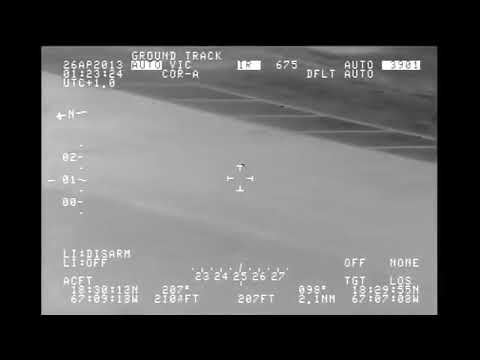
AARO Released "UAP" Video: Puerto Rico Objects
Inside The Black Vault's repost of the Department of Defense's own official re-release of the original 2013 CBP infrared footage, the same source this case file's hero image is drawn from.
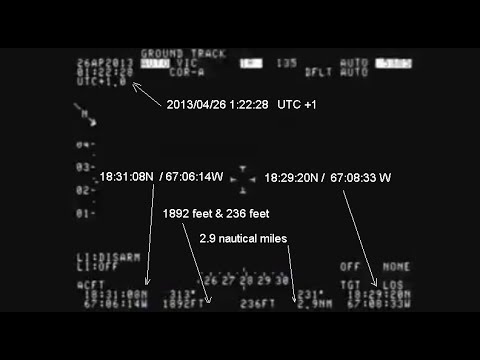
2013 Aguadilla, Puerto Rico — Jorge Martín / Enigma del Milenio Coverage
A repost tied directly to the case's original 2013 provenance chain — Jorge Martín's own ENIGMAS del Milenio magazine release of the leaked footage.

Reality Check: Why AARO Might Be Trying to Debunk Puerto Rico's Aguadilla Object
NewsNation's segment examining skeptical reaction to AARO's 2025 sky-lantern resolution, representing the case's post-resolution reception and dispute.
Sources
- All-domain Anomaly Resolution Office (AARO), U.S. Department of Defense, "The Puerto Rico Object" — Case Resolution Report, Case No. 330UAP000010, cleared for open publication Mar. 19, 2025. aaro.mil
- AARO, UAP Case Resolution Reports (official index page). aaro.mil
- AARO, Dr. Jon T. Kosloski — Official Biography. aaro.mil
- Dr. Jon Kosloski, Director, AARO, Statement for the Record, Senate Armed Services Committee Open Hearing, Nov. 19, 2024. armed-services.senate.gov
- U.S. Department of Defense, "Puerto Rico Objects" (official infrared video release), Defense Visual Information Distribution Service. dvidshub.net
- Brad D. Williams, "Pentagon's UAP office reviews findings on Go Fast, Puerto Rico, Mt. Etna incidents in Senate hearing," DefenseScoop, Nov. 19, 2024. defensescoop.com
- Scientific Coalition for UAP Studies, "SCU Announcement on the AARO Investigation of the Aguadilla Video," Apr. 2025. explorescu.org
- Scientific Coalition for UAP Studies, "2013 Aguadilla Puerto Rico UAP Incident Report: A Detailed Analysis," Aug. 2015. explorescu.org
- John Greenewald Jr., "DoD Report Says Aguadilla UFO Was Just Sky Lanterns; Previous Scientific Studies Claim Otherwise," The Black Vault, 2025. theblackvault.com
- "Leaked UFO Video Captured by Homeland Security Analyzed," Openminds.tv, 2015. openminds.tv
- "Leaked Homeland Security Aguadilla UFO Video — No Explanation For 'Anomalous Phenomenon,' Says 161-Page Report," The Inquisitr, 2015. inquisitr.com
- "In the Air, in the Water, Splitting in Two — Scientifically Investigating the Aguadilla UFO Incident," MysteryWire (George Knapp). mysterywire.com
- M. Felton, K.P. Gurton, J.L. Pezzaniti, D.B. Chenault, L.E. Roth, "Measured comparison of the crossover periods for mid- and long-wave IR (MWIR and LWIR) polarimetric and conventional thermal imagery," Optics Express, Vol. 18, No. 15 (2010), pp. 15704–15713 — cited directly within AARO's case resolution report as the technical basis for its thermal-crossover explanation.
- United States Senate Committee on Armed Services, Hearing on All-Domain Anomaly Resolution Office Update, Nov. 19, 2024 (testimony transcript and case slides).
- John Greenewald Jr., Inside the Black Vault: The Government's UFO Secrets Revealed, Rowman & Littlefield, 2019.
- Robert Powell, UFOs: A Scientist Explains What We Know (And Don't Know), Prometheus Books, 2024.
- Robert Powell and Glen Schulze, "Stephenville Lights: A Comprehensive Radar and Witness Report Study," Mutual UFO Network, July 2008 (background on SCU lead investigator's prior methodology).
- Wikipedia, "John Greenewald Jr." (biographical orientation only; primary facts independently corroborated via The Black Vault's own published materials). en.wikipedia.org
- Mick West, Escaping the Rabbit Hole: How to Debunk Conspiracy Theories Using Facts, Logic, and Respect, Skyhorse Publishing, 2018 (Metabunk forum's independent open-source analysis of this case).
- Sarah Scoles, They Are Already Here: UFO Culture and Why We See Saucers, Pegasus Books, 2020.
- Darcy Weir, interviewed in "Why AARO Might Be Trying to Debunk Puerto Rico's Aguadilla Object," Reality Check, NewsNation, 2025.
- U.S. Air Force 84th Radar Evaluation Squadron radar data, obtained via Freedom of Information Act request by the Scientific Coalition for UAP Studies, cited within SCU's 2015 report.
- National Defense Authorization Act for Fiscal Year 2024, § 1841 (public-release provisions governing AARO case resolution reports).
See something inaccurate? Have additional information or sources?
Suggest an Edit →Last Updated: August 2026