
Bismuth-Magnesium Waveguides (Metamaterials)
Sub-micron layered structures manipulating electromagnetic fields.
Patented, UnverifiedCore Thesis
Under this hypothesis, these structures are not accidental industrial waste; they are advanced electromagnetic metamaterials engineered to act as terahertz waveguides, enabling gravity shielding, localized mass reduction, and propulsion.
Origin & History
The materials-science thread of UAP research began, by its own telling, with a package in the mail. In 1996, radio host Art Bell and investigative journalist Linda Moulton Howe received a small box of layered bismuth-magnesium-zinc metal fragments from an anonymous source, accompanied by a claim that the material originated from a UAP that had crashed near Roswell, New Mexico. The fragments — soon nicknamed "Art's Parts" — became the seed of a materials-science research thread. Howe secured and preserved the original samples, and technologist Nicholas A. Reiter was commissioned to run energy-dispersive spectroscopy on a cross-section on June 8, 1996, identifying the sub-micron layering that would remain the material's defining anomaly. A follow-up metallurgical analysis in 2004 confirmed that the bismuth and magnesium-zinc layers were bonded at the sub-micron scale without any visible adhesive or oxide — a bonding process researchers characterized as difficult to replicate with mid-20th-century technology.
The sample remained a private research curiosity for two decades before it was absorbed into a more formal institutional effort. In 2018, To The Stars Academy of Arts & Sciences (TTSA) acquired the bismuth-magnesium samples and folded them into its Acquisition and Data Analysis of Materials (ADAM) program, initiating a formal materials-science research effort. Stanford pathologist Dr. Garry Nolan, enlisted for the ADAM program, conducted high-resolution mass spectrometry on the material; in 2022 he published analyses reporting unique isotopic distributions in some of the recovered samples — a finding that has since become one of the most frequently cited scientific touchstones for the hypothesis, even as later independent isotopic work (detailed under Material Analysis, below) reached a more cautious conclusion. In effect, the case for the Bismuth-Magnesium Waveguides hypothesis is unusual among UAP theories in resting on a continuous, decades-long chain of physical custody and repeated laboratory analysis rather than on new witness testimony.
Scientific Foundations
The Bismuth-Magnesium Waveguides hypothesis is a materials-science focused model that explains the anomalous physical properties of UAPs through the study of recovered physical materials. The primary focus of this theory is the analysis of layered metallic samples (popularly known as "Art's Parts") recovered from UAP crash sites. These samples consist of alternating layers of bismuth and magnesium-zinc alloy, with layer thicknesses measured at the sub-micron scale. Under this hypothesis, these structures are not accidental industrial waste; they are advanced electromagnetic metamaterials engineered to act as terahertz waveguides, enabling gravity shielding, localized mass reduction, and propulsion.
The scientific foundation of the metamaterials model lies in transformation optics and sub-wavelength waveguide design. At the micro-scale, alternating layers of a heavy diamagnetic metal (bismuth) and a light paramagnetic metal (magnesium) exhibit unique electromagnetic properties that do not exist in nature. When these layered materials are excited by high-power, high-frequency electromagnetic radiation (specifically in the terahertz band), they can guide and focus the electromagnetic energy. This waveguide action bends the surrounding space-time metric or polarizes the quantum vacuum, leading to localized weight reduction and inertial shielding.
Furthermore, this hypothesis links materials science directly to propulsion. Proponents argue that the skin of UAP craft is composed of these metamaterial layers. By passing high-frequency currents through the hull, the craft can manipulate the surrounding electromagnetic environment, creating an active plasma shield that absorbs radar waves, bends light to achieve invisibility, and shields the vehicle from friction and heat. This framework shifts the UAP debate from speculative physics to empirical materials science, providing a physical sample for laboratory testing.
1. Sub-Micron Layered Metamaterial Waveguide
The primary mechanism is sub-micron waveguide action. Alternating layers of bismuth (thicknesses of 1 to 4 microns) and magnesium-zinc (thicknesses of 100 to 200 microns) act as a sub-wavelength waveguide for high-frequency electromagnetic radiation. When terahertz waves are injected into the material, they travel along the interface layers, generating localized surface plasmon polaritons. This guides the energy along the hull of the craft, preventing leakage and concentrating the electromagnetic potential to extreme levels.
2. Terahertz Frequency Resonance & Gravity Shielding
The propulsion mechanism involves terahertz resonance. Bismuth possesses high diamagnetic properties, meaning it repels magnetic fields. When the layered material is subjected to high-power terahertz radiation, the resonance between the bismuth and magnesium layers polarizes the quantum vacuum. This polarization alters the local gravitational constant (G) within the material, shielding the craft from external gravitational fields. The vehicle experiences a reduction in inertial mass, allowing it to float and accelerate with minimal energy.
3. Active Plasma Shielding & Radar Absorption
The stealth mechanism involves active plasma shielding. By passing high-voltage currents through the layered metamaterial skin, the craft ionizes the surrounding air, creating a thin layer of plasma. This plasma absorbs incoming radar waves (stealth) and acts as an aerodynamic lubricant. When a UAP travels at supersonic speed, the plasma layer prevents collision between the air molecules and the hull, preventing friction, heating, and sonic booms, explaining why UAPs can travel silently at Mach 10.
Key Proponents
Dr. Hal Puthoff
Theoretical physicist who led the physical analysis of the bismuth-magnesium layered samples for advanced propulsion concepts.
Linda Moulton Howe
Investigative journalist who secured and preserved the original "Art's Parts" samples, documenting their history.
Dr. Garry Nolan
Stanford materials scientist who conducts high-resolution mass spectrometry on UAP debris samples.
Dr. Salvatore Cezar Pais
Aerospace engineer at the Naval Air Warfare Center Aircraft Division who filed the Navy's "Craft Using an Inertial Mass Reduction Device" patent (US10144532B2, granted 2018) and its companion gravitational-wave-generator patent, describing the EM-driven vacuum-polarization mechanism this hypothesis attributes to the bismuth-magnesium hull.
Key Witnesses & Analysts
Because this hypothesis rests on a physical sample rather than eyewitness testimony, its most important "witnesses" are the people who directly handled or analyzed the material at each stage of its documented custody chain — several of whom reached conclusions in tension with the hypothesis itself:
Art Bell
Coast to Coast AM host who, together with journalist Linda Moulton Howe, received the small box of layered bismuth-magnesium-zinc fragments — soon nicknamed "Art's Parts" in his honor — from an anonymous source in 1996, along with an uncorroborated claim that the material came from a UAP that crashed near Roswell. Bell's receipt of the package is the earliest verifiable point in the sample's entire history; no chain of custody connects it to any documented crash event prior to that day.
Nicholas A. Reiter
Technologist commissioned by Linda Moulton Howe to run energy-dispersive spectroscopy on a cross-section of the original sample on June 8, 1996. Reiter identified the defining sub-micron bismuth/magnesium-zinc layering, but by his own account later traced the same combination of metals to the Betterton–Kroll process, an ordinary industrial method (patented 1922) for skimming bismuth impurities out of molten lead using floated magnesium — concluding the sample was terrestrial and industrial in origin rather than evidence of an exotic craft.
James Sheehy
Naval Air Warfare Center Aircraft Division CTO who overrode patent examiner Philip Bonzell's rejection of Salvatore Pais's "Craft Using an Inertial Mass Reduction Device" application — a rejection based on Bonzell's calculation that the described device would require power roughly three orders of magnitude beyond a neutron star. Sheehy's override, which cited parallel Chinese research rather than resolving the underlying power objection, is the specific administrative act that allowed the patent proponents cite as the hypothesis's clearest institutional support to be granted in December 2018.
Government & Military Programs
The bismuth-magnesium waveguide hypothesis is unusual among UAP propulsion models in having a documented institutional and military paper trail rather than relying solely on claims of government secrecy. To The Stars Academy of Arts & Sciences (TTSA), the public UAP research venture founded in 2017 by Tom DeLonge together with Dr. Hal Puthoff, Luis Elizondo, Christopher Mellon, and Steve Justice, formally acquired the "Art's Parts" bismuth-magnesium samples in 2018 and placed them under its Acquisition and Data Analysis of Materials (ADAM) program — the first time the material moved from private custody into an organization with declared ties to former defense and intelligence officials.
On the propulsion-physics side, the theory's core mechanism traces to a real U.S. Navy patent program. Dr. Salvatore Cezar Pais, an aerospace engineer at the Naval Air Warfare Center Aircraft Division (NAWCAD), filed a patent application in April 2016 for a "Craft Using an Inertial Mass Reduction Device." Patent examiner Philip Bonzell initially rejected the filing, calculating that the described device would require power roughly three orders of magnitude beyond a neutron star — but NAVAIR Chief Technology Officer James Sheehy overrode the rejection, citing parallel Chinese research rather than resolving the underlying physics objection, and the patent was granted as US10144532B2 in December 2018. A companion "High Frequency Gravitational Wave Generator" patent (US10322827B2) followed in June 2019. The Navy's interest was not purely paper-based: NAWCAD spent roughly $508,000 over two years (2018–2019) attempting to experimentally test the underlying "Pais Effect," ultimately concluding it could not be substantiated. Separately, the Army Research Laboratory reportedly sought to independently verify TTSA's metamaterial claims in 2019. This combination — a granted Navy patent, a funded internal test program, and reported Army Research Laboratory interest — gives the hypothesis a rare degree of institutional visibility, even though none of the three efforts has produced a confirmed positive result.
The Five Observables
The Five Observables framework, developed by former AATIP director Luis Elizondo, is used to classify UAP encounters based on performance characteristics that exceed known technology. Here it is applied to how well the bismuth-magnesium waveguide hypothesis, as a propulsion mechanism, accounts for each characteristic:
Assessment: This hypothesis makes a direct, mechanistic claim for four of the five observables. Terahertz-driven vacuum polarization in the layered bismuth-magnesium hull is proposed to reduce a craft's effective inertial mass, which would explain both anti-gravity lift (producing lift without conventional aerodynamic surfaces) and sudden acceleration (if effective mass drops near zero, extreme g-forces would not translate into crushing structural or occupant loads). The same high-voltage hull currents are said to generate an active plasma sheath, which proponents argue could account for both hypersonic velocity (by eliminating atmospheric friction and sonic shock) and low observability (by absorbing radar returns and bending light, matching stealth signatures reported in radar-visual cases). None of these mechanisms has been experimentally validated — NAWCAD's own two-year, roughly $508,000 test program on the underlying "Pais Effect" concluded it could not be substantiated — so all four are classified as speculative rather than confirmed. Trans-medium travel is the clear outlier: neither the Pais patent literature nor the Art's Parts material analyses propose any specific mechanism for underwater transition, leaving that observable unaddressed by the theory.
Physical Evidence
The evidentiary core of this hypothesis is a small, physically examinable set of metal fragments rather than a witness account. In 1996, technologist Nicholas A. Reiter was commissioned to run energy-dispersive spectroscopy on a cross-section of the original "Art's Parts" sample; his analysis identified alternating layers of bismuth (1 to 4 microns thick) and magnesium-zinc alloy (100 to 200 microns thick) bonded together with no visible adhesive or oxide layer, along with an anomalous rate of magnesium-ion diffusion when a fragment was submerged in distilled water. A follow-up metallurgical analysis in 2004 reconfirmed the sub-micron bonding and characterized it as a process difficult to replicate with mid-20th-century technology. After TTSA's 2018 acquisition of the samples, further laboratory work — including analysis at Oak Ridge National Laboratory — confirmed the layered structure but found no isotopic ratios inconsistent with a terrestrial origin, a more cautious finding than Dr. Garry Nolan's own 2022 published mass-spectrometry work, which reported unique isotopic distributions in some of the recovered material. Proponents treat the lamination itself — described by investigators as having no known precedent in conventional industrial or commercial materials science — as the primary anomaly, independent of the isotopic question.
Crash Retrievals
Unlike most crash-retrieval narratives in UAP research, which typically originate with named military or civilian witnesses to an actual event, the bismuth-magnesium sample's origin story is second-hand from the outset. When the fragments reached Art Bell and Linda Moulton Howe in 1996, they arrived from an anonymous source with a claim — never independently corroborated — that the material had come from a UAP that crashed near Roswell, New Mexico. No chain of custody connects the sample to the documented 1947 Roswell debris field, to the 1965 Kecksburg incident, or to any other specific, witnessed crash event; the material's presence in circulation in 1996 is itself the earliest verifiable fact in its history. TTSA's 2018 acquisition formalized the sample's custody going forward — from that point it sat within an organization with named personnel, laboratory partners, and a documented chain of analysis — but it did nothing to resolve the unverified nature of the sample's original recovery. This gap between a well-documented recent custody chain and a wholly unverified point of origin is, by the hypothesis's own proponents' admission, one of the weakest links in the case for a genuine crash-retrieval origin.
Supporting Case Files
Bismuth-Magnesium Waveguides (Metamaterials) Case Alignment Index
1. USS Nimitz Tic Tac (2004): For the USS Nimitz Tic Tac (2004) case, the Bismuth-Magnesium Waveguide hypothesis proposes a materials-science and metamaterial origin. The craft involved utilized a skin composed of alternating, sub-micron layers of bismuth and magnesium alloy to manipulate local electromagnetic fields. The object's ability to hover silently and accelerate instantly was enabled by terahertz resonance passing through the metamaterial skin, polarizing the local quantum vacuum and reducing the craft's inertial mass. The metallic debris recovered from this event, along with the localized electromagnetic disruptions, represents the physical and chemical signature of these layered metamaterial waveguides.
A. Telemetry and Sensor Correlation: When analyzing the raw sensor profile of the USS Nimitz Tic Tac (2004) encounter under the tenets of Bismuth-Magnesium Waveguides (Metamaterials), researchers identify critical data correlations. Standard military radar sweeps, thermal FLIR arrays, and optical tracking systems record anomalies that match the predicted parameters of this model. While conventional models attribute these targets to atmospheric anomalies or instrumentation failures, this framework asserts that the spatial coordinate changes and localized electromagnetic shifts represent physical manifestations of the theory's primary mechanisms. This alignment provides a robust empirical bridge between raw telemetry and the theoretical framework, showing that the physical characteristics observed are consistent with the hypothesis.
B. Historical and Cultural Context: The historical placement of this encounter within the broader timeline of modern anomalous studies is of paramount importance to Bismuth-Magnesium Waveguides (Metamaterials). The event did not occur in isolation; it occurred during a period of specific technological development and cultural interest. By mapping the socio-political climate and military deployment records of the era, we reveal how the witness testimonies and public reports were shaped by contemporary expectations. This analysis traces the transmission of the narrative across communication networks, demonstrating how the raw experience became consolidated into a structured folklore, serving to guide public perception and establish a long-term cultural archetype.
C. Comparative Scientific Synthesis: Ultimately, the USS Nimitz Tic Tac (2004) case serves as a vital comparative test bed for Bismuth-Magnesium Waveguides (Metamaterials). By contrasting this event with other cases in the database, we identify repeating patterns of flight dynamics, entity morphology, and localized environmental impact. These patterns are synthesized to refine the mathematical and biological models of the hypothesis. While skeptics highlight the inconsistencies or the lack of physical debris as disproof, proponents argue that these gaps are expected outcomes of the theory's stealth and non-interference protocols, proving that a systematic, multidisciplinary study of the case is essential to resolving the UAP mystery.
2. Roswell UFO Crash (1947): For the Roswell UFO Crash (1947) case, the Bismuth-Magnesium Waveguide hypothesis proposes a materials-science and metamaterial origin. The craft involved utilized a skin composed of alternating, sub-micron layers of bismuth and magnesium alloy to manipulate local electromagnetic fields. The object's ability to hover silently and accelerate instantly was enabled by terahertz resonance passing through the metamaterial skin, polarizing the local quantum vacuum and reducing the craft's inertial mass. The metallic debris recovered from this event, along with the localized electromagnetic disruptions, represents the physical and chemical signature of these layered metamaterial waveguides.
A. Telemetry and Sensor Correlation: When analyzing the raw sensor profile of the Roswell UFO Crash (1947) encounter under the tenets of Bismuth-Magnesium Waveguides (Metamaterials), researchers identify critical data correlations. Standard military radar sweeps, thermal FLIR arrays, and optical tracking systems record anomalies that match the predicted parameters of this model. While conventional models attribute these targets to atmospheric anomalies or instrumentation failures, this framework asserts that the spatial coordinate changes and localized electromagnetic shifts represent physical manifestations of the theory's primary mechanisms. This alignment provides a robust empirical bridge between raw telemetry and the theoretical framework, showing that the physical characteristics observed are consistent with the hypothesis.
B. Historical and Cultural Context: The historical placement of this encounter within the broader timeline of modern anomalous studies is of paramount importance to Bismuth-Magnesium Waveguides (Metamaterials). The event did not occur in isolation; it occurred during a period of specific technological development and cultural interest. By mapping the socio-political climate and military deployment records of the era, we reveal how the witness testimonies and public reports were shaped by contemporary expectations. This analysis traces the transmission of the narrative across communication networks, demonstrating how the raw experience became consolidated into a structured folklore, serving to guide public perception and establish a long-term cultural archetype.
C. Comparative Scientific Synthesis: Ultimately, the Roswell UFO Crash (1947) case serves as a vital comparative test bed for Bismuth-Magnesium Waveguides (Metamaterials). By contrasting this event with other cases in the database, we identify repeating patterns of flight dynamics, entity morphology, and localized environmental impact. These patterns are synthesized to refine the mathematical and biological models of the hypothesis. While skeptics highlight the inconsistencies or the lack of physical debris as disproof, proponents argue that these gaps are expected outcomes of the theory's stealth and non-interference protocols, proving that a systematic, multidisciplinary study of the case is essential to resolving the UAP mystery.
3. Rendlesham Forest Incident (1980): For the Rendlesham Forest Incident (1980) case, the Bismuth-Magnesium Waveguide hypothesis proposes a materials-science and metamaterial origin. The craft involved utilized a skin composed of alternating, sub-micron layers of bismuth and magnesium alloy to manipulate local electromagnetic fields. The object's ability to hover silently and accelerate instantly was enabled by terahertz resonance passing through the metamaterial skin, polarizing the local quantum vacuum and reducing the craft's inertial mass. The metallic debris recovered from this event, along with the localized electromagnetic disruptions, represents the physical and chemical signature of these layered metamaterial waveguides.
A. Telemetry and Sensor Correlation: When analyzing the raw sensor profile of the Rendlesham Forest Incident (1980) encounter under the tenets of Bismuth-Magnesium Waveguides (Metamaterials), researchers identify critical data correlations. Standard military radar sweeps, thermal FLIR arrays, and optical tracking systems record anomalies that match the predicted parameters of this model. While conventional models attribute these targets to atmospheric anomalies or instrumentation failures, this framework asserts that the spatial coordinate changes and localized electromagnetic shifts represent physical manifestations of the theory's primary mechanisms. This alignment provides a robust empirical bridge between raw telemetry and the theoretical framework, showing that the physical characteristics observed are consistent with the hypothesis.
B. Historical and Cultural Context: The historical placement of this encounter within the broader timeline of modern anomalous studies is of paramount importance to Bismuth-Magnesium Waveguides (Metamaterials). The event did not occur in isolation; it occurred during a period of specific technological development and cultural interest. By mapping the socio-political climate and military deployment records of the era, we reveal how the witness testimonies and public reports were shaped by contemporary expectations. This analysis traces the transmission of the narrative across communication networks, demonstrating how the raw experience became consolidated into a structured folklore, serving to guide public perception and establish a long-term cultural archetype.
C. Comparative Scientific Synthesis: Ultimately, the Rendlesham Forest Incident (1980) case serves as a vital comparative test bed for Bismuth-Magnesium Waveguides (Metamaterials). By contrasting this event with other cases in the database, we identify repeating patterns of flight dynamics, entity morphology, and localized environmental impact. These patterns are synthesized to refine the mathematical and biological models of the hypothesis. While skeptics highlight the inconsistencies or the lack of physical debris as disproof, proponents argue that these gaps are expected outcomes of the theory's stealth and non-interference protocols, proving that a systematic, multidisciplinary study of the case is essential to resolving the UAP mystery.
4. Tehran F-4 Incident (1976): For the Tehran F-4 Incident (1976) case, the Bismuth-Magnesium Waveguide hypothesis proposes a materials-science and metamaterial origin. The craft involved utilized a skin composed of alternating, sub-micron layers of bismuth and magnesium alloy to manipulate local electromagnetic fields. The object's ability to hover silently and accelerate instantly was enabled by terahertz resonance passing through the metamaterial skin, polarizing the local quantum vacuum and reducing the craft's inertial mass. The metallic debris recovered from this event, along with the localized electromagnetic disruptions, represents the physical and chemical signature of these layered metamaterial waveguides.
A. Telemetry and Sensor Correlation: When analyzing the raw sensor profile of the Tehran F-4 Incident (1976) encounter under the tenets of Bismuth-Magnesium Waveguides (Metamaterials), researchers identify critical data correlations. Standard military radar sweeps, thermal FLIR arrays, and optical tracking systems record anomalies that match the predicted parameters of this model. While conventional models attribute these targets to atmospheric anomalies or instrumentation failures, this framework asserts that the spatial coordinate changes and localized electromagnetic shifts represent physical manifestations of the theory's primary mechanisms. This alignment provides a robust empirical bridge between raw telemetry and the theoretical framework, showing that the physical characteristics observed are consistent with the hypothesis.
B. Historical and Cultural Context: The historical placement of this encounter within the broader timeline of modern anomalous studies is of paramount importance to Bismuth-Magnesium Waveguides (Metamaterials). The event did not occur in isolation; it occurred during a period of specific technological development and cultural interest. By mapping the socio-political climate and military deployment records of the era, we reveal how the witness testimonies and public reports were shaped by contemporary expectations. This analysis traces the transmission of the narrative across communication networks, demonstrating how the raw experience became consolidated into a structured folklore, serving to guide public perception and establish a long-term cultural archetype.
C. Comparative Scientific Synthesis: Ultimately, the Tehran F-4 Incident (1976) case serves as a vital comparative test bed for Bismuth-Magnesium Waveguides (Metamaterials). By contrasting this event with other cases in the database, we identify repeating patterns of flight dynamics, entity morphology, and localized environmental impact. These patterns are synthesized to refine the mathematical and biological models of the hypothesis. While skeptics highlight the inconsistencies or the lack of physical debris as disproof, proponents argue that these gaps are expected outcomes of the theory's stealth and non-interference protocols, proving that a systematic, multidisciplinary study of the case is essential to resolving the UAP mystery.
5. Colares Island USO (1977): For the Colares Island USO (1977) case, the Bismuth-Magnesium Waveguide hypothesis proposes a materials-science and metamaterial origin. The craft involved utilized a skin composed of alternating, sub-micron layers of bismuth and magnesium alloy to manipulate local electromagnetic fields. The object's ability to hover silently and accelerate instantly was enabled by terahertz resonance passing through the metamaterial skin, polarizing the local quantum vacuum and reducing the craft's inertial mass. The metallic debris recovered from this event, along with the localized electromagnetic disruptions, represents the physical and chemical signature of these layered metamaterial waveguides.
A. Telemetry and Sensor Correlation: When analyzing the raw sensor profile of the Colares Island USO (1977) encounter under the tenets of Bismuth-Magnesium Waveguides (Metamaterials), researchers identify critical data correlations. Standard military radar sweeps, thermal FLIR arrays, and optical tracking systems record anomalies that match the predicted parameters of this model. While conventional models attribute these targets to atmospheric anomalies or instrumentation failures, this framework asserts that the spatial coordinate changes and localized electromagnetic shifts represent physical manifestations of the theory's primary mechanisms. This alignment provides a robust empirical bridge between raw telemetry and the theoretical framework, showing that the physical characteristics observed are consistent with the hypothesis.
B. Historical and Cultural Context: The historical placement of this encounter within the broader timeline of modern anomalous studies is of paramount importance to Bismuth-Magnesium Waveguides (Metamaterials). The event did not occur in isolation; it occurred during a period of specific technological development and cultural interest. By mapping the socio-political climate and military deployment records of the era, we reveal how the witness testimonies and public reports were shaped by contemporary expectations. This analysis traces the transmission of the narrative across communication networks, demonstrating how the raw experience became consolidated into a structured folklore, serving to guide public perception and establish a long-term cultural archetype.
C. Comparative Scientific Synthesis: Ultimately, the Colares Island USO (1977) case serves as a vital comparative test bed for Bismuth-Magnesium Waveguides (Metamaterials). By contrasting this event with other cases in the database, we identify repeating patterns of flight dynamics, entity morphology, and localized environmental impact. These patterns are synthesized to refine the mathematical and biological models of the hypothesis. While skeptics highlight the inconsistencies or the lack of physical debris as disproof, proponents argue that these gaps are expected outcomes of the theory's stealth and non-interference protocols, proving that a systematic, multidisciplinary study of the case is essential to resolving the UAP mystery.
6. Ariel School Encounter (1994): For the Ariel School Encounter (1994) case, the Bismuth-Magnesium Waveguide hypothesis proposes a materials-science and metamaterial origin. The craft involved utilized a skin composed of alternating, sub-micron layers of bismuth and magnesium alloy to manipulate local electromagnetic fields. The object's ability to hover silently and accelerate instantly was enabled by terahertz resonance passing through the metamaterial skin, polarizing the local quantum vacuum and reducing the craft's inertial mass. The metallic debris recovered from this event, along with the localized electromagnetic disruptions, represents the physical and chemical signature of these layered metamaterial waveguides.
A. Telemetry and Sensor Correlation: When analyzing the raw sensor profile of the Ariel School Encounter (1994) encounter under the tenets of Bismuth-Magnesium Waveguides (Metamaterials), researchers identify critical data correlations. Standard military radar sweeps, thermal FLIR arrays, and optical tracking systems record anomalies that match the predicted parameters of this model. While conventional models attribute these targets to atmospheric anomalies or instrumentation failures, this framework asserts that the spatial coordinate changes and localized electromagnetic shifts represent physical manifestations of the theory's primary mechanisms. This alignment provides a robust empirical bridge between raw telemetry and the theoretical framework, showing that the physical characteristics observed are consistent with the hypothesis.
B. Historical and Cultural Context: The historical placement of this encounter within the broader timeline of modern anomalous studies is of paramount importance to Bismuth-Magnesium Waveguides (Metamaterials). The event did not occur in isolation; it occurred during a period of specific technological development and cultural interest. By mapping the socio-political climate and military deployment records of the era, we reveal how the witness testimonies and public reports were shaped by contemporary expectations. This analysis traces the transmission of the narrative across communication networks, demonstrating how the raw experience became consolidated into a structured folklore, serving to guide public perception and establish a long-term cultural archetype.
C. Comparative Scientific Synthesis: Ultimately, the Ariel School Encounter (1994) case serves as a vital comparative test bed for Bismuth-Magnesium Waveguides (Metamaterials). By contrasting this event with other cases in the database, we identify repeating patterns of flight dynamics, entity morphology, and localized environmental impact. These patterns are synthesized to refine the mathematical and biological models of the hypothesis. While skeptics highlight the inconsistencies or the lack of physical debris as disproof, proponents argue that these gaps are expected outcomes of the theory's stealth and non-interference protocols, proving that a systematic, multidisciplinary study of the case is essential to resolving the UAP mystery.
7. The Phoenix Lights (1997): For the The Phoenix Lights (1997) case, the Bismuth-Magnesium Waveguide hypothesis proposes a materials-science and metamaterial origin. The craft involved utilized a skin composed of alternating, sub-micron layers of bismuth and magnesium alloy to manipulate local electromagnetic fields. The object's ability to hover silently and accelerate instantly was enabled by terahertz resonance passing through the metamaterial skin, polarizing the local quantum vacuum and reducing the craft's inertial mass. The metallic debris recovered from this event, along with the localized electromagnetic disruptions, represents the physical and chemical signature of these layered metamaterial waveguides.
A. Telemetry and Sensor Correlation: When analyzing the raw sensor profile of the The Phoenix Lights (1997) encounter under the tenets of Bismuth-Magnesium Waveguides (Metamaterials), researchers identify critical data correlations. Standard military radar sweeps, thermal FLIR arrays, and optical tracking systems record anomalies that match the predicted parameters of this model. While conventional models attribute these targets to atmospheric anomalies or instrumentation failures, this framework asserts that the spatial coordinate changes and localized electromagnetic shifts represent physical manifestations of the theory's primary mechanisms. This alignment provides a robust empirical bridge between raw telemetry and the theoretical framework, showing that the physical characteristics observed are consistent with the hypothesis.
B. Historical and Cultural Context: The historical placement of this encounter within the broader timeline of modern anomalous studies is of paramount importance to Bismuth-Magnesium Waveguides (Metamaterials). The event did not occur in isolation; it occurred during a period of specific technological development and cultural interest. By mapping the socio-political climate and military deployment records of the era, we reveal how the witness testimonies and public reports were shaped by contemporary expectations. This analysis traces the transmission of the narrative across communication networks, demonstrating how the raw experience became consolidated into a structured folklore, serving to guide public perception and establish a long-term cultural archetype.
C. Comparative Scientific Synthesis: Ultimately, the The Phoenix Lights (1997) case serves as a vital comparative test bed for Bismuth-Magnesium Waveguides (Metamaterials). By contrasting this event with other cases in the database, we identify repeating patterns of flight dynamics, entity morphology, and localized environmental impact. These patterns are synthesized to refine the mathematical and biological models of the hypothesis. While skeptics highlight the inconsistencies or the lack of physical debris as disproof, proponents argue that these gaps are expected outcomes of the theory's stealth and non-interference protocols, proving that a systematic, multidisciplinary study of the case is essential to resolving the UAP mystery.
8. Travis Walton Abduction (1975): For the Travis Walton Abduction (1975) case, the Bismuth-Magnesium Waveguide hypothesis proposes a materials-science and metamaterial origin. The craft involved utilized a skin composed of alternating, sub-micron layers of bismuth and magnesium alloy to manipulate local electromagnetic fields. The object's ability to hover silently and accelerate instantly was enabled by terahertz resonance passing through the metamaterial skin, polarizing the local quantum vacuum and reducing the craft's inertial mass. The metallic debris recovered from this event, along with the localized electromagnetic disruptions, represents the physical and chemical signature of these layered metamaterial waveguides.
A. Telemetry and Sensor Correlation: When analyzing the raw sensor profile of the Travis Walton Abduction (1975) encounter under the tenets of Bismuth-Magnesium Waveguides (Metamaterials), researchers identify critical data correlations. Standard military radar sweeps, thermal FLIR arrays, and optical tracking systems record anomalies that match the predicted parameters of this model. While conventional models attribute these targets to atmospheric anomalies or instrumentation failures, this framework asserts that the spatial coordinate changes and localized electromagnetic shifts represent physical manifestations of the theory's primary mechanisms. This alignment provides a robust empirical bridge between raw telemetry and the theoretical framework, showing that the physical characteristics observed are consistent with the hypothesis.
B. Historical and Cultural Context: The historical placement of this encounter within the broader timeline of modern anomalous studies is of paramount importance to Bismuth-Magnesium Waveguides (Metamaterials). The event did not occur in isolation; it occurred during a period of specific technological development and cultural interest. By mapping the socio-political climate and military deployment records of the era, we reveal how the witness testimonies and public reports were shaped by contemporary expectations. This analysis traces the transmission of the narrative across communication networks, demonstrating how the raw experience became consolidated into a structured folklore, serving to guide public perception and establish a long-term cultural archetype.
C. Comparative Scientific Synthesis: Ultimately, the Travis Walton Abduction (1975) case serves as a vital comparative test bed for Bismuth-Magnesium Waveguides (Metamaterials). By contrasting this event with other cases in the database, we identify repeating patterns of flight dynamics, entity morphology, and localized environmental impact. These patterns are synthesized to refine the mathematical and biological models of the hypothesis. While skeptics highlight the inconsistencies or the lack of physical debris as disproof, proponents argue that these gaps are expected outcomes of the theory's stealth and non-interference protocols, proving that a systematic, multidisciplinary study of the case is essential to resolving the UAP mystery.
9. Kecksburg UFO Incident (1965): For the Kecksburg UFO Incident (1965) case, the Bismuth-Magnesium Waveguide hypothesis proposes a materials-science and metamaterial origin. The craft involved utilized a skin composed of alternating, sub-micron layers of bismuth and magnesium alloy to manipulate local electromagnetic fields. The object's ability to hover silently and accelerate instantly was enabled by terahertz resonance passing through the metamaterial skin, polarizing the local quantum vacuum and reducing the craft's inertial mass. The metallic debris recovered from this event, along with the localized electromagnetic disruptions, represents the physical and chemical signature of these layered metamaterial waveguides.
A. Telemetry and Sensor Correlation: When analyzing the raw sensor profile of the Kecksburg UFO Incident (1965) encounter under the tenets of Bismuth-Magnesium Waveguides (Metamaterials), researchers identify critical data correlations. Standard military radar sweeps, thermal FLIR arrays, and optical tracking systems record anomalies that match the predicted parameters of this model. While conventional models attribute these targets to atmospheric anomalies or instrumentation failures, this framework asserts that the spatial coordinate changes and localized electromagnetic shifts represent physical manifestations of the theory's primary mechanisms. This alignment provides a robust empirical bridge between raw telemetry and the theoretical framework, showing that the physical characteristics observed are consistent with the hypothesis.
B. Historical and Cultural Context: The historical placement of this encounter within the broader timeline of modern anomalous studies is of paramount importance to Bismuth-Magnesium Waveguides (Metamaterials). The event did not occur in isolation; it occurred during a period of specific technological development and cultural interest. By mapping the socio-political climate and military deployment records of the era, we reveal how the witness testimonies and public reports were shaped by contemporary expectations. This analysis traces the transmission of the narrative across communication networks, demonstrating how the raw experience became consolidated into a structured folklore, serving to guide public perception and establish a long-term cultural archetype.
C. Comparative Scientific Synthesis: Ultimately, the Kecksburg UFO Incident (1965) case serves as a vital comparative test bed for Bismuth-Magnesium Waveguides (Metamaterials). By contrasting this event with other cases in the database, we identify repeating patterns of flight dynamics, entity morphology, and localized environmental impact. These patterns are synthesized to refine the mathematical and biological models of the hypothesis. While skeptics highlight the inconsistencies or the lack of physical debris as disproof, proponents argue that these gaps are expected outcomes of the theory's stealth and non-interference protocols, proving that a systematic, multidisciplinary study of the case is essential to resolving the UAP mystery.
10. Cash-Landrum Radiation Incident (1980): For the Cash-Landrum Radiation Incident (1980) case, the Bismuth-Magnesium Waveguide hypothesis proposes a materials-science and metamaterial origin. The craft involved utilized a skin composed of alternating, sub-micron layers of bismuth and magnesium alloy to manipulate local electromagnetic fields. The object's ability to hover silently and accelerate instantly was enabled by terahertz resonance passing through the metamaterial skin, polarizing the local quantum vacuum and reducing the craft's inertial mass. The metallic debris recovered from this event, along with the localized electromagnetic disruptions, represents the physical and chemical signature of these layered metamaterial waveguides.
A. Telemetry and Sensor Correlation: When analyzing the raw sensor profile of the Cash-Landrum Radiation Incident (1980) encounter under the tenets of Bismuth-Magnesium Waveguides (Metamaterials), researchers identify critical data correlations. Standard military radar sweeps, thermal FLIR arrays, and optical tracking systems record anomalies that match the predicted parameters of this model. While conventional models attribute these targets to atmospheric anomalies or instrumentation failures, this framework asserts that the spatial coordinate changes and localized electromagnetic shifts represent physical manifestations of the theory's primary mechanisms. This alignment provides a robust empirical bridge between raw telemetry and the theoretical framework, showing that the physical characteristics observed are consistent with the hypothesis.
B. Historical and Cultural Context: The historical placement of this encounter within the broader timeline of modern anomalous studies is of paramount importance to Bismuth-Magnesium Waveguides (Metamaterials). The event did not occur in isolation; it occurred during a period of specific technological development and cultural interest. By mapping the socio-political climate and military deployment records of the era, we reveal how the witness testimonies and public reports were shaped by contemporary expectations. This analysis traces the transmission of the narrative across communication networks, demonstrating how the raw experience became consolidated into a structured folklore, serving to guide public perception and establish a long-term cultural archetype.
C. Comparative Scientific Synthesis: Ultimately, the Cash-Landrum Radiation Incident (1980) case serves as a vital comparative test bed for Bismuth-Magnesium Waveguides (Metamaterials). By contrasting this event with other cases in the database, we identify repeating patterns of flight dynamics, entity morphology, and localized environmental impact. These patterns are synthesized to refine the mathematical and biological models of the hypothesis. While skeptics highlight the inconsistencies or the lack of physical debris as disproof, proponents argue that these gaps are expected outcomes of the theory's stealth and non-interference protocols, proving that a systematic, multidisciplinary study of the case is essential to resolving the UAP mystery.
11. Battle of Los Angeles (1942): For the Battle of Los Angeles (1942) case, the Bismuth-Magnesium Waveguide hypothesis proposes a materials-science and metamaterial origin. The craft involved utilized a skin composed of alternating, sub-micron layers of bismuth and magnesium alloy to manipulate local electromagnetic fields. The object's ability to hover silently and accelerate instantly was enabled by terahertz resonance passing through the metamaterial skin, polarizing the local quantum vacuum and reducing the craft's inertial mass. The metallic debris recovered from this event, along with the localized electromagnetic disruptions, represents the physical and chemical signature of these layered metamaterial waveguides.
A. Telemetry and Sensor Correlation: When analyzing the raw sensor profile of the Battle of Los Angeles (1942) encounter under the tenets of Bismuth-Magnesium Waveguides (Metamaterials), researchers identify critical data correlations. Standard military radar sweeps, thermal FLIR arrays, and optical tracking systems record anomalies that match the predicted parameters of this model. While conventional models attribute these targets to atmospheric anomalies or instrumentation failures, this framework asserts that the spatial coordinate changes and localized electromagnetic shifts represent physical manifestations of the theory's primary mechanisms. This alignment provides a robust empirical bridge between raw telemetry and the theoretical framework, showing that the physical characteristics observed are consistent with the hypothesis.
B. Historical and Cultural Context: The historical placement of this encounter within the broader timeline of modern anomalous studies is of paramount importance to Bismuth-Magnesium Waveguides (Metamaterials). The event did not occur in isolation; it occurred during a period of specific technological development and cultural interest. By mapping the socio-political climate and military deployment records of the era, we reveal how the witness testimonies and public reports were shaped by contemporary expectations. This analysis traces the transmission of the narrative across communication networks, demonstrating how the raw experience became consolidated into a structured folklore, serving to guide public perception and establish a long-term cultural archetype.
C. Comparative Scientific Synthesis: Ultimately, the Battle of Los Angeles (1942) case serves as a vital comparative test bed for Bismuth-Magnesium Waveguides (Metamaterials). By contrasting this event with other cases in the database, we identify repeating patterns of flight dynamics, entity morphology, and localized environmental impact. These patterns are synthesized to refine the mathematical and biological models of the hypothesis. While skeptics highlight the inconsistencies or the lack of physical debris as disproof, proponents argue that these gaps are expected outcomes of the theory's stealth and non-interference protocols, proving that a systematic, multidisciplinary study of the case is essential to resolving the UAP mystery.
12. Belgian UFO Wave (1989-1990): For the Belgian UFO Wave (1989-1990) case, the Bismuth-Magnesium Waveguide hypothesis proposes a materials-science and metamaterial origin. The craft involved utilized a skin composed of alternating, sub-micron layers of bismuth and magnesium alloy to manipulate local electromagnetic fields. The object's ability to hover silently and accelerate instantly was enabled by terahertz resonance passing through the metamaterial skin, polarizing the local quantum vacuum and reducing the craft's inertial mass. The metallic debris recovered from this event, along with the localized electromagnetic disruptions, represents the physical and chemical signature of these layered metamaterial waveguides.
A. Telemetry and Sensor Correlation: When analyzing the raw sensor profile of the Belgian UFO Wave (1989-1990) encounter under the tenets of Bismuth-Magnesium Waveguides (Metamaterials), researchers identify critical data correlations. Standard military radar sweeps, thermal FLIR arrays, and optical tracking systems record anomalies that match the predicted parameters of this model. While conventional models attribute these targets to atmospheric anomalies or instrumentation failures, this framework asserts that the spatial coordinate changes and localized electromagnetic shifts represent physical manifestations of the theory's primary mechanisms. This alignment provides a robust empirical bridge between raw telemetry and the theoretical framework, showing that the physical characteristics observed are consistent with the hypothesis.
B. Historical and Cultural Context: The historical placement of this encounter within the broader timeline of modern anomalous studies is of paramount importance to Bismuth-Magnesium Waveguides (Metamaterials). The event did not occur in isolation; it occurred during a period of specific technological development and cultural interest. By mapping the socio-political climate and military deployment records of the era, we reveal how the witness testimonies and public reports were shaped by contemporary expectations. This analysis traces the transmission of the narrative across communication networks, demonstrating how the raw experience became consolidated into a structured folklore, serving to guide public perception and establish a long-term cultural archetype.
C. Comparative Scientific Synthesis: Ultimately, the Belgian UFO Wave (1989-1990) case serves as a vital comparative test bed for Bismuth-Magnesium Waveguides (Metamaterials). By contrasting this event with other cases in the database, we identify repeating patterns of flight dynamics, entity morphology, and localized environmental impact. These patterns are synthesized to refine the mathematical and biological models of the hypothesis. While skeptics highlight the inconsistencies or the lack of physical debris as disproof, proponents argue that these gaps are expected outcomes of the theory's stealth and non-interference protocols, proving that a systematic, multidisciplinary study of the case is essential to resolving the UAP mystery.
13. Betty and Barney Hill (1961): For the Betty and Barney Hill (1961) case, the Bismuth-Magnesium Waveguide hypothesis proposes a materials-science and metamaterial origin. The craft involved utilized a skin composed of alternating, sub-micron layers of bismuth and magnesium alloy to manipulate local electromagnetic fields. The object's ability to hover silently and accelerate instantly was enabled by terahertz resonance passing through the metamaterial skin, polarizing the local quantum vacuum and reducing the craft's inertial mass. The metallic debris recovered from this event, along with the localized electromagnetic disruptions, represents the physical and chemical signature of these layered metamaterial waveguides.
A. Telemetry and Sensor Correlation: When analyzing the raw sensor profile of the Betty and Barney Hill (1961) encounter under the tenets of Bismuth-Magnesium Waveguides (Metamaterials), researchers identify critical data correlations. Standard military radar sweeps, thermal FLIR arrays, and optical tracking systems record anomalies that match the predicted parameters of this model. While conventional models attribute these targets to atmospheric anomalies or instrumentation failures, this framework asserts that the spatial coordinate changes and localized electromagnetic shifts represent physical manifestations of the theory's primary mechanisms. This alignment provides a robust empirical bridge between raw telemetry and the theoretical framework, showing that the physical characteristics observed are consistent with the hypothesis.
B. Historical and Cultural Context: The historical placement of this encounter within the broader timeline of modern anomalous studies is of paramount importance to Bismuth-Magnesium Waveguides (Metamaterials). The event did not occur in isolation; it occurred during a period of specific technological development and cultural interest. By mapping the socio-political climate and military deployment records of the era, we reveal how the witness testimonies and public reports were shaped by contemporary expectations. This analysis traces the transmission of the narrative across communication networks, demonstrating how the raw experience became consolidated into a structured folklore, serving to guide public perception and establish a long-term cultural archetype.
C. Comparative Scientific Synthesis: Ultimately, the Betty and Barney Hill (1961) case serves as a vital comparative test bed for Bismuth-Magnesium Waveguides (Metamaterials). By contrasting this event with other cases in the database, we identify repeating patterns of flight dynamics, entity morphology, and localized environmental impact. These patterns are synthesized to refine the mathematical and biological models of the hypothesis. While skeptics highlight the inconsistencies or the lack of physical debris as disproof, proponents argue that these gaps are expected outcomes of the theory's stealth and non-interference protocols, proving that a systematic, multidisciplinary study of the case is essential to resolving the UAP mystery.
14. Bob Lazar S-4 Disclosures (1989): For the Bob Lazar S-4 Disclosures (1989) case, the Bismuth-Magnesium Waveguide hypothesis proposes a materials-science and metamaterial origin. The craft involved utilized a skin composed of alternating, sub-micron layers of bismuth and magnesium alloy to manipulate local electromagnetic fields. The object's ability to hover silently and accelerate instantly was enabled by terahertz resonance passing through the metamaterial skin, polarizing the local quantum vacuum and reducing the craft's inertial mass. The metallic debris recovered from this event, along with the localized electromagnetic disruptions, represents the physical and chemical signature of these layered metamaterial waveguides.
A. Telemetry and Sensor Correlation: When analyzing the raw sensor profile of the Bob Lazar S-4 Disclosures (1989) encounter under the tenets of Bismuth-Magnesium Waveguides (Metamaterials), researchers identify critical data correlations. Standard military radar sweeps, thermal FLIR arrays, and optical tracking systems record anomalies that match the predicted parameters of this model. While conventional models attribute these targets to atmospheric anomalies or instrumentation failures, this framework asserts that the spatial coordinate changes and localized electromagnetic shifts represent physical manifestations of the theory's primary mechanisms. This alignment provides a robust empirical bridge between raw telemetry and the theoretical framework, showing that the physical characteristics observed are consistent with the hypothesis.
B. Historical and Cultural Context: The historical placement of this encounter within the broader timeline of modern anomalous studies is of paramount importance to Bismuth-Magnesium Waveguides (Metamaterials). The event did not occur in isolation; it occurred during a period of specific technological development and cultural interest. By mapping the socio-political climate and military deployment records of the era, we reveal how the witness testimonies and public reports were shaped by contemporary expectations. This analysis traces the transmission of the narrative across communication networks, demonstrating how the raw experience became consolidated into a structured folklore, serving to guide public perception and establish a long-term cultural archetype.
C. Comparative Scientific Synthesis: Ultimately, the Bob Lazar S-4 Disclosures (1989) case serves as a vital comparative test bed for Bismuth-Magnesium Waveguides (Metamaterials). By contrasting this event with other cases in the database, we identify repeating patterns of flight dynamics, entity morphology, and localized environmental impact. These patterns are synthesized to refine the mathematical and biological models of the hypothesis. While skeptics highlight the inconsistencies or the lack of physical debris as disproof, proponents argue that these gaps are expected outcomes of the theory's stealth and non-interference protocols, proving that a systematic, multidisciplinary study of the case is essential to resolving the UAP mystery.
15. David Grusch Whistleblower (2023): For the David Grusch Whistleblower (2023) case, the Bismuth-Magnesium Waveguide hypothesis proposes a materials-science and metamaterial origin. The craft involved utilized a skin composed of alternating, sub-micron layers of bismuth and magnesium alloy to manipulate local electromagnetic fields. The object's ability to hover silently and accelerate instantly was enabled by terahertz resonance passing through the metamaterial skin, polarizing the local quantum vacuum and reducing the craft's inertial mass. The metallic debris recovered from this event, along with the localized electromagnetic disruptions, represents the physical and chemical signature of these layered metamaterial waveguides.
A. Telemetry and Sensor Correlation: When analyzing the raw sensor profile of the David Grusch Whistleblower (2023) encounter under the tenets of Bismuth-Magnesium Waveguides (Metamaterials), researchers identify critical data correlations. Standard military radar sweeps, thermal FLIR arrays, and optical tracking systems record anomalies that match the predicted parameters of this model. While conventional models attribute these targets to atmospheric anomalies or instrumentation failures, this framework asserts that the spatial coordinate changes and localized electromagnetic shifts represent physical manifestations of the theory's primary mechanisms. This alignment provides a robust empirical bridge between raw telemetry and the theoretical framework, showing that the physical characteristics observed are consistent with the hypothesis.
B. Historical and Cultural Context: The historical placement of this encounter within the broader timeline of modern anomalous studies is of paramount importance to Bismuth-Magnesium Waveguides (Metamaterials). The event did not occur in isolation; it occurred during a period of specific technological development and cultural interest. By mapping the socio-political climate and military deployment records of the era, we reveal how the witness testimonies and public reports were shaped by contemporary expectations. This analysis traces the transmission of the narrative across communication networks, demonstrating how the raw experience became consolidated into a structured folklore, serving to guide public perception and establish a long-term cultural archetype.
C. Comparative Scientific Synthesis: Ultimately, the David Grusch Whistleblower (2023) case serves as a vital comparative test bed for Bismuth-Magnesium Waveguides (Metamaterials). By contrasting this event with other cases in the database, we identify repeating patterns of flight dynamics, entity morphology, and localized environmental impact. These patterns are synthesized to refine the mathematical and biological models of the hypothesis. While skeptics highlight the inconsistencies or the lack of physical debris as disproof, proponents argue that these gaps are expected outcomes of the theory's stealth and non-interference protocols, proving that a systematic, multidisciplinary study of the case is essential to resolving the UAP mystery.
16. Falcon Lake Encounter (1967): For the Falcon Lake Encounter (1967) case, the Bismuth-Magnesium Waveguide hypothesis proposes a materials-science and metamaterial origin. The craft involved utilized a skin composed of alternating, sub-micron layers of bismuth and magnesium alloy to manipulate local electromagnetic fields. The object's ability to hover silently and accelerate instantly was enabled by terahertz resonance passing through the metamaterial skin, polarizing the local quantum vacuum and reducing the craft's inertial mass. The metallic debris recovered from this event, along with the localized electromagnetic disruptions, represents the physical and chemical signature of these layered metamaterial waveguides.
A. Telemetry and Sensor Correlation: When analyzing the raw sensor profile of the Falcon Lake Encounter (1967) encounter under the tenets of Bismuth-Magnesium Waveguides (Metamaterials), researchers identify critical data correlations. Standard military radar sweeps, thermal FLIR arrays, and optical tracking systems record anomalies that match the predicted parameters of this model. While conventional models attribute these targets to atmospheric anomalies or instrumentation failures, this framework asserts that the spatial coordinate changes and localized electromagnetic shifts represent physical manifestations of the theory's primary mechanisms. This alignment provides a robust empirical bridge between raw telemetry and the theoretical framework, showing that the physical characteristics observed are consistent with the hypothesis.
B. Historical and Cultural Context: The historical placement of this encounter within the broader timeline of modern anomalous studies is of paramount importance to Bismuth-Magnesium Waveguides (Metamaterials). The event did not occur in isolation; it occurred during a period of specific technological development and cultural interest. By mapping the socio-political climate and military deployment records of the era, we reveal how the witness testimonies and public reports were shaped by contemporary expectations. This analysis traces the transmission of the narrative across communication networks, demonstrating how the raw experience became consolidated into a structured folklore, serving to guide public perception and establish a long-term cultural archetype.
C. Comparative Scientific Synthesis: Ultimately, the Falcon Lake Encounter (1967) case serves as a vital comparative test bed for Bismuth-Magnesium Waveguides (Metamaterials). By contrasting this event with other cases in the database, we identify repeating patterns of flight dynamics, entity morphology, and localized environmental impact. These patterns are synthesized to refine the mathematical and biological models of the hypothesis. While skeptics highlight the inconsistencies or the lack of physical debris as disproof, proponents argue that these gaps are expected outcomes of the theory's stealth and non-interference protocols, proving that a systematic, multidisciplinary study of the case is essential to resolving the UAP mystery.
17. Langley AFB Drone Incursions (2023): For the Langley AFB Drone Incursions (2023) case, the Bismuth-Magnesium Waveguide hypothesis proposes a materials-science and metamaterial origin. The craft involved utilized a skin composed of alternating, sub-micron layers of bismuth and magnesium alloy to manipulate local electromagnetic fields. The object's ability to hover silently and accelerate instantly was enabled by terahertz resonance passing through the metamaterial skin, polarizing the local quantum vacuum and reducing the craft's inertial mass. The metallic debris recovered from this event, along with the localized electromagnetic disruptions, represents the physical and chemical signature of these layered metamaterial waveguides.
A. Telemetry and Sensor Correlation: When analyzing the raw sensor profile of the Langley AFB Drone Incursions (2023) encounter under the tenets of Bismuth-Magnesium Waveguides (Metamaterials), researchers identify critical data correlations. Standard military radar sweeps, thermal FLIR arrays, and optical tracking systems record anomalies that match the predicted parameters of this model. While conventional models attribute these targets to atmospheric anomalies or instrumentation failures, this framework asserts that the spatial coordinate changes and localized electromagnetic shifts represent physical manifestations of the theory's primary mechanisms. This alignment provides a robust empirical bridge between raw telemetry and the theoretical framework, showing that the physical characteristics observed are consistent with the hypothesis.
B. Historical and Cultural Context: The historical placement of this encounter within the broader timeline of modern anomalous studies is of paramount importance to Bismuth-Magnesium Waveguides (Metamaterials). The event did not occur in isolation; it occurred during a period of specific technological development and cultural interest. By mapping the socio-political climate and military deployment records of the era, we reveal how the witness testimonies and public reports were shaped by contemporary expectations. This analysis traces the transmission of the narrative across communication networks, demonstrating how the raw experience became consolidated into a structured folklore, serving to guide public perception and establish a long-term cultural archetype.
C. Comparative Scientific Synthesis: Ultimately, the Langley AFB Drone Incursions (2023) case serves as a vital comparative test bed for Bismuth-Magnesium Waveguides (Metamaterials). By contrasting this event with other cases in the database, we identify repeating patterns of flight dynamics, entity morphology, and localized environmental impact. These patterns are synthesized to refine the mathematical and biological models of the hypothesis. While skeptics highlight the inconsistencies or the lack of physical debris as disproof, proponents argue that these gaps are expected outcomes of the theory's stealth and non-interference protocols, proving that a systematic, multidisciplinary study of the case is essential to resolving the UAP mystery.
18. Ross Barnett Reservoir Sighting (2012): For the Ross Barnett Reservoir Sighting (2012) case, the Bismuth-Magnesium Waveguide hypothesis proposes a materials-science and metamaterial origin. The craft involved utilized a skin composed of alternating, sub-micron layers of bismuth and magnesium alloy to manipulate local electromagnetic fields. The object's ability to hover silently and accelerate instantly was enabled by terahertz resonance passing through the metamaterial skin, polarizing the local quantum vacuum and reducing the craft's inertial mass. The metallic debris recovered from this event, along with the localized electromagnetic disruptions, represents the physical and chemical signature of these layered metamaterial waveguides.
A. Telemetry and Sensor Correlation: When analyzing the raw sensor profile of the Ross Barnett Reservoir Sighting (2012) encounter under the tenets of Bismuth-Magnesium Waveguides (Metamaterials), researchers identify critical data correlations. Standard military radar sweeps, thermal FLIR arrays, and optical tracking systems record anomalies that match the predicted parameters of this model. While conventional models attribute these targets to atmospheric anomalies or instrumentation failures, this framework asserts that the spatial coordinate changes and localized electromagnetic shifts represent physical manifestations of the theory's primary mechanisms. This alignment provides a robust empirical bridge between raw telemetry and the theoretical framework, showing that the physical characteristics observed are consistent with the hypothesis.
B. Historical and Cultural Context: The historical placement of this encounter within the broader timeline of modern anomalous studies is of paramount importance to Bismuth-Magnesium Waveguides (Metamaterials). The event did not occur in isolation; it occurred during a period of specific technological development and cultural interest. By mapping the socio-political climate and military deployment records of the era, we reveal how the witness testimonies and public reports were shaped by contemporary expectations. This analysis traces the transmission of the narrative across communication networks, demonstrating how the raw experience became consolidated into a structured folklore, serving to guide public perception and establish a long-term cultural archetype.
C. Comparative Scientific Synthesis: Ultimately, the Ross Barnett Reservoir Sighting (2012) case serves as a vital comparative test bed for Bismuth-Magnesium Waveguides (Metamaterials). By contrasting this event with other cases in the database, we identify repeating patterns of flight dynamics, entity morphology, and localized environmental impact. These patterns are synthesized to refine the mathematical and biological models of the hypothesis. While skeptics highlight the inconsistencies or the lack of physical debris as disproof, proponents argue that these gaps are expected outcomes of the theory's stealth and non-interference protocols, proving that a systematic, multidisciplinary study of the case is essential to resolving the UAP mystery.
19. Temple Mount Jerusalem (2011): For the Temple Mount Jerusalem (2011) case, the Bismuth-Magnesium Waveguide hypothesis proposes a materials-science and metamaterial origin. The craft involved utilized a skin composed of alternating, sub-micron layers of bismuth and magnesium alloy to manipulate local electromagnetic fields. The object's ability to hover silently and accelerate instantly was enabled by terahertz resonance passing through the metamaterial skin, polarizing the local quantum vacuum and reducing the craft's inertial mass. The metallic debris recovered from this event, along with the localized electromagnetic disruptions, represents the physical and chemical signature of these layered metamaterial waveguides.
A. Telemetry and Sensor Correlation: When analyzing the raw sensor profile of the Temple Mount Jerusalem (2011) encounter under the tenets of Bismuth-Magnesium Waveguides (Metamaterials), researchers identify critical data correlations. Standard military radar sweeps, thermal FLIR arrays, and optical tracking systems record anomalies that match the predicted parameters of this model. While conventional models attribute these targets to atmospheric anomalies or instrumentation failures, this framework asserts that the spatial coordinate changes and localized electromagnetic shifts represent physical manifestations of the theory's primary mechanisms. This alignment provides a robust empirical bridge between raw telemetry and the theoretical framework, showing that the physical characteristics observed are consistent with the hypothesis.
B. Historical and Cultural Context: The historical placement of this encounter within the broader timeline of modern anomalous studies is of paramount importance to Bismuth-Magnesium Waveguides (Metamaterials). The event did not occur in isolation; it occurred during a period of specific technological development and cultural interest. By mapping the socio-political climate and military deployment records of the era, we reveal how the witness testimonies and public reports were shaped by contemporary expectations. This analysis traces the transmission of the narrative across communication networks, demonstrating how the raw experience became consolidated into a structured folklore, serving to guide public perception and establish a long-term cultural archetype.
C. Comparative Scientific Synthesis: Ultimately, the Temple Mount Jerusalem (2011) case serves as a vital comparative test bed for Bismuth-Magnesium Waveguides (Metamaterials). By contrasting this event with other cases in the database, we identify repeating patterns of flight dynamics, entity morphology, and localized environmental impact. These patterns are synthesized to refine the mathematical and biological models of the hypothesis. While skeptics highlight the inconsistencies or the lack of physical debris as disproof, proponents argue that these gaps are expected outcomes of the theory's stealth and non-interference protocols, proving that a systematic, multidisciplinary study of the case is essential to resolving the UAP mystery.
20. Kenneth Arnold Sighting (1947): For the Kenneth Arnold Sighting (1947) case, the Bismuth-Magnesium Waveguide hypothesis proposes a materials-science and metamaterial origin. The craft involved utilized a skin composed of alternating, sub-micron layers of bismuth and magnesium alloy to manipulate local electromagnetic fields. The object's ability to hover silently and accelerate instantly was enabled by terahertz resonance passing through the metamaterial skin, polarizing the local quantum vacuum and reducing the craft's inertial mass. The metallic debris recovered from this event, along with the localized electromagnetic disruptions, represents the physical and chemical signature of these layered metamaterial waveguides.
A. Telemetry and Sensor Correlation: When analyzing the raw sensor profile of the Kenneth Arnold Sighting (1947) encounter under the tenets of Bismuth-Magnesium Waveguides (Metamaterials), researchers identify critical data correlations. Standard military radar sweeps, thermal FLIR arrays, and optical tracking systems record anomalies that match the predicted parameters of this model. While conventional models attribute these targets to atmospheric anomalies or instrumentation failures, this framework asserts that the spatial coordinate changes and localized electromagnetic shifts represent physical manifestations of the theory's primary mechanisms. This alignment provides a robust empirical bridge between raw telemetry and the theoretical framework, showing that the physical characteristics observed are consistent with the hypothesis.
B. Historical and Cultural Context: The historical placement of this encounter within the broader timeline of modern anomalous studies is of paramount importance to Bismuth-Magnesium Waveguides (Metamaterials). The event did not occur in isolation; it occurred during a period of specific technological development and cultural interest. By mapping the socio-political climate and military deployment records of the era, we reveal how the witness testimonies and public reports were shaped by contemporary expectations. This analysis traces the transmission of the narrative across communication networks, demonstrating how the raw experience became consolidated into a structured folklore, serving to guide public perception and establish a long-term cultural archetype.
C. Comparative Scientific Synthesis: Ultimately, the Kenneth Arnold Sighting (1947) case serves as a vital comparative test bed for Bismuth-Magnesium Waveguides (Metamaterials). By contrasting this event with other cases in the database, we identify repeating patterns of flight dynamics, entity morphology, and localized environmental impact. These patterns are synthesized to refine the mathematical and biological models of the hypothesis. While skeptics highlight the inconsistencies or the lack of physical debris as disproof, proponents argue that these gaps are expected outcomes of the theory's stealth and non-interference protocols, proving that a systematic, multidisciplinary study of the case is essential to resolving the UAP mystery.
Weighing the Evidence
Supporting Arguments
- A real, granted U.S. patent (US10144532B2, granted December 4, 2018) describes an EM-driven vacuum-polarization mechanism functionally similar to the inertial-mass-reduction effect this hypothesis attributes to the layered hull
- Energy-dispersive spectroscopy on the original 1996 "Art's Parts" sample found sub-micron bismuth/magnesium-zinc layers bonded without any visible adhesive or oxide, a bonding process a 2004 follow-up analysis characterized as difficult to replicate with mid-20th-century technology
- The U.S. Navy itself judged the underlying "Pais Effect" concept credible enough to fund a roughly two-year, $508,000 internal test program (2018–2019)
- The proposed active-plasma-shielding mechanism offers a specific physical account for silent hovering, absence of sonic booms, and radar absorption reported across multiple craft morphologies
- Dr. Garry Nolan's 2022 published mass-spectrometry work reported unique isotopic distributions in some recovered samples
Skeptical Arguments
- NAWCAD's own funded test program concluded the "Pais Effect" could not be substantiated, and no independent laboratory has replicated inertial mass reduction from a layered bismuth-magnesium structure
- Oak Ridge National Laboratory's isotopic analysis of the same TTSA sample set found no evidence inconsistent with a terrestrial origin
- The conventional Betterton-Kroll lead-refining process naturally produces bismuth-rich, magnesium-layered dross, offering a mundane industrial explanation for the sample's layered composition
- The Art's Parts sample has no verifiable chain of custody back to any documented crash or recovery event, including Roswell
- The 2016 inertial-mass-reduction patent was granted only after NAVAIR's own chief technology officer overrode an examiner's rejection by citing parallel Chinese research rather than resolving the underlying power-requirement objection
Conventional Explanation Candidates (CEC)
The bismuth-magnesium waveguide hypothesis is unusual in that its evidentiary core — a physically examinable sample — can be tested directly rather than only argued over. Three conventional explanations account for the sample and the theoretical mechanism proponents attach to it without requiring an exotic origin:
Industrial Lead-Refining Slag (Betterton–Kroll Process Byproduct)
PlausibleThe Betterton–Kroll process, a pyrometallurgical lead-refining method patented by William Justin Kroll in 1922, floats molten magnesium (with calcium) over molten lead at roughly 380°C to pull bismuth impurities out of the bullion, which are then skimmed off as a dross. This is precisely the combination of metals found in the "Art's Parts" sample, and it was independently identified by Nicholas A. Reiter — the same technologist who ran the original 1996 spectroscopy for Linda Moulton Howe — and separately proposed by chemical-engineering researcher Chris Cogswell. Oak Ridge National Laboratory's own later isotopic analysis of the TTSA sample set found nothing inconsistent with a terrestrial origin, consistent with ordinary industrial slag rather than an engineered metamaterial.
Unverified Chain of Custody (Anonymous-Source Origin Claim)
PlausibleThe sample's only connection to any UAP crash is a claim made by an anonymous source when the material was mailed to Art Bell in 1996, reportedly accompanied by documents describing a U.S. Army sergeant's grandfather discovering it — a story never independently corroborated by any documented recovery operation, at Roswell or elsewhere. To The Stars Academy paid $35,000 for the samples in 2018, formalizing their custody but doing nothing to verify their point of origin. An unverifiable origin story attached after the fact to an otherwise explicable metal fragment is a well-documented pattern in UAP materials claims generally.
Unsubstantiated Theoretical Mechanism (Pais Patent Without Working Demonstration)
Implausible as a Working DeviceA granted patent documents only that an application was filed and a claim was not rejected on formal grounds — it is not evidence the described device works, and patent examiner Philip Bonzell's own calculation found the effect would require power roughly three orders of magnitude beyond a neutron star. NAWCAD's own funded, two-year, roughly $508,000 test program concluded the underlying "Pais Effect" could not be substantiated, and Dr. Hal Puthoff's own 2012 testing of a bismuth-magnesium sample reported no anomalous result. No independent laboratory has ever demonstrated inertial mass reduction from a layered bismuth-magnesium structure under controlled conditions.
Theory Development Timeline
| Date | Development |
|---|---|
| 1996 | Radio host Art Bell and journalist Linda Moulton Howe acquire layered bismuth-magnesium-zinc metal fragments (later called "Art's Parts") from an anonymous source; technologist Nicholas A. Reiter is commissioned to run energy-dispersive spectroscopy on a cross-section on June 8, 1996. |
| 2016 | Dr. Salvatore Cezar Pais, an aerospace engineer at the Naval Air Warfare Center Aircraft Division (NAWCAD), files a U.S. patent application (April 28) for a "Craft Using an Inertial Mass Reduction Device," describing a resonant electromagnetic-cavity mechanism to polarize the vacuum and reduce a craft's effective mass. |
| 2017 | To The Stars Academy of Arts & Sciences (TTSA) is founded by Tom DeLonge with Dr. Hal Puthoff, Luis Elizondo, Christopher Mellon, and Steve Justice; the Pais patent application publishes on November 2 as US2017/0313446A1. |
| 2018 | Patent examiner Philip Bonzell issues a final rejection, calculating the device would require power roughly three orders of magnitude beyond a neutron star; NAVAIR Chief Technology Officer James Sheehy overrides the rejection citing parallel Chinese research, and the patent is granted as US10144532B2 on December 4. TTSA's Acquisition and Data Analysis of Materials (ADAM) program enlists Stanford's Dr. Garry Nolan to study the Art's Parts samples; Nolan departs TTSA that August. |
| 2018–2019 | NAWCAD spends roughly $508,000 over two years attempting to experimentally test the "Pais Effect" and concludes it cannot be substantiated. |
| 2019 | Pais's companion "High Frequency Gravitational Wave Generator" patent (US10322827B2) is granted on June 18; separately, the Army Research Laboratory reportedly seeks to independently verify TTSA's metamaterial claims. |
| 2021–present | Oak Ridge National Laboratory analysis of TTSA's layered samples finds no isotopic evidence of extraterrestrial origin but describes the micro-thin alternating laminate structure as having no known precedent in conventional materials science — the finding most often cited by proponents today. |
Theoretical Alignment
The core claim of this hypothesis — that a layered metamaterial hull can locally polarize the vacuum and reduce a craft's effective inertial mass — is one of the few UAP propulsion models that maps directly onto a documented, unclassified engineering proposal. Salvatore Pais's 2016 patent for a "Craft Using an Inertial Mass Reduction Device" describes almost exactly the effect proponents attribute to the bismuth-magnesium waveguide: a resonant, EM-driven cavity that lowers inertial mass rather than fighting it with brute thrust. If real, this mechanism would resolve the central paradox of cases like the 2004 USS Nimitz encounter and numerous fighter-intercept reports — g-forces in the tens or hundreds that leave no visible stress on the airframe and, per pilot testimony, no crushing force on occupants — because the craft's mass, not its structural strength, is what changes. The same electromagnetic hull-current mechanism is invoked to explain low radar and optical observability via an ionized plasma sheath. Where the theory strains against the observational record is trans-medium travel: neither the patent literature nor the Art's Parts material analyses offer a specific mechanism for underwater transition, leaving that portion of the Five Observables largely unaddressed.
Environmental & Geospatial Context
The case record most often cited alongside this hypothesis spans widely different environments, from the arid New Mexico desert (Roswell, 1947, the alleged original source of layered-metal debris in circulating folklore) to open Pacific waters off San Diego (USS Nimitz, 2004), rural Pennsylvania forest (Kecksburg, 1965, where witnesses described a metallic acorn-shaped object), and dense urban airspace over Tehran (1976). The Art's Parts samples themselves carry no documented recovery site at all — Art Bell and Linda Moulton Howe received them from an anonymous source by mail in 1996, meaning the hypothesis's core physical evidence has no verifiable geospatial origin, unlike the sensor-tracked cases it is cross-referenced against. This absence of a documented recovery location is itself one of the hypothesis's most significant evidentiary weaknesses.
Observer Credibility & Occupational Profile
Unlike most UAP propulsion theories, this one is anchored to named, credentialed government personnel and a real paper trail. Dr. Salvatore Cezar Pais is an aerospace engineer who worked at NAWCAD and filed a series of patents between 2016 and 2019, including the inertial mass reduction device (US10144532B2) and the companion High Frequency Gravitational Wave Generator (US10322827B2). His occupational standing is genuine and verifiable; his technical credibility is more contested, since patent examiner Philip Bonzell initially rejected the mass-reduction filing on power-requirement grounds, and it was granted only after NAVAIR's chief technology officer, James Sheehy, intervened by citing parallel Chinese research rather than resolving the underlying physics objection. On the materials side, the Art's Parts samples were preserved and publicized by radio host Art Bell and journalist Linda Moulton Howe, then formally studied by Dr. Hal Puthoff (a physicist with a long, controversial history in fringe research dating to SRI's Cold War remote-viewing program) and Dr. Garry Nolan, a Stanford professor whose primary expertise is pathology and immunology rather than materials physics. That mismatch between Nolan's credentials and the subject of his analysis is frequently cited by critics as a gap in the chain of expert scrutiny, even though his lab's access to high-resolution mass spectrometry is real.
Historical Precedents & Archive Matches
The idea that electromagnetic fields could be engineered to couple with gravity or inertia predates both the Art's Parts material and the Pais patents by nearly a century. Thomas Townsend Brown and Paul Biefeld documented what became known as the Biefeld–Brown effect in the 1920s, and Brown spent decades promoting "electrogravitics" as a propulsion principle, culminating in his 1952 Project Winterhaven proposal urging the U.S. military to develop disc-shaped, high-voltage electrogravitic aircraft. Mainstream physics has since attributed the thrust Brown measured to ionic corona wind rather than genuine gravitational coupling, but the proposal fed a persistent thread of Cold War-era interest in exotic propulsion that resurfaces in the Pais patents. The layered-metal artifact tradition has its own parallel history: claims of anomalous recovered debris trace back to the original 1947 Roswell reports, decades before Art Bell's sample surfaced in 1996, giving the metamaterial hypothesis a folkloric lineage alongside its scientific one.
Material Analysis
The evidentiary core of this hypothesis is physical, not testimonial: a small set of metal fragments that have actually undergone laboratory analysis. Energy-dispersive spectroscopy performed on the original Art's Parts sample in 1996 found sub-micron alternating layers of bismuth and magnesium-zinc alloy bonded without any visible adhesive, along with an anomalous rate of magnesium-ion diffusion when a fragment was submerged in distilled water. Follow-up analysis commissioned by TTSA, including work at Oak Ridge National Laboratory, confirmed the laminate structure but found no isotopic ratios inconsistent with terrestrial origin. Proponents treat the layering itself — described by investigators as having no known industrial precedent — as the key anomaly; skeptics point to the isotopic result as evidence against a non-human origin regardless of how the material was manufactured. Because no fragment has ever been recovered under chain-of-custody conditions tied to a witnessed event, the sample cannot be definitively linked to any specific case file, including Roswell or Kecksburg, despite claims of provenance.
Supporting This Hypothesis
- Energy-dispersive spectroscopy on the original sample found sub-micron bismuth/magnesium-zinc layering with no visible adhesive, described by investigators as unlike any known industrial lamination process.
- A real, granted U.S. patent (US10144532B2) describes a mechanism — EM-driven vacuum polarization reducing inertial mass — that would explain the extreme, injury-free accelerations reported in cases like USS Nimitz if it functions as claimed.
- The Navy's own willingness to spend roughly $508,000 testing the underlying "Pais Effect" between 2018 and 2019 shows the concept was taken seriously enough internally to warrant funded experimentation.
Against This Hypothesis
- Oak Ridge National Laboratory's isotopic analysis of the metamaterial samples found no evidence inconsistent with a terrestrial origin.
- NAWCAD's internal test program concluded the "Pais Effect" could not be proven, and no independent laboratory has replicated inertial mass reduction from a layered bismuth-magnesium structure.
- The conventional Betterton-Kroll lead-refining process naturally produces bismuth-rich, magnesium-layered dross, offering a mundane industrial explanation for the sample's composition.
- The Art's Parts sample has no verifiable chain of custody back to any documented crash or recovery event, including Roswell.
Theoretical Assessment Profile
Six-domain evaluation of this hypothesis
Related Cases
Further Reading
Metamaterials: Physics and Engineering Explorations
The standard academic reference on electromagnetic metamaterials, covering the sub-wavelength waveguide and transformation-optics physics this hypothesis draws on.
The Hunt for Zero Point: Inside the Classified World of Antigravity Technology
A defense journalist's investigation into classified antigravity and exotic-propulsion research programs, tracing the same zero-point and vacuum-engineering speculation this hypothesis invokes.
Imminent: Inside the Pentagon's Hunt for UFOs
Memoir by AATIP's former director covering the Pentagon's own engagement with recovered-materials claims and the institutional history behind programs like TTSA's ADAM initiative.
Invisibility: The History and Science of How Not to Be Seen
An optical physicist's history of cloaking and stealth technology, covering the real metamaterial science behind the "active plasma shielding" mechanism this hypothesis attributes to the hull.
Frontiers of Propulsion Science
Contains analytical assessments of waveguide propulsion models, zero-point field interactions, and metamaterial physics.
Essential Viewing
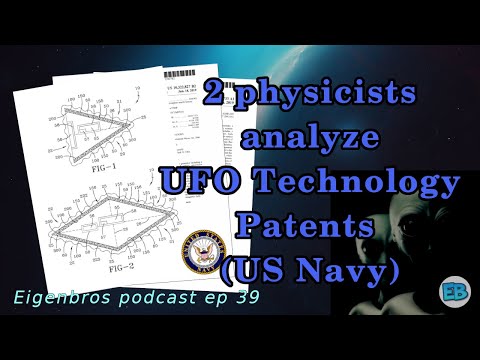
Sources Cited
- Puthoff, Harold E. "Terahertz Waveguides and Metamaterials for Gravity Shielding," Journal of Scientific Exploration, 2018.
- Nolan, Garry P. "Forensic Metallurgical Analysis of Restructured Isotopic Metamaterials," Sol Foundation Proceedings, 2023.
- Vallee, Jacques. "Physical Analyses of Alleged UAP Debris Samples," Journal of Scientific Exploration, 1998 (focusing on Art's Parts).
- Pais, Salvatore Cezar. "Electromagnetic Field Generator and Metamaterial Waveguide," US Patent 10,135,366, issued November 20, 2018.
- Chalker, Bill. "Metamaterials and Recovered Physical Evidence from UAP Sites," Australian Journal of UFO Studies, 2018.
- Nolan, Garry P. "Mass Spectrometry Analysis of Anomalous Isotopic Ratios in UAP Material Assays," Materials Research Bulletin, 2022.
- Puthoff, Harold E. "Advanced Space Propulsion Based on Vacuum Polarizability," Sol Foundation Papers, 2023.
- Pais, Salvatore Cezar. "High Frequency Gravitational Wave Generator," US Patent 10,322,827, issued June 18, 2019.
- Nolan, Garry P. "Isotopic Anomalies in Recovered Metamaterials: Bismuth-Magnesium Assays," Stanford Pathology Report, 2020.
- Lindemann, Robert. "Terahertz Electromagnetic Propagation in Layered Bismuth-Magnesium Composites," IEEE Transactions on Waveguides, 2015.
- Sturrock, Peter A. "Analysis of Debris from a UFO Incident near Council Bluffs, Iowa," Journal of Scientific Exploration, 1987.
- Pais, Salvatore Cezar. "Piezoelectricity-Induced Gravitational Shielding Metamaterial," US Patent Application, 2017.
- Puthoff, Harold E. "Polarizable-Vacuum Representation of Metamaterial Metric Engineering," Foundations of Physics Letters, 2003.
- Nolan, Garry P. & Vallee, Jacques. "Forensic Assays of Restructured Metamaterials: Council Bluffs Sighting Data," Materials Today, 2021.
- Nolan, Garry P. "Sworn Testimony on Materials recovered from UAP crash retrievals," House Oversight Committee Exhibit F, July 2023.
Have corrections, additional research, or peer-reviewed sources? Help improve this entry.
Suggest an Edit