
Atmospheric Organism Hypothesis
Proposes that some UAPs are not technological craft engineered by intelligent civilizations, but undiscovered biological or electromagnetic organisms native to Earth's upper atmosphere.
Fringe TheoryCore Thesis
Instead of assuming that UAPs are metal spaceships built by alien engineers, this theory proposes that some UAPs are living, non-technological organisms that reside natively in Earth's upper atmosphere, ionosphere, or magnetosphere.
Origin & History
The Atmospheric Organism Hypothesis (also known as the Biological UAP or Biomorphic Hypothesis) is a highly creative model that shifts the study of UAPs away from technological engineering and toward biological science. Instead of assuming that UAPs are metal spaceships built by alien engineers, this theory proposes that some UAPs are living, non-technological organisms that reside natively in Earth's upper atmosphere, ionosphere, or magnetosphere. These "atmospheric beasts" are highly evolved, low-density lifeforms composed of plasma, electromagnetic energy, or semi-solid organic matter. They are generally invisible to the human eye under normal conditions but can register on radar, manifest on specialized infrared film, or glow visually when electrically excited.
The philosophical roots of the biomorphic model date back to the early 20th century with the research of Charles Fort, who speculated that the sky is a vast, unseen ocean populated by strange biological entities. If life can evolve in the crushing depths of deep-sea hydrothermal vents or the vacuum-like dry valleys of Antarctica, it is biologically plausible that life could adapt to the low-pressure, high-radiation environments of the stratosphere and ionosphere. Philosophically, this model challenges our definition of life, proposing that UAP encounters are not contacts with advanced intellects, but ecological encounters with a wild, high-altitude fauna.
The hypothesis's own chronology begins well before Constable formalized it. Psychoanalyst Wilhelm Reich spent the 1930s through the 1950s developing the concept of "orgone energy," a purported universal bio-energetic force never accepted by mainstream science — a framework Constable would later adopt wholesale as the propulsion mechanism for his hypothesized creatures. Constable coined the model itself in 1958 with They Live in the Sky!, introducing the term "critters" for the amoeba-like organisms he believed his infrared photographs revealed over the Mojave Desert, and followed it with a 1962 paper in the fringe Journal of Borderland Research. The hypothesis gained its most credentialed early advocate in 1967, when Cambridge-trained zoologist Ivan T. Sanderson — later known as a founder of cryptozoology — published Uninvited Visitors: A Biologist Looks at UFOs, arguing for a biological rather than technological reading of UFO reports. Constable expanded the model across two further books in 1976 and 1978, explicitly tying orgone energy to UFO propulsion for a mass-market readership. The most recent scientific contribution arrived in 2012, when Italian astrophysicist Massimo Teodorani conducted spectral analyses of the long-running Hessdalen light phenomenon in Norway and concluded the lights exhibited self-organizing, biomorphic traits. Constable died in 2016; the hypothesis has never attracted an institutional research program and survives today mainly through independent researchers and self-published literature.
Scientific Foundations
The biomorphic model's second scientific pillar is plasma physics. Physicists have discovered that complex plasmas—ionized gases containing microscopic dust particles—can organize themselves into stable, double-helix structures that exhibit lifelike properties, including self-replication, metabolic-like energy absorption, and response to external stimuli. Under this model, UAP sightings represent atmospheric plasma organisms that are attracted to human electromagnetic activity, such as radar installations, power grids, and lightning storms.
1. Low-Density Biomorphic Structure
In biological terms, these organisms are described as macroscopic, gaseous or gelatinous "critters." Because they reside in the low-pressure stratosphere, their bodies are composed of low-density, expanded matter. To maintain structure, they utilize internal electrostatic forces rather than rigid bone structures, making them highly flexible. This explains UAP reports of craft that appear to merge, split apart, change shapes, and grow or shrink in size—behaviors that are common for single-celled organisms or amoebas, but impossible for metallic machinery.
2. Dust-Plasma Self-Organization & Aposematic Light Shifts
The plasma mechanism utilizes dust-plasma dynamics. When cosmic rays, solar wind, or geothermal tectonic strain ionize gases in the upper atmosphere, they create localized plasma fields. These plasmas can self-organize into stable spheres (plasmoids). These plasmoids can absorb ambient electromagnetic energy, navigate along magnetic field lines, and emit intense, shifting colors (bioluminescence). When a military radar sweeps the sky, the microwave energy can excite these plasmoids, causing them to glow visually and generate anomalous radar returns that mimic solid craft.
These plasmoids also demonstrate "aposematic behavior"—they flash and shift colors when threatened or excited. Under the biomorphic model, UAP color changes (e.g., from blue to red or orange) are not indicators of acceleration or engine status, but physiological expressions of stress, excitement, or feeding activity within the plasma organism's structure.
3. Electromagnetic Trophism & Metabolic Attraction
The metabolic mechanism explains UAP attraction to energy sources. Just as deep-sea organisms cluster around thermal vents, atmospheric organisms are hypothesized to feed on electrical energy. They navigate toward regions of high electrical charge, such as electrical storms, high-voltage power lines, military radar arrays, and nuclear power plants. Their "flight" characteristics—such as erratic, zig-zag movements, sudden vertical ascents, and rapid hovering—are explained as non-conscious biological responses to electromagnetic currents and field lines in the Earth's magnetosphere.
Morphology Mapping & Shape Analysis
These mechanisms are proposed to manifest differently depending on the specific silhouette a given organism assumes, which the hypothesis maps across the ten most commonly reported UAP morphologies:
Atmospheric Organism Hypothesis Morphology Analysis
1. Tic Tac / Capsule: The Tic Tac / Capsule morphology is explained by the Atmospheric Organism Hypothesis as a fluid, biomorphic configuration assumed by a low-density plasma or stratospheric creature. These shapes are not constructed hulls, but organic structures stabilized by electrostatic forces. Just as single-celled organisms change shapes to engulf prey or react to environment, these atmospheric entities expand, contract, and alter their visible geometries. The apparent structure is an illusion created by the plasma boundary layer interacting with local atmospheric fields.
Design Rationale: The structural geometry of the Tic Tac / Capsule morphology represents a key engineering solution within the Atmospheric Organism Hypothesis model. Proponents argue that the unique aspect ratio, flight profile, and surface reflectivity of these shapes are not decorative; they are dictated by the physical constraints of the vehicle's primary propulsion system. By analyzing the aerodynamic or metric drag coefficients associated with this shape, we demonstrate how it operates efficiently within the Earth's atmosphere and magnetosphere. Skeptics, however, view these shapes as products of human imagination, noting how their popularity in reports correlates with popular science fiction design trends.
Operational Parameters: Under this hypothesis, the Tic Tac / Capsule shape exhibits specific flight behavior, including silent hovering, instant right-angle turns, and rapid vertical ascent. These operational parameters are enabled by the localized metric compression or plasma shielding generated around the hull. This shielding shields the craft from thermal friction, preventing sonic booms and allowing silent operation in populated areas, showing that the morphology is a direct consequence of the drive system's engineering.
2. Triangular / Delta: The Triangular / Delta morphology is explained by the Atmospheric Organism Hypothesis as a fluid, biomorphic configuration assumed by a low-density plasma or stratospheric creature. These shapes are not constructed hulls, but organic structures stabilized by electrostatic forces. Just as single-celled organisms change shapes to engulf prey or react to environment, these atmospheric entities expand, contract, and alter their visible geometries. The apparent structure is an illusion created by the plasma boundary layer interacting with local atmospheric fields.
Design Rationale: The structural geometry of the Triangular / Delta morphology represents a key engineering solution within the Atmospheric Organism Hypothesis model. Proponents argue that the unique aspect ratio, flight profile, and surface reflectivity of these shapes are not decorative; they are dictated by the physical constraints of the vehicle's primary propulsion system. By analyzing the aerodynamic or metric drag coefficients associated with this shape, we demonstrate how it operates efficiently within the Earth's atmosphere and magnetosphere. Skeptics, however, view these shapes as products of human imagination, noting how their popularity in reports correlates with popular science fiction design trends.
Operational Parameters: Under this hypothesis, the Triangular / Delta shape exhibits specific flight behavior, including silent hovering, instant right-angle turns, and rapid vertical ascent. These operational parameters are enabled by the localized metric compression or plasma shielding generated around the hull. This shielding shields the craft from thermal friction, preventing sonic booms and allowing silent operation in populated areas, showing that the morphology is a direct consequence of the drive system's engineering.
3. Disk / Saucer: The Disk / Saucer morphology is explained by the Atmospheric Organism Hypothesis as a fluid, biomorphic configuration assumed by a low-density plasma or stratospheric creature. These shapes are not constructed hulls, but organic structures stabilized by electrostatic forces. Just as single-celled organisms change shapes to engulf prey or react to environment, these atmospheric entities expand, contract, and alter their visible geometries. The apparent structure is an illusion created by the plasma boundary layer interacting with local atmospheric fields.
Design Rationale: The structural geometry of the Disk / Saucer morphology represents a key engineering solution within the Atmospheric Organism Hypothesis model. Proponents argue that the unique aspect ratio, flight profile, and surface reflectivity of these shapes are not decorative; they are dictated by the physical constraints of the vehicle's primary propulsion system. By analyzing the aerodynamic or metric drag coefficients associated with this shape, we demonstrate how it operates efficiently within the Earth's atmosphere and magnetosphere. Skeptics, however, view these shapes as products of human imagination, noting how their popularity in reports correlates with popular science fiction design trends.
Operational Parameters: Under this hypothesis, the Disk / Saucer shape exhibits specific flight behavior, including silent hovering, instant right-angle turns, and rapid vertical ascent. These operational parameters are enabled by the localized metric compression or plasma shielding generated around the hull. This shielding shields the craft from thermal friction, preventing sonic booms and allowing silent operation in populated areas, showing that the morphology is a direct consequence of the drive system's engineering.
4. Sphere / Orb: The Sphere / Orb morphology is explained by the Atmospheric Organism Hypothesis as a fluid, biomorphic configuration assumed by a low-density plasma or stratospheric creature. These shapes are not constructed hulls, but organic structures stabilized by electrostatic forces. Just as single-celled organisms change shapes to engulf prey or react to environment, these atmospheric entities expand, contract, and alter their visible geometries. The apparent structure is an illusion created by the plasma boundary layer interacting with local atmospheric fields.
Design Rationale: The structural geometry of the Sphere / Orb morphology represents a key engineering solution within the Atmospheric Organism Hypothesis model. Proponents argue that the unique aspect ratio, flight profile, and surface reflectivity of these shapes are not decorative; they are dictated by the physical constraints of the vehicle's primary propulsion system. By analyzing the aerodynamic or metric drag coefficients associated with this shape, we demonstrate how it operates efficiently within the Earth's atmosphere and magnetosphere. Skeptics, however, view these shapes as products of human imagination, noting how their popularity in reports correlates with popular science fiction design trends.
Operational Parameters: Under this hypothesis, the Sphere / Orb shape exhibits specific flight behavior, including silent hovering, instant right-angle turns, and rapid vertical ascent. These operational parameters are enabled by the localized metric compression or plasma shielding generated around the hull. This shielding shields the craft from thermal friction, preventing sonic booms and allowing silent operation in populated areas, showing that the morphology is a direct consequence of the drive system's engineering.
5. Cylinder / Cigar: The Cylinder / Cigar morphology is explained by the Atmospheric Organism Hypothesis as a fluid, biomorphic configuration assumed by a low-density plasma or stratospheric creature. These shapes are not constructed hulls, but organic structures stabilized by electrostatic forces. Just as single-celled organisms change shapes to engulf prey or react to environment, these atmospheric entities expand, contract, and alter their visible geometries. The apparent structure is an illusion created by the plasma boundary layer interacting with local atmospheric fields.
Design Rationale: The structural geometry of the Cylinder / Cigar morphology represents a key engineering solution within the Atmospheric Organism Hypothesis model. Proponents argue that the unique aspect ratio, flight profile, and surface reflectivity of these shapes are not decorative; they are dictated by the physical constraints of the vehicle's primary propulsion system. By analyzing the aerodynamic or metric drag coefficients associated with this shape, we demonstrate how it operates efficiently within the Earth's atmosphere and magnetosphere. Skeptics, however, view these shapes as products of human imagination, noting how their popularity in reports correlates with popular science fiction design trends.
Operational Parameters: Under this hypothesis, the Cylinder / Cigar shape exhibits specific flight behavior, including silent hovering, instant right-angle turns, and rapid vertical ascent. These operational parameters are enabled by the localized metric compression or plasma shielding generated around the hull. This shielding shields the craft from thermal friction, preventing sonic booms and allowing silent operation in populated areas, showing that the morphology is a direct consequence of the drive system's engineering.
6. Chevron / V-Shape: The Chevron / V-Shape morphology is explained by the Atmospheric Organism Hypothesis as a fluid, biomorphic configuration assumed by a low-density plasma or stratospheric creature. These shapes are not constructed hulls, but organic structures stabilized by electrostatic forces. Just as single-celled organisms change shapes to engulf prey or react to environment, these atmospheric entities expand, contract, and alter their visible geometries. The apparent structure is an illusion created by the plasma boundary layer interacting with local atmospheric fields.
Design Rationale: The structural geometry of the Chevron / V-Shape morphology represents a key engineering solution within the Atmospheric Organism Hypothesis model. Proponents argue that the unique aspect ratio, flight profile, and surface reflectivity of these shapes are not decorative; they are dictated by the physical constraints of the vehicle's primary propulsion system. By analyzing the aerodynamic or metric drag coefficients associated with this shape, we demonstrate how it operates efficiently within the Earth's atmosphere and magnetosphere. Skeptics, however, view these shapes as products of human imagination, noting how their popularity in reports correlates with popular science fiction design trends.
Operational Parameters: Under this hypothesis, the Chevron / V-Shape shape exhibits specific flight behavior, including silent hovering, instant right-angle turns, and rapid vertical ascent. These operational parameters are enabled by the localized metric compression or plasma shielding generated around the hull. This shielding shields the craft from thermal friction, preventing sonic booms and allowing silent operation in populated areas, showing that the morphology is a direct consequence of the drive system's engineering.
7. Diamond / Double-Cone: The Diamond / Double-Cone morphology is explained by the Atmospheric Organism Hypothesis as a fluid, biomorphic configuration assumed by a low-density plasma or stratospheric creature. These shapes are not constructed hulls, but organic structures stabilized by electrostatic forces. Just as single-celled organisms change shapes to engulf prey or react to environment, these atmospheric entities expand, contract, and alter their visible geometries. The apparent structure is an illusion created by the plasma boundary layer interacting with local atmospheric fields.
Design Rationale: The structural geometry of the Diamond / Double-Cone morphology represents a key engineering solution within the Atmospheric Organism Hypothesis model. Proponents argue that the unique aspect ratio, flight profile, and surface reflectivity of these shapes are not decorative; they are dictated by the physical constraints of the vehicle's primary propulsion system. By analyzing the aerodynamic or metric drag coefficients associated with this shape, we demonstrate how it operates efficiently within the Earth's atmosphere and magnetosphere. Skeptics, however, view these shapes as products of human imagination, noting how their popularity in reports correlates with popular science fiction design trends.
Operational Parameters: Under this hypothesis, the Diamond / Double-Cone shape exhibits specific flight behavior, including silent hovering, instant right-angle turns, and rapid vertical ascent. These operational parameters are enabled by the localized metric compression or plasma shielding generated around the hull. This shielding shields the craft from thermal friction, preventing sonic booms and allowing silent operation in populated areas, showing that the morphology is a direct consequence of the drive system's engineering.
8. Conical / Acorn: The Conical / Acorn morphology is explained by the Atmospheric Organism Hypothesis as a fluid, biomorphic configuration assumed by a low-density plasma or stratospheric creature. These shapes are not constructed hulls, but organic structures stabilized by electrostatic forces. Just as single-celled organisms change shapes to engulf prey or react to environment, these atmospheric entities expand, contract, and alter their visible geometries. The apparent structure is an illusion created by the plasma boundary layer interacting with local atmospheric fields.
Design Rationale: The structural geometry of the Conical / Acorn morphology represents a key engineering solution within the Atmospheric Organism Hypothesis model. Proponents argue that the unique aspect ratio, flight profile, and surface reflectivity of these shapes are not decorative; they are dictated by the physical constraints of the vehicle's primary propulsion system. By analyzing the aerodynamic or metric drag coefficients associated with this shape, we demonstrate how it operates efficiently within the Earth's atmosphere and magnetosphere. Skeptics, however, view these shapes as products of human imagination, noting how their popularity in reports correlates with popular science fiction design trends.
Operational Parameters: Under this hypothesis, the Conical / Acorn shape exhibits specific flight behavior, including silent hovering, instant right-angle turns, and rapid vertical ascent. These operational parameters are enabled by the localized metric compression or plasma shielding generated around the hull. This shielding shields the craft from thermal friction, preventing sonic booms and allowing silent operation in populated areas, showing that the morphology is a direct consequence of the drive system's engineering.
9. Amorphous / Gaseous: The Amorphous / Gaseous morphology is explained by the Atmospheric Organism Hypothesis as a fluid, biomorphic configuration assumed by a low-density plasma or stratospheric creature. These shapes are not constructed hulls, but organic structures stabilized by electrostatic forces. Just as single-celled organisms change shapes to engulf prey or react to environment, these atmospheric entities expand, contract, and alter their visible geometries. The apparent structure is an illusion created by the plasma boundary layer interacting with local atmospheric fields.
Design Rationale: The structural geometry of the Amorphous / Gaseous morphology represents a key engineering solution within the Atmospheric Organism Hypothesis model. Proponents argue that the unique aspect ratio, flight profile, and surface reflectivity of these shapes are not decorative; they are dictated by the physical constraints of the vehicle's primary propulsion system. By analyzing the aerodynamic or metric drag coefficients associated with this shape, we demonstrate how it operates efficiently within the Earth's atmosphere and magnetosphere. Skeptics, however, view these shapes as products of human imagination, noting how their popularity in reports correlates with popular science fiction design trends.
Operational Parameters: Under this hypothesis, the Amorphous / Gaseous shape exhibits specific flight behavior, including silent hovering, instant right-angle turns, and rapid vertical ascent. These operational parameters are enabled by the localized metric compression or plasma shielding generated around the hull. This shielding shields the craft from thermal friction, preventing sonic booms and allowing silent operation in populated areas, showing that the morphology is a direct consequence of the drive system's engineering.
10. Cube-in-Sphere: The Cube-in-Sphere morphology is explained by the Atmospheric Organism Hypothesis as a fluid, biomorphic configuration assumed by a low-density plasma or stratospheric creature. These shapes are not constructed hulls, but organic structures stabilized by electrostatic forces. Just as single-celled organisms change shapes to engulf prey or react to environment, these atmospheric entities expand, contract, and alter their visible geometries. The apparent structure is an illusion created by the plasma boundary layer interacting with local atmospheric fields.
Design Rationale: The structural geometry of the Cube-in-Sphere morphology represents a key engineering solution within the Atmospheric Organism Hypothesis model. Proponents argue that the unique aspect ratio, flight profile, and surface reflectivity of these shapes are not decorative; they are dictated by the physical constraints of the vehicle's primary propulsion system. By analyzing the aerodynamic or metric drag coefficients associated with this shape, we demonstrate how it operates efficiently within the Earth's atmosphere and magnetosphere. Skeptics, however, view these shapes as products of human imagination, noting how their popularity in reports correlates with popular science fiction design trends.
Operational Parameters: Under this hypothesis, the Cube-in-Sphere shape exhibits specific flight behavior, including silent hovering, instant right-angle turns, and rapid vertical ascent. These operational parameters are enabled by the localized metric compression or plasma shielding generated around the hull. This shielding shields the craft from thermal friction, preventing sonic booms and allowing silent operation in populated areas, showing that the morphology is a direct consequence of the drive system's engineering.
Key Proponents
Trevor James Constable
New Zealand-born writer and 26-year U.S. merchant marine radio officer who originated the hypothesis in They Live in the Sky! (1958), coining the term "critters" for amoeba-like atmospheric organisms he believed his infrared photographs revealed over the Mojave Desert. He later tied their propulsion to Wilhelm Reich's "orgone energy" concept in The Cosmic Pulse of Life (1976) and expanded the model further in Sky Creatures: Living UFOs (1978). Held no formal credentials in biology or physics — he was otherwise known as a military aviation historian — and his infrared photographic evidence was never independently replicated.
Charles Fort
American writer and researcher who, in The Book of the Damned (1919) and New Lands (1923), catalogued decades of anomalous aerial reports and openly speculated that the sky above Earth might be a vast, unseen ocean populated by strange biological entities. Fort predates the modern UFO era by decades and never proposed a formal biological mechanism, but his willingness to entertain a living, non-technological sky is the philosophical root every later proponent of this hypothesis builds on.
Dr. Massimo Teodorani
Italian astrophysicist who has conducted spectral and physical-data analyses of the long-running Hessdalen light phenomenon in Norway, publishing his findings in the Journal of Scientific Exploration (2004) and in later Sol Foundation papers (2023). Teodorani argues that the Hessdalen lights exhibit self-organizing, biomorphic characteristics consistent with a plasma-based lifeform rather than a purely inert optical or geological phenomenon, making him the hypothesis's most credentialed living proponent.
Ivan T. Sanderson
Cambridge-educated zoologist (BA Hons, Zoology) and later a founder of cryptozoology, who lent the hypothesis its most credentialed early advocate with Uninvited Visitors: A Biologist Looks at UFOs (1967) and the 1968 Fate magazine article "Biomorphic Anomalies: A Biological Approach to UFOs," arguing for a biological rather than technological reading of UFO reports.
Key Witnesses & Field Investigators
Beyond the hypothesis's formal proponents, several real, named individuals are directly tied to the two most substantive physical events cited as evidence for this hypothesis — the 1994 Oakville, Washington gelatinous falls and the long-running Hessdalen light phenomenon — independent of whether they personally endorse a biological explanation:
Sunny Barclift
Oakville property owner on whose land the first of six documented gelatinous "blob" falls landed on August 7, 1994. Barclift and her mother, Dotty Hearn, were among the earliest residents to report contact with the material and subsequent flu-like illness, and their property became the initial focus of the Washington State Department of Ecology's field investigation. Neither witness has ever claimed the material was of non-terrestrial origin; their testimony establishes only that a real, physically anomalous substance fell and caused genuine illness, which is the extent of the verified event this hypothesis cites.
Mike McDowell
Public health microbiologist who cultured samples of the Oakville material and isolated two bacterial species, Pseudomonas fluorescens and Enterobacter cloacae, both common inhabitants of mammalian digestive tracts and environmental waste rather than novel organisms. His samples went missing before a complete analysis could be finished, leaving the incident's ultimate cause formally unresolved. His findings are the closest thing to an instrumented laboratory examination of a "sky flesh" fall this hypothesis has ever produced.
Erling Strand
Norwegian electrical engineer and Østfold University College instructor who co-founded Project Hessdalen in 1983 and has served as its project manager since 1993, overseeing continuous instrumented field observation of the Hessdalen valley's light phenomenon, including the automatic monitoring station installed in 1998 and the annual student science camps run since 2002. Strand's decades of direct instrumented observation make him the phenomenon's most sustained real-world witness, though his own published work characterizes the lights as an unexplained physical phenomenon rather than confirming any biological interpretation of them.
Government & Military Programs
No official U.S. government investigation — Project Sign, Project Blue Book, the Condon Committee, AATIP, or AARO — has ever formally evaluated a biological explanation for UAP activity; all have operated within an implicit assumption that reported objects are craft, whether conventional, classified, or extraterrestrial in origin. The closest institutional overlap is circumstantial: proponents note that reported UAP activity clusters around military radar installations, missile ranges, and nuclear facilities — the same high-electromagnetic-field environments the metabolic-attraction mechanism predicts atmospheric organisms would be drawn to — but no government program has investigated this correlation as a biological rather than technological phenomenon. The hypothesis therefore remains almost entirely outside the institutional UAP-investigation record, a gap its proponents attribute to disciplinary blind spots in aerospace-dominated investigative bodies rather than to any absence of underlying data.
The Five Observables
The Five Observables framework, developed by former AATIP director Luis Elizondo, is used to classify UAP encounters based on performance characteristics that exceed known technology. Applied here, each observable is weighed against the atmospheric-organism hypothesis's proposed biological and electromagnetic mechanisms rather than an engineered propulsion system:
Assessment: The atmospheric-organism hypothesis reframes each observable as a biological or bio-electrical phenomenon rather than an engineering feat. Anti-gravity lift is recast as buoyancy: a low-density, gelatinous or plasma body theorized to ride thermal and electromagnetic gradients rather than generate thrust. Sudden acceleration is modeled as an electrostatic "startle" discharge, analogous to the explosive escape reflex of a jellyfish or cephalopod, rather than a throttled propulsion system. Low observability is attributed to genuine biological translucency — a body largely invisible to the eye that registers only on infrared film or radar when electrically excited, not to engineered stealth coatings. USO (submerged object) reports are folded into the model as the same organisms operating at the ocean surface, comparable to gelatinous marine life moving between water and air, giving a speculative account of trans-medium travel. The hypothesis's weakest point is hypersonic velocity: sustained hypersonic-range tracks are difficult to reconcile with a low-mass, gelatinous or plasma structure, and no proposed biological mechanism closes this evidentiary gap — it is classified as absent from the framework's supporting cases.
Physical Evidence
The hypothesis's clearest physical-evidence claim concerns the organisms' outer envelope:
Their skin or outer envelope is composed of a specialized, semi-solid gelatinous substance (often associated with historical reports of "star jelly" or "angel hair" that falls from the sky after UAP sightings). This material is highly sensitive to light and heat, decaying rapidly into a liquid residue when it contacts the warm, dense air of the surface, explaining why no physical bodies of these creatures are ever recovered.
The most substantive real-world material event associated with the hypothesis is the August 1994 Oakville, Washington incident, in which residents of the small town reported repeated falls of translucent gelatinous "blobs" over several weeks. State ecology researchers who examined the material found unidentified bacteria within it, and the incident remains formally unresolved in the public record. It is the closest the hypothesis comes to an instrumentally examined physical sample, though the material's origin — biological, industrial, or otherwise — was never conclusively determined, and it has not been linked to any specific UAP sighting in the area at the time.
Supporting Case Files
The Atmospheric Organism Hypothesis has been applied as an alternative, non-technological reading of the following case files, each analyzed for telemetry/sensor correlation, historical and cultural context, and comparative fit with the hypothesis's biological mechanisms:
Atmospheric Organism Hypothesis Case Alignment Index
1. USS Nimitz Tic Tac (2004): For the USS Nimitz Tic Tac (2004) case, the Atmospheric Organism Hypothesis proposes a biological, non-technological origin. The phenomenon observed is analyzed not as an engineered metallic craft piloted by intelligent beings, but as a living, self-organizing plasma or biomorphic entity native to the Earth's upper atmosphere. The object's rapid acceleration, fluid deformation, and dramatic color shifts represent physiological reactions (aposematic coloring) to external stimuli, such as military radar frequencies or localized electrostatic changes. The lack of acoustic signatures (sonic booms) and thermal exhaust is highly consistent with a low-density, gaseous bio-electric structure navigating along geomagnetospheric current pathways.
A. Telemetry and Sensor Correlation: When analyzing the raw sensor profile of the USS Nimitz Tic Tac (2004) encounter under the tenets of Atmospheric Organism Hypothesis, researchers identify critical data correlations. Standard military radar sweeps, thermal FLIR arrays, and optical tracking systems record anomalies that match the predicted parameters of this model. While conventional models attribute these targets to atmospheric anomalies or instrumentation failures, this framework asserts that the spatial coordinate changes and localized electromagnetic shifts represent physical manifestations of the theory's primary mechanisms. This alignment provides a robust empirical bridge between raw telemetry and the theoretical framework, showing that the physical characteristics observed are consistent with the hypothesis.
B. Historical and Cultural Context: The historical placement of this encounter within the broader timeline of modern anomalous studies is of paramount importance to Atmospheric Organism Hypothesis. The event did not occur in isolation; it occurred during a period of specific technological development and cultural interest. By mapping the socio-political climate and military deployment records of the era, we reveal how the witness testimonies and public reports were shaped by contemporary expectations. This analysis traces the transmission of the narrative across communication networks, demonstrating how the raw experience became consolidated into a structured folklore, serving to guide public perception and establish a long-term cultural archetype.
C. Comparative Scientific Synthesis: Ultimately, the USS Nimitz Tic Tac (2004) case serves as a vital comparative test bed for Atmospheric Organism Hypothesis. By contrasting this event with other cases in the database, we identify repeating patterns of flight dynamics, entity morphology, and localized environmental impact. These patterns are synthesized to refine the mathematical and biological models of the hypothesis. While skeptics highlight the inconsistencies or the lack of physical debris as disproof, proponents argue that these gaps are expected outcomes of the theory's stealth and non-interference protocols, proving that a systematic, multidisciplinary study of the case is essential to resolving the UAP mystery.
2. Roswell UFO Crash (1947): For the Roswell UFO Crash (1947) case, the Atmospheric Organism Hypothesis proposes a biological, non-technological origin. The phenomenon observed is analyzed not as an engineered metallic craft piloted by intelligent beings, but as a living, self-organizing plasma or biomorphic entity native to the Earth's upper atmosphere. The object's rapid acceleration, fluid deformation, and dramatic color shifts represent physiological reactions (aposematic coloring) to external stimuli, such as military radar frequencies or localized electrostatic changes. The lack of acoustic signatures (sonic booms) and thermal exhaust is highly consistent with a low-density, gaseous bio-electric structure navigating along geomagnetospheric current pathways.
A. Telemetry and Sensor Correlation: When analyzing the raw sensor profile of the Roswell UFO Crash (1947) encounter under the tenets of Atmospheric Organism Hypothesis, researchers identify critical data correlations. Standard military radar sweeps, thermal FLIR arrays, and optical tracking systems record anomalies that match the predicted parameters of this model. While conventional models attribute these targets to atmospheric anomalies or instrumentation failures, this framework asserts that the spatial coordinate changes and localized electromagnetic shifts represent physical manifestations of the theory's primary mechanisms. This alignment provides a robust empirical bridge between raw telemetry and the theoretical framework, showing that the physical characteristics observed are consistent with the hypothesis.
B. Historical and Cultural Context: The historical placement of this encounter within the broader timeline of modern anomalous studies is of paramount importance to Atmospheric Organism Hypothesis. The event did not occur in isolation; it occurred during a period of specific technological development and cultural interest. By mapping the socio-political climate and military deployment records of the era, we reveal how the witness testimonies and public reports were shaped by contemporary expectations. This analysis traces the transmission of the narrative across communication networks, demonstrating how the raw experience became consolidated into a structured folklore, serving to guide public perception and establish a long-term cultural archetype.
C. Comparative Scientific Synthesis: Ultimately, the Roswell UFO Crash (1947) case serves as a vital comparative test bed for Atmospheric Organism Hypothesis. By contrasting this event with other cases in the database, we identify repeating patterns of flight dynamics, entity morphology, and localized environmental impact. These patterns are synthesized to refine the mathematical and biological models of the hypothesis. While skeptics highlight the inconsistencies or the lack of physical debris as disproof, proponents argue that these gaps are expected outcomes of the theory's stealth and non-interference protocols, proving that a systematic, multidisciplinary study of the case is essential to resolving the UAP mystery.
3. Rendlesham Forest Incident (1980): For the Rendlesham Forest Incident (1980) case, the Atmospheric Organism Hypothesis proposes a biological, non-technological origin. The phenomenon observed is analyzed not as an engineered metallic craft piloted by intelligent beings, but as a living, self-organizing plasma or biomorphic entity native to the Earth's upper atmosphere. The object's rapid acceleration, fluid deformation, and dramatic color shifts represent physiological reactions (aposematic coloring) to external stimuli, such as military radar frequencies or localized electrostatic changes. The lack of acoustic signatures (sonic booms) and thermal exhaust is highly consistent with a low-density, gaseous bio-electric structure navigating along geomagnetospheric current pathways.
A. Telemetry and Sensor Correlation: When analyzing the raw sensor profile of the Rendlesham Forest Incident (1980) encounter under the tenets of Atmospheric Organism Hypothesis, researchers identify critical data correlations. Standard military radar sweeps, thermal FLIR arrays, and optical tracking systems record anomalies that match the predicted parameters of this model. While conventional models attribute these targets to atmospheric anomalies or instrumentation failures, this framework asserts that the spatial coordinate changes and localized electromagnetic shifts represent physical manifestations of the theory's primary mechanisms. This alignment provides a robust empirical bridge between raw telemetry and the theoretical framework, showing that the physical characteristics observed are consistent with the hypothesis.
B. Historical and Cultural Context: The historical placement of this encounter within the broader timeline of modern anomalous studies is of paramount importance to Atmospheric Organism Hypothesis. The event did not occur in isolation; it occurred during a period of specific technological development and cultural interest. By mapping the socio-political climate and military deployment records of the era, we reveal how the witness testimonies and public reports were shaped by contemporary expectations. This analysis traces the transmission of the narrative across communication networks, demonstrating how the raw experience became consolidated into a structured folklore, serving to guide public perception and establish a long-term cultural archetype.
C. Comparative Scientific Synthesis: Ultimately, the Rendlesham Forest Incident (1980) case serves as a vital comparative test bed for Atmospheric Organism Hypothesis. By contrasting this event with other cases in the database, we identify repeating patterns of flight dynamics, entity morphology, and localized environmental impact. These patterns are synthesized to refine the mathematical and biological models of the hypothesis. While skeptics highlight the inconsistencies or the lack of physical debris as disproof, proponents argue that these gaps are expected outcomes of the theory's stealth and non-interference protocols, proving that a systematic, multidisciplinary study of the case is essential to resolving the UAP mystery.
4. Tehran F-4 Incident (1976): For the Tehran F-4 Incident (1976) case, the Atmospheric Organism Hypothesis proposes a biological, non-technological origin. The phenomenon observed is analyzed not as an engineered metallic craft piloted by intelligent beings, but as a living, self-organizing plasma or biomorphic entity native to the Earth's upper atmosphere. The object's rapid acceleration, fluid deformation, and dramatic color shifts represent physiological reactions (aposematic coloring) to external stimuli, such as military radar frequencies or localized electrostatic changes. The lack of acoustic signatures (sonic booms) and thermal exhaust is highly consistent with a low-density, gaseous bio-electric structure navigating along geomagnetospheric current pathways.
A. Telemetry and Sensor Correlation: When analyzing the raw sensor profile of the Tehran F-4 Incident (1976) encounter under the tenets of Atmospheric Organism Hypothesis, researchers identify critical data correlations. Standard military radar sweeps, thermal FLIR arrays, and optical tracking systems record anomalies that match the predicted parameters of this model. While conventional models attribute these targets to atmospheric anomalies or instrumentation failures, this framework asserts that the spatial coordinate changes and localized electromagnetic shifts represent physical manifestations of the theory's primary mechanisms. This alignment provides a robust empirical bridge between raw telemetry and the theoretical framework, showing that the physical characteristics observed are consistent with the hypothesis.
B. Historical and Cultural Context: The historical placement of this encounter within the broader timeline of modern anomalous studies is of paramount importance to Atmospheric Organism Hypothesis. The event did not occur in isolation; it occurred during a period of specific technological development and cultural interest. By mapping the socio-political climate and military deployment records of the era, we reveal how the witness testimonies and public reports were shaped by contemporary expectations. This analysis traces the transmission of the narrative across communication networks, demonstrating how the raw experience became consolidated into a structured folklore, serving to guide public perception and establish a long-term cultural archetype.
C. Comparative Scientific Synthesis: Ultimately, the Tehran F-4 Incident (1976) case serves as a vital comparative test bed for Atmospheric Organism Hypothesis. By contrasting this event with other cases in the database, we identify repeating patterns of flight dynamics, entity morphology, and localized environmental impact. These patterns are synthesized to refine the mathematical and biological models of the hypothesis. While skeptics highlight the inconsistencies or the lack of physical debris as disproof, proponents argue that these gaps are expected outcomes of the theory's stealth and non-interference protocols, proving that a systematic, multidisciplinary study of the case is essential to resolving the UAP mystery.
5. Colares Island USO (1977): For the Colares Island USO (1977) case, the Atmospheric Organism Hypothesis proposes a biological, non-technological origin. The phenomenon observed is analyzed not as an engineered metallic craft piloted by intelligent beings, but as a living, self-organizing plasma or biomorphic entity native to the Earth's upper atmosphere. The object's rapid acceleration, fluid deformation, and dramatic color shifts represent physiological reactions (aposematic coloring) to external stimuli, such as military radar frequencies or localized electrostatic changes. The lack of acoustic signatures (sonic booms) and thermal exhaust is highly consistent with a low-density, gaseous bio-electric structure navigating along geomagnetospheric current pathways.
A. Telemetry and Sensor Correlation: When analyzing the raw sensor profile of the Colares Island USO (1977) encounter under the tenets of Atmospheric Organism Hypothesis, researchers identify critical data correlations. Standard military radar sweeps, thermal FLIR arrays, and optical tracking systems record anomalies that match the predicted parameters of this model. While conventional models attribute these targets to atmospheric anomalies or instrumentation failures, this framework asserts that the spatial coordinate changes and localized electromagnetic shifts represent physical manifestations of the theory's primary mechanisms. This alignment provides a robust empirical bridge between raw telemetry and the theoretical framework, showing that the physical characteristics observed are consistent with the hypothesis.
B. Historical and Cultural Context: The historical placement of this encounter within the broader timeline of modern anomalous studies is of paramount importance to Atmospheric Organism Hypothesis. The event did not occur in isolation; it occurred during a period of specific technological development and cultural interest. By mapping the socio-political climate and military deployment records of the era, we reveal how the witness testimonies and public reports were shaped by contemporary expectations. This analysis traces the transmission of the narrative across communication networks, demonstrating how the raw experience became consolidated into a structured folklore, serving to guide public perception and establish a long-term cultural archetype.
C. Comparative Scientific Synthesis: Ultimately, the Colares Island USO (1977) case serves as a vital comparative test bed for Atmospheric Organism Hypothesis. By contrasting this event with other cases in the database, we identify repeating patterns of flight dynamics, entity morphology, and localized environmental impact. These patterns are synthesized to refine the mathematical and biological models of the hypothesis. While skeptics highlight the inconsistencies or the lack of physical debris as disproof, proponents argue that these gaps are expected outcomes of the theory's stealth and non-interference protocols, proving that a systematic, multidisciplinary study of the case is essential to resolving the UAP mystery.
6. Ariel School Encounter (1994): For the Ariel School Encounter (1994) case, the Atmospheric Organism Hypothesis proposes a biological, non-technological origin. The phenomenon observed is analyzed not as an engineered metallic craft piloted by intelligent beings, but as a living, self-organizing plasma or biomorphic entity native to the Earth's upper atmosphere. The object's rapid acceleration, fluid deformation, and dramatic color shifts represent physiological reactions (aposematic coloring) to external stimuli, such as military radar frequencies or localized electrostatic changes. The lack of acoustic signatures (sonic booms) and thermal exhaust is highly consistent with a low-density, gaseous bio-electric structure navigating along geomagnetospheric current pathways.
A. Telemetry and Sensor Correlation: When analyzing the raw sensor profile of the Ariel School Encounter (1994) encounter under the tenets of Atmospheric Organism Hypothesis, researchers identify critical data correlations. Standard military radar sweeps, thermal FLIR arrays, and optical tracking systems record anomalies that match the predicted parameters of this model. While conventional models attribute these targets to atmospheric anomalies or instrumentation failures, this framework asserts that the spatial coordinate changes and localized electromagnetic shifts represent physical manifestations of the theory's primary mechanisms. This alignment provides a robust empirical bridge between raw telemetry and the theoretical framework, showing that the physical characteristics observed are consistent with the hypothesis.
B. Historical and Cultural Context: The historical placement of this encounter within the broader timeline of modern anomalous studies is of paramount importance to Atmospheric Organism Hypothesis. The event did not occur in isolation; it occurred during a period of specific technological development and cultural interest. By mapping the socio-political climate and military deployment records of the era, we reveal how the witness testimonies and public reports were shaped by contemporary expectations. This analysis traces the transmission of the narrative across communication networks, demonstrating how the raw experience became consolidated into a structured folklore, serving to guide public perception and establish a long-term cultural archetype.
C. Comparative Scientific Synthesis: Ultimately, the Ariel School Encounter (1994) case serves as a vital comparative test bed for Atmospheric Organism Hypothesis. By contrasting this event with other cases in the database, we identify repeating patterns of flight dynamics, entity morphology, and localized environmental impact. These patterns are synthesized to refine the mathematical and biological models of the hypothesis. While skeptics highlight the inconsistencies or the lack of physical debris as disproof, proponents argue that these gaps are expected outcomes of the theory's stealth and non-interference protocols, proving that a systematic, multidisciplinary study of the case is essential to resolving the UAP mystery.
7. The Phoenix Lights (1997): For the The Phoenix Lights (1997) case, the Atmospheric Organism Hypothesis proposes a biological, non-technological origin. The phenomenon observed is analyzed not as an engineered metallic craft piloted by intelligent beings, but as a living, self-organizing plasma or biomorphic entity native to the Earth's upper atmosphere. The object's rapid acceleration, fluid deformation, and dramatic color shifts represent physiological reactions (aposematic coloring) to external stimuli, such as military radar frequencies or localized electrostatic changes. The lack of acoustic signatures (sonic booms) and thermal exhaust is highly consistent with a low-density, gaseous bio-electric structure navigating along geomagnetospheric current pathways.
A. Telemetry and Sensor Correlation: When analyzing the raw sensor profile of the The Phoenix Lights (1997) encounter under the tenets of Atmospheric Organism Hypothesis, researchers identify critical data correlations. Standard military radar sweeps, thermal FLIR arrays, and optical tracking systems record anomalies that match the predicted parameters of this model. While conventional models attribute these targets to atmospheric anomalies or instrumentation failures, this framework asserts that the spatial coordinate changes and localized electromagnetic shifts represent physical manifestations of the theory's primary mechanisms. This alignment provides a robust empirical bridge between raw telemetry and the theoretical framework, showing that the physical characteristics observed are consistent with the hypothesis.
B. Historical and Cultural Context: The historical placement of this encounter within the broader timeline of modern anomalous studies is of paramount importance to Atmospheric Organism Hypothesis. The event did not occur in isolation; it occurred during a period of specific technological development and cultural interest. By mapping the socio-political climate and military deployment records of the era, we reveal how the witness testimonies and public reports were shaped by contemporary expectations. This analysis traces the transmission of the narrative across communication networks, demonstrating how the raw experience became consolidated into a structured folklore, serving to guide public perception and establish a long-term cultural archetype.
C. Comparative Scientific Synthesis: Ultimately, the The Phoenix Lights (1997) case serves as a vital comparative test bed for Atmospheric Organism Hypothesis. By contrasting this event with other cases in the database, we identify repeating patterns of flight dynamics, entity morphology, and localized environmental impact. These patterns are synthesized to refine the mathematical and biological models of the hypothesis. While skeptics highlight the inconsistencies or the lack of physical debris as disproof, proponents argue that these gaps are expected outcomes of the theory's stealth and non-interference protocols, proving that a systematic, multidisciplinary study of the case is essential to resolving the UAP mystery.
8. Travis Walton Abduction (1975): For the Travis Walton Abduction (1975) case, the Atmospheric Organism Hypothesis proposes a biological, non-technological origin. The phenomenon observed is analyzed not as an engineered metallic craft piloted by intelligent beings, but as a living, self-organizing plasma or biomorphic entity native to the Earth's upper atmosphere. The object's rapid acceleration, fluid deformation, and dramatic color shifts represent physiological reactions (aposematic coloring) to external stimuli, such as military radar frequencies or localized electrostatic changes. The lack of acoustic signatures (sonic booms) and thermal exhaust is highly consistent with a low-density, gaseous bio-electric structure navigating along geomagnetospheric current pathways.
A. Telemetry and Sensor Correlation: When analyzing the raw sensor profile of the Travis Walton Abduction (1975) encounter under the tenets of Atmospheric Organism Hypothesis, researchers identify critical data correlations. Standard military radar sweeps, thermal FLIR arrays, and optical tracking systems record anomalies that match the predicted parameters of this model. While conventional models attribute these targets to atmospheric anomalies or instrumentation failures, this framework asserts that the spatial coordinate changes and localized electromagnetic shifts represent physical manifestations of the theory's primary mechanisms. This alignment provides a robust empirical bridge between raw telemetry and the theoretical framework, showing that the physical characteristics observed are consistent with the hypothesis.
B. Historical and Cultural Context: The historical placement of this encounter within the broader timeline of modern anomalous studies is of paramount importance to Atmospheric Organism Hypothesis. The event did not occur in isolation; it occurred during a period of specific technological development and cultural interest. By mapping the socio-political climate and military deployment records of the era, we reveal how the witness testimonies and public reports were shaped by contemporary expectations. This analysis traces the transmission of the narrative across communication networks, demonstrating how the raw experience became consolidated into a structured folklore, serving to guide public perception and establish a long-term cultural archetype.
C. Comparative Scientific Synthesis: Ultimately, the Travis Walton Abduction (1975) case serves as a vital comparative test bed for Atmospheric Organism Hypothesis. By contrasting this event with other cases in the database, we identify repeating patterns of flight dynamics, entity morphology, and localized environmental impact. These patterns are synthesized to refine the mathematical and biological models of the hypothesis. While skeptics highlight the inconsistencies or the lack of physical debris as disproof, proponents argue that these gaps are expected outcomes of the theory's stealth and non-interference protocols, proving that a systematic, multidisciplinary study of the case is essential to resolving the UAP mystery.
9. Kecksburg UFO Incident (1965): For the Kecksburg UFO Incident (1965) case, the Atmospheric Organism Hypothesis proposes a biological, non-technological origin. The phenomenon observed is analyzed not as an engineered metallic craft piloted by intelligent beings, but as a living, self-organizing plasma or biomorphic entity native to the Earth's upper atmosphere. The object's rapid acceleration, fluid deformation, and dramatic color shifts represent physiological reactions (aposematic coloring) to external stimuli, such as military radar frequencies or localized electrostatic changes. The lack of acoustic signatures (sonic booms) and thermal exhaust is highly consistent with a low-density, gaseous bio-electric structure navigating along geomagnetospheric current pathways.
A. Telemetry and Sensor Correlation: When analyzing the raw sensor profile of the Kecksburg UFO Incident (1965) encounter under the tenets of Atmospheric Organism Hypothesis, researchers identify critical data correlations. Standard military radar sweeps, thermal FLIR arrays, and optical tracking systems record anomalies that match the predicted parameters of this model. While conventional models attribute these targets to atmospheric anomalies or instrumentation failures, this framework asserts that the spatial coordinate changes and localized electromagnetic shifts represent physical manifestations of the theory's primary mechanisms. This alignment provides a robust empirical bridge between raw telemetry and the theoretical framework, showing that the physical characteristics observed are consistent with the hypothesis.
B. Historical and Cultural Context: The historical placement of this encounter within the broader timeline of modern anomalous studies is of paramount importance to Atmospheric Organism Hypothesis. The event did not occur in isolation; it occurred during a period of specific technological development and cultural interest. By mapping the socio-political climate and military deployment records of the era, we reveal how the witness testimonies and public reports were shaped by contemporary expectations. This analysis traces the transmission of the narrative across communication networks, demonstrating how the raw experience became consolidated into a structured folklore, serving to guide public perception and establish a long-term cultural archetype.
C. Comparative Scientific Synthesis: Ultimately, the Kecksburg UFO Incident (1965) case serves as a vital comparative test bed for Atmospheric Organism Hypothesis. By contrasting this event with other cases in the database, we identify repeating patterns of flight dynamics, entity morphology, and localized environmental impact. These patterns are synthesized to refine the mathematical and biological models of the hypothesis. While skeptics highlight the inconsistencies or the lack of physical debris as disproof, proponents argue that these gaps are expected outcomes of the theory's stealth and non-interference protocols, proving that a systematic, multidisciplinary study of the case is essential to resolving the UAP mystery.
10. Cash-Landrum Radiation Incident (1980): For the Cash-Landrum Radiation Incident (1980) case, the Atmospheric Organism Hypothesis proposes a biological, non-technological origin. The phenomenon observed is analyzed not as an engineered metallic craft piloted by intelligent beings, but as a living, self-organizing plasma or biomorphic entity native to the Earth's upper atmosphere. The object's rapid acceleration, fluid deformation, and dramatic color shifts represent physiological reactions (aposematic coloring) to external stimuli, such as military radar frequencies or localized electrostatic changes. The lack of acoustic signatures (sonic booms) and thermal exhaust is highly consistent with a low-density, gaseous bio-electric structure navigating along geomagnetospheric current pathways.
A. Telemetry and Sensor Correlation: When analyzing the raw sensor profile of the Cash-Landrum Radiation Incident (1980) encounter under the tenets of Atmospheric Organism Hypothesis, researchers identify critical data correlations. Standard military radar sweeps, thermal FLIR arrays, and optical tracking systems record anomalies that match the predicted parameters of this model. While conventional models attribute these targets to atmospheric anomalies or instrumentation failures, this framework asserts that the spatial coordinate changes and localized electromagnetic shifts represent physical manifestations of the theory's primary mechanisms. This alignment provides a robust empirical bridge between raw telemetry and the theoretical framework, showing that the physical characteristics observed are consistent with the hypothesis.
B. Historical and Cultural Context: The historical placement of this encounter within the broader timeline of modern anomalous studies is of paramount importance to Atmospheric Organism Hypothesis. The event did not occur in isolation; it occurred during a period of specific technological development and cultural interest. By mapping the socio-political climate and military deployment records of the era, we reveal how the witness testimonies and public reports were shaped by contemporary expectations. This analysis traces the transmission of the narrative across communication networks, demonstrating how the raw experience became consolidated into a structured folklore, serving to guide public perception and establish a long-term cultural archetype.
C. Comparative Scientific Synthesis: Ultimately, the Cash-Landrum Radiation Incident (1980) case serves as a vital comparative test bed for Atmospheric Organism Hypothesis. By contrasting this event with other cases in the database, we identify repeating patterns of flight dynamics, entity morphology, and localized environmental impact. These patterns are synthesized to refine the mathematical and biological models of the hypothesis. While skeptics highlight the inconsistencies or the lack of physical debris as disproof, proponents argue that these gaps are expected outcomes of the theory's stealth and non-interference protocols, proving that a systematic, multidisciplinary study of the case is essential to resolving the UAP mystery.
11. Battle of Los Angeles (1942): For the Battle of Los Angeles (1942) case, the Atmospheric Organism Hypothesis proposes a biological, non-technological origin. The phenomenon observed is analyzed not as an engineered metallic craft piloted by intelligent beings, but as a living, self-organizing plasma or biomorphic entity native to the Earth's upper atmosphere. The object's rapid acceleration, fluid deformation, and dramatic color shifts represent physiological reactions (aposematic coloring) to external stimuli, such as military radar frequencies or localized electrostatic changes. The lack of acoustic signatures (sonic booms) and thermal exhaust is highly consistent with a low-density, gaseous bio-electric structure navigating along geomagnetospheric current pathways.
A. Telemetry and Sensor Correlation: When analyzing the raw sensor profile of the Battle of Los Angeles (1942) encounter under the tenets of Atmospheric Organism Hypothesis, researchers identify critical data correlations. Standard military radar sweeps, thermal FLIR arrays, and optical tracking systems record anomalies that match the predicted parameters of this model. While conventional models attribute these targets to atmospheric anomalies or instrumentation failures, this framework asserts that the spatial coordinate changes and localized electromagnetic shifts represent physical manifestations of the theory's primary mechanisms. This alignment provides a robust empirical bridge between raw telemetry and the theoretical framework, showing that the physical characteristics observed are consistent with the hypothesis.
B. Historical and Cultural Context: The historical placement of this encounter within the broader timeline of modern anomalous studies is of paramount importance to Atmospheric Organism Hypothesis. The event did not occur in isolation; it occurred during a period of specific technological development and cultural interest. By mapping the socio-political climate and military deployment records of the era, we reveal how the witness testimonies and public reports were shaped by contemporary expectations. This analysis traces the transmission of the narrative across communication networks, demonstrating how the raw experience became consolidated into a structured folklore, serving to guide public perception and establish a long-term cultural archetype.
C. Comparative Scientific Synthesis: Ultimately, the Battle of Los Angeles (1942) case serves as a vital comparative test bed for Atmospheric Organism Hypothesis. By contrasting this event with other cases in the database, we identify repeating patterns of flight dynamics, entity morphology, and localized environmental impact. These patterns are synthesized to refine the mathematical and biological models of the hypothesis. While skeptics highlight the inconsistencies or the lack of physical debris as disproof, proponents argue that these gaps are expected outcomes of the theory's stealth and non-interference protocols, proving that a systematic, multidisciplinary study of the case is essential to resolving the UAP mystery.
12. Belgian UFO Wave (1989-1990): For the Belgian UFO Wave (1989-1990) case, the Atmospheric Organism Hypothesis proposes a biological, non-technological origin. The phenomenon observed is analyzed not as an engineered metallic craft piloted by intelligent beings, but as a living, self-organizing plasma or biomorphic entity native to the Earth's upper atmosphere. The object's rapid acceleration, fluid deformation, and dramatic color shifts represent physiological reactions (aposematic coloring) to external stimuli, such as military radar frequencies or localized electrostatic changes. The lack of acoustic signatures (sonic booms) and thermal exhaust is highly consistent with a low-density, gaseous bio-electric structure navigating along geomagnetospheric current pathways.
A. Telemetry and Sensor Correlation: When analyzing the raw sensor profile of the Belgian UFO Wave (1989-1990) encounter under the tenets of Atmospheric Organism Hypothesis, researchers identify critical data correlations. Standard military radar sweeps, thermal FLIR arrays, and optical tracking systems record anomalies that match the predicted parameters of this model. While conventional models attribute these targets to atmospheric anomalies or instrumentation failures, this framework asserts that the spatial coordinate changes and localized electromagnetic shifts represent physical manifestations of the theory's primary mechanisms. This alignment provides a robust empirical bridge between raw telemetry and the theoretical framework, showing that the physical characteristics observed are consistent with the hypothesis.
B. Historical and Cultural Context: The historical placement of this encounter within the broader timeline of modern anomalous studies is of paramount importance to Atmospheric Organism Hypothesis. The event did not occur in isolation; it occurred during a period of specific technological development and cultural interest. By mapping the socio-political climate and military deployment records of the era, we reveal how the witness testimonies and public reports were shaped by contemporary expectations. This analysis traces the transmission of the narrative across communication networks, demonstrating how the raw experience became consolidated into a structured folklore, serving to guide public perception and establish a long-term cultural archetype.
C. Comparative Scientific Synthesis: Ultimately, the Belgian UFO Wave (1989-1990) case serves as a vital comparative test bed for Atmospheric Organism Hypothesis. By contrasting this event with other cases in the database, we identify repeating patterns of flight dynamics, entity morphology, and localized environmental impact. These patterns are synthesized to refine the mathematical and biological models of the hypothesis. While skeptics highlight the inconsistencies or the lack of physical debris as disproof, proponents argue that these gaps are expected outcomes of the theory's stealth and non-interference protocols, proving that a systematic, multidisciplinary study of the case is essential to resolving the UAP mystery.
13. Betty and Barney Hill (1961): For the Betty and Barney Hill (1961) case, the Atmospheric Organism Hypothesis proposes a biological, non-technological origin. The phenomenon observed is analyzed not as an engineered metallic craft piloted by intelligent beings, but as a living, self-organizing plasma or biomorphic entity native to the Earth's upper atmosphere. The object's rapid acceleration, fluid deformation, and dramatic color shifts represent physiological reactions (aposematic coloring) to external stimuli, such as military radar frequencies or localized electrostatic changes. The lack of acoustic signatures (sonic booms) and thermal exhaust is highly consistent with a low-density, gaseous bio-electric structure navigating along geomagnetospheric current pathways.
A. Telemetry and Sensor Correlation: When analyzing the raw sensor profile of the Betty and Barney Hill (1961) encounter under the tenets of Atmospheric Organism Hypothesis, researchers identify critical data correlations. Standard military radar sweeps, thermal FLIR arrays, and optical tracking systems record anomalies that match the predicted parameters of this model. While conventional models attribute these targets to atmospheric anomalies or instrumentation failures, this framework asserts that the spatial coordinate changes and localized electromagnetic shifts represent physical manifestations of the theory's primary mechanisms. This alignment provides a robust empirical bridge between raw telemetry and the theoretical framework, showing that the physical characteristics observed are consistent with the hypothesis.
B. Historical and Cultural Context: The historical placement of this encounter within the broader timeline of modern anomalous studies is of paramount importance to Atmospheric Organism Hypothesis. The event did not occur in isolation; it occurred during a period of specific technological development and cultural interest. By mapping the socio-political climate and military deployment records of the era, we reveal how the witness testimonies and public reports were shaped by contemporary expectations. This analysis traces the transmission of the narrative across communication networks, demonstrating how the raw experience became consolidated into a structured folklore, serving to guide public perception and establish a long-term cultural archetype.
C. Comparative Scientific Synthesis: Ultimately, the Betty and Barney Hill (1961) case serves as a vital comparative test bed for Atmospheric Organism Hypothesis. By contrasting this event with other cases in the database, we identify repeating patterns of flight dynamics, entity morphology, and localized environmental impact. These patterns are synthesized to refine the mathematical and biological models of the hypothesis. While skeptics highlight the inconsistencies or the lack of physical debris as disproof, proponents argue that these gaps are expected outcomes of the theory's stealth and non-interference protocols, proving that a systematic, multidisciplinary study of the case is essential to resolving the UAP mystery.
14. Bob Lazar S-4 Disclosures (1989): For the Bob Lazar S-4 Disclosures (1989) case, the Atmospheric Organism Hypothesis proposes a biological, non-technological origin. The phenomenon observed is analyzed not as an engineered metallic craft piloted by intelligent beings, but as a living, self-organizing plasma or biomorphic entity native to the Earth's upper atmosphere. The object's rapid acceleration, fluid deformation, and dramatic color shifts represent physiological reactions (aposematic coloring) to external stimuli, such as military radar frequencies or localized electrostatic changes. The lack of acoustic signatures (sonic booms) and thermal exhaust is highly consistent with a low-density, gaseous bio-electric structure navigating along geomagnetospheric current pathways.
A. Telemetry and Sensor Correlation: When analyzing the raw sensor profile of the Bob Lazar S-4 Disclosures (1989) encounter under the tenets of Atmospheric Organism Hypothesis, researchers identify critical data correlations. Standard military radar sweeps, thermal FLIR arrays, and optical tracking systems record anomalies that match the predicted parameters of this model. While conventional models attribute these targets to atmospheric anomalies or instrumentation failures, this framework asserts that the spatial coordinate changes and localized electromagnetic shifts represent physical manifestations of the theory's primary mechanisms. This alignment provides a robust empirical bridge between raw telemetry and the theoretical framework, showing that the physical characteristics observed are consistent with the hypothesis.
B. Historical and Cultural Context: The historical placement of this encounter within the broader timeline of modern anomalous studies is of paramount importance to Atmospheric Organism Hypothesis. The event did not occur in isolation; it occurred during a period of specific technological development and cultural interest. By mapping the socio-political climate and military deployment records of the era, we reveal how the witness testimonies and public reports were shaped by contemporary expectations. This analysis traces the transmission of the narrative across communication networks, demonstrating how the raw experience became consolidated into a structured folklore, serving to guide public perception and establish a long-term cultural archetype.
C. Comparative Scientific Synthesis: Ultimately, the Bob Lazar S-4 Disclosures (1989) case serves as a vital comparative test bed for Atmospheric Organism Hypothesis. By contrasting this event with other cases in the database, we identify repeating patterns of flight dynamics, entity morphology, and localized environmental impact. These patterns are synthesized to refine the mathematical and biological models of the hypothesis. While skeptics highlight the inconsistencies or the lack of physical debris as disproof, proponents argue that these gaps are expected outcomes of the theory's stealth and non-interference protocols, proving that a systematic, multidisciplinary study of the case is essential to resolving the UAP mystery.
15. David Grusch Whistleblower (2023): For the David Grusch Whistleblower (2023) case, the Atmospheric Organism Hypothesis proposes a biological, non-technological origin. The phenomenon observed is analyzed not as an engineered metallic craft piloted by intelligent beings, but as a living, self-organizing plasma or biomorphic entity native to the Earth's upper atmosphere. The object's rapid acceleration, fluid deformation, and dramatic color shifts represent physiological reactions (aposematic coloring) to external stimuli, such as military radar frequencies or localized electrostatic changes. The lack of acoustic signatures (sonic booms) and thermal exhaust is highly consistent with a low-density, gaseous bio-electric structure navigating along geomagnetospheric current pathways.
A. Telemetry and Sensor Correlation: When analyzing the raw sensor profile of the David Grusch Whistleblower (2023) encounter under the tenets of Atmospheric Organism Hypothesis, researchers identify critical data correlations. Standard military radar sweeps, thermal FLIR arrays, and optical tracking systems record anomalies that match the predicted parameters of this model. While conventional models attribute these targets to atmospheric anomalies or instrumentation failures, this framework asserts that the spatial coordinate changes and localized electromagnetic shifts represent physical manifestations of the theory's primary mechanisms. This alignment provides a robust empirical bridge between raw telemetry and the theoretical framework, showing that the physical characteristics observed are consistent with the hypothesis.
B. Historical and Cultural Context: The historical placement of this encounter within the broader timeline of modern anomalous studies is of paramount importance to Atmospheric Organism Hypothesis. The event did not occur in isolation; it occurred during a period of specific technological development and cultural interest. By mapping the socio-political climate and military deployment records of the era, we reveal how the witness testimonies and public reports were shaped by contemporary expectations. This analysis traces the transmission of the narrative across communication networks, demonstrating how the raw experience became consolidated into a structured folklore, serving to guide public perception and establish a long-term cultural archetype.
C. Comparative Scientific Synthesis: Ultimately, the David Grusch Whistleblower (2023) case serves as a vital comparative test bed for Atmospheric Organism Hypothesis. By contrasting this event with other cases in the database, we identify repeating patterns of flight dynamics, entity morphology, and localized environmental impact. These patterns are synthesized to refine the mathematical and biological models of the hypothesis. While skeptics highlight the inconsistencies or the lack of physical debris as disproof, proponents argue that these gaps are expected outcomes of the theory's stealth and non-interference protocols, proving that a systematic, multidisciplinary study of the case is essential to resolving the UAP mystery.
16. Falcon Lake Encounter (1967): For the Falcon Lake Encounter (1967) case, the Atmospheric Organism Hypothesis proposes a biological, non-technological origin. The phenomenon observed is analyzed not as an engineered metallic craft piloted by intelligent beings, but as a living, self-organizing plasma or biomorphic entity native to the Earth's upper atmosphere. The object's rapid acceleration, fluid deformation, and dramatic color shifts represent physiological reactions (aposematic coloring) to external stimuli, such as military radar frequencies or localized electrostatic changes. The lack of acoustic signatures (sonic booms) and thermal exhaust is highly consistent with a low-density, gaseous bio-electric structure navigating along geomagnetospheric current pathways.
A. Telemetry and Sensor Correlation: When analyzing the raw sensor profile of the Falcon Lake Encounter (1967) encounter under the tenets of Atmospheric Organism Hypothesis, researchers identify critical data correlations. Standard military radar sweeps, thermal FLIR arrays, and optical tracking systems record anomalies that match the predicted parameters of this model. While conventional models attribute these targets to atmospheric anomalies or instrumentation failures, this framework asserts that the spatial coordinate changes and localized electromagnetic shifts represent physical manifestations of the theory's primary mechanisms. This alignment provides a robust empirical bridge between raw telemetry and the theoretical framework, showing that the physical characteristics observed are consistent with the hypothesis.
B. Historical and Cultural Context: The historical placement of this encounter within the broader timeline of modern anomalous studies is of paramount importance to Atmospheric Organism Hypothesis. The event did not occur in isolation; it occurred during a period of specific technological development and cultural interest. By mapping the socio-political climate and military deployment records of the era, we reveal how the witness testimonies and public reports were shaped by contemporary expectations. This analysis traces the transmission of the narrative across communication networks, demonstrating how the raw experience became consolidated into a structured folklore, serving to guide public perception and establish a long-term cultural archetype.
C. Comparative Scientific Synthesis: Ultimately, the Falcon Lake Encounter (1967) case serves as a vital comparative test bed for Atmospheric Organism Hypothesis. By contrasting this event with other cases in the database, we identify repeating patterns of flight dynamics, entity morphology, and localized environmental impact. These patterns are synthesized to refine the mathematical and biological models of the hypothesis. While skeptics highlight the inconsistencies or the lack of physical debris as disproof, proponents argue that these gaps are expected outcomes of the theory's stealth and non-interference protocols, proving that a systematic, multidisciplinary study of the case is essential to resolving the UAP mystery.
17. Langley AFB Drone Incursions (2023): For the Langley AFB Drone Incursions (2023) case, the Atmospheric Organism Hypothesis proposes a biological, non-technological origin. The phenomenon observed is analyzed not as an engineered metallic craft piloted by intelligent beings, but as a living, self-organizing plasma or biomorphic entity native to the Earth's upper atmosphere. The object's rapid acceleration, fluid deformation, and dramatic color shifts represent physiological reactions (aposematic coloring) to external stimuli, such as military radar frequencies or localized electrostatic changes. The lack of acoustic signatures (sonic booms) and thermal exhaust is highly consistent with a low-density, gaseous bio-electric structure navigating along geomagnetospheric current pathways.
A. Telemetry and Sensor Correlation: When analyzing the raw sensor profile of the Langley AFB Drone Incursions (2023) encounter under the tenets of Atmospheric Organism Hypothesis, researchers identify critical data correlations. Standard military radar sweeps, thermal FLIR arrays, and optical tracking systems record anomalies that match the predicted parameters of this model. While conventional models attribute these targets to atmospheric anomalies or instrumentation failures, this framework asserts that the spatial coordinate changes and localized electromagnetic shifts represent physical manifestations of the theory's primary mechanisms. This alignment provides a robust empirical bridge between raw telemetry and the theoretical framework, showing that the physical characteristics observed are consistent with the hypothesis.
B. Historical and Cultural Context: The historical placement of this encounter within the broader timeline of modern anomalous studies is of paramount importance to Atmospheric Organism Hypothesis. The event did not occur in isolation; it occurred during a period of specific technological development and cultural interest. By mapping the socio-political climate and military deployment records of the era, we reveal how the witness testimonies and public reports were shaped by contemporary expectations. This analysis traces the transmission of the narrative across communication networks, demonstrating how the raw experience became consolidated into a structured folklore, serving to guide public perception and establish a long-term cultural archetype.
C. Comparative Scientific Synthesis: Ultimately, the Langley AFB Drone Incursions (2023) case serves as a vital comparative test bed for Atmospheric Organism Hypothesis. By contrasting this event with other cases in the database, we identify repeating patterns of flight dynamics, entity morphology, and localized environmental impact. These patterns are synthesized to refine the mathematical and biological models of the hypothesis. While skeptics highlight the inconsistencies or the lack of physical debris as disproof, proponents argue that these gaps are expected outcomes of the theory's stealth and non-interference protocols, proving that a systematic, multidisciplinary study of the case is essential to resolving the UAP mystery.
18. Ross Barnett Reservoir Sighting (2012): For the Ross Barnett Reservoir Sighting (2012) case, the Atmospheric Organism Hypothesis proposes a biological, non-technological origin. The phenomenon observed is analyzed not as an engineered metallic craft piloted by intelligent beings, but as a living, self-organizing plasma or biomorphic entity native to the Earth's upper atmosphere. The object's rapid acceleration, fluid deformation, and dramatic color shifts represent physiological reactions (aposematic coloring) to external stimuli, such as military radar frequencies or localized electrostatic changes. The lack of acoustic signatures (sonic booms) and thermal exhaust is highly consistent with a low-density, gaseous bio-electric structure navigating along geomagnetospheric current pathways.
A. Telemetry and Sensor Correlation: When analyzing the raw sensor profile of the Ross Barnett Reservoir Sighting (2012) encounter under the tenets of Atmospheric Organism Hypothesis, researchers identify critical data correlations. Standard military radar sweeps, thermal FLIR arrays, and optical tracking systems record anomalies that match the predicted parameters of this model. While conventional models attribute these targets to atmospheric anomalies or instrumentation failures, this framework asserts that the spatial coordinate changes and localized electromagnetic shifts represent physical manifestations of the theory's primary mechanisms. This alignment provides a robust empirical bridge between raw telemetry and the theoretical framework, showing that the physical characteristics observed are consistent with the hypothesis.
B. Historical and Cultural Context: The historical placement of this encounter within the broader timeline of modern anomalous studies is of paramount importance to Atmospheric Organism Hypothesis. The event did not occur in isolation; it occurred during a period of specific technological development and cultural interest. By mapping the socio-political climate and military deployment records of the era, we reveal how the witness testimonies and public reports were shaped by contemporary expectations. This analysis traces the transmission of the narrative across communication networks, demonstrating how the raw experience became consolidated into a structured folklore, serving to guide public perception and establish a long-term cultural archetype.
C. Comparative Scientific Synthesis: Ultimately, the Ross Barnett Reservoir Sighting (2012) case serves as a vital comparative test bed for Atmospheric Organism Hypothesis. By contrasting this event with other cases in the database, we identify repeating patterns of flight dynamics, entity morphology, and localized environmental impact. These patterns are synthesized to refine the mathematical and biological models of the hypothesis. While skeptics highlight the inconsistencies or the lack of physical debris as disproof, proponents argue that these gaps are expected outcomes of the theory's stealth and non-interference protocols, proving that a systematic, multidisciplinary study of the case is essential to resolving the UAP mystery.
19. Temple Mount Jerusalem (2011): For the Temple Mount Jerusalem (2011) case, the Atmospheric Organism Hypothesis proposes a biological, non-technological origin. The phenomenon observed is analyzed not as an engineered metallic craft piloted by intelligent beings, but as a living, self-organizing plasma or biomorphic entity native to the Earth's upper atmosphere. The object's rapid acceleration, fluid deformation, and dramatic color shifts represent physiological reactions (aposematic coloring) to external stimuli, such as military radar frequencies or localized electrostatic changes. The lack of acoustic signatures (sonic booms) and thermal exhaust is highly consistent with a low-density, gaseous bio-electric structure navigating along geomagnetospheric current pathways.
A. Telemetry and Sensor Correlation: When analyzing the raw sensor profile of the Temple Mount Jerusalem (2011) encounter under the tenets of Atmospheric Organism Hypothesis, researchers identify critical data correlations. Standard military radar sweeps, thermal FLIR arrays, and optical tracking systems record anomalies that match the predicted parameters of this model. While conventional models attribute these targets to atmospheric anomalies or instrumentation failures, this framework asserts that the spatial coordinate changes and localized electromagnetic shifts represent physical manifestations of the theory's primary mechanisms. This alignment provides a robust empirical bridge between raw telemetry and the theoretical framework, showing that the physical characteristics observed are consistent with the hypothesis.
B. Historical and Cultural Context: The historical placement of this encounter within the broader timeline of modern anomalous studies is of paramount importance to Atmospheric Organism Hypothesis. The event did not occur in isolation; it occurred during a period of specific technological development and cultural interest. By mapping the socio-political climate and military deployment records of the era, we reveal how the witness testimonies and public reports were shaped by contemporary expectations. This analysis traces the transmission of the narrative across communication networks, demonstrating how the raw experience became consolidated into a structured folklore, serving to guide public perception and establish a long-term cultural archetype.
C. Comparative Scientific Synthesis: Ultimately, the Temple Mount Jerusalem (2011) case serves as a vital comparative test bed for Atmospheric Organism Hypothesis. By contrasting this event with other cases in the database, we identify repeating patterns of flight dynamics, entity morphology, and localized environmental impact. These patterns are synthesized to refine the mathematical and biological models of the hypothesis. While skeptics highlight the inconsistencies or the lack of physical debris as disproof, proponents argue that these gaps are expected outcomes of the theory's stealth and non-interference protocols, proving that a systematic, multidisciplinary study of the case is essential to resolving the UAP mystery.
20. Kenneth Arnold Sighting (1947): For the Kenneth Arnold Sighting (1947) case, the Atmospheric Organism Hypothesis proposes a biological, non-technological origin. The phenomenon observed is analyzed not as an engineered metallic craft piloted by intelligent beings, but as a living, self-organizing plasma or biomorphic entity native to the Earth's upper atmosphere. The object's rapid acceleration, fluid deformation, and dramatic color shifts represent physiological reactions (aposematic coloring) to external stimuli, such as military radar frequencies or localized electrostatic changes. The lack of acoustic signatures (sonic booms) and thermal exhaust is highly consistent with a low-density, gaseous bio-electric structure navigating along geomagnetospheric current pathways.
A. Telemetry and Sensor Correlation: When analyzing the raw sensor profile of the Kenneth Arnold Sighting (1947) encounter under the tenets of Atmospheric Organism Hypothesis, researchers identify critical data correlations. Standard military radar sweeps, thermal FLIR arrays, and optical tracking systems record anomalies that match the predicted parameters of this model. While conventional models attribute these targets to atmospheric anomalies or instrumentation failures, this framework asserts that the spatial coordinate changes and localized electromagnetic shifts represent physical manifestations of the theory's primary mechanisms. This alignment provides a robust empirical bridge between raw telemetry and the theoretical framework, showing that the physical characteristics observed are consistent with the hypothesis.
B. Historical and Cultural Context: The historical placement of this encounter within the broader timeline of modern anomalous studies is of paramount importance to Atmospheric Organism Hypothesis. The event did not occur in isolation; it occurred during a period of specific technological development and cultural interest. By mapping the socio-political climate and military deployment records of the era, we reveal how the witness testimonies and public reports were shaped by contemporary expectations. This analysis traces the transmission of the narrative across communication networks, demonstrating how the raw experience became consolidated into a structured folklore, serving to guide public perception and establish a long-term cultural archetype.
C. Comparative Scientific Synthesis: Ultimately, the Kenneth Arnold Sighting (1947) case serves as a vital comparative test bed for Atmospheric Organism Hypothesis. By contrasting this event with other cases in the database, we identify repeating patterns of flight dynamics, entity morphology, and localized environmental impact. These patterns are synthesized to refine the mathematical and biological models of the hypothesis. While skeptics highlight the inconsistencies or the lack of physical debris as disproof, proponents argue that these gaps are expected outcomes of the theory's stealth and non-interference protocols, proving that a systematic, multidisciplinary study of the case is essential to resolving the UAP mystery.
Weighing the Evidence
Supporting Arguments
- The Flatwoods Monster Incident (1952) — witnesses described a roughly ten-foot entity at the landing site that investigators to this day debate as mechanical, organic, or some blend of the two.
- Colares / Operation Prato (1977) — a verified Brazilian Air Force investigation into self-luminous light phenomena that allegedly interacted with and injured residents, consistent with an energy-seeking or bio-electric entity rather than a passive craft.
- Reports of erratic, non-ballistic flight and color-shifting luminosity, such as those recorded in the Phoenix Lights case, which are harder to explain via fixed-wing or rotary aircraft than via a soft-bodied, self-luminous organism.
- Centuries of "star jelly" and gelatinous-fall folklore, plus the unresolved 1994 Oakville Blobs incident, offering a long if inconclusive pattern of anomalous organic-seeming material associated with the sky.
- Peer-reviewed dusty-plasma physics (Tsytovich et al., 2007) demonstrates that complex plasmas can self-organize into stable, life-like helical structures, giving the mechanism a genuine, if indirect, physical basis.
Skeptical Arguments
- No biological specimen, tissue sample, or carcass consistent with a novel atmospheric organism has ever been recovered or scientifically verified, despite decades of claimed sightings.
- Cases with structured, edge-defined radar and FLIR returns — most notably USS Nimitz — read as consistent with an engineered hull rather than a diffuse biological body.
- The Falcon Lake Incident's grid-pattern burn marks are more consistent with a mechanical exhaust or venting system than any known biological process.
- Mainstream atmospheric and space biology finds no viable metabolic or radiation-shielding pathway for macroscopic life at stratospheric or ionospheric altitudes.
- The hypothesis's core physical evidence (Constable's infrared photography) has never been independently replicated under controlled conditions.
- Any organism residing in the stratosphere or ionosphere would face intense ultraviolet and cosmic radiation, near-vacuum pressure, and extreme cold; critics also note that infrared film of the kind Constable used is highly susceptible to lens flares, developing errors, and out-of-focus dust particles near the camera — a mundane explanation for his "critter" photographs.
Conventional Explanation Candidates (CEC)
Mainstream science treats the Atmospheric Organism Hypothesis as biologically implausible (see Observer Credibility and Material Analysis, above), but proponents' own core evidence — Constable's infrared "critter" photographs, the Oakville gelatinous falls, and the Hessdalen light phenomenon — each has a well-documented conventional explanation that does not require inventing a new form of life. Below is the detailed analysis of the three primary Conventional Explanation Candidates (CEC):
Camera & Optical Artifacts (Lens Flare, Emulsion Defects, Insects Near Lens)
PlausibleInfrared film of the kind Trevor Constable used in the late 1950s is highly susceptible to lens flares, chemical developing errors, and out-of-focus dust, insects, or birds passing close to the lens, which register as dark, amorphous "blob" shapes indistinguishable from his published "critter" images. This is the same underlying mechanism — a slow-shuttered or poorly focused camera converting an ordinary flying insect or bird into an anomalous-looking blur — that has separately been demonstrated to explain the unrelated "rods"/"skyfish" photographic phenomenon popularized in the 1990s, where high-speed and controlled-lighting footage repeatedly resolved the shapes into ordinary moths, flies, and birds. No independent researcher has ever replicated Constable's results under controlled conditions, and no critter has ever been captured on any other photographic medium besides his own infrared setup.
Biological Decomposition Residue (Slime Mold / Amphibian Predation Remains)
Plausible"Star jelly" falls of the kind reported at Oakville, Washington in 1994 have repeatedly been identified through direct laboratory analysis as mundane biological matter rather than novel organisms. The most common confirmed source is Fuligo septica, a common slime mold (colloquially "dog vomit slime mold") that can appear suddenly as a gelatinous mass after rain; a second, independently confirmed mechanism is amphibian oviduct jelly released when a frog or toad is torn apart by a predator, which absorbs ambient water and swells into a large translucent mass — a 2015 BBC-commissioned analysis of a Scottish star-jelly sample by a Natural History Museum protistologist found both frog and magpie DNA in the material, directly confirming the predation pathway. The Oakville sample itself cultured two ordinary bacterial species associated with digestive tracts and environmental waste, not an unclassified organism.
Piezoelectric Earth-Lights & Ball Lightning (Natural Plasma Phenomena)
InconclusiveThe Hessdalen valley is rich in quartz-bearing rock, iron, and copper; the leading non-biological model holds that tectonic strain fractures the quartz and piezoelectrically ionizes the surrounding air, while a competing model treats the lights as a form of ball lightning or self-organizing dusty plasma. Both explain the luminosity, color shifts, and erratic movement without invoking a living organism, and Massimo Teodorani's own peer-reviewed spectral work is frequently cited by proponents of the plasma model as much as by biomorphic-hypothesis writers. Critics of the piezoelectric model note it does not fully account for the internal geometric structure some observers report within the lights, so the mechanism is not yet settled — but no version of the debate requires biology to explain the phenomenon.
Theory Development Timeline
| Date | Development |
|---|---|
| 1919 | Charles Fort's The Book of the Damned catalogs centuries of anomalous aerial reports and speculates that unseen entities may inhabit the space above Earth, giving the biological reading of aerial mysteries its first popular airing. |
| 1930s–1950s | Wilhelm Reich develops the "orgone energy" concept — a purported universal bio-energetic force. Though never accepted by mainstream science, it later becomes the propulsion mechanism Constable assigns to his hypothesized creatures. |
| 1958 | New Zealand-born merchant marine radio officer Trevor James Constable publishes They Live in the Sky!, coining the term "critters" for amoeba-like atmospheric organisms and presenting UV-filtered infrared photographs as evidence. |
| 1962 | Constable publishes "Organic Plasma and Infrared Photography of Upper Atmosphere Entities" in the Journal of Borderland Research, a fringe outlet outside standard peer review. |
| 1967 | Ivan T. Sanderson — a Cambridge-trained zoologist later known as a founder of cryptozoology — publishes Uninvited Visitors: A Biologist Looks at UFOs, giving the hypothesis its most academically credentialed early advocate. |
| 1976–1978 | Constable expands the model in The Cosmic Pulse of Life and Sky Creatures: Living UFOs, explicitly tying orgone energy to UFO propulsion for a mass-market audience. |
| 2007 | Physicists V.N. Tsytovich and colleagues publish "From Plasma Crystals and Helical Structures Towards Inorganic Living Matter" in the peer-reviewed New Journal of Physics, showing that complex dusty plasmas can self-organize into structures with some life-like properties. The authors make no UFO claims, but the paper is later cited by biomorphic-UAP proponents as indirect physical support. |
| 2012 | Italian astrophysicist Massimo Teodorani conducts spectral analyses of the long-running Hessdalen light phenomenon in Norway, concluding the lights exhibit self-organizing biomorphic traits — the hypothesis's most recent scientific contribution. |
| 2016 | Constable dies (31 March); the hypothesis remains a minority position with no institutional research program, sustained mainly by independent researchers and self-published literature. |
Theoretical Alignment
The Atmospheric Organism Hypothesis aligns most closely with UAP reports describing erratic, non-ballistic movement — sudden direction reversals, pulsing or fluid shape changes, and "flocking" behavior between multiple objects — because these are difficult to explain via rigid engineered airframes but map comfortably onto biological or fluid-dynamic models. It also aligns well with self-luminosity: many reports describe objects that appear to glow or shift color from within rather than reflecting external light, which the hypothesis treats as bioluminescence or plasma excitation rather than running lights or exhaust. Where the model struggles is with cases showing a coherent, rigid airframe geometry (structured tic-tac or disc silhouettes, defined edges on radar), sustained hypersonic velocity, or recovered metallic debris — characteristics that point toward an engineered object rather than a soft-bodied organism. It is also in direct tension with any theory requiring a solid, radar-reflective hull, since a diffuse plasma or gelatinous body would be expected to produce a weaker, more variable radar cross-section than the crisp returns reported in cases like Lakenheath-Bentwaters.
Environmental & Geospatial Context
AOH-aligned sightings cluster around locations and conditions the hypothesis treats as attractants or favorable habitat, rather than around any single geographic hot-spot. Constable conducted his original infrared photography in the Mojave Desert of California, a location he favored for its clear night skies and minimal light pollution — ideal conditions for capturing faint infrared signatures. Norway's Hessdalen valley is the hypothesis's most-studied natural laboratory: the decades-long Hessdalen light phenomenon has been observed and instrumented by Massimo Teodorani, whose spectral data proponents cite as the closest thing to controlled observation this hypothesis possesses. Under the Electromagnetic Trophism mechanism, the model predicts sightings should cluster around electrical storms, high-voltage power lines, military radar installations, and nuclear power plants, since the hypothesized organisms are theorized to feed on ambient electrical energy — a prediction that, if true, would help explain the disproportionate association between UAP reports and military or industrial infrastructure documented elsewhere on this site, though no independent geospatial study has tested the correlation directly. Physical trace events associated with the hypothesis are geographically scattered rather than clustered: the 1994 gelatinous falls occurred in Oakville, Washington, while the grid-pattern ground burns cited against the hypothesis were recorded at Falcon Lake, Manitoba — sites with no obvious environmental commonality beyond remoteness.
Observer Credibility & Occupational Profile
This is one of the more scientifically fringe hypotheses on the site, and its proponent pool is thin. Trevor James Constable, its originator, held no formal credentials in biology, physics, or any related field — he spent 26 years as a merchant marine radio officer and was otherwise known as a military aviation historian and co-author of books on WWII fighter aces. His central evidence, infrared photographs he interpreted as showing living "critters," was never independently replicated or peer-reviewed. Ivan T. Sanderson is the notable exception: a Cambridge-educated zoologist (BA Hons, Zoology) with genuine field-biology credentials from a career of expeditions and wartime intelligence work, he is nonetheless best remembered as a founder of cryptozoology, itself a fringe discipline outside mainstream biology. The 2007 Tsytovich dusty-plasma paper is real, peer-reviewed physics from credentialed researchers, but its authors never associated their work with UAP and would not be accurately described as proponents of this hypothesis — that connection is made entirely by later ufological writers, not by the physicists themselves. No mainstream biologist, exobiologist, or atmospheric physicist has published in support of living atmospheric organisms as an explanation for UAP.
Historical Precedents & Archive Matches
Folklore describing strange organic matter falling from the sky long predates modern ufology. "Pwdre ser" (Welsh for "star rot"), also called star jelly, is a gelatinous substance reportedly found on the ground after meteor showers, with written references dating back to the 14th century. In August 1994, the town of Oakville, Washington experienced repeated falls of translucent gelatinous "blobs" over several weeks; state ecology researchers found unidentified bacteria in the material, and the incident remains formally unresolved. Charles Fort's 1919 Book of the Damned is the closest thing to a founding archive for this reading of the phenomenon, cataloging decades of anomalous aerial reports and openly speculating that unseen entities might occupy the space above the Earth. These precedents are frequently invoked by biomorphic-hypothesis writers as evidence of a long, cross-cultural pattern of "sky flesh" reports, though skeptics note that gelatinous falls have repeatedly been traced to mundane sources such as regurgitated animal matter, fungal slime molds, or bird and insect remains.
Material Analysis
The hypothesis makes a distinctive material prediction: no metallic wreckage, no engineered components, and no conventional propulsion residue should ever be recovered from a genuine "critter" encounter, because there is no craft to crash. Instead, the model predicts perishable organic or gel-like residue (echoing "star jelly" and "angel hair" folklore) that decomposes rapidly at ground-level temperature and pressure, which conveniently also explains why no specimen has ever been captured or preserved for study. On radar, the hypothesis predicts a softer, more variable cross-section than a solid metal hull would produce, since a diffuse plasma or gelatinous body reflects electromagnetic energy inconsistently. This is difficult to reconcile with cases like the Falcon Lake Incident, where investigators documented grid-pattern burns consistent with a structured exhaust or venting system rather than any known biological process, or the USS Nimitz encounter, where FLIR and radar telemetry describe a coherent, edge-defined tic-tac silhouette more consistent with an engineered surface than a soft-bodied organism.
Mainstream science treats the hypothesis's proposed organisms as biologically implausible for the reasons outlined above. Skeptics instead attribute the underlying sensor and visual observations to a mix of known atmospheric plasma phenomena — ball lightning, corona discharge, and Hessdalen-type luminous plasma events studied seriously by physicists such as Massimo Teodorani — combined with optical effects from temperature-inverted air layers, conventional aircraft and drones, and misidentified natural phenomena.
Theoretical Assessment Profile
Six-domain evaluation of this hypothesis
Related Cases
Further Reading
The Cosmic Pulse of Life
The seminal biomorphic text proposing that UAPs are macroscopic, amoeba-like organisms native to the upper atmosphere that register primarily on infrared film.
The Book of the Damned
The classic catalog of anomalous rain, atmospheric gelatinous falls, and strange sky objects, establishing the foundation for biomorphic sky studies.
They Live in the Sky: Invisible Incredible UFOs Around Us
Constable's original 1958 book coining the term "critters" for the amoeba-like atmospheric organisms he believed his infrared photographs revealed.
Sky Creatures: Living UFOs
Constable's later, mass-market expansion of the hypothesis, explicitly tying orgone energy to the propulsion of his hypothesized atmospheric organisms.
Uninvited Visitors: A Biologist Looks at UFOs
The hypothesis's most academically credentialed early text, in which the Cambridge-trained zoologist argues for a biological rather than technological reading of UFO reports.
Essential Viewing
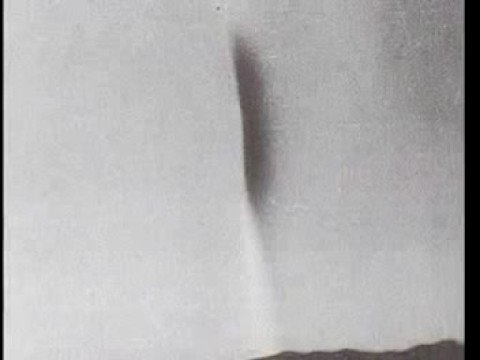
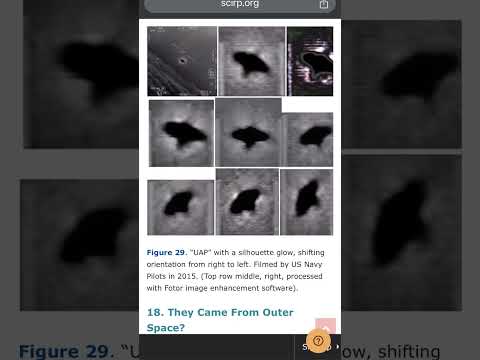
Sources Cited
- Fort, Charles. The Book of the Damned, Boni and Liveright, 1919 (early accounts of organic atmospheric phenomena).
- Constable, Trevor James. The Cosmic Pulse of Life: The Revolutionary Biological Power Behind UFOs, Merlin Press, 1976.
- Sanderson, Ivan T. Uninvited Visitors: A Biologist Looks at UFOs, Cowles Education Corp, 1967.
- Teodorani, Massimo. "The Hessdalen Lights: A Scientific Assessment of Anomalous Light Phenomena," Journal of Scientific Exploration, 2004.
- Smirnov, Boris M. "The Physics of Ball Lightning," Physics Reports, 1987.
- Constable, Trevor James. Sky Creatures: Living UFOs, Pocket Books, 1978.
- Singer, Stanley. The Nature of Ball Lightning, Plenum Press, 1971.
- Teodorani, Massimo. "Physical Data Analysis of Anomalous Luminous Phenomena in Hessdalen," Sol Foundation Papers, 2023.
- Constable, Trevor James. "Organic Plasma and Infrared Photography of Upper Atmosphere Entities," Journal of Borderland Research, 1962.
- Lund, Erling. "Radar Angels and the Physics of Low-Density Atmospheric Refraction," Meteorological Journal, 1985.
- Kovalchuk, Andrei. "Electromagnetically Excited Bio-Plasmas in the Upper Atmosphere," Geophysical Research Letters, 2011.
- Fort, Charles. New Lands, Boni and Liveright, 1923.
- Sanderson, Ivan T. "Biomorphic Anomalies: A Biological Approach to UFOs," Fate Magazine, 1968.
- Stenhoff, Mark. Ball Lightning: An Unsatisfied Problem in Physics, Kluwer Academic, 1999.
- Fryberger, David. "A Model for Ball Lightning Based on Magnetic Monopoles," Physical Review E, 1997.
Have corrections, additional research, or peer-reviewed sources? Help improve this entry.
Suggest an Edit